
Reviewed · POMPEII TOURS WITH AN ARCHAEOLOGIST
Pompeii: Tour with Archaeologist Guide & Skip-the-Line Entry
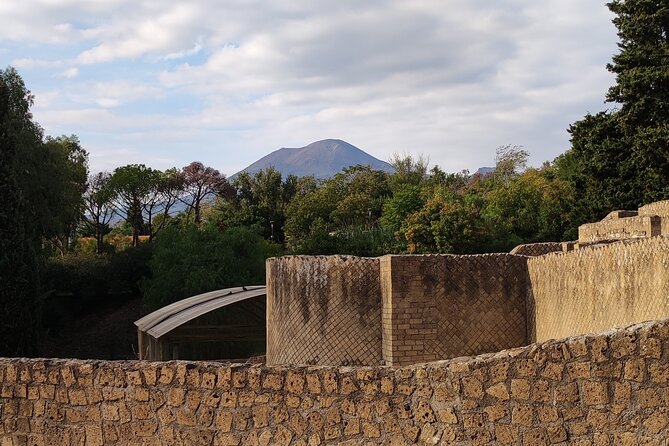
Pompeii makes the ancient world feel startlingly close. In two hours, this guided walk takes you from the amphitheater and Teatro Grande through Roman homes, baths, the lupanare, and the Forum, with the 79 AD eruption always in the background.
I like the efficient route and the chance to hear the site explained by an archaeologist rather than simply walking past old walls. I also like that you can remain inside the archaeological park after the tour. The main trade-off is time: two hours is a useful introduction, but Pompeii is large enough to reward a longer visit.
Key points before you book
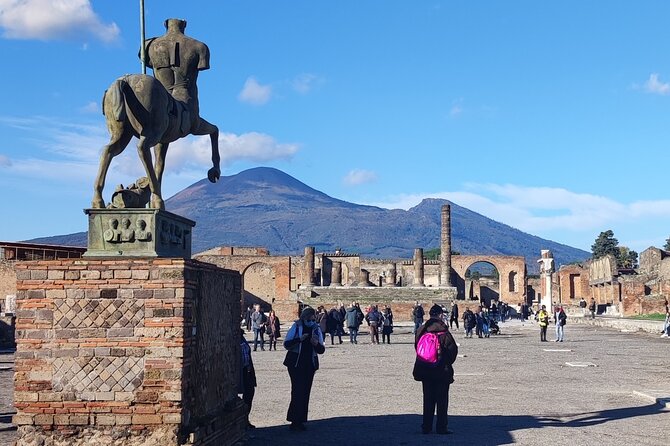
- The tour covers Pompeii’s essential sights: the amphitheater, private houses, Via dell’Abbondanza, Stabian baths, lupanare, Forum, Basilica, and casts.
- An archaeologist guide leads the walk, explaining Roman life, culture, and the city’s final hours.
- Skip-the-line entry is included, with the guide handling ticket purchase at the entrance.
- The route lasts about two hours, making it practical for a short stop in Pompeii.
- The group can include up to 25 people, so this is not a private or ultra-small tour.
- You may stay inside the archaeological park afterward, useful if you want more time with the ruins.
Starting near Piazza Esedra and Coffee Shop Vittoria
The practical starting point is near Piazza Esedra, by Coffee Shop Vittoria. The listed meeting details also give Travelcampania at Via Plinio 107 in Pompeii, while the ticket redemption point is Tour & Audio Guide at Piazza Esedra 2.
Because several location details are provided, read your confirmation carefully before setting out. The clearest action is to reach the Piazza Esedra area and look for the tour staff near the specified coffee shop and ticket point. This is the side of Pompeii used for the start of the walk.
The guide purchases the archaeological-site tickets for the group using the skip-the-line service. That matters most on a busy day, when standing around at the entrance can waste the best part of your morning or afternoon.
The exact meeting procedure deserves your attention. Do not arrive at Pompeii and assume every entrance or nearby office is the same place. Give yourself enough time to find Piazza Esedra, locate the guide, and join the correct group before the start.
More Guided Tours in Pompeii
- Skip the Line Guided Tour of Pompeii led by an Archaeologist
★ 5.0 · 703 reviews - Pompeii private tour with an Official Guide
★ 5.0 · 631 reviews - Pompeii Skip-the-line Tour with Archaeologist Guide
★ 5.0 · 559 reviews
A short route through a very large ancient city
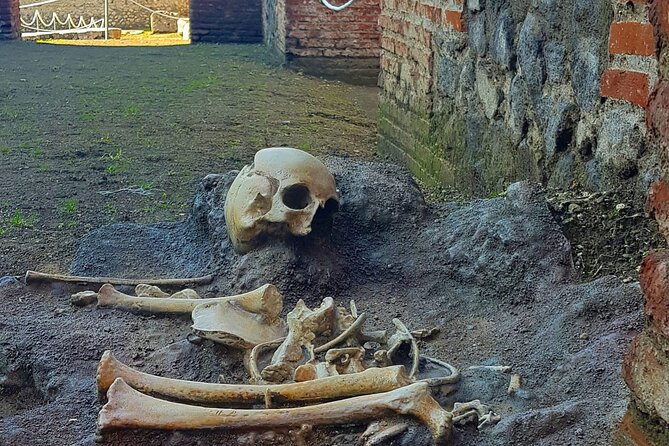
Pompeii is not a single monument. It is a broad archaeological area with streets, homes, public buildings, shops, baths, religious spaces, and entertainment venues. A two-hour walk cannot show you everything, so the value of this tour rests on how clearly the guide connects the main stops.
That focused approach suits you if this is your first visit and you want a firm sense of what makes Pompeii special. You will see the major sights without spending your limited time trying to read every sign or choose a route on your own.
The pace also means you should expect an overview, not a full archaeological study. If you want to inspect every house, photograph every fresco, or wander far beyond the central sights, plan to remain inside the park after the guided portion.
The group limit is 25 people. That is small enough for a structured walk, but not the same as a private tour or a tiny seminar. Your position in the group may affect how easily you hear every explanation, especially when the guide is speaking beside a popular building.
Teatro Grande and Pompeii’s public life
The walk begins with Pompeii’s large entertainment spaces, including Teatro Grande. This is a good opening because it introduces the city as a living Roman community rather than only a place frozen by disaster.
A theater helps you picture public life, shared entertainment, and the scale of Pompeii’s population. The guide can give you the basic context needed to understand the streets and buildings that follow.
The tour also highlights the amphitheater, one of the city’s most important public structures. Its inclusion gives the visit a strong sense of scale. You are not only looking at private rooms and household objects. You are also seeing where large crowds gathered.
For many people, this is one of the most memorable parts of the route because it shows how organized Roman urban life was. At the same time, the tour’s two-hour limit means the guide may need to keep the stop moving. You will receive context and a clear introduction, rather than unlimited time to study every architectural detail.
Roman homes, frescoes, and everyday objects
The private houses are where Pompeii becomes especially personal. The tour includes ancient Roman domus with frescoes and preserved objects that help connect the ruins to daily routines.
A wall painting can tell you about taste, status, religion, and household decoration. An everyday object can make the eruption feel less like a distant historical event and more like a sudden interruption to ordinary life. These details are often more powerful than a broad date or a list of emperors.
The condition of some frescoes is a major reason to visit Pompeii with a guide. You might otherwise pass a painted wall without understanding what you are seeing, how it relates to the room, or why its survival matters.
The guide also discusses the culture and lives of Pompeii’s people. One strong point of the experience is that the historical explanation is not limited to the eruption. You learn about the city before the disaster, which gives the remains more meaning.
You should not expect every house in Pompeii to be open or every painting to be seen in perfect condition. Archaeological sites change, and access can vary. The safe expectation is that you will see selected homes and frescoes as part of a larger route.
More Skip-the-Line Tickets in Pompeii
- Pompeii Private Tour with an Archaeologist and Skip The Line – 3 hours
★ 5.0 · 564 reviews - Pompeii Private Tour with an Archaeologist and Skip The Line
★ 5.0 · 391 reviews - Complete Pompeii Skip the Line Tour with Archaeologist Guide
★ 4.5 · 379 reviews - Ancient Pompeii Private Tour: Skip the Line & Kid-Friendly Option
★ 5.0 · 167 reviews
Walking Via dell’Abbondanza

Via dell’Abbondanza is one of the most useful places for understanding Pompeii as a working city. This famous street helps you read the site at ground level, where movement, commerce, homes, and public life all met.
The guide’s explanations are especially helpful here because a Roman street can look like a field of stones if you do not know what to notice. With context, the road becomes a route through a neighborhood rather than a collection of broken walls.
This is also where a moderate level of fitness matters. The experience is a walking tour through an archaeological park, and the ground may not always feel like a smooth modern pavement. The information provided asks for moderate physical fitness, so comfortable footwear and a willingness to walk are sensible choices.
The route is not described as accessible to every mobility level, and no detailed accessibility information is provided. If that is important for you, ask Travelcampania before booking rather than relying on general assumptions about the site.
The Stabian baths and the lupanare
The Stabian baths show another side of Roman life. Public bathing was not simply about washing. It was also part of city life and social routine, and the baths help explain how Roman public buildings served several purposes.
This stop balances the private homes and grand public spaces. You see how ordinary routines fit into the city’s wider design. The guide’s role is important because the remains can be difficult to interpret without a clear explanation of their function.
The lupanare, or ancient brothel, is one of Pompeii’s most famous stops. It is also one of the places where a guide can add useful historical care. The building is often treated as a curiosity, but it belongs to a broader picture of work, commerce, and social life in the ancient city.
You should expect this part of the tour to be direct and historical rather than polished or romantic. Pompeii preserves uncomfortable parts of Roman life along with its art and architecture. That frankness is part of what makes the site valuable.
The casts and the final hours of Pompeii
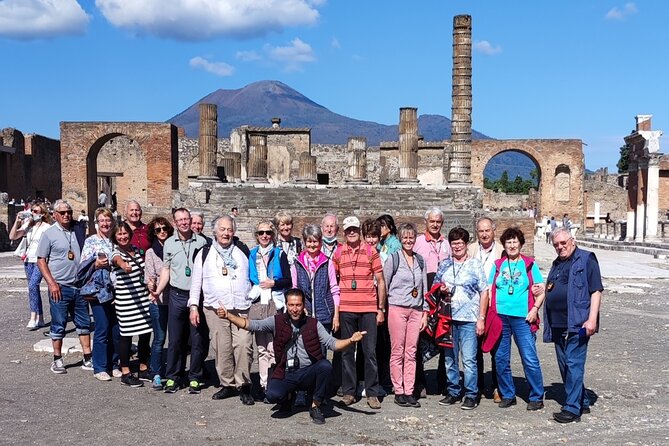
The casts are among the most emotionally difficult sights on the route. They were made from voids left in the hardened ash where bodies had decomposed. The tour specifically includes the first casts made in 1863 under the direction of archaeologist Giuseppe Fiorelli.
That date and name matter because the casts are not only evidence of the eruption. They also reflect the development of archaeological methods used to record the victims’ final positions. The guide can place the casts within both the disaster and the history of excavation.
The tour presents Pompeii’s last moments under the eruption of Vesuvius in AD 79. This is the point where the houses, streets, baths, and objects take on a more serious meaning. You are no longer looking only at well-preserved Roman life. You are seeing a city interrupted by catastrophe.
The casts can be upsetting. The experience is best for you if you are comfortable with a historical site that includes human remains and a tragic story. The tour does not treat Pompeii as a light sightseeing stop, even though its art and architecture are fascinating.
The Forum and Basilica bring the visit together
The Forum is the natural place to gather the larger picture. It was a central public space, and seeing it after the houses, streets, baths, and entertainment buildings helps you understand how the city functioned as a whole.
The Basilica is included as well. Its presence adds another layer to the civic center and gives the guide a chance to explain how public buildings shaped Roman urban life.
This section of the walk is likely to be visually striking, but the value goes beyond the view. The Forum connects the pieces. You have seen private life, public entertainment, bathing, commerce, and the aftermath of the eruption. Here, those subjects meet in one major civic area.
The tour ends at the Forum entrance on Via Villa dei Misteri. If you prefer, you can stay inside the archaeological park after the guided walk. That is a useful benefit because you can continue at your own speed instead of having to leave with the group.
Is $57.84 good value for two hours?
At $57.84 per person, this is not the cheapest way to enter Pompeii. The price includes admission and a guided walk led by an archaeologist, so you are paying for interpretation as well as access.
I see the value most clearly if you have only a short window in Pompeii or feel unsure about navigating a large archaeological area alone. The guide gives you a route, explains the important structures, and helps you understand details that could otherwise pass unnoticed.
The value is less clear if you already know Pompeii well, prefer a slow independent visit, or want several hours inside the site. In that case, the fixed two-hour route may feel too brief for the money.
The two available comments are positive about the guide’s friendliness and the amount of information covered in two hours, while another gives the experience four out of five and notes that the overall visit was not perfect. The overall rating is 3.8 from five ratings, a small sample that suggests a generally solid experience with room for unevenness.
A practical point from one visit is that driving from Rome was considered manageable, though tolls were about $40. That cost is separate from the tour and matters if you are building a day trip by car. The tour itself is in Pompeii, so you must arrange your own way to the meeting point.
Who will get the most from this Pompeii walk?
This experience fits you best if you want:
- A first visit with the major sights selected for you
- A clear explanation of Roman culture and daily life
- Skip-the-line entry rather than handling the ticket process alone
- A two-hour introduction that leaves room for other plans
- A guide who can explain frescoes, casts, buildings, and the eruption together
It may not suit you if you want a private guide, a very small group, or a full-day exploration. The maximum group size is 25, and the route is designed as a compact introduction.
Families and mixed-interest groups may find the structure useful because the walk moves through several kinds of places. People most interested in ancient art, architecture, or archaeology may want to stay afterward for a longer independent look.
Service animals are allowed, and the site is near public transportation. Confirmation is provided at booking, and free cancellation is available if you cancel at least 24 hours before the local start time. Changes or cancellations made within 24 hours are not accepted for a refund.
Should you book this Pompeii tour?
Book it if you want a well-planned first look at Pompeii, especially if the scale of the site feels intimidating or your schedule allows only two hours. The archaeologist guide, included admission, key public buildings, private homes, frescoes, lupanare, casts, and Forum make this a sensible introduction.
Skip it if you want to roam without a schedule or spend most of the day examining individual houses. The price is fair for guided access and a focused route, but the short duration limits how much you can see.
My practical advice is to arrive ready to walk, confirm the Piazza Esedra meeting details, and keep time afterward if Pompeii is a major reason for your trip. The guided portion gives you the framework. The extra time lets you slow down and make the ruins your own.
FAQ
How long does the Pompeii tour last?
The tour lasts approximately two hours.
What is included in the price?
Admission to the archaeological site is included, along with the guided walking tour and skip-the-line entry service.
Where does the tour start?
The meeting area is near Piazza Esedra, specifically near Coffee Shop Vittoria. The supplied meeting details also list Travelcampania at Via Plinio 107 in Pompeii.
Where does the tour end?
The tour ends at Foro di Pompei on Via Villa dei Misteri. You may stay inside the archaeological park afterward if you prefer.
What sights are included?
The route includes Teatro Grande, the amphitheater, Roman houses with frescoes, Via dell’Abbondanza, the Stabian baths, the lupanare, the Forum, the Basilica, and the first casts made in 1863.
Is a guide included?
Yes. An archaeologist guide leads the walking tour and explains Pompeii’s history, culture, daily life, and final moments during the eruption of Vesuvius in AD 79.
How many people can join the tour?
The activity has a maximum group size of 25 people.
Is the tour suitable for people with limited fitness?
The activity states that participants should have a moderate level of physical fitness. No more detailed accessibility information is provided.
Can I cancel for a full refund?
Yes. You can cancel at least 24 hours before the experience starts for a full refund. Cancellations or changes made less than 24 hours before the local start time are not accepted for a refund.
More Ways to See Pompeii
- Discover the Ancient Ruins of Pompeii: Day Trip from Rome
★ 3.5 · 2,247 reviews - Pompeii Ticket + Tour with Optional Tasting Experience at Pompeii
★ 5.0 · 663 reviews - Sharing Tour of Pompeii
★ 5.0 · 487 reviews - Visit in Pompeii – Pompeii Private Tour with Ada
★ 5.0 · 436 reviews
More Pompeii Tours Led by an Archaeologist
- Pompeii Small Group Tour with an Archaeologist
★ 5.0 · 6,593 reviews - Pompeii and Herculaneum Small Group Tour with an Archaeologist
★ 5.0 · 1,350 reviews - Explore Pompeii with an Archaeologist
★ 5.0 · 511 reviews - Pompeii 2h Small-Group Tour with Expert Archaeologist
★ 5.0 · 385 reviews
Just added around Pompeii
- Wine Tasting and Winery Tour in Vesuvio National Park with Lunch★ 4.5 · 3 reviews
- Mt. Vesuvius Wine Tasting and Lunch Experience from Pompeii★ 4.5 · 20 reviews
- Wine tasting in the Vesuvius national park★ 5.0 · 3 reviews
- Traditional Neapolitan Dinner in Pompei – Villa Franca – Family Restourant★ 5.0 · 8 reviews
- Private Guided Tour and VR Headsets in the Ancient Pompeii★ 5.0 · 3 reviews
- Visit Pompeii with a local expert guide★ 5.0 · 10 reviews
- Tour Mount Vesuvius with Entry Tickets and Round Trip Transfer Included★ 3.5 · 4 reviews
- Vesuvius tour entrance to the crater and return bus★ 4.5 · 9 reviews
Pompeii Tours with an Archaeologist, compared.

Pompeii Small Group Tour with an Archaeologist
Read our review →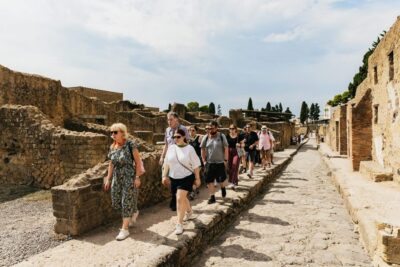
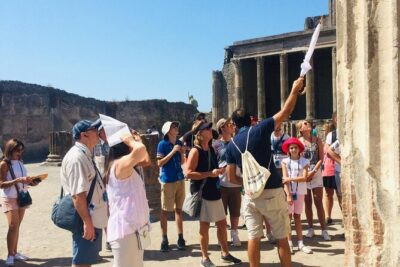
Pompeii and Herculaneum Small Group Tour with an Archaeologist
Read our review →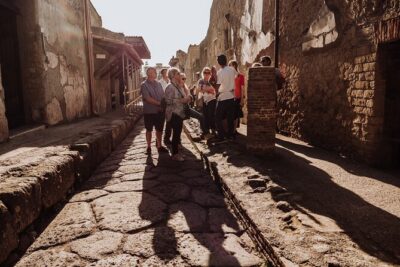
Herculaneum Small Group Tour and Ticket With an Archaeologist
Read our review →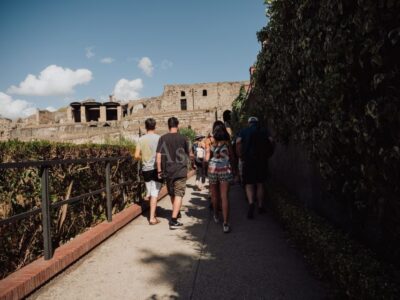
Pompeii & Herculaneum with Archaeologist Guide
Read our review →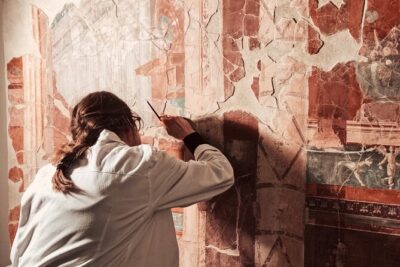
Pompeii Private Tour with an Archaeologist and Skip The Line – 3 hours
Read our review →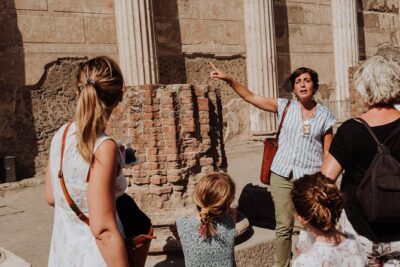
Pompeii Private Tour with an Archaeologist and Skip The Line
Read our review →Browse the lists this tour appears in