

Reviewed · POMPEII TOURS WITH AN ARCHAEOLOGIST
Pompeii Small Group Tour with an Archaeologist
Pompeii is far too large for a quick wander with a map and a hopeful smile. This two-hour walk gives you a clear route through the ruins, with an archaeologist explaining what you are seeing and why it mattered. You’ll enter at Porta Marina Superiore and finish inside the site, ready to continue on your own.
I like the focused selection of major buildings, especially the Forum, House of Menander, Stabian Baths, Lupanar, and House of the Faun. I also like the human side of the visit: the plaster casts in the Forum granaries and the stories of Pompeii’s residents give the stones an emotional weight that a solo walk can miss.
The main caution is the group size, which can reach 20 people per guide. That is reasonable for the price, but it can slow things down at popular rooms and mosaics. The ground is uneven, shade is scarce, and a late arrival can mean missing the tour entirely.
Key things to know before booking
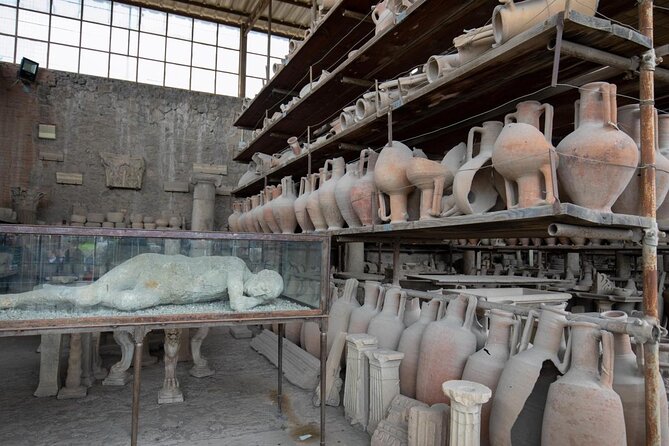
- Two hours with an archaeologist: The guide leads you through Pompeii’s major public buildings, private homes, baths, and theaters.
- A practical first look at a huge site: You see the essential sights before deciding what to explore independently.
- Included Pompeii Express ticket: Entrance and guide assistance are covered, with no separate admission purchase needed.
- Up to 20 people per guide: Small by some standards, but not an intimate private tour.
- Strong guide feedback: Guides including Alessandra, Paolo, Teresa, Amedeo, Vincenzo, Antonio, Julia, and Rafaela are praised for clear storytelling, humor, patience, and archaeological insight.
- Bring serious walking gear: Wear sturdy, comfortable shoes, carry water, and prepare for sun, steps, ramps, and uneven paving.
Why an archaeologist changes the Pompeii experience
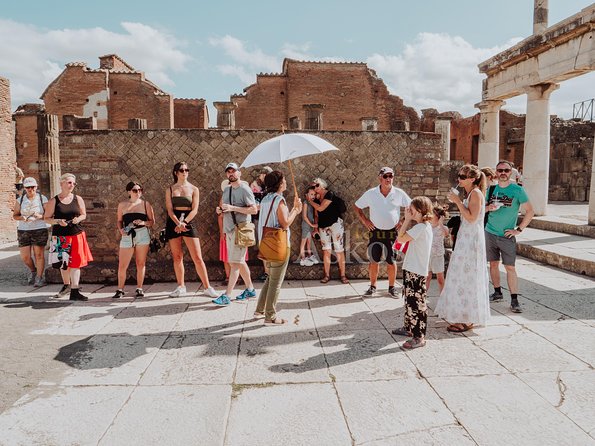
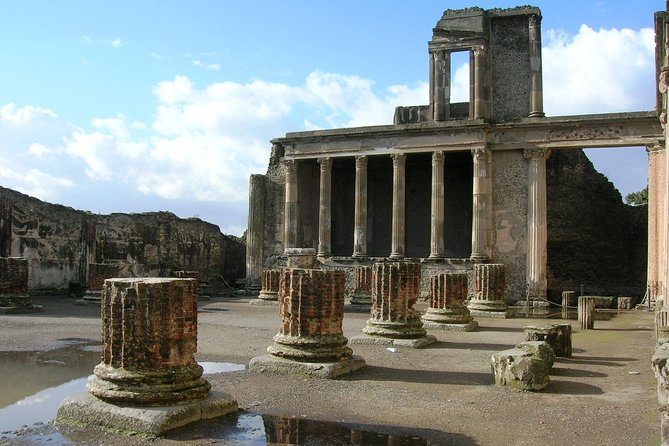
Pompeii can look like a collection of broken walls until someone explains the function of each space. The Basilica was not a church in the later Christian sense. It was a covered public building where merchants and legal business took place. The Forum was the city’s main square, and the baths were part of everyday Roman social life.
That context is the real value here. You are not simply ticking off ruins. You are learning how the city worked, how its residents moved through it, and what archaeologists can still read from floors, wall paintings, street paving, and household layouts.
The guide’s archaeological background also helps with the difficult parts of the visit. Pompeii is both an extraordinary record of Roman life and the scene of a catastrophe. The plaster casts at the Forum granaries are a quiet but powerful reminder that this was a lived-in city, not a stage set.
Guide quality matters greatly on a site like this. Alessandra is praised for connecting ancient life with current excavation and preservation work. Paolo is noted for his enthusiasm and care for the site. Teresa is praised for storytelling and for adjusting the pace to the group. Other guides, including Amedeo, Vincenzo, Antonio, Julia, and Rafaela, are described as clear, funny, patient, and good with questions.
You cannot select a particular guide when booking, so treat those names as examples of the standard you might encounter rather than a promise. The consistently high rating, 4.8 from 6,593 reviews with 96 percent recommending the experience, suggests that the guiding is the main reason this tour earns its price.
More Pompeii tours led by an archaeologist:
- Pompeii and Herculaneum Small Group Tour with an Archaeologist
★ 5.0 · 1,350 reviews - Skip the Line Guided Tour of Pompeii led by an Archaeologist
★ 5.0 · 703 reviews - Pompeii Private Tour with an Archaeologist and Skip The Line – 3 hours
★ 5.0 · 564 reviews
Starting at Porta Marina Superiore
Meet at Via Villa dei Misteri, 2, at the entrance known as Porta Marina Superiore. Look for the guide holding an Askos Tours sign. The starting meeting point matters because Pompeii has several access points, and wandering around the perimeter looking for the group would be a poor start to a walking tour.
The first 10 minutes are set aside for meeting the guide and entering with the included Pompeii Express ticket. The tour finishes inside the ruins rather than returning you to the entrance, so pay attention to the guide’s advice about exits and your onward route.
This is also the moment to check your shoes, water, sun protection, and phone. Pompeii’s ancient streets are not smooth modern pavements, and there are steps, ramps, and short steep sections. The site can be tiring even when the weather is mild.
The Basilica and Forum: Pompeii’s civic center
The Basilica is the first major stop. Its open portico sheltered commercial and civic activity, giving the guide a useful opening to explain how public business worked in the city. You spend about 15 minutes here, enough for a clear explanation without turning the first stop into a long lecture.
Next comes the Forum, the main square of Pompeii. This is one of the most important spaces in the entire site, but it can be hard to understand without a guide. The scale, surrounding buildings, and original purpose are easier to grasp when someone points out how the square organized public life.
The Forum stop lasts about 10 minutes. That may sound brief, but the tour has many stops to cover. If the guide gives a strong overview here, you will have a useful framework for understanding the buildings that follow.
Victim casts in the Forum granaries

The granaries are used today to display marble tables, fountain elements, architectural pieces, and plaster casts connected with the eruption. You may see casts of people, a dog, and a tree.
This is likely to be one of the most affecting parts of the visit. The casts are not decorative objects. They preserve the final positions of victims caught in the disaster, turning the story of Pompeii from an abstract date into something immediate and human.
The planned stop is about 15 minutes. It is enough time to look carefully and listen, though some people may want longer. The emotional weight can also make this a slower part of the walk, especially for families with older children or teenagers.
More ways to see Pompeii:
- Discover the Ancient Ruins of Pompeii: Day Trip from Rome
★ 3.5 · 2,247 reviews - Pompeii Ticket + Tour with Optional Tasting Experience at Pompeii
★ 5.0 · 663 reviews - Pompeii private tour with an Official Guide
★ 5.0 · 631 reviews - Pompeii Skip-the-line Tour with Archaeologist Guide
★ 5.0 · 559 reviews
Walking Pompeii’s original streets
Between the major buildings, you walk along the original paved roads. This is where the site begins to feel like a city rather than a set of isolated monuments.
The uneven paving is authentic but demanding. You will need to watch your footing while also listening to the guide. Comfortable shoes are not a minor suggestion here. Sturdy trainers or walking shoes will serve you far better than thin sandals or fashion footwear.
There is little shade in many areas. In summer, bring sunglasses, sunscreen, and a small bottle of water. The tour runs in rain or shine, so a light weather check before you leave your hotel is sensible.
House of Menander and Roman domestic life
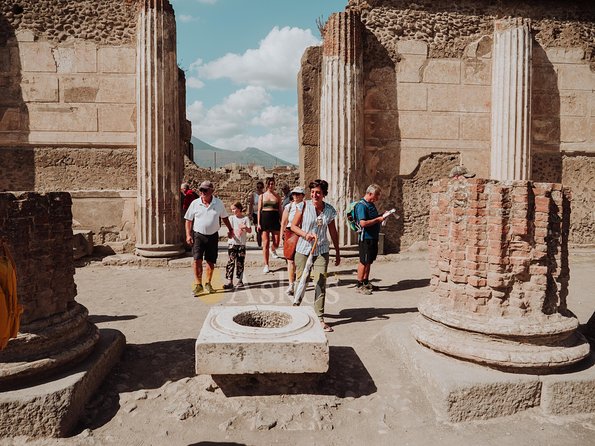
The House of Menander is one of Pompeii’s grand private residences. It is valued for its architecture, decoration, and contents, and it gives you a look at how wealthy residents lived behind the public face of the Forum.
This is one of the places where the archaeologist’s explanations can make a big difference. A house plan can seem confusing when you are looking at walls without a roof. A guide can help you read the arrangement of rooms, decorative details, and the contrast between private space and public reception areas.
The visit lasts about 15 minutes. You may not see every corner of the house, but you should come away with a better sense of Pompeii’s upper-class domestic life.
Stabian Baths: daily life beyond the elite homes
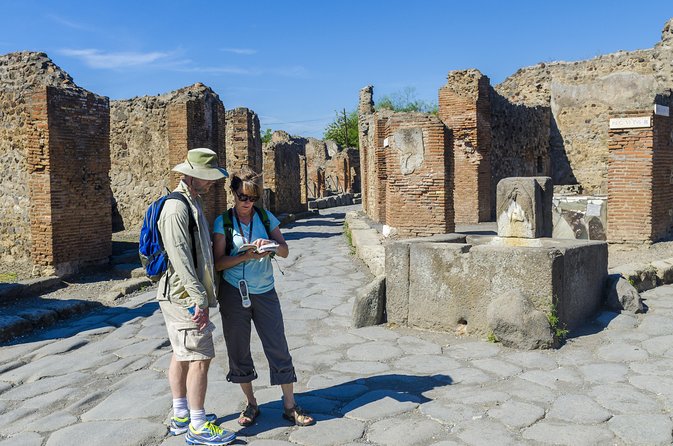
The Stabian Baths are the oldest thermal complex in Pompeii and occupy a broad area near the Brothel lane, the Holconius crossroads, and Via Stabiana. Roman baths were not simply places to wash. They were part of the city’s social routine.
This stop helps balance the tour. After the public Forum and a wealthy home, you see a building used by a wider part of the city. The guide can explain how the complex functioned and why baths mattered in Roman life.
Again, the stop is planned for about 15 minutes. The baths can be especially useful for families because the purpose of the rooms is easier to picture than the function of some ruined civic buildings.
The Lupanar and Pompeii’s less polished side
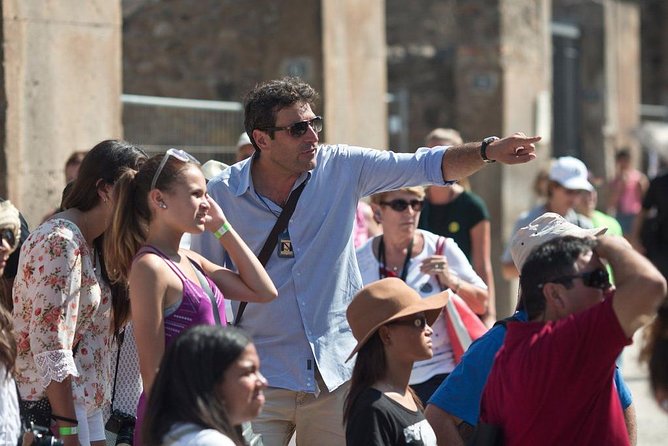
The Lupanar is Pompeii’s most famous brothel ruin. It is a compact, memorable stop, with a reputation that makes it one of the places most people want to see.
The guide provides context for the building and its role in the city. This is not a glossy version of Pompeii. The Lupanar, the street layout, and the ordinary details of urban life help show that the ancient city included business, pleasure, poverty, status, and private behavior alongside temples and civic buildings.
The stop takes about 15 minutes. The rooms can become crowded, and the group may need to wait while everyone gets a chance to see the key features. That is one reason a group of up to 20 can feel less nimble than a private tour.
House of the Faun and the city’s grandest homes
The House of the Faun was among Pompeii’s largest and most impressive private residences. It gives you another look at wealth and status, but on a bigger scale than the House of Menander.
This part of the walk helps you compare two elite houses rather than seeing each one in isolation. The guide can point out the size, design, decoration, and arrangement of the residences, helping you understand how much variety existed within Pompeii’s wealthy neighborhoods.
You should not expect to study every mosaic or room at length. The tour is designed as an efficient overview, not a specialist house-by-house examination. If the House of the Faun captures your interest, note where it is so you can return after the guided portion.
Teatro Piccolo and Teatro Grande
The route includes a brief look at Pompeii’s smaller theater, often called the Teatro Piccolo, before ending at the Teatro Grande, the city’s most important theater.
The smaller theater provides a useful contrast with the larger venue. The final stop then brings you to a major performance space where the guide can explain its place in Pompeii’s public life.
About 10 minutes is allocated to the Teatro Grande. That is enough for an overview, but not for a long architectural study. The advantage is that you finish near a major site landmark while still inside the ruins, with the option to keep exploring on your own.
What two hours really gives you
Two hours is a sensible length for a first orientation, especially if you are visiting Pompeii in hot weather or with children. You cover the main civic center, victim casts, a major house, baths, brothel, another grand residence, and the theaters.
You will not see everything. Pompeii is too large for that, and the tour does not claim to cover the entire archaeological park. Several people find that the guided walk gives them enough structure to continue independently afterward. The guide may also point out additional areas worth seeing once the formal tour ends.
That arrangement is one of the strongest features of the experience. You get interpretation when the site is hardest to read, then freedom to linger, retrace the route, or find other sections at your own pace.
The tradeoff is that you need to manage your energy. If you arrive determined to see every corner after the tour, you may find the uneven roads and strong sun more tiring than expected. Keep your independent plans flexible.
Group size, headsets, and pacing
The maximum is 20 people per guide. That is not a private or highly personal experience, but it is still more manageable than a large coach group. The guide can answer questions, though you may need to stay close and listen carefully in open spaces.
Headsets are supplied for groups of 16 or more. They should help you hear the explanation while standing near a crowded monument, but one poor experience included a delay caused by headset problems. That appears to be an occasional organizational risk rather than the normal pattern, yet it is worth knowing that equipment issues can reduce the effective tour time.
Some guides are praised for a relaxed pace and for involving children and teenagers. Others have been criticized in one case for spending too long standing still at the start after a delayed departure and headset trouble. The lesson is practical: arrive early, stay with the group, and speak up if you cannot hear.
Price and value at $35.67
At $35.67 per person, this is a strong value if you want an informed introduction to Pompeii without paying for a private guide. The entrance ticket, licensed archaeologically trained guide, and assistance throughout the two-hour visit are included.
The value depends on how you use the tour. If you want a slow photographic study of a few houses, a private or smaller group experience may suit you better. If you want a clear route through the essential areas and help understanding what you see, this price is easier to justify.
The guide’s role is especially important because Pompeii’s size can make independent touring inefficient. You may walk a long way and still understand only half of what you pass. A guided first circuit reduces that problem, then lets you use the rest of your time with better bearings.
Food, drinks, and transportation are not included. Plan your route to the meeting point separately, and bring water rather than expecting refreshments inside the tour.
Who should book this Pompeii tour?
I would choose this tour for a first visit, families with teenagers, couples who want historical context, and anyone arriving with only part of a day. The route includes enough variety to keep the visit moving, and the guides are often praised for making the subject clear and entertaining.
It is also a good fit if you prefer a guide with archaeological training rather than a simple audio explanation. The best guides, such as Alessandra and Paolo, add a sense of current preservation work and personal care for the site.
I would hesitate if you have significant mobility limitations. Scooters are not allowed, and the tour is specifically not recommended for people with mobility issues because of steps, ramps, uneven surfaces, and short steep climbs. Ask the operator about a suitable private option before booking.
Children must be accompanied by an adult. Service animals are allowed, while other dogs must weigh no more than 10 kilograms, measure no more than 40 centimeters in height, stay on a leash, and be carried inside buildings. Those rules make this a possible family outing, but not necessarily an easy one for every child or pet.
Practical advice for a smooth visit
Arrive early at Porta Marina Superiore. A major late arrival may not be able to catch up with the group because Pompeii is large and phone reception inside can be poor. The operator may still provide your entrance ticket, but the tour itself may be gone.
Wear sturdy shoes, not just attractive ones. Bring water, sunglasses, and sunscreen, particularly in summer. The tour operates all year in rain or shine, so prepare for the day’s weather.
Keep the confirmation on your phone because the tour uses a mobile ticket. For anyone under 18, bring an ID card or passport. Free cancellation is available if you cancel at least 24 hours before the start time. Inside 24 hours, the payment is not refunded and changes are not accepted.
Should you book it?
Book this Pompeii tour if you want the site to make sense quickly and you like the idea of learning from an archaeologist before exploring on your own. The route covers the strongest first-visit highlights, the price is fair, and the guide can turn confusing walls into a readable ancient city.
Skip it only if you need a very small group, a slow specialist visit, or a route designed around mobility needs. For most first-time visitors who can handle uneven ground and a brisk two-hour walk, this is a practical way to meet Pompeii properly.
FAQ
How long does the Pompeii tour last?
The tour lasts approximately two hours.
Where does the tour meet?
Meet at Porta Marina Superiore, at Via Villa dei Misteri, 2, 80045 Pompei, Italy. The guide holds an Askos Tours sign.
Where does the tour finish?
The tour finishes inside the Pompeii archaeological site.
Is the Pompeii entrance ticket included?
Yes. The Pompeii Express entrance ticket is included in the tour price.
What language is the tour offered in?
The tour is offered in English.
How large is the group?
The maximum group size is 20 people per guide.
Are headsets provided?
Headsets are provided for groups of 16 or more.
Is the tour suitable for people with mobility issues?
The tour is not recommended for people with mobility issues because the route includes steps, ramps, uneven surfaces, and some short steep climbs. Mobility scooters are not allowed.
What happens if I need to cancel?
You receive a full refund if you cancel at least 24 hours before the experience begins. Cancellations or changes made less than 24 hours before the start time are not refunded or accepted.
Just added around Pompeii
- Wine Tasting and Winery Tour in Vesuvio National Park with Lunch★ 4.5 · 3 reviews
- Mt. Vesuvius Wine Tasting and Lunch Experience from Pompeii★ 4.5 · 20 reviews
- Wine tasting in the Vesuvius national park★ 5.0 · 3 reviews
- Traditional Neapolitan Dinner in Pompei – Villa Franca – Family Restourant★ 5.0 · 8 reviews
- Private Guided Tour and VR Headsets in the Ancient Pompeii★ 5.0 · 3 reviews
- Visit Pompeii with a local expert guide★ 5.0 · 10 reviews
- Tour Mount Vesuvius with Entry Tickets and Round Trip Transfer Included★ 3.5 · 4 reviews
- Vesuvius tour entrance to the crater and return bus★ 4.5 · 9 reviews
Pompeii Tours with an Archaeologist, compared.
Pompeii and Herculaneum Small Group Tour with an Archaeologist
Read our review →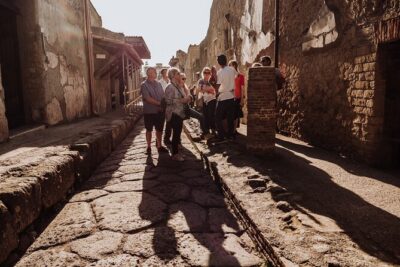
Herculaneum Small Group Tour and Ticket With an Archaeologist
Read our review →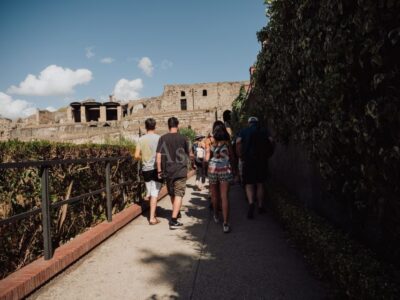
Pompeii & Herculaneum with Archaeologist Guide
Read our review →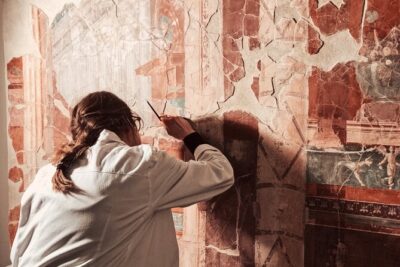
Pompeii Private Tour with an Archaeologist and Skip The Line – 3 hours
Read our review →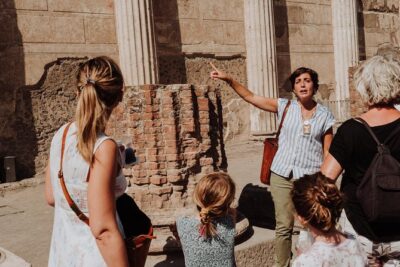
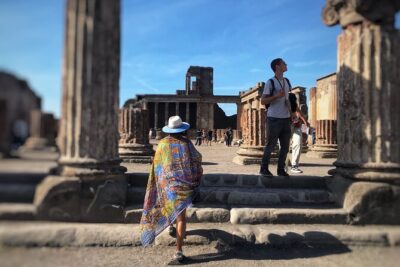
Pompeii Private Tour with an Archaeologist and Skip The Line
Read our review →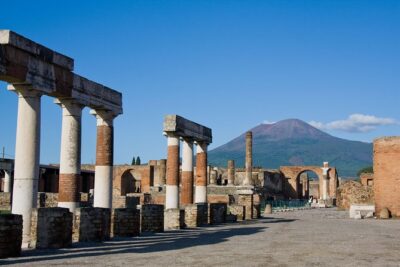
Pompeii 2h Small-Group Tour with Expert Archaeologist
Read our review →Browse the lists this tour appears in