
Reviewed · POMPEII TOURS WITH AN ARCHAEOLOGIST
Complete Pompeii Skip the Line Tour with Archaeologist Guide
Pompeii is easiest to understand when someone helps you read the ruins. An archaeologist guide can point out the bakery ovens, explain how the streets worked, and show how ordinary Romans lived before the eruption buried the city. The plaster casts are powerful, but the everyday details are just as striking.
I like the small groups of 15 or fewer, which make it easier to hear and ask questions. I also like the reserved entry, since Pompeii can have long lines and a guided route keeps you from wandering past important sites without knowing what you’re seeing.
The main drawback is physical. You’ll walk at a moderate pace across uneven ancient streets, often in strong sun, with pauses rather than regular refreshment stops. Meeting instructions have also confused some people, so take extra care with the exact entrance.
Key points to know before you book
- Archaeologist-led touring: Guides such as Enzo, Ilaria, Francesca, Sonia, Vito, and Francesco bring professional training and years of experience at the site.
- Small group size: The maximum is 15 people, a useful limit in crowded streets and busy buildings.
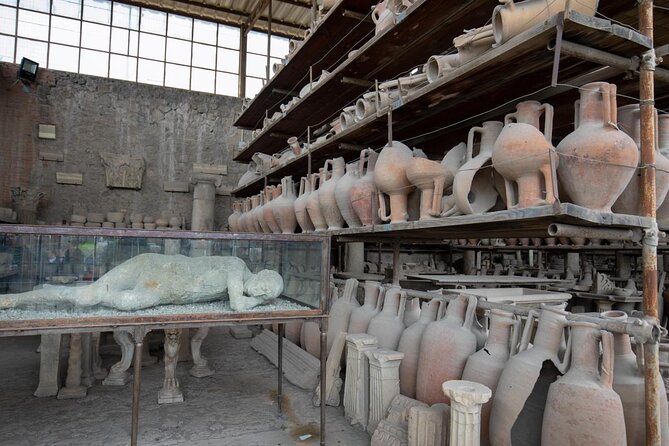
- Three-hour route: The full visit covers major public buildings, ordinary shops, homes, streets, baths, and the casts of eruption victims.
- Two-hour express choice: If time is tight, the shorter option focuses on Pompeii’s main sights.
- Reserved admission: Your entrance ticket is arranged in advance, helping you avoid the main ticket line.
- Prepare for the heat: Wear proper walking shoes, bring water, and use sun protection. Sandals are a poor choice on Pompeii’s rough paving.
Why an archaeologist changes Pompeii

Pompeii is not a single monument you can understand from one grand view. It is a large Roman city, with homes, shops, temples, public baths, streets, cemeteries, and work areas spread across an enormous archaeological park.
That scale is both the wonder and the problem. On your own, you can see the stones, but it is easy to miss what they tell you. A guide can explain why a bakery matters, how a street was used, or what a public building reveals about daily life nearly 2,000 years ago.
The strongest part of this experience is the human scale. You are not only looking at temples and official buildings. You are seeing the places where people bought food, worked, washed, worshipped, socialized, and lived.
The guides named in the feedback include Enzo, Ilaria, Francesca, Sonia, Francesco, Vito, Lorenzo, Vincento, and Sonja. Their personalities differ, but the best guides share the same traits: clear explanations, patience with questions, humor used at the right moment, and a gift for making small details matter.
A trained archaeologist also gives the visit some depth without requiring you to be an expert. You can ask questions as you go, and the guide can adjust the explanation to the group. That matters at Pompeii, where new excavation and preservation work continues and some areas may change.
More Guided Tours in Pompeii
- Skip the Line Guided Tour of Pompeii led by an Archaeologist
★ 5.0 · 703 reviews - Pompeii private tour with an Official Guide
★ 5.0 · 631 reviews - Pompeii Skip-the-line Tour with Archaeologist Guide
★ 5.0 · 559 reviews
Meeting at Via Villa dei Misteri
The stated meeting point is at Via Villa dei Misteri, 1, near the Pompeii archaeological entrance. The tour ends inside the archaeological park, which is helpful because you can continue looking around after the guided portion instead of having to walk back to a separate meeting place.
Allow time to find the group. Several people had trouble because Pompeii has many entrances, signs, tour companies, and groups gathering nearby. The most useful advice is simple: check the entrance named in your booking details, arrive early, and look for the tour representative before the start time.
The meeting point is not the same thing as a hotel pickup. Transportation to the site is not included, and the tour does not return you to your hotel. Pompeii is near public transportation, but you need to arrange your own way there.
Bring the full names of every person in your booking exactly as they appear on an identification document or passport. Name changes are not accepted. This is an easy detail to overlook, but it can matter at admission.
Entering the ruins with reserved admission
Once the group is assembled, the guide handles the entry process and provides the pre-reserved tickets. This saves time compared with buying admission at the site, though it does not make Pompeii quiet or empty. The archaeological park remains a popular destination, and busy periods can feel crowded.
Headsets are provided when needed. That is useful because the group may be standing in open streets or near other tour groups. In a place this large, being able to hear the guide clearly can make the difference between following the story and losing pieces of it.
The full tour lasts about three hours. That is long enough to see a good range of Pompeii without turning the visit into an all-day march. The pace is usually moderate, but you should be comfortable walking for most of the visit.
There may be short breaks, including a pause of around 10 minutes and another of around 20 minutes. These breaks can help in hot weather or give you time to use facilities and ask questions. If you prefer constant movement, they may feel longer than necessary.
Pompeii’s main street and preserved paving
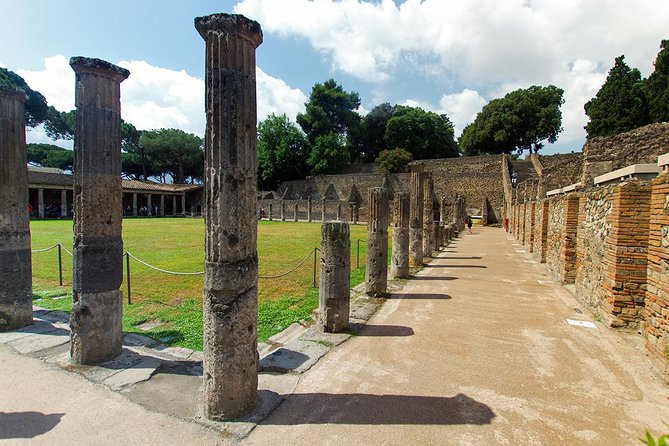
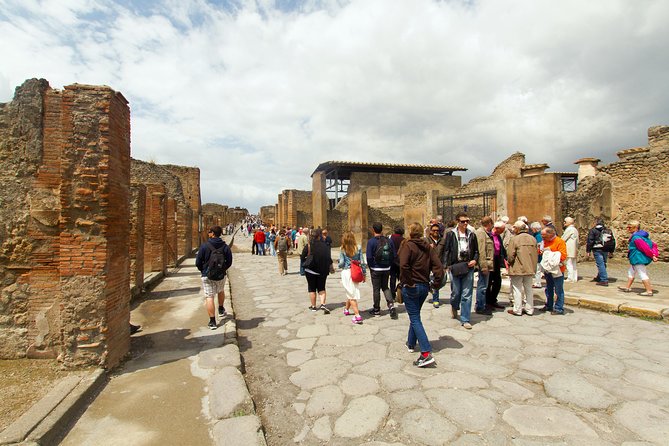
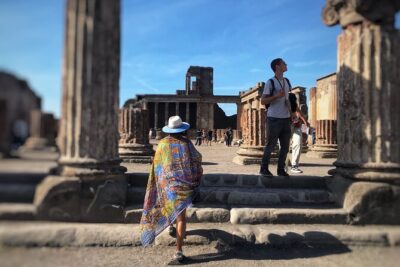
The main street is one of the best places to understand how Pompeii functioned as a city. The paving, building fronts, sidewalks, and raised stepping stones show that this was a working urban environment, not a collection of isolated ruins.
Your guide can help you picture daily movement through the city. You’ll see how people passed shops and public buildings, how streets were laid out, and how the worn surfaces preserve clues about everyday use.
Uneven paving is part of the experience. This is not a smooth museum floor, and you should wear firm walking shoes with good support. Sandals can be uncomfortable, especially on a hot day or across rough stone.
The route also provides repeated photo stops. You’ll have chances to take pictures, but this is primarily a walking and listening experience. If you stop often for photographs, you may need to catch up with the group.
More Skip-the-Line Tickets in Pompeii
- Pompeii Private Tour with an Archaeologist and Skip The Line – 3 hours
★ 5.0 · 564 reviews - Pompeii Private Tour with an Archaeologist and Skip The Line
★ 5.0 · 391 reviews - Ancient Pompeii Private Tour: Skip the Line & Kid-Friendly Option
★ 5.0 · 167 reviews - Pompeii small group tour with skip-the-line entrance included
★ 5.0 · 155 reviews
The bakery and the ordinary Pompeians
The Roman bakery is one of the most memorable stops because it shifts the focus from emperors and temples to food and work. The preserved equipment and remains help show how bread was produced and sold.
This is the kind of place that can disappear into the background without an explanation. A guide gives it meaning by connecting the ovens and work areas to the people who depended on them. You begin to see Pompeii as a neighborhood with businesses, customers, and routines.
The route also includes an ancient market or supermarket area, along with other commercial spaces. These stops are valuable because they make the city feel practical and familiar. Pompeii was not only a place for public ceremonies. It was full of errands, trade, meals, and household work.
The guide’s commentary about life in the Roman Republic adds context, especially for first-time visitors. You’ll gain a clearer sense of how social life and public space fit together, even when the surviving walls are incomplete.
The Temple of Apollo and Roman Forum
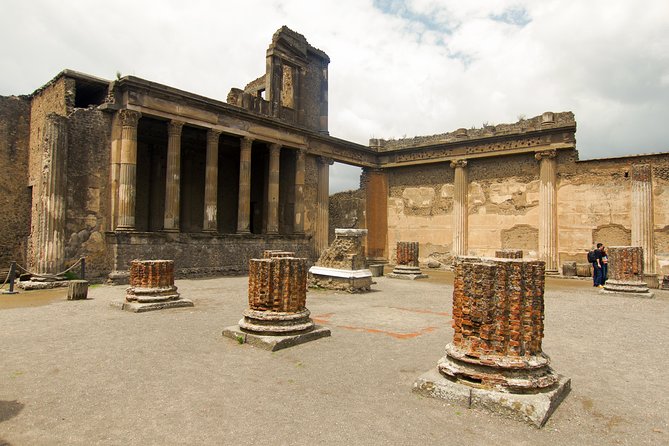
The Temple of Apollo and Roman Forum bring you into Pompeii’s public center. Here, the story shifts from private work and shopping to religion, politics, civic life, and large communal spaces.
The Forum is one of the places where a guide is especially useful. Its size and layout can be hard to grasp when you are standing among columns and broken walls. A clear explanation helps you understand how the space functioned and why its location mattered.
You should expect stops for explanation and photographs rather than a quick march through. The guides are often praised for giving people time to absorb what they are seeing and for answering extra questions fully.
The public buildings also help place the eruption in context. You are looking at a functioning city interrupted suddenly, not at a site that was designed to become an archaeological park. That contrast is part of what makes Pompeii so moving.
Roman baths, cemetery, and brothel
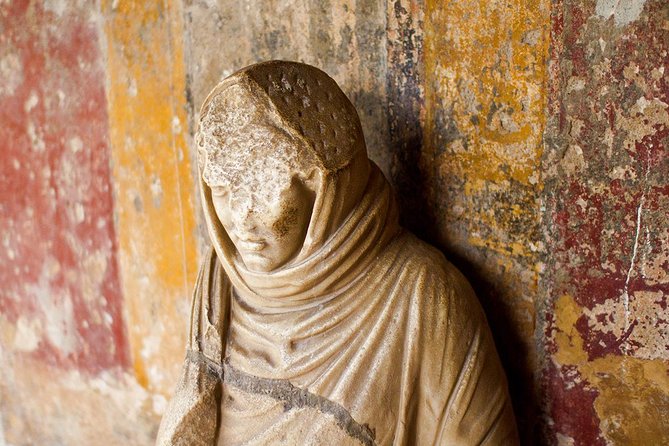
The Roman baths offer another view of daily life. They show how washing and social activity were part of public life, and the surviving rooms help you picture a city with shared facilities rather than modern private bathrooms.
The cemetery adds a quieter, more solemn stop. It sits outside the main urban area and shows how the city marked the boundary between the living and the dead.
The route may also include a brothel, depending on the group and what is open. It is suitable only if age appropriate. Families should be prepared for the guide to explain the site plainly and historically.
These stops add variety to the tour. You move from religion to hygiene, burial customs, and adult commerce. That broad range is useful because it keeps Pompeii from becoming a parade of similar walls.
The plaster casts and the human cost of the eruption
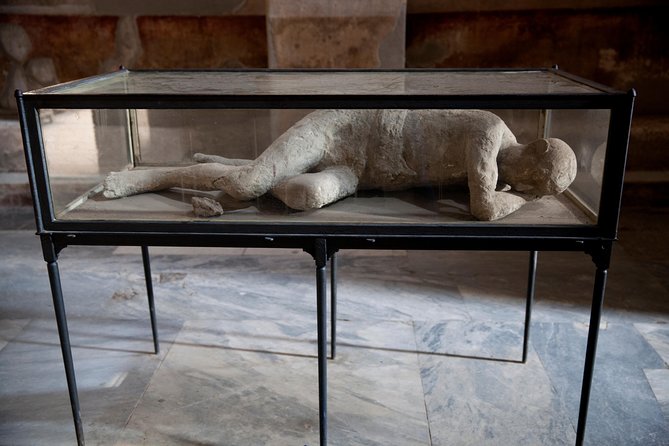
The plaster casts are among Pompeii’s most difficult sights. They preserve the forms of people caught during the eruption, and the experience can be heart-wrenching.
A guide can provide historical context, but no explanation removes the emotional weight. Some people find this the most memorable part of the tour, while others may prefer to keep their distance. If you are visiting with children, consider discussing the subject beforehand.
The casts are powerful because they connect the enormous disaster to individual lives. The temples, streets, and Forum show a city. The casts remind you that the city was filled with people who did not know what was coming.
The tour does not treat Pompeii as a simple spectacle. The best explanations hold together two ideas: the tragedy of the eruption and the remarkable preservation that allows you to learn from it today.
What you may not see in three hours
About one-third of Pompeii remains uncovered, and excavation and preservation work continue. No three-hour walking tour can show every street, house, and building in the park.
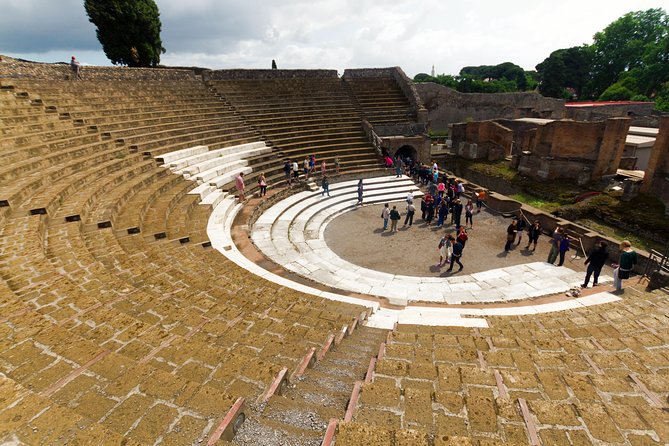
One useful detail is that the route may not include the amphitheater. A guided visit can cover the main public areas and still leave important sections for later. This is not necessarily a flaw, but you should think of the tour as an introduction and guided framework, not a complete visit to every corner.
The tour ends inside the site, so you can continue exploring on your own afterward. This makes the guide’s route more useful. You get the key explanations first, then you can return to an area that interests you or seek out sections not included in the group route.
If you have only a short window in Pompeii, choose the full three-hour option if possible. The two-hour express version is better for a tight schedule, but it gives you less time for smaller details and questions.
Is the $71.38 price good value?
At $71.38 per person, this is not the cheapest way to enter Pompeii. The value comes from the archaeologist guide, reserved admission, headsets when needed, and the time saved by following a planned route.
I think the price makes the most sense for a first visit. Pompeii can feel confusing without context, and a strong guide can help you notice features you would otherwise pass without understanding. The information is not just decoration. It changes what you see.
The small group limit also matters. Fifteen people is still a group, especially on a crowded street, but it is far more manageable than a large coach tour. You can usually hear the guide and ask questions without waiting through a long line of people.
The value is weaker if you already know Pompeii well or plan to spend many hours studying the site independently. A return visit may suit a self-guided approach better. For a first visit, though, the organized route can save time and prevent the site from becoming an exhausting puzzle.
Who should book this walking tour?
This tour suits you if you want history explained in plain language, prefer a small group, and have about three hours for Pompeii. It is particularly useful for first-time visitors, families with older children, and anyone who wants to understand daily Roman life rather than only photograph famous ruins.
It is less suitable if you have difficulty walking at a moderate pace or need frequent seating. The ruins cover a large area, and ancient paving is uneven. One person specifically noted that the experience is not suited to someone infirm, so consider your mobility honestly before booking.
It also requires planning for the weather. Bring water, sunglasses, and sun protection. An umbrella is sensible if rain is forecast, and comfortable closed walking shoes are a better choice than sandals.
The tour is offered in English. Confirmation arrives at booking, and free cancellation is available until 24 hours before the start time. Cancellations or changes made within that final 24-hour period are not refunded or accepted.
Should you book the Complete Pompeii tour?
Book it if this is your first Pompeii visit and you want the ruins to make sense rather than simply pass in front of you. The combination of an archaeologist guide, reserved entry, a small group, and access to the site after the tour gives you a strong first look.
Choose the express option if your schedule is tight, but expect a faster focus on the main sights. Choose the full tour if you can manage the walking and want time for the bakery, baths, public buildings, streets, cemetery, brothel when appropriate, and plaster casts.
I would book this for the guide’s interpretation, not just the skip-the-line feature. The line matters, but the real benefit is learning how Pompeii worked as a living city. Bring water, arrive early at the correct entrance, and leave extra time afterward to explore the parts the group route cannot cover.
FAQ
How long does the Complete Pompeii tour last?
The full guided experience lasts about three hours. A shorter Pompeii Express option lasts about two hours and focuses on the main sights.
Is admission to Pompeii included?
Yes. The experience includes pre-reserved entrance tickets to the Archaeological Park of Pompeii.
How large is the tour group?
The group has a maximum of 15 people.
Is the tour led by an archaeologist?
Yes. The tour is led by an official Pompeii guide with archaeological training. Named guides connected with the experience include Enzo, Ilaria, Francesca, Sonia, Vito, Francesco, Lorenzo, Vincento, and Sonja.
Where does the tour meet and end?
The meeting point is Via Villa dei Misteri, 1, 80045 Pompei, Italy. The tour ends inside the Pompeii archaeological site.
Does the tour include hotel pickup?
No. Hotel pickup and drop-off are not included. The site is near public transportation, but you must arrange your own transport to the meeting point.
What should I bring to Pompeii?
Wear comfortable walking shoes and bring water, sunglasses, and sun protection. An umbrella is useful if rain is forecast. You should be able to walk at a moderate pace without difficulty.
More Ways to See Pompeii
- Discover the Ancient Ruins of Pompeii: Day Trip from Rome
★ 3.5 · 2,247 reviews - Pompeii Ticket + Tour with Optional Tasting Experience at Pompeii
★ 5.0 · 663 reviews - Sharing Tour of Pompeii
★ 5.0 · 487 reviews - Visit in Pompeii – Pompeii Private Tour with Ada
★ 5.0 · 436 reviews
More Pompeii Tours Led by an Archaeologist
- Pompeii Small Group Tour with an Archaeologist
★ 5.0 · 6,593 reviews - Pompeii and Herculaneum Small Group Tour with an Archaeologist
★ 5.0 · 1,350 reviews - Explore Pompeii with an Archaeologist
★ 5.0 · 511 reviews - Pompeii 2h Small-Group Tour with Expert Archaeologist
★ 5.0 · 385 reviews
Just added around Pompeii
- Wine Tasting and Winery Tour in Vesuvio National Park with Lunch★ 4.5 · 3 reviews
- Mt. Vesuvius Wine Tasting and Lunch Experience from Pompeii★ 4.5 · 20 reviews
- Wine tasting in the Vesuvius national park★ 5.0 · 3 reviews
- Traditional Neapolitan Dinner in Pompei – Villa Franca – Family Restourant★ 5.0 · 8 reviews
- Private Guided Tour and VR Headsets in the Ancient Pompeii★ 5.0 · 3 reviews
- Visit Pompeii with a local expert guide★ 5.0 · 10 reviews
- Tour Mount Vesuvius with Entry Tickets and Round Trip Transfer Included★ 3.5 · 4 reviews
- Vesuvius tour entrance to the crater and return bus★ 4.5 · 9 reviews
Pompeii Tours with an Archaeologist, compared.

Pompeii Small Group Tour with an Archaeologist
Read our review →
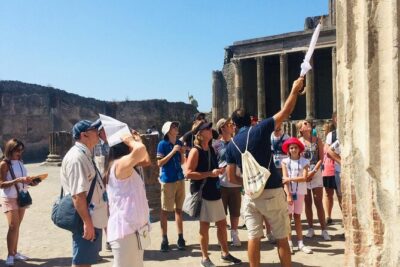
Pompeii and Herculaneum Small Group Tour with an Archaeologist
Read our review →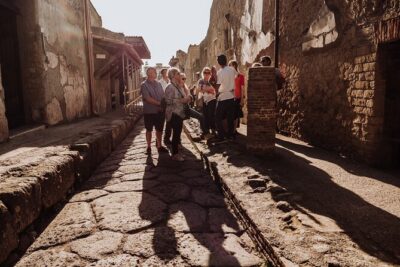
Herculaneum Small Group Tour and Ticket With an Archaeologist
Read our review →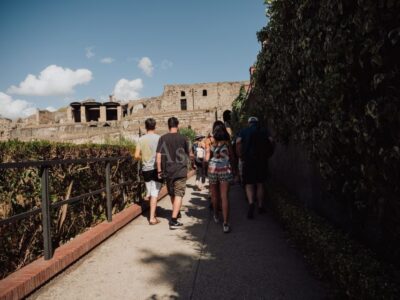
Pompeii & Herculaneum with Archaeologist Guide
Read our review →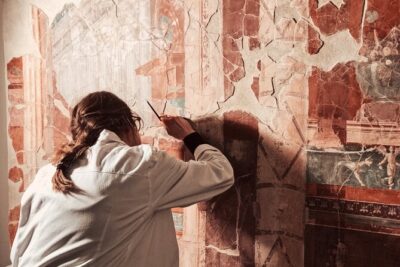
Pompeii Private Tour with an Archaeologist and Skip The Line – 3 hours
Read our review →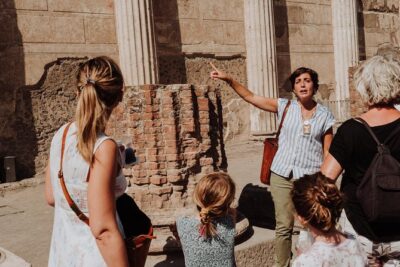
Pompeii Private Tour with an Archaeologist and Skip The Line
Read our review →Browse the lists this tour appears in