
Reviewed · POMPEII TOURS WITH AN ARCHAEOLOGIST
Herculaneum: Skip-the-Line Guided Tour with Archaeologist
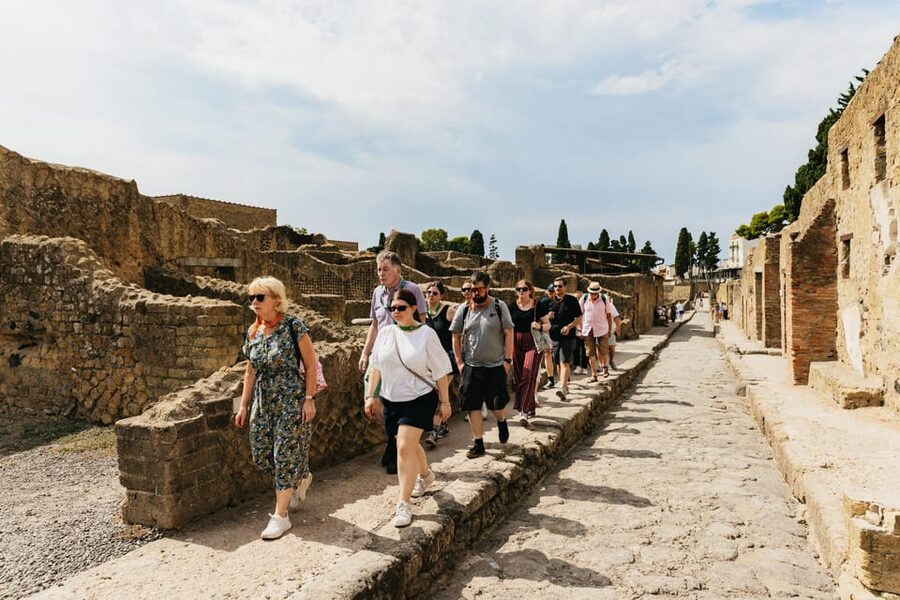
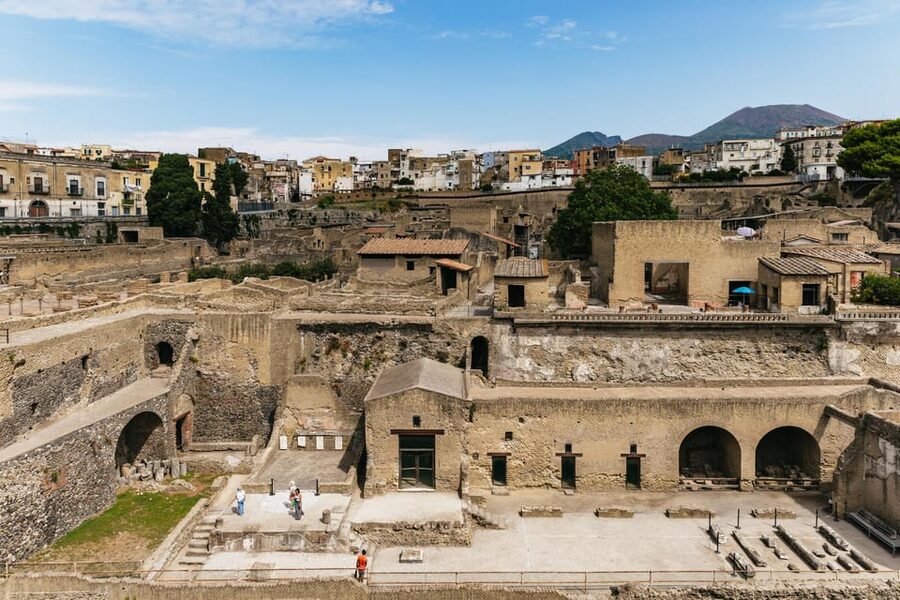
Herculaneum gives you something Pompeii cannot: Roman homes preserved with startling detail beneath volcanic mud. In two hours, an archaeologist leads you from the waterfront to elegant houses, baths, temples, mosaics, paintings, and carbonized wood, explaining how Vesuvius ended this seaside town almost instantly.
I like the archaeologist guide, especially when guides such as Luciano, Diego, Teresa, and Angelo use photographs or books to show what the city looked like before and after the eruption. I also like the skip-the-line entry, since your time goes toward the ruins rather than the ticket queue.
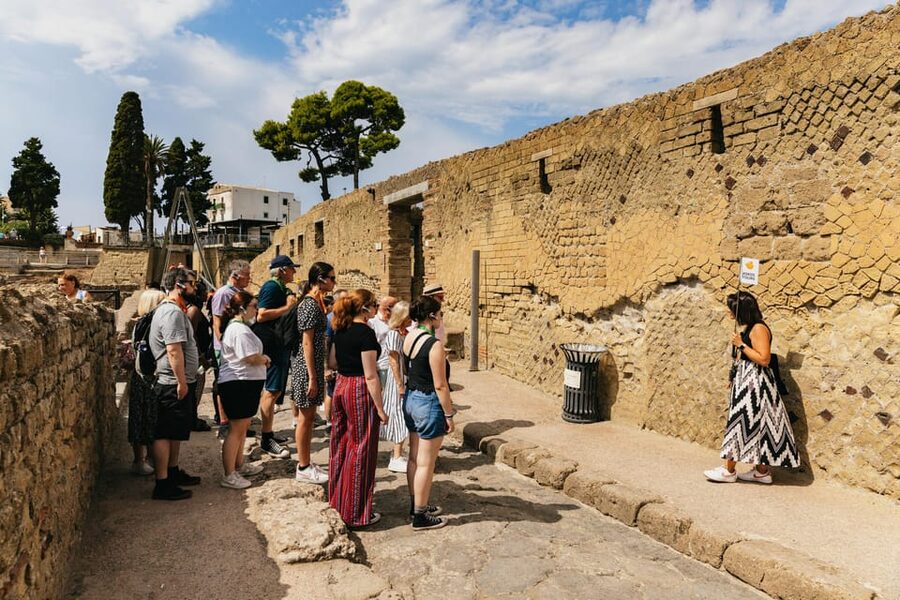
The main consideration is pace. Two hours covers many highlights, but the site is large and the tour can feel brisk. Groups have sometimes reached about 15 to 20 people, and the audio can be harder to follow from the back. Book a morning start if you want time to explore alone afterward.
Key points to know before booking
- The waterfront is the emotional center: See the boathouses and the remains of more than 300 people who tried to escape toward the sea.
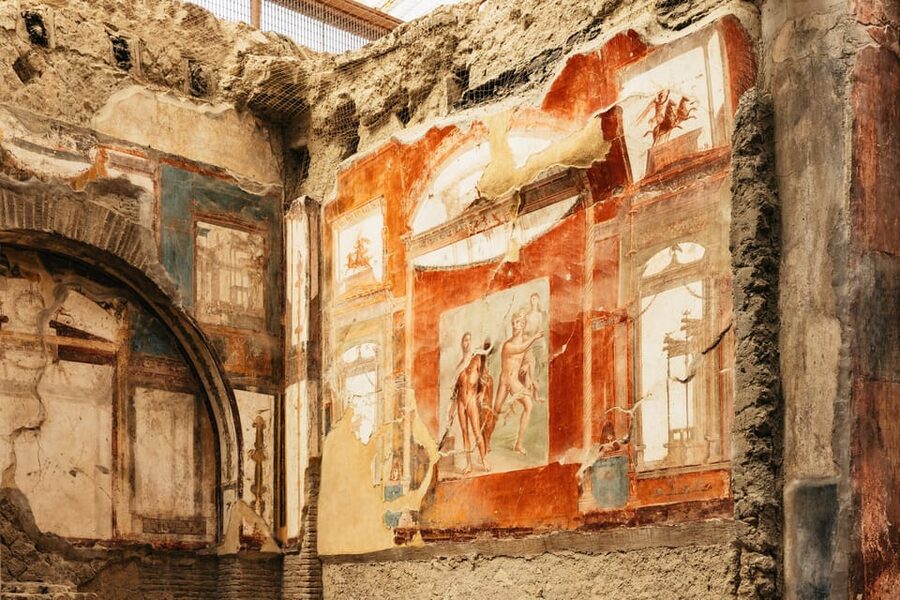
- Roman interiors survive unusually well: Expect mosaics, wall paintings, ceramics, marble, and carbonized wood.
- The guide shapes the experience: Luciano Leone is known for energetic explanations and visual material, while Diego, Teresa, Angelo, and others bring their own archaeological focus.
- The route covers major buildings: Visit the baths, Forum area, Temple of the Augustales, House of Neptune and Amphitrite, and several private homes.
- It is not a relaxed stroll: Uneven ruins, sun exposure, and a two-hour schedule make closed shoes, water, sunscreen, and a hat sensible.
- The price includes more than entry: At about $53, you get admission, an archaeologist, a guided visit, and headsets, but not transportation or food.
Why Herculaneum feels different from Pompeii
Pompeii spreads across a much larger area, while Herculaneum feels more compact and concentrated. That does not make it less important. In many ways, it gives you a sharper view of domestic Roman life because the eruption preserved upper floors, wooden fittings, decorated rooms, and household objects with remarkable detail.
Herculaneum was a port town with wealthy merchants and members of the local nobility. Its streets, houses, baths, and public buildings show a community built around business, leisure, family life, and status. Your guide helps you read those clues instead of simply walking past old walls.
The disaster also unfolded differently from Pompeii. Herculaneum was overwhelmed by hot volcanic material and mud, which buried the town quickly. That fast burial helped protect paintings, mosaics, ceramics, marble, and even wood that would normally have rotted away.
This contrast is one of the strongest reasons to visit both sites. Pompeii gives you scale and a broad picture of a Roman city. Herculaneum gives you close detail. Guides often compare the two, and this makes the second visit more rewarding if you have already seen Pompeii.
More Herculaneum tours:
- Herculaneum Small Group Tour and Ticket With an Archaeologist
★ 5.0 · 994 reviews - Herculaneum: Skip-the-Line Entry Ticket with Audio Guide
★ 4.3 · 870 reviews - From Naples: Pompeii & Herculaneum with Archaeologist Guide
★ 4.8 · 665 reviews
Meeting at the ticket office in Ercolano
You meet at the ticket office of the Herculaneum ruins, where the guide holds an Askos Tours sign. Check the exact meeting point carefully before setting off. One booking location shown in an app was reported to be roughly 300 meters away from the actual ticket booth, so the ticket office is the useful landmark.
Transportation is not included. You need to make your own way to the archaeological site, and the tour begins at the entrance rather than in Naples. The starting location is listed as Via dei Papiri Ercolanesi.
Bring a passport or valid identity card. It is part of the entry requirements, and EU citizens aged 18 to 25 may qualify for the reduced admission price of 2 euros. Standard adult admission is listed as 16 euros, included in the tour price.
The tour is offered in English, Italian, German, Spanish, and French. Headsets are included, which matters when your guide is speaking beside a busy path or when the group spreads out through a narrow Roman street.
The waterfront and the first view of the disaster

The waterfront is one of the most affecting places on the route. More than 300 people died there while trying to escape toward the sea, and their remains are connected with the boathouses near the ancient shore.
This is not just a dramatic opening. It changes how you understand the eruption. Instead of imagining a distant mountain event, you see the final point of a desperate attempt to flee. Your guide explains the blast and the way volcanic material reached the town, giving human meaning to the ruins around you.
The waterfront also helps explain Herculaneum’s identity as a port town. The city was not merely a collection of grand villas. It supported trade, local business, public life, and families with very different levels of wealth.
The area can be emotionally heavy, especially for children. A good guide keeps the explanation clear and respectful rather than turning the deaths into spectacle.
The Samnite House and Roman domestic life
The Samnite house provides an early look at private architecture and social rank. Herculaneum’s houses are valuable because they show more than foundations. You may see traces of painted walls, decorative floors, doorways, courtyards, and household arrangements that help explain how rooms worked.
This is where an archaeologist adds real value. A bare wall can be difficult to interpret on your own. Your guide can point out where decoration, furniture, and family activity once fit into the building, then connect the space to Roman customs.
The route also includes Casa dei Cervi, or the House of the Deer. This is one of the grander residences associated with Herculaneum’s wealthy residents. Its name comes from the sculptural decoration found there, and the house helps show how affluent families used art and spacious rooms to signal their position.
You will not simply see a series of empty rooms. You will compare modest architectural details with the grander houses later in the tour. That comparison is one of the best ways to understand the gap between ordinary residents and the town’s elite.
More Pompeii tours led by an archaeologist:
- Pompeii: Private Tour with an Archaeologist
★ 4.9 · 168 reviews - Herculaneum Private Tour with an Archaeologist
★ 5.0 · 132 reviews - Pompeii and Herculaneum led by an Archaeologist with private transport
★ 5.0 · 78 reviews - Pompeii and Herculaneum Private Walking Tour with an Archaeologist
★ 5.0 · 77 reviews
The House of Neptune and Amphitrite
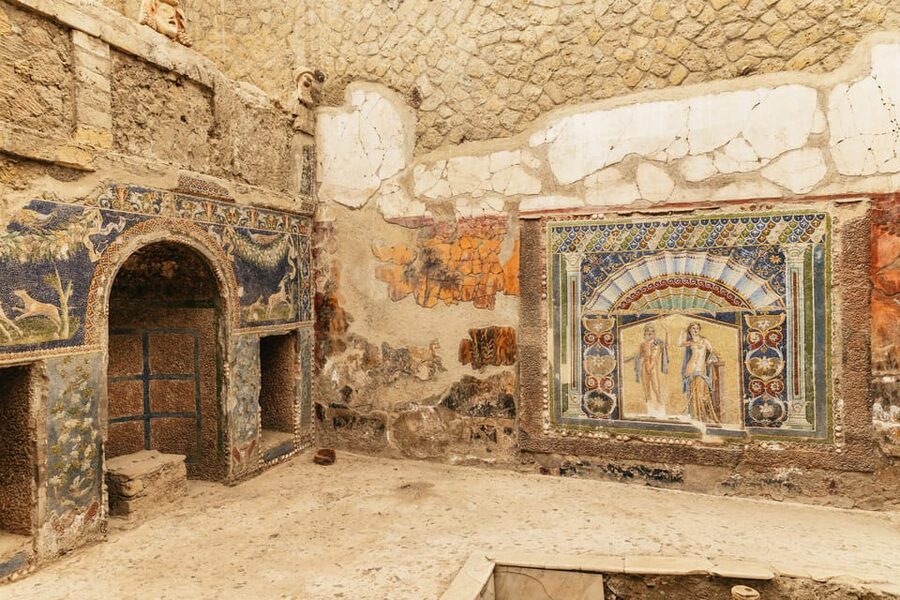
Casa di Nettuno ed Anfitrite is among the tour’s most important stops. Its mosaic decoration gives you an immediate sense of Roman taste, color, and wealth. The House of Neptune and Amphitrite is especially memorable because the preserved interiors feel more like rooms than archaeological outlines.
Look closely at the mosaic work and the decorative surfaces. The materials survived because the eruption buried them rapidly, protecting them from centuries of weather and later rebuilding. Your guide explains what you are seeing and why the preservation here is so unusual.
This is also a good place to pay attention to the difference between original material and modern protection. The site is an active archaeological area, so some surfaces may be shielded or partly restricted. You should expect conservation measures rather than unrestricted access to every room.
A guide such as Luciano Leone has used books and photographs to compare the remains with reconstructions and present-day views. That visual help can make patterns, missing roofs, and altered streets easier to grasp.
Baths, Forum, and the Temple of the Augustales
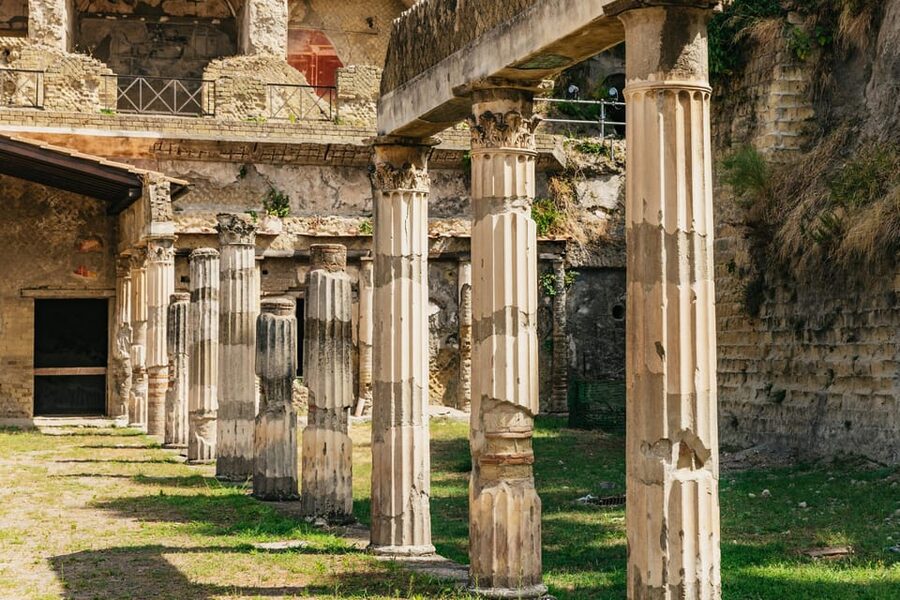
The thermal baths reveal how much public life depended on shared facilities. You see more than bathing rooms. The baths point to Roman ideas about cleanliness, social contact, routine, and leisure.
The Forum area gives you a sense of civic organization, although Herculaneum does not present the same broad open scale as Pompeii. Here, your guide helps identify how public buildings fit together and how the town’s religious and administrative life worked.
The Temple of the Augustales, also called the Sacellum of the Augustales, is a key religious building on the route. The Augustales were connected with the worship of the emperor, so this site links local life with the political structure of the Roman world.
This is the point where a good explanation prevents the tour from becoming a list of names. The building matters because it shows how religion, public honor, and imperial loyalty met in a small Roman community.
More houses, more clues about status
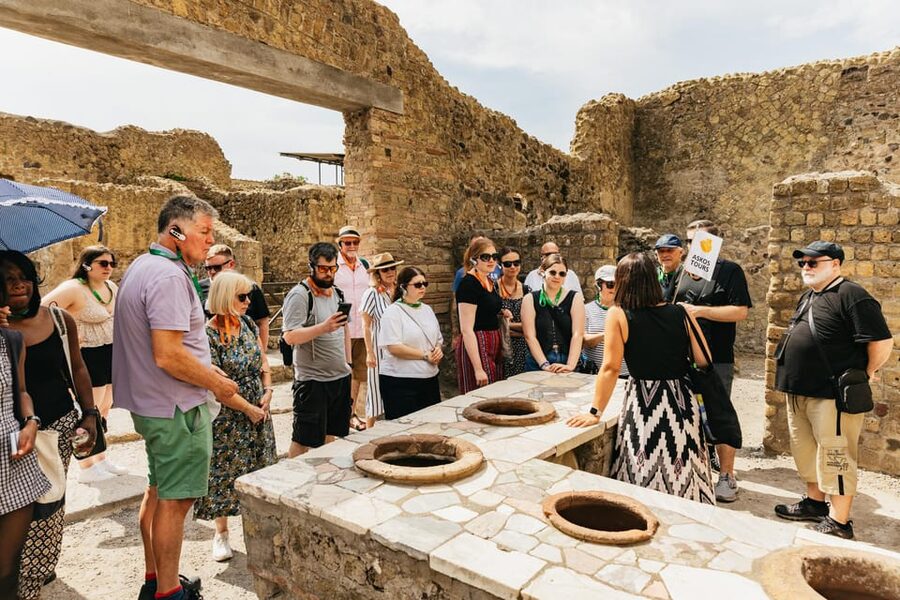
The itinerary continues through the House of Skeletons, Casa dell’Albergo, and Casa del Salone Nero. Each adds another piece to the picture of Herculaneum’s residents.
The House of Skeletons carries a grim reminder of the eruption and the people caught inside the town. Casa dell’Albergo and Casa del Salone Nero help you compare different kinds of domestic architecture, decorative rooms, and signs of status.
You may find that the private houses are more memorable than the public monuments. A painted wall or a preserved wooden element can make Roman life feel close and practical. You begin to notice storage, entrances, courtyards, decoration, and the way rooms directed movement through the house.
The tour does not promise to linger over every building. That is the tradeoff. You gain a strong overview, but if one house catches your attention, you may want to return to it after the guided portion.
The Gymnasium and the preserved materials
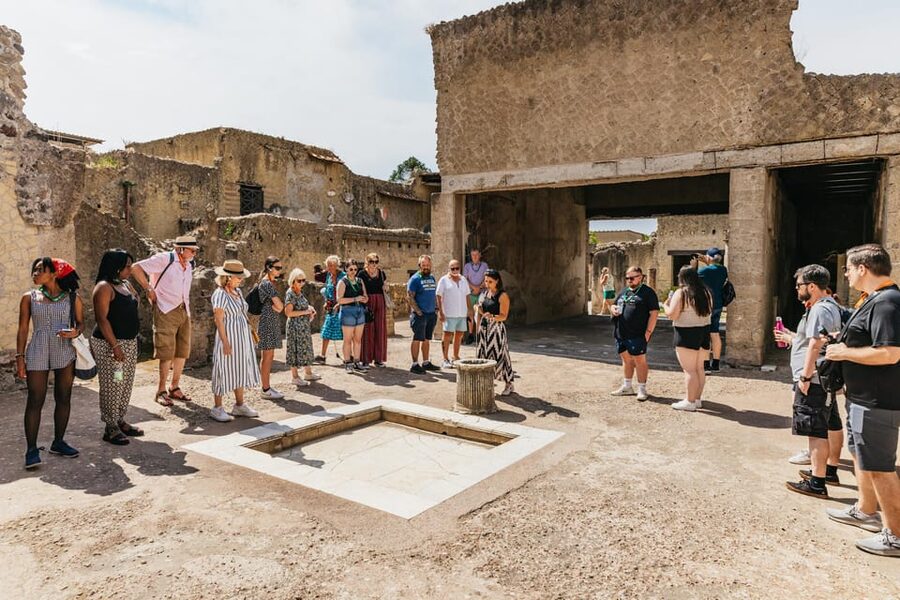
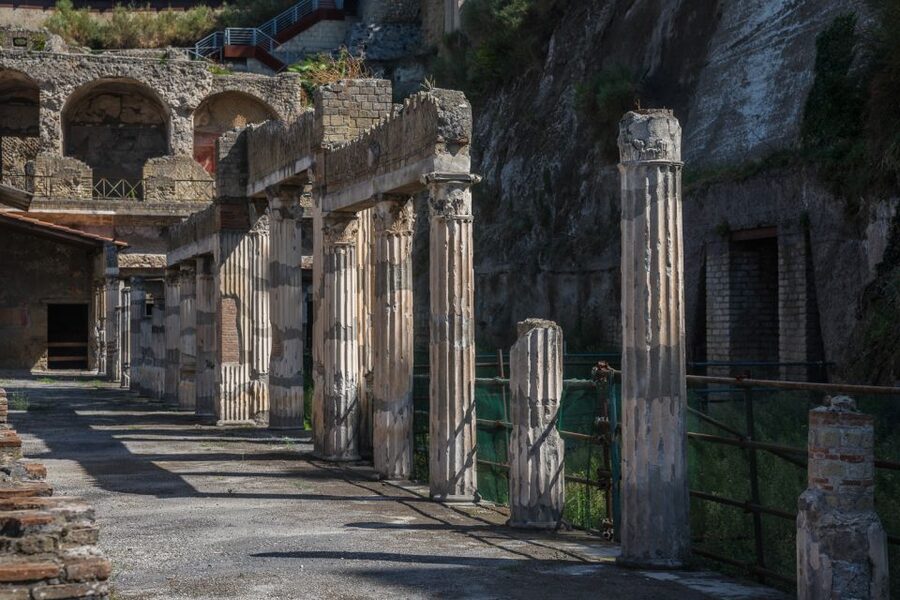
The Gymnasium is another important part of the site, with spaces connected to exercise, education, and public life. One guide took the group into a tunnel toward the center of the Gymnasium, where a swimming pool would have been. Access and routing can vary, so treat this as a possible feature rather than a guarantee.
Across the ruins, you will see stone and marble alongside ceramics, paintings, and mosaics. Carbonized wood is especially striking. Wooden doors, beams, and fittings rarely survive in ancient towns, but the eruption changed the conditions enough to preserve some of these fragile materials.
This variety makes Herculaneum rewarding for people who are not normally drawn to archaeology. You are not looking only at walls. You are seeing the physical remains of ordinary materials that once filled Roman houses.
What the archaeologist adds
The strongest part of this experience is the guide. The tour has earned a 4.8 rating from 3,439 reviews, and the praise centers heavily on the guides’ ability to explain the site with energy and clarity.
Luciano Leone is frequently singled out for his enthusiasm, humor, and use of photographs and books. He is also described as comparing Herculaneum and Pompeii in a way that makes the differences easy to follow. Diego has been praised for clear English and a strong sense of care for the site. Teresa has been especially effective with families, including a group with an eight-year-old child.
Other named guides include Angelo, Anna, Alfredo, Roberta, Giulia, Giovanni, Bruno, Gerardo, and Yolanta. The exact guide depends on the date and language, so you cannot assume you will get a particular person. You can, however, expect an archaeologist-led visit rather than a simple walk with a generic audio guide.
The style may vary. Some guides use humor and theatrical storytelling. Others give a calmer, more measured explanation. One reported drawback was that a guide sometimes walked ahead of the group, causing the headset signal to fade for people at the back.
Group size can also affect the experience. Groups of about 15 to 20 people have been reported. That is manageable, but not intimate. Stay near the guide if you want every explanation, especially in busy or narrow areas.
Two hours, then time on your own
The guided visit lasts two hours, and it covers most of the major highlights. That is enough time to understand the town’s layout, see important houses and public buildings, and learn how the eruption affected Herculaneum.
Your admission remains valid for the day, so you can continue exploring after the guided portion. This is a major advantage. You can use the guide to get your bearings, then return to areas that deserve more time.
Timing matters. A late afternoon tour may leave little time to wander afterward if the archaeological site closes soon after the tour. One visitor found that a 2:30 p.m. start left no spare time before a 5 p.m. closing. If you want a quiet second look, choose a morning slot when available.
The site is exposed to the sun and the tour runs in rain or shine. Wear closed-toe shoes, not delicate sandals, since the ancient paths can be uneven. Bring sunscreen, a hat, and a raincoat when the forecast calls for wet weather.
Large bags and luggage are not allowed. Children must be accompanied by an adult, and the experience is not suitable for wheelchair users or people with mobility impairments.
Is $53 a fair price?
At $53 per person, the price is reasonable if you want the site to make sense rather than simply walk through it. Admission is included, along with a two-hour guided tour by an archaeologist and headsets. The adult entry fee alone is listed as 16 euros, so the remaining cost pays for interpretation, organization, and skip-the-line access.
The value is strongest when you are visiting Herculaneum for the first time. Without context, it is easy to miss why one house matters, what a decorated room tells you, or how the eruption preserved wood and paintings. A guide turns those details into a connected story.
The value is weaker if you prefer to read every sign at your own pace or spend hours photographing individual rooms. In that case, use the tour as an introduction, then stay for independent exploration. Since admission lasts all day, you have that option.
Who should book this Herculaneum tour?
I would book this tour if you want clear historical context, efficient coverage, and an archaeologist who can answer questions. It suits first-time visitors, families with older children, and anyone comparing Herculaneum with Pompeii.
It is also a good choice if you have limited time in Campania. Two hours gives you a structured route through the most important parts of the site without requiring you to plan every stop yourself.
I would think twice if you need step-free access, dislike uneven ground, are traveling with large luggage, or want a slow and silent archaeological visit. The site is exposed, the route moves at a steady pace, and the group may be larger than expected.
For most people, the best plan is a morning tour followed by independent time. You get the guide’s explanations while your attention is fresh, then revisit the House of Neptune and Amphitrite, the waterfront, or the houses that interested you most.
FAQ
Where does the Herculaneum tour meet?
Meet at the ticket office of the Herculaneum ruins on Via dei Papiri Ercolanesi. Your guide will hold an Askos Tours sign.
Is transportation from Naples included?
No. Transportation is not included, so you must make your own way to the Herculaneum archaeological site.
How long does the guided tour last?
The guided tour lasts two hours. Your admission is included, and you may continue exploring the site afterward during opening hours.
What languages are available?
The tour is offered in English, Italian, German, Spanish, and French.
What is included in the price?
The price includes admission to Herculaneum, the guided tour, an archaeologist guide, and headsets. Food, drinks, and transportation are not included.
What should I bring?
Bring a valid passport or identity card, comfortable closed-toe shoes, sunscreen, and a hat. A raincoat is useful because the tour operates in all weather.
Can I bring luggage or a large bag?
No. Luggage and large bags are not allowed at the site.
Is the tour suitable for wheelchair users?
No. The experience is not suitable for wheelchair users or people with mobility impairments. Children must be accompanied by an adult.
Should you book it?
Book it if you want Herculaneum explained by someone who can connect the houses, temples, art, and eruption into one clear story. The guide is the main reason to choose this experience, and names such as Luciano, Diego, Teresa, and Angelo show the strong archaeological focus available across the schedule.
Choose a morning departure when possible, stay near the guide, and plan extra time after the two-hour walk. For about $53, you get efficient entry, expert interpretation, and a full day of site access. That is a solid deal for a first visit, especially if you want Herculaneum to feel like a lived-in Roman town rather than a silent field of ruins.
More Skip-the-Line Tickets in Naples
- Mount Vesuvius: Skip-the-Line Ticket and Smart Digital Guide
★ 4.2 · 2,780 reviews - From Naples: Pompeii Skip-the-Line Entry Ticket and Tour
★ 4.4 · 2,753 reviews - Pompeii: Skip-the-Line Entry Ticket with Audio Guide or Tour
★ 4.1 · 1,364 reviews - From Naples: Pompeii Guided Tour with Skip-the-Line Tickets
★ 4.8 · 1,171 reviews
Just added around Naples
- Naples: Guided Walking Tour★ 4.7 · 63 reviews
- Wine tasting in the Vesuvius National Park★ 3.5 · 4 reviews
- Naples: Pompeii and Vesuvius Skip-the-Line Day Trip★ 3.8 · 32 reviews
- Visit the Museum MANN with a professional guide★ 5.0 · 3 reviews
- Walking-tour of Naples hystorical Centre★ 4.4 · 4 reviews
- Vesuvius – Herculaneum – Pompeii Excavations Tour★ 4.2 · 9 reviews
- Pompeii: Vesuvius at Sunset★ 3.5 · 31 reviews
- Vesuvius and Herculaneum from Naples★ 3.7 · 29 reviews
Pompeii Tours with an Archaeologist, compared.
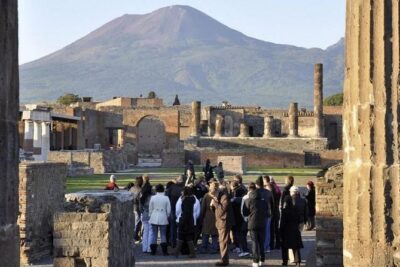
Pompeii Small Group Tour with an Archaeologist
Read our review →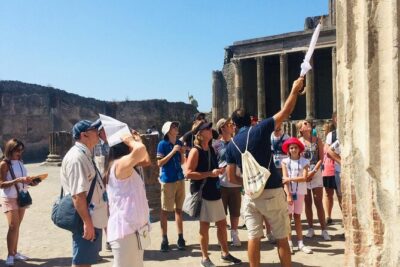
Pompeii and Herculaneum Small Group Tour with an Archaeologist
Read our review →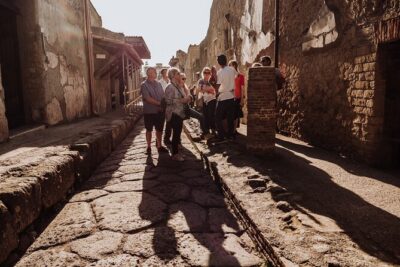
Herculaneum Small Group Tour and Ticket With an Archaeologist
Read our review →
Pompeii & Herculaneum with Archaeologist Guide
Read our review →
Pompeii Private Tour with an Archaeologist and Skip The Line – 3 hours
Read our review →
Pompeii Private Tour with an Archaeologist and Skip The Line
Read our review →
Pompeii 2h Small-Group Tour with Expert Archaeologist
Read our review →Browse the lists this tour appears in