
Reviewed · POMPEII TOURS WITH AN ARCHAEOLOGIST
Herculaneum Small Group Tour and Ticket With an Archaeologist
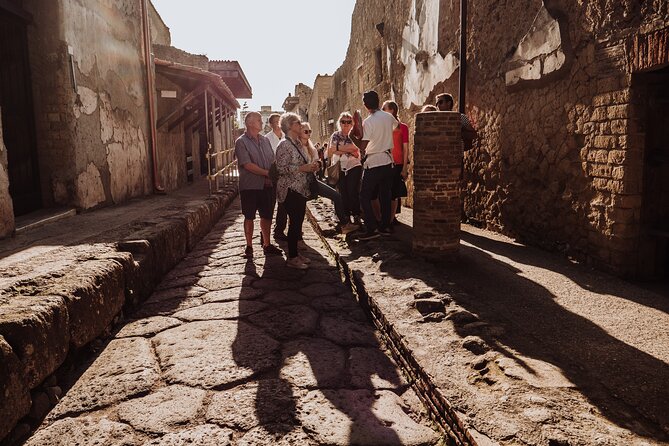
Herculaneum feels more intimate than Pompeii, and this tour gets you quickly into the town’s best-preserved homes, baths, and public buildings. The archaeologist guide adds the details you could easily miss, from carbonized door frames to the wooden partition that survived the eruption.
I like the small-group format, which makes it easier to hear explanations and ask questions. I also like the practical use of headsets and skip-the-line entry. The main drawback is the pace: eleven stops in roughly two hours means plenty of standing, steady walking, and limited time to explore the museum or linger alone afterward.
Key points to know before booking
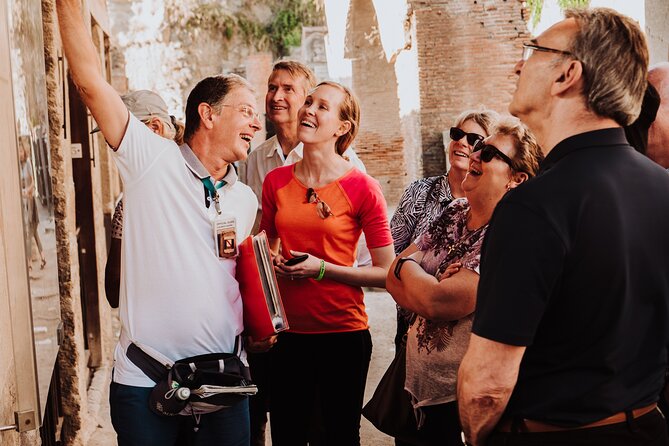
- Archaeologist-led visit: Guides such as Luciano Leone, Paulo, Julia, Sergio, and Antonella have been praised for clear explanations, humor, and strong knowledge of the site.
- Eleven focused stops: The route covers important houses, the baths, the Augustales building, and the terrace of M. Nonius Balbus.
- Up to 20 people: Groups may be smaller, but the stated maximum is 20 people per guide.
- About two hours: The planned pace gives you a strong overview rather than a slow, detailed study of every open building.
- Easy public transport: The Circumvesuviana station at Corso Resina is about a 10-minute walk from the meeting point.
- Useful equipment included: Your entry ticket, guide, assistance, and headset are included. Food, drinks, and private transport are not.
Why Herculaneum rewards a guided visit
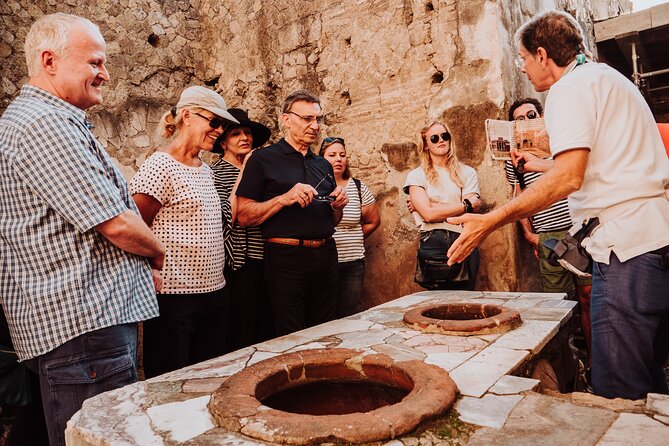
Herculaneum was buried by the eruption of Mount Vesuvius in AD 79, just as Pompeii was, but the two sites feel different. Herculaneum is smaller and more compact, so you can see an unusually clear picture of Roman domestic life in a short visit.
The preservation is the real surprise. Along with painted walls and patterned floors, the site retains carbonized wood, including doors, beams, and a remarkable wooden room divider. That fragile material gives the ruins a more immediate quality than a field of stone walls.
I find Herculaneum particularly rewarding when a guide explains how the pieces fit together. A fresco is not only decoration. A bath is not only a room with a curved wall. The guide helps you connect architecture, status, religion, business, and family life.
An audio guide can give you facts, but it cannot always point out a small feature at the right moment or adjust the explanation to the pace of the group. The strongest guides on this tour, including Luciano Leone, have used visual reconstructions and personal archaeological experience to show how the buildings may once have looked.
That said, a live guide is only as good as the person assigned to your group. Most of the available feedback is very strong, but one visitor found the guide too long-winded and said the tour ran over time, leaving less opportunity for the museum. Another found the guide spoke too quickly. That is worth keeping in mind if you prefer a quiet, self-directed visit.
More Herculaneum tours:
- Herculaneum: Skip-the-Line Guided Tour with Archaeologist
★ 4.8 · 3,439 reviews - Herculaneum: Skip-the-Line Entry Ticket with Audio Guide
★ 4.3 · 870 reviews - From Naples: Pompeii & Herculaneum with Archaeologist Guide
★ 4.8 · 665 reviews
Meeting at Corso Resina and entering the ruins
The meeting point is the Herculaneum ticket office at Corso Resina 187 in Ercolano. If you come by train, use the Circumvesuviana station at Corso Resina 1. The station is about a 10-minute walk away.
By car, you can approach via Pignalver. An unguarded car park is located very close to the meeting point, though you should treat it as basic parking rather than a supervised facility.
The tour ends inside the archaeological park. This matters because you can continue looking around after the guided portion, assuming opening conditions and your available time allow it. The guide meets you at the entrance, handles the included entry arrangement, and takes the group into the ruins.
Allow a little extra time to find the meeting place. A few minutes late may be manageable, but it is not something to count on. The tour operator has helped people who were delayed by a few minutes or missed a train, but the safest plan is to arrive early.
House of the Deer: an elegant opening stop
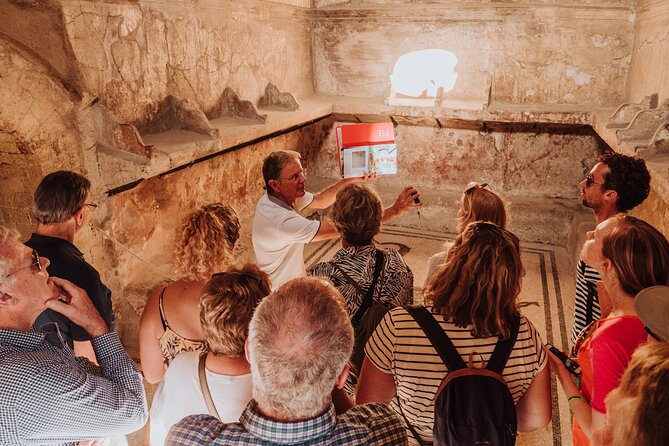
The House of the Deer takes its name from marble statues of stags found in the peristyle, or garden courtyard. It introduces one of Herculaneum’s most useful themes: this was not only a town of ordinary workers. Some homes were large, carefully designed, and decorated to signal wealth.
The house gives your guide a chance to explain Roman domestic layout. You will likely hear about the relationship between rooms, courtyards, decoration, and outdoor space. The planned stop is about 10 minutes, so expect a concise explanation rather than a full architectural study.
M. Nonius Balbus and public honor
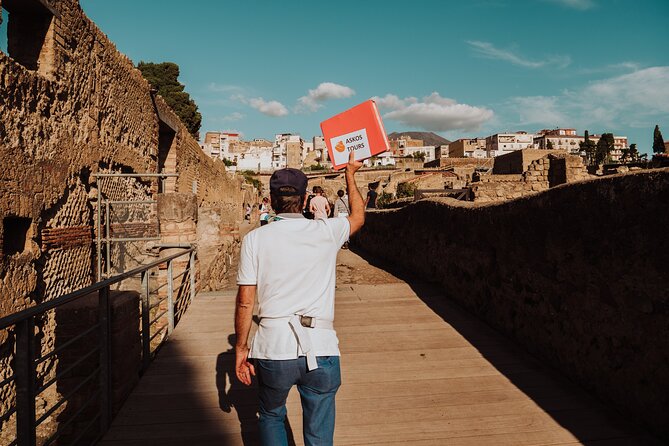
At La Terrazza di M. Nonio Balbo, the tour shifts from private life to civic power. M. Nonius Balbus was a major benefactor who restored and built public buildings in Herculaneum.
After his death, the city honored him as a patron. His funeral altar carries a long inscription describing those honors. This is a useful reminder that Roman cities depended heavily on wealthy residents who funded public works and gained prestige in return.
The terrace also helps explain how the city remembered important people. Your guide can make the inscription less abstract by connecting it to the political and social system behind the building projects.
More Pompeii tours led by an archaeologist:
- Pompeii: Private Tour with an Archaeologist
★ 4.9 · 168 reviews - Herculaneum Private Tour with an Archaeologist
★ 5.0 · 132 reviews - Pompeii and Herculaneum led by an Archaeologist with private transport
★ 5.0 · 78 reviews - Pompeii and Herculaneum Private Walking Tour with an Archaeologist
★ 5.0 · 77 reviews
The College of the Augustales and emperor worship
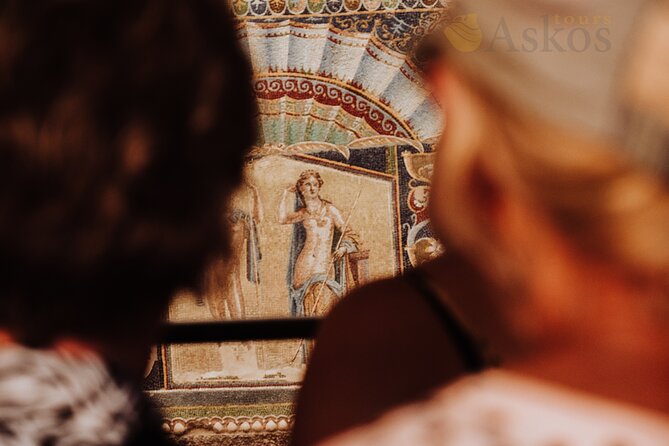
The College of the Augustales was likely linked to the cult of Emperor Augustus. It may also have served as the headquarters of the local Augustales or perhaps even as a local civic building.
This stop is valuable because it shows how religion and government overlapped in Roman life. Worship of the emperor was not simply a private belief. It could also reinforce loyalty, civic identity, and the position of local leaders.
The building is scheduled for about 10 minutes. Listen for the guide’s explanation of what is certain and what remains debated. Ancient sites often come with competing interpretations, and a good archaeological guide will separate evidence from theory.
Casa del Rilievo di Telefo and private access
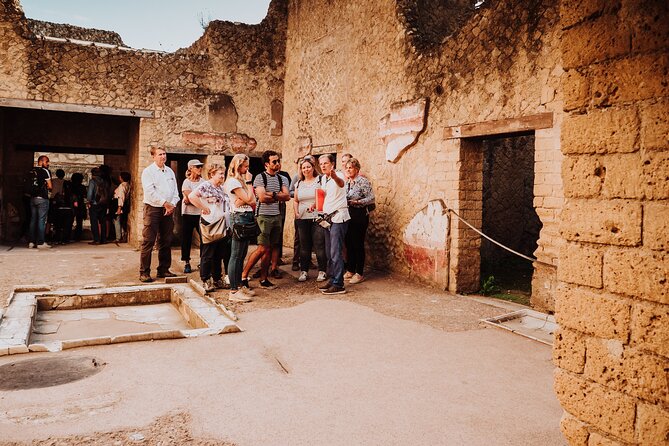
The House of the Relief of Telephus may have belonged to Marcus Nonius Balbus, the same prominent figure honored at the terrace. Its unusual feature is a private access route to the adjoining Suburban Baths.
That private connection says a great deal about comfort and status. The baths were public facilities, but a home with its own access could offer convenience and privacy. It also gives you a glimpse of how separate buildings in the Roman town could function as part of one household’s social world.
The planned stop is short, so do not expect to inspect every room. The guide’s explanation is the main value here, especially if you want to understand why a doorway or passage matters.
The wooden partition in the House of the Wooden Partition
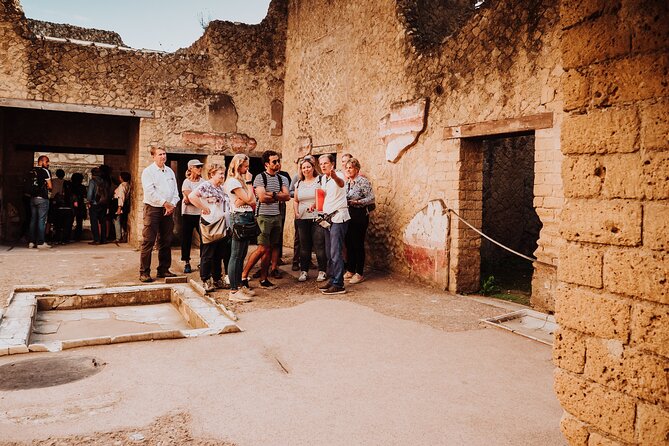
The House of the Wooden Partition contains one of Herculaneum’s most memorable surviving features: an elegant carbonized wooden divider. Wood rarely survives at ancient sites, which makes this stop especially useful for understanding that Roman interiors were not made only of stone and plaster.
The partition also helps correct a common mistake. When you see a Roman ruin, it is easy to imagine bare masonry. In reality, buildings included doors, shutters, furniture, screens, beams, and other wooden elements. Herculaneum preserves some of those details in charred form.
Your guide may point out how this feature affected the arrangement of the house. It is the kind of small detail that can disappear if you walk through alone without knowing where to look.
The House of the Skeleton and the human cost of eruption
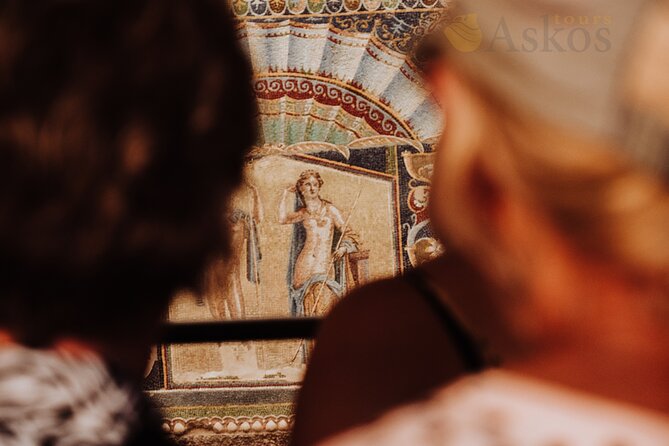
The House of the Skeleton probably formed from three smaller buildings joined together. It received its name after human remains were discovered in an upper-floor room in 1831.
This stop changes the mood. Herculaneum is fascinating because it preserves domestic life, but the site also records a catastrophe that killed residents and buried their town. A guide can discuss the building’s layout while giving suitable context to the human remains.
The planned 10-minute visit does not allow much time for extended reflection. Still, it is an important point on the route, especially for understanding how archaeologists identify changes to a building over time.
Central Thermae and the practical side of Roman life
The Central Thermae were built around the beginning of the first century AD. As was common at the time, men’s and women’s baths had separate entrances.
Roman baths were places for washing, exercise, social contact, and routine. They also show how much planning went into public comfort. The division between men’s and women’s facilities is a small but useful detail, and the guide can place the baths within the larger daily rhythm of the town.
This part of the tour involves standing and walking on uneven archaeological surfaces. If you have trouble remaining on your feet, keep that in mind. One particularly useful point from the experience feedback is that the guide may keep a brisk pace so the group can cover the scheduled route.
The Black Salon and a grand entrance
The House of the Black Salon is one of Herculaneum’s more luxurious residences. Its monumental entrance still preserves carbonized doorposts and a lintel.
The entrance is a good example of how the tour moves from broad history to physical evidence. You are not only told that the home was wealthy. You can see the scale of the entrance and the surviving wooden elements that once formed part of it.
The name refers to the black hall, a room whose decoration helped define the character of the house. The guide’s interpretation is important here because the rooms may not be immediately obvious to a first-time visitor. A quick explanation can turn a dark wall and damaged surface into evidence of taste, expense, and social position.
Casa Sannitica and the Roman house plan
Casa Sannitica follows an arrangement associated with the Samnites, an ancient people connected with the mountainous part of central Italy. Its atrium is surrounded by a gallery with Ionic columns, and the rooms retain fresco decoration.
This house helps you see how architectural styles changed and overlapped. Herculaneum was not frozen in one single period. Buildings were adapted, decorated, and reshaped as families and customs changed.
Look up at the gallery and pay attention to the relationship between the atrium and surrounding rooms. The group will spend about 10 minutes here, so the guide will focus on the main architectural points rather than every decorative fragment.
Casa del Bel Cortile and an unusual courtyard
The House of the Beautiful Courtyard is unusual because it has a courtyard with a staircase and stone balcony instead of the more familiar atrium arrangement.
That difference is easy to miss if you expect every Roman house to follow one standard plan. The building is a good reminder that ancient homes were not identical. Owners adapted designs to the plot, the period, their needs, and perhaps their budget.
I like this stop because it gives the guide a chance to compare house plans. You can better understand the previous residences after seeing one that breaks the usual pattern.
The House of the Grand Portal and the final overview
The House of the Grand Portal is a large domus in the center of the archaeological area. It includes columns, frescoes, several rooms, and more carbonized wooden remains.
As the final scheduled stop, it works as a broad recap of the tour. You have seen rich homes, public baths, religious buildings, civic honors, and evidence of the eruption. The house brings many of those themes together in one place.
The route gives each stop about 10 minutes. That is enough to see the main features and hear a focused explanation, but not enough to inspect every fresco or room at length. If you want a slower visit, plan to remain inside after the guided portion.
What the two-hour pace feels like
Two hours is an efficient introduction. You cover eleven major stops, hear the basic story of the town, and get a clear sense of Roman domestic life without committing half a day to the site.
The tradeoff is that you will spend much of the tour standing. There are limited opportunities to sit, and the route involves walking across an archaeological site. Wear practical shoes and dress for the weather. The tour operates in all weather conditions, so rain protection matters.
Headsets are included and have been useful for groups of different sizes. They also help when the guide needs to speak while the group is spread out around a room or courtyard. If you use hearing aids, tell the guide at the start. One guide regularly checked that a guest could hear properly, which is the sort of small courtesy that can make the visit much easier.
The maximum group size is 20, though some departures may be much smaller. A six-person group feels very different from a full group of 20. Ask questions when you can, but remember that the tour must keep moving to complete the route.
Price, value, and who should book
At $53.81 per person, the tour costs more than entering Herculaneum alone. The adult entry ticket is listed at 16 euros, with a reduced 2-euro ticket for EU citizens aged 18 to 25. The extra cost pays for the guide, assistance, headset, and the convenience of skip-the-line entry.
I think the price is fair if you want context and have only a short time in Ercolano. The archaeological details are not always obvious, and the best guides explain how the homes worked rather than simply naming rooms. Guides such as Luciano Leone, Paulo, Julia, and Sergio have been praised for clear pacing, humor, and enthusiasm. Luciano has also used his own visual material to show how buildings may have looked 2,000 years ago.
The tour is a good fit for first-time visitors, families with older children, and anyone choosing Herculaneum instead of Pompeii. It also suits people who want an overview before exploring on their own.
You may prefer the ticket-only option if you read ancient history comfortably, want to photograph at your own pace, or dislike fixed schedules. The one negative experience reported about the format involved a guide running overtime and reducing time for the museum. That risk is not a reason to reject the tour, but it is a reason to tell the guide early if you have a firm train or lunch plan.
Dogs are permitted in the archaeological park without breed or size restrictions, but they must be leashed or muzzled, and you must carry bags for waste. In the Antiquarium, Boat Pavilion, and houses with mosaic floors, dogs must be carried or placed in a suitable carrier.
Should you book this Herculaneum tour?
I would book it if you want the ruins to make sense quickly. The combination of an archaeologist guide, included entry, headsets, and a route through the site’s key houses offers strong value for a two-hour visit.
Book with realistic expectations. You are getting a brisk overview, not unlimited time in every room. Arrive early at Corso Resina, wear shoes suited to uneven ground, and plan extra time afterward if you want the museum or a slower look at the site.
If you prefer independent exploration, the ticket alone may suit you better. For most first visits, though, the guide adds the human stories and architectural clues that make Herculaneum far more than a collection of old walls.
FAQ
How long does the Herculaneum tour last?
The tour lasts approximately two hours.
Where does the tour meet?
The meeting point is the Herculaneum ruins ticket office at Corso Resina 187, 80056 Ercolano, Italy.
How can I reach the meeting point by train?
The Circumvesuviana train station is at Corso Resina 1 and is about a 10-minute walk from the meeting point.
Is admission to Herculaneum included?
Yes. The Herculaneum entry ticket is included in the tour price. The listed adult entry price is 16 euros, while EU citizens aged 18 to 25 pay 2 euros.
How large is the tour group?
The maximum group size is 20 people per guide. Some groups may be smaller.
Are headsets included?
Yes. Headsets are included, along with guidance, assistance, the entrance ticket, and a licensed guide with an archaeological background.
Can I cancel the booking?
You can cancel up to 24 hours before the experience starts for a full refund. Cancellations or changes made less than 24 hours before the start time are not accepted, and the experience may be changed or refunded if the minimum number of participants is not met.
Just added around Naples
- Naples: Guided Walking Tour★ 4.7 · 63 reviews
- Wine tasting in the Vesuvius National Park★ 3.5 · 4 reviews
- Visit the Museum MANN with a professional guide★ 5.0 · 3 reviews
- Walking-tour of Naples hystorical Centre★ 4.4 · 4 reviews
- Naples: Pompeii and Vesuvius Skip-the-Line Day Trip★ 3.8 · 32 reviews
- Vesuvius – Herculaneum – Pompeii Excavations Tour★ 4.2 · 9 reviews
- Pompeii: Vesuvius at Sunset★ 3.5 · 31 reviews
- Vesuvius and Herculaneum from Naples★ 3.7 · 29 reviews
Pompeii Tours with an Archaeologist, compared.
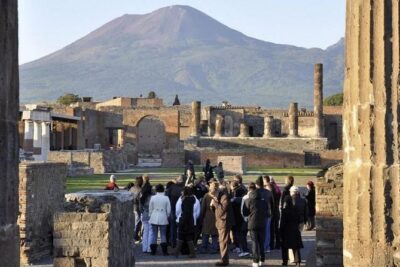
Pompeii Small Group Tour with an Archaeologist
Read our review →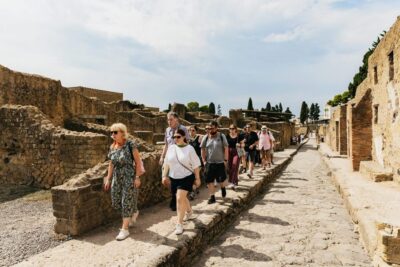
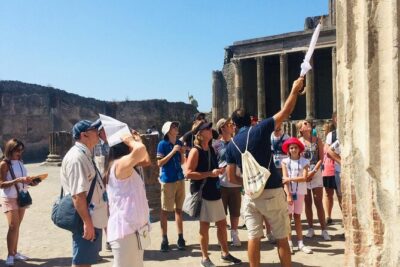
Pompeii and Herculaneum Small Group Tour with an Archaeologist
Read our review →
Pompeii & Herculaneum with Archaeologist Guide
Read our review →
Pompeii Private Tour with an Archaeologist and Skip The Line – 3 hours
Read our review →
Pompeii Private Tour with an Archaeologist and Skip The Line
Read our review →
Pompeii 2h Small-Group Tour with Expert Archaeologist
Read our review →Browse the lists this tour appears in