
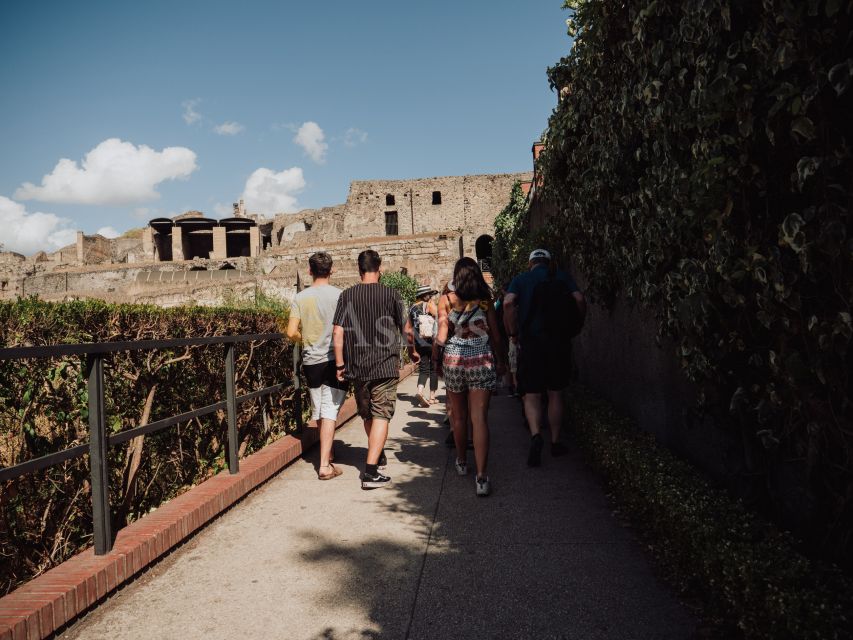
Reviewed · POMPEII TOURS WITH AN ARCHAEOLOGIST
From Naples: Pompeii & Herculaneum with Archaeologist Guide
Herculaneum and Pompeii tell two different stories of the same volcanic disaster. Herculaneum preserves carbonized wood, bright wall paintings, mosaics, and even a shoreline where more than 300 skeletons were found. Pompeii gives you the grand public spaces, busy streets, bakeries, bathhouses, and plaster casts that help explain daily Roman life.
I like the archaeologist-led walks, especially when guides such as Raphael, Roberta, Michele, and Gennaro turn small details into clear stories. I also like the skip-the-line entry and minibus transport, which make it possible to visit both sites in seven hours. The tradeoff is simple: two hours at each excavation gives you the best-known sights, but not every corner.
Key points to know before booking
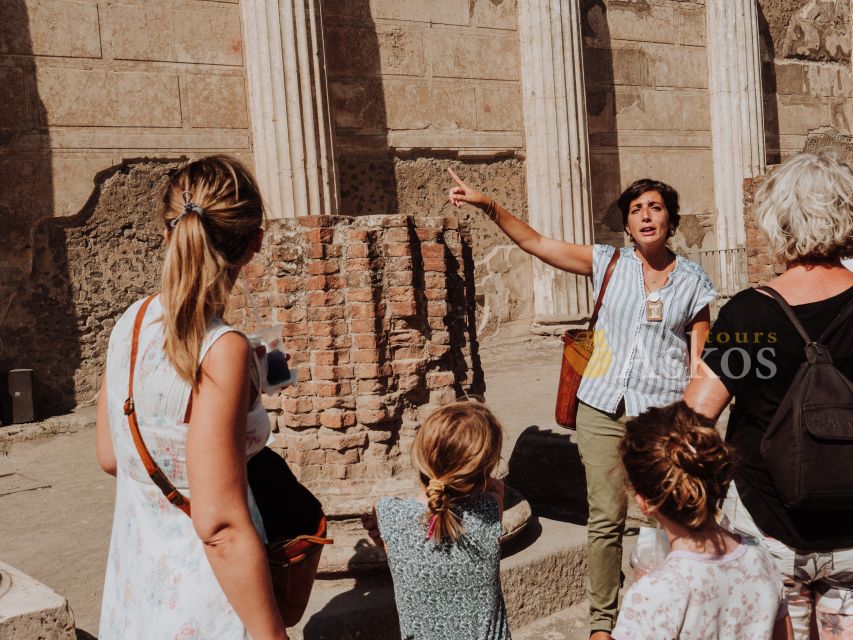
- Herculaneum comes first, with two hours for its unusually well-preserved houses, woodwork, mosaics, and ancient beachfront.
- Pompeii follows after a 40 to 45-minute break, with a two-hour guided route through the forum, homes, baths, bakery, brothel, and plaster casts.
- The group can reach 20 people, small enough for a personal feel but not a private tour.
- Skip-the-line tickets matter, especially when queues stretch outside the entrances.
- The route is physically demanding, with uneven ground, slopes, and significant stairs at both sites.
- The $168.79 price includes transport, entrance tickets, tolls, parking, and the guide, but not lunch.
Why seeing Herculaneum and Pompeii together works

If you have only one day near Naples, pairing these excavations makes good sense. Both towns were destroyed by Mount Vesuvius in 79 AD, but the volcanic material affected them in different ways.
Pompeii was covered in volcanic ash and pumice. Much of the city remains open to the sky, so you get a broad sense of its streets, public buildings, and neighborhood life. Herculaneum was buried under a much deeper mudflow, reportedly around 20 meters thick. That heavy covering helped preserve materials Pompeii often lost, including wooden doors, furniture, beams, and vivid wall decoration.
I find Herculaneum more intimate and visually complete. Its houses can feel closer to a Roman neighborhood than a collection of ruins. Pompeii is larger and more varied, with a forum, basilica, baths, shops, homes, and streets that show how a whole town functioned.
The contrast gives your guide something useful to explain. You are not simply visiting two versions of the same attraction. You are seeing how the eruption and burial conditions shaped what survived.
More Herculaneum tours:
- Herculaneum: Skip-the-Line Guided Tour with Archaeologist
★ 4.8 · 3,439 reviews - Herculaneum Small Group Tour and Ticket With an Archaeologist
★ 5.0 · 994 reviews - Herculaneum: Skip-the-Line Entry Ticket with Audio Guide
★ 4.3 · 870 reviews
Meeting at Starhotels Terminus in Naples
The tour begins outside the entrance of Starhotels Terminus, directly opposite Naples Central Station. Look for the guide holding an Askos Tours sign. This is a practical meeting point if you arrive by train or stay near the station.
The shared minibus takes about 45 minutes to reach Ercolano, the modern town beside Herculaneum. After the first visit, expect about 30 minutes on the road to Pompeii, then roughly 45 minutes back to Naples at the end.
The minibus is modern, air-conditioned, and convenient for a full day on foot. It removes the need to work out separate train connections between the two sites. The only drawback is space. One person found the seating a little tight, so do not expect a luxury coach with room to stretch out.
The driver waits only up to five minutes for late arrivals. Arrive early, especially if you are crossing Naples or relying on a train connection. The activity returns to Starhotels Terminus, but you should avoid booking a tight onward departure because traffic can affect the final drive.
Herculaneum: two hours among preserved Roman homes
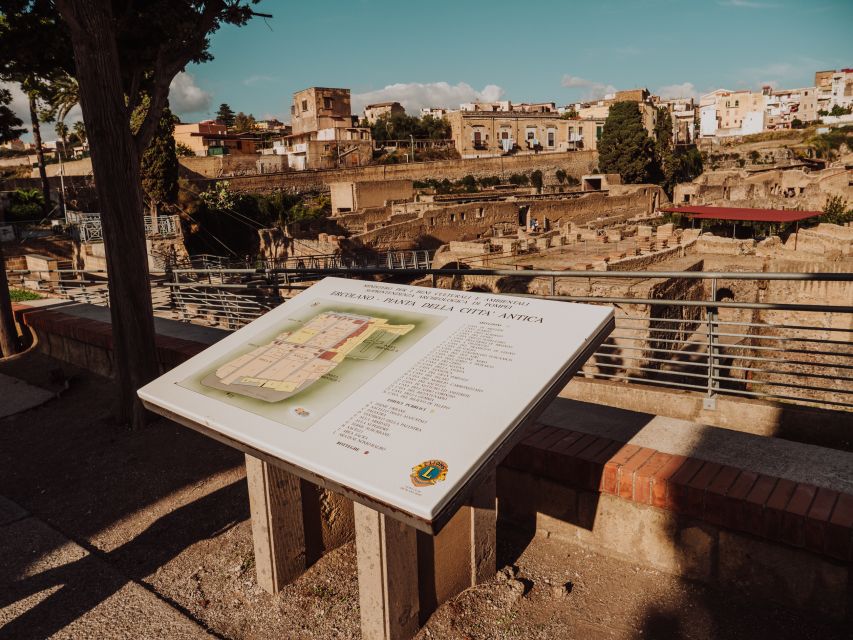
Herculaneum is the first major stop, and the two-hour guided visit begins with skip-the-line entry. That can save valuable time, since you move past the ticket queue and start inside the archaeological site with your guide.
The ancient town was buried under a deep landslide of mud rather than the lighter ash that covered much of Pompeii. The result is remarkable. Carbonized wooden objects, mosaics, and wall paintings remain in places where they would normally have disappeared.
Your route includes the Temple of the Augustali, an important religious building, and the Thermal Baths, where you can see how Romans built spaces for washing and social life. The Forum gives you a sense of the town’s civic center, while the Samnite House points to an earlier local tradition within the later Roman city.
The beach area is one of the most affecting stops. More than 300 skeletons were found there, offering a stark reminder that this was not just a city suddenly abandoned. People were caught by a disaster they could not outrun.
Other stops include the Gymnasium and the House of the Dears. These names may sound like a long checklist, but the guide’s role is to connect them. A strong guide can explain what a room was used for, what its decoration suggests, and how the surviving materials help reconstruct ordinary life.
This is where the archaeologist guide adds real value. Guides such as Michele have worked at Herculaneum, and several named guides, including Raphael and Roberta, have been praised for answering questions, explaining small details, and keeping the group engaged. The guide assignment can vary, so book this tour for the format and expertise rather than a promise of one particular person.
The break before Pompeii
After Herculaneum, the minibus continues to Pompeii. You get around 40 to 45 minutes for a lunch break before entering the site.
Lunch is not included, and this is the main extra expense to plan for. One person noted that a restaurant stop could cost about €30 per person, while another advised bringing your own food if you prefer to spend less. The supplied details do not promise a specific restaurant, so carry cash or a snack if you want a quick, economical break.
This pause is useful even if it takes time from the ruins. You have already walked for two hours, and Pompeii involves another long stretch over uneven ground. Use the break for food, water, and a little rest rather than treating it as wasted touring time.
More Pompeii tours led by an archaeologist:
- Pompeii: Private Tour with an Archaeologist
★ 4.9 · 168 reviews - Herculaneum Private Tour with an Archaeologist
★ 5.0 · 132 reviews - Pompeii and Herculaneum led by an Archaeologist with private transport
★ 5.0 · 78 reviews - Pompeii and Herculaneum Private Walking Tour with an Archaeologist
★ 5.0 · 77 reviews
Pompeii: the essential route in two hours
Pompeii is the larger and more famous site, but two hours is a tight window. The guide focuses on major public buildings and private homes rather than trying to cover the entire excavation.
The walk begins around the Marina Gate, one of the main entrances to the old city. From there, the route reaches the Basilica and the Forum, the civic heart of Pompeii. These spaces help you picture public life, administration, commerce, and ceremony before the eruption.
You also visit the Forum Baths, where the guide can explain the practical side of Roman bathing culture. The Lupanar, commonly identified as a brothel, offers one of the site’s more direct glimpses into commercial sex and the way Pompeii marked different services.
The Bakery and the Termopolium Capuano shift the focus to food and business. A bakery shows how bread production worked at neighborhood level, while a thermopolium was a shop selling prepared food and drink. These stops make Pompeii feel less like a collection of temples and more like a functioning town.
The private houses add another layer. The House of the Faun is one of Pompeii’s grand residences, while the House of the Tragic Poet is known for its domestic decoration. The guide also points out the plaster casts, among the most sobering remains in the city. They preserve the shapes of people caught in the eruption, turning a distant historical event into something immediate.
Two hours is enough to understand the main story and see the headline sites. It is not enough to wander at your own pace, study every mosaic, or explore every open street. Several people who enjoyed the tour still wanted more time. If you are an archaeology specialist or a repeat visitor, a longer independent visit may suit you better.
How the archaeologist changes the visit
Without a guide, Pompeii can be confusing. You walk through impressive ruins, but it is not always obvious which buildings mattered, how rooms were used, or what has been reconstructed.
An archaeologist guide gives the route a clear shape. Guides praised for this tour include Raphael, Roberta, Vito, Gennaro, Julia, and Michele. Their reported strengths vary in personality, but the useful pattern is consistent: clear English, patience with questions, humor, and attention to details that are easy to miss.
Some groups use headsets, which help you hear explanations while walking. This matters at busy sites, where standing close to the guide is not always possible. Ask at the start how the audio system works and stay within the group’s sight line.
The best guides also keep the pace moving. Pompeii can tempt you to stop at every doorway, but the schedule requires decisions. A good explanation of five important buildings is more useful than a hurried attempt to name fifty.
Walking conditions and who should book
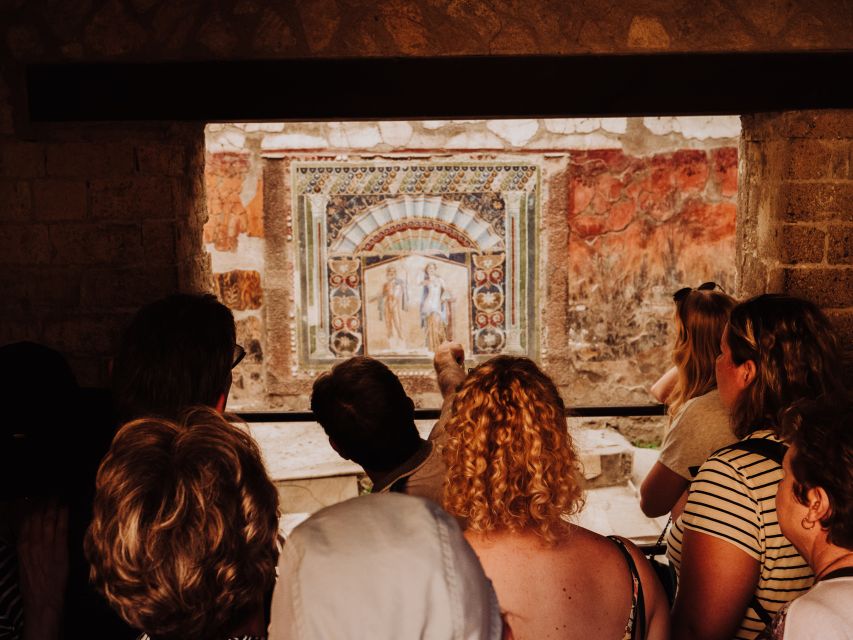
Do not treat this as a light sightseeing day. You will walk for about two hours at Herculaneum and another two hours at Pompeii, with a break between them. Expect uneven paving, slopes, steps, and frequent changes in level.
Wear sturdy, comfortable walking shoes. Bring water and protect yourself from rain, since the tour operates in wet weather as well as sunshine. A raincoat is specifically recommended. The exposed ruins offer limited comfort when weather turns poor.
This activity is not suitable for wheelchair users or people with significant mobility impairments. Anyone who has trouble with stairs, steep grades, or uneven surfaces should think carefully before booking. The sites are ancient excavations, not smooth museum floors.
Baby seats are available on request. Large bags and luggage are not allowed, so leave suitcases at your accommodation or arrange storage before meeting the group. Bring a passport or ID card, as identification is required.
Is $168.79 good value?
At $168.79 per person, this is not the cheapest way to see Pompeii and Herculaneum. The value comes from combining two entrance tickets, shared transport from Naples, parking and toll costs, skip-the-line access, and a full day with an archaeologist guide.
The price makes the most sense if you want both sites but do not want to manage trains, local transport, ticket timing, and route planning yourself. It also makes sense if the ancient world is new to you. A guide can save you from spending two hours looking at ruins without understanding what you are seeing.
The value is weaker if you want a slow, independent visit. You will not have time to explore every open house or linger at each mosaic. You are paying for structure and interpretation, not maximum freedom.
The group limit of 20 is a good middle ground. It is more personal than a large coach tour, but it is not private. With a strong guide and headsets, the format should let you hear the explanations without paying private-tour prices.
Cancellation is free up to 24 hours before the activity, and you can reserve now and pay later. Those terms help if your Naples plans are still shifting, but the core booking decision is about pace and walking ability.
Should you book the Pompeii and Herculaneum tour?
I would book this tour if you have one day in Naples, want to see both excavations, and prefer clear explanations over wandering alone. Herculaneum is the quieter, more preserved half of the day, while Pompeii supplies the broad city view and the famous public and private buildings.
I would skip it if you need step-free access, dislike fixed schedules, or want several hours at each site. Independent visitors with plenty of time may prefer to split the excavations across two days.
For most first-time visitors, the combination is strong. Arrive early at Starhotels Terminus, wear serious walking shoes, bring water and rain protection, and budget for lunch. You will see the crucial parts of two extraordinary Roman towns, with an archaeologist helping you understand why the smallest surviving detail can matter.
FAQ
Where does the tour meet in Naples?
Meet outside the entrance of Starhotels Terminus, opposite Naples Central Station. Look for the guide holding an Askos Tours sign.
How long does the activity last?
The tour lasts seven hours. The schedule includes minibus transfers, two hours at Herculaneum, a 40 to 45-minute break, two hours at Pompeii, and the return journey to Naples.
Are entrance tickets included?
Yes. The Pompeii Express entrance ticket and the Herculaneum entrance ticket are included. The Herculaneum ticket is listed as €16.
Is lunch included?
No. Meals are not included. You have a 40 to 45-minute break before entering Pompeii, and you can buy food or bring your own.
Is the tour offered in English?
Yes. The tour has a live English-speaking guide.
Can I bring luggage or a large bag?
No. Luggage and large bags are not allowed. Bring only what you need for the walking tour.
Is the tour suitable for people with limited mobility?
No. The tour is not recommended for wheelchair users or people with mobility impairments because the sites include uneven ground, slopes, and significant stairs.
More Ways to See Pompeii
- From Naples: Pompeii Ruins & Mount Vesuvius Day Tour
★ 4.3 · 11,459 reviews - Naples or Sorrento: Full-Day Pompeii and Mount Vesuvius Tour
★ 4.6 · 4,235 reviews - Pompeii & Mt.Vesuvius Day Tour from Naples with Pizza Lunch
★ 4.0 · 2,901 reviews - From Naples: Pompeii Skip-the-Line Entry Ticket and Tour
★ 4.4 · 2,753 reviews
Just added around Naples
- Naples: Guided Walking Tour★ 4.7 · 63 reviews
- Wine tasting in the Vesuvius National Park★ 3.5 · 4 reviews
- Naples: Pompeii and Vesuvius Skip-the-Line Day Trip★ 3.8 · 32 reviews
- Visit the Museum MANN with a professional guide★ 5.0 · 3 reviews
- Walking-tour of Naples hystorical Centre★ 4.4 · 4 reviews
- Vesuvius – Herculaneum – Pompeii Excavations Tour★ 4.2 · 9 reviews
- Pompeii: Vesuvius at Sunset★ 3.5 · 31 reviews
- Vesuvius and Herculaneum from Naples★ 3.7 · 29 reviews
Pompeii Tours with an Archaeologist, compared.

Pompeii Small Group Tour with an Archaeologist
Read our review →
Pompeii and Herculaneum Small Group Tour with an Archaeologist
Read our review →
Herculaneum Small Group Tour and Ticket With an Archaeologist
Read our review →
Pompeii Private Tour with an Archaeologist and Skip The Line – 3 hours
Read our review →
Pompeii Private Tour with an Archaeologist and Skip The Line
Read our review →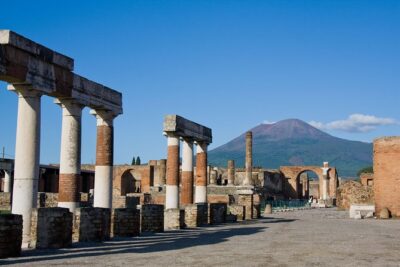
Pompeii 2h Small-Group Tour with Expert Archaeologist
Read our review →Browse the lists this tour appears in