
Reviewed · POMPEII TOURS WITH AN ARCHAEOLOGIST
Pompeii and Herculaneum led by an Archaeologist with private transport
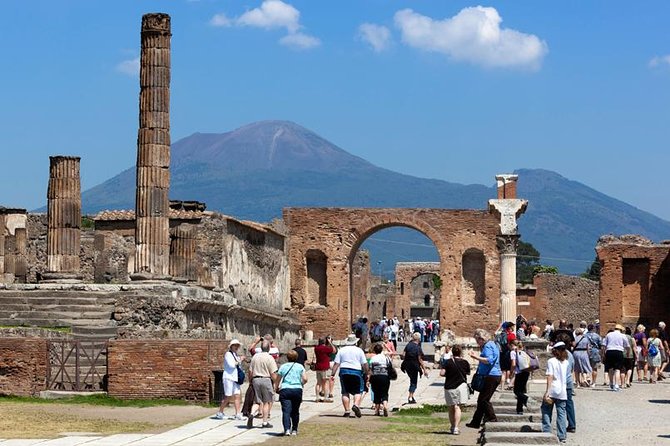
The remarkable thing here is the contrast between two Roman towns destroyed by Vesuvius. Pompeii was covered by falling ash, while Herculaneum was buried under searing volcanic material. That difference shaped what survived, and an archaeologist guide can make the contrast clear as you move from one site to the other.
I like the private Mercedes transport, which removes the fuss of arranging trains, taxis, and local transfers. I also like the chance to spend the day with one guide, rather than piecing together two short explanations from separate tour groups. The drawback is simple: this is a long, walking-heavy day, and the price of $666.75 per person is high unless you value private service and specialist guidance.
Key points to know before booking
- Two major Roman sites in one day: See the forums, villas, baths, theaters, and streets of Pompeii, then compare them with the better-preserved houses of Herculaneum.
- A guide with archaeological training: Guides such as Ivan, Daniela, Alfredo, Benedetto, and John Carlos have been praised for clear explanations and strong knowledge of the sites.
- Private transport across Campania: Pickup and return are offered from accommodations, ports, stations, and airports in Naples, Salerno, Sorrento, and the Amalfi Coast.
- A demanding walking schedule: Comfortable shoes, water, sunscreen, and sunglasses matter, especially in summer. Flip-flops are specifically discouraged.
- Lunch is flexible: You can stop for lunch between the ruins, or skip it to gain more sightseeing time.
- Check the admission wording: The details say entry is included, but also list a separate Herculaneum fee of €16 for adults. Confirm this before paying.
Why seeing Pompeii and Herculaneum together matters
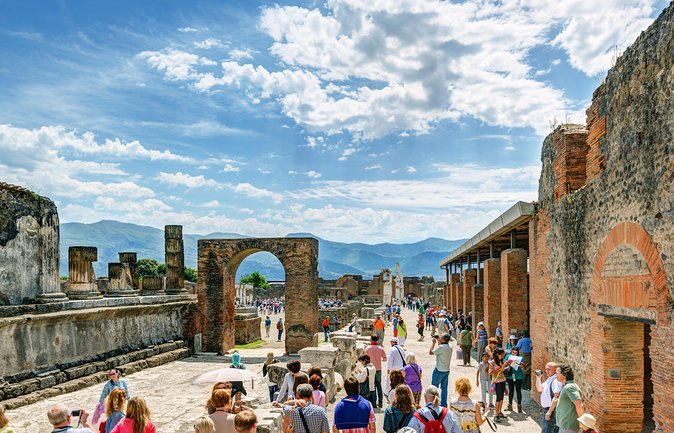
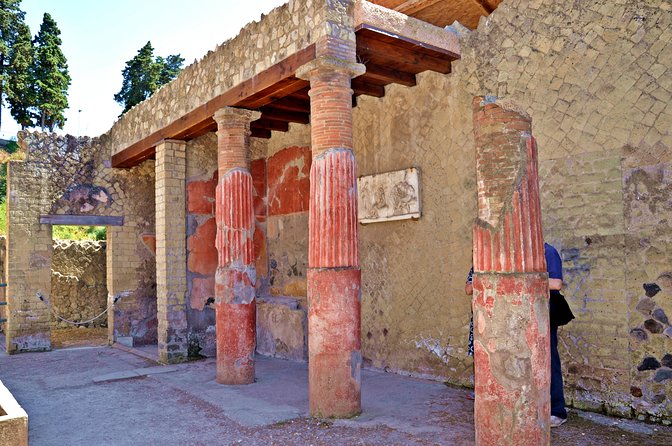
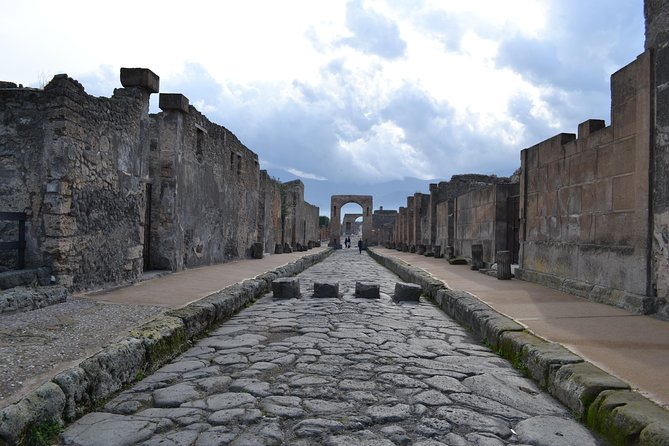
Pompeii is the famous one, and for good reason. Its broad streets, public buildings, villas, shops, baths, and theaters give you the feeling of a full Roman city laid open. But Herculaneum often feels more intimate. Its houses retain remarkable architectural details, including carbonized wood, painted rooms, balconies, and household fittings.
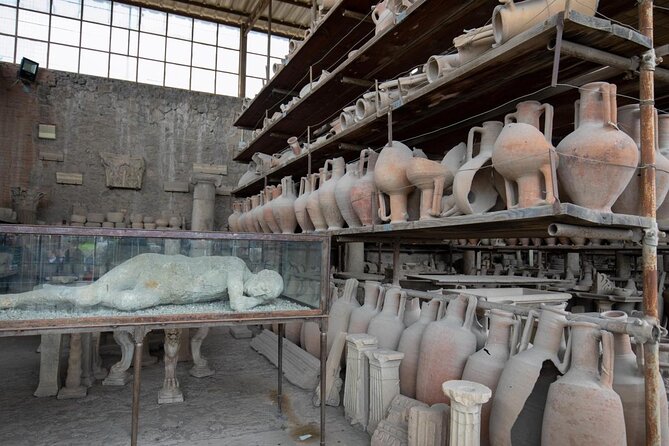
Seeing both in one day gives you a useful comparison. Pompeii was struck by a rain of ash and pumice, while Herculaneum suffered a much hotter volcanic surge and landslides. The destruction was terrible in both places, but the preservation looks different. At Herculaneum, wooden partitions and doors survived in charred form. At Pompeii, you see a larger urban plan and the famous plaster casts of victims.
That contrast is one of the strongest reasons to pay for a specialist guide. On your own, you can admire the ruins, but it is harder to understand why one wall, beam, or fresco survived while another vanished. A guide can also explain how the towns worked, who lived in the houses, and how public spaces served daily life.
More Herculaneum tours:
- Herculaneum: Skip-the-Line Guided Tour with Archaeologist
★ 4.8 · 3,439 reviews - Herculaneum Small Group Tour and Ticket With an Archaeologist
★ 5.0 · 994 reviews - Herculaneum: Skip-the-Line Entry Ticket with Audio Guide
★ 4.3 · 870 reviews
A private ride makes the Campania day easier
The tour includes pickup and drop-off from your accommodation, cruise port, train station, or airport in Naples, Salerno, Sorrento, or the Amalfi Coast. You ride between the sites in a private air-conditioned Mercedes car or minivan with a professional driver.
That arrangement matters more than it might seem. Pompeii and Herculaneum are close enough to combine, but moving between them by public transport adds time and uncertainty. With a private vehicle, you do not need to solve the transfer after several hours of walking in the sun.
The driver is separate from the archaeologist guide. Drivers named in past bookings include Luigi, Luca, Giovanni, Fulvio, and Raphaelle. Fulvio, for example, was praised for an energetic approach and Italian music during the ride, while Giovanni was noted for friendly service. These details suggest that the driving portion can add some local character, though your assigned driver will depend on availability.
The private format also helps with timing. One group was able to adjust the start time after a cruise ship arrived late, and another group changed the order of the sites to fit its schedule. Do not assume every change is guaranteed, but a private tour gives you more room to ask.
Herculaneum: small scale, superb preservation
The day begins with pickup and a meeting with your guide at the Herculaneum ticket office. The listed route includes many important buildings, though the schedule is brisk. The named stops should be understood as a set of highlights rather than a promise that you will spend a full ten or fifteen minutes at every single one.
Herculaneum was a wealthy coastal town, and its houses make that clear. The House of the Deer takes its name from marble deer statues found around its peristyle, or columned courtyard. The site gives you a sense of the private world behind Roman street fronts, where garden spaces and sculpture signaled status.
At the terrace of M. Nonius Balbus, your guide can connect one individual to the wider city. Balbus was a major benefactor who funded public works. After his death, the town honored him with monuments and a long inscription on his funeral altar. This is a useful stop for understanding how civic generosity worked in Roman towns.
The College of the Augustales is tied to the cult of Emperor Augustus. It may also have served as a local administrative center. The building shows how religion, politics, and civic identity overlapped in the Roman world.
The Central Baths reveal the practical side of ancient life. Built around the beginning of the first century AD, they were divided into men’s and women’s sections, each with separate entrances. The baths were not simply places to wash. They were public facilities woven into the rhythm of city life.
The House of the Relief of Telephus is linked, possibly, to M. Nonius Balbus. Its private access to the adjoining Suburban Baths makes it unusual. That detail gives you a glimpse of comfort and privilege that a general view of a street cannot provide.
The House of the Skeleton gets its name from human remains found in an upper room in 1831. The name is memorable, but the more useful lesson is how archaeologists have had to piece together the lives and deaths of the town’s residents from scattered evidence.
The House of the Black Salon is one of Herculaneum’s grander homes. Its monumental entrance still preserves carbonized doorposts and a lintel. At the House of the Wooden Partition, a preserved wooden divider is the key feature. Seeing charred wood in place is one of Herculaneum’s most striking experiences because it makes the ancient home feel less abstract.
The Samnite House has an atrium surrounded by a gallery with Ionic columns, along with frescoed rooms. The House of the Beautiful Courtyard is unusual because its courtyard, stairs, and stone balcony replace the more familiar atrium arrangement. Finally, the House of the Grand Portal brings together columns, frescoes, and carbonized wooden remains.
Herculaneum is smaller than Pompeii, but do not mistake smaller for easier. Uneven ancient paving, exposed walls, sun, and a steady stream of details can tire you quickly. The advantage of a private guide is that you can spend more time on the features that interest you and move more quickly through areas that do not.
Pompeii: streets, forums, baths, and theaters
After Herculaneum, you have a lunch break before continuing to Pompeii. Lunch is not included, and the stop is optional. A driver may recommend a local restaurant or winery, but you can also skip the meal and use the time inside the archaeological park.
Skipping lunch is not necessarily the best choice for everyone. The full day is physically demanding, and food and water will help you keep your concentration. Still, one group chose to skip lunch and reach more of Herculaneum before larger bus groups arrived. Your guide and driver can help you judge the tradeoff on the day.
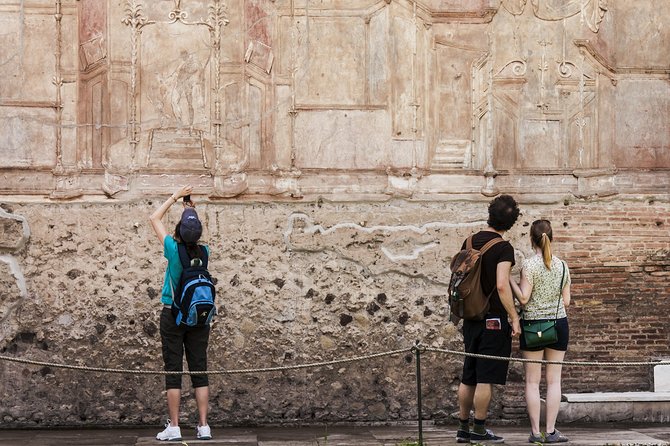
Pompeii begins with the city’s main public spaces. At the Forum, you see the center of civic, commercial, and religious life. The route also takes you along a main street, where the paving stones, buildings, and shop fronts help you understand how people moved through the city.
The Lupanar, Pompeii’s most famous brothel, is a brief but memorable stop. Its rooms and painted imagery offer a direct look at a commercial side of Roman life that formal monuments tend to hide. It can be crowded, and the small spaces may require patience.
The Granaries of the Forum now hold marble tables, fountain pieces, and casts of victims, including a dog and a tree. The word granary can make the building sound plain, but the contents help connect Pompeii’s public center with both daily trade and the disaster that ended the city.
The Basilica was an open portico used for business and other public activities. It was not a church in the later Christian sense. Your guide can help you read the remains as a civic and commercial building rather than applying a modern meaning to the name.
The Stabian Baths occupy a large area near several important streets. They are considered the oldest thermal complex in Pompeii. The scale of the site shows how much public investment went into bathing, exercise, and social life.
The House of Menander is among Pompeii’s most impressive homes, with fine architecture, decoration, and contents. The House of the Faun is even larger, one of the city’s grandest private residences. These houses help you see the gap between ordinary urban life and the wealth of Pompeii’s leading families.
The day ends with Pompeii’s theaters. The Teatro Grande was the city’s main theater, while the nearby Teatro Piccolo was smaller and more intimate. Together, they show that entertainment was part of civic life, not an occasional luxury.
More Pompeii tours led by an archaeologist:
- From Naples: Pompeii & Herculaneum with Archaeologist Guide
★ 4.8 · 665 reviews - Pompeii: Private Tour with an Archaeologist
★ 4.9 · 168 reviews - Herculaneum Private Tour with an Archaeologist
★ 5.0 · 132 reviews - Pompeii and Herculaneum Private Walking Tour with an Archaeologist
★ 5.0 · 77 reviews
The archaeologist guide is the main reason to choose this tour
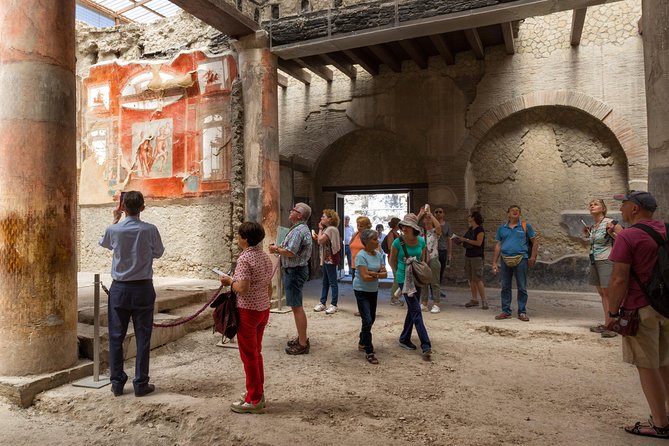
The best part of this format is not simply having a person point out buildings. It is having someone connect fragments into a story. Several guides associated with this experience have been praised for doing exactly that.
Daniela has been described as warm, clear, and able to turn archaeological facts into engaging stories. Ivan has been praised for spending the full day with a small private group and for having worked at both sites for many years. Alfredo was noted for answering questions while keeping the explanation detailed but approachable.
Benedetto holds a PhD in archaeology, and John Carlos has been praised for explaining how Pompeii was laid out, who lived there, and how people used its streets and buildings. These are not interchangeable skills. A guide may know dates and names, but the best guide helps you see why the remains matter.
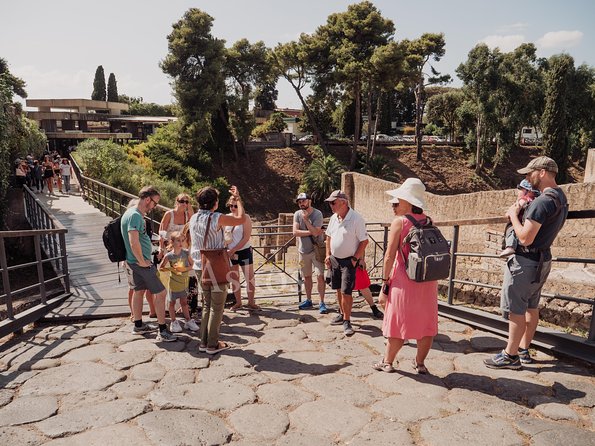
The guide can also adjust the pace. That matters if one person in your group has mobility limits or if teenagers need a change of rhythm. One family found the guide patient and helpful with mobility concerns, while another group with three teenagers found the tour held their interest.
You should still be realistic. The route covers a lot of ground, and even an excellent explanation cannot remove the heat, uneven paving, or fatigue. Wear supportive walking shoes, carry water, and bring sunglasses and sunscreen. In summer, avoid flip-flops.
What the $666.75 price buys you
At $666.75 per person, this is not a budget way to see the ruins. The value comes from combining several services: private transport, pickup and return, a professional driver, an archaeologist guide, and a full day devoted to two major sites.
For a couple or small family, the price may make sense if you want door-to-door service and do not want to manage transport in Campania. It is also useful for a cruise stop, when returning to the ship on time matters. A private group can ask questions freely and change the pace more easily than a large coach group.
The price is harder to justify if you are comfortable with public transport, prefer a self-guided visit, or plan to spend only a few hours at one site. Pompeii and Herculaneum both reward slow looking, and trying to see both in seven hours means accepting a brisk schedule.
The admission information needs clarification. The inclusions say Pompeii Express and Herculaneum entry tickets are covered, but the additional details list Herculaneum at €16 for adults and €2 for European Union citizens aged 18 to 25. Ask the provider to confirm exactly what is included before booking. That small check can prevent an awkward surprise.
Who will get the most from this day
I would choose this tour if you want both sites but have limited time, especially if you are staying outside Pompeii or arriving by cruise ship. It suits you if you care about context, ask questions, and prefer a private conversation with a specialist over an audio guide.
Families can benefit from the private format because the guide can adapt the pace. The experience can also work well for a group with modest mobility limits, although the ruins remain uneven and demanding. Tell the provider about your needs before the tour.
I would not choose it if your main aim is a relaxed day with long breaks. The route is full, the sites are large, and lunch takes time away from sightseeing. You should also avoid booking it if you dislike walking in heat or want to explore every room at leisure.
Cancellation is free if you cancel at least 24 hours before the start time. Changes or cancellations inside that window are not accepted for a refund.
FAQ
How long does the tour last?
The tour lasts approximately seven hours.
Where can pickup and drop-off take place?
Pickup and drop-off are offered at accommodations, cruise ports, train stations, and airports in Naples, Salerno, Sorrento, and the Amalfi Coast.
Is transportation private?
Yes. Transportation is by private air-conditioned Mercedes car or minivan with a professional driver, and only your group participates.
Are Pompeii and Herculaneum admission tickets included?
The included services state that Pompeii Express and Herculaneum entry tickets are included. However, the additional details also list a Herculaneum fee of €16 for adults and €2 for European Union citizens aged 18 to 25, so confirm the exact ticket arrangement before booking.
Is lunch included?
No. Meals and personal expenses are not included. A lunch stop is offered between Herculaneum and Pompeii, but you are not required to stop.
Is the tour offered in English?
Yes. The tour is offered in English.
What should I bring?
Bring comfortable walking shoes, water, sunglasses, and sunscreen. Flip-flops are not recommended in summer.
Can service animals participate?
Yes. Service animals are allowed.
What is the cancellation policy?
You can cancel for a full refund up to 24 hours before the experience starts. Cancellations or changes made less than 24 hours before the start time are not accepted for a refund.
Should you book this Pompeii and Herculaneum tour?
Book it if you want to see both ancient towns in one day without arranging transport yourself, and if an archaeologist’s explanation matters to you. The private vehicle, flexible pickup, and small-group format are especially useful from a cruise port or from Sorrento and the Amalfi Coast.
Skip it if the $666.75 price feels too steep or if you would rather give one site a slower, quieter visit. For the right group, though, the combination of Herculaneum’s preserved houses, Pompeii’s grand civic spaces, and a guide such as Daniela, Ivan, Alfredo, or Benedetto can turn a rushed pair of ruins into a clear picture of Roman life and volcanic disaster.
More Ways to See Pompeii
- From Naples: Pompeii Ruins & Mount Vesuvius Day Tour
★ 4.3 · 11,459 reviews - Naples or Sorrento: Full-Day Pompeii and Mount Vesuvius Tour
★ 4.6 · 4,235 reviews - Pompeii & Mt.Vesuvius Day Tour from Naples with Pizza Lunch
★ 4.0 · 2,901 reviews - From Naples: Pompeii Skip-the-Line Entry Ticket and Tour
★ 4.4 · 2,753 reviews
Just added around Naples
- Naples: Guided Walking Tour★ 4.7 · 63 reviews
- Wine tasting in the Vesuvius National Park★ 3.5 · 4 reviews
- Naples: Pompeii and Vesuvius Skip-the-Line Day Trip★ 3.8 · 32 reviews
- Visit the Museum MANN with a professional guide★ 5.0 · 3 reviews
- Walking-tour of Naples hystorical Centre★ 4.4 · 4 reviews
- Vesuvius – Herculaneum – Pompeii Excavations Tour★ 4.2 · 9 reviews
- Pompeii: Vesuvius at Sunset★ 3.5 · 31 reviews
- Vesuvius and Herculaneum from Naples★ 3.7 · 29 reviews
Pompeii Tours with an Archaeologist, compared.

Pompeii Small Group Tour with an Archaeologist
Read our review →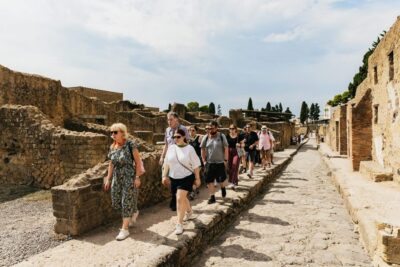
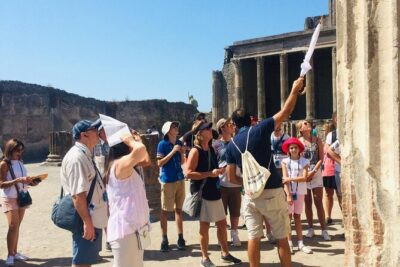
Pompeii and Herculaneum Small Group Tour with an Archaeologist
Read our review →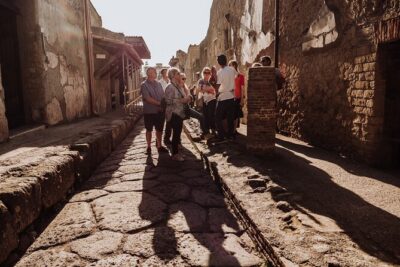
Herculaneum Small Group Tour and Ticket With an Archaeologist
Read our review →
Pompeii & Herculaneum with Archaeologist Guide
Read our review →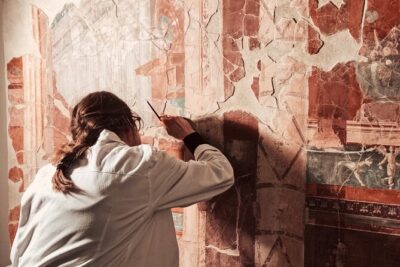
Pompeii Private Tour with an Archaeologist and Skip The Line – 3 hours
Read our review →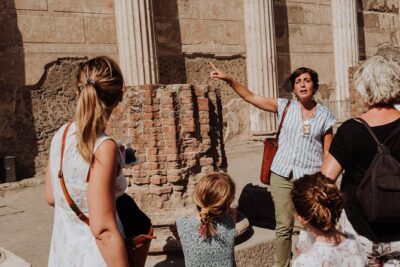
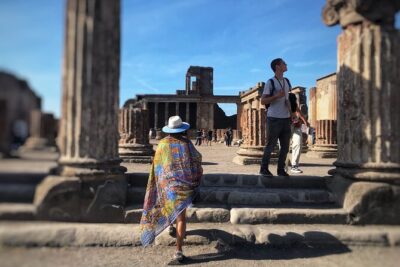
Pompeii Private Tour with an Archaeologist and Skip The Line
Read our review →Browse the lists this tour appears in