
Reviewed · POMPEII TOURS WITH AN ARCHAEOLOGIST
Pompeii: Private Tour with an Archaeologist
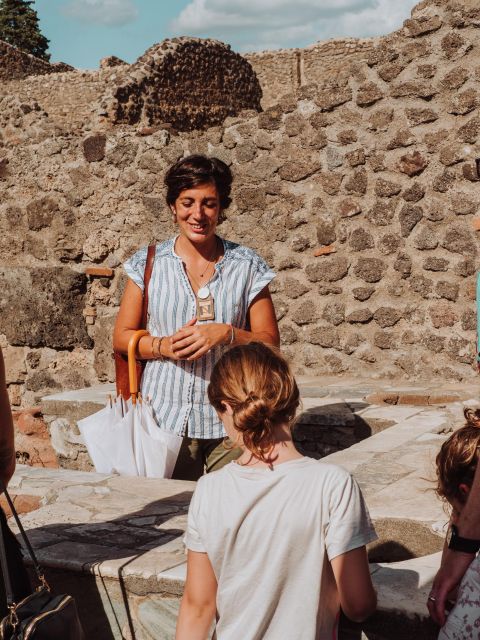
Pompeii is most powerful when it feels like a town rather than a pile of ruins. This three-hour private walk leads you past homes, shops, baths, theaters, and public buildings, while your guide explains the small details that make daily Roman life visible.
I like the private format, which lets you ask questions and slow down at places that catch your eye. I also like the route’s range: you see major public monuments, elegant houses, a brothel, theaters, and the plaster casts of victims, rather than spending the whole visit in one corner.
The main thing to consider is the price: $508.15 for a private group of up to one person is a serious outlay unless you place a high value on expert attention. Pompeii is also large, uneven, and tiring, so comfortable shoes are essential.
Key points at a glance
- Three hours with a private guide: You can ask questions freely and adjust the pace to your interests.
- A broad western Pompeii route: The walk includes the Forum, Basilica, Temple of Apollo, major houses, baths, theaters, and amphitheater.
- Guides who bring the city to life: Guides including Nicoletta, Patrizia, Jasmine, Silvia, Serenella, Annalisa, and Laura are praised for warmth, detail, humor, and flexibility.
- Skip-the-line admission included: You meet at Porta Marina Superiore, near the Hortus bar-restaurant, with entry fees covered.
- Useful for families and serious history fans: Guides have kept children engaged while also satisfying visitors interested in archaeology and excavation.
- One practical contradiction: The activity is marked wheelchair accessible in one place but also listed as unsuitable for wheelchair users, so confirm access before booking.
Why a private walk changes Pompeii
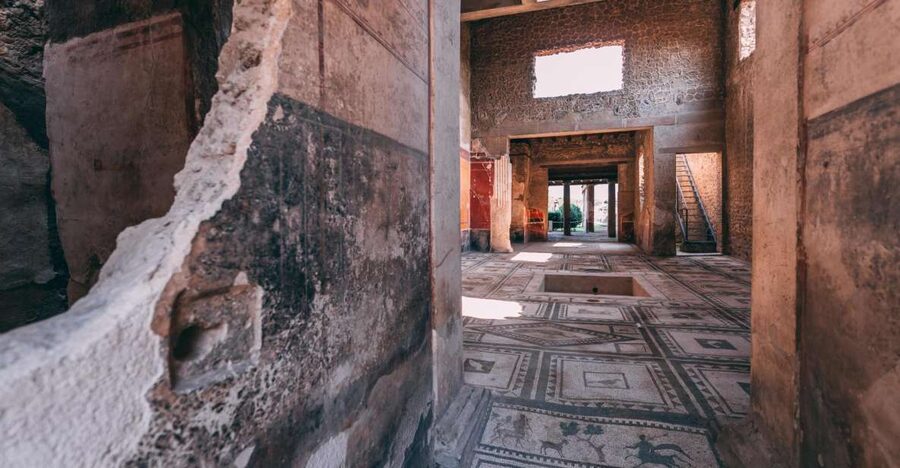
Pompeii can be hard to read on your own. A broad street may look like a simple road until someone points out the raised stepping stones, fountains, storefronts, and marks of ordinary movement. A house may seem like a roofless shell until your guide explains how its rooms, garden, paintings, and reception spaces fit together.
That is where this tour earns its keep. You are not just moving from monument to monument. You are getting a running explanation of how the city worked and how its residents lived before the eruption of Mount Vesuvius in 79 A.D.
A private guide also removes some of the usual museum-style awkwardness. You can ask why a building matters, stop for clarification, or request more detail about volcanoes, excavation, preservation, art, or Roman society. Guides such as Paola have been praised for explaining everything from the surrounding mountains to the excavation process, while Mena offered advice about what to see after the formal tour ended.
The tour is designed for a group of up to one person according to the supplied pricing, which makes the cost feel especially high. If your booking setup allows only a single participant, this is a premium experience. If the operator confirms a private party arrangement for your booking, the value improves as more people share the fee. Check the exact group and price details before paying.
More Pompeii tours led by an archaeologist:
- Herculaneum: Skip-the-Line Guided Tour with Archaeologist
★ 4.8 · 3,439 reviews - Herculaneum Small Group Tour and Ticket With an Archaeologist
★ 5.0 · 994 reviews - From Naples: Pompeii & Herculaneum with Archaeologist Guide
★ 4.8 · 665 reviews
Meeting your guide at Porta Marina Superiore
The meeting point is Pompeii’s main gate, Porta Marina Superiore, in front of the bar-restaurant called Hortus. Look for the building with lemons and oranges hanging outside. This detail matters because Pompeii has more than one entrance, and arriving at the wrong gate could waste valuable time.
Transportation is not included. You need to reach the entrance on your own, and the tour ends back at the meeting point. Food, drinks, and personal expenses are also separate, so bring water and plan around the three-hour walk.
Admission fees and skip-the-line entry are included. That can be useful at a busy archaeological site, especially when your time in Campania is limited. On the first Sunday of each month, Pompeii entrance is free, but tickets cannot be reserved ahead of time and entry is not guaranteed. I would not choose that day if this tour is the main reason for your visit.
The experience runs in rain or shine. The instructions advise bringing a small umbrella or raincoat in wet weather, though umbrellas are also listed among the items not allowed. That is a point worth clarifying with the operator. A raincoat is the safer choice, and comfortable shoes are non-negotiable.
Porta Marina, the Temple of Apollo, and the city center
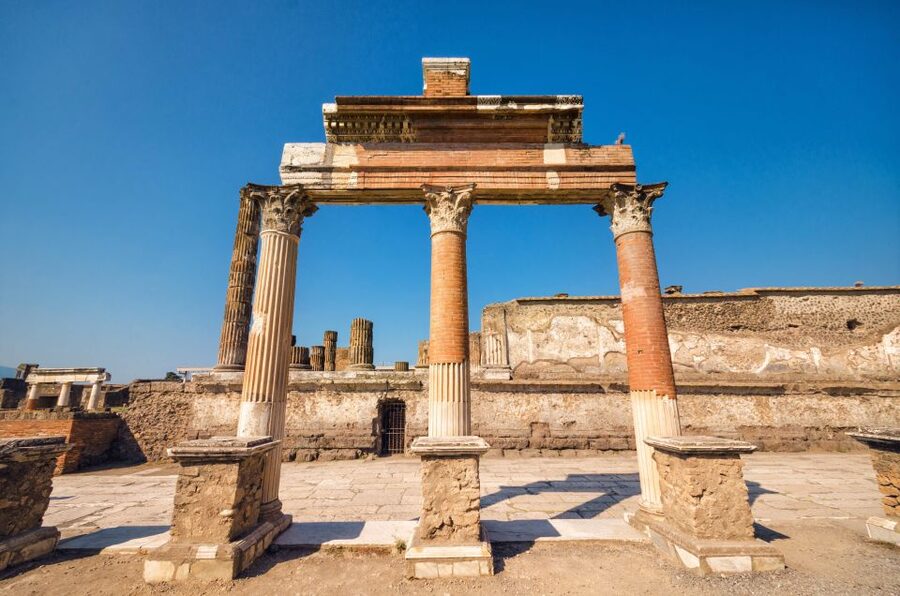
Your first stops are Porta Marina and the Temple of Apollo. Porta Marina helps establish Pompeii’s connection with the outside world. It is a strong opening because your guide can explain how people entered the city and how the route leads toward its civic heart.
At the Temple of Apollo, look for the chance to connect religion with the layout of the city. The stop is not just about columns and old stone. It shows how worship occupied a central place in public life and gives you an early sense of Pompeii’s mix of Greek influence and Roman control.
The Forum follows, and this is the big orientation point. Pompeii’s main public square gathered political, religious, commercial, and social activity. Your guide can help separate the functions of the surrounding buildings, which is much more useful than simply hearing a list of names.
The Basilica is another important stop. In Roman cities, a basilica was tied to legal and business activity, not Christian worship in the later sense of the word. That distinction is easy to miss without explanation, and it helps you picture Pompeii as a working city with courts, trade, public ceremonies, and civic business.
House of Menander and the Forum Baths
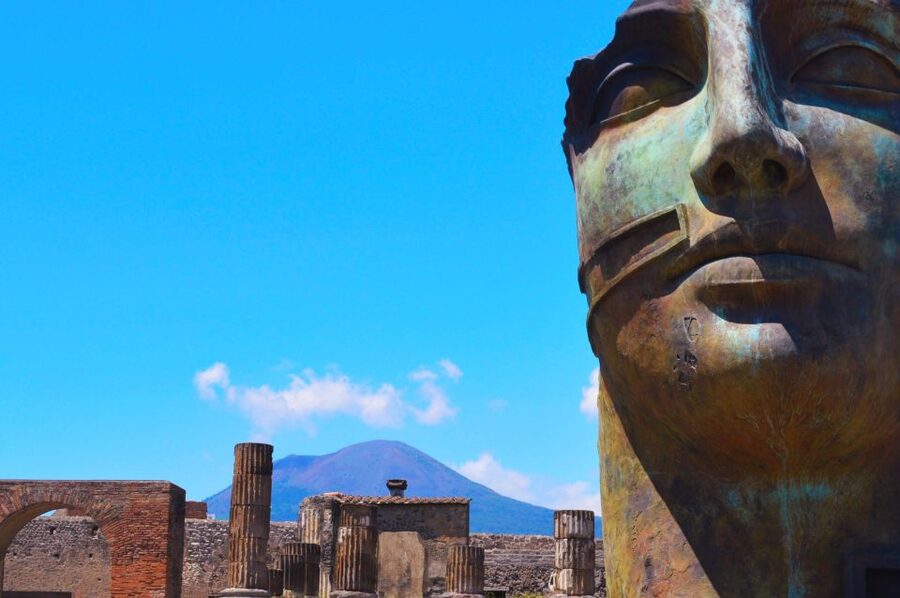
The House of Menander gives the tour a domestic turn. Pompeii is famous for public buildings, but private homes are where the city becomes human. The house offers a way to discuss status, decoration, household space, and the contrast between public presentation and private life.
The Forum Baths then show how Romans handled washing and social routines. A visit here works best when your guide explains the practical side of the complex, rather than treating it as another set of broken walls. You may hear about how the rooms were arranged and why public baths mattered beyond simple cleanliness.
This part of the route is especially useful for families. One guide, Monica, was praised for keeping granddaughters interested, and another guide held children’s attention through the ruins. That tells you something important about the tour’s style: the right guide can turn dry architectural details into stories and questions.
Still, three hours is not enough to examine every house or building at length. The route gives you a strong survey of key areas, but you should not expect the slow, specialist treatment of every painting, inscription, or side street.
More ways to see Pompeii:
- From Naples: Pompeii Ruins & Mount Vesuvius Day Tour
★ 4.3 · 11,459 reviews - Naples or Sorrento: Full-Day Pompeii and Mount Vesuvius Tour
★ 4.6 · 4,235 reviews - Pompeii & Mt.Vesuvius Day Tour from Naples with Pizza Lunch
★ 4.0 · 2,901 reviews - From Naples: Pompeii Skip-the-Line Entry Ticket and Tour
★ 4.4 · 2,753 reviews
The Lupanare, House of the Faun, and daily life
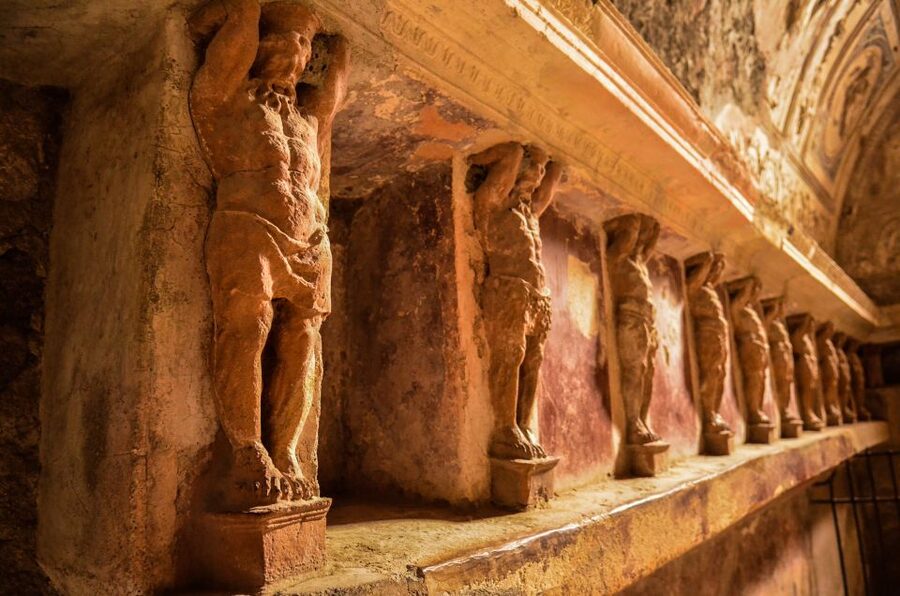
The Lupanare, Pompeii’s famous brothel, is one of the stops many people remember. Its presence adds a blunt, everyday dimension to the visit. Pompeii was not a polished postcard city. It was a place where commerce, sex, religion, politics, food, work, and family life shared the same streets.
The guide’s explanation matters here because the building can easily become a quick novelty stop. A good guide places it in the wider social setting and keeps the focus on what the site tells you about Roman life. The same applies to the shops and fountains encountered along the route. These modest details may explain more about ordinary routines than the grand monuments do.
The House of the Faun shifts the mood again. It is one of Pompeii’s best-known residences and gives you a chance to see how wealthy households used scale, decoration, courtyards, and display. If you care about Roman art and architecture, this is one of the places where asking questions pays off.
The plaster casts of victims are among the most emotional parts of Pompeii. They are not simply archaeological objects. They force you to think about the people caught in the eruption, and several guides are praised for keeping that human element in view. I appreciate that approach. Pompeii should not be reduced to spectacle.
The theaters and the final amphitheater stop
The Large Theatre gives the route a cultural setting. A theater helps you imagine Pompeii as a place of entertainment and community gatherings, not just a city frozen by disaster. Ask your guide how the space functioned and who might have used it.
The Amphitheater of Pompeii closes the main route with another large public venue. Its scale makes a useful contrast with the narrow streets and private houses seen earlier. By this stage, you should have a clearer sense of how public life, domestic life, business, religion, and entertainment fitted together.
The route also includes the Stabian Baths, listed among the major highlights even though the stop-by-stop sequence emphasizes the Forum Baths. If a particular bath complex matters to you, ask at the beginning whether it can be included or given extra attention. The private format makes that request more realistic than it would be on a large group tour.
The tour returns to the meeting point at Porta Marina Superiore. You may also be directed toward the Pompeii ticket office at Scavi di Pompei, depending on the agreed drop-off arrangement. Clarify the end point if you have a train, transfer, or another timed activity afterward.
The guides are the main reason to book
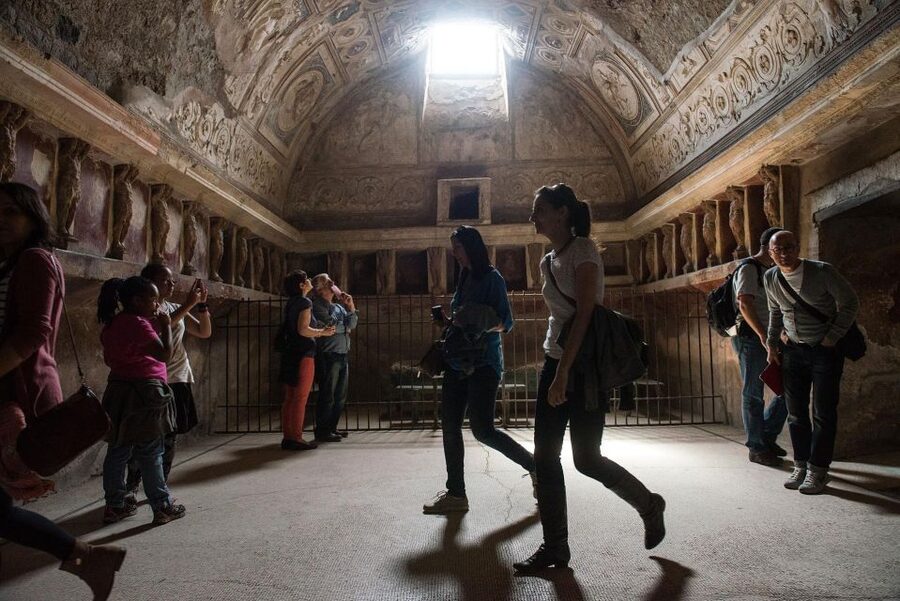
The strongest part of this experience is not the ticket access. It is the guide. The praise is remarkably consistent around warmth, subject knowledge, humor, patience, and the ability to answer questions without making the visit feel like a lecture.
Nicoletta is described as especially strong for people interested in history, anthropology, and archaeology. She reportedly points out small details, tells personal stories about the people who lived in Pompeii, and keeps the tone light without losing respect for those who died.
Patrizia is praised for adapting the route to personal interests. Laura is described as warm, flexible, and able to work around changing crowds. Diego is noted for covering art, history, and culture in careful detail. Annalisa and Michele are praised for enthusiasm and the ability to make three hours pass quickly.
One guide had taken part in excavations at the site, which added direct insight into excavation and preservation. That is useful, but do not assume every assigned guide has that exact background. The product promises a certified archaeologist-guide, yet one four-star assessment specifically questioned whether the assigned guide was an archaeologist. If that credential matters to you, confirm it at booking rather than relying only on the title.
Guides are available in Japanese, English, Spanish, Italian, German, French, Portuguese, Chinese, and Russian. A disposable earpiece may be provided for larger groups, though the experience itself is private.
Price, pace, and who gets the best value
At $508.15 per group up to one person, this is not a budget Pompeii visit. You are paying for private attention, included admission, skip-the-line access, and a guide who can shape the conversation around your interests.
I would consider it good value for a serious history fan, a couple wanting a focused visit, or a family that needs a flexible pace. It can also make sense if Pompeii is a once-in-a-lifetime stop and you want help understanding what you are seeing rather than wandering without context.
The value is weaker if you enjoy exploring alone, already know Roman archaeology well, or have a full day to move slowly through the site with your own guidebook. Three hours gives you the major highlights, but Pompeii is too large for one short visit to cover everything.
The pace is active. You will walk over uneven ancient paving in sun, heat, or rain, and there may be crowds around the most famous houses and casts. Wear sturdy, comfortable shoes and carry water. If you want frequent photo stops, tell the guide early so the visit does not become a race.
The site is described inconsistently for wheelchair access. One section calls the tour wheelchair accessible, while another says it is not suitable for wheelchair users. Because Pompeii’s ancient streets can be difficult, contact the operator before booking if anyone in your party uses a wheelchair.
Should you book this Pompeii tour?
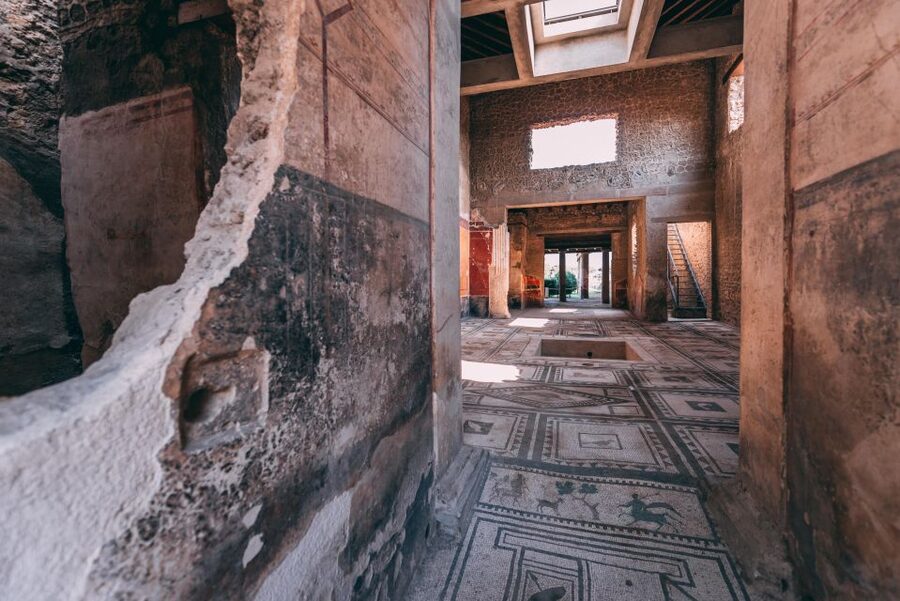
Book it if you want Pompeii explained by one attentive guide rather than viewed as a sequence of ruins. The route covers the civic center, private homes, baths, brothel, theaters, public entertainment spaces, and victims’ casts, giving you both the grand picture and the human details.
I would especially choose it for visitors who ask many questions, families with children, and anyone who wants to understand excavation, preservation, Roman daily life, and the eruption in one focused visit. The guide can make the difference between recognizing famous names and actually seeing a living city beneath the stones.
Skip it if the price feels too steep for a three-hour visit, if you prefer an unstructured day, or if you need confirmed wheelchair access and the operator cannot resolve the conflicting information. For everyone else, this is a strong way to meet Pompeii: personal, broad in scope, and far more rewarding than simply ticking off the Forum and leaving.
FAQ
How long is the private Pompeii tour?
The tour lasts three hours. Starting times depend on availability when you book.
Where does the tour begin?
Meet your guide at Porta Marina Superiore, Pompeii’s main gate, in front of the Hortus bar-restaurant. It is the building with lemons and oranges hanging outside.
Where does the tour end?
The activity ends back at the meeting point. The listed drop-off information also refers to the Pompeii ticket office at Scavi di Pompei and Porta Marina Superiore, so confirm the exact arrangement with the operator.
Is transportation included?
No. You must arrange your own transportation to and from Pompeii. Food, drinks, and personal expenses are also not included.
Which languages are available?
Guides are available in Japanese, English, Spanish, Italian, German, French, Portuguese, Chinese, and Russian.
What should I bring?
Bring comfortable shoes. The tour takes place in all weather, so a raincoat is useful if rain is forecast. Umbrellas are listed as not allowed, despite separate advice referring to a small umbrella, so check this detail before arrival.
Is the tour wheelchair accessible?
The information is inconsistent. One section describes the activity as wheelchair accessible, while another says it is not suitable for wheelchair users. Contact Askos Tours before booking to confirm whether the route fits your needs.
Just added around Naples
- Naples: Guided Walking Tour★ 4.7 · 63 reviews
- Wine tasting in the Vesuvius National Park★ 3.5 · 4 reviews
- Naples: Pompeii and Vesuvius Skip-the-Line Day Trip★ 3.8 · 32 reviews
- Visit the Museum MANN with a professional guide★ 5.0 · 3 reviews
- Walking-tour of Naples hystorical Centre★ 4.4 · 4 reviews
- Vesuvius – Herculaneum – Pompeii Excavations Tour★ 4.2 · 9 reviews
- Pompeii: Vesuvius at Sunset★ 3.5 · 31 reviews
- Vesuvius and Herculaneum from Naples★ 3.7 · 29 reviews
Pompeii Tours with an Archaeologist, compared.

Pompeii Small Group Tour with an Archaeologist
Read our review →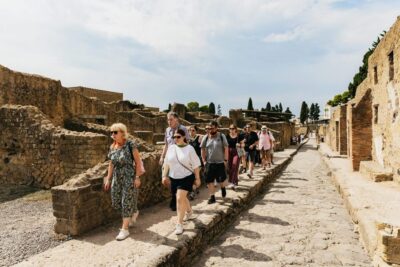
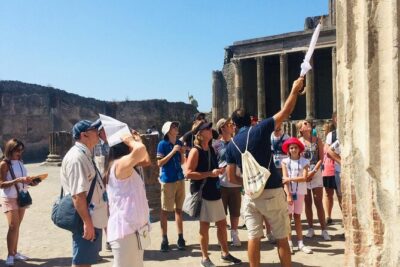
Pompeii and Herculaneum Small Group Tour with an Archaeologist
Read our review →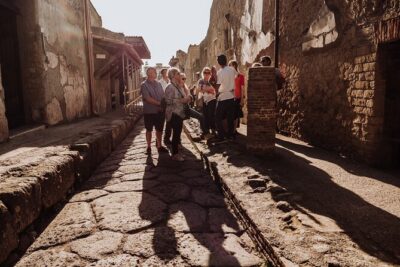
Herculaneum Small Group Tour and Ticket With an Archaeologist
Read our review →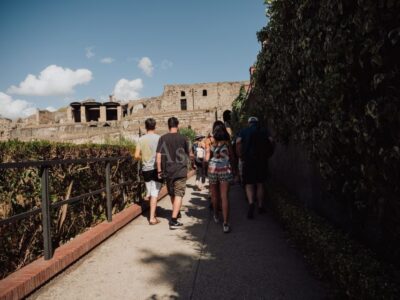
Pompeii & Herculaneum with Archaeologist Guide
Read our review →
Pompeii Private Tour with an Archaeologist and Skip The Line – 3 hours
Read our review →
Pompeii Private Tour with an Archaeologist and Skip The Line
Read our review →Browse the lists this tour appears in