
Reviewed · POMPEII TOURS WITH AN ARCHAEOLOGIST
Pompeii Private Tour with an Archaeologist and Skip The Line – 3 hours
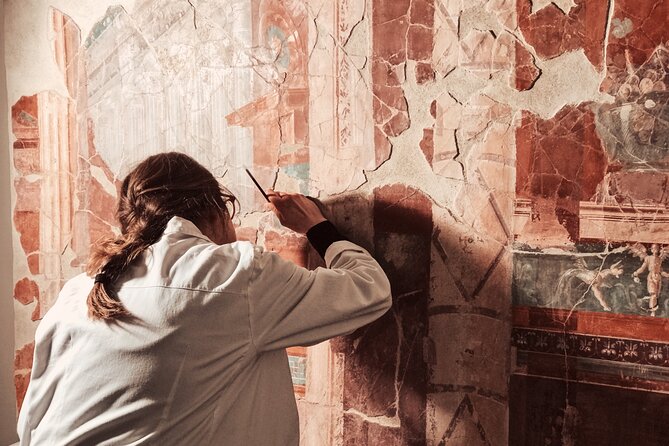
Pompeii makes far more sense with an archaeologist beside you. In three hours, you move from theaters and temples to a brothel, a fast-food counter, a laundry, and private homes, seeing not just ruins but the daily machinery of Roman life. Guides such as Luisa, Amedeo, Eliana, and Roberto are praised for clear stories and sharp answers.
I like the private format because you can ask questions and adjust the pace. I also like the route’s focus on ordinary life, from the Cave Canem mosaic to the market stalls and laundry. The main catch is cost: the $302.32 group price does not include the €19 adult entrance ticket, and skip-the-line entry must be arranged ahead of time.
Key points at a glance
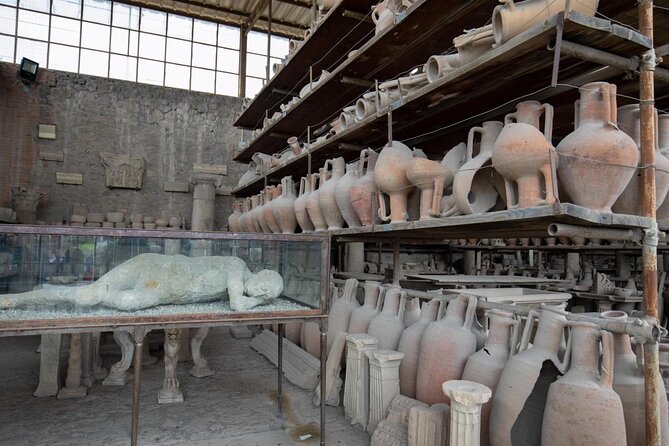
- A private archaeologist-led walk: Only your group takes part, so you can ask questions and request more detail on architecture, Roman customs, or the eruption.
- A useful three-hour route: The tour covers theaters, baths, the Forum, temples, shops, homes, and working buildings without trying to show every corner of Pompeii.
- Daily life is the star: You see a brothel, takeaway food shop, wool market, meat market, laundry, and houses with mosaics and frescoes.
- Entrance is extra: Adults pay €19 per person for Pompeii, while children under 18 enter free. Confirm the ticket process before arrival.
- Walking takes effort: Expect uneven paving, steps, slippery surfaces, and heat. A moderate level of balance is useful.
- Flexible guide quality: Strong praise goes to Luisa, Amedeo, Eliana, Mariagrazia, Roberto, Maria, and Luciana, though your assigned guide may differ.
Why a private Pompeii guide changes the visit
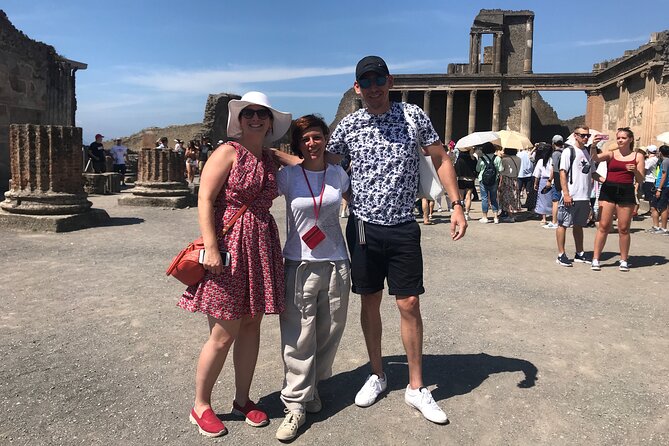
Pompeii is not a small collection of ruins that you can absorb in a quick lap. It is a large ancient city, and its streets can feel confusing when you do not know what you are looking at. A private guide gives the remains a sequence and a human scale.
The best part of this tour is its range. You are not led only to the Forum and the grand temples. You also see where people ate, bathed, shopped, worked, watched theater, and lived. That mix helps you picture Pompeii as a functioning town rather than a frozen archaeological site.
A three-hour tour is long enough to build a strong first understanding, but not long enough to cover every open building. I like that balance for a first visit. You get a guided framework, then you can decide if you want to return and explore on your own.
The private format matters most if your group has mixed interests. One person can ask about construction, another about food or religion, and another about the volcanic disaster. Guides have also adapted the walking pace for people with mobility concerns, though the ground itself remains demanding.
More Private Tours in Pompeii
- Pompeii private tour with an Official Guide
★ 5.0 · 631 reviews - Visit in Pompeii – Pompeii Private Tour with Ada
★ 5.0 · 436 reviews - Pompeii Private Tour with an Archaeologist and Skip The Line
★ 5.0 · 391 reviews
Starting at Porta Marina Superiore
The meeting point is at Hortus Pompei, Restaurant & Garden Bar, near Porta Marina Superiore at Piazza Esedra. The tour begins by entering the archaeological park from this side, with admission included in the route but not in the tour price.
That distinction is important. The listed adult entrance fee is €19 per person, and only children under 18 receive free admission. You should arrange the ticket before the tour if you want the skip-the-line option. The operator provides a link for advance ticket purchase, but skip-the-line assistance is available only when requested in advance.
The route is described as ending at Porta Marina Inferiore, while the practical meeting information says the activity ends back at the meeting point. Confirm the exact exit with the operator before setting a train or bus departure. Pompeii is not the place to discover a gate change when you have luggage and a schedule.
The theaters and the main street
The first substantial stop is the Odeon, or Small Theater. Its compact scale makes it easier to understand how a performance space worked than the larger theater does. Your guide can help you read the building as part of city life, not simply as a set of stone seats.
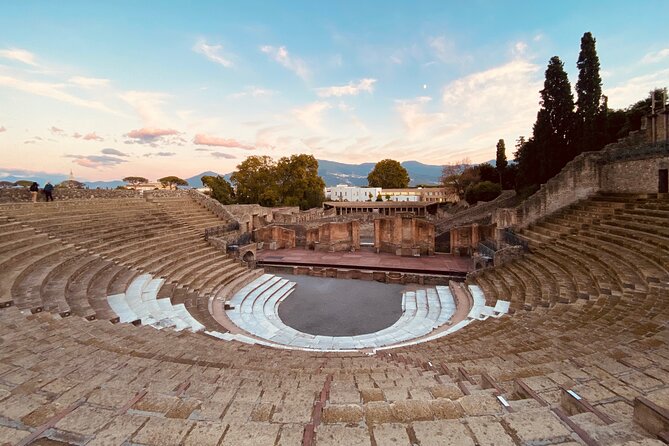
The Teatro Grande follows, with about 15 minutes planned here. This is the larger performance venue, and it gives you a sense of Pompeii’s public entertainment culture. The two theaters work well together: one feels intimate, while the other shows the city’s capacity for bigger events.
You then move along Pompeii’s main street. This is one of the most useful parts of the walk because it ties the separate monuments together. You see how public buildings, homes, shops, temples, and work spaces faced one another along the same urban network.
Do not expect a quiet museum-style stroll. The paving is uneven, and some surfaces can be slippery. Wear shoes with a firm sole, and take the walking conditions seriously if you have balance or joint problems.
Granai del Foro and the Stabian Baths
The Granai del Foro, an archaeological storage area, offers a different view of Pompeii. Instead of focusing on a single grand building, it helps explain how excavated material is handled and preserved. The planned 15-minute stop is brief, but it adds useful context to the city’s ongoing archaeological work.
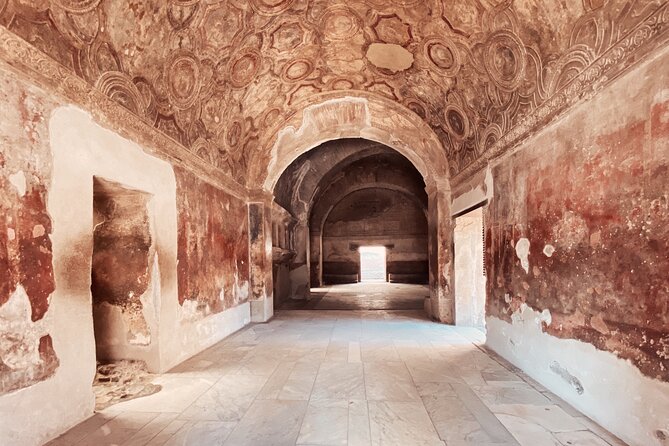
The Stabian Baths are among the key public buildings on the route. These were Pompeii’s earliest baths, and the stop gives you a window into the social side of Roman bathing. A bath complex was not only about washing. It was also part of public routine and city life.
This is where an archaeologist’s explanation can save you from simply seeing walls and guessing at their purpose. Ask your guide to explain how the different spaces worked and how the baths fit into the wider city. The schedule allows about 15 minutes, so keep questions focused if you want to stay on time.
More Skip-the-Line Tickets in Pompeii
- Skip the Line Guided Tour of Pompeii led by an Archaeologist
★ 5.0 · 703 reviews - Pompeii Skip-the-line Tour with Archaeologist Guide
★ 5.0 · 559 reviews - Complete Pompeii Skip the Line Tour with Archaeologist Guide
★ 4.5 · 379 reviews - Ancient Pompeii Private Tour: Skip the Line & Kid-Friendly Option
★ 5.0 · 167 reviews
The Forum, Basilica, and Temple of Jupiter
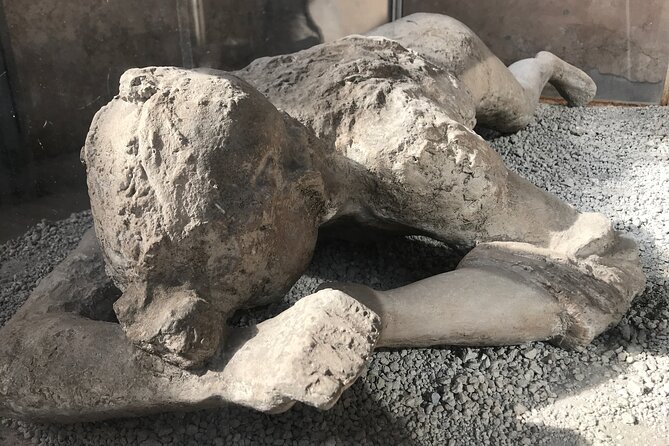
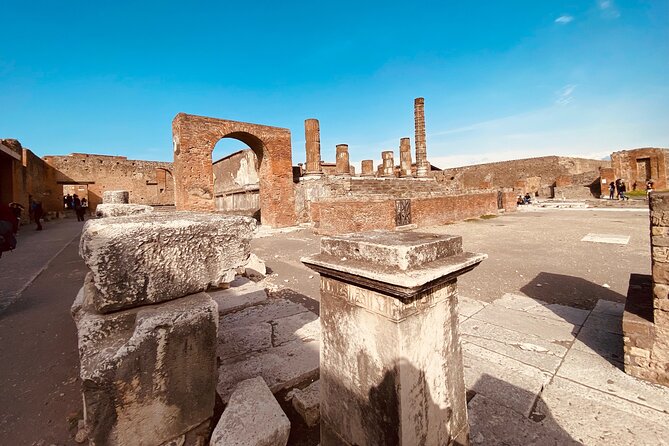
Pompeii’s Forum is the natural center of the tour. It was the city’s main public square, surrounded by religious, political, and commercial buildings. The open space can feel stark, especially under the sun, but that emptiness also makes the surrounding architecture easier to read.
The Basilica comes next. It served as a court of justice and was one of the city’s most important civic structures. This stop gives you a useful contrast with the baths and theaters. Pompeii was not only a place of entertainment and trade. It had formal legal and administrative life too.
The Temple of Jupiter adds a religious anchor to the Forum area. With the Basilica, the temple helps show how civic authority, worship, and public business occupied the same urban center.
I would pay close attention here to the guide’s explanation of how the Forum functioned. Without context, it can look like a broad field of broken columns. With context, it becomes the place where public decisions, worship, commerce, and social display came together.
Gladiators, the Lupanar, and the Temple of Venus
The Quadriporticus of the theaters is identified as the gladiators’ barracks. Its position near the theaters makes practical sense, and it adds another layer to the entertainment side of Pompeii. The planned stop is about 15 minutes.
The Lupanar, Pompeii’s brothel, is one of the most talked-about stops. It is a small but revealing part of the route, showing a less polished side of Roman urban life. The tour does not treat Pompeii as a collection of temples and wealthy homes. It includes the businesses and habits that made the city function.
You also pass the Temple of Venus. This gives the route another religious point, separate from the Forum’s Temple of Jupiter. A guide can help you understand why sacred spaces appeared throughout the city and how religion was woven into public life.
Crowds can gather around the Lupanar, so your guide’s ability to position the group well matters. Several guides, including Amedeo and Roberto, have been praised for finding better views and moving groups around crowded areas when possible. That does not guarantee an empty building, but a private guide can make the visit less frustrating.
The Cave Canem house and Pompeian homes
Casa del Poeta Tragico is a quick five-minute stop, centered on the famous Cave Canem mosaic. The Latin warning means beware of the dog, and the mosaic is a memorable reminder that Pompeii’s houses were decorated with messages, symbols, and personal touches.
Casa del Menandro receives about 20 minutes, the longest stop on the route. That extra time is well used. The house is known for frescoes and mosaics, and it gives you a closer look at domestic interiors rather than public monuments.
This is one place where the private setting pays off. You can ask what a room was used for, how the house was arranged, or what the decoration says about the people who lived there. The guide can also connect the house to wider Roman habits of status, hospitality, and household organization.
I would not rush these stops. The Forum may be the city’s symbolic center, but homes like Casa del Menandro help you picture people eating, receiving friends, managing servants, and displaying their wealth.
Markets, food, wool, and laundry
The Macellum was Pompeii’s meat and fish market. It brings the city’s food supply into view and helps balance the grand public spaces with a practical concern: how people bought what they ate.
The Edificio di Eumachia was linked to the wool market. This is a useful stop for understanding trade and production. Pompeii’s economy depended on much more than monuments and political offices. Wool, food, cleaning, and retail were part of everyday work.
At the Termopolio di Vetuzio Placido, you see a takeaway shop or ancient fast-food counter. The stop is especially helpful because it gives you a simple connection to modern life. People needed convenient meals then too, and this shop shows how food could be sold outside a private kitchen.
The Fullonica di Stephanus was a laundry. It offers another look at work that is easy to overlook when you focus only on villas and temples. By the end of these stops, you have seen a city supported by markets, food sellers, textile workers, and cleaners.
This everyday focus is one of the strongest reasons to choose the tour. You leave with more than a list of famous buildings. You begin to understand how a Roman town operated hour by hour.
The guide makes the difference
The operator assigns a specialized archaeological guide, and the individual guide can shape the whole experience. Luisa is repeatedly praised for lively explanations, patience, and the ability to tailor the route. Amedeo, also spelled Amadeu in some comments, is noted for humor, careful answers, and help on steeper steps.
Eliana Sandretti is described as especially strong on architecture, excavation, and the continuing work at Pompeii. Mariagrazia has adjusted the pace for people with mobility limits, while Roberto has been praised for patience, crowd awareness, and detailed explanations. Maria and Luciana are also singled out for their warmth and command of the site.
You cannot assume that one particular guide will be assigned unless you request a name and receive confirmation. If a certain style matters to you, ask in advance for Luisa, Amedeo, Eliana, or another named guide. The supplied information suggests a trained team, but it does not promise a specific person.
The strongest guide traits are clear: explain the architecture, tell stories about ordinary life, answer questions without rushing, and notice when the group needs shade or a slower pace. That is what turns a three-hour walk into a useful lesson rather than a march between ruins.
Price, tickets, and practical value
The tour costs $302.32 per group of up to one, according to the supplied price. The wording is unusual, so check how the booking platform handles additional people before paying. The adult Pompeii entrance ticket is extra at €19 per person, and meals, drinks, and private transport are not included.
At first glance, this is a costly way to see Pompeii. The value comes from the private archaeologist, the chance to ask unlimited questions within the time, and the structure provided by someone who knows how the city fits together. If you are already comfortable studying a map and reading site panels, you may prefer to enter alone and spend less.
I would choose this tour if Pompeii is a major reason for your trip, if you have only one visit, or if your group includes people who want different levels of historical detail. I would think twice if you are traveling on a tight budget or want a full-day archaeological exploration.
The tour lasts about three hours and is offered in English. Confirmation arrives at booking, service animals are allowed, and public transportation is nearby. The activity requires good weather. Cancellation is free up to 24 hours before the start time, but late cancellations and late changes are not accepted.
Walking conditions and who should book
Pompeii is an outdoor archaeological site with steps, uneven paving, and slippery surfaces. A moderate level of balance is needed. Heat can also affect the pace, and guides have made a point of using shaded places when possible.
Most people can take part, but do not mistake a private format for a fully accessible route. If someone in your group has mobility limitations, tell the operator ahead of time and ask what route adjustments are possible. Past guide support has included slower pacing and help on steeper steps, but the ancient surfaces cannot be changed.
I would recommend comfortable shoes, water, and sun protection. The tour does not include food or drinks, so plan those separately. Keep your schedule open around the end of the walk, especially if the final exit is Porta Marina Inferiore rather than the original meeting point.
Should you book this Pompeii tour?
Book it if you want Pompeii explained through both grand monuments and small details. The theaters, Forum, temples, baths, and gladiators’ barracks give you the big picture, while the brothel, food shop, wool market, laundry, and private houses show how people actually lived.
The best reason to book is the private archaeologist. Guides such as Luisa, Amedeo, Eliana, and Roberto have been praised for storytelling, patience, architectural skill, and personal attention. Request your preferred guide if possible, and confirm the name before the day.
Skip it if the $302.32 fee plus entrance tickets feels too high for a three-hour walk, or if you prefer exploring alone at your own speed. If you do book, arrange the Pompeii entrance ticket early, request skip-the-line help in advance, wear stable shoes, and verify the ending gate. Those small checks will leave you free to focus on one of Italy’s most remarkable ancient cities.
FAQ
How long is the Pompeii private tour?
The tour lasts approximately three hours.
Where does the tour start?
It starts at Hortus Pompei, Restaurant & Garden Bar, near Porta Marina Superiore at Via Villa dei Misteri, Piazza Porta Marina Superiore 1, Piazza Esedra, Pompei.
Where does the tour end?
The route information says it ends at Porta Marina Inferiore, while the meeting information says the activity ends back at the meeting point. Confirm the exact ending location before the tour.
Is the Pompeii entrance ticket included in the price?
No. Adult entrance costs €19 per person, and the ticket is not included. Admission is free for children under 18.
Does the tour include skip-the-line entry?
Skip-the-line help is available only when requested in advance. The tour also provides a link for buying entrance tickets ahead of time.
Is this a private tour?
Yes. Only your group takes part in the activity.
Can people with mobility limitations join?
Most people can participate, but the site has steps, uneven paving, and slippery surfaces. Guides have adapted the pace for some people with mobility concerns, so contact the operator before booking if your group needs adjustments.
More Ways to See Pompeii
- Discover the Ancient Ruins of Pompeii: Day Trip from Rome
★ 3.5 · 2,247 reviews - Pompeii Ticket + Tour with Optional Tasting Experience at Pompeii
★ 5.0 · 663 reviews - Sharing Tour of Pompeii
★ 5.0 · 487 reviews - Pompeii Guided Tour & Horse Riding on Vesuvius with Lunch
★ 5.0 · 419 reviews
More Pompeii Tours Led by an Archaeologist
- Pompeii Small Group Tour with an Archaeologist
★ 5.0 · 6,593 reviews - Pompeii and Herculaneum Small Group Tour with an Archaeologist
★ 5.0 · 1,350 reviews - Explore Pompeii with an Archaeologist
★ 5.0 · 511 reviews - Pompeii 2h Small-Group Tour with Expert Archaeologist
★ 5.0 · 385 reviews
Just added around Pompeii
- Wine Tasting and Winery Tour in Vesuvio National Park with Lunch★ 4.5 · 3 reviews
- Mt. Vesuvius Wine Tasting and Lunch Experience from Pompeii★ 4.5 · 20 reviews
- Wine tasting in the Vesuvius national park★ 5.0 · 3 reviews
- Traditional Neapolitan Dinner in Pompei – Villa Franca – Family Restourant★ 5.0 · 8 reviews
- Private Guided Tour and VR Headsets in the Ancient Pompeii★ 5.0 · 3 reviews
- Visit Pompeii with a local expert guide★ 5.0 · 10 reviews
- Tour Mount Vesuvius with Entry Tickets and Round Trip Transfer Included★ 3.5 · 4 reviews
- Vesuvius tour entrance to the crater and return bus★ 4.5 · 9 reviews
Pompeii Tours with an Archaeologist, compared.

Pompeii Small Group Tour with an Archaeologist
Read our review →
Pompeii and Herculaneum Small Group Tour with an Archaeologist
Read our review →
Herculaneum Small Group Tour and Ticket With an Archaeologist
Read our review →
Pompeii & Herculaneum with Archaeologist Guide
Read our review →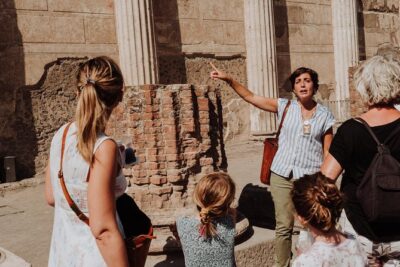
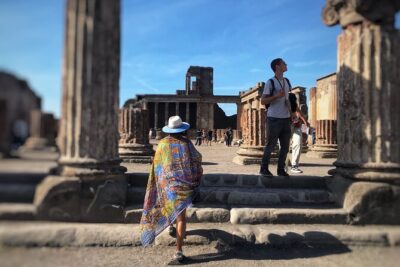
Pompeii Private Tour with an Archaeologist and Skip The Line
Read our review →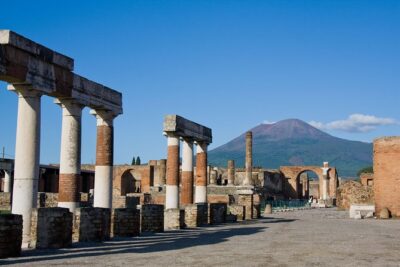
Pompeii 2h Small-Group Tour with Expert Archaeologist
Read our review →Browse the lists this tour appears in