
Reviewed · POMPEII TOURS WITH AN ARCHAEOLOGIST
Herculaneum Private Tour with an Archaeologist
Herculaneum feels less like a scattered ruin and more like a Roman neighborhood paused in time. With an archaeologist such as Eliana Sandretti, Amedeo, Roberto, Pina, or Francesco leading the way, you can understand why a wooden partition, black-painted salon, or faded skeleton matters.
I like the private format, which lets the guide adjust the pace and answer your family’s questions. I also like the close look at ordinary Roman life, from house plans and dining rooms to furniture and building materials preserved by Vesuvius.
The main drawback is cost. The advertised price is $349.98 per group of up to 10, but entrance fees are extra, and the two-hour visit can feel short if you want to linger at every house.
Key points at a glance
- Carbonized wood still survives: See the famous wooden partition in the House of the Wooden Partition and other fire-darkened remains.
- A private archaeologist leads the way: Your guide can adjust explanations and walking pace to your group.
- The harbor area is sobering: Skeletons and the charred boat show the human cost of the eruption.
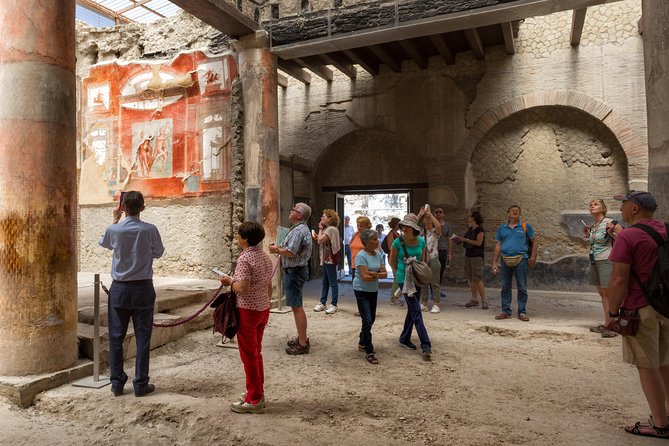
- The Roman homes are unusually well preserved: Expect frescoes, mosaics, terraces, courtyards, and decorative rooms.
- Admission costs extra: Adults pay €15, while entrance is free for visitors under 18.
- The tour stays focused: It lasts about two hours and ends where it begins at the archaeological park.
Why Herculaneum deserves its own visit
Many people pair Herculaneum with Pompeii, but the two sites give you different experiences. Pompeii is much larger and asks you to cover more ground. Herculaneum is smaller, yet its preserved buildings and furnishings often make the ancient town easier to picture.
The eruption of Mount Vesuvius in AD 79 buried Herculaneum under roughly 100 feet of volcanic material. That covering helped protect parts of the town from later damage. You can still see carbonized beams, painted walls, marble details, and house layouts that would be hard to understand from foundations alone.
That preservation is what makes an archaeologist valuable here. Without a guide, you may recognize a fresco or a column, but miss the clues that explain how the building worked. Your guide can point out what was preserved by heat, what was restored, what remains underground, and how the site was excavated.
The experience is private, so only your group takes part. That matters at a site where rooms can be narrow and where you may want to stop for questions. Families, couples, and small groups who prefer discussion over a fixed speech will get the most from it.
More Herculaneum tours:
- Herculaneum: Skip-the-Line Guided Tour with Archaeologist
★ 4.8 · 3,439 reviews - Herculaneum Small Group Tour and Ticket With an Archaeologist
★ 5.0 · 994 reviews - Herculaneum: Skip-the-Line Entry Ticket with Audio Guide
★ 4.3 · 870 reviews
Meeting at the archaeological park
You meet at the ticket office of the Archaeological Park of Herculaneum, on Corso Resina in Ercolano. The guide waits with a sign naming Eliana Sandretti, so look for that name at the entrance.
Entrance tickets are not included. The stated adult admission is €15 per person, with free admission for visitors under 18. The information also lists a €15 private-tour admission charge, so confirm the exact total when booking. The advertised tour price covers the private guide and the group experience, not food, drinks, or entry to the park.
The tour is offered in English and includes a mobile ticket. It is also near public transportation, which helps if you are staying in Naples or arranging a visit around other sights. The tour returns to the same meeting point, so you do not need to arrange a separate pickup or drop-off.
Allow a little patience at the start if you still need to buy tickets. The meeting instructions specifically allow you to purchase them at the site ticket office if you have not bought them in advance.
The terrace of Marcus Nonius Balbus and the harbor skeletons
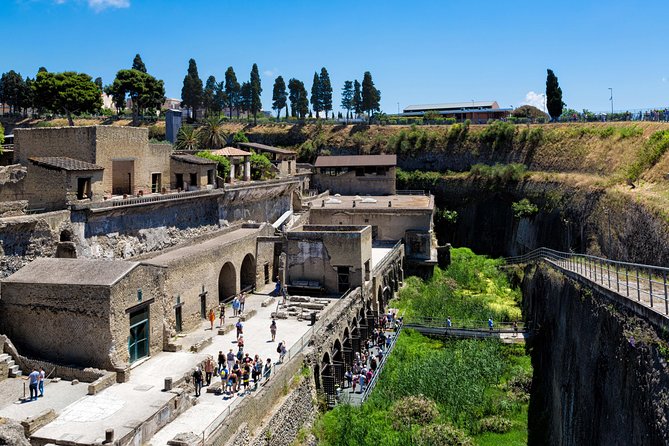
The first major stop is the Terrace of Marcus Nonius Balbus. From here, you look toward the ancient shoreline and think about what Herculaneum may have looked like before the eruption changed it forever.
The nearby skeletons make this a serious opening to the visit. They belonged to people who died while trying to escape or find shelter near the ancient harbor. The sight is not presented as a theatrical shock. It is a direct reminder that Herculaneum was a living town, not simply a collection of attractive ruins.
Your guide can help connect the remains to the eruption and to the town’s geography. That context is useful because the site can otherwise feel like a series of disconnected rooms. Here, the sea, the terrace, the harbor area, and the victims all help you understand what happened.
The emotional tone may not suit every young child, and the human remains can be difficult for some people. Still, this is one of the most important parts of Herculaneum because it keeps the visit grounded in the lives lost.
Casa dei Cervi and a Roman home by the sea
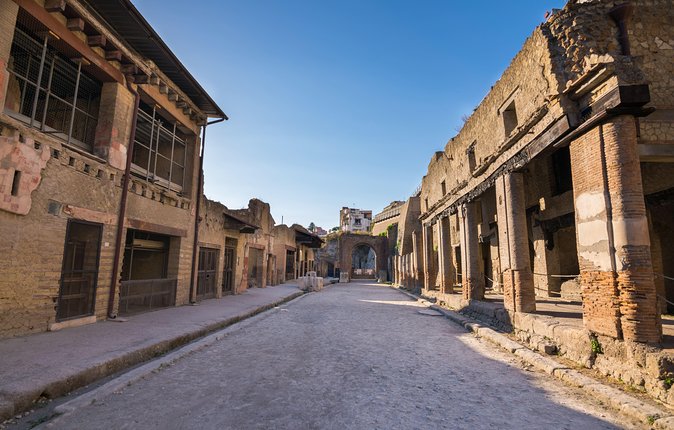
The House of the Deer was a large, luxurious home with a terrace looking toward the sea. Its name comes from a high relief showing the myth of Telephus, a reminder that elite Roman homes used art and decoration to display status.
This stop is less about one dramatic object than about the way the house was arranged. A terrace, decorative program, and sea-facing position give you a sense of how wealthy residents used their homes for leisure and social life.
I find houses like this especially useful for understanding the gap between grand Roman residences and more modest dwellings elsewhere in the town. Ask your archaeologist how the rooms may have been used and which details belong to the original building or later restoration.
You spend about 15 minutes here. That is enough for a clear explanation, though anyone interested in Roman domestic architecture may wish for more time.
More Pompeii tours led by an archaeologist:
- From Naples: Pompeii & Herculaneum with Archaeologist Guide
★ 4.8 · 665 reviews - Pompeii: Private Tour with an Archaeologist
★ 4.9 · 168 reviews - Herculaneum Private Tour with an Archaeologist
★ 5.0 · 132 reviews - Pompeii and Herculaneum led by an Archaeologist with private transport
★ 5.0 · 78 reviews
The House of the Wooden Partition
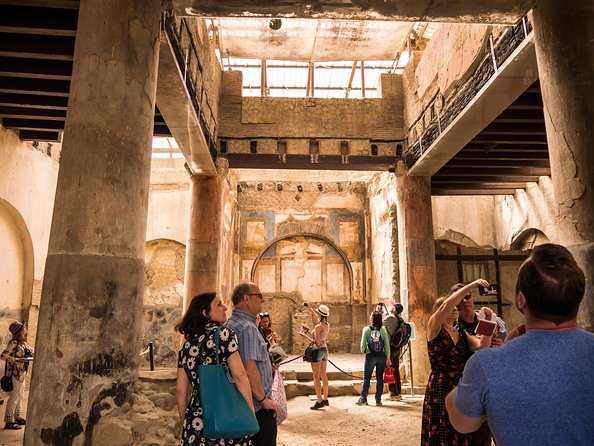
The House of the Wooden Partition is named for a charred wooden divider found inside. Wood rarely survives at ancient sites, so this is one of Herculaneum’s most memorable features.
The partition helps correct a common idea about Roman buildings. Roman homes were not made only of stone and marble. Wood was part of everyday construction and interior design, used for doors, furniture, screens, and structural elements.
Here, the eruption preserved a detail that would normally disappear. Your guide can explain how the carbonized material survived and how archaeologists interpret it. The stop also shows why you should not rush through Herculaneum looking only for statues and mosaics. Some of the best evidence is made from humble materials.
The visit takes about 15 minutes. The route includes ancient surfaces and stairs, so tell your guide at the start if anyone in your party has trouble walking. Guides have adjusted the pace for visitors using a mobility scooter, dealing with a bad knee, or helping an older family member with stairs.
The Black Room and the town’s most elegant interiors
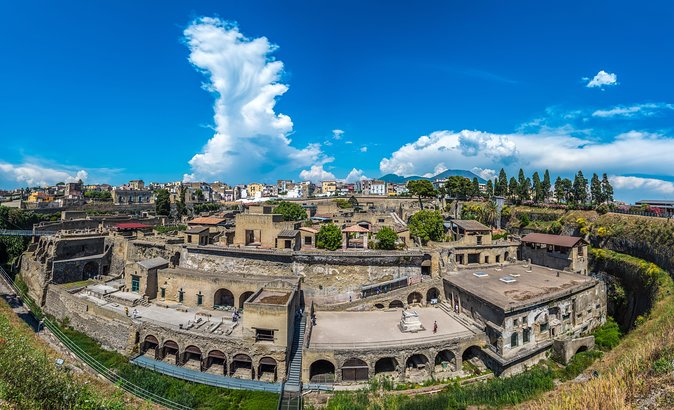
The House of the Black Room takes its name from a salon painted black. It was one of Herculaneum’s most luxurious homes, and its decoration gives you a strong sense of the taste of the Roman upper class.
Dark wall paint could create a dramatic setting for frescoes and furnishings. The room also makes a useful comparison with the brighter colors found elsewhere on the site. Do not assume that ancient Roman interiors were plain white. Herculaneum shows a much bolder use of color and pattern.
This is a good place to ask your guide about the social role of a Roman reception room. The appearance of a house was tied to the way its owner received guests, displayed wealth, and managed movement through the home.
Like the other house visits, the scheduled stop is about 15 minutes. If art is your main interest, tell the guide early. The private setting allows the explanation to focus more closely on frescoes and decoration instead of following a fixed group script.
The charred boat and the College of the Augustales
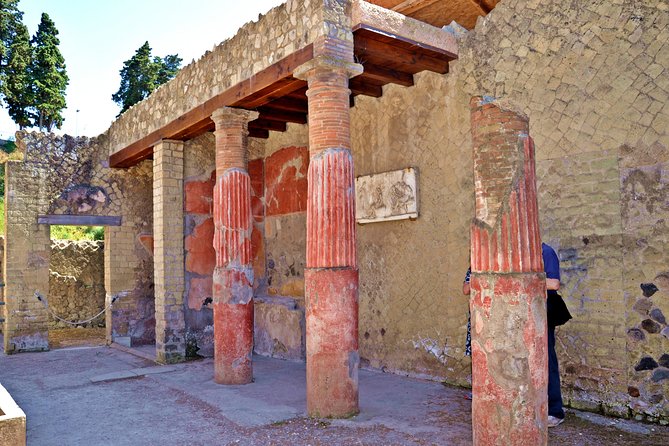
The Salone della Barca di Ercolano contains a boat charred by the eruption and found in recent excavations. It is a powerful object because it brings the shoreline and the disaster together. You are not just looking at a ruined building. You are seeing part of the equipment and infrastructure connected with a coastal town.
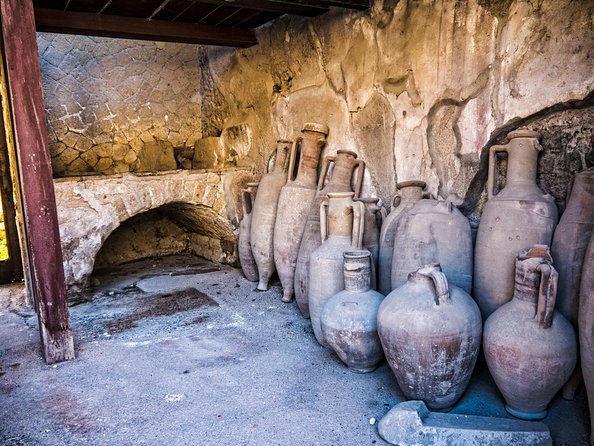
The boat also helps explain why the eruption remains so compelling. Vesuvius did not preserve a staged museum display. It sealed away objects from a working community, including vessels, wood, tools, and household goods.
At the College of the Augustales, the walls preserve frescoes showing Hercules entering Olympus. The building was linked to the worship of the emperor, and its decoration reflects the public and religious life of the town.
The skeleton of the keeper was found in this room. As at the harbor, the human remains change the mood. The painted scenes suggest ceremony and civic pride, while the skeleton brings you back to the sudden violence of the eruption.
Plan about 15 minutes for each stop. These are some of the strongest places to have an archaeologist explain how religion, public identity, and the disaster fit together.
The House of the Skeleton and the Samnite House
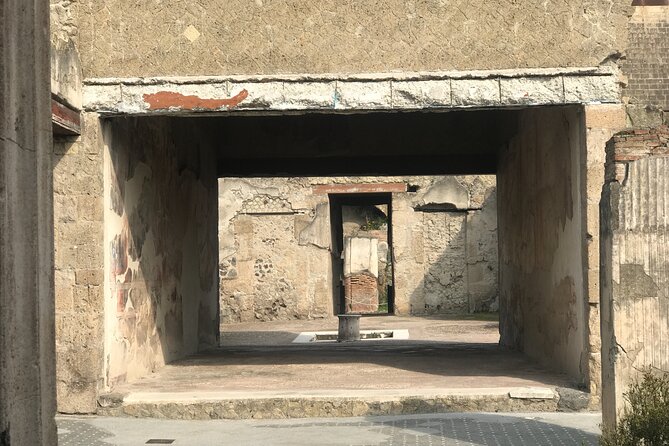
The House of the Skeleton received its name after the remains of an inhabitant were found inside. That simple name gives the building a somber identity, but the real value of the stop is the connection between a private home and a person who could not escape.
The visit is short, about 10 minutes. It works best when your guide helps you focus on what the building tells you about domestic space and the risks people faced during the eruption.
The Samnite House is one of the oldest homes in Herculaneum. Its earlier character gives you a chance to see that the town was not built all at once in a single style. Buildings changed over time, and different phases of construction can reveal shifts in taste, wealth, and social organization.
Expect about 15 minutes here. The house may be less instantly dramatic than the boat or the frescoes, but it adds useful depth to the site. You are seeing a town that developed across generations, not a single frozen moment.
Neptune and Amphitrite’s colorful display
The House of Neptune and Amphitrite is one of the visual highlights of the route. Its decorative compositions are designed to impress, with strong color and theatrical arrangement.
The name refers to Neptune and Amphitrite, the sea gods, and the house’s decoration fits Herculaneum’s coastal setting. This is a place where mosaics and wall art can make ancient taste feel surprisingly immediate.
The stop usually takes about 15 minutes. If you enjoy design, photography, or painted interiors, you may want to ask for a little extra attention here. The private tour cannot guarantee unlimited time, but your guide can shape the explanation around what interests you most.
This final house also gives the tour a satisfying visual finish. You move from the human cost of the eruption through homes, public buildings, wooden objects, and decorative art, then end with one of the site’s most eye-catching interiors.
What the archaeologist adds
The strongest part of this experience is the guide’s ability to turn remains into a story without making the visit feel like a memorized lecture. Eliana Sandretti is identified as the guide for the tour, and the company may also provide specialists such as Amedeo, Roberto, Pina, Maria, Francesco, Pia, or Mattia.
The most useful guide qualities are clear explanation, patience, and the ability to answer questions. Several guides have been praised for connecting AD 79 to the way people lived, worked, worshipped, and decorated their homes. Eliana has also been described as bringing unusual insight into the excavation process and the parts of the ancient town that remain buried beneath the modern settlement.
That depth matters at Herculaneum. The visible ruins are only part of the story, and current habitation above the buried town limits what can be excavated. A specialist can explain the difference between what you see, what was restored, and what remains inaccessible.
The private format also helps if your group already knows Pompeii or plans to visit the Naples archaeological museum. One guide has tailored the explanation around those other visits, helping connect objects and buildings across the sites.
Price, pace, and who should book
At $349.98 per group of up to 10, the tour can be good value for a full family or group. Split among ten people, the guide fee becomes modest per person. For one or two people, it is a much larger purchase, especially after adding the €15 adult admission fee and any separate private-tour charge.
The two-hour length is both a strength and a limit. It keeps the visit manageable in hot weather and works well for families, older adults, or anyone combining Herculaneum with other Naples sights. It also means you will not study every open house at leisure.
I would book this for you if you want the site explained rather than simply photographed. It is especially suited to families, first-time visitors, history fans, and anyone who wants help with stairs or a slower pace. The tour has accommodated a mobility scooter and visitors with knee or stair difficulties, but the site itself remains archaeological terrain, so discuss mobility needs with the guide.
You should think twice if you prefer to wander alone, need a very low-cost visit, or want several hours for detailed photography. An audio guide or self-guided visit may cost less, though it will not offer the same back-and-forth discussion.
Confirmation arrives at booking. Service animals are allowed, most people can participate, and the activity requires good weather. You can cancel for a full refund up to 24 hours before the start time. Changes or cancellations inside that period are not accepted, unless poor weather causes the operator to cancel and offer another date or a full refund.
Should you book this Herculaneum tour?
Yes, if you want the preserved wood, frescoes, skeletons, boat, and Roman houses to make sense as parts of one town and one disaster. The archaeologist is the real reason to pay more than a basic entry ticket.
The best value comes when several people share the private price. Book early if your dates are firm, since this experience is often reserved well ahead of time. Bring questions, arrive ready to buy or show your entrance ticket, and tell the guide about mobility concerns before the walking begins.
If your group includes up to 10 people and Herculaneum is a priority, this is a focused and worthwhile way to see it. If you are traveling alone on a tight budget, the extra cost may be harder to justify.
FAQ
How long does the Herculaneum tour last?
The tour lasts approximately two hours.
Where does the tour begin?
It begins at the ticket office of the Archaeological Park of Herculaneum at Corso Resina 187, 80056 Ercolano, Italy.
Where does the tour end?
The activity ends back at the meeting point.
Is the entrance ticket included?
No. Entrance is listed separately from the tour price.
How much is admission to Herculaneum?
Admission is €15 for adults. Visitors under 18 receive free admission. The information also lists a €15 private-tour admission fee, so confirm the final amount before booking.
How many people can join the private tour?
The advertised price covers one private group of up to 10 people.
Is the tour offered in English?
Yes. The activity is offered in English.
Who is the guide?
The meeting instructions identify Eliana Sandretti. Other specialist guides named for this experience include Amedeo, Roberto, Pina, Maria, Francesco, Pia, and Mattia.
Is the tour suitable for people with mobility needs?
Most people can participate, and guides have assisted visitors using a mobility scooter, dealing with knee problems, or having difficulty with stairs. The archaeological site still includes uneven surfaces and stairs, so share your needs in advance.
Can I cancel for a refund?
You can cancel at least 24 hours before the start time for a full refund. Cancellations or changes made less than 24 hours before the experience are not refunded or accepted. If poor weather causes the tour to be canceled, you will be offered another date or a full refund.
Just added around Naples
- Wine tasting in the Vesuvius National Park★ 3.5 · 4 reviews
- Naples: Guided Walking Tour★ 4.7 · 63 reviews
- Naples: Pompeii and Vesuvius Skip-the-Line Day Trip★ 3.8 · 32 reviews
- Visit the Museum MANN with a professional guide★ 5.0 · 3 reviews
- Walking-tour of Naples hystorical Centre★ 4.4 · 4 reviews
- Vesuvius – Herculaneum – Pompeii Excavations Tour★ 4.2 · 9 reviews
- Pompeii: Vesuvius at Sunset★ 3.5 · 31 reviews
- Vesuvius and Herculaneum from Naples★ 3.7 · 29 reviews
Pompeii Tours with an Archaeologist, compared.
Pompeii Small Group Tour with an Archaeologist
Read our review →
Pompeii and Herculaneum Small Group Tour with an Archaeologist
Read our review →
Herculaneum Small Group Tour and Ticket With an Archaeologist
Read our review →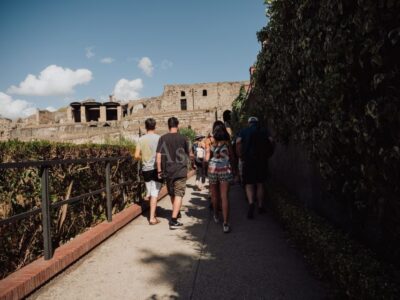
Pompeii & Herculaneum with Archaeologist Guide
Read our review →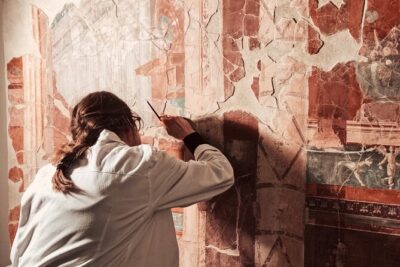
Pompeii Private Tour with an Archaeologist and Skip The Line – 3 hours
Read our review →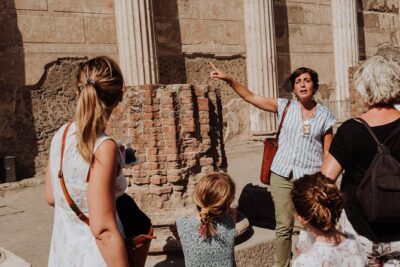
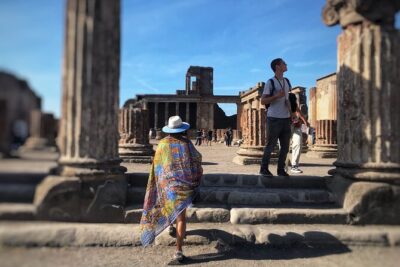
Pompeii Private Tour with an Archaeologist and Skip The Line
Read our review →Browse the lists this tour appears in