
Reviewed · POMPEII TOURS WITH AN ARCHAEOLOGIST
2 Hours Private Walking Tour in Pompeii with an Archaeologist
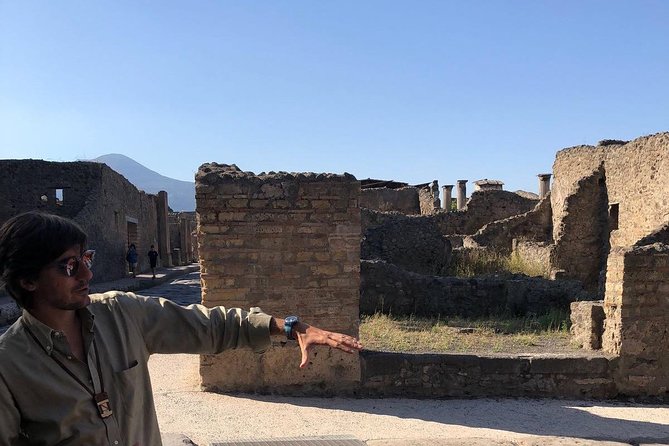
Pompeii gets far more interesting when you stop seeing it as a field of ruins and start reading it as a Roman town. In two hours, a licensed archaeologist takes you from the Forum and theatres to everyday places such as a bakery, fabric market, Roman fast-food counter, and private homes. The less-touristed corners are a useful part of the plan.
I like the private format, which keeps your group to eight people and lets you ask questions without competing with a large crowd. I also like the guide’s professional background: you are led by a licensed guide with a degree in archaeology, not simply handed a map and a list of dates. The main caution is time. Pompeii is enormous, and two hours gives you a smart introduction rather than a complete visit.
Key points to know
- A private archaeology tour: Only your group participates, with a maximum of eight people.
- Daily Roman life is central: The route includes a bakery, Thermopolium, fabric market, homes, baths, and public buildings.
- Important public spaces: You visit the Forum, theatres, sacred area, and thermal baths.
- Less-touristed areas: The guide aims to include corners beyond the usual main route when access allows.
- Entry is extra: Pompeii Archaeological Park admission costs €20 per person.
- Meet at Piazza Esedra: The tour starts and ends at Piazza Esedra, 10/13, near public transportation.
Pompeii in Two Hours: A Focused First Look
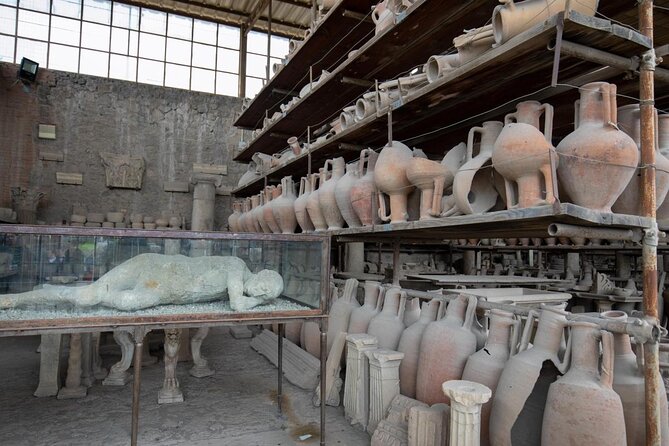
Pompeii can feel confusing at first. Streets cross at odd angles, walls are broken, and the buildings do not always announce what they once were. A guide with archaeological training gives those stones a job and a purpose. You begin to see where people gathered, worked, worshiped, washed, ate, and lived.
This tour is built around the most important parts of the city, but it does not stop with the grand monuments. The Forum and theatres show public life. The bakery, Thermopolium, fabric market, and homes bring you closer to ordinary routines. That mix is the strongest reason to choose this experience.
The guide also looks for areas away from the heaviest tourist route. Exact access can depend on conditions inside the park, but the promise is valuable: you are not limited to a quick look at the best-known square and a few columns.
The two-hour limit calls for sensible expectations. You will not see every street, house, and painted wall in Pompeii. Instead, you get a guided framework that helps the rest of the site make sense if you decide to stay longer.
More Private Tours in Pompeii
- Pompeii private tour with an Official Guide
★ 5.0 · 631 reviews - Pompeii Private Tour with an Archaeologist and Skip The Line – 3 hours
★ 5.0 · 564 reviews - Visit in Pompeii – Pompeii Private Tour with Ada
★ 5.0 · 436 reviews
Meeting at Piazza Esedra and Getting Started
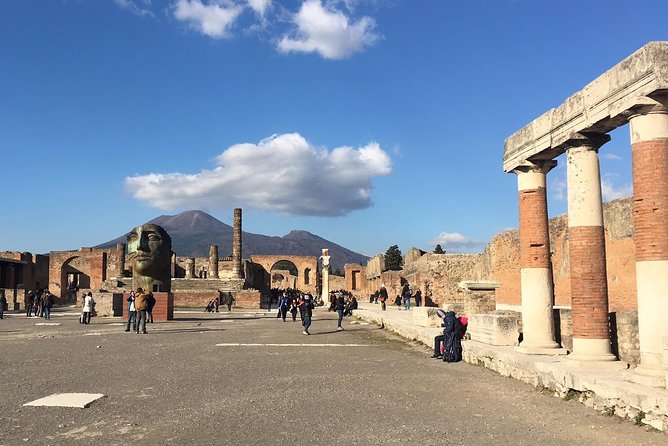
The meeting point is Piazza Esedra, 10/13, 80045 Pompei NA, Italy. The tour returns to this same point at the end. The location is near public transportation, which makes it practical if you are arriving in Pompeii without a car.
Your confirmation arrives within 48 hours of booking, subject to availability. Since this is a private activity and is booked, on average, about seven days ahead, I would not leave it until the last moment if your schedule is fixed.
Several start times are offered. That matters at Pompeii, where the time of day can affect both heat and the feel of the site. You can choose a departure that fits your wider day, though the available times depend on booking conditions.
The experience is offered in English. A mobile ticket is provided, so keep the booking details easy to reach on your phone.
The Forum: Pompeii’s Main Public Square
The Forum is the natural center of a Pompeii introduction. This was the city’s main square, where public, religious, and commercial activity met. It is also the place where the scale of ancient Pompeii becomes easier to grasp.
Your guide can explain how the surrounding buildings fit together and why the square mattered. Without that context, the Forum can look like a collection of foundations and upright columns. With an archaeologist beside you, the open space begins to read as a planned civic center.
I like that the Forum is paired with smaller, more practical stops later in the tour. You see both the official face of the city and the places that supported daily life. That balance keeps the visit from becoming a parade of impressive but disconnected ruins.
Do not expect a leisurely study of every structure in the Forum during this two-hour route. The value lies in understanding its role, then moving on to see how that public world connected with homes, shops, and workshops.
Theatres and Sacred Areas
Pompeii’s theatres reveal another side of public life. These spaces were built for shared experiences, not private business or household routines. Your guide can place the theatres within the wider social life of the city and explain why they mattered to Roman communities.
The sacred area adds a religious dimension to the walk. Ancient cities were not divided into tidy modern categories, with religion kept apart from civic life. Public spaces, temples, ceremonies, and daily business often sat close together.
These stops are especially useful if you want more than a list of famous ruins. The guide’s role is to connect architecture with use. You are not only looking at surviving walls, but asking what kind of activity took place there and who used the space.
Because the tour is private, you can spend a little more time on the parts that interest your group. A visitor fascinated by Roman entertainment may want more explanation at the theatres. Someone curious about religion or city planning may prefer to linger near the sacred area.
More Walking Tours in Pompeii
- Pompeii 3 Hours Walking Tour Led by an Archaeologist
★ 5.0 · 126 reviews - Explore Pompeii: 2-Hour Guided Walking Tour with Included Ticket
★ 4.5 · 77 reviews - Pompeii: walking tour with 3D glasses and with entrance ticket
★ 4.5 · 61 reviews - Pompeii walking tour
★ 5.0 · 29 reviews
Thermal Baths and the Roman Routine
The thermal baths show how important public bathing was in Roman society. Baths were not simply places to get clean. They were social spaces and part of the regular rhythm of urban life.
This stop helps correct a common mistake about Pompeii. The city was not made only of temples, villas, and government buildings. It also needed practical services and shared facilities that supported residents day after day.
An archaeologist can explain how the bath complex worked and what its different spaces were for. The surviving structure may require some imagination, but that is where a trained guide earns the fee. You get an explanation of the building rather than a quick glance at tiled walls.
The baths are also a good contrast with the private homes on the route. Public bathing shows how residents shared parts of daily life, while the houses show how families and households organized their own space.
The Thermopolium: Ancient Fast Food
One of the more memorable stops is the Thermopolium, a Roman fast-food establishment. The name alone makes the site easy to remember, but the important point is what it tells you about urban life.
Not everyone prepared every meal at home. A business serving ready food points to a city with workers, shoppers, and residents using commercial services. It makes Pompeii feel less like an archaeological site and more like a functioning town.
This is the kind of detail I value on a Pompeii tour. The Forum may be grander, but the Thermopolium gives you a direct connection to ordinary habits. You can picture people stopping for food during the day rather than thinking only about emperors and monuments.
The stop is also a good example of why the private tour format helps. You can ask how the counter worked, who might have used it, and how it fits with the bakeries and markets nearby. The exact level of detail depends on the guide and the conditions during your visit, but the subject is naturally engaging.
Bakery, Fabric Market, and Working Pompeii
The bakery brings the city’s food system into clearer view. A bakery was more than a room with an oven. It was a working business that required supplies, equipment, labor, and customers.
Seeing it alongside the Thermopolium gives you a small economic picture of Pompeii. One place produced food, another sold prepared meals, and the surrounding market activity helped keep the town running.
The fabric market adds another trade to the route. Together, these stops move your attention away from wealthy households and major monuments. You get a glimpse of production and commerce, the less glamorous work that made city life possible.
This is where I find the tour’s focus on daily life most useful. A general walk through Pompeii can leave you remembering columns and large walls. A bakery and fabric market give you more concrete memories, and they make the ancient city easier to understand.
Private Houses and the Shape of Home Life
The private buildings offer a look at how Pompeii’s residents lived away from public squares. Houses can reveal social status, household organization, decoration, and the relationship between private rooms and open areas.
The tour does not promise a specific named house, so you should not book it expecting one particular residence. Instead, you get private architecture as part of a wider route that also includes public and commercial spaces.
That broad approach suits first-time visitors. You learn how the pieces fit together: public squares for civic life, theatres for entertainment, baths for social routines, shops for commerce, and houses for domestic life.
If your main interest is detailed wall painting, mosaics, or one famous villa, you may want a longer or more specialized visit. For a general introduction, the inclusion of houses helps round out the picture.
Less-Touristed Corners and the Value of a Private Guide
The tour includes an effort to show areas beyond the standard tourist path. That does not mean every restricted or lesser-known section will be open on every date. Pompeii’s access conditions can change, so treat this as a useful possibility rather than a guarantee of a particular secret room.
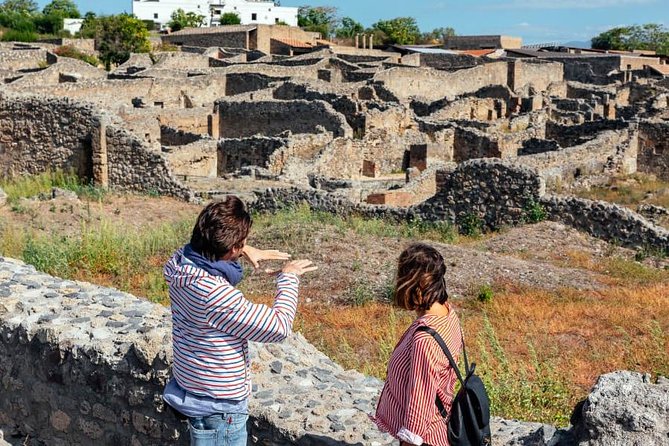
The real advantage is flexibility. A private guide can adjust the explanation to your interests and keep the pace suited to your group. With up to eight people, the tour remains small enough for questions and conversation.
This is also why the guide’s archaeology degree matters. Pompeii rewards interpretation. You need help understanding what a space was used for, how public and private areas related to one another, and why a modest bakery can tell you as much about Roman life as a grand temple.
Yana is the guide named in the available feedback, and the tour team includes other archaeologists. The praise connected to Yana is specific: the booking process was easy, and the experience matched the group’s expectations. That suggests a straightforward, well-organized style, though guide assignment can vary.
Is $336.43 Good Value for Up to Eight People?
The price is $336.43 per group, with up to eight participants. At full capacity, that works out to roughly $42 per person before admission, although the per-person figure changes if fewer people join your group.
Pompeii entry is separate at €20 per person. For eight people, that adds €160 in admission fees. Keep the extra cost in mind when comparing this with a group tour or a self-guided visit.
The price makes the most sense for a family or friend group that can share the private fee. You are paying for an English-speaking licensed guide with an archaeology degree, a private setting, and a focused route through a huge archaeological park.
For one or two people, the cost is harder to justify unless you place a high value on personal attention. A cheaper large-group option may suit you if budget matters more than flexibility. A self-guided visit costs less for the guiding portion, but you give up the explanations that make the ruins easier to read.
The tour’s value is strongest for first-time visitors who want a clear introduction without spending several hours wandering uncertainly. It is less compelling for someone who already knows Pompeii well and mainly wants time to explore independently.
Practical Limits: Weather, Tickets, and Participation
Most travelers can take part, and service animals are allowed. The activity runs in normal outdoor archaeological conditions, so comfortable clothing and sensible footwear are practical choices, even though the supplied details do not specify a required dress code.
Admission is not included. You need to budget €20 per person for Pompeii Archaeological Park entry in addition to the tour price.
The experience requires good weather. If poor weather causes cancellation, you are offered a different date or a full refund. For other cancellations or changes, the payment is non-refundable and cannot be amended, so check your plans before booking.
The tour is private, and only your group participates. That makes it a good fit for families, couples, friends, and small groups with different interests. It also lets you ask questions freely, which is harder in a crowded group.
Who Should Book This Pompeii Walk?
I would choose this tour if you are visiting Pompeii for the first time and want help turning a large site into a readable story. The route covers the big civic spaces while giving equal attention to food, trade, homes, and bathing.
It is particularly useful for groups of four to eight people. The shared group price becomes easier to justify, and the private format gives you a more personal pace than a large scheduled tour.
Families may appreciate the Thermopolium, bakery, theatres, and homes because these places make ancient life easier to picture. History-minded visitors will value the archaeologist guide, while casual visitors can enjoy the practical details without needing specialist knowledge.
I would think twice if you want a long, slow study of individual buildings. Two hours passes quickly, and Pompeii contains far more than this route can cover. You might prefer to add independent time before or after the guided walk if your schedule allows.
Final Verdict: A Strong Introduction, Not a Complete Pompeii Day
Book this tour if you want a private, archaeology-led introduction to Pompeii, especially if your group can share the cost. The blend of Forum, theatres, baths, sacred areas, bakery, Thermopolium, fabric market, and homes gives you more than a monument checklist.
Skip it if you need the cheapest possible visit, dislike fixed timing, or already understand Pompeii and want to explore alone. For everyone else, the two-hour length is both its strength and its limit: it keeps the first look focused, but you should not mistake it for a complete tour of the park.
The perfect rating from 15 reviews and the 100 percent recommendation are encouraging, with Yana receiving particular praise for delivering the expected experience. Still, the practical decision comes down to group size. With several people sharing the fee, this is a sensible way to get expert context and a personal route through one of Italy’s most demanding archaeological sites.
FAQ
How long is the Pompeii walking tour?
The tour lasts approximately two hours.
Where does the tour start?
It starts at Piazza Esedra, 10/13, 80045 Pompei NA, Italy.
Where does the tour end?
The activity ends back at the meeting point at Piazza Esedra.
Is the tour private?
Yes. Only your group participates, with a maximum of eight people.
Is the guide an archaeologist?
The tour is led by a licensed guide with a degree in archaeology.
Is the tour offered in English?
Yes, English is the offered language.
Is the Pompeii entrance fee included?
No. Admission to Pompeii Archaeological Park costs €20 per person and is not included.
How much does the private tour cost?
The price is $336.43 per group, for up to eight people.
Are several tour times available?
Yes. You can choose from several tour times, subject to availability.
What happens if bad weather cancels the tour?
If poor weather causes cancellation, you are offered a different date or a full refund.
More Ways to See Pompeii
- Discover the Ancient Ruins of Pompeii: Day Trip from Rome
★ 3.5 · 2,247 reviews - Pompeii Ticket + Tour with Optional Tasting Experience at Pompeii
★ 5.0 · 663 reviews - Explore Pompeii with an Archaeologist
★ 5.0 · 511 reviews - Sharing Tour of Pompeii
★ 5.0 · 487 reviews
More Pompeii Tours Led by an Archaeologist
- Pompeii Small Group Tour with an Archaeologist
★ 5.0 · 6,593 reviews - Pompeii and Herculaneum Small Group Tour with an Archaeologist
★ 5.0 · 1,350 reviews - Skip the Line Guided Tour of Pompeii led by an Archaeologist
★ 5.0 · 703 reviews - Pompeii Skip-the-line Tour with Archaeologist Guide
★ 5.0 · 559 reviews
Just added around Pompeii
- Wine Tasting and Winery Tour in Vesuvio National Park with Lunch★ 4.5 · 3 reviews
- Wine tasting in the Vesuvius national park★ 5.0 · 3 reviews
- Mt. Vesuvius Wine Tasting and Lunch Experience from Pompeii★ 4.5 · 20 reviews
- Traditional Neapolitan Dinner in Pompei – Villa Franca – Family Restourant★ 5.0 · 8 reviews
- Private Guided Tour and VR Headsets in the Ancient Pompeii★ 5.0 · 3 reviews
- Visit Pompeii with a local expert guide★ 5.0 · 10 reviews
- Tour Mount Vesuvius with Entry Tickets and Round Trip Transfer Included★ 3.5 · 4 reviews
- Vesuvius tour entrance to the crater and return bus★ 4.5 · 9 reviews
Pompeii Tours with an Archaeologist, compared.

Pompeii Small Group Tour with an Archaeologist
Read our review →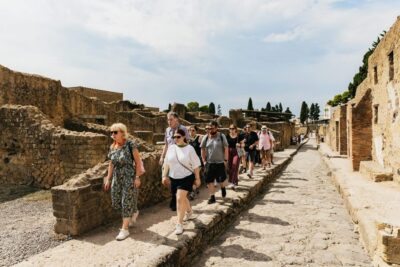
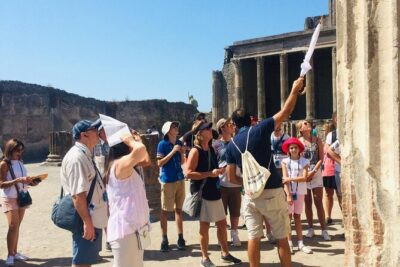
Pompeii and Herculaneum Small Group Tour with an Archaeologist
Read our review →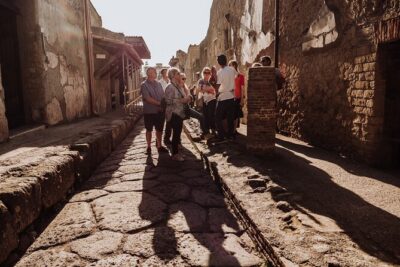
Herculaneum Small Group Tour and Ticket With an Archaeologist
Read our review →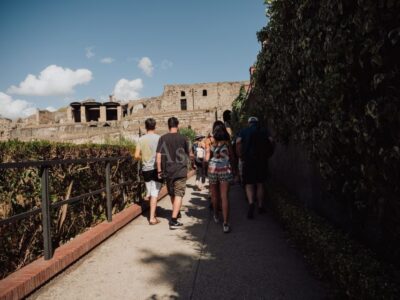
Pompeii & Herculaneum with Archaeologist Guide
Read our review →
Pompeii Private Tour with an Archaeologist and Skip The Line – 3 hours
Read our review →
Pompeii Private Tour with an Archaeologist and Skip The Line
Read our review →Browse the lists this tour appears in