
Reviewed · POMPEII TOURS WITH AN ARCHAEOLOGIST
Pompeii with an archaeologist, the original!!!
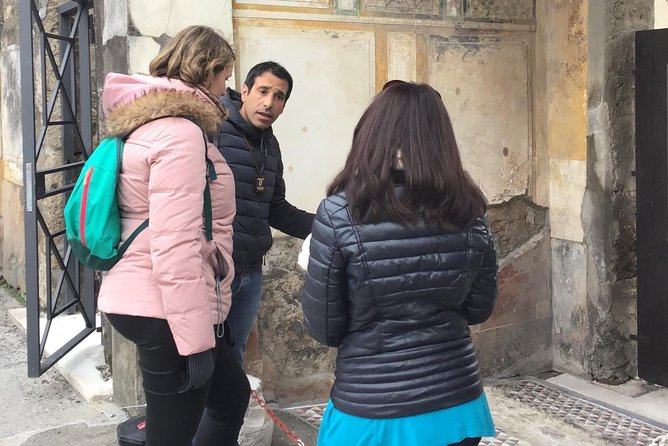
Pompeii becomes far more than a row of ruined walls when you walk through it with an archaeologist who has actually excavated and researched the site. This private tour is led by the guide or trusted archaeological colleagues, with Valeria among the possible guides. You’ll focus on houses, shops, baths, theater, lupanary, plaster casts, and the small details of Roman daily life.
I like the private format, which keeps the visit limited to your own group of up to eight people. I also like the afternoon timing: the cooler hours and late-day light can make a two-hour walk more comfortable and atmospheric. The main drawback is that the €226.89 group price does not include Pompeii admission, and two hours gives you only a carefully chosen introduction to a very large site.
Key points to know before booking
- An archaeologist leads your group: The guide has a degree in archaeology and postgraduate training from Federico II University in Naples, with excavation and research experience at Pompeii.
- A private visit for up to eight: You are not joining a large mixed group, so the tour can stay focused on your party.
- A two-hour route through major sights: Expect houses, decorated interiors, shops, thermal baths, theater, lupanary, and plaster casts.
- Afternoon hours avoid the worst heat: The timing is planned for cooler conditions and the softer light near the end of the day.
- Tickets cost extra: Adult admission is €19, European Union visitors aged 18 to 24 pay €3, and children under 18 enter free.
- Valeria may guide you: The available archaeologist can vary, but Valeria is specifically identified as one of the guides.
Why an excavating archaeologist changes Pompeii
Pompeii is easy to admire and surprisingly easy to misunderstand. Without context, you may see a bakery, courtyard, or wall painting and move on in seconds. An archaeologist can connect those remains to Roman habits, building choices, commerce, decoration, and family life.
That is the central reason to book this experience. The guide is not simply escorting you between famous ruins. The advertised background includes a degree in archaeology, postgraduate study at the University of Naples Federico II, excavation work, and research projects at Pompeii. Those qualifications matter most when you want the site explained as evidence, not just as scenery.
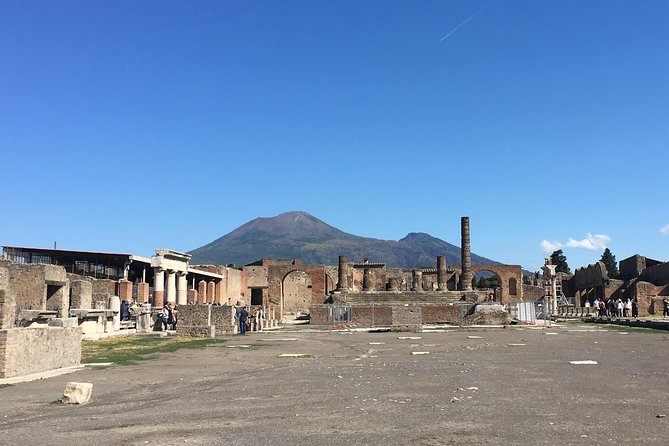
I especially like the promise to cover ordinary life alongside the headline monuments. Pompeii is famous for the eruption of Mount Vesuvius in AD 79, but the city is also valuable because it preserves the routines of a Roman town. Shops, baths, homes, entertainment spaces, and streets show how people worked, relaxed, worshipped, socialized, and displayed wealth.
You should also know what this tour is not. It is not a full-day archaeological survey, and it cannot cover every corner of a 66-hectare site in two hours. Instead, it offers a guided selection of the most important and recognizable places, with the guide helping you understand how the pieces fit together.
More Pompeii tours led by an archaeologist:
- Pompeii Small Group Tour with an Archaeologist
★ 5.0 · 6,593 reviews - Pompeii and Herculaneum Small Group Tour with an Archaeologist
★ 5.0 · 1,350 reviews - Skip the Line Guided Tour of Pompeii led by an Archaeologist
★ 5.0 · 703 reviews
Meeting at Piazza Esedra
The meeting point is Ristorante Suisse at Piazza Esedra, 10/13, in Pompeii. The tour ends back at the same meeting point, which gives you a simple start and finish without a complicated transfer arrangement.
Check the exact location before you set out. A clear meeting point matters at Pompeii, where the entrances and surrounding streets can be confusing. Since the activity uses a mobile ticket, keep your booking available on your phone and allow enough time to reach Piazza Esedra.
The tour includes a private visit and a local government guide. The guide may be the archaeologist who leads the experience directly or one of the trusted archaeological colleagues arranged by the provider. If having Valeria specifically is important to you, ask about guide availability before booking rather than assuming she will lead every departure.
A focused walk through ancient Pompeii
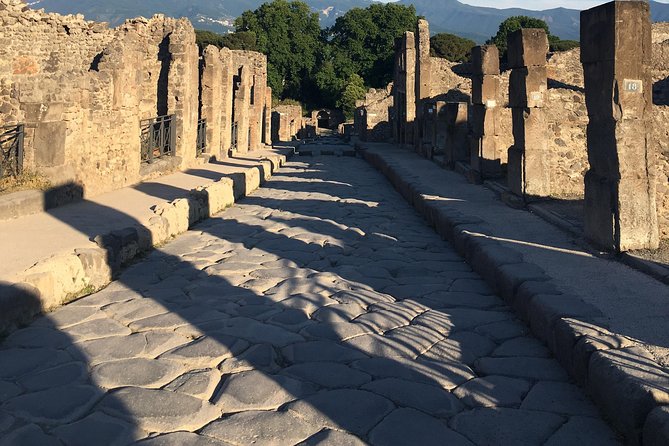
The tour begins inside Pompeii Archaeological Park, with admission purchased separately. The city was buried by the eruption of Vesuvius in AD 79, preserving an unusual record of Roman urban life. That preservation is what makes Pompeii different from a standard collection of classical ruins.
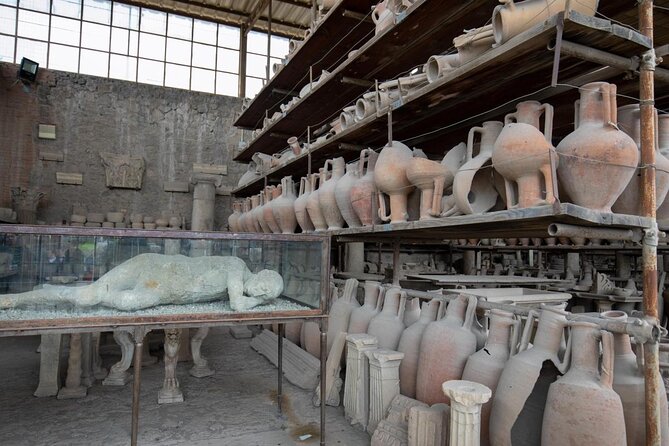
The route is designed around important and famous buildings. You can expect to see examples of the typical Roman house, including decorative elements, along with shops, thermal baths, the theater, the lupanary, and the plaster casts often described as moving molds. The exact order may depend on access, conditions, and the guide’s judgment.
Roman houses and decoration
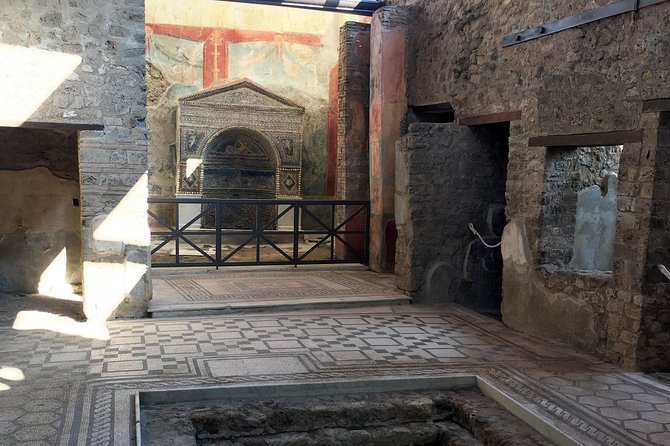
The houses are among the best places to see how private life worked in Pompeii. Their rooms and decorations can reveal social status, taste, entertaining habits, and the division between public-looking spaces and more private areas.
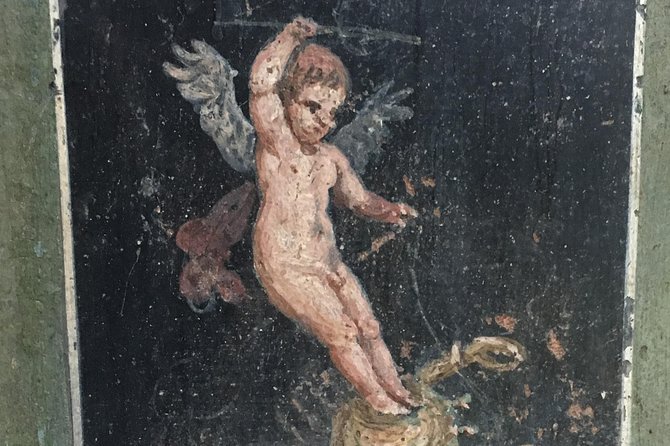
I would pay close attention to how the archaeologist explains the decorations rather than treating them as isolated artwork. A painted wall is not only a pretty surface. Its subject, placement, and setting can help explain what the homeowner wanted visitors to see.
Because the tour lasts about two hours, you will not examine every house in detail. The benefit is that the guide can select representative examples and explain why they matter, instead of leaving you to compare dozens of similar-looking rooms on your own.
More ways to see Pompeii:
- Discover the Ancient Ruins of Pompeii: Day Trip from Rome
★ 3.5 · 2,247 reviews - Pompeii Ticket + Tour with Optional Tasting Experience at Pompeii
★ 5.0 · 663 reviews - Pompeii private tour with an Official Guide
★ 5.0 · 631 reviews - Pompeii Private Tour with an Archaeologist and Skip The Line – 3 hours
★ 5.0 · 564 reviews
Shops and working life
Pompeii is also a city of business. Shops help you picture the practical side of Roman life, from buying goods to preparing food and serving customers. These spaces provide a useful counterpoint to the grander homes and public buildings.
This is where the archaeological approach should be especially useful. You can ask how a space functioned, what its layout suggests, and how commercial activity fitted into the street. The tour description places daily life and Roman habits at the center, so expect attention to ordinary work as well as impressive architecture.
Thermal baths and social routines
The thermal baths were not simply places to wash. They were part of Roman social life, and their remains help explain how people spent time in public settings.
A guide can make the surviving rooms easier to read by connecting them to use and routine. You may see the building as a series of walls without help, while the archaeologist can explain the purpose of the spaces and their place in Pompeii’s daily rhythm. This is another area where a specialist guide adds more than a recorded commentary.
Theater and public entertainment
The theater represents Pompeii’s public side. It shows that entertainment and shared gatherings were important parts of city life, not occasional extras.
The visit includes the theater among its main stops, but the supplied details do not specify which theater or how long the group spends there. You should think of it as one part of a broad two-hour route rather than a stand-alone theater tour.
The lupanary and difficult subjects
The lupanary is one of Pompeii’s most recognizable stops. It can also attract attention for the wrong reasons, with people treating it as a quick curiosity instead of part of a larger Roman social setting.
An archaeologist can place the building within the city and discuss it as evidence of Roman habits and public life. The tour’s stated aim is to explain daily routines rather than simply point out famous attractions, so this stop should have more context than a passing visit.
Plaster casts and the human cost of the eruption
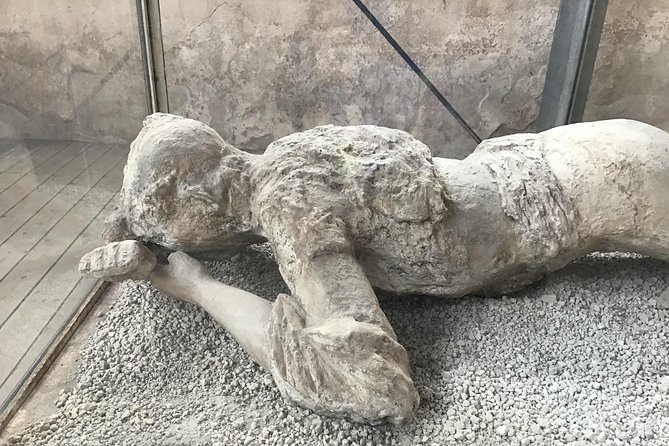
The plaster casts are among Pompeii’s most powerful remains. They bring the eruption into personal focus and show that the disaster was not only a matter of ash-covered buildings and preserved objects.
The description refers to the moving molds, meaning the casts created from voids left by bodies in the volcanic material. Their presence can make the visit emotionally heavier, especially after seeing the city’s ordinary homes and shops. A good explanation should connect these casts to the eruption while treating them with care.
Why the afternoon schedule may suit you
The afternoon departure is planned to avoid the worst heat and crowds. That is a practical advantage, especially because Pompeii requires walking across a broad open-air archaeological site. Cooler conditions can help you listen, look closely, and keep your energy for the full two hours.
Late-day light can also change the feel of the ruins. The softer light may bring out textures and decoration that look flat under strong midday sun. That said, afternoon conditions vary by season, and the tour still requires suitable weather.
You should not book this time slot solely for photography. The main value is comfort and interpretation. The light is a pleasant extra, while the archaeologist’s explanation remains the reason to choose the tour.
The price and what it means for a group
The cost is $226.89 per group of up to eight people. That makes the price easier to assess as a private experience rather than a per-person ticket.
For a full group of eight, the guide cost works out to about $28.36 per person before admission. For two people, the same group price is a much larger per-person expense. The value improves when you can share it with family or friends who want the same level of attention.
Pompeii admission is separate. Adult tickets cost €19, European Union visitors aged 18 to 24 pay €3, and admission is free for minors. Add those costs to your planning, especially if your group includes several adults.
I would choose this tour if you care about interpretation, prefer a private setting, and want to ask questions as you walk. If you mainly want the cheapest way to enter Pompeii or plan to spend most of the day exploring every district, the fixed two-hour private price may not suit your priorities.
Group size, language, and personal attention
Only your group participates, with a maximum of eight people. That is small enough to keep the guide’s attention within your party and avoids the stop-and-start feel of a large tour.
The available information specifically praises Valeria’s communication and English. Her inclusion as a possible guide is useful for English-speaking visitors who want clear explanations and an easy conversation. The assigned archaeologist can vary, so confirm the language and guide details if those points are essential to you.
A private tour also gives you room to ask about the things you notice. You can pause over a household decoration, a shop layout, or a public building instead of following a fixed lecture meant for strangers with different interests.
Who will get the most from this Pompeii tour
This experience suits you best if you want Pompeii explained by someone with archaeological training and site experience. It is also a good match for a small family or group of friends that values privacy and wants to divide the cost.
It should appeal to first-time visitors who want a clear introduction to the city’s key buildings. You will see enough variety to understand that Pompeii was not only a disaster site, but a functioning Roman town with homes, businesses, baths, entertainment, and social customs.
It may be less suitable if you want a long, unhurried visit. Two hours passes quickly, and the route cannot cover all 66 hectares. Independent visitors who prefer to set their own pace may want more time after the tour, assuming they arrange admission and site access according to current rules.
The walking demands are not described in detail, but the activity takes place across an archaeological park. Most people can participate, service animals are allowed, and the site is near public transportation. You should still plan for an outdoor walk and choose comfortable footwear.
Booking, weather, and cancellation
Confirmation arrives within 48 hours of booking, subject to availability. The experience is also booked well ahead by many people, with an average lead time of 51 days, so early planning is sensible if your Pompeii date is fixed.
Free cancellation applies when you cancel at least 24 hours before the local start time. Changes or cancellations made within 24 hours are not accepted for a refund. The tour requires good weather, and if poor weather causes cancellation, you can receive a different date or a full refund.
Because this is a private activity, a weather cancellation affects only your group rather than a large shared departure. Keep your schedule flexible if rain is likely, and check your phone for the confirmation details.
Should you book it?
Book this Pompeii tour if you want a real archaeological perspective, a private group, and a compact route through the city’s most important sights. The guide’s excavation and research background gives the experience a strong academic foundation without requiring you to spend a full day on site.
The $226.89 price makes the most sense for a group of several people. Remember to add admission, and do not expect two hours to reveal every part of Pompeii. For a focused first visit, especially in the cooler afternoon, this is a solid choice. For maximum time and independence, use the tour as an introduction and continue exploring on your own afterward.
FAQ
How long does the Pompeii tour last?
The visit lasts approximately two hours.
How many people can join the private tour?
The price covers one private group of up to eight people.
Is the Pompeii entrance ticket included?
No. Admission is separate from the tour price.
How much does Pompeii admission cost?
Adult admission is €19. European Union visitors aged 18 to 24 pay €3, and minors enter free.
Where does the tour meet?
The meeting point is Ristorante Suisse at Piazza Esedra, 10/13, 80045 Pompeii, Italy.
Where does the tour end?
The activity ends back at the meeting point.
Who leads the tour?
The visit is led by the provider or a trusted archaeological colleague. Valeria is one possible guide, and the advertised guide has archaeological training, excavation experience, and research experience at Pompeii.
Can I cancel for a full refund?
Yes. You can cancel at least 24 hours before the local start time for a full refund. Cancellations or changes made less than 24 hours before the start are not refunded, and poor weather may lead to a new date or a full refund.
Just added around Pompeii
- Wine Tasting and Winery Tour in Vesuvio National Park with Lunch★ 4.5 · 3 reviews
- Mt. Vesuvius Wine Tasting and Lunch Experience from Pompeii★ 4.5 · 20 reviews
- Wine tasting in the Vesuvius national park★ 5.0 · 3 reviews
- Traditional Neapolitan Dinner in Pompei – Villa Franca – Family Restourant★ 5.0 · 8 reviews
- Private Guided Tour and VR Headsets in the Ancient Pompeii★ 5.0 · 3 reviews
- Visit Pompeii with a local expert guide★ 5.0 · 10 reviews
- Tour Mount Vesuvius with Entry Tickets and Round Trip Transfer Included★ 3.5 · 4 reviews
- Vesuvius tour entrance to the crater and return bus★ 4.5 · 9 reviews
Pompeii Tours with an Archaeologist, compared.

Pompeii Small Group Tour with an Archaeologist
Read our review →
Pompeii and Herculaneum Small Group Tour with an Archaeologist
Read our review →
Herculaneum Small Group Tour and Ticket With an Archaeologist
Read our review →
Pompeii & Herculaneum with Archaeologist Guide
Read our review →
Pompeii Private Tour with an Archaeologist and Skip The Line – 3 hours
Read our review →
Pompeii Private Tour with an Archaeologist and Skip The Line
Read our review →Browse the lists this tour appears in