
Reviewed · POMPEII TOURS WITH AN ARCHAEOLOGIST
Pompeii with an archaeologist, small group!!!
Pompeii is most rewarding when you can connect its ruins to ordinary Roman life. This small-group walk does that with an archaeologist, taking you from decorated houses and shops to baths, theaters, the lupanary, and the famous moving molds left by the eruption of Vesuvius in 79 AD. Luca, one named guide, is praised for being both clear and friendly.
I like the 12-person limit, which should make it easier to hear explanations and ask questions. I also like the afternoon timing: it is planned to reduce the worst heat and crowds, while the later light gives the old streets a more atmospheric look. The main drawback is the roughly two-hour length. Pompeii covers 66 hectares, so this tour gives you a strong introduction, not a full day of exploration.
Key points at a glance
- See Pompeii with an archaeologist: Get context for buildings, decorations, Roman habits, and daily work instead of simply walking past the stones.
- Small group of 12 maximum: A more manageable size for listening, questions, and staying together in a large archaeological site.
- Afternoon timing: The schedule is designed to avoid some heat and crowds and makes use of softer light for photography.
- Major Pompeii sights in two hours: Expect houses, shops, thermal baths, a theater, the lupanary, and the plaster casts.
- Price of $66.09 per person: The cost includes the guide and Pompeii Express entrance ticket, making the value depend on how much context you want.
- Simple meeting point: Meet at Ristorante Suisse on Piazza Esedra, 10/13, in Pompei, then return there at the end.
Why an archaeologist changes the Pompeii visit
Pompeii can be visually striking but confusing. You see walls, paving stones, courtyards, counters, and open rooms, yet it is not always clear what each space was for or how Romans used it. An archaeologist can turn those fragments into a readable town.
That matters here because the tour is not limited to a single famous building. It uses several types of places to explain Roman life: the private home, the commercial street, public bathing, entertainment, sex work, and the physical evidence left by the eruption.
I would choose this approach if you want the site to make sense rather than simply collect photographs. The guide is meant to explain both important buildings and daily habits, so you should come away with a better idea of how people lived, worked, relaxed, and moved through Pompeii.
The available feedback names Luca and describes him as competent and friendly, with clear explanations that made the visit feel complete. That is useful information for a tour like this. The ruins are impressive on their own, but the guide’s ability to connect one building to the next is what determines how much you get from two hours.
More Pompeii tours led by an archaeologist:
- Pompeii Small Group Tour with an Archaeologist
★ 5.0 · 6,593 reviews - Pompeii and Herculaneum Small Group Tour with an Archaeologist
★ 5.0 · 1,350 reviews - Skip the Line Guided Tour of Pompeii led by an Archaeologist
★ 5.0 · 703 reviews
Entering a 66-hectare Roman city
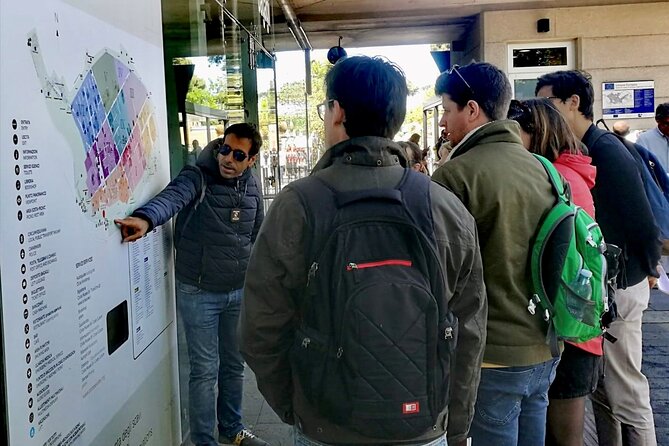
The tour begins at Ristorante Suisse, at Piazza Esedra, 10/13, in Pompei. The activity also ends at this meeting point, so you do not need to arrange a separate pickup or wonder where the walk finishes.
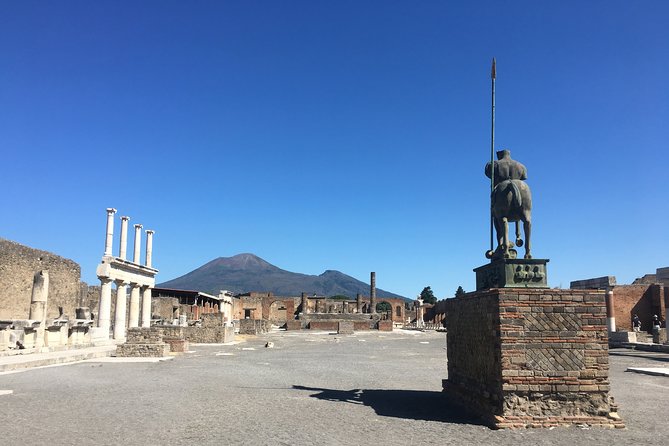
From there, the focus is ancient Pompeii, a Roman city covering 66 hectares. The eruption of Vesuvius buried the city in 79 AD, preserving an unusual amount of information about homes, shops, public facilities, and human activity.
The scale is important. Pompeii is not a compact monument that you can understand from one courtyard. It is a full urban area, and a two-hour route has to make choices. This tour concentrates on the most famous and useful examples, giving you a framework for the larger site.
That makes the experience a good first visit. If you have only a short amount of time, an archaeologist can point you toward the parts that best explain the city. If you already know Pompeii well, the shorter route may feel limited, since you will not have time to cover every street or building.
Roman homes and the details inside them
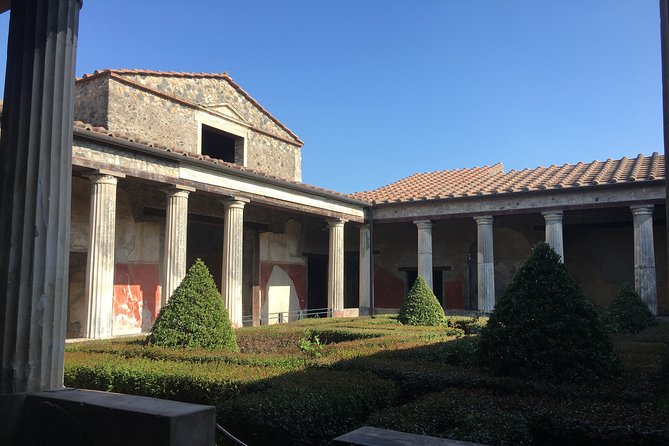
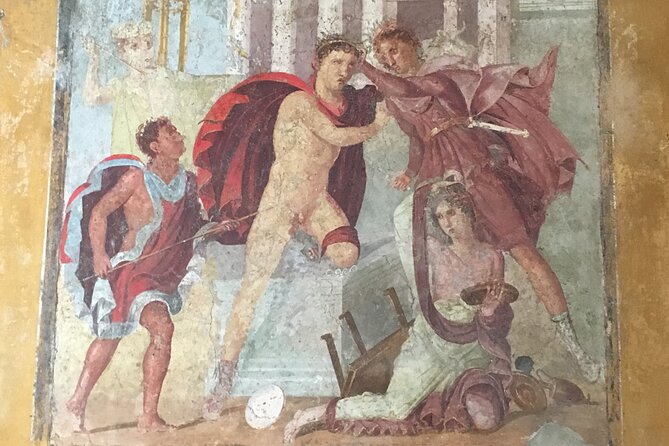
The tour includes the typical Roman house and its decorations. This is one of the most valuable parts of the visit because a home can show social habits more clearly than a grand public monument.
Look for the way rooms are arranged, the decorative elements, and the distinction between areas used for different purposes. The point is not only to admire painted surfaces or architectural remains. It is to understand how a Roman household presented itself and organized everyday life.
The tour’s emphasis on decorations also suits photographers. Pompeii gives you strong visual material, but a guide can help explain why particular rooms or designs mattered. You will be better placed to notice details rather than treating the site as a collection of old walls.
The drawback is time. Homes can reward slow looking, and a guided group needs to keep moving. If a particular house catches your attention, you may have to accept a shorter look in exchange for seeing the rest of the route.
Shops, baths, and the working city
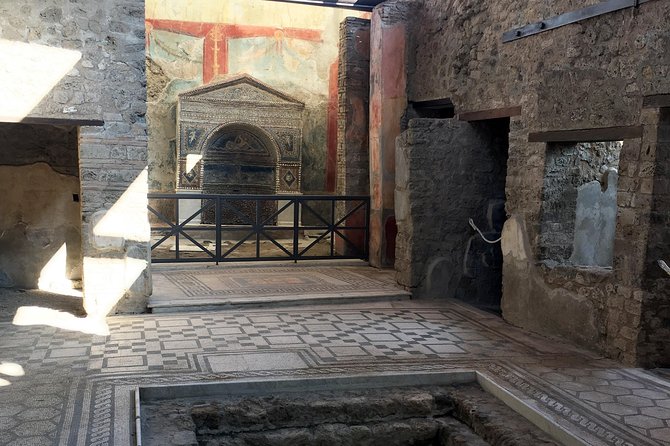
The itinerary also includes shops and thermal baths. These stops shift the focus away from private life and toward the systems that kept the city moving.
Shops help you picture Pompeii as a working town rather than a frozen archaeological display. The baths point to the social side of Roman public life, where bathing was connected to routine and community as well as cleanliness.
I like this range because it prevents the tour from becoming a parade of elite houses. The inclusion of commercial and public spaces gives the visit a broader human scale. You are not only looking at how wealthy residents lived. You are also considering the places people used for business and public routines.
The information provided does not specify which individual shops, bath complexes, or houses you will enter. That is worth keeping in mind if you are hoping for one exact landmark. The route is described by its main types of buildings rather than by a guaranteed list of room-by-room stops.
More ways to see Pompeii:
- Discover the Ancient Ruins of Pompeii: Day Trip from Rome
★ 3.5 · 2,247 reviews - Pompeii Ticket + Tour with Optional Tasting Experience at Pompeii
★ 5.0 · 663 reviews - Pompeii private tour with an Official Guide
★ 5.0 · 631 reviews - Pompeii Private Tour with an Archaeologist and Skip The Line – 3 hours
★ 5.0 · 564 reviews
The theater and the lupanary
The theater adds another part of Pompeii’s public life. It helps show how entertainment fit into the city and gives the tour a chance to discuss the way Romans spent leisure time.
The lupanary, or brothel, is one of the site’s most famous and talked-about places. Including it makes the visit more candid about Roman society. It also gives the archaeologist a chance to explain a part of daily life that is often reduced to a quick joke or a dramatic photograph.
For families, this stop may deserve a little thought. The experience is specifically recommended for families, but the lupanary is an adult subject. The supplied information does not give an age restriction or explain how the guide presents it, so parents should decide if that topic suits their children.
The tour’s strength is its variety. In two hours, you move from domestic decoration to work, bathing, theater, and sex work. That mix creates a more complete picture than a route focused only on grand houses.
The plaster casts and the eruption of 79 AD
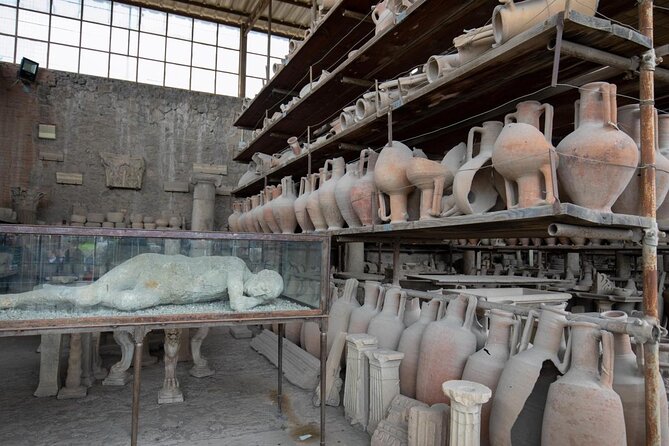
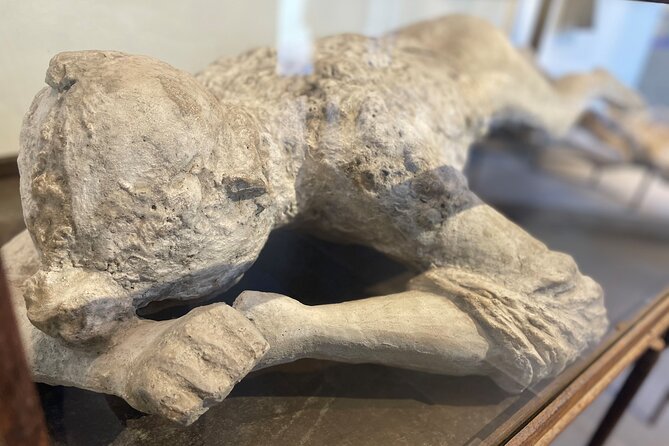
The moving molds, more commonly understood as plaster casts of victims, bring the eruption into sharp focus. They are among Pompeii’s most emotional remains because they show the human cost of the disaster.
The tour includes these casts without making them the only story. That balance matters. Pompeii is often presented mainly as a tragedy, but the archaeological value also comes from the ordinary streets, buildings, tools, decorations, and habits preserved by the eruption.
An archaeologist can help you hold both ideas together. You see the city as a living Roman community, then confront the sudden event that ended its life. The result is more meaningful than simply hearing the date 79 AD and moving on.
Because the experience is short, you should expect an introduction rather than a detailed study of the eruption. The tour gives you a guided look at the most famous evidence, while a longer independent visit would allow more time at each location.
Why the afternoon schedule matters
Pompeii can be tiring, particularly when the sun is strong and the site requires steady walking. This experience is scheduled in the afternoon to help avoid the heat and some of the busiest periods.
That does not mean the site will be empty or cool. The schedule is a practical attempt to improve conditions, not a promise of solitude or mild weather. Still, timing can make a real difference when you are walking through a large open archaeological area.
The late-day light is another reason to consider this departure. Softer light can make walls, street lines, and decorations easier to photograph, and it can give the old city a more memorable mood.
Photography enthusiasts are a natural match for this timing. You should still keep the group moving and listen for the guide’s instructions, but the afternoon setting gives you a better chance to make images with texture and contrast rather than harsh midday glare.
What the 12-person limit means
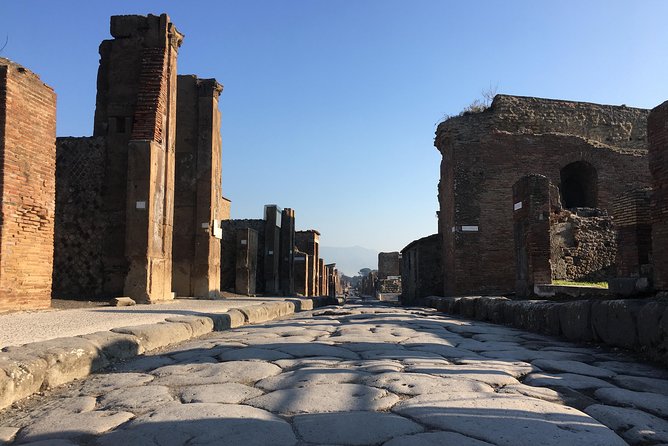
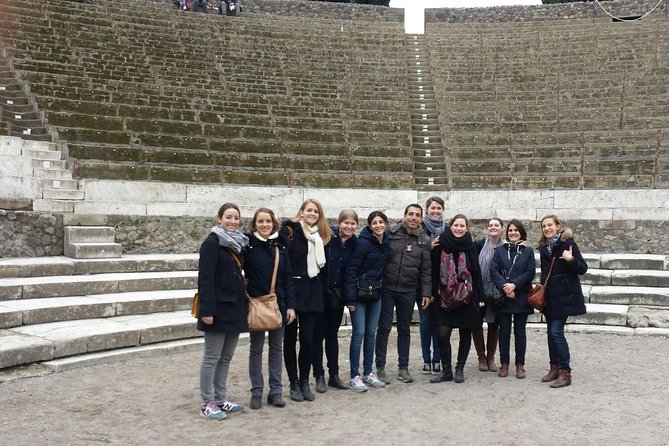
A maximum of 12 people is small enough to feel more personal than a large coach-style group. You should have a better chance of hearing the archaeologist, keeping track of the route, and asking a question without turning the visit into a public performance.
The size also matters in narrow or crowded areas. A group of 12 still needs to stay together, but it is easier to gather around a guide than it would be with several dozen people.
Do not confuse small group with private tour. You will still share the experience with other participants, and the route must suit the whole group. The benefit is a more manageable guided visit, not a custom itinerary.
The mobile ticket is another practical feature. You can use the ticket on your phone, and the Pompeii Express entrance is included. Lunch is not included, so plan that separately before or after the two-hour activity.
Is $66.09 a fair price?
At $66.09 per person, this is not the cheapest way to enter Pompeii. The price includes three useful elements: a small group capped at 12, an archaeologist-led tour, and the Pompeii Express entrance ticket.
The value depends on your priorities. If you are comfortable reading signs, finding your way around a large site, and researching the buildings yourself, independent entry may cost less. You will then have more control over your pace and may spend longer in places that interest you.
If you want the site explained as you go, the price is easier to justify. An archaeologist can help you use two hours well, especially on a first visit. You are paying for interpretation and a planned route, not only for admission.
I would see this as a sensible choice for a short Pompeii visit, families that want structure, and anyone who prefers to understand what they are seeing. It is less compelling for people who already know the ruins or want a full-day archaeological study.
Who should book this Pompeii walk?
I would recommend it to first-time visitors who want the main ideas without committing an entire day. The route covers enough ground to introduce private homes, public life, business, entertainment, and the eruption itself.
Families may appreciate the fixed length and guided structure. Photography enthusiasts should like the afternoon light, while archaeology fans will value the chance to ask questions and hear explanations from a specialist.
You should think twice if you want a slow, independent wander. Pompeii is large, and two hours will pass quickly. You may leave with a clear sense of the city but still have plenty of areas left to explore.
The tour is also a reasonable fit for most people because the activity is near public transportation, service animals are allowed, and most participants can take part. Confirmation is sent within 48 hours of booking, subject to availability. The experience requires good weather and a minimum number of participants, so a cancellation for those reasons may result in another date or a full refund.
Should you book it?
Book this tour if you want a focused introduction to Pompeii with an archaeologist, especially if the $66.09 price fits your budget and you like the idea of a small group. Luca’s praised clarity and friendliness are encouraging, and the route covers the city’s most useful themes rather than only its most photogenic ruins.
Skip it if you want to spend many hours exploring at your own speed. For everyone else, the combination of expert guidance, included entrance, afternoon timing, and a 12-person limit makes this a practical way to get your bearings in one of Italy’s most important ancient sites.
FAQ
Where does the Pompeii tour begin?
Meet at Ristorante Suisse, Piazza Esedra, 10/13, 80045 Pompei, Italy.
Where does the activity end?
The tour ends back at the meeting point at Ristorante Suisse.
How long does the Pompeii experience last?
The guided visit lasts approximately two hours.
What is included in the price?
The price includes the small-group tour, an archaeologist guide, and the Pompeii Express entrance ticket.
Is lunch included?
No. Lunch is not included in the activity.
How large is the group?
The group has a maximum of 12 people.
Is the tour offered in English?
Yes. The experience is offered in English.
Can I cancel for a full refund?
Yes. You can cancel at least 24 hours before the experience start time for a full refund. Cancellations or changes made less than 24 hours before the start time are not refunded or accepted. If poor weather or an insufficient minimum number of participants cancels the tour, you will be offered another date or experience, or a full refund.
Just added around Pompeii
- Wine Tasting and Winery Tour in Vesuvio National Park with Lunch★ 4.5 · 3 reviews
- Mt. Vesuvius Wine Tasting and Lunch Experience from Pompeii★ 4.5 · 20 reviews
- Wine tasting in the Vesuvius national park★ 5.0 · 3 reviews
- Private Guided Tour and VR Headsets in the Ancient Pompeii★ 5.0 · 3 reviews
- Visit Pompeii with a local expert guide★ 5.0 · 10 reviews
- Traditional Neapolitan Dinner in Pompei – Villa Franca – Family Restourant★ 5.0 · 8 reviews
- Tour Mount Vesuvius with Entry Tickets and Round Trip Transfer Included★ 3.5 · 4 reviews
- Vesuvius tour entrance to the crater and return bus★ 4.5 · 9 reviews
Pompeii Tours with an Archaeologist, compared.

Pompeii Small Group Tour with an Archaeologist
Read our review →
Pompeii and Herculaneum Small Group Tour with an Archaeologist
Read our review →
Herculaneum Small Group Tour and Ticket With an Archaeologist
Read our review →
Pompeii & Herculaneum with Archaeologist Guide
Read our review →
Pompeii Private Tour with an Archaeologist and Skip The Line – 3 hours
Read our review →
Pompeii Private Tour with an Archaeologist and Skip The Line
Read our review →Browse the lists this tour appears in