
Reviewed · POMPEII TOURS WITH AN ARCHAEOLOGIST
Pompeii tour with archaeologist
Pompeii makes far more sense with an archaeologist beside you. In about two and a half hours, this tour connects the Forum, temples, homes, theaters, baths, and shops into a picture of daily Roman life, rather than leaving you to wander a huge ruined city with only scattered signs.
I like the small maximum of 15 people, which should make it easier to hear and ask questions. I also like the route’s variety: you see famous sights such as the House of the Faun and Cave Canem, but also a thermopolium, an ancient fast-food counter, and the Stabian Baths.
The main catch is cost. The $42.01 price covers the guide, but your entrance ticket is extra, as are food, drinks, and tips. You’ll also cover a lot of ground on foot, so good shoes and water matter.
Key points to know before booking
- Archaeologist-led context: The guide explains not only what you are looking at, but how Pompeii functioned as a Roman city.
- Fourteen major stops: The route includes the Forum, temples, theaters, baths, homes, Via dell’Abbondanza, and the Lupanar.
- A small group format: The maximum group size is 15 people, a useful middle ground between a private tour and a large crowd.
- A strong range of sights: You’ll move from public monuments to kitchens, dining counters, bedrooms, mosaics, and religious buildings.
- The tour ends at the Forum: You can remain inside the excavations afterward and continue exploring on your own.
- Entrance is not included: Budget for the Pompeii admission fee in addition to the listed tour price.
Why an archaeologist changes Pompeii
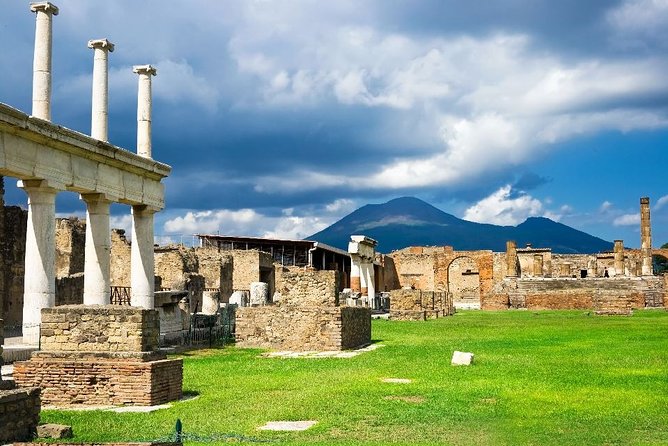
Pompeii is not hard to find, but it is easy to misunderstand. The excavated city is large, the streets can feel repetitive, and many buildings make sense only when someone explains their purpose.
That is where an archaeologist can earn the fee. The guide places each stop within Pompeii’s development, its public life, its religious customs, and the eruption of AD 79. You begin with the city’s origins and the volcanic disaster, then move through the spaces where people worshiped, shopped, ate, worked, bathed, and watched performances.
Pina Esposito is named as the experience provider. The supplied tour information describes a guide or archaeologist in English, Italian, or German, while the booking details specifically list English as the offered language. If language matters to you, confirm the option available for your date.
Pina’s background is especially suited to visitors who want more than a quick walk past ruins. Her past work has included Pompeii, Herculaneum, the National Archaeological Museum in Naples, Oplontis, Stabiae, Paestum, and the Phlegraean Fields. Her teaching style is described as clear and accessible, with attention to how archaeological understanding changes over time.
That last point is useful. Pompeii is not a finished puzzle. Excavation, preservation, and interpretation continue to shape what experts can say about the city. A good guide can separate firm evidence from educated reconstruction.
More Pompeii tours led by an archaeologist:
- Pompeii Small Group Tour with an Archaeologist
★ 5.0 · 6,593 reviews - Pompeii and Herculaneum Small Group Tour with an Archaeologist
★ 5.0 · 1,350 reviews - Skip the Line Guided Tour of Pompeii led by an Archaeologist
★ 5.0 · 703 reviews
Starting at the Forum of Pompeii
The meeting point is at Pompeii Scavi Villa Dei Misteri. The tour ends at the Forum, on Via Villa dei Misteri. This arrangement is practical: you finish near one of the site’s central areas and can remain inside the excavations afterward if you want more time.
The Forum is the right place to begin. It was Pompeii’s civic center, and from here the guide explains the city’s origins, public institutions, and final days. The 15-minute visit is short, but it gives you a working map for everything that follows.
I would pay close attention here to the city plan and the relationship between public buildings. Without that basic orientation, Pompeii can become a string of disconnected houses. With it, the rest of the walk has a clearer shape.
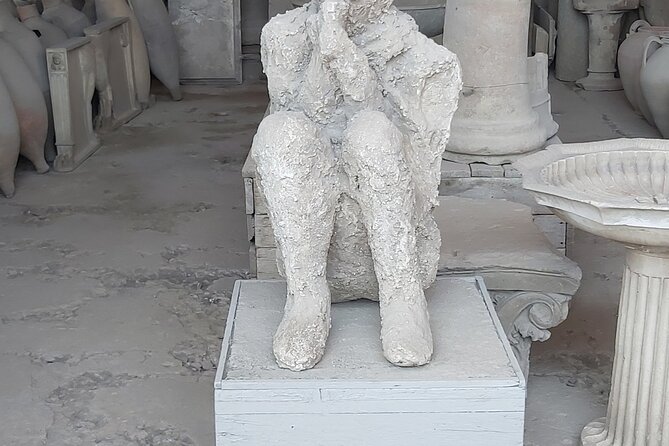
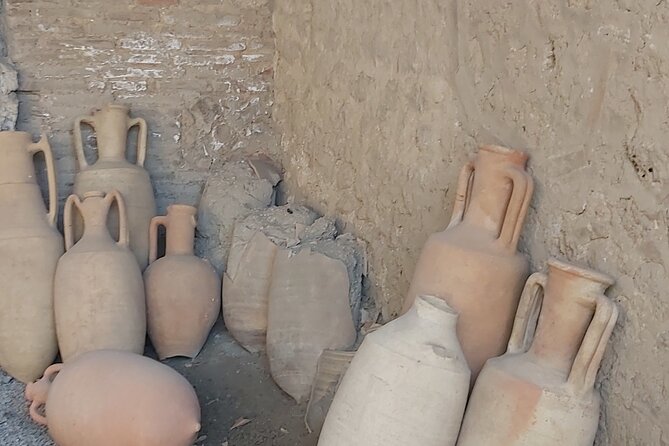
The route then moves to the Granaries of the Forum. Despite the name, this area is also important for the objects found there, including amphorae, sculptures, inscriptions, and plaster casts of eruption victims.
The casts are among Pompeii’s most emotionally difficult sights. They preserve the positions of people caught in the disaster, but the guide can also explain what these casts are and what they cannot tell us. The stop lasts about 10 minutes, so expect a focused explanation rather than a long museum visit.
Public power at the Basilica and Temple of Apollo
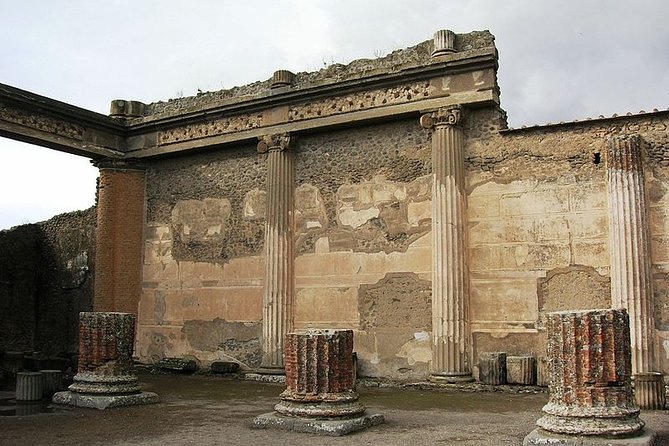
Pompeii’s Basilica is one of its largest and most imposing public buildings. It was tied to civic and legal activity, not Christian worship. The guide explains its function and helps you read the surviving structure as part of the city’s public life.
This is one of the places where scale matters. A ruined building can look bare until you understand the activity it once held. Allow yourself a moment to look beyond individual stones and imagine the Basilica as a place where business and legal matters were handled.
The nearby Temple of Apollo brings a different mood. Its surviving features include sculptures, an altar, a fountain, inscriptions, columns, and a Roman sundial. The tour allows about 15 minutes here, enough for the guide to discuss both the building and Roman religious practice.
The original pieces are the attraction, but the setting is just as important. Religious buildings in Pompeii were part of the city’s daily rhythm, not isolated monuments reserved for occasional visits. The guide ties the temple to that broader civic and spiritual world.
A brief stop at Hotel Vittoria follows. The name can be confusing, since this is not presented as a modern hotel experience. It is an ancient gateway to the city and a useful point for discussing the surrounding area. At only five minutes, this is more of a transition than a major stop.
Mosaics and the House of the Faun
One of Pompeii’s most memorable details is the Cave Canem mosaic, the familiar warning to beware of the dog. It was placed at the entrance of the House of the Tragic Poet, and the guide explains why this small image matters.
The mosaic is a good reminder that Pompeii is not only about emperors, temples, and public monuments. A household entrance could carry a message about security, status, and the character of the home. The stop lasts about 10 minutes.
The House of the Faun receives 15 minutes and is one of the route’s major highlights. It is the largest house in Pompeii and the place where several famous works were found, including the bronze dancing Faun and the enormous Alexander Mosaic.
The Alexander Mosaic was made from more than a million tiny colored tiles. Even if the original masterpiece is no longer in the house, learning where it was discovered helps you understand the scale and wealth of the residence.
The House of the Faun also gives you a useful contrast with the public buildings seen earlier. Its size and decoration point to a powerful household, while the route’s later shops and baths show other parts of city life. I like that the tour does not treat Pompeii as one single social world.
More ways to see Pompeii:
- Discover the Ancient Ruins of Pompeii: Day Trip from Rome
★ 3.5 · 2,247 reviews - Pompeii Ticket + Tour with Optional Tasting Experience at Pompeii
★ 5.0 · 663 reviews - Pompeii private tour with an Official Guide
★ 5.0 · 631 reviews - Pompeii Private Tour with an Archaeologist and Skip The Line – 3 hours
★ 5.0 · 564 reviews
A thermopolium and the practical side of Roman life
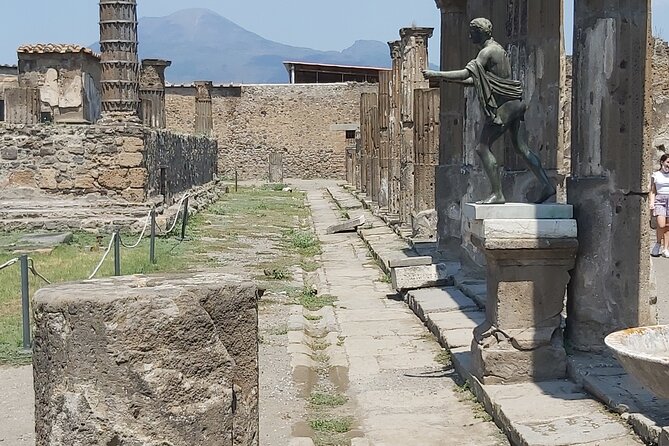
At the thermopolium in Regio VI, Insula VIII, you see one of the best-preserved examples of an ancient fast-food counter. The guide uses it to discuss food, nutrition, and social life in Pompeii.
This is one of the most approachable stops on the walk. Temples and forums can feel distant, but a food counter is instantly familiar. It gives you a simple way to think about how people ate when they did not prepare every meal at home.
The visit lasts about 10 minutes. The guide may also explain what the counter’s design suggests about service and daily routines, but the supplied information does not promise a tasting or meal. Food and drinks are not included in the tour, so do not book this expecting a snack stop.
Imperial worship and Via dell’Abbondanza
The Temple of Vespasian, also called the Temple of Genius Augusti, introduces the Roman imperial cult. The guide explains why the emperor’s image and authority were linked to religious practice.
This can be a difficult subject if you are not familiar with Roman politics. The value here is the connection between religion and public loyalty. In Pompeii, worship and civic identity were closely connected, and this temple helps make that system visible.
The tour then reaches Via dell’Abbondanza, Pompeii’s famous main street. The guide discusses the road network and urban plan, giving you a chance to see how the city was organized.
Do not rush this section. Street surfaces, building fronts, and the arrangement of entrances can tell you a great deal about movement through Pompeii. The 10-minute explanation is compact, but it gives you a framework for reading the streets you may explore after the guided portion ends.
Theater District and the oldest temple
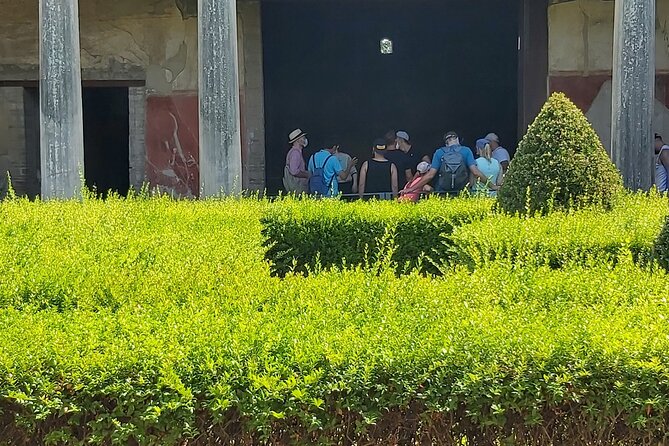
Pompeii’s Theater District includes the Teatro Grande, Teatro Piccolo, and Quadriportico dei Teatri. The guide explains how these performance spaces fit together and why they are among the best-preserved theaters from antiquity.
The Teatro Grande is the main attraction here, but the smaller theater adds an important comparison. The two spaces suggest different kinds of performance and audience experience. The Quadriportico, a covered colonnaded area, helps you understand how people moved around the theater complex before and after performances.
This stop lasts about 10 minutes. If theaters are your main interest, you may want to return after the tour and spend longer looking at the seating, stage area, and surrounding structures.
The Doric Temple and Triangular Forum come next. The Doric Temple is described as the oldest temple in Pompeii, making it an important stop for understanding the city’s early development.
Only five minutes are assigned here, so this is another brief but meaningful pause. The site may appeal most to visitors interested in Pompeii before the grand Roman buildings took shape. The Triangular Forum also shows how open public spaces could serve religious and civic purposes.
Stabian Baths and the Lupanar
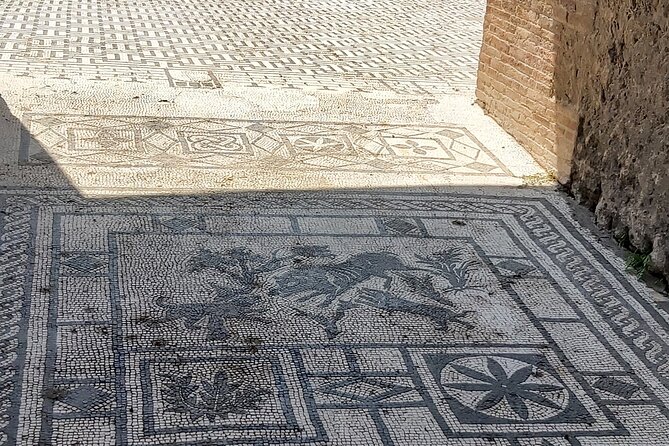
The Stabian Baths are a fine example of ancient thermal architecture. The guide explains how the bath complex worked and what it reveals about Roman social life.
A bath was not simply a place to wash. It was also a public meeting point, and the design of the complex reflects the importance of bathing in Roman culture. You have about 10 minutes here, enough for an overview but not an extended architectural study.
The final major stop is the Lupanar, Pompeii’s best-known brothel. Its small bedrooms and erotic frescoes are unusually well preserved, which explains its popularity with visitors.
The Lupanar is also one of the most crowded stops on many Pompeii routes. The rooms are small, and the tour has only 10 minutes here. Listen closely to the guide’s explanation, since the building can otherwise become a quick photo stop rather than a useful lesson about Roman commerce, sexuality, and social arrangements.
The Lupanar is an adult subject, and the images are explicit. Families should decide in advance if this stop suits their group.
How much the $42.01 price is worth
At $42.01 per person, this is not an all-inclusive Pompeii visit. Entrance fees are separate, and you also pay for your own food, drinks, and tip. That makes the final cost higher than the advertised guide price.
Still, the price can be reasonable if you value structure and interpretation. In two and a half hours, you cover 14 stops spread across public, religious, domestic, commercial, and entertainment sites. A self-guided visit may cost less for the guiding itself, but it can also leave you spending time on buildings you do not understand or missing the logic of the city.
The small group limit helps the value. A maximum of 15 people is not the intimacy of a private tour, but it should be easier to hear than a large group. The guide can also respond to questions, although the exact amount of personal attention will depend on the group size and pace.
The strongest value comes if you are visiting Pompeii once and want a clear introduction. The tour is less useful for someone who has already studied the site closely and wants to spend hours on a few specific houses.
Timing, meeting point, and practical advice
The experience is listed as running Monday through Sunday from 9:00 a.m. to 7:30 p.m. for the stated operating period. The tour itself lasts about two hours and 30 minutes, but the exact start time should be checked when booking.
You meet at Pompei Scavi Villa Dei Misteri and finish at the Forum. Since the tour ends inside the excavations, you can continue independently rather than losing time traveling back to the entrance.
Wear sturdy walking shoes. Pompeii’s ancient streets and open ruins demand more attention from your feet than a normal city walk. Carry water, since food and drinks are not included, and consider your own need for breaks. One account of a longer visit with Pina describes her paying attention to water, coffee, ice cream, and bathroom stops, but this shorter experience does not promise those services.
The tour is near public transportation, and service animals are allowed. Most people can participate, but the supplied information does not give detailed guidance about wheelchair access, seating, shade, or restroom locations. If any of those are important to you, ask before booking.
Free cancellation is available up to 24 hours before the start time. Late cancellations and late changes are not accepted for a refund. Poor weather or failure to reach the minimum number of participants can lead to a rescheduled experience or full refund.
Who will get the most from this Pompeii tour
I would choose this tour if you want the major sights explained in a fixed, sensible route. It suits first-time visitors, history fans, families with older children, and anyone who feels that Pompeii might be too large to handle alone.
It is also a good match if you want archaeological context rather than a quick list of dates. Pina’s wider work in Naples and the surrounding ancient sites means she can place Pompeii within a larger regional story, if she is the guide assigned to your departure.
You may want something else if you prefer a slow visit with long stretches of independent time. Fourteen stops in 150 minutes means the pace is purposeful. Several locations receive only five or 10 minutes, so you will not study every building in detail.
If you have already visited Pompeii, consider using the tour as a refresher and then staying inside the site after the official finish. The Forum endpoint makes that especially convenient.
Should you book it?
Book this Pompeii tour if you want a strong overview, an archaeologist’s explanation, and a route that balances famous masterpieces with ordinary city life. The House of the Faun, the plaster casts, the thermopolium, the theaters, and the Lupanar give you a broad view of Pompeii in one morning or afternoon.
Before paying, confirm the entrance fee, available language, start time, and guide arrangements. If Pina Esposito is leading your visit, her academic background and wider knowledge of the Naples area may add real value. If the guide is someone else, the tour still offers a well-planned set of stops, but your experience will depend heavily on that person’s skill.
For a first visit, I would book it, then stay afterward to revisit the places that catch your eye.
FAQ
How long does the Pompeii tour last?
The guided experience lasts approximately two hours and 30 minutes.
What language is the tour offered in?
The booking information lists English, while the included guide information also names Italian and German. Confirm the language available for your selected date.
Is the Pompeii entrance ticket included?
No. The entrance fee is not included in the $42.01 tour price.
Where does the tour begin?
The meeting point is Pompei Scavi Villa Dei Misteri, 80045 Pompei, Metropolitan City of Naples, Italy.
Where does the tour end?
The tour ends at the Pompeii Forum on Via Villa dei Misteri. You can stay inside the excavations afterward and continue exploring independently.
How many people can join the tour?
The maximum group size is 15 participants.
Can I cancel for a full refund?
Yes, if you cancel at least 24 hours before the experience start time. Cancellations or changes made less than 24 hours in advance are not refunded. If poor weather or an insufficient number of participants cancels the tour, you will be offered another date or experience, or a full refund.
Just added around Pompeii
- Wine Tasting and Winery Tour in Vesuvio National Park with Lunch★ 4.5 · 3 reviews
- Wine tasting in the Vesuvius national park★ 5.0 · 3 reviews
- Mt. Vesuvius Wine Tasting and Lunch Experience from Pompeii★ 4.5 · 20 reviews
- Traditional Neapolitan Dinner in Pompei – Villa Franca – Family Restourant★ 5.0 · 8 reviews
- Private Guided Tour and VR Headsets in the Ancient Pompeii★ 5.0 · 3 reviews
- Visit Pompeii with a local expert guide★ 5.0 · 10 reviews
- Tour Mount Vesuvius with Entry Tickets and Round Trip Transfer Included★ 3.5 · 4 reviews
- Vesuvius tour entrance to the crater and return bus★ 4.5 · 9 reviews
Pompeii Tours with an Archaeologist, compared.
Pompeii Small Group Tour with an Archaeologist
Read our review →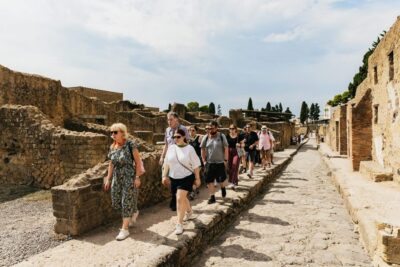
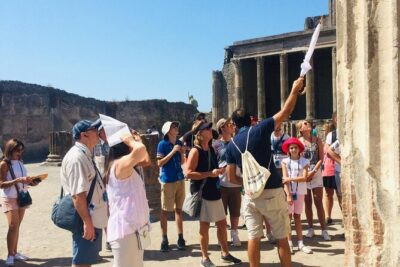
Pompeii and Herculaneum Small Group Tour with an Archaeologist
Read our review →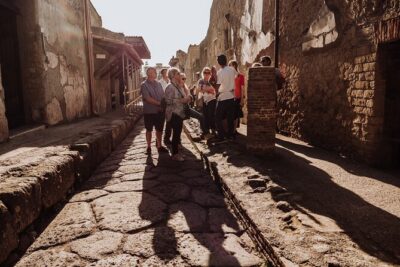
Herculaneum Small Group Tour and Ticket With an Archaeologist
Read our review →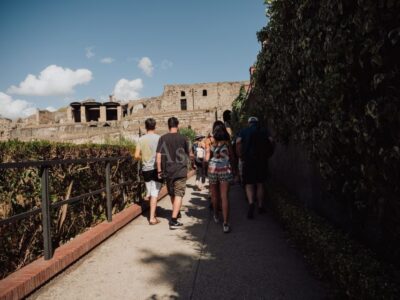
Pompeii & Herculaneum with Archaeologist Guide
Read our review →
Pompeii Private Tour with an Archaeologist and Skip The Line – 3 hours
Read our review →
Pompeii Private Tour with an Archaeologist and Skip The Line
Read our review →Browse the lists this tour appears in