
Reviewed · POMPEII TOURS WITH AN ARCHAEOLOGIST
Naples: City and Lapis Museum Tour with an Archaeologist
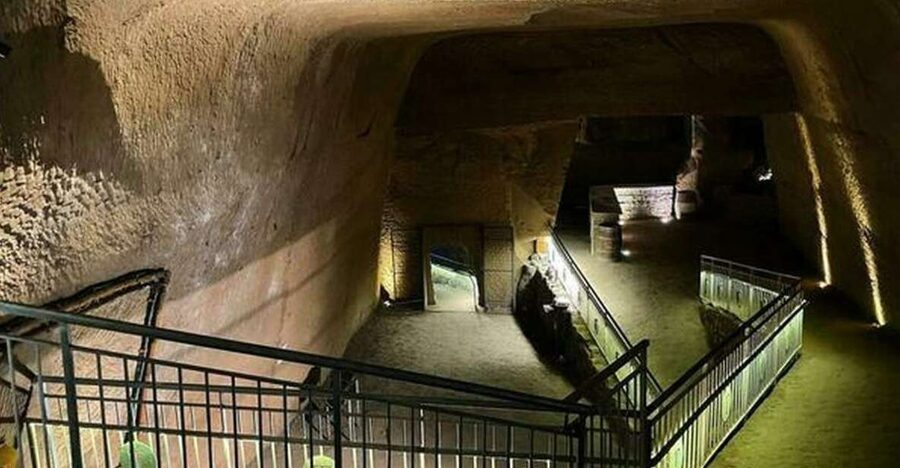
Naples keeps one of its best stories under your feet. This two-hour walk links the noisy lanes around Piazza San Gaetano with Greek cisterns, Roman water tanks, and WWII air shelters hidden far below the city. I like the clear march through time, and I like that a professional archaeologist leads the way rather than a guide who sticks to postcard facts.
The $53 price includes admission to the LAPIS Museum and the WWII Shelters Museum, so you are paying for both the guide and the underground access. The main caution is physical: you descend about 40 meters, the route is not suitable for wheelchair users, and comfortable shoes are a must. A previous cancellation also appears in the booking record, so keep an eye on your confirmation.
Key points to know before you book
- Forty meters below Naples: The route drops from the old city into a network of ancient cisterns and tunnels.
- Three eras in one walk: You move from Greek foundations to Roman water systems and then to WWII shelters.
- A professional archaeologist leads: Guides named Riccardo and Theresa have received especially strong praise for clear explanations and patience with questions.
- Small groups help underground: Numbers are limited to 10, useful in narrow passageways and at historic stops.
- The tour begins and ends in different places: Meet at Piazza San Gaetano and finish at Piazza Bellini.
- Not an easy-access outing: The route is not suitable for wheelchair users, and you should expect stairs and underground walking.
Why Naples makes sense from below
Naples is one of Italy’s oldest cities, and its underground spaces show how the city kept changing without erasing everything beneath it. The city’s lower levels include Greek cisterns, Roman aqueducts, medieval passages, and shelters used during World War II.
The figures supplied for this experience say that about 45 percent of the underground city is practically empty. That is a striking way to think about Naples. The streets above can feel crowded and fast, but below them are quiet spaces cut into stone and reused for very different needs over many centuries.
I like this tour because it does not treat the underground as a separate attraction. You first walk through the old center, then connect what you see on the surface with what lies below. That helps you understand why the ancient street plan, churches, and later buildings sit so closely together.
The guide’s archaeological training matters here. The route includes several periods, and without context, a cistern can look like a dark room with rough walls. With a good explanation, it becomes part of a water system, a medieval route, and eventually a wartime refuge.
More Pompeii tours led by an archaeologist:
- Herculaneum: Skip-the-Line Guided Tour with Archaeologist
★ 4.8 · 3,439 reviews - Herculaneum Small Group Tour and Ticket With an Archaeologist
★ 5.0 · 994 reviews - From Naples: Pompeii & Herculaneum with Archaeologist Guide
★ 4.8 · 665 reviews
Starting at Piazza San Gaetano
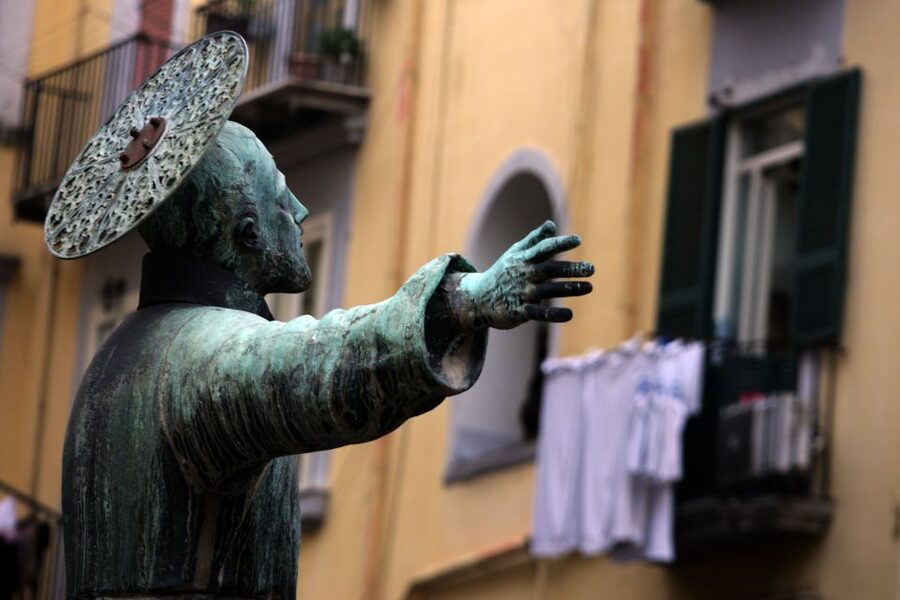
Your meeting point is Piazza San Gaetano, at the foot of the statue. Look for a guide holding a Grand Tour Experience sign. This is an important detail in central Naples, where several streets and monuments sit close together and the square can be busy.
The piazza is an ancient Greek-Roman square, so the tour starts in a place that already carries the main idea of the experience: present-day Naples built over older Naples. From here, you walk into the surrounding streets and local life before heading underground.
The first part takes you along Via dei Tribunali. This street is one of the central routes through the old city, and it gives the guide a chance to explain the underground cults and beliefs connected with Naples. The route is not only about stones and construction. It also looks at the ideas and practices that helped shape the city.
Since the entire tour lasts two hours, the surface walk is fairly focused. You will not get a full walking tour of every major sight in the historic center. Instead, the streets work as an introduction to the layers below.
Basilica di San Lorenzo Maggiore and the first layers
The next stop is Basilica di San Lorenzo Maggiore. This Gothic church gives the tour a useful contrast. You are looking at a Christian building while learning how older structures remain part of the same site.
The church area helps show how Naples reused earlier spaces. Greek and Roman remains are not always isolated behind glass or placed in a distant archaeological park. In the old center, they can sit beneath churches, homes, and working streets.
This stop is valuable for visitors who want more than a basic underground walk. It shows that the city’s archaeology is not just a collection of objects. It is built into the places people still use.
The pace may feel brisk if you want long time at each church. That is the tradeoff of fitting the surface route and the LAPIS Museum into two hours. You get a connected story, but not a slow, detailed church tour.
The Church of Purgatory and a glimpse through glass
The route also includes the Church of Purgatory, where you can look through a glass floor at the remains of an earlier ancient mosaic. This is one of the most effective moments in the above-ground section because you can see the old layer without leaving the present building.
A glass floor changes the way you look at a church. Instead of treating the floor as a finished surface, you begin to ask what came before it. That is the central lesson of this Naples tour: the city is often a stack of different periods, with each generation building over the last.
I would pay close attention here and ask questions. The supplied information does not specify the full condition or size of the mosaic, so you should not expect a large archaeological display. The value is the direct view through the floor and the explanation that connects it to the surrounding church.
More museums and sites in Naples:
- Naples: National Archaeological Museum Ticket & Audio App
★ 4.4 · 617 reviews - Naples: National Archaeological Museum of Naples Guided Tour
★ 4.8 · 498 reviews - Naples: National Archaeological Museum Tour & Digital Guide
★ 4.2 · 177 reviews - Naples: National Archaeological Museum audio guide
★ 4.0 · 155 reviews
Going down through Santa Maria Maggiore
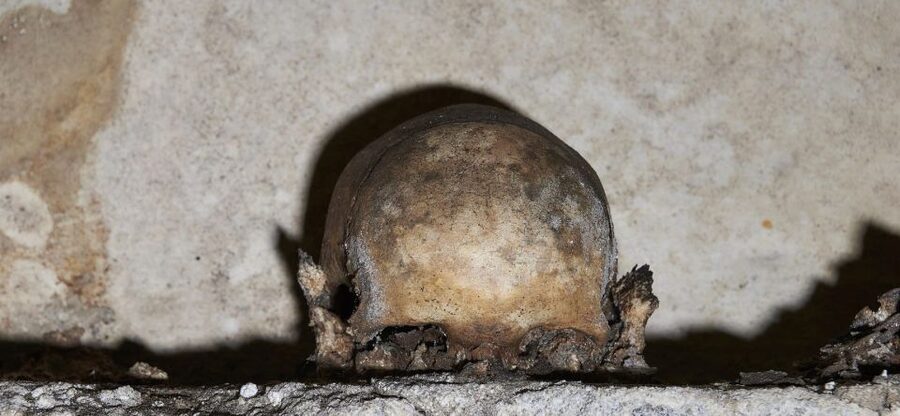
The descent begins through a doorbell in Santa Maria Maggiore, described as one of the oldest churches in the city. The church was built on a pagan Roman temple dedicated to Diana and still contains Roman structures.
This entrance gives the experience a very Naples quality. You do not simply enter an underground attraction from a modern visitor center. You pass through an old church, then continue downward into the stone beneath it.
The route reaches roughly 40 meters below the crowds above. That depth is one reason the tour feels like a change of world, but it also explains the accessibility warning. You need to be comfortable walking underground and handling the route’s physical demands. The information provided does not give a precise stair count, so anyone with mobility concerns should ask the operator before booking.
The descent is also where sturdy footwear becomes practical rather than optional. Wear shoes with good support. Bring a light layer because weather underground may feel different from the street, and use clothing suited to the conditions on the day.
Greek cisterns and Roman water tanks
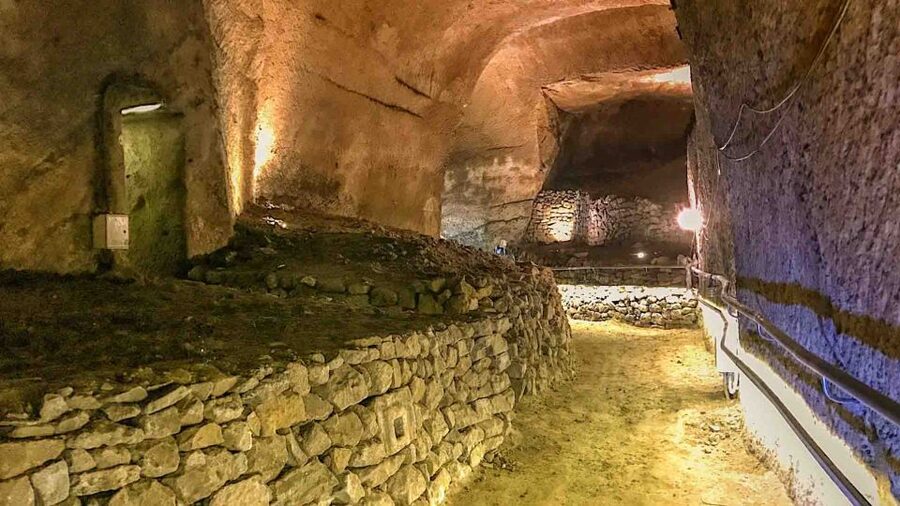
Far below the city, you reach cisterns carved into the tough stone. These spaces formed part of the water network that served Naples in ancient times. The tour then follows tunnels to tanks used to collect water during the Roman period.
This is the strongest archaeological section of the experience. You are not only seeing a ruin. You are moving through the infrastructure that helped an ancient city function.
The underground route also gives you a better sense of scale than a museum label can. The water system had to be cut, connected, and maintained. The cisterns are physical evidence of that work, and the archaeologist can explain how the different layers fit together.
The surfaces may be uneven, and the lighting in any underground archaeological setting can make footing harder to judge. I would keep your camera ready, but do not let photographs distract you from the guide. The tour includes camera use as a suggested item, not as a promise of ideal photo conditions.
Medieval passage and WWII shelter
The same underground trail had later uses. In medieval times, it served as a secret passage for the Knights Templar. In 1943, it became an air-raid refuge.
This change of purpose is what gives the tour its emotional weight. The tunnels were not frozen in antiquity. People kept finding practical uses for them as the city changed.
At the lowest point, the route includes the WWII shelters and preserved signs of daily life. Bathrooms, kitchens, and personal memorabilia remain in parts of the shelter area. Those details help you picture the space as a refuge used by ordinary people, not just as a military site.
The Roman cisterns and wartime rooms also make a sharp contrast. One space was designed to collect water. The other was used for safety during air raids. Seeing both in the same underground route shows how old infrastructure can take on new meaning.
This section may be especially useful if you want Naples history beyond ancient Greece and Rome. The wartime material brings the city closer to the modern era, and the preserved rooms make that part easier to understand.
What the archaeologist adds
The guide is central to the value of this tour. The route includes Greek, Roman, Gothic, medieval, and WWII material, so the explanations need to be organized and clear.
Riccardo has been praised for passion and strong subject knowledge, while Theresa has been described as patient with questions and generous with her expertise. Those names come from earlier tours, so you should not assume that either guide will lead your specific departure. Still, they show the standard of guiding associated with some departures.
I like the small-group limit of 10 people. A group that size gives you a better chance to hear in the tunnels and ask a question without stopping a large crowd. It also makes it easier for the guide to keep everyone together during the descent.
The languages offered are English and Italian. If you need a particular language, check the departure details before paying. Guide quality can change from one departure to another, but the professional archaeologist element is a strong reason to choose this over a basic sightseeing walk.
What $53 buys you
At $53 per person, this is not the cheapest way to spend two hours in Naples. The price becomes easier to justify because admission tickets to the Roman Cistern Museum, the LAPIS Museum, and the WWII Shelters Museum are included, along with a local guide and a professional archaeologist.
You are also paying for a route that would be difficult to understand on your own. The underground spaces are connected to several periods, and the guide helps turn separate rooms into one story.
The value is weaker if you want a long, relaxed tour of the historic center. You will see selected surface locations, but the main purpose is the underground route. It is also less suitable if you dislike stairs, enclosed spaces, or uneven walking.
A current rating of 4.5 from 29 ratings suggests a generally strong experience, but the record includes a score of 2 from a departure canceled by the operator. That low score appears tied to the cancellation rather than the content of the tour. You can cancel up to 24 hours before the start for a full refund, and the reserve-now, pay-later option gives you some flexibility.
Practical details for a smooth visit
Meet at the foot of the statue in Piazza San Gaetano. The guide should have a Grand Tour Experience sign. The route finishes at Piazza Bellini, so plan your next stop from there rather than expecting to return to the starting point.
The activity lasts two hours, with start times varying by availability. It does not include food or drinks, so eat beforehand or carry something for later. A packed lunch is listed among the suggested items, although the tour itself is not a meal experience.
Bring cash and a credit card, but the information does not specify extra fees on the route. Weather-appropriate clothing is sensible for the street portion, and comfortable shoes are essential underground.
Pets are not allowed, except for assistance dogs. Wheelchair users should not book this route because it is listed as unsuitable for wheelchair access.
Who should book this Naples walk?
I would choose this tour if you have already seen the major churches and museums, or if you want a different way to understand the historic center. It suits anyone curious about how a city can reuse the same spaces for water, worship, escape, and shelter.
It is also a good choice for a first visit if you like guided context and do not mind spending much of your sightseeing time below street level. The small group and archaeologist-led format should appeal to you if details matter more than a fast checklist of landmarks.
I would look elsewhere if you want a fully accessible route, a food-focused walk, or a broad survey of Naples attractions. Two hours is enough for a strong introduction, but not enough for a complete tour of the old center.
Should you book the LAPIS Museum tour?
Book it if the idea of walking from a Greek-Roman square into ancient cisterns and WWII shelters sounds more appealing than another standard city stroll. The best parts are the change of scale, the preserved wartime rooms, and the way the archaeologist links what you see above ground with what lies below.
Skip it if stairs, underground spaces, or uneven surfaces will make the route stressful. For everyone else, $53 is a fair price for a small-group tour with admissions included, especially when you value explanation as much as access. Check the meeting details and departure status carefully, wear good shoes, and leave Piazza Bellini free for your next Naples stop.
FAQ
Where does the tour begin?
The tour begins at Piazza San Gaetano, at the foot of the statue. Look for the guide holding a Grand Tour Experience sign.
Where does the tour finish?
The tour finishes at Piazza Bellini.
How long does the experience last?
The tour lasts two hours.
How far underground does the route go?
The route descends about 40 meters below the streets of Naples.
What underground sites are included?
You visit the LAPIS Museum route, including Greek cisterns, Roman water tanks, tunnels, and WWII shelters.
Are museum admission tickets included?
Yes. Admission to the Roman Cistern Museum, the LAPIS Museum, and the WWII Shelters Museum is included.
Is the tour available in English?
Yes. Live guiding is available in English and Italian.
How large is the group?
The group is limited to 10 participants.
Is the tour suitable for wheelchair users?
No. The experience is listed as unsuitable for wheelchair users.
What should I bring?
Bring comfortable shoes, a camera, a credit card, cash, a packed lunch, and clothing suitable for the weather.
Just added around Naples
- Naples: Guided Walking Tour★ 4.7 · 63 reviews
- Wine tasting in the Vesuvius National Park★ 3.5 · 4 reviews
- Naples: Pompeii and Vesuvius Skip-the-Line Day Trip★ 3.8 · 32 reviews
- Visit the Museum MANN with a professional guide★ 5.0 · 3 reviews
- Walking-tour of Naples hystorical Centre★ 4.4 · 4 reviews
- Vesuvius – Herculaneum – Pompeii Excavations Tour★ 4.2 · 9 reviews
- Pompeii: Vesuvius at Sunset★ 3.5 · 31 reviews
- Vesuvius and Herculaneum from Naples★ 3.7 · 29 reviews
Pompeii Tours with an Archaeologist, compared.

Pompeii Small Group Tour with an Archaeologist
Read our review →
Pompeii and Herculaneum Small Group Tour with an Archaeologist
Read our review →
Herculaneum Small Group Tour and Ticket With an Archaeologist
Read our review →
Pompeii & Herculaneum with Archaeologist Guide
Read our review →
Pompeii Private Tour with an Archaeologist and Skip The Line – 3 hours
Read our review →
Pompeii Private Tour with an Archaeologist and Skip The Line
Read our review →Browse the lists this tour appears in