

Reviewed · GUIDED TOURS IN POMPEII
Guided Tours of Pompeii Excavations Historical and Cultural Itineraries
Pompeii’s grandest treasures come together here: the Forum, ancient baths, richly painted houses, and the Villa dei Misteri, home to the famous Dionysian fresco. Guide Bruno Pisano presents the city as more than a Roman ruin, explaining its Hellenistic culture, trade, religion, and ordinary routines.
I like the maximum group size of 15, which makes a four-hour explanation easier to follow, and I like the unusual mix of history, philosophy, art, and daily life. The main drawback is that the Pompeii admission ticket is not included, so you must budget for that separately.
Key points to know before booking
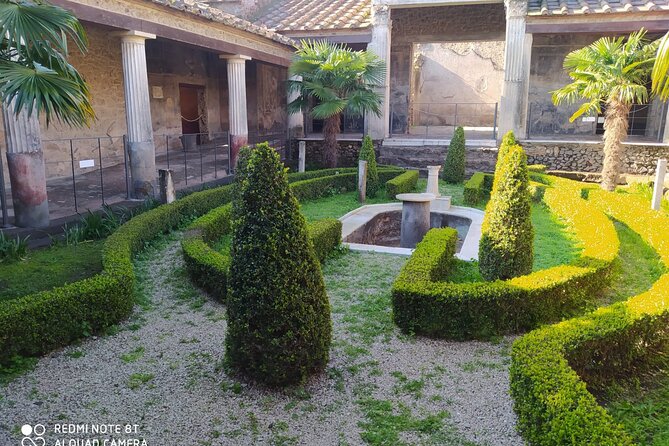
- Ten major stops in about four hours: Each place receives roughly 25 minutes, giving you a broad introduction rather than a slow study of every room.
- Guide Bruno Pisano: His approach links ancient customs with art, psychology, and modern life, and is suitable for adults and older children.
- The Villa dei Misteri is included: You’ll see its remarkably preserved Dionysian fresco, one of Pompeii’s most important painted works.
- A strong focus on Hellenistic Pompeii: The tour explains the city’s connections with the wider Mediterranean, Asia Minor, India, and Persia.
- Small group, mobile ticket: The group is limited to 15 people per guide, and confirmation is sent within 48 hours, subject to availability.
- Admission costs extra: The listed price is $57.62 per person for the guided service, but entry to the ruins is separate.
Why this Pompeii tour takes a different route through the ruins
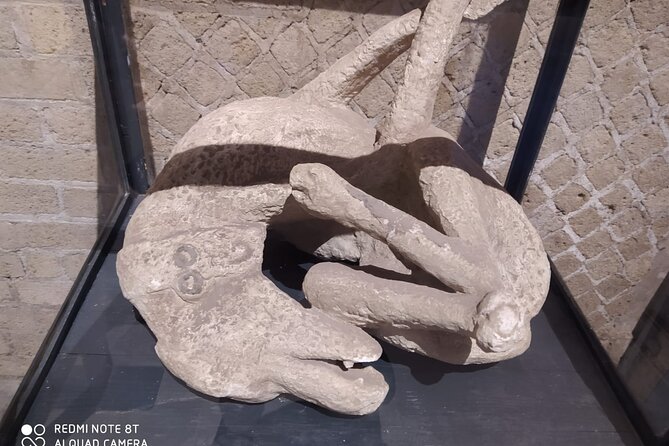
Many Pompeii walks concentrate on famous streets and a few large houses. This one tries to explain how the entire city worked. You move from public buildings and temples to bathing culture, private homes, painting, mythology, and religious practice.
That broad view matters because Pompeii can otherwise feel like a huge collection of disconnected walls. At the Forum, you learn how power and commerce operated. At the baths, you see how public wellness fit into community life. In the villas, art and status come into focus.
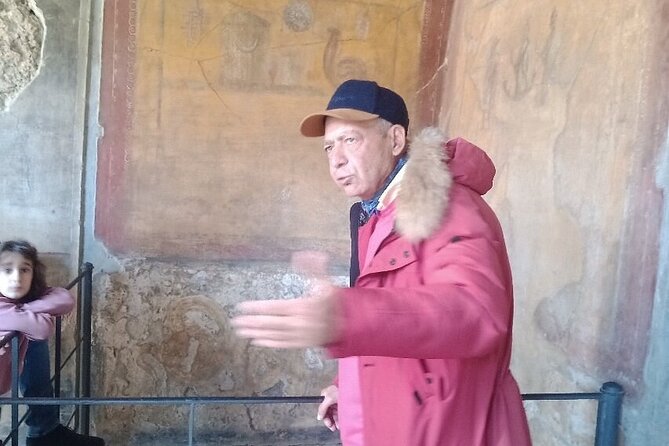
The guide, Bruno Pisano, is described as a professor and specialist in archaeology, history, and philosophy. His style is not limited to dates and building names. He connects ancient habits with psychology and modern life, which can make the material easier to remember. One especially useful detail is his attention to Pompeii as a Hellenistic city, not simply a Roman one.
That interpretation gives the tour a wider Mediterranean frame. Pompeii was a commercial and industrial center with links reaching toward Asia Minor, India, and Persia. You still see Roman institutions, of course, but the city’s art, religion, and trade reflect a much wider world.
More Guided Tours in Pompeii
- Skip the Line Guided Tour of Pompeii led by an Archaeologist
★ 5.0 · 703 reviews - Pompeii private tour with an Official Guide
★ 5.0 · 631 reviews - Pompeii Skip-the-line Tour with Archaeologist Guide
★ 5.0 · 559 reviews
Start at Porta Marina at 9:30 in the morning
The tour begins at 9:30 am at the official audioguide point near Porta Marina, on Via Villa dei Misteri. It ends at the same location, which keeps the outing simple if you are staying nearby or continuing independently after the walk.
The tour lasts about four hours and ten minutes. That is a serious morning of walking, standing, and listening. You should plan for a steady pace through an archaeological site where surfaces and paths may not always feel as easy as a modern pavement.
A group limit of 15 people is a useful middle ground. You get the social ease of a group tour without the crowd size of a large coach excursion. It also gives Bruno Pisano a better chance to speak clearly and respond to questions.
The itinerary gives about 25 minutes to each of ten stops. This keeps the tour moving, but it also means you should not expect an exhaustive study of every building. If you want long periods for photography or quiet exploration, you may need extra time in Pompeii before or after the guided visit.
Suburban baths and the first look at Pompeii’s public life
The first stop is the suburban bath complex. Its frigidarium includes a nymphaeum decorated with glass paste, polychrome and glazed tiles. A swimming pool with Nilotic frescoes adds another layer, showing how ancient decorative art could bring distant places and exotic subjects into a local setting.
This is a smart opening stop because it shifts your attention away from the eruption and toward everyday life. Pompeii was a functioning city before it became an archaeological site. Baths were places for washing and exercise, but also for social contact and public display.
You receive about 25 minutes here. That is enough for an explanation of the main rooms and decoration, though not for a full architectural study. Since the entrance ticket is not part of the tour price, make sure you have accounted for the park admission before arriving.
Venus and the terrace above the city
The Temple of Venus occupies a high terrace with broad views over the surrounding area. It was connected with the imperial cult and Venus, who was also linked to sailors. The location helps explain why temples were not just enclosed religious rooms. Their position could shape how people saw the city and its setting.
An unusual feature here is the bronze statue of Daedalus by Polish artist Igor Mitoraj. It brings a modern work of art into the ancient site. That contrast can be striking, especially for anyone interested in how modern artists respond to classical themes.
The stop lasts about 25 minutes. You’ll get context for the temple and its role, but the tour’s steady schedule means you may want to return later if you want more time with the statue or the views.
More ways to see Pompeii:
- Pompeii Small Group Tour with an Archaeologist
★ 5.0 · 6,593 reviews - Discover the Ancient Ruins of Pompeii: Day Trip from Rome
★ 3.5 · 2,247 reviews - Pompeii and Herculaneum Small Group Tour with an Archaeologist
★ 5.0 · 1,350 reviews - Pompeii Ticket + Tour with Optional Tasting Experience at Pompeii
★ 5.0 · 663 reviews
The Basilica and Pompeii’s public institutions
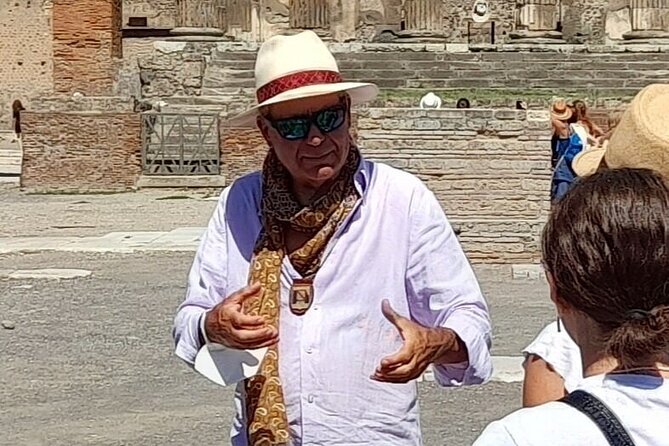
The Basilica was Pompeii’s great tribunal and its largest public building. With three naves, it also anticipates the layout later associated with Christian basilicas. The building’s scale helps you picture Pompeii as a city with courts, administration, commerce, and formal civic life.
I find this kind of stop useful because it counters the idea that Pompeii is mainly a collection of private houses. The Basilica shows how law and business occupied a central place in the city. Its size also gives you a sense of public ambition before the eruption.
Again, the planned 25 minutes offer a focused introduction. You will hear what made the building important, then continue rather than linger for a detailed study of every surviving feature.
Apollo, Jupiter, and the religious heart of Pompeii
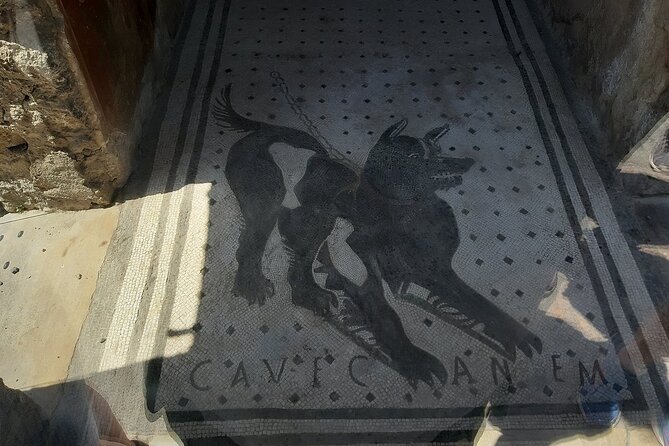
The Temple of Apollo is presented as a building with Greek design and a strong ethical and prophetic role. Bronze statues of Apollo and Diana dominate the setting. The temple offers a clear reminder that Pompeii’s religious life did not fit into a single Roman box.
Next comes the Forum, the city’s commercial, administrative, and religious center. The grand Temple of Jupiter, Juno, and Minerva dominates the complex. This is one of the places where the whole argument of the tour comes together: politics, business, worship, and public ceremony all met in one urban space.
The Forum can be visually powerful, but it is also a place where a guide adds real value. Without explanation, columns and foundations may blur together. With a clear account of how the buildings served the city, the open space becomes easier to read.
Forum baths and the ancient spa experience
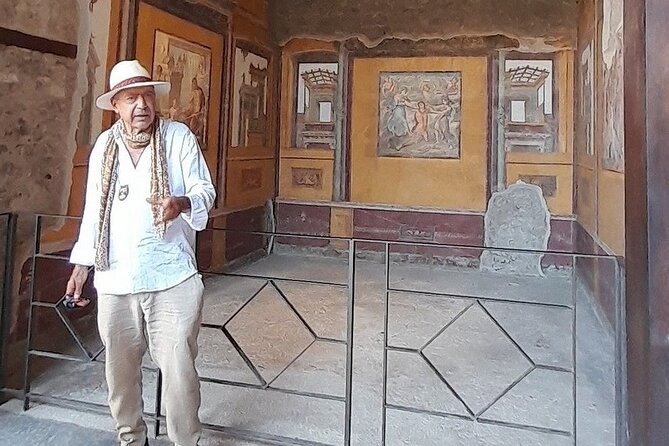
The Forum Baths offer a more intimate view of public comfort. The tepidarium is decorated with stuccoes associated with the Neronian school. In the calidarium, an alabaster labrum of Egyptian origin draws attention to the materials and trade networks available to Pompeii’s residents.
This stop works well after the Forum because it brings the focus from public power to personal routine. The baths were a wellness center for the community, and the preserved rooms show that comfort and decoration mattered.
The Egyptian alabaster basin is also a small but useful clue about Pompeii’s connections beyond Italy. Imported materials could travel long distances, and their presence in a bathhouse says something about taste, wealth, and the movement of goods.
The House of the Faun and the Battle of Issus
The House of the Faun is the largest house in Pompeii and a palace from the Hellenistic period. Its famous mosaic depicts the Battle of Issus in 333 BC, when Alexander the Great fought Darius III of Persia. The tour includes an excellent copy of this celebrated work.
This is one of the most important stops for understanding Pompeii’s cultural identity. The subject is not a small local myth. It points toward the eastern Mediterranean and the powerful Hellenistic world that shaped art, politics, and elite taste.
You should note the wording around the mosaic: the itinerary presents a copy rather than claiming that the original is always on view in the house. Even so, the composition and subject make the stop valuable. Bruno Pisano’s broader focus on Pompeii’s links with Persia, India, and Asia Minor fits naturally here.
The House of the Faun is large enough to make 25 minutes feel brief. You’ll get the main story and key visual details, but you may want to return on your own if architectural scale and mosaics are your main interests.
The House of the Vettii and Pompeian painting
The House of the Vettii is known for its Fourth Pompeian Style frescoes. It includes the famous Priapus image, a majestic hall, and a cycle showing Cupids at work. Mythological scenes include Daedalus and the Minotaur.
This house is a strong choice for anyone who wants to understand Pompeian painting rather than simply admire pretty walls. The images reveal humor, mythology, wealth, work, and social display. The Cupids engaged in different activities are especially useful because they turn decoration into a series of scenes with movement and purpose.
The stop also helps explain how Roman-era households used art to present themselves. Paintings were not an afterthought. They shaped the atmosphere of the home and told visitors what the owners valued, admired, or wanted to project.
The itinerary calls this the grandest pictorial cycle of the Neronian school in Pompeii. With only 25 minutes, listen closely when the guide points out specific images. It is easy to look at an entire wall and miss the details.
The House of the Golden Cupids and private religion
The House of the Golden Cupids is a well-preserved domus with a Rhodian peristyle. Its obsidian mirrors, shrine to Isis, and lararium show how private space could combine beauty, family ritual, and wider religious traditions.
The frescoes connected with the Trojan War add another layer. Mythology was not merely entertainment. Stories about Troy and its heroes helped households connect themselves with famous cultural traditions.
The shrine to Isis is particularly useful for understanding the variety of worship in Pompeii. Religious life existed both in public temples and in private homes. A lararium honored the protective gods of the household, while the Isis shrine points to religious practices with roots beyond the immediate city.
This stop rewards a guide who can connect small objects and rooms to broader ideas. Bruno Pisano’s emphasis on culture and philosophy suits this part of the tour well.
Villa dei Misteri and the Dionysian fresco
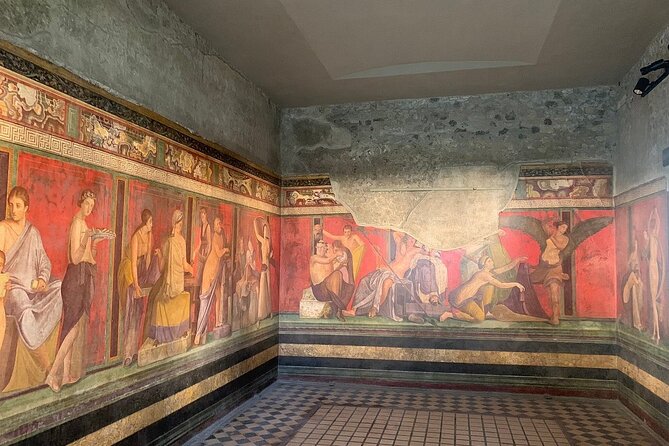
The final stop is the Villa dei Misteri, one of the main reasons to choose this itinerary. Its first-century BC Dionysian fresco is famous for its unusual subject and remarkable state of preservation.
The paintings are associated with mystery cults, including Dionysian and Isiac traditions. The scenes invite questions about initiation, ritual, belief, and private identity. The villa does not offer a simple story that can be reduced to a few dates, so a thoughtful explanation makes a real difference.
Ending here gives the tour a strong final image. After seeing public institutions, temples, baths, and houses, you finish with a private, highly charged painted room. It brings together Pompeii’s love of decoration, its religious variety, and its links to the Hellenistic world.
The Villa dei Misteri is also outside the central cluster of many famous buildings, so including it saves you from having to plan that visit alone. Still, the 25-minute format means you should not expect a slow, solitary viewing. If this fresco is your main goal, consider allowing additional time around the guided program if your admission arrangements permit it.
What the $57.62 price means in practice
At $57.62 per person, the price is for the guided experience, not the Pompeii entrance ticket. That distinction matters. You should calculate the total cost before booking, especially if you are arranging the visit for a family or a larger party.
The value comes from the length, the specialist focus, and the small group. Four hours is enough to cover major public buildings, baths, villas, and the Villa dei Misteri in one organized route. A self-guided visit may cost less for the guiding element, but you would need to build your own structure and research the sites in advance.
I would see this as a good fit if you want context more than freedom to wander. It is less suitable if you prefer to stop for long periods at one house, take many photographs, or move at your own pace.
The tour is booked on average 23 days ahead, so planning early is sensible. Confirmation arrives within 48 hours of booking, subject to availability. Free cancellation is available until 24 hours before the start time. Changes or cancellations inside that window are not accepted for a refund.
Who will get the most from this four-hour walk
I would recommend this tour to you if:
- You want a clear route through Pompeii’s most important public and private buildings.
- You enjoy archaeology, art, philosophy, and religious history.
- You want the Villa dei Misteri included rather than left for another visit.
- You prefer a group of no more than 15 people.
- You like a guide who connects ancient life with modern ideas.
- You are visiting Pompeii for the first time and want help making sense of the site.
It can also suit families with older children. Bruno Pisano’s style includes links to psychology and contemporary life, which may hold attention better than a string of dates and names.
You may want another type of visit if you need a relaxed, flexible pace. Ten stops in just over four hours is a lot. The service is designed to give you range and structure, not complete independence.
Should you book the Pompeii Historical and Cultural Itineraries tour?
Book it if you want a serious introduction to Pompeii led by Bruno Pisano, with the Forum, baths, temples, major houses, and Villa dei Misteri connected into one story. The strongest features are the specialist interpretation, the maximum group size of 15, and the attention to Pompeii’s Hellenistic and Mediterranean identity.
Before committing, remember two points: admission to the ruins costs extra, and each stop receives about 25 minutes. If those limits suit your plans, the tour offers a well-organized way to see a great deal without treating Pompeii as a pile of ruins. If you want to linger, sketch, or photograph every room, use the guided visit as your introduction and allow extra time for your own exploration.
FAQ
How long does the Pompeii guided tour last?
The tour lasts approximately four hours and ten minutes.
What time does the tour begin?
The tour begins at 9:30 am.
Where does the tour meet?
The meeting point is the Porta Marina audioguide official point at Via Villa dei Misteri, 2, Pompeii.
Where does the tour end?
The tour ends at Via Villa dei Misteri, 2, the same location as the meeting point.
Is the Pompeii entrance ticket included?
No. Admission to the Pompeii ruins is not included in the tour price.
How large is the tour group?
The maximum is 15 travelers per guide.
Who provides the tour?
The experience provider is Bruno Pisano.
Is the Villa dei Misteri part of the itinerary?
Yes. The route includes the Villa dei Misteri and its famous Dionysian fresco.
Can I cancel for a full refund?
Yes. You can cancel at least 24 hours before the experience start time for a full refund. Cancellations or changes made less than 24 hours before the start time are not accepted for a refund.
More Ancient Sites near Pompeii
- Pompeii Walking Tour: The Real History of the Ruins
★ 4.5 · 16 reviews - Naples: Street Art & History Tour in the Spanish Quarters
★ 4.9 · 540 reviews - Naples: Historic Center and Sansevero Chapel Walking Tour
★ 4.8 · 208 reviews - 360 ° Naples. THE historic center of the city
★ 5.0 · 85 reviews
Just added around Pompeii
- Wine Tasting and Winery Tour in Vesuvio National Park with Lunch★ 4.5 · 3 reviews
- Mt. Vesuvius Wine Tasting and Lunch Experience from Pompeii★ 4.5 · 20 reviews
- Wine tasting in the Vesuvius national park★ 5.0 · 3 reviews
- Visit Pompeii with a local expert guide★ 5.0 · 10 reviews
- Traditional Neapolitan Dinner in Pompei – Villa Franca – Family Restourant★ 5.0 · 8 reviews
- Private Guided Tour and VR Headsets in the Ancient Pompeii★ 5.0 · 3 reviews
- Tour Mount Vesuvius with Entry Tickets and Round Trip Transfer Included★ 3.5 · 4 reviews
- Vesuvius tour entrance to the crater and return bus★ 4.5 · 9 reviews
Guided Tours in Pompeii, compared.


Pompeii Guided Tour & Horse Riding on Vesuvius with Lunch
Read our review →
Complete Pompeii Skip the Line Tour with Archaeologist Guide
Read our review →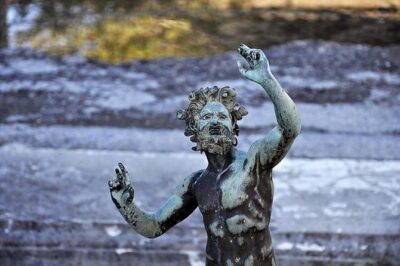
Guided Small Group Tour Max 6 People with Private Option
Read our review →
Pompeii Guided Group Tour with Entry Ticket and Archaeologist
Read our review →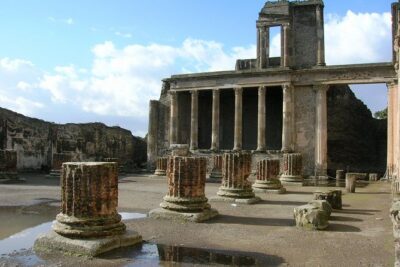
2 Hour Private Tour with an Archeologist Guide
Read our review →
Stories of Pompeii: Small Group tour with archeology expert guide
Read our review →
Mount Vesuvius Tour from Pompeii Led by an Expert Guide
Read our review →Browse the lists this tour appears in