
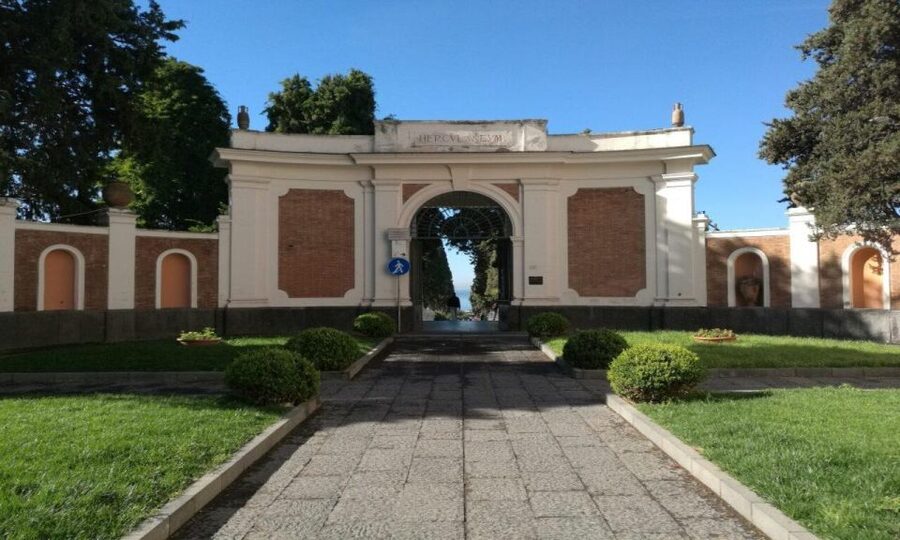
Reviewed · HERCULANEUM TOURS FROM NAPLES
Herculaneum with an Archaelogical Guide & Ticket
Herculaneum gives you a remarkably close look at Roman daily life. Unlike Pompeii, this smaller site preserves many upper floors, wooden objects, vivid wall decoration, and household details. You spend about four hours away from Sorrento, with an archaeologist guide explaining what you are seeing rather than simply walking you past ancient walls.
I like the easy round-trip coach transport and the fact that your admission ticket is included. I also like the early 8:00 a.m. start, which leaves much of the day free. The main consideration is the tightly timed visit: the guided portion lasts about 1.5 hours, so you may not have time for every corner, including the Antiquarium.
Key points
- Meet at Bar Kontatto in central Sorrento: The meeting point is a short walk from the train and bus station.
- A guide with archaeological training leads the visit: Monica is specifically praised for clear, lively explanations, though guide assignment can vary.
- Coach transport saves planning time: The ride takes about 70 minutes each way in a 50-seat coach.
- The tour focuses on some of Herculaneum’s best houses: Casa di Nettuno ed Anfitrite, Casa dei Cervi, Casa del Salone Nero, and the House of Skeletons are all included.
- The visit is efficient rather than leisurely: You get a strong introduction in a half-day, but limited free time inside the site.
- The price is $88 per person: That is a fair convenience price if you value transport, entry, and a specialist guide in one booking.
Why Herculaneum feels different from Pompeii
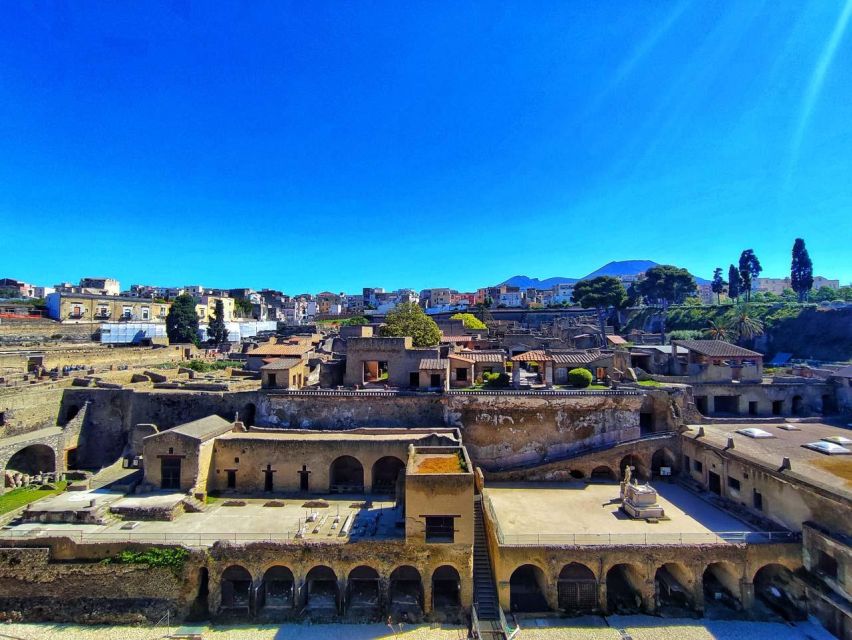
Herculaneum was founded by the Greeks and later became a Roman town near Mount Vesuvius. In the eruption of AD 79, it was buried by hot volcanic material rather than mainly covered by falling ash. That difference helped preserve parts of the town in striking detail.
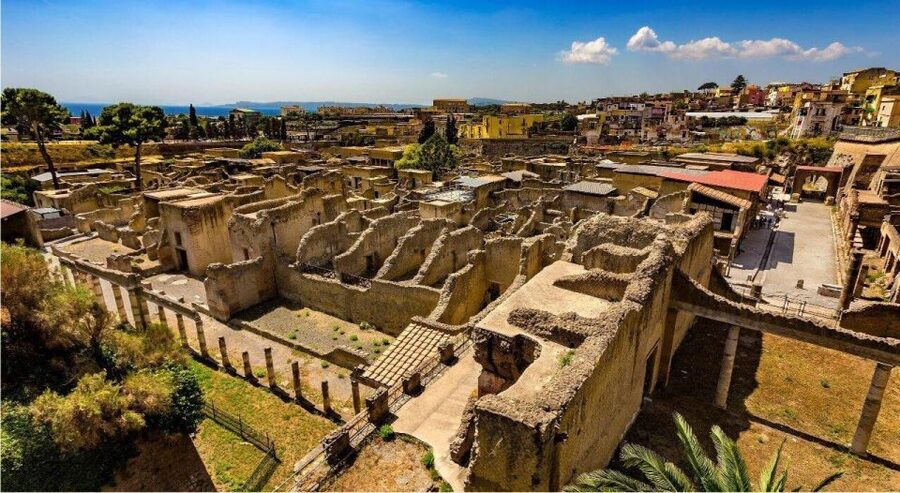
I find Herculaneum easier to understand than Pompeii because the site is smaller and the buildings often feel more complete. You might see several levels of a house, traces of timber, painted rooms, courtyards, shops, shrines, and decorative floors packed into a fairly compact area.
This is not a tour of a ruined city reduced to foundations. You are looking at homes and public spaces where daily routines once took place. A guide can point out the difference between a grand reception room, a private courtyard, a household shrine, and a commercial space. Those details make the site feel less like a collection of artifacts and more like a town.
The experience is especially useful if you have only one free morning from Sorrento. Getting to Herculaneum independently is possible, but this arrangement removes the need to work out the transfer, ticket purchase, and site orientation on your own.
More Herculaneum tours:
- Ercolano: Herculaneum Entry Ticket with Optional Audio Guide
★ 4.1 · 581 reviews - Herculaneum: Skip The Line Entrance ticket + Audioguide
★ 4.3 · 266 reviews - Herculaneum: Tickets & Tour with a Local Archaeologist
★ 4.8 · 226 reviews
Starting at Bar Kontatto in Sorrento
The day begins at 8:00 a.m. at Bar Kontatto, Corso Italia n. 257. The meeting point is only a few minutes on foot from Sorrento’s train and bus station, which is helpful if you are staying nearby or arriving by public transport.
I would arrive at least 10 minutes early. The tour operator sends confirmation by email or WhatsApp after booking, so check your spam folder if the message does not appear. Have the confirmation available, and bring identification because a passport or ID card may be requested. A copy is accepted according to the tour information.
The early start works well for a half-day plan. You should be back in Sorrento after roughly four hours, leaving time for lunch, a second outing, or a slower afternoon in town. The trade-off is simple: you must be ready early, and a late arrival could be a serious problem for a group departure.
The 70-minute coach ride to the ruins
The transfer takes about 70 minutes each way in a 50-seat coach. That is a substantial part of a four-hour experience, but it gives you a direct plan from Sorrento to the archaeological site and back.
I like this setup for anyone who does not want to compare trains, buses, and local connections. The return journey is already arranged, and the transport is one of the parts most strongly praised in the available feedback. One review specifically describes the trip to and from the site as comfortable and worry-free.
The large coach also means this is not a private tour. One recent booking described a group of 21, which gives you a useful sense of the scale, though group size may change. You should expect a shared outing, not a quiet one-on-one archaeological lesson.
Bring water, sunscreen, a hat, and comfortable shoes. The site involves walking over ancient surfaces, and the practical advice here matters more than fashionable footwear. A camera is welcome, and cash is useful for personal extras since lunch and other purchases are not included.
A focused guided visit inside Herculaneum
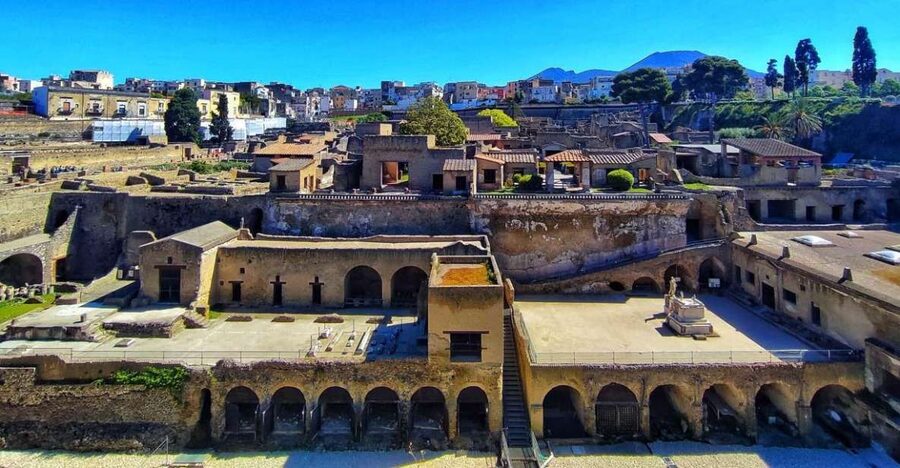
The site portion is listed as about two hours, with roughly 1.5 hours led by the archaeologist. That is enough time for a clear introduction to the main areas, but you should not expect to inspect every street at your own pace.
The guide is the heart of the visit. The strongest feedback centers on guides who explain clearly, point out small details, and keep the past connected to the buildings in front of you. Monica is named several times as an especially engaging guide. She is described as passionate, clear, and good at drawing attention to details you might otherwise miss.
Guide assignment can vary, so Monica is not guaranteed. The key point is that the tour includes an authorized archaeologist guide rather than only an audio recording. Headsets are supplied for groups larger than 10, which should make explanations easier to follow when you are standing several steps away.
English is the stated language for both the live guide and the audio support. If you prefer to linger quietly over one mosaic or explore side streets at your own pace, the fixed route may feel restrictive. If you want the major sights explained efficiently, the structure works well.
A few more Ercolano outings worth a look
- Naples: Pompeii and Herculaneum Tour with Tickets and Lunch
★ 4.4 · 136 reviews - Vesuvio Skip The Line Ticket With Digital Audioguide
★ 3.2 · 91 reviews - Herculaneum Archaeological Park smart Audio Tour
★ 3.8 · 70 reviews - Herculaneum: Private Walking Tour with Archeologist Guide
★ 5.0 · 59 reviews
Casa dell’Albergo and the first look at Roman homes
Casa dell’Albergo is one of the first named stops. As you move through the house, the guide can help you read the arrangement of rooms and see how Roman domestic buildings were organized.
The value of a stop like this is not just the architecture. A house gives you a way to picture movement through a Roman home: where people gathered, where decoration made an impression, and how different areas served different purposes. Without context, it is easy to walk past a doorway or floor pattern without understanding its role.
The visit is guided rather than self-directed, so you will hear the explanation while moving with the group. That keeps the pace brisk, but it also helps you avoid spending all your time on the first building and missing later highlights.
The Sacellum of the Augustales
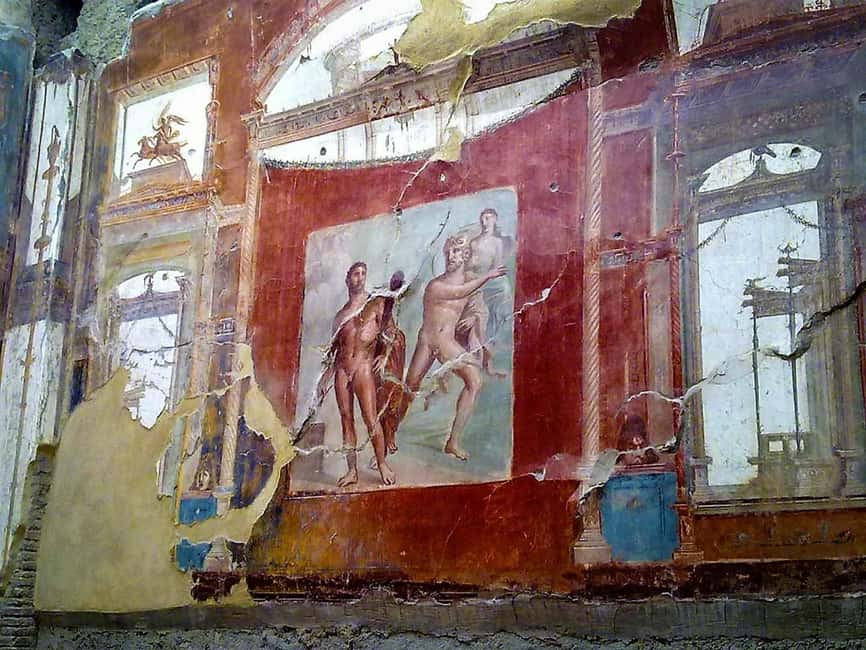
The Sacellum of the Augustales introduces a religious and civic side of Herculaneum. This was a sacred space associated with the Augustales, a group connected to the worship of the emperor.
I find this stop useful because it broadens the visit beyond private houses. Herculaneum was not only a place of kitchens, bedrooms, courtyards, and dining rooms. Public identity and religious practice shaped the town as well.
Your guide’s explanation matters here. A small shrine can look modest if you do not know what to look for, but its position and decoration can reveal how Roman communities expressed loyalty, status, and belief. The tour gives you that framework without requiring you to prepare a textbook’s worth of background beforehand.
Casa di Nettuno ed Anfitrite and its colorful decoration
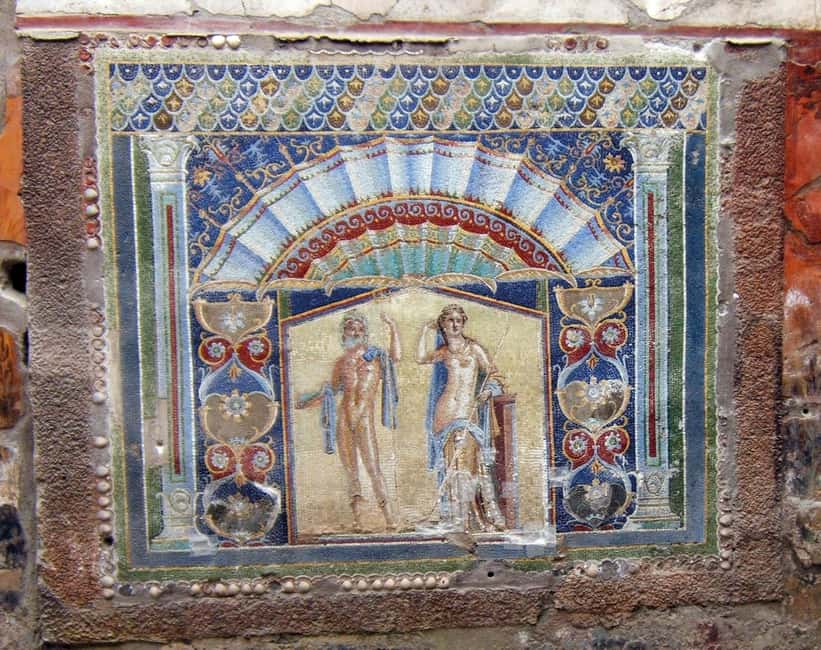
Casa di Nettuno ed Anfitrite is one of the most memorable stops because of its decorative work. The name refers to Neptune and Amphitrite, and the house is known for its colorful mosaic decoration.
This is where I would keep your camera ready, while also taking time to look closely at the materials and patterns. The value is in the small craft details: the way a wall or mosaic was designed to catch the eye, and how decoration helped signal taste and wealth.
A guide can also explain how the room functioned within the house. You will get more from the stop if you look beyond the famous image and notice how the decoration relates to the space around it. The visit is not simply a series of photo opportunities, though the mosaic work is naturally one of the most visually appealing parts.
Casa del Salone Nero and the role of painted rooms
Casa del Salone Nero, or the House of the Black Room, brings the focus back to interiors and wall decoration. The name points to a room with dark painted walls, an example of how Roman homeowners used color to shape the feeling of a space.
I like this stop because it shows that ancient homes were not plain stone boxes. Painted surfaces, decorative schemes, and carefully designed rooms helped communicate taste and social standing. A guide can explain how to read those choices instead of leaving you to guess why one room looks different from the next.
The time limit means you may not be able to stand in every room for long. Still, this is the sort of site where a short explanation can make a large difference. You begin to notice that preservation is not limited to walls and pavement. It includes the atmosphere created by interiors.
Casa dei Cervi and a more spacious Roman residence
Casa dei Cervi, the House of the Deer, is among Herculaneum’s larger and more impressive homes. Its name comes from decorative statues of deer, and the house helps show how wealthy residents used space, views, and decoration.
This stop gives the tour a useful change of scale. After seeing individual rooms and shrines, you get a better sense of how a substantial residence could be arranged. The house also connects domestic comfort with status. Large homes were designed to impress guests as much as to shelter families.
You should listen for how the guide explains the relationship between rooms and open areas. Herculaneum’s houses are easier to appreciate when you understand that they were planned environments, not random collections of chambers. The guided format helps you make that connection quickly.
The House of Skeletons and the human cost of the eruption
The House of Skeletons is a darker stop. Its name refers to human remains found in the building, bringing the eruption out of the realm of architecture and into personal tragedy.
This is a sobering part of the visit, and it gives the rest of the site a human scale. Beautiful mosaics and painted walls can make ancient life seem distant or elegant. The House of Skeletons reminds you that the town’s preservation came through a disaster that killed its residents.
Your guide sets the tone here, explaining the site without turning it into a spectacle. If you prefer a lighter sightseeing experience, this stop may feel confronting. For me, it is important because it connects the preserved rooms with the people who lived in them.
What you may not have time to see
The main drawback is limited free time. The guided visit covers a selection of major buildings, but one recent booking specifically wished there had been time for the Antiquarium.
That point is worth taking seriously. The Antiquarium can add useful context through objects and displays connected with the site, but this tour is built around a guided walk through the ruins. You should book it expecting a selected route, not a full independent exploration of every exhibition and street.
The best way to handle this is to decide what matters most before you arrive. If you want the guide’s explanations, the named houses, and a clear first visit, the plan is sensible. If you already know Herculaneum well or want to study every display at your own pace, a longer independent visit may suit you better.
Is $88 a fair price from Sorrento?
At $88 per person, the price includes the return coach, entrance ticket, and guided access with an archaeologist. Lunch, drinks, and personal extras are not included.
I see the value mainly in convenience. You are not paying only for admission. You are paying to have the transfer from Sorrento organized, the entrance handled, and the site interpreted in English by a specialist guide. For a short stay, that can be worth more than saving a little money through separate arrangements.
The value is less convincing if you already have transport sorted or want several hours of free time inside the ruins. The tour’s strength is efficiency. You leave Sorrento in the morning, receive a focused explanation of the principal areas, and return after about four hours.
The coach is shared, and the visit follows a set route. That keeps the cost below a private excursion but also means you give up some flexibility. I would compare the price with the cost and effort of arranging transport, admission, and a guide separately, not with the entry ticket alone.
Who should book this half-day visit?
I would recommend this tour to you if you are staying in Sorrento and want Herculaneum without spending a full day on transport and planning. It is also a good fit if ancient sites make more sense to you when someone points out the purpose of rooms, symbols, and decoration.
It suits first-time visitors especially well. The guide gives you a strong introduction to the site’s houses, religious spaces, artwork, and tragic final chapter. Monica has received particular praise for making those details clear and interesting, though another guide may lead your group.
You may want a different arrangement if you use a wheelchair, since the tour is not suitable for wheelchair users. You may also prefer a self-guided visit if the Antiquarium or unhurried photography matters more to you than a guided route.
Wear sturdy, comfortable shoes. Bring water, sun protection, and identification, and arrive at Bar Kontatto early. These small preparations help you spend your energy looking at Herculaneum instead of worrying about the departure.
Should you book Herculaneum with an archaeologist guide?
Book it if you want a well-organized half-day from Sorrento with transport, admission, and expert explanation in one package. The strongest reasons are the efficient coach transfer, the focused selection of major houses, and guides such as Monica who make small archaeological details easier to notice.
Skip it if you want a long, unhurried visit or need time for every museum display. The Antiquarium may not fit into the schedule, and the guided portion moves at a group pace.
For most first visits, I think the tour offers solid value. Herculaneum rewards context, and the archaeologist guide gives you that context while keeping the morning manageable. Just book it with the right expectation: this is a well-planned introduction, not a full day to wander every corner.
FAQ
Where does the tour begin?
The tour begins at Bar Kontatto, Corso Italia n. 257 in Sorrento, at 8:00 a.m. The meeting point is a few minutes’ walk from the train and bus station.
How long does the experience last?
The full experience lasts about four hours, including the coach journeys to and from Herculaneum. The coach ride takes about 70 minutes each way.
Is transportation included?
Yes. Pick-up and drop-off at the stated Sorrento meeting point are included, with transport in a 50-seat coach.
Is the Herculaneum entrance ticket included?
Yes. Admission to the archaeological site and the guided tour inside are included in the price.
What language is the tour offered in?
The live tour guide and audio support are in English. Headsets are provided for groups larger than 10.
Is the tour suitable for wheelchair users?
No. The activity is not suitable for wheelchair users.
Just added around Ercolano
- Vesuvius and Pompeii Transfer + Entrance for the Vesuvio★ 4.2 · 11 reviews
- Herculaneum – Small Group Tour (admission included)★ 5.0 · 14 reviews
- Herculaneum Archaeological Park smart Audio Tour★ 3.8 · 70 reviews
- Herculaneum: Skip-The-Line Entrance Tickets + Audioguide★ 4.7 · 3 reviews
- Herculaneum: Private Walking Tour with Archeologist Guide★ 5.0 · 59 reviews
- Herculaneum: 2hour Shared Guided Tour + entry tickets★ 4.3 · 38 reviews
- Herculaneum: Private Tour with Driver from Naples★ 4.6 · 15 reviews
- Herculaneum Guided Walking Tour with Entry Ticket★ 3.7 · 21 reviews
Herculaneum Tours from Naples, compared.
Pompeii and Herculaneum Small Group Tour with an Archaeologist
Read our review →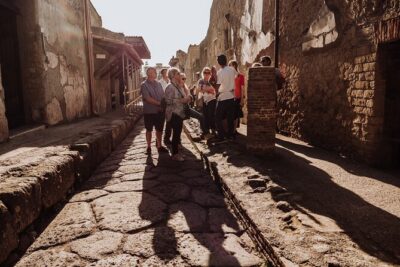
Herculaneum Small Group Tour and Ticket With an Archaeologist
Read our review →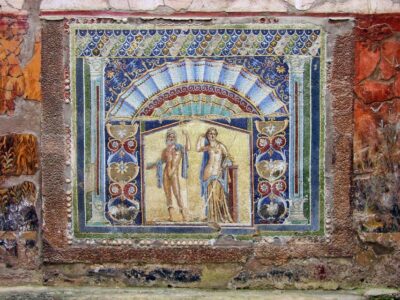
Pompeii & Herculaneum with Archaeologist Guide
Read our review →
Pompeii, Herculaneum, & Vesuvius Full-Day Tour
Read our review →
Herculaneum Entry Ticket with Optional Audio Guide
Read our review →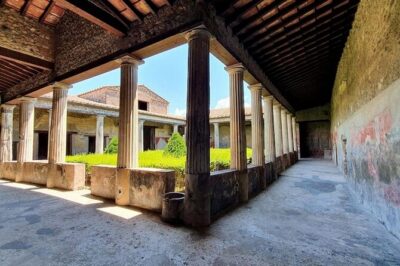
Day Trip of Pompeii, Herculaneum and Vesuvius from Naples
Read our review →Browse the lists this tour appears in