
Reviewed · HERCULANEUM TOURS FROM NAPLES
Herculaneum: Skip The Line Entrance ticket + Audioguide
Herculaneum gives you a remarkably close look at Roman daily life. Its streets, houses, mosaics, and wooden details are packed into a smaller site than Pompeii, so this self-guided visit lets you set the pace instead of following a group.
I like the freedom to linger at the buildings that catch your eye, and I like having explanations for numbered areas that otherwise have little information on site. The main catch is the audio device: earphones are not included, and it can feel awkward to hold the unit to your ear.
I also like that the ticket includes skip-the-ticket-line entry and flexible cancellation up to 24 hours ahead. Still, check the Sunday admission rules before booking, since the park may offer free entry on some Sundays and a third-party booking may not be the best value then.
Key points to know before you book
- A smaller site with remarkable preservation: Herculaneum is easier to cover than Pompeii, but allow about three hours if you want to take your time.
- A useful self-guided format: Follow the map and numbered stops without waiting for a group or matching a guide’s pace.
- Five audio languages: Choose English, Italian, German, French, or Spanish.
- Bring your own earphones: They are not supplied, and the hired device is held close to your ear.
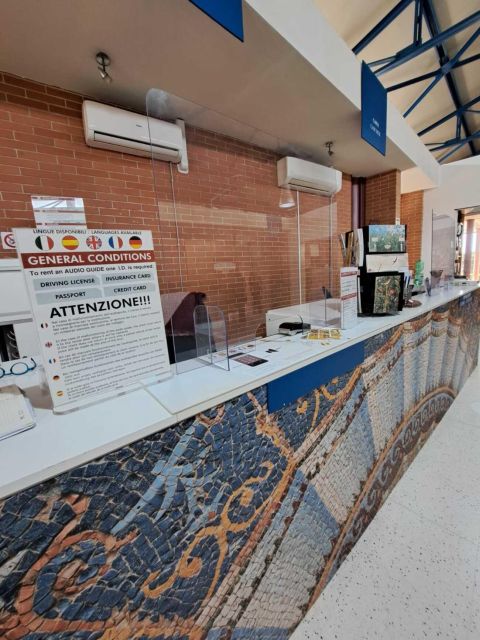
- Collect everything at the entrance: Look for the Audioguide Desk, not just the main ticket office.
- Plan food and transport carefully: There is no café or restaurant inside, and the walk from the station is downhill to the site.
Why Herculaneum feels different from Pompeii
Herculaneum was an ancient Roman town buried by the eruption of Mount Vesuvius in AD 79. Like Pompeii, it offers streets, homes, public spaces, wall decoration, and household objects. The difference is scale and preservation.
The excavated area is more compact, which makes it less tiring to navigate. You can cover a good deal in two to three hours, though two hours may feel rushed if you want to stop at every major building and listen to the audio commentary.
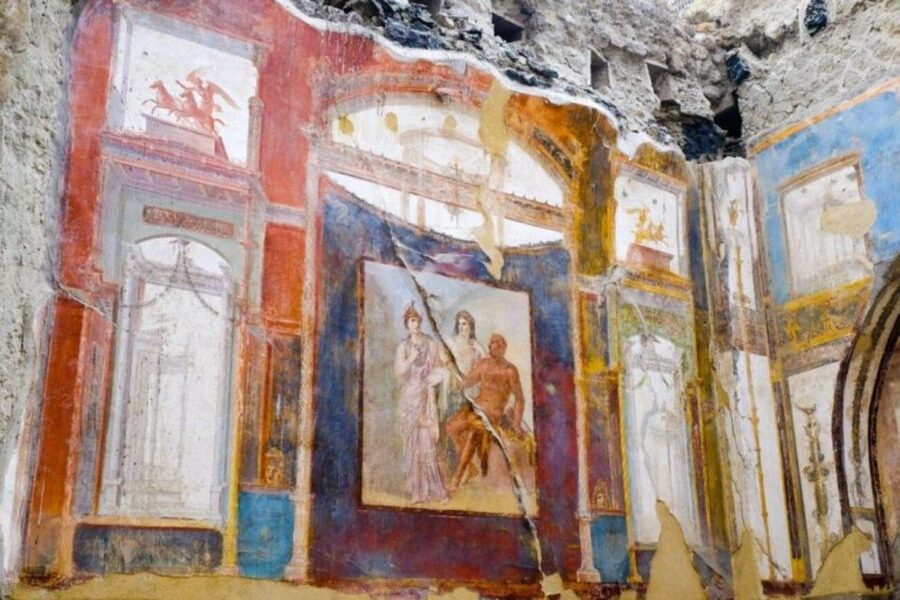
The preservation is the real reward. You might see houses with striking mosaics, villas with decorative details, and evidence of ordinary domestic life rather than only grand monuments. Herculaneum often feels more intimate than Pompeii. Instead of looking across a huge city grid, you move from one doorway, courtyard, room, or street corner to the next.
That compact layout suits an independent visit. You do not need to keep up with a group, and you can skip a stop that does not interest you. If one villa catches your attention, you can stay longer. If the heat, rain, or your legs tell you to move on, you can do that too.
More Herculaneum tours:
- Ercolano: Herculaneum Entry Ticket with Optional Audio Guide
★ 4.1 · 581 reviews - Herculaneum: Tickets & Tour with a Local Archaeologist
★ 4.8 · 226 reviews - Naples: Pompeii and Herculaneum Tour with Tickets and Lunch
★ 4.4 · 136 reviews
Entering through the Audioguide Desk
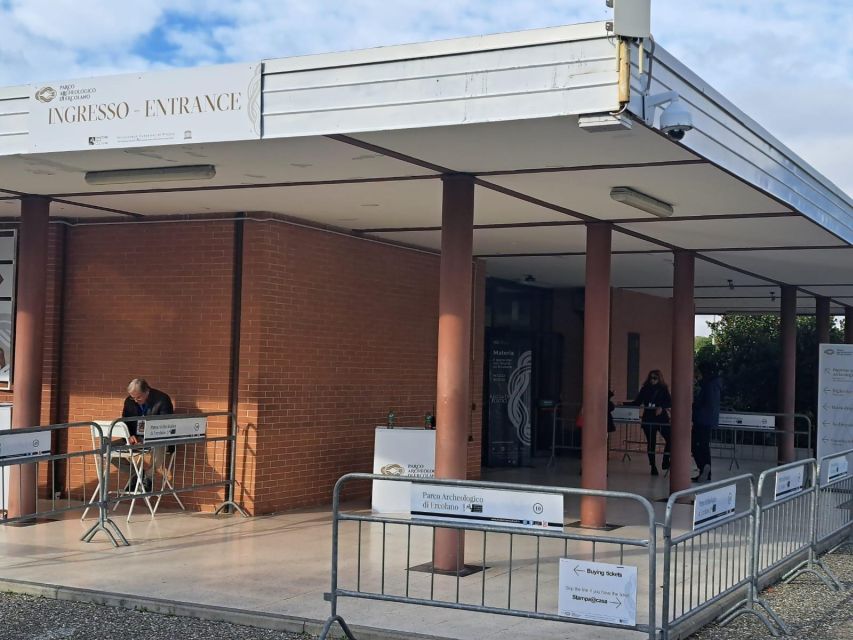
The meeting point is at the entrance to the archaeological park. Once there, look specifically for the Audioguide Desk. The ticket office and audio collection point can cause confusion, and the entrance signs may not feel perfectly obvious on your first approach.
The skip-the-ticket-line feature is useful when there is a queue. That said, some visitors have found little or no line at the time they arrived, so the practical value depends on the day and hour. You are paying for more than queue avoidance here, since the audio guide and map are the main tools for understanding the site.
Bring a valid passport, identity card, or driving licence. The information says a valid photo ID is required for audioguide hire, so do not leave it at your hotel. The device must be returned before the office closes, and you are responsible for repair or replacement costs if it is damaged, lost, or stolen.
Earphones are not included. You can hold the device to your ear, but this is not the most comfortable arrangement for a long visit. Some people find the unit sensitive, especially if their face touches it while listening. Bring your own simple earphones if the device allows you to use them, but do not assume Bluetooth headphones will pair with it.
Following the streets with the map and audio stops
The map is an important part of the package. Herculaneum has a compact footprint, but ancient streets and building entrances can still be confusing when you are trying to match what you see with an audio stop.
The audio commentary follows numbered buildings and areas. That gives you a basic route without forcing you into a fixed walking order. You can use the map to choose a broad direction, then listen when you reach a marked point.
This is especially useful because on-site written information can be limited. Without the guide, you may see an impressive doorway or mosaic but have little help understanding its purpose, age, or place in the town. The commentary supplies that missing context.
The content is informative, though not always easy listening. Some explanations use formal or high-level language, and parts of the guide may feel due for an update. Treat it as a useful framework rather than the final word on every building.
The audio format also has limits. A live guide can point out small details, answer questions, and add stories based on what your group is noticing. This package cannot do that. In return, you are free to stop, repeat a section, or walk away from the commentary when you want quiet.
What you will see during the three-hour visit
There is no fixed itinerary, so your route depends on how carefully you explore. A sensible visit begins with the main streets and the better-preserved homes, then moves toward villas, mosaics, and other areas that interest you most.
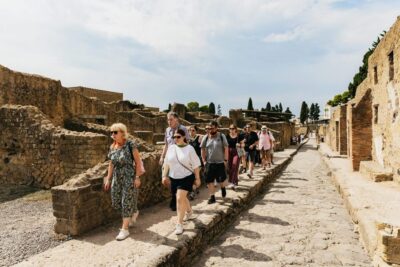
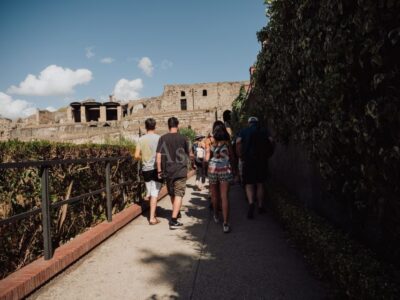
The streets help you understand the town as a place where people lived and worked. Look at the layout of doorways, rooms, courtyards, and passageways. Herculaneum is most rewarding when you stop thinking of it as a collection of ruins and start reading it as a neighborhood.
The houses are the heart of the visit. Their preserved decoration gives you more than a general sense of Roman wealth. You can compare modest rooms with more elaborate residences, notice floor patterns, and picture how domestic space was organized.
Mosaics deserve time rather than a quick glance. The audio guide can help explain what you are looking at, but the map also lets you return to a room later if it is crowded or you first passed through too quickly.
Villas and larger homes add another layer. They show how some residents had more space and decoration than others. You will not simply be ticking off famous monuments. The pleasure comes from the ordinary details that survived: a threshold, a wall surface, a room plan, or a street that still suggests how people moved through the town.
The site also carries a sobering side. The eruption did not merely preserve buildings in an abstract way. It records a community caught in a catastrophe. Give yourself time to take in that human cost, especially in areas where the remains make the event feel immediate.
More Skip-the-Line Tickets in Ercolano:
- Vesuvio Skip The Line Ticket With Digital Audioguide
★ 3.2 · 91 reviews - Herculaneum: Skip-The-Line Entrance Tickets + Audioguide
★ 4.7 · 3 reviews - Herculaneum: Skip-the-Line Guided Tour with Archaeologist
★ 4.8 · 3,439 reviews - Mount Vesuvius: Skip-the-Line Ticket and Smart Digital Guide
★ 4.2 · 2,780 reviews
How long you should allow
The stated duration is three hours, but you can visit within the park’s opening hours and set your own pace. Two hours is enough for a brisk visit focused on major areas. It is not enough if you want to listen to much of the audio, inspect the houses closely, and pause for photographs.
I would plan on three hours for a comfortable first visit. That gives you time to get the audio device, understand the map, walk the site, and return anything you skipped. It also gives you breathing room if you arrive from Naples, Sorrento, or another base and do not want to rush.
A train journey can make timing important. Direct rail options from Sorrento may be limited at certain times, so check your return connection before entering the park. The site itself is manageable, but a missed train can turn a relaxed visit into a long wait.
The walk from the station to Herculaneum is about half a mile downhill. Wear comfortable shoes, as requested in the booking details, and remember that the return walk will be uphill. The archaeological park itself also requires steady walking on historic streets and uneven surfaces.
Food, weather, and practical comfort
There is no café or restaurant inside the park. Vending machines provide some options, but they are not a substitute for lunch or a proper drink break. Bring food and water if you expect to stay for several hours, while following any current park rules about eating.
The visit goes ahead in rain or sunshine. A wet day can make the practical side less pleasant, especially on old paving, so suitable shoes matter. On a hot day, the lack of a café is an even bigger concern.
Plan your comfort around the visit rather than assuming the park will supply everything. Carry water, use sun protection when needed, and bring a light rain layer if the forecast is uncertain. These are simple steps, but they make the difference between a thoughtful visit and a hurried one.
The audio device adds another small task. You need to collect it, learn how it works, and return it before the office closes. That is not difficult, but it means you should not leave the park at the last minute.
Is $35 a fair price?
At about $35 per person, this is not the cheapest way to enter Herculaneum. The value depends on what you want from the visit and what admission costs directly from the park on your chosen date.
The package includes the entry ticket, the audio guide, and the map. For many people, the audio commentary is the key value because the site has limited information at some points. If you want to understand what you are seeing but do not want to join a live group, the extra cost can make sense.
The ticket is also practical when you want to avoid a possible ticket queue. Yet queue conditions change, and some arrivals have found no line. On those days, the skip-the-line feature carries less weight.
Check the park’s direct admission rules before paying. Sunday admission can be free, and one booking reported needing to request a refund after paying full price through a third-party platform. The outcome was only a partial refund in that case. I would compare the official park price with the package price, especially if your date is a free-admission day.
The package makes the most financial sense when you value independent commentary, need a scheduled ticket, or are visiting at a busy time. It makes less sense if you already have a guidebook, want only a quick walk through the ruins, or can enter directly for free.
Self-guided audio or live guide?
This option suits you if independence matters. You choose the order, decide how long to stay at each stop, and avoid the common problem of being rushed away from a room you want to study.
It is also useful when people in your group have different interests or walking speeds. One person can listen to a full explanation while another looks around, and you can meet again without holding up a larger group.
The main weakness is the lack of personal interaction. You cannot ask the device why a detail matters, request a shorter explanation, or hear extra stories about a particular building. A live guide may also point out small features that are easy to miss.
The supplied audio guide is available in English, Italian, German, French, and Spanish. Its information is generally useful, but the wording may feel formal, and some parts could use an update. If you prefer plain explanations and casual questions, a live guide may suit you better.
Who should book this Herculaneum visit?
I would choose this package for an independent sightseer who wants historical context without committing to a group. It is particularly good for people who have already visited Pompeii and want a smaller, more concentrated ancient town.
It also works well for a first visit if you are willing to prepare a little. Bring your ID, comfortable shoes, earphones if you want them, and food or water. Check the opening hours, train connections, and Sunday admission price before you set off.
Families and mixed-interest groups may appreciate the freedom, though the audio equipment can be less convenient for children if they need to hold it close to the ear. Anyone with limited time should focus on selected areas rather than trying to hear every stop.
If you want a polished narrative, expert questions answered on the spot, and stories tailored to your interests, choose a live guide instead. If you prefer control and quiet, this ticket and audioguide combination is the better fit.
Should you book it?
Book it if you want to explore Herculaneum at your own speed and need help making sense of the buildings. The compact site, preserved houses, mosaics, and numbered audio stops make this a rewarding independent visit.
Before paying $35, compare the cost with direct admission, especially on Sunday. Also remember the practical drawbacks: no restaurant, a downhill walk from the station, a device that may feel awkward, and an audio guide that is informative but not always fresh or simple.
For many visitors, the freedom is worth more than a fixed group route. Allow three hours, bring your ID and earphones, and treat the map as your companion. You will get the most from Herculaneum by slowing down at the homes and streets that show how people actually lived.
FAQ
What does the Herculaneum ticket and audioguide package include?
It includes entry to the Herculaneum Archaeological Park, an audioguide, and a map of the site. A guided tour is not included.
Which languages are available for the audioguide?
The audioguide is available in English, Italian, German, French, and Spanish.
Where do I collect the ticket and audioguide?
Go to the entrance of Herculaneum and look for the Audioguide Desk.
Do I need identification to use the audioguide?
Yes. A valid passport, identity card, or driving licence is required for audioguide hire.
Are earphones included?
No. Earphones are not included, so you may need to hold the device to your ear. Bringing your own earphones may be more comfortable.
How long does the visit take?
The stated duration is three hours. Some people complete the site in about two and a half hours, but two hours may not be enough if you want to see everything and listen carefully.
Just added around Ercolano
- Vesuvius and Pompeii Transfer + Entrance for the Vesuvio★ 4.2 · 11 reviews
- Herculaneum with an Archaelogical Guide & Ticket★ 4.8 · 11 reviews
- Herculaneum – Small Group Tour (admission included)★ 5.0 · 14 reviews
- Herculaneum Archaeological Park smart Audio Tour★ 3.8 · 70 reviews
- Herculaneum: Skip-The-Line Entrance Tickets + Audioguide★ 4.7 · 3 reviews
- Herculaneum: Private Walking Tour with Archeologist Guide★ 5.0 · 59 reviews
- Herculaneum: 2hour Shared Guided Tour + entry tickets★ 4.3 · 38 reviews
- Herculaneum: Private Tour with Driver from Naples★ 4.6 · 15 reviews
Herculaneum Tours from Naples, compared.
Pompeii and Herculaneum Small Group Tour with an Archaeologist
Read our review →
Herculaneum Small Group Tour and Ticket With an Archaeologist
Read our review →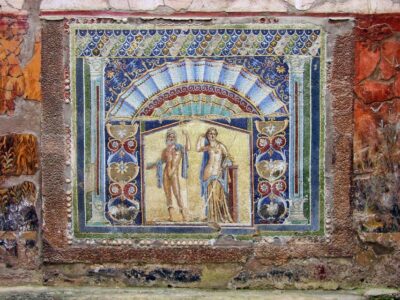
Pompeii & Herculaneum with Archaeologist Guide
Read our review →
Pompeii, Herculaneum, & Vesuvius Full-Day Tour
Read our review →
Herculaneum Entry Ticket with Optional Audio Guide
Read our review →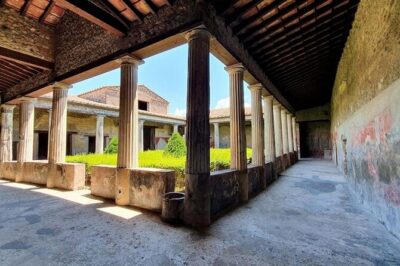
Day Trip of Pompeii, Herculaneum and Vesuvius from Naples
Read our review →Browse the lists this tour appears in