
Reviewed · HERCULANEUM TOURS FROM NAPLES
Herculaneum: Private Walking Tour with Archeologist Guide
Herculaneum gives you an unusually close look at Roman home life. The town was buried under roughly 20 meters of volcanic mud after Vesuvius erupted in 79 AD, preserving wooden doors, furniture, paintings, mosaics, and even food-shop details that are harder to find at Pompeii.
I like the private format, which lets your guide adjust the pace and explain details without a large group crowding around. I also like the two-hour focus: you see major houses, shops, public buildings, and the shoreline without giving up an entire day.
The main drawback is the price, listed at $317.76 per group up to one person, with admission included at 16 euros each. Confirm the final cost for your party before booking, and remember that transportation is not included. Guides highlighted for this experience include Antonio, Luciano, and Paola, though your assigned guide may differ.
Key points to know before you book
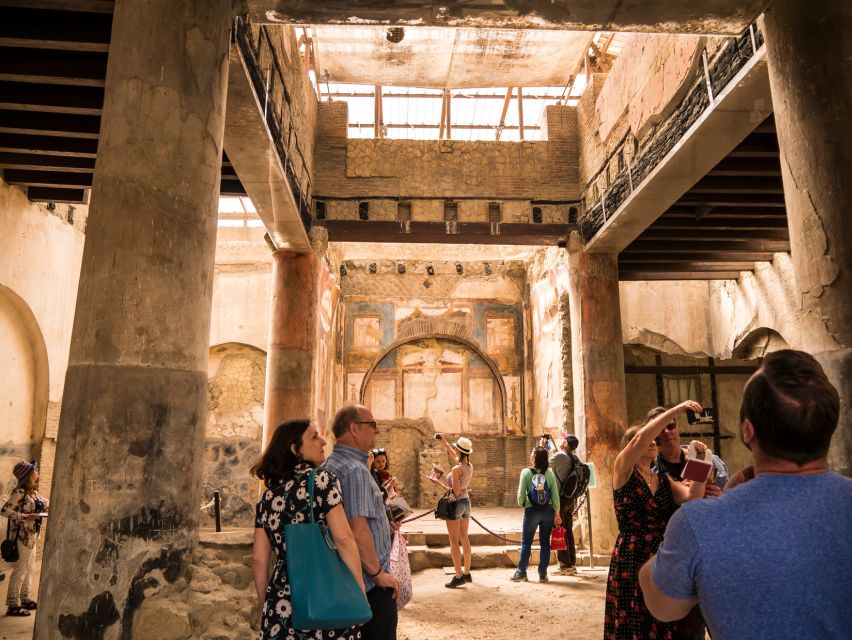
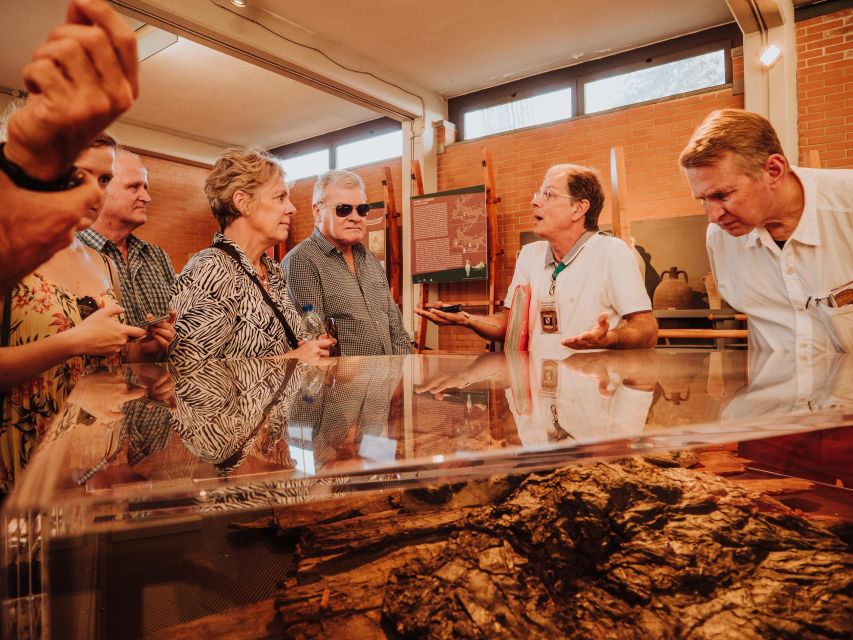
- The preserved wood is the star: Herculaneum’s volcanic mud protected doors, partitions, and other wooden objects rarely seen at ancient Roman sites.
- You get a private archaeologist guide: The format suits families, couples, and small groups who want questions answered at their own pace.
- The tour covers major highlights: Expect the House of the Black Saloon, Thermopolium, House of Neptune and Amphitrite, House of the Deer, House of Skeletons, and the Augustales shrine.
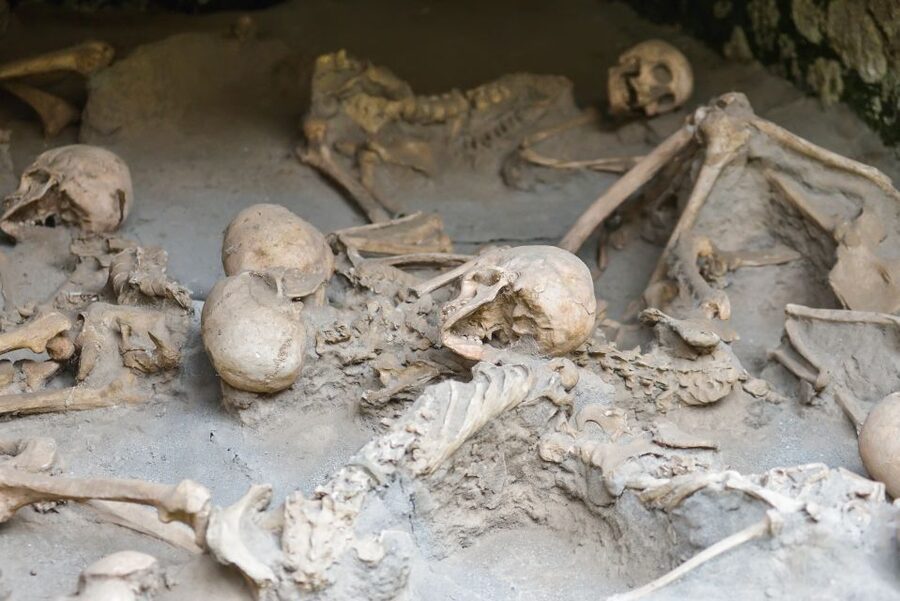
- The shoreline tells the darkest part of the story: Hundreds of victims’ skeletons were found near the ancient beach.
- Two hours is efficient but focused: You will see a strong selection of the site, not every corner of the archaeological park.
- Plan for the practical details: Wear comfortable shoes, leave oversized luggage behind, and arrange your own transportation to Herculaneum.
Why Herculaneum feels different from Pompeii
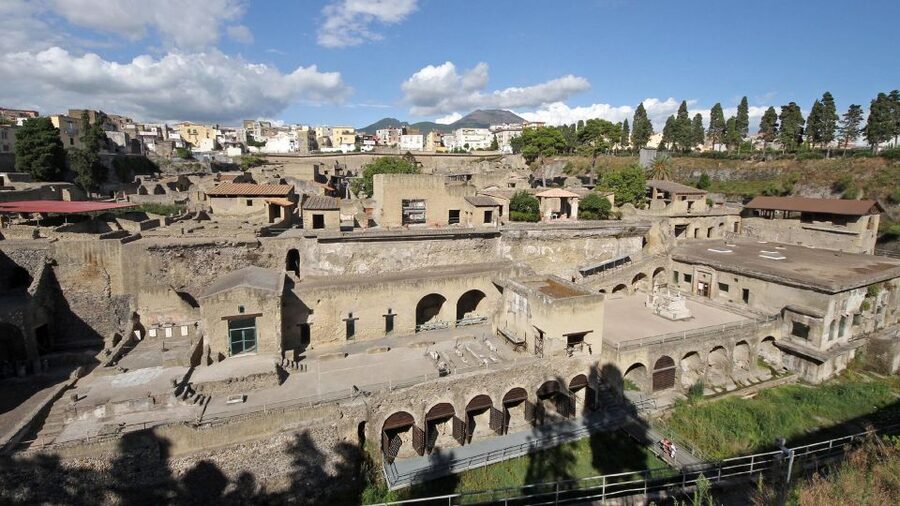
Herculaneum is often called Pompeii’s sister city, but the two sites offer different experiences. Pompeii was covered by roughly four to five meters of ash. Herculaneum was hit by an avalanche of mud about 20 meters deep, which sealed buildings and household objects in place.
That difference matters when you walk through the ruins. At Herculaneum, you may see wooden doors, beams, partitions, and other fittings that give the buildings a more immediate, lived-in feel. Painted walls and mosaics also survive in striking condition.
Your guide’s job is especially useful here because the site can look like a maze of walls and rooms without context. An archaeologist can point out what each space was used for, explain how the eruption affected the town, and connect small details to everyday Roman life.
The eruption story is not just a dramatic opening lecture. It explains why the town looks the way it does. Ash, mud, heat, and pressure shaped what survived, and your guide can help you understand why one building retains a wooden feature while another has only masonry walls.
More Herculaneum tours:
- Ercolano: Herculaneum Entry Ticket with Optional Audio Guide
★ 4.1 · 581 reviews - Herculaneum: Skip The Line Entrance ticket + Audioguide
★ 4.3 · 266 reviews - Herculaneum: Tickets & Tour with a Local Archaeologist
★ 4.8 · 226 reviews
Starting at the archaeological park
The tour begins at the Parco Archeologico di Ercolano on Via dei Papiri Ercolanesi 21, although the exact meeting point can vary with the option you book. The experience ends back at the meeting point, so you will need to arrange your own transport before and after the visit.
The tour includes skip-the-ticket-line access and admission fees. The listed entrance cost is 16 euros per person, which is useful when judging the total price. Since the advertised amount is for a private group up to one person, check how the price changes for your actual party size.
Once inside, your guide leads the route through the main archaeological site. The order of stops can vary, but the listed sights form a sensible tour of public spaces, shops, large homes, and the ancient shoreline.
Two hours sounds short for a town this important, but it can be the right amount of time if you want the main story and leading highlights. You should not expect to inspect every house or spend long periods at each room. The private format helps because your guide can spend more time on the parts that interest you most.
The House of the Black Saloon and Herculaneum homes
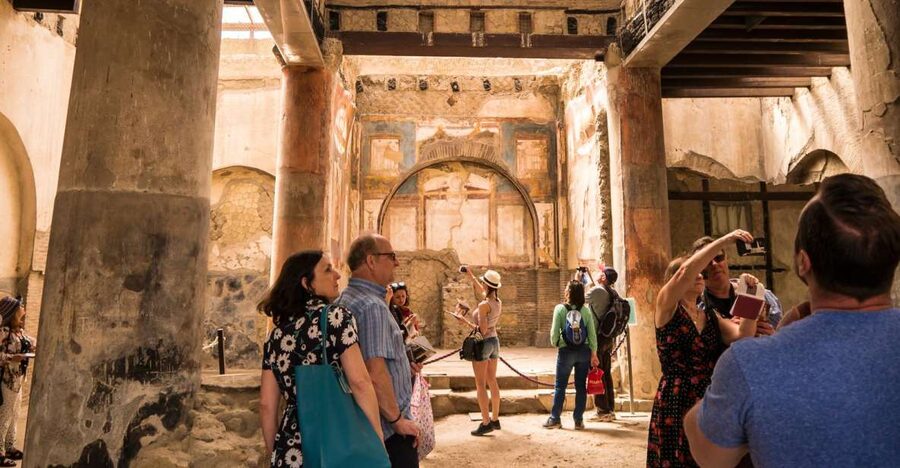
The Casa del Salone Nero, or House of the Black Saloon, is one of the tour’s main residential stops. Its name comes from the dark wall decoration in one of its rooms. Here, the appeal is not only the painted surface but the chance to see how Roman domestic spaces were arranged and decorated.
Your guide can help you read the house as a home rather than a collection of empty rooms. Look for the relationship between painted walls, courtyards, thresholds, and practical household features. Details that seem minor at first can help you picture how residents moved through the building.
The House of the Wooden Partition is another important example, even though it is not listed as a separate itinerary stop. Its preserved wooden divider is one of the clearest reminders that Roman homes were not made entirely of stone. You see the material choices of ordinary domestic life, not just grand architecture.
The House of the Deer, or Casa dei Cervi, offers another look at a substantial residence. The stop helps balance the tour between public monuments and private wealth. You can compare its scale and decoration with smaller homes and shops elsewhere in the town.
Shops, food, and ordinary Roman routines
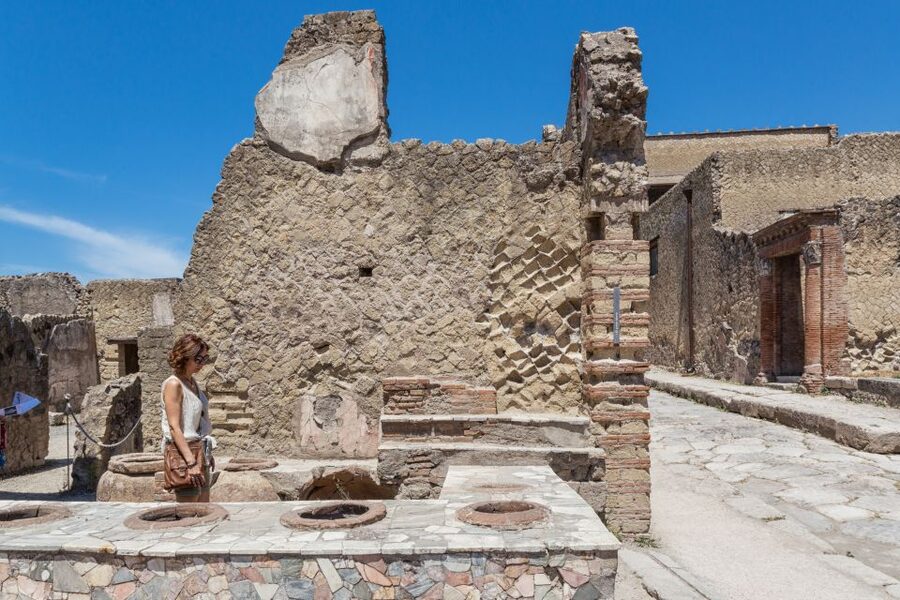
The Herculaneum Thermopolium gives you a glimpse of food service in the ancient town. A thermopolium was a shop where prepared food and drink could be sold, making it a useful stop for understanding the practical side of city life.
This is the sort of place where a guide adds real value. Without explanation, you may see counters, walls, and openings without knowing how the space worked. Your guide can connect the physical layout to the people who prepared, sold, and bought food there.
The Bakery adds another everyday layer. It shifts the focus from wealthy houses to production and trade. You get a better sense that Herculaneum was a functioning town with businesses, workers, customers, and household routines, not simply a row of elite villas.
These stops are especially helpful if you are visiting with children or teenagers. The story of what people cooked, sold, ate, and used at home is easier to grasp than a long list of dates. Antonio and Luciano have been especially noted for keeping explanations lively and relatable, including for younger visitors.
More Walking Tours in Ercolano:
- Herculaneum Guided Walking Tour with Entry Ticket
★ 3.7 · 21 reviews - Naples: Street Food Walking Tour with Local Guide
★ 4.8 · 4,256 reviews - Naples Spanish Quarters Walking Tour Street Art, Folklore & Sweet
★ 5.0 · 797 reviews - Naples: Old Town Guided Walking Tour
★ 4.8 · 553 reviews
The House of Neptune and Amphitrite
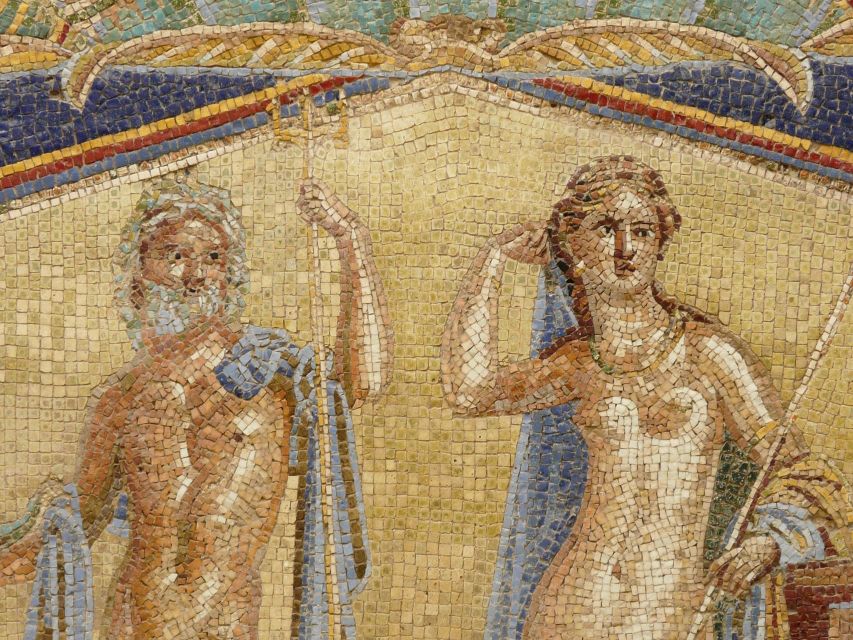
The Casa di Nettuno ed Anfitrite is known for its decorative work dedicated to Neptune and Amphitrite. This stop is one of the strongest places to focus on Herculaneum’s paintings and mosaics.
Give yourself time to look closely at the wall surfaces and patterned decoration. The preserved color and detail help you understand how much visual display mattered in Roman homes. A guide can explain the mythological imagery and show how decoration worked within the room rather than treating the mosaic as an isolated artwork.
This house also shows why a guided visit can be more rewarding than walking alone. You may notice a bright mosaic, but your archaeologist guide can explain its setting, purpose, and place within the house. That extra layer turns a pretty wall into evidence of taste, status, and household life.
Casa dell’Albergo and larger residential spaces
Casa dell’Albergo is another major house on the route. The name can suggest a hotel to modern ears, but here it refers to an ancient residence rather than a modern lodging business. Your guide can help clarify the building’s role and point out the features that make it important.
The value of this stop is comparison. After seeing the Thermopolium and Bakery, you can look at a larger private property and consider the differences in space, decoration, and daily use. A two-hour tour works best when you use each building as part of that bigger picture.
Do not rush from doorway to doorway. The best moments may come when your guide pauses at a threshold, a painted wall, or a preserved object and explains what it reveals about the people who used the room.
The public world of the Forum and Augustales shrine
The Forum was the civic heart of the town. It is one of the listed highlights, and it gives the tour a change of scale after the domestic houses and food shops.
Your guide can place the private homes into a wider civic setting here. The Forum was not simply an open space to photograph. It connected public business, community life, and the town’s religious and political identity.
The Sacellum of the Augustales adds a religious and civic dimension. The Augustales were associated with the imperial cult, and the shrine shows how public loyalty and worship were expressed in Roman communities.
This is an important balance in the itinerary. Herculaneum is famous for its preserved homes, but the town also had institutions and shared spaces. Seeing both helps you avoid viewing the site as a collection of attractive villas alone.
The Terrace of Marcus Nonius Balbus
The Terrace of Marcus Nonius Balbus is another key point on the route. Marcus Nonius Balbus was a prominent Roman figure whose memorial presence reflects the way status was displayed in the ancient city.
The terrace also helps you understand how Herculaneum related to its setting near the Bay of Naples. The exact view and access can depend on the open sections of the site, but the stop gives your guide a chance to discuss public honor, monuments, and the people who shaped the town’s identity.
As you move between buildings, wear shoes with good support. The archaeological site requires walking across uneven historic surfaces, and comfortable footwear is specifically recommended.
The House of Skeletons and the ancient shoreline
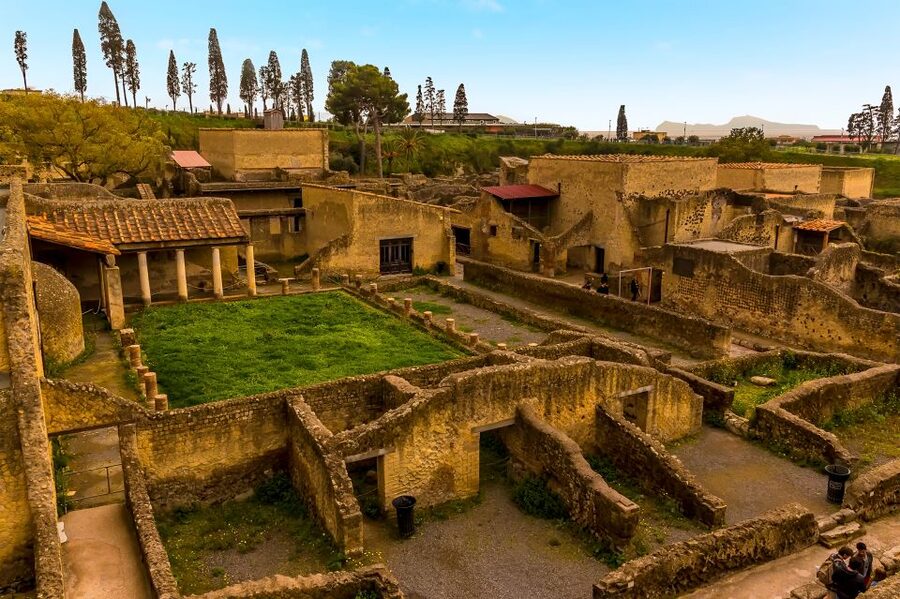
The House of Skeletons is one of the most sobering stops. The name points to the human cost of the eruption, and it shifts the mood away from decorative rooms and household objects.
The route continues toward the ancient beach, where hundreds of victims’ skeletons were discovered. This is the most emotionally difficult part of the visit, but it is also essential to understanding what happened in 79 AD.
The shoreline helps make the eruption feel immediate. You are not only hearing about ash and mud covering a town. You are seeing the place where people sought escape and where many died.
A good guide should handle this section with care, giving you historical context without turning human remains into spectacle. The private setting can be useful here because you can ask questions quietly and move at a pace that feels appropriate.
What the archaeologist guide adds
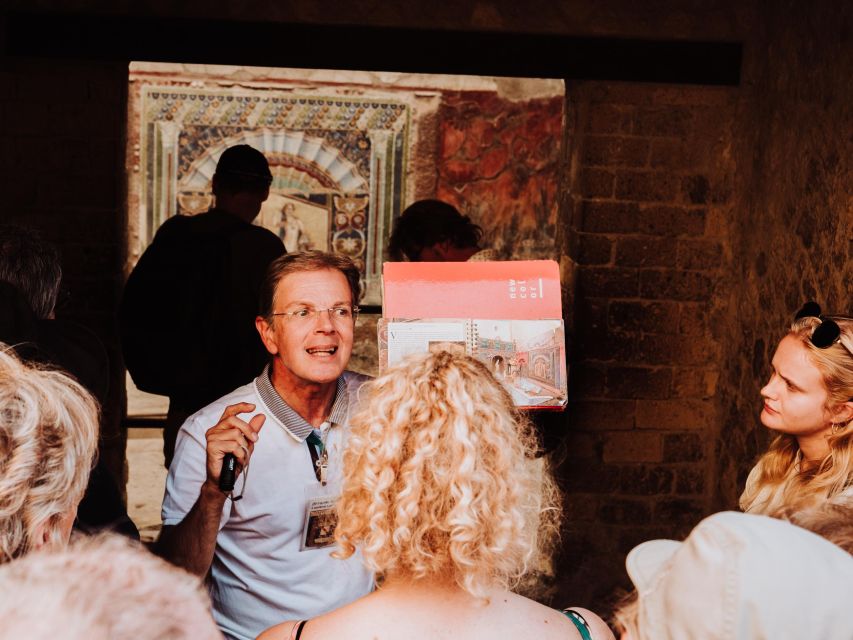
The greatest strength of this tour is the guide. Herculaneum rewards close looking, but it can be difficult to know what you are seeing without expert help.
Antonio is described as engaging and able to keep information amusing even when the group is tired. Luciano is noted for making the ancient town feel alive and relatable, including for teenagers. Paola is praised for bringing the site to life and trying to keep the group in the shade when possible.
Those details give you a useful picture of the guiding style to expect, but they do not guarantee which guide you will receive. The available guide languages include English, Italian, Spanish, Japanese, Russian, French, Portuguese, Chinese, and German.
The private format is best for questions. You can ask about a mosaic, a building’s function, the eruption, or Roman household life without waiting for a large group to catch up. It also gives families more freedom to pause or move on.
Price, timing, and who gets the best value
The listed price is $317.76 per group up to one person. Admission is included, with the stated ticket price of 16 euros per person, but transportation is not. Because the pricing format is unusual for a private experience, check the total for your group before paying.
I would consider this worthwhile for a first visit if you value explanation and efficient sightseeing. A private archaeologist-led tour can help you see the major houses and understand the eruption in two hours, rather than spending your visit guessing what each room was used for.
The value is less clear if you want a slow, independent day at the site. Two hours gives you the main highlights, but you may want more time to wander beyond the guided route. In that case, ask about the practical arrangements before booking, since the tour ends at the meeting point and no transportation is supplied.
You can cancel up to 24 hours ahead for a full refund, and the reserve-now, pay-later option gives you some flexibility. On the first Sunday of each month, entrance is free, but tickets cannot be reserved ahead of time and entry is not guaranteed. That free-entry rule may not suit anyone who wants a fixed private appointment.
The supplied information also contains conflicting accessibility notes. The activity details describe the tour as wheelchair accessible, while the additional information says it is not suitable for wheelchair users. If accessibility matters to you, contact Askos Tours before booking and ask about the current route, surfaces, and entrance arrangements.
Who should book this Herculaneum tour
I would choose this experience for a family that wants history explained in plain language, especially if children or teenagers are coming along. The guides highlighted for this tour have a strong record of making the site fun and relatable without losing the serious story.
It also suits couples and small groups who prefer a focused visit with room for questions. The homes, mosaics, wooden objects, food shop, and shoreline create a good mix of beauty, daily life, and difficult history.
You may want a different plan if you dislike guided visits, want extensive free time, or need transport included. The site itself is the main event, and the tour works best when you arrive ready to walk, listen, and look closely.
Should you book it?
Book this tour if you want Herculaneum to make sense quickly and prefer a private archaeologist rather than a large group. The best reasons are the preserved wooden features, vivid domestic decoration, strong selection of houses and shops, and the chance to discuss the eruption at your own pace.
Skip it if the price for your party is too high or if you want to explore every open section independently. Before confirming, check the group price, guide language, meeting point, transport plan, and wheelchair access. For a short, focused introduction to Herculaneum, this is a strong choice.
FAQ
How long does the Herculaneum private tour last?
The guided visit lasts two hours. Starting times depend on availability when you book.
What is included in the price?
A licensed archaeologist guide and Herculaneum admission are included. The stated admission fee is 16 euros per person.
Is transportation included?
No. You must arrange your own transportation to and from the meeting point.
Which languages are available?
Guiding is available in Italian, Spanish, English, Japanese, Russian, French, Portuguese, Chinese, and German.
What should I bring?
Wear comfortable shoes. Oversized luggage is not allowed.
Is the tour wheelchair accessible?
The supplied activity information gives conflicting details. One section describes it as wheelchair accessible, while another says it is not suitable for wheelchair users. Contact Askos Tours before booking to confirm the current arrangements.
Just added around Ercolano
- Vesuvius and Pompeii Transfer + Entrance for the Vesuvio★ 4.2 · 11 reviews
- Herculaneum with an Archaelogical Guide & Ticket★ 4.8 · 11 reviews
- Herculaneum – Small Group Tour (admission included)★ 5.0 · 14 reviews
- Herculaneum Archaeological Park smart Audio Tour★ 3.8 · 70 reviews
- Herculaneum: Skip-The-Line Entrance Tickets + Audioguide★ 4.7 · 3 reviews
- Herculaneum: 2hour Shared Guided Tour + entry tickets★ 4.3 · 38 reviews
- Herculaneum: Private Tour with Driver from Naples★ 4.6 · 15 reviews
- Herculaneum Guided Walking Tour with Entry Ticket★ 3.7 · 21 reviews
Herculaneum Tours from Naples, compared.
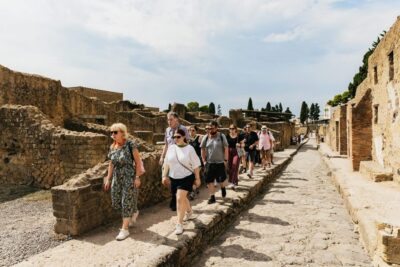
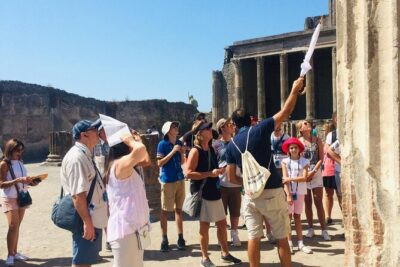
Pompeii and Herculaneum Small Group Tour with an Archaeologist
Read our review →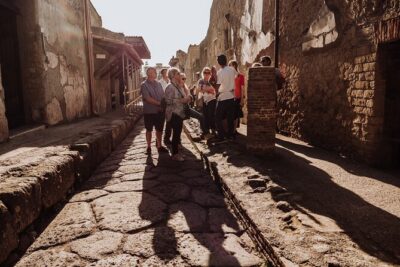
Herculaneum Small Group Tour and Ticket With an Archaeologist
Read our review →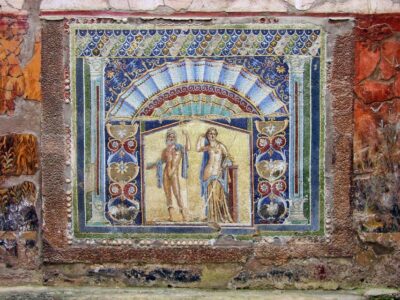
Pompeii & Herculaneum with Archaeologist Guide
Read our review →
Pompeii, Herculaneum, & Vesuvius Full-Day Tour
Read our review →
Herculaneum Entry Ticket with Optional Audio Guide
Read our review →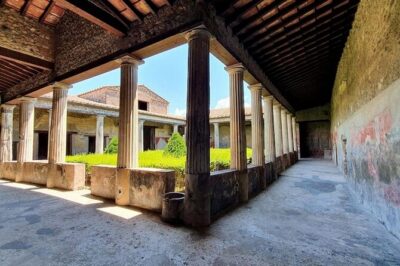
Day Trip of Pompeii, Herculaneum and Vesuvius from Naples
Read our review →Browse the lists this tour appears in