
Reviewed · SKIP-THE-LINE TICKETS IN POMPEII
Pompeii and Herculaneum small group tour – skip the line
Pompeii and Herculaneum make a powerful pair: one spreads across broad streets and public buildings, while the other packs remarkably preserved homes into a smaller, more intimate site. This tour gives you both in one day, with guides such as Vince, Sergio, Diego, and Amadeau bringing the ruins to life.
I like the small-group format, capped at 20 people, and the way the tour focuses on ordinary Roman life, not only grand monuments. I also like that skip-the-line admission and the one-way Circumvesuviana train ticket are included. The catch is simple: this is a long, walking-heavy half-day with uneven ground, heat, and a fairly quick pace.
Key points at a glance
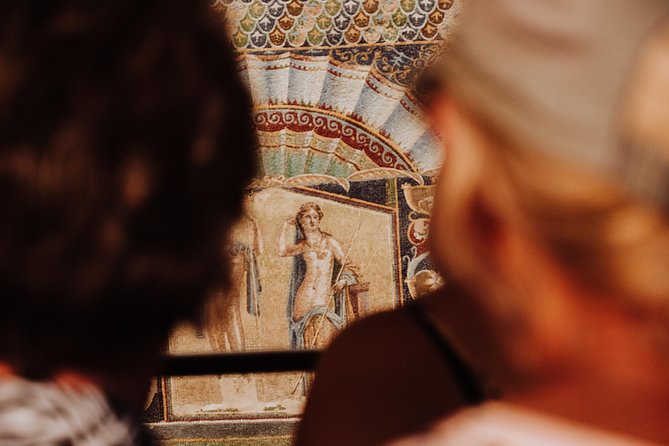
- Two ancient cities in one tour: See Pompeii’s forum, theaters, baths, houses, and casts, then compare them with Herculaneum’s preserved interiors and carbonized wood.
- Strong guide element: Guides including Sergio, an archaeologist who works at the site, and Vince, praised for his humor and clear explanations, can add much more than signs alone.
- Skip-the-line entry at both sites: The tour includes admission to Pompeii and Herculaneum, plus a one-way train ticket between them.
- A real walking day: Expect uneven paving, long distances, sunshine, and little chance to sit for long stretches. Comfortable shoes and plenty of water matter.
- One-way finish in Herculaneum: You end at the ruins in Ercolano, not back in Pompeii, so plan your return before you start.
- Good value for first-time visitors: At $119.85 per person, the price is reasonable if you want both sites, a guide, and transport arranged in one booking.
Why seeing Pompeii and Herculaneum together works
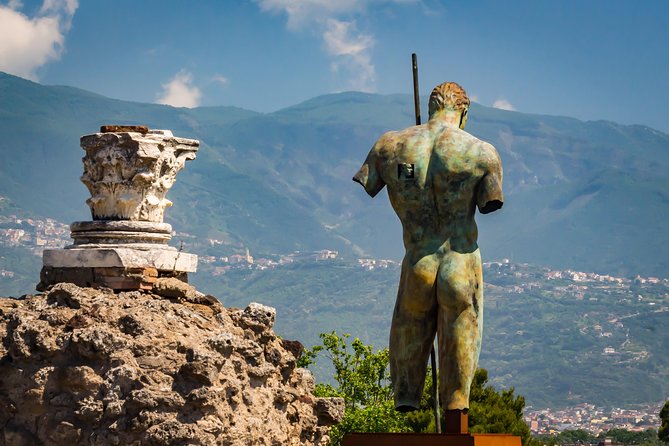
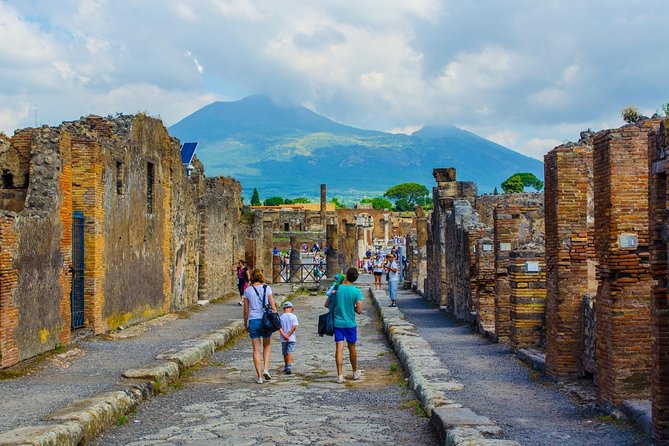
Pompeii and Herculaneum were both buried by the eruption of Mount Vesuvius in AD 79, but they offer different kinds of archaeology. Pompeii is the larger site, with long streets, public squares, theaters, baths, and a wider sense of how a whole city worked.
Herculaneum feels more concentrated. Its houses retain striking details such as wooden partitions, door frames, balconies, frescoed rooms, and carbonized fittings. You spend less time crossing the ancient city and more time looking closely at domestic spaces.
That contrast is the main reason I like this itinerary. Pompeii gives you the city-wide picture. Herculaneum gives you the close-up. Seeing them in that order also helps you understand why the second stop is not simply a smaller repeat of the first.
The tour lasts about five and a half hours, though the actual time at each site includes walking, explanations, the transfer, and a possible food break. You should not expect to inspect every open building. Instead, the guide leads you to a selected group of important places.
More Skip-the-Line Tickets in Pompeii
- Skip the Line Guided Tour of Pompeii led by an Archaeologist
★ 5.0 · 703 reviews - Pompeii Private Tour with an Archaeologist and Skip The Line – 3 hours
★ 5.0 · 564 reviews - Pompeii Skip-the-line Tour with Archaeologist Guide
★ 5.0 · 559 reviews
Starting at Pompeii’s Porta Marina
The tour begins at the Pompeii archaeological area. The meeting information lists Piazza Esedra in Pompei, while the on-site instructions direct you to the main entrance called Porta Marina Superiore, where the Askos Tours guide holds a company sign.
Because those details point to two nearby but distinct meeting references, check the confirmation carefully before setting out. Give yourself time to reach the entrance. You do not want to begin this walking day by rushing through Pompeii’s gates.
Once inside, the guide starts with the site itself and its layout. That orientation helps. Pompeii can feel confusing at first, with streets leading in several directions and large buildings appearing without much explanation. A guide can connect the stones to their former use and show you where daily business, politics, worship, bathing, and entertainment took place.
Pompeii’s public heart: Basilica and Forum
The Basilica was an open portico used by merchants and for civic business. It was not a church in the later Christian sense. Its position near the forum shows how closely trade, law, and public life were tied together in Roman towns.
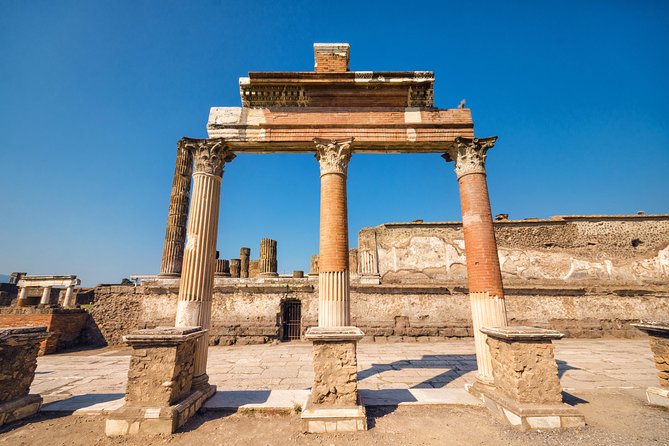
Next comes Pompeii’s ancient main square, the Foro. This is one of the places where the city’s scale becomes clear. Rather than viewing isolated ruins, you can see the forum as the center of government, religion, commerce, and public ceremony.
The short stops listed for the Basilica and forum run about 10 minutes each. That is enough for a guide to explain the function of each area, but not enough for a slow photographic study. Keep your attention on the explanation, then take a few quick pictures when the group moves on.
Pompeii’s streets, homes, and public baths
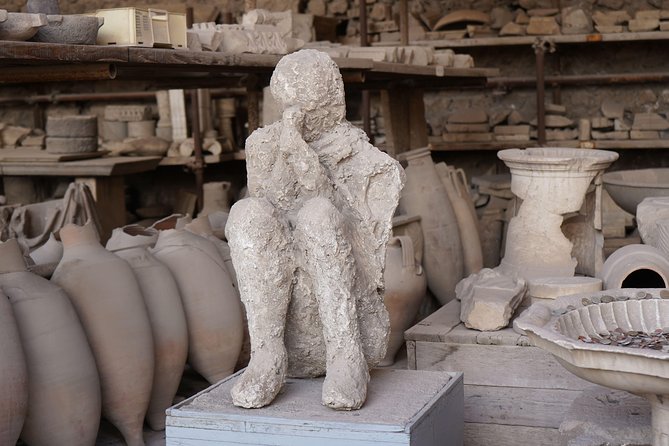
Walking the main street is one of the most useful parts of the Pompeii visit. The paving stones, shopfronts, walls, and raised crossings help you picture movement through the city. You get a better sense of Roman life by walking the route than by viewing a single monument.
The House of Menander is one of Pompeii’s grandest residences. Its architecture, decoration, and contents suggest the wealth of its owners. This is where the social gap between an elite household and ordinary street life becomes easier to grasp.
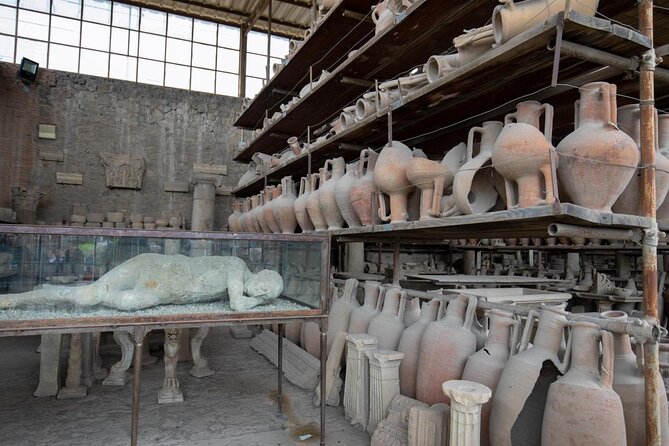
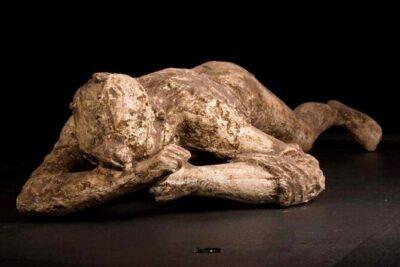
At the Granai del Foro, or forum granary, you can see marble tables and fountain basins that once decorated homes. The building also contains casts of victims from the eruption, including a dog and a tree. These casts can be emotionally difficult. They are not just archaeological objects, but direct reminders that the disaster caught people and animals in the middle of daily life.
The Forum Baths show another side of Roman routine. They are considered the oldest thermal complex in the city and occupy a large area near several important streets. The guide can explain how public bathing combined washing, social time, and civic life.
You will also pass Pompeii’s famous brothel. It is a brief but memorable stop because the painted images and tiny rooms offer a blunt look at commercial sex in the Roman city. The site can attract attention, so listen closely rather than treating it as a quick joke stop. It says something about how Pompeii recorded ordinary life without much modesty.
More Herculaneum tours:
- Pompeii and Herculaneum Small Group Tour with an Archaeologist
★ 5.0 · 1,350 reviews - Private Day Tour to Vesuvius, Herculaneum & Pompeii with Pick Up
★ 5.0 · 279 reviews - The Ultimate Ruins of Pompeii and Herculaneum Private Day Trip
★ 5.0 · 103 reviews - Naples: Pompeii & Herculaneum Day Trip – Small Group Tour
★ 4.5 · 72 reviews
House of the Faun and Pompeii’s theaters
The House of the Faun was one of Pompeii’s largest private residences. Its size and layout help show how wealthy families used architecture to impress visitors and manage household life.
The tour also includes the Teatro Piccolo and Teatro Grande. The smaller theater gives you a look at a more compact performance space, while the Teatro Grande was the city’s main theater. Together, they show that entertainment was part of public life, not a rare luxury.
The Pompeii section is packed. You move from civic buildings to private houses, baths, entertainment, and disaster evidence in a relatively short time. That variety is a strength, but it also means you may leave wanting more time in several places.
The walking is substantial and the ancient paving is uneven. One review described the route as unsuitable for a stroller, with a small child sometimes needing to be carried. Even without a child, you should wear shoes with good support and watch your footing.
The transfer to Herculaneum
After Pompeii, the group travels by Circumvesuviana train to Herculaneum. The train ride takes about 30 minutes, followed by roughly a 10-minute walk to the archaeological park. A one-way train ticket is included.
There may be a quick lunch break if needed. Another tour experience used an air-conditioned shopping center for this pause, but the exact lunch arrangement can vary. Meals are not included, so carry money and do not count on a long sit-down meal.
The route ends at Herculaneum rather than returning to Pompeii. The archaeological park is on Corso Resina in Ercolano, and the meeting point there is the site ticket office. From the exit, the Circumvesuviana station is about a 10-minute uphill walk. Directions can be affected by station work, and a past update noted renovation there, so allow extra time if you are catching a train back to Sorrento, Naples, or elsewhere.
One review also described problems during a strike, which is a reminder that public transport can disrupt the return journey. The tour includes the train from Pompeii to Herculaneum, not transportation back to your accommodation.
Herculaneum’s preserved houses
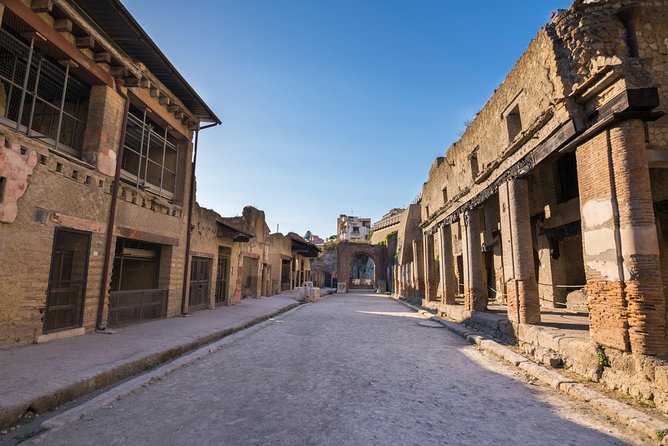
Herculaneum rewards close looking. The city was buried under different volcanic material than Pompeii, and several buildings preserve carbonized wood and interior details that are easy to miss without guidance.
The House of the Deer, or Casa dei Cervi, takes its name from marble deer statues found in the peristyle. It offers a sense of an elegant seaside residence, with open space organized around a central garden area.
At the Terrace of Marcus Nonius Balbus, you encounter one of the town’s prominent public figures. The stop helps connect private homes with civic honors and local benefactors.
The College of the Augustales is another important building. It relates to the Augustales, a priestly group linked to the imperial cult. The name can sound technical, but the site gives your guide a chance to explain how religion, status, and public service worked together in Roman society.
The House of the Telephus Relief is associated with Marcus Nonius Balbus and is unusual because it had private access to the nearby Suburban Baths. That private connection shows how luxury could extend beyond a large house into personal bathing facilities.
Wood, skeletons, and Roman bathing
The House of the Wooden Partition is especially memorable because the elegant wooden divider survived in carbonized form. Wood usually disappears from ancient sites, so this kind of detail makes Herculaneum feel unusually close to its former domestic life.
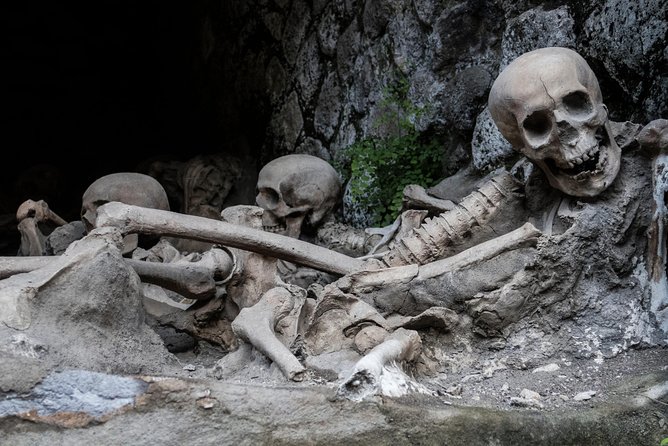
The House of the Skeleton gets its name from human remains found in an upper room in 1831. Like the casts at Pompeii, it adds a human weight to the archaeology. The tour does not only show attractive frescoes and courtyards. It also asks you to face the cost of the eruption.
The Central Baths were built around the start of the first century AD. They were divided into men’s and women’s sections, each with separate entrances. This is a useful stop for understanding how a standard Roman facility was organized and how bathing fit into the daily routine.
At the House of the Black Hall, you can see a monumental entrance with carbonized doorposts and a lintel. The building was one of Herculaneum’s more luxurious mansions, and the survival of its wooden elements makes the house particularly effective at showing what has been lost at many other Roman sites.
Final houses: Samnite design and the Grand Portal
The Samnite House has an atrium surrounded by a gallery with Ionic columns. Its layout reflects an older architectural tradition associated with the Samnites, an ancient people from central Italy. Frescoed rooms and the arrangement around the atrium make this a useful place to compare local building styles with the more standardized Roman forms.
The House of the Fine Courtyard is one of Herculaneum’s more unusual homes. Instead of a conventional atrium, it has a courtyard with a stairway and stone balcony. This is the sort of detail that makes a guided visit worthwhile, since the difference can be easy to miss when you are walking past a series of walls.
The House of the Grand Portal closes the Herculaneum route. It contains columns, frescoes, and carbonized wooden remains. By this point, you have seen enough houses to compare the size, decoration, and layout of different households rather than viewing each one in isolation.
The Herculaneum portion is described as about an hour, but that includes a substantial number of stops. You will see many highlights, not every open room. If you prefer a slow archaeological study, spend a full separate day at each site. If you want a well-selected introduction, this format covers a great deal.
How much value do you get for $119.85?
At $119.85 per person, this is not a budget entry ticket. The value comes from combining two admissions, a guide for the full tour, skip-the-line access, and the train transfer between sites.
The price makes the most sense if you want structure. You do not have to work out which Pompeii entrance to use, find the correct train, choose which buildings matter most, or decode every half-visible wall. Guides such as Sergio, who works as an archaeologist at the site, can add technical context that a basic audio guide may not provide.
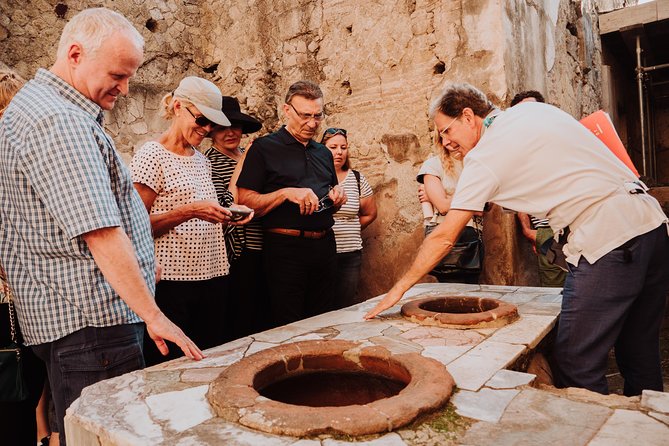
The small group also matters. With a maximum of 20 people, you have a better chance of hearing the explanation and asking questions than you would in a large coach group. Several guides, including Amadeau, Vince, Paulo, Michele, Vincenzo, Alfredo, and Diego, have been praised for clear explanations, patience, humor, and strong subject knowledge.
The tradeoff is that a five-and-a-half-hour tour cannot offer unlimited time. You pay for efficient coverage, not complete independence. If you already have strong archaeology background or want long stretches alone with the ruins, buying separate tickets and exploring at your own pace may suit you better.
Who should book this experience?
I would choose this tour if you are visiting the Naples, Sorrento, or Pompeii area for a short stay and want to see both major eruption sites. It is also a good fit if you value interpretation and do not want to spend hours planning the route yourself.
It suits people who can walk for several hours over uneven ground. In late July or other hot periods, the sun can be intense. Bring water, drink regularly, and use the ancient water fountains to refill your bottle if the guide points one out.
Families with strollers should think carefully. The route is not stroller-friendly, and the uneven paving can make movement difficult. Anyone with limited mobility should also consider the distance, slopes, and lack of a relaxed pace.
The tour is often reserved well ahead, with an average booking lead time of about 47 days. That suggests you should not leave it until the last moment if the date matters to you. Free cancellation is available up to 24 hours before the start time, but changes or cancellations inside that window are not refunded.
Should you book the Pompeii and Herculaneum tour?
Book it if you want both sites in one organized day, appreciate a strong guide, and accept plenty of walking. The biggest strengths are the contrast between Pompeii and Herculaneum, the selected route through important buildings, the small group, and the included train transfer.
Skip it if you want a slow, private visit, dislike public transport, or need a route designed around mobility limits. Also confirm the exact starting instructions, since Piazza Esedra and Porta Marina Superiore are both given in the meeting information.
For most first-time visitors with limited time, I think the combination offers solid value. Pompeii gives you the broad Roman city. Herculaneum supplies the intimate details. Together, they make the eruption feel less like a single dramatic event and more like the sudden interruption of thousands of ordinary lives.
FAQ
How long does the tour last?
The tour lasts approximately 5 hours and 30 minutes.
What sites does the tour visit?
It visits Pompeii Archaeological Park and the Archaeological Park of Herculaneum.
Are admission tickets included?
Skip-the-line admission tickets for Pompeii and Herculaneum are included in the tour details.
Is transportation between Pompeii and Herculaneum included?
Yes. A one-way Circumvesuviana train ticket from Pompeii to Herculaneum is included.
Where does the tour end?
The tour ends at the Archaeological Park of Herculaneum on Corso Resina in Ercolano.
Where do I meet the guide in Pompeii?
The listed starting point is Piazza Esedra, 4, in Pompei. The on-site instructions direct you to Porta Marina Superiore, where the guide holds an Askos Tours sign. Check your confirmation for the exact meeting instructions.
Is lunch included?
No. Meals and personal expenses are not included. A quick lunch break may be possible during the transfer between the two sites.
How large is the group?
The group can include a maximum of 20 people.
Can I cancel for a refund?
You can cancel at least 24 hours before the local start time for a full refund. Cancellations or changes made less than 24 hours before the start time are not accepted for a refund.
More Ways to See Pompeii
- Pompeii Small Group Tour with an Archaeologist
★ 5.0 · 6,593 reviews - Discover the Ancient Ruins of Pompeii: Day Trip from Rome
★ 3.5 · 2,247 reviews - Pompeii Ticket + Tour with Optional Tasting Experience at Pompeii
★ 5.0 · 663 reviews - Pompeii private tour with an Official Guide
★ 5.0 · 631 reviews
Just added around Pompeii
- Wine Tasting and Winery Tour in Vesuvio National Park with Lunch★ 4.5 · 3 reviews
- Mt. Vesuvius Wine Tasting and Lunch Experience from Pompeii★ 4.5 · 20 reviews
- Wine tasting in the Vesuvius national park★ 5.0 · 3 reviews
- Traditional Neapolitan Dinner in Pompei – Villa Franca – Family Restourant★ 5.0 · 8 reviews
- Private Guided Tour and VR Headsets in the Ancient Pompeii★ 5.0 · 3 reviews
- Visit Pompeii with a local expert guide★ 5.0 · 10 reviews
- Tour Mount Vesuvius with Entry Tickets and Round Trip Transfer Included★ 3.5 · 4 reviews
- Vesuvius tour entrance to the crater and return bus★ 4.5 · 9 reviews
Skip-the-Line Tickets in Pompeii, compared.
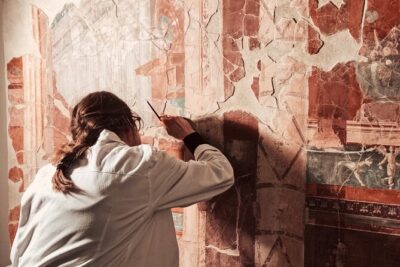
Pompeii Private Tour with an Archaeologist and Skip The Line – 3 hours
Read our review →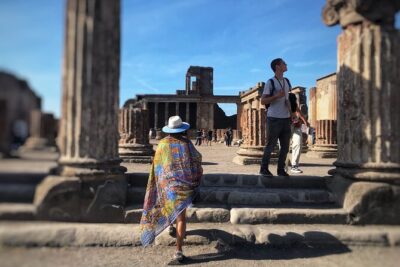
Pompeii Private Tour with an Archaeologist and Skip The Line
Read our review →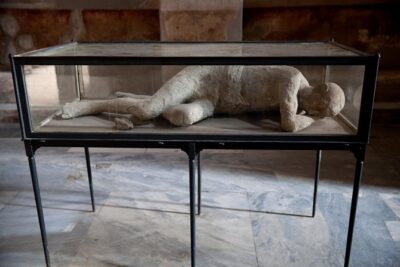
Complete Pompeii Skip the Line Tour with Archaeologist Guide
Read our review →
Ancient Pompeii Private Tour: Skip the Line & Kid-Friendly Option
Read our review →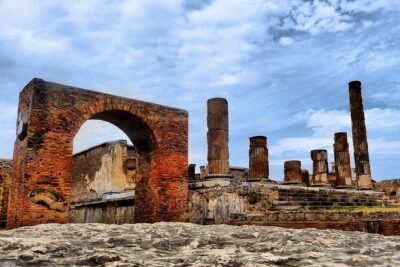
Pompeii small group tour with skip-the-line entrance included
Read our review →
Pompeii Skip-the-Line Entry Small Group Guided Tour
Read our review →
Skip-the-Line Half-Day Private Tour Ancient Pompeii Highlights with Native Guide
Read our review →Browse the lists this tour appears in