
Reviewed · SKIP-THE-LINE TICKETS IN POMPEII
Pompeii Skip-the-Line Tour for Kids & Families with Archaelogist
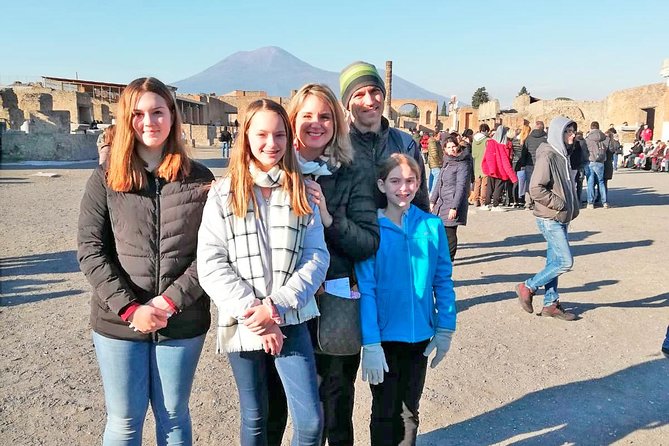
Pompeii can be a tough sell to children: miles of sun-baked ruins, broken walls, and a disaster that needs careful explanation. This private tour fixes that problem with kid-focused storytelling, scavenger hunts, team challenges, simple visual aids, and a route shaped around your family. Guides such as Lello, Marina, Claire, Roberta, and Clelia are especially praised for keeping children involved.
I like two things right away. First, you skip the entrance line, which matters when the sun is high and young legs are already tired. Second, the guide can adjust the visit for a four-year-old, an inquisitive 10-year-old, or teenagers who want more Roman detail. The possible drawback is the price: at $107.63 per person, this costs far more than entering Pompeii on your own.
Key points to know before booking
- Private family format: Only your group takes part, so the guide can change the pace and focus.
- Skip-the-line entry: Admission tickets are included, helping you avoid a slow wait at the entrance.
- Strong child engagement: Scavenger hunts, team challenges, stories, and occasional visual clips help hold attention.
- Main Pompeii highlights: The route includes the Forum, Teatro Grande, Teatro Piccolo, Stabian Baths, Casa del Menandro, and Via dell’Abbondanza.
- About two hours inside: The advertised duration is approximately two hours, though some families describe visits lasting around two and a half hours.
- Early timing is useful: An early start can mean fewer large groups and less heat, based on practical family experience.
Why a private guide changes Pompeii for children
Pompeii is not a tidy museum. It is a huge ancient city, and the most interesting details are often low to the ground, partly hidden, or easy to miss without context. A private guide gives you a person who can turn a wall painting, bathhouse, theater, or shop street into a story your child can follow.
That personal approach is the heart of this experience. The guide does not need to deliver one fixed speech to a mixed group wearing headsets. If your child is fascinated by Roman gods, the guide can spend more time on a mythological painting. If another child is losing interest, the guide can switch to a challenge, a question, or a faster route.
The age range handled by these guides is unusually wide. Families have used the tour with children as young as four, as well as teenagers and adults. Lello is repeatedly praised for addressing children at their level while still giving parents plenty of historical detail. Claire, Clelia, Roberta, Marina, Daniela, Ines, Loretta, and other guides are also singled out for patience, warmth, and lively explanations.
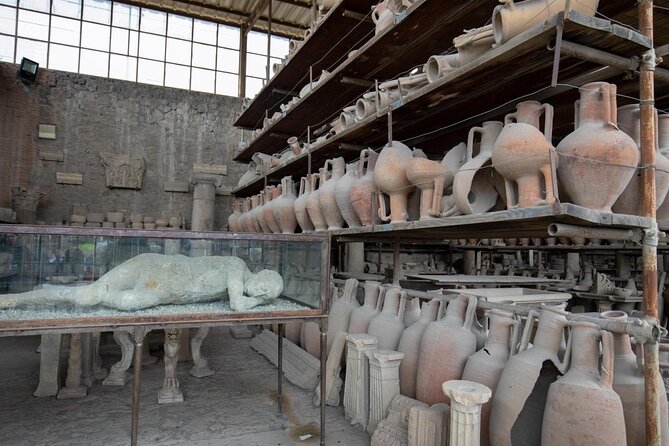
This is still an archaeological site, not an amusement park. Your children will see ruins, streets, ancient homes, and evidence of the eruption. Some areas, including plaster casts of victims, can be upsetting. A private guide can explain difficult material with care and help you decide how much detail your children should receive.
More Skip-the-Line Tickets in Pompeii
- Skip the Line Guided Tour of Pompeii led by an Archaeologist
★ 5.0 · 703 reviews - Pompeii Private Tour with an Archaeologist and Skip The Line – 3 hours
★ 5.0 · 564 reviews - Pompeii Skip-the-line Tour with Archaeologist Guide
★ 5.0 · 559 reviews
Meeting at Piazza Esedra and entering Pompeii
The meeting point is outside Hotel Vittoria at Piazza Esedra in Pompeii. It is about a five-minute walk from the train station, according to the practical directions provided by one family. Your guide meets you there, and the tour ends back at the same meeting point.
There is no private transportation included. That is not a problem if you are arriving by train or staying nearby, but you need to arrange your own way to the meeting point. The tour is close to public transportation, which makes it a sensible choice for families visiting Pompeii from Naples or another nearby base.
Skip-the-line admission is included. In practical terms, the guide handles the entry process while you avoid spending your limited family energy in a long queue. One family described sitting at a café while the guide obtained the tickets, then walking straight inside. The exact procedure may vary, but the point is clear: fast entry is a real part of the value.
Bring water, especially in warm weather. Families praised guides for looking for shade and stopping for drinks, but shade is not available everywhere. Pompeii requires a moderate level of fitness, and you should expect uneven ancient streets, substantial walking, and a fair amount of standing.
Teatro Grande and Teatro Piccolo: starting with spectacle
The theater area gives the tour a lively opening. Teatro Grande was used for performances and could help children picture Pompeii as a working city rather than a silent collection of ruins. The guide can explain how the theater functioned and draw attention to the shape of the seating and performance space.
Nearby Teatro Piccolo is used to demonstrate its impressive acoustics. This is a good moment for a child-friendly experiment: listen carefully, speak, and notice how sound carries through the space. It is a simple physical detail, but it helps children understand the building better than a long explanation about Roman entertainment.
The theater section also gives your guide a chance to read the group. If your children are eager, the guide can add more context about Roman performances and public life. If they are restless, this area offers a clear change of scene before the route moves into domestic spaces and streets.
Casa del Menandro and ancient home life
Casa del Menandro is one of the most important stops because it changes the scale of the visit. The theaters show public life. This house lets you consider how people lived at home, entertained guests, decorated rooms, and moved through private space.
The house is known for its extensive decoration and size. Your guide can point out details that would be easy to pass without help, including the connection between rooms, painted surfaces, and the way the home reflects the status of its occupants.
This is also where the guide’s storytelling matters most. Children often understand ancient life better when it is connected to familiar ideas: where people cooked, where they met visitors, what they decorated, and how a home was arranged. The tour is not only about the eruption. It is about the ordinary day that came before it.
One guide used clips on an iPad to help children picture what happened and connect the ruins to the people who lived there. Another brought small gifts for the children. These touches are not guaranteed with every guide, but they show the kind of flexible, personal approach families can receive.
More ways to see Pompeii:
- Pompeii Small Group Tour with an Archaeologist
★ 5.0 · 6,593 reviews - Discover the Ancient Ruins of Pompeii: Day Trip from Rome
★ 3.5 · 2,247 reviews - Pompeii and Herculaneum Small Group Tour with an Archaeologist
★ 5.0 · 1,350 reviews - Pompeii Ticket + Tour with Optional Tasting Experience at Pompeii
★ 5.0 · 663 reviews
The Forum and Pompeii’s working streets
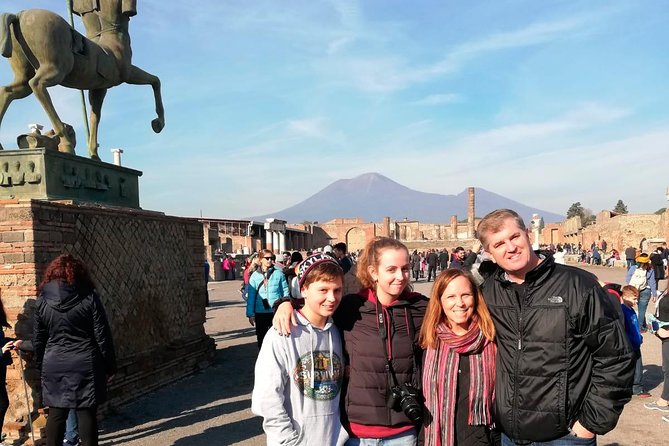
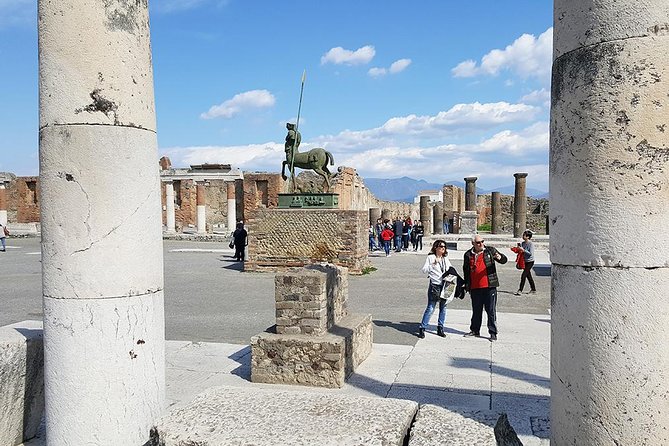
The Forum was Pompeii’s main public square and commercial center. It is the place to explain how religion, politics, trade, and public life came together. The open space can feel confusing to children at first, so a guide is useful for showing how the different buildings related to one another.
The route continues along Via dell’Abbondanza, the principal commercial street. This is one of the best places to help children imagine daily movement through the city. You can walk where ancient residents walked, look at the remains of shops and buildings, and consider how goods and people passed through the neighborhood.
A guide can turn the street into a puzzle. What might this room have been used for? Why is the road built this way? What clues show that this was a commercial area? The scavenger hunt and team-based challenges used by some guides are particularly effective here. One family reported that the children defeated the adults, which is exactly the sort of small victory that keeps a long archaeological visit lively.
The Forum and Via dell’Abbondanza are also where Pompeii’s size becomes clear. Two hours gives you a strong introduction, but not every street and house. A guide can help you see the main points without wasting time on a route that leaves children exhausted.
The Stabian Baths and the practical Roman city
The Stabian Baths offer another useful change of subject. Instead of focusing only on art or catastrophe, the guide can show how Romans handled exercise, washing, social life, and public facilities.
Baths help children connect Pompeii with everyday routines. They can see that the city had systems and public spaces designed for ordinary needs. The remains also offer a chance to explain how different rooms served different purposes, using the architecture itself as a visual guide.
This stop is not as instantly dramatic as a theater or a decorated house. Its value comes from the questions it raises. How did people heat the rooms? Why were public baths important? Who used them? A good guide can keep the explanation short and concrete, then move on before attention fades.
Handling the eruption and difficult sights
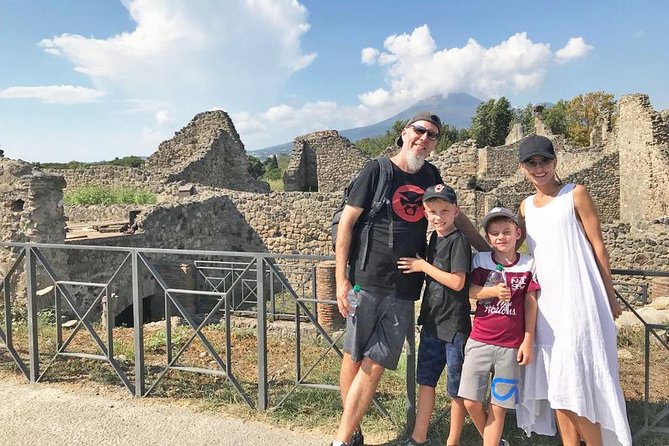
Pompeii’s destruction is central to the visit, but it should not swallow the whole story. The strongest family approach gives equal attention to the people, homes, work, entertainment, and beliefs of the city before explaining the natural disaster.
You should know that some displays can be emotionally hard, particularly plaster casts of victims. One parent specifically valued having a guide who understood which subjects might be unsuitable or needed careful handling for children. With a private tour, you can ask the guide to soften an explanation, skip a particular display, or answer questions at the level your child can manage.
The guides are also able to discuss excavation and recent discoveries. That adds a useful modern link: Pompeii is not simply a finished ruin from the past. Work continues, and new information can change how experts understand the site. This made the visit useful for families planning to see Herculaneum later, since the guide can provide background that carries over to another archaeological site.
How the two-hour pace works for a family
The stated duration is approximately two hours. The listed sections add up to a guided visit that moves through the major highlights, while some families describe spending two and a half hours with the guide. Treat the timing as a guide rather than a strict promise.
Two hours is a sensible length for many children. It is long enough to see major areas and short enough to avoid turning Pompeii into an endurance test. Families with older children may want to remain inside after the guided portion and explore more independently. Lello, in particular, is praised for recommending additional areas to see after the formal tour.
Start early if you can choose your time. Families found that the first entry of the day helped avoid the largest groups and the worst heat. This matters more than it might seem. Crowds make it harder for children to hear, while heat can drain energy before you reach the Forum or the baths.
The route includes shade stops when possible, but Pompeii is a large open site. Build in water breaks, keep the pace comfortable, and tell your guide early if a child needs a pause. A private format makes those small adjustments much easier.
Is $107.63 per person good value?
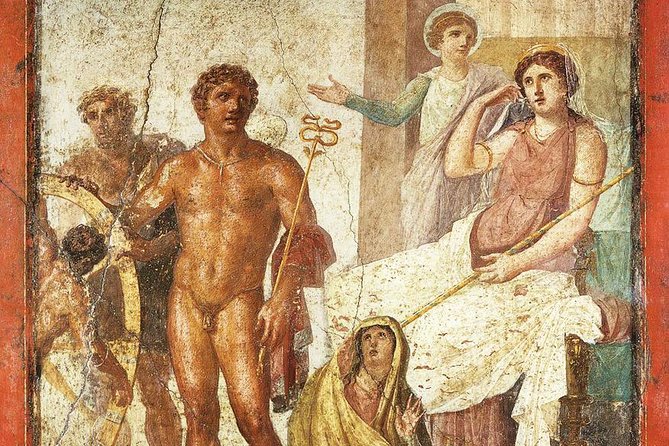
At $107.63 per person, this is a premium Pompeii visit. You are paying for a private guide, an English-language tour, skip-the-line admission, and a program shaped around your own children. The cost can add up quickly for a large family, even though group discounts may be available.
The value is strongest if your children would struggle with a standard adult history tour. A guide who can change the explanation, run a game, find shade, answer questions, and avoid unsuitable material may save you from an expensive visit that nobody enjoys.
The value is also stronger for a first visit when you want an efficient route. Pompeii is too large to understand fully in two hours, but this tour gives you a clear starting point. You can stay afterward and explore at your own speed, or use what you learned when visiting Herculaneum.
If your children are older, patient, and already interested in archaeology, you may prefer a less expensive general tour or independent visit. You should also compare the per-person cost against the size of your group. For families with several children, the price is easier to justify when the alternative is a rushed self-guided visit in the heat.
Who should book this Pompeii tour?
I would choose this for families with children from early primary-school age through the teenage years, especially if the adults want solid historical detail without losing the children. It suits families who value personal attention and want to avoid a large group with headphones.
It is a particularly good fit if one child already loves Pompeii, Roman life, mythology, or archaeology. The private guide gives that child room to ask questions without holding up a large group.
I would be more cautious if your group dislikes walking, struggles in heat, or expects to see every part of Pompeii. The site requires moderate physical fitness, and two hours only covers selected areas. This is a focused introduction, not a complete examination of the entire archaeological park.
Free cancellation is available up to 24 hours before the start time for a full refund. Changes or cancellations inside that window are not accepted for a refund, so check your plans before booking.
Should you book it?
Book this tour if your main aim is to make Pompeii understandable and enjoyable for children. The strongest features are the private format, fast entry, flexible pacing, and guides who know how to turn ruins into stories and games.
The names Lello, Marina, Claire, Clelia, Roberta, Daniela, Ines, and Loretta appear repeatedly in family praise, but guide availability is not guaranteed. If you have a preferred guide, request that person when booking, then confirm what can be arranged.
Skip it if you are traveling on a tight budget, have older children who prefer independent sightseeing, or want a full-day archaeological study. For most families, though, the extra cost buys something difficult to reproduce on your own: children who stay curious long enough to see Pompeii as a real city, not just a field of old stones.
FAQ
How long does the Pompeii family tour last?
The advertised duration is approximately two hours. Some families describe spending around two and a half hours with their guide, so the exact length may vary.
Is the tour private?
Yes. Only your group participates, allowing the guide to adjust the pace and explanations to your children’s ages and interests.
Is the guide suitable for children?
Yes. The experience includes a child-friendly guide who uses stories and activities to explain Pompeii. Guides named in family feedback include Lello, Marina, Claire, Clelia, Roberta, Daniela, Ines, and Loretta.
Are entrance tickets included?
Yes. Skip-the-line entrance tickets to Pompeii are included in the experience.
Where does the tour start?
The meeting point is Hotel Vittoria at Piazza Esedra, 80045 Pompei, Italy.
Where does the tour end?
The activity ends back at the meeting point.
Is transportation included?
No. Private transportation is not included. The meeting point is near public transportation.
What places are included on the route?
The route includes the Archaeological Park of Pompeii, the Forum, Teatro Grande, Teatro Piccolo, the Stabian Baths, Casa del Menandro, and Via dell’Abbondanza.
Can I cancel for a full refund?
Yes, if you cancel at least 24 hours before the experience start time. Cancellations or changes made less than 24 hours before the start time are not accepted for a refund.
Just added around Pompeii
- Wine Tasting and Winery Tour in Vesuvio National Park with Lunch★ 4.5 · 3 reviews
- Mt. Vesuvius Wine Tasting and Lunch Experience from Pompeii★ 4.5 · 20 reviews
- Wine tasting in the Vesuvius national park★ 5.0 · 3 reviews
- Private Guided Tour and VR Headsets in the Ancient Pompeii★ 5.0 · 3 reviews
- Visit Pompeii with a local expert guide★ 5.0 · 10 reviews
- Traditional Neapolitan Dinner in Pompei – Villa Franca – Family Restourant★ 5.0 · 8 reviews
- Tour Mount Vesuvius with Entry Tickets and Round Trip Transfer Included★ 3.5 · 4 reviews
- Vesuvius tour entrance to the crater and return bus★ 4.5 · 9 reviews
Skip-the-Line Tickets in Pompeii, compared.
Pompeii Private Tour with an Archaeologist and Skip The Line – 3 hours
Read our review →
Pompeii Private Tour with an Archaeologist and Skip The Line
Read our review →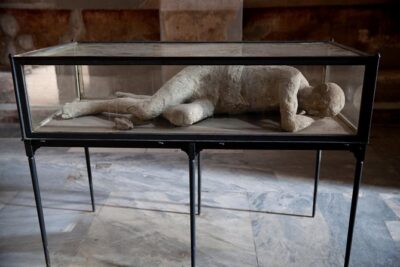
Complete Pompeii Skip the Line Tour with Archaeologist Guide
Read our review →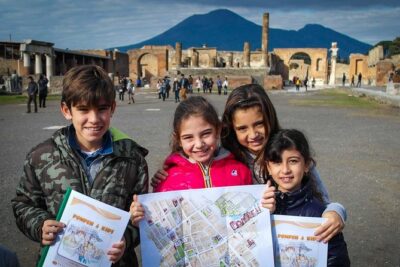
Ancient Pompeii Private Tour: Skip the Line & Kid-Friendly Option
Read our review →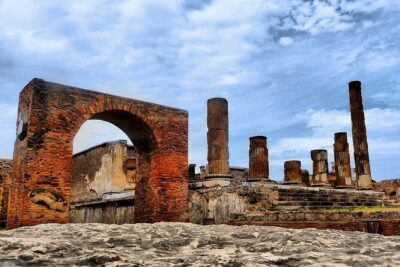

Pompeii small group tour with skip-the-line entrance included
Read our review →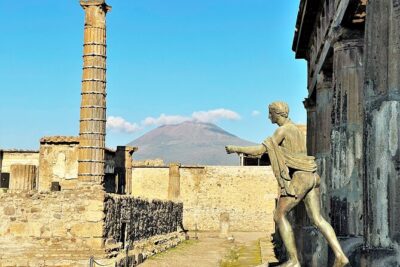
Pompeii Skip-the-Line Entry Small Group Guided Tour
Read our review →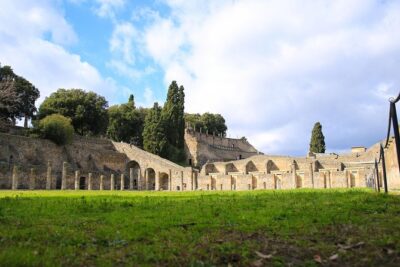
Skip-the-Line Half-Day Private Tour Ancient Pompeii Highlights with Native Guide
Read our review →Browse the lists this tour appears in