
Reviewed · GUIDED TOURS IN POMPEII
Pompeii & Herculaneum Family Adventure | Guide+Transport+Tickets
Herculaneum may be the surprise star here. Its compact streets still hold wooden doors, furniture, painted walls, and even a Roman boat, giving you a sharper picture of home life than Pompeii’s wider ruins often can. You then move to Pompeii for the grand civic buildings, villas, theaters, and ancient streets.
I like the private vehicle and flexible pickup, especially if you are arriving by cruise ship or staying in Naples, Sorrento, or Pompeii. I also like the family booklet, riddles, stickers, and map, which give children something to do beyond listening to dates and Roman names. The main drawback is the price: at $738.31 per person, this is a serious investment, and eight hours of walking in sun can tire younger children.
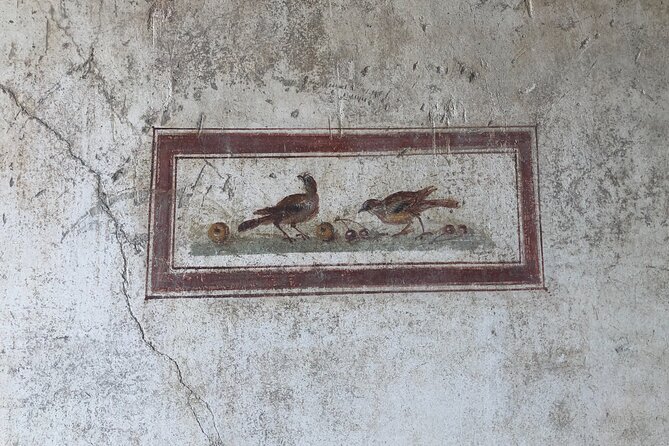
- Herculaneum first: See carbonized wood, painted rooms, a preserved boat, mosaics, baths, and the ancient shoreline.
- Pompeii with context: Enter through Porta Marina, then connect the Forum, temples, baths, villas, theaters, and shops into one readable city.
- Private guiding: Only your group participates, so the pace and explanations can be adjusted to your family.
- Family tools: Riddles, stickers, a booklet, and a map turn the ruins into an active lesson.
- Easy transport plan: Pickup is offered from hotels, vacation rentals, train stations, airports, cruise terminals, and ports in Naples, Sorrento, Pompeii, and nearby areas.
- Strong service record: The experience has a 5.0 rating from 15 reviews, with 100 percent recommending it. Giuseppe D’Angelo is singled out for being kind, thoughtful, and helpful.
Why Herculaneum Makes the Best First Stop
The day begins at the Archaeological Park of Herculaneum, usually for about two and a half hours. This is a smart order. Herculaneum is smaller and more concentrated than Pompeii, so you can begin with a place that rewards close looking before tackling the larger site.
The eruption of Mount Vesuvius in 79 AD affected the two towns in different ways. Pompeii was covered by ash and pumice. Herculaneum was hit by a superheated volcanic surge that carbonized wood and sealed buildings under volcanic material. That is why you can see wooden beams, doors, shelves, and upper-floor structures here.
Your guide can make those details useful rather than simply pointing them out. A blackened wooden door tells you about construction. A shelf or piece of furniture gives you a clue about storage. A painted wall or mosaic shows how much color and decoration filled an ordinary Roman home.
The compact size also helps families. You are not crossing a huge ancient city at the start of the day. You can pause over a doorway, compare a Roman shop with a modern café, or ask why some buildings survived better than others without losing your place.
The Boat Pavilion and Herculaneum’s Human Story
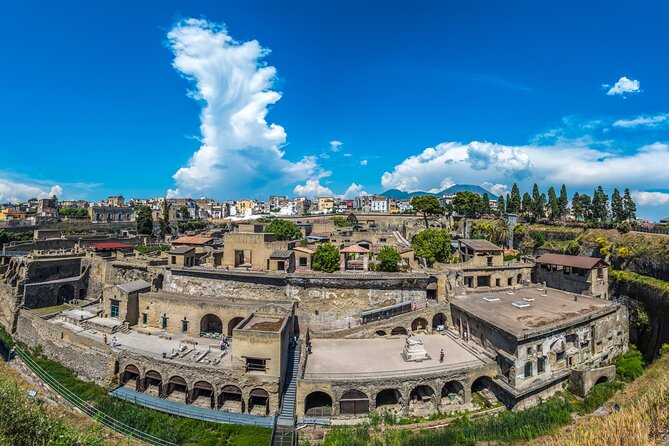
The Boat Pavilion is one of the most memorable stops. A Roman vessel and maritime equipment were found here, making it easier to picture Herculaneum as a working port connected to trade across the bay. Children can imagine sailors preparing to leave, while you get a more practical sense of how goods and people moved.
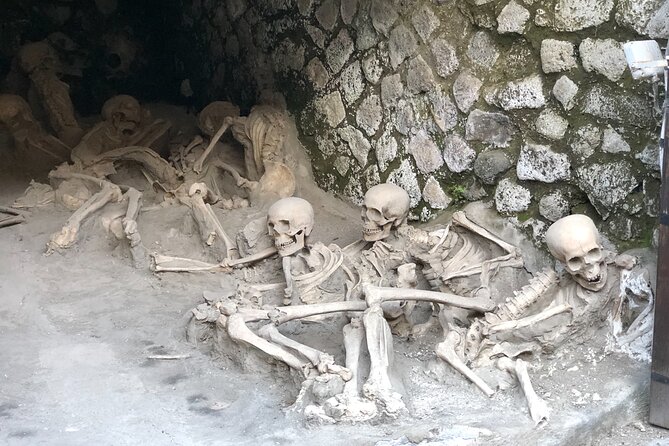
The route continues toward the ancient shoreline. In 1980, archaeologists found more than 300 skeletons in the boathouses, including men, women, and children who had tried to escape by sea. This is difficult material, especially with young children, but the guide handles it with care and gives your family room to absorb the story.
The shoreline also helps you understand the town’s position by the water. The coast has changed, and the old harbor area is not experienced exactly as an ancient resident would have seen it. Still, the combination of the boat, boathouses, and shoreline makes this part of Herculaneum unusually direct and human.
More Guided Tours in Pompeii
- Skip the Line Guided Tour of Pompeii led by an Archaeologist
★ 5.0 · 703 reviews - Pompeii private tour with an Official Guide
★ 5.0 · 631 reviews - Pompeii Skip-the-line Tour with Archaeologist Guide
★ 5.0 · 559 reviews
Houses, Shops, Baths, and Roman Daily Life
Herculaneum is at its best when it shows ordinary routines. At the House of the Deer, marble sculptures of deer attacked by dogs point to the taste and wealth of a seaside villa. Terraces and views toward the coast help explain why wealthy families valued this location.
The large exercise courtyard offers another side of Roman life. It was used for athletic training and civic education, with porticoes and classrooms around the open space. Your guide can help you picture young men practicing fitness and rhetoric, not simply wandering through a roofless ruin.
At the House of the Telephus Relief, preserved wall paintings, wooden shutters, and upper-floor structures reveal how a Roman home worked across several levels. That is rare. Many ancient sites show only foundations, but here the surviving details make rooms easier to read as living spaces.
The ancient food shop is equally effective for children. Terracotta jars were set into a marble counter, much like a Roman takeaway counter. Original wooden shelving survived in the eruption, adding a small but powerful detail: people once stood here to buy food and drink, just as you might stop at a neighborhood shop today.
The House of Neptune and Amphitrite brings the art into focus. Its mosaic panel uses deep blue and golden glass pieces to depict the sea gods. Painted walls, a dining area, and a fountain niche show how Roman homeowners used decoration to impress friends during meals.
The women’s section of the public baths is another strong stop. You can see the changing room, warm and hot rooms, benches, painted walls, and wooden shelving. The baths were not only for washing. They were places to prepare for the day, relax, and exchange news.
At the College of the Augustales, vivid frescoes depict mythological scenes in a hall tied to the cult of the Emperor. Here your guide can explain how religion, local government, social rank, and imperial politics overlapped. The role of the Augustales, a prestigious group of freedmen, gives you a useful glimpse into a society more complex than the usual image of emperors and slaves.
Pompeii’s Grand Scale and Civic Center
After Herculaneum, you continue by private vehicle to Pompeii. The Pompeii visit also lasts about two and a half hours, although the full experience takes roughly eight hours including transport and the transition between sites.
Pompeii is much larger and more spread out. The benefit is variety. The cost is that you cover more ground, and the second half of the day can feel demanding after Herculaneum. Your guide may suggest an afternoon visit when crowds are lighter, but the schedule can be adjusted around your preferences or cruise timing.
Porta Marina is a useful entrance because it once connected the city with its port. From here, the route leads into the Basilica, Pompeii’s key civic building. Legal cases, contracts, and business dealings took place there. The roof is gone, but the columns still communicate the building’s authority.
The Temple of Apollo gives you a clear link between religion and city life. Statues of Apollo and Diana remain part of the setting, and the view toward Vesuvius makes the eruption feel less like an abstract event. The volcano is visible from both Pompeii and Herculaneum, but this is one of the stronger places for a family photograph.
Then comes the Forum, the city’s main public square. It was a place for business, ceremonies, speeches, and public movement. A good guide can turn the broad open space into a working center of town, with citizens moving between temples, shops, offices, and markets.
Pompeii’s Food, Baths, and Famous Houses
The Macellum was Pompeii’s main marketplace, where people bought meat, fish, fruit, and imported foods. Marble counters and storage vessels show how trade worked at street level. This is a useful stop for children because food gives them an immediate way into ancient life.
The Forum Baths show how bathing combined hygiene and social time. You can see changing rooms, heated areas, mosaics, and stucco decoration. Comparing the baths with a modern spa or sports club helps younger children grasp why the complex mattered.
The House of the Faun is one of Pompeii’s grand aristocratic residences. Its gardens, mosaics, and small bronze statue of a dancing faun are easy to remember. The famous Alexander mosaic presents a more formal side of elite taste, showing how wealthy owners used art to signal education and status.
The House of the Vettii offers another look at wealth, but with a different domestic mood. Its restored frescoes, garden courtyard, dining rooms, service areas, and private chambers make the house readable as a functioning home. Mythological scenes work almost like painted story panels, giving children plenty to spot while you consider how the owners presented themselves.
More Herculaneum tours:
- Pompeii and Herculaneum Small Group Tour with an Archaeologist
★ 5.0 · 1,350 reviews - Private Day Tour to Vesuvius, Herculaneum & Pompeii with Pick Up
★ 5.0 · 279 reviews - The Ultimate Ruins of Pompeii and Herculaneum Private Day Trip
★ 5.0 · 103 reviews - Naples: Pompeii & Herculaneum Day Trip – Small Group Tour
★ 4.5 · 72 reviews
Streets, Theaters, and the Human Scale of Pompeii
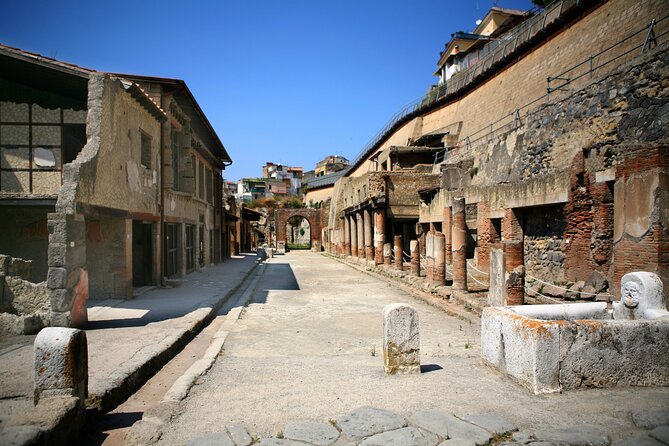
One of Pompeii’s liveliest streets brings the city back to street level. Bakeries, bars, shops, fountains, counters, and stepping stones show how residents handled daily errands. The basalt paving still carries the marks of carts, and the raised stepping stones helped people cross the street without walking through runoff.
A raised platform gives you a useful view into a complete city block. From above, roofless rooms look like a dollhouse. Kitchens, workshops, dining rooms, and courtyards fit together in a dense urban pattern. This perspective helps you understand that Pompeii was not a collection of isolated monuments. It was a crowded town where homes and businesses shared the same streets.
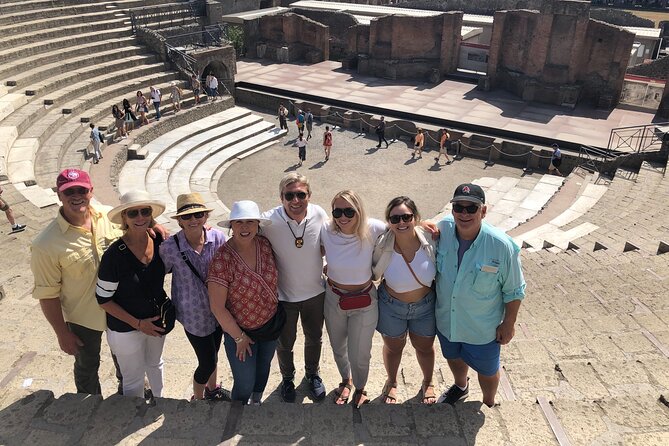
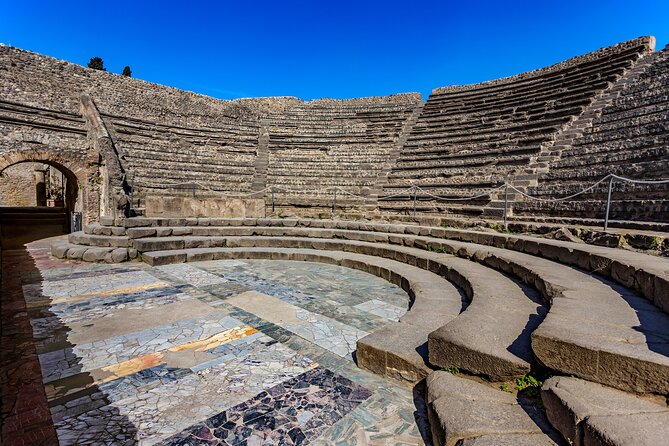
The main theater is built into a hillside, using the slope to improve sound. Your children can test the acoustics from the stage, while you think about how much ancient entertainment depended on live performance and shared public space.
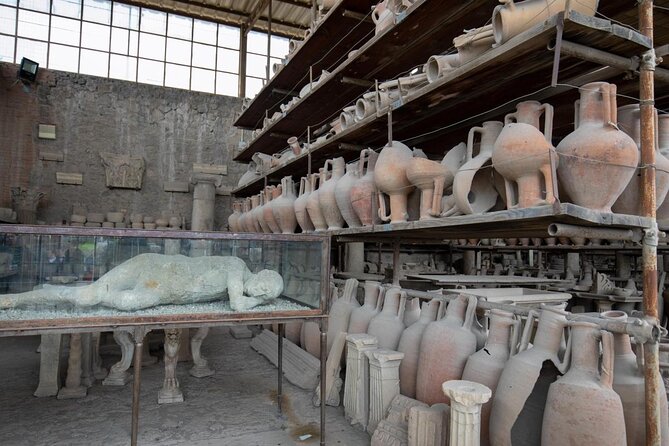
The Antiquarium closes the Pompeii portion with objects removed from the excavations. Jewelry, coins, tools, and household items connect the large buildings to individual lives. Plaster casts of people who died in the eruption are introduced with care, giving your family a way to confront the human cost without making the entire day about tragedy.
What the Private Format Adds
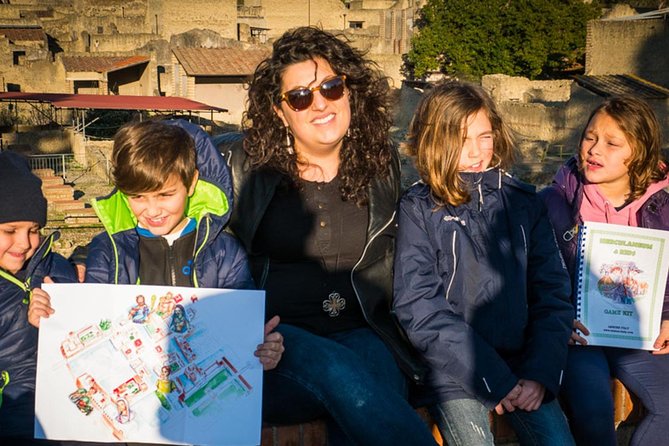
This is a private activity, so only your group participates. That matters most at the points where children need a pause, a simpler explanation, or a change of pace. You can ask questions without worrying about delaying a large group.
A Blue Badge private guide accompanies you at both sites. Giuseppe D’Angelo is specifically praised for being kind, thoughtful, and helpful, but you should not assume he will be your assigned guide unless the provider confirms it. The guide’s role is especially useful at Pompeii, where it is easy to walk past a house or public building without understanding its purpose.
Transport is included in a private vehicle, with pickup available from hotels, vacation rentals, train stations, airports, cruise terminals, and ports in Naples, Sorrento, Pompeii, and nearby areas. Give the pickup place when booking. Bottled water is not included, so bring your own supply, along with sun protection and comfortable walking shoes.
Is $738.31 Per Person Good Value?
At $738.31 per person, this is not a budget way to see Pompeii. The cost needs to cover the private vehicle, a guide at both archaeological parks, skip-the-line tickets, and a full day built around your group rather than a fixed public schedule.
I see the value if you are a family with limited time, arriving by cruise ship, or staying outside Pompeii. The pickup service removes a layer of planning, and the guide helps you see more in two and a half hours at each site. The family activities also reduce the chance that children will lose interest halfway through the day.
The price is harder to justify for adults who are happy with a larger group, a self-guided visit, or a shorter stay. Meals are not included unless you select the pizza lunch option, and bottled water is extra. Compare the total cost for your whole party before booking, since the per-person figure rises quickly.
The experience receives a 5.0 rating from 15 reviews, with 100 percent recommending it. That is a small sample, but the specific praise for Giuseppe’s kindness and care is useful. It suggests that the human side of the service matters as much as the archaeology.
Who Should Book This Day
I would choose this for families who want both sites in one day and prefer clear explanations over wandering on their own. It also suits cruise passengers and families with a complicated arrival point because pickup is flexible.
Older children and teenagers are likely to get the most from the full route, especially with the family booklet, map, riddles, and sticker activities. Younger children can still enjoy the boat, shops, mosaics, theater, and stepping stones, but the walking time may test their patience.
You need a moderate level of physical fitness. The sites involve extended walking, uneven ancient streets, open areas, and sun exposure. Wear comfortable shoes, use sun block, and bring water.
Should You Book It?
Book this if you want a private, tightly organized day that explains both Herculaneum and Pompeii without making you handle transport, admission lines, or route planning. Herculaneum’s preserved wood and shoreline give the morning unusual emotional force, while Pompeii supplies the scale and famous monuments.
Skip it if the price is too high for your group or if you prefer to explore slowly over several days. For the right family, though, the combination of private transport, a guide, skip-the-line admission, and child-friendly activities makes this a practical way to cover two demanding archaeological sites in one day.
FAQ
How long does the Pompeii and Herculaneum tour last?
The experience lasts approximately eight hours. Herculaneum and Pompeii each receive about two hours and 30 minutes of guided time.
Is transportation included?
Yes. Transport by private vehicle is included, and pickup is offered from hotels, vacation rentals, train stations, airports, cruise terminals, and ports in Naples, Sorrento, Pompeii, and nearby areas.
Can the tour pick me up at a cruise port?
Yes. Cruise terminal and port pickup is offered. You should provide your exact pickup place when booking.
Are entrance tickets included?
Yes. Herculaneum and Pompeii Express skip-the-line tickets are included.
Is this a private tour?
Yes. Only your group participates in the activity.
Is the tour offered in English?
Yes. The experience is offered in English.
Is lunch included?
Meals are included only if you select the pizza lunch option. Bottled water is not included.
What should I bring?
Comfortable walking shoes and sun block are recommended. Since bottled water is not included, you should plan your own water supply.
Can I cancel for a full refund?
Yes, if you cancel at least 24 hours before the experience start time. Cancellations or changes made less than 24 hours before the start time are not accepted for a refund.
More Ways to See Pompeii
- Pompeii Small Group Tour with an Archaeologist
★ 5.0 · 6,593 reviews - Discover the Ancient Ruins of Pompeii: Day Trip from Rome
★ 3.5 · 2,247 reviews - Pompeii Ticket + Tour with Optional Tasting Experience at Pompeii
★ 5.0 · 663 reviews - Pompeii Private Tour with an Archaeologist and Skip The Line – 3 hours
★ 5.0 · 564 reviews
Just added around Pompeii
- Wine Tasting and Winery Tour in Vesuvio National Park with Lunch★ 4.5 · 3 reviews
- Wine tasting in the Vesuvius national park★ 5.0 · 3 reviews
- Mt. Vesuvius Wine Tasting and Lunch Experience from Pompeii★ 4.5 · 20 reviews
- Traditional Neapolitan Dinner in Pompei – Villa Franca – Family Restourant★ 5.0 · 8 reviews
- Private Guided Tour and VR Headsets in the Ancient Pompeii★ 5.0 · 3 reviews
- Visit Pompeii with a local expert guide★ 5.0 · 10 reviews
- Tour Mount Vesuvius with Entry Tickets and Round Trip Transfer Included★ 3.5 · 4 reviews
- Vesuvius tour entrance to the crater and return bus★ 4.5 · 9 reviews
Guided Tours in Pompeii, compared.


Pompeii Guided Tour & Horse Riding on Vesuvius with Lunch
Read our review →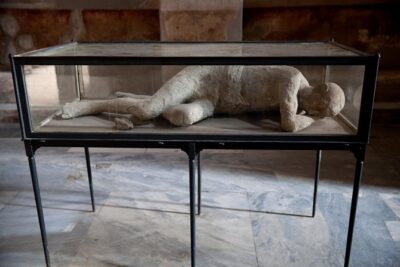
Complete Pompeii Skip the Line Tour with Archaeologist Guide
Read our review →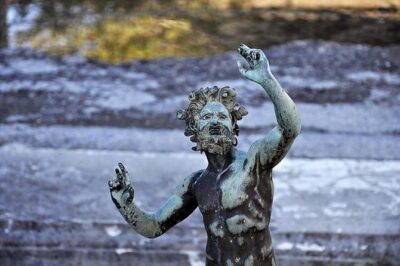
Guided Small Group Tour Max 6 People with Private Option
Read our review →
Pompeii Guided Group Tour with Entry Ticket and Archaeologist
Read our review →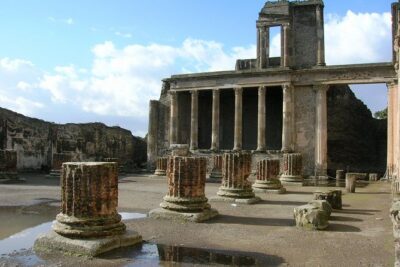
2 Hour Private Tour with an Archeologist Guide
Read our review →
Stories of Pompeii: Small Group tour with archeology expert guide
Read our review →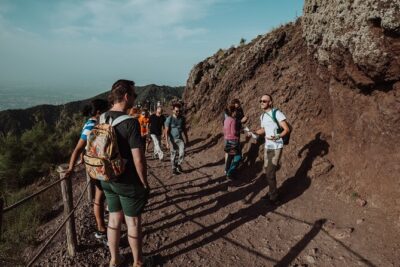
Mount Vesuvius Tour from Pompeii Led by an Expert Guide
Read our review →Browse the lists this tour appears in