
Reviewed · HERCULANEUM TOURS FROM NAPLES
Pompeii and Herculaneum small group Excursion from Naples
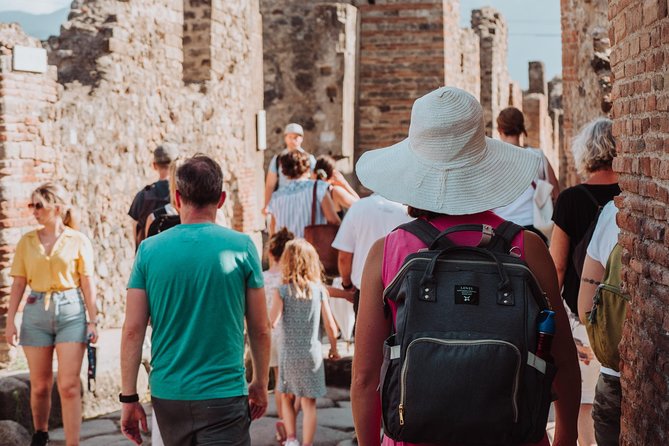
Pompeii and Herculaneum tell two very different stories of the eruption of Mount Vesuvius. This seven-hour small-group tour lets you see both without wrestling with train schedules, ticket lines, or the huge scale of the ruins on your own. An archaeologist guide such as Rafael, Gennaro, Michele, or Vincenzo brings the streets and houses into focus with clear explanations and a good sense of humor.
I like the skip-the-line admission and the air-conditioned minibus, especially when you are working around a tight day in Naples. I also like the pace: about two hours at each site, enough for a strong introduction without turning the day into an archaeological endurance test. The catch is that Pompeii and Herculaneum are large, uneven sites, so you should expect plenty of walking, sun, and steps.
Key points to know before booking
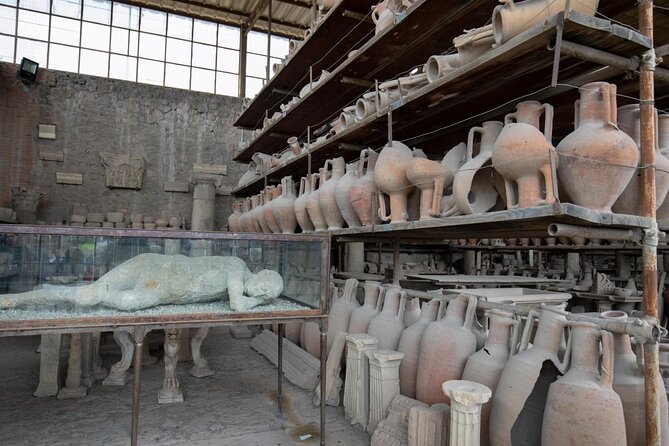
- Two Roman cities in one day: Compare Pompeii’s broad streets and public buildings with Herculaneum’s compact, remarkably preserved homes.
- Archaeologist-led visits: Guides including Rafael, Gennaro, Michele, Giulia, and Vincenzo have been praised for clear explanations, humor, and well-timed stops.
- About two hours per site: You see major highlights, but this is an introduction rather than an exhaustive visit.
- Transport from central Naples: Meet at Starhotels Terminus near Naples Central Station for minibus transport.
- Walking is part of the deal: Wear sturdy shoes and bring your own mask if the stated health rules are still in force.
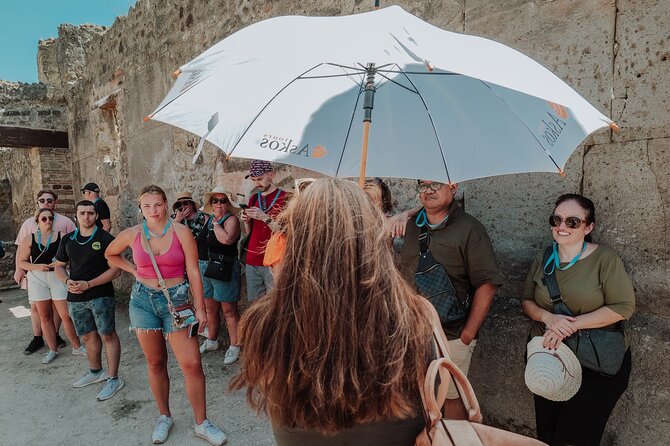
- A useful small-group size: The maximum is 20 people, giving the guide room to keep the group together and answer questions.
Why seeing both sites makes sense
Many visitors choose Pompeii because its name is familiar, but Herculaneum adds an important second view of Roman life. Pompeii spreads across a large area, with long roads, a forum, theaters, baths, shops, and grand houses. It feels like a city caught in the middle of daily business.
Herculaneum is smaller and more compact. Its preserved buildings help you notice domestic details that can be easier to miss at Pompeii. You move through homes, courtyards, baths, and civic buildings with a stronger sense of how people used their rooms.
I like the pairing because the contrast keeps the day fresh. Pompeii gives you scale. Herculaneum gives you detail. Visiting only one site can leave you with an incomplete picture, while this tour offers a useful comparison in a single outing.
The tour costs $173.27 per person. That is not a budget sightseeing day, but the price includes both entrance fees, transport, and an archaeologist guide at both parks. You are paying for structure and time savings as much as for admission.
More Herculaneum tours:
- Pompeii and Herculaneum Small Group Tour with an Archaeologist
★ 5.0 · 1,350 reviews - Private Day Tour to Vesuvius, Herculaneum & Pompeii with Pick Up
★ 5.0 · 279 reviews - The Ultimate Ruins of Pompeii and Herculaneum Private Day Trip
★ 5.0 · 103 reviews
Starting near Naples Central Station
The stated meeting point is Starhotels Terminus, P.za Giuseppe Garibaldi 91, beside Naples Central Station. This is a practical base if you are staying near the station or arriving by train. The tour includes assistance from a professional driver and minibus transport to the archaeological sites.
The experience is advertised as a shore excursion with pickup offered, but the supplied meeting information specifically names Starhotels Terminus and the central train station area. If you are coming from a cruise ship, confirm the exact pickup arrangement before booking rather than assuming the driver will meet you at the port.
The maximum group size is 20 people. That is small enough for a guide to keep order in narrow streets and busy rooms, though it is not a private tour. Several guides are praised for organizing the group, starting on time, and adjusting explanations for people with different levels of background knowledge.
Pompeii: the city at street level
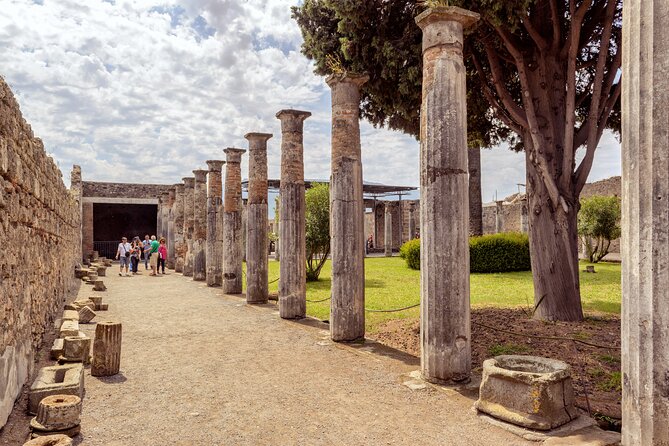
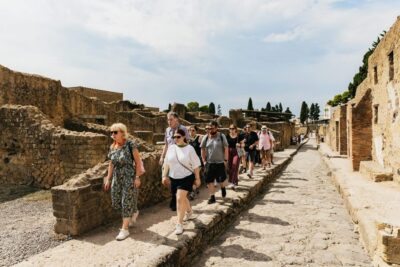
The first major stop is the Archaeological Park of Pompeii, with about two hours inside. Your guide uses the ruins to explain how the city worked, rather than simply pointing out one famous building after another.
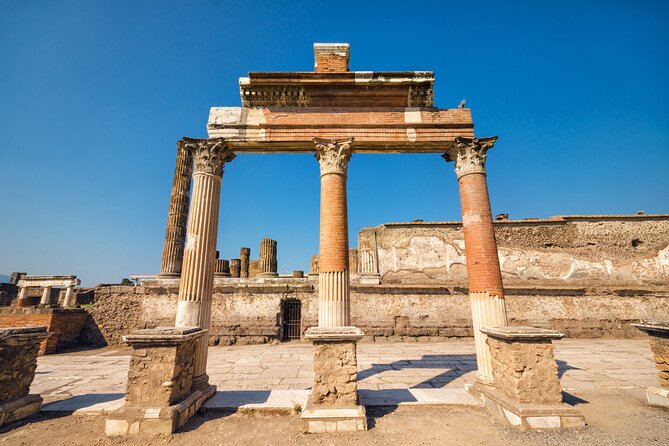
The route includes the Basilica, one of the main civic buildings near the forum. You then see the Forum, the political and commercial heart of Pompeii. Ten minutes at each of these short stops may not sound like much, but a guide can use them to establish the city’s layout before you move into its streets and houses.
Via dell’Abbondanza is one of the most useful parts of the visit. This long street helps you picture Pompeii as a living town, with people moving between shops, homes, baths, and public spaces. You may find that the road itself says as much about daily life as the grand villas do.
The House of Menander provides a look at an affluent home and its decorative rooms. The Granaries of the Forum, also called the Forum barns, connect the public square with the practical business of storing and selling goods. These stops help balance the familiar grand ruins with the working side of the city.
Baths, houses, and theaters at Pompeii
The Stabian Baths show how Roman public bathing worked. Your guide can explain the different spaces and the way engineering, heat, and social life came together in one building. This is one of the stops where a short explanation adds far more than a quick look from the doorway.
The Lupanar is among Pompeii’s most talked-about buildings. It is a small site, but its rooms and surviving details offer an unusually direct look at an aspect of Roman commercial life. The guide’s context matters here, since the building can be easy to misunderstand if you view it without explanation.
The House of the Faun is another major residence. Its size and layout show the wealth of Pompeii’s upper class. Keep in mind that a two-hour route cannot guarantee time inside every room or every famous house. One visitor specifically wished the group had entered the House of the Faun, though other homes were included.
The Odeon, or Small Theatre, and the Great Theatre finish the Pompeii portion. The smaller theater gives you a sense of intimate performances, while the Great Theatre shows the scale of public entertainment. These sites also break up the walking through streets and houses.
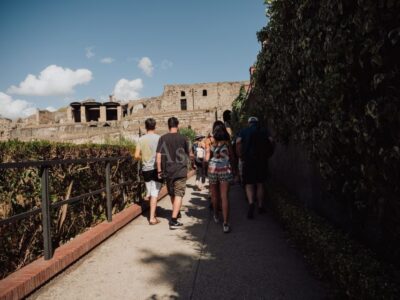
Pompeii can feel strenuous. The surfaces are uneven, the distances add up, and the open areas offer limited relief from the sun. I would not choose this tour if you want a slow, deeply detailed visit to every building. I would choose it if you want the major story, strong orientation, and a guide to point out what deserves your attention.
More ways to see Pompeii:
- Pompeii Small Group Tour with an Archaeologist
★ 5.0 · 6,593 reviews - Discover the Ancient Ruins of Pompeii: Day Trip from Rome
★ 3.5 · 2,247 reviews - Skip the Line Guided Tour of Pompeii led by an Archaeologist
★ 5.0 · 703 reviews - Pompeii Ticket + Tour with Optional Tasting Experience at Pompeii
★ 5.0 · 663 reviews
Herculaneum: smaller scale, sharper detail
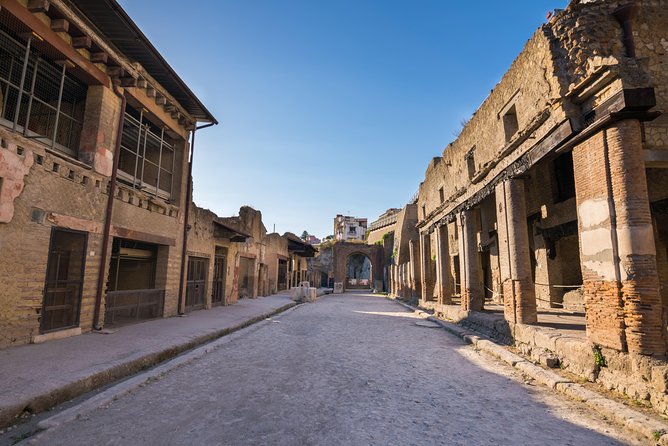
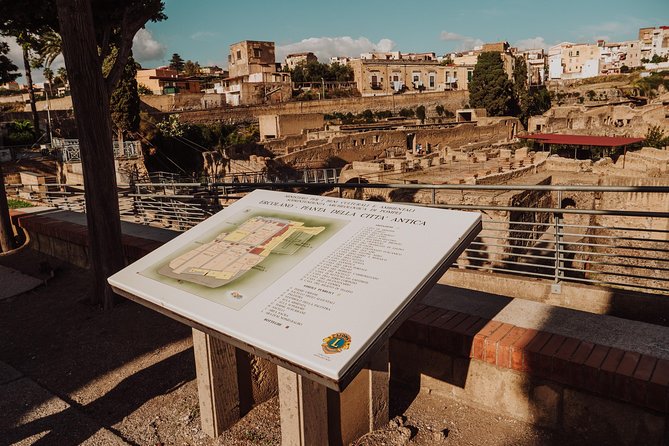
The second major visit is the Archaeological Park of Herculaneum, with about two hours inside. This is where the contrast with Pompeii becomes clear. The route includes the House of the Deer, a fine residence with a terrace, and the Terrace of M. Nonio Balbo.
You also visit the College of the Augustales, a civic and religious building. The House of the Relief of Telephus adds another example of domestic decoration and Roman taste. These stops are useful because they show that Herculaneum was not simply a smaller version of Pompeii.
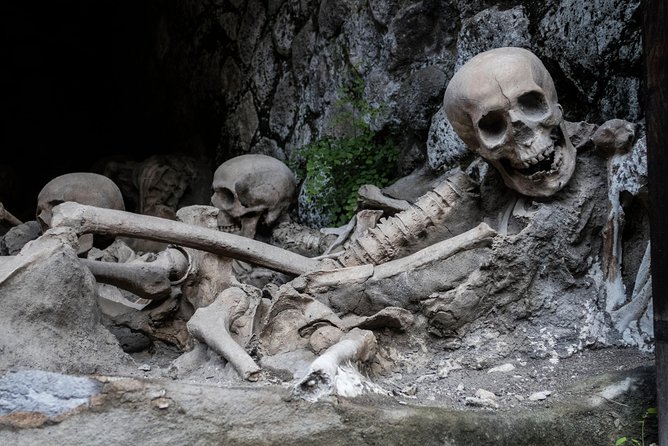
The House of the Wooden Partition is one of the most distinctive stops listed. Its surviving wooden feature gives you a rare look at materials that often disappeared from ancient buildings. At the House of the Skeleton, the guide can help explain the evidence left behind by the eruption and the way archaeologists interpret it.
The Central Thermae brings you back to public life. As at Pompeii, the baths reveal how engineering and social customs shaped the city. The House of the Black Salon, the Samnitic House, and the House of the Fine Courtyard continue the focus on private spaces, room design, and household life.
The route ends with the House of the Grand Portal. Herculaneum’s compact layout makes it easier to connect one building with the next, but the ruins are still not effortless to walk. You will cover uneven ground at both parks, and the day feels active even though the guide keeps a steady pace.
What the archaeologist guide adds
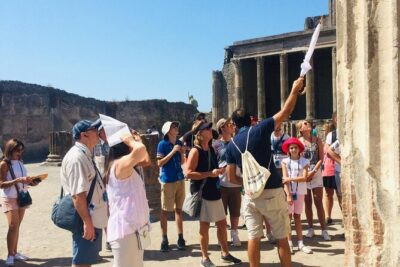
The guide is the main reason to choose this experience instead of visiting independently. Pompeii and Herculaneum can overwhelm you with streets, walls, fragments, and unfamiliar terms. A strong guide gives those remains a human scale.
Rafael is described as funny, engaging, and generous with information. Gennaro is praised for an easy pace and for choosing historical and architectural details that fit the group. Michele Lamberti is noted for making the ancient streets feel alive, while Vincenzo is praised for smooth timing and a clear sense of the area.
Other named guides include Giulia and Diego. Giulia is noted for keeping the group on time while staying entertaining. Diego is described as friendly and well informed. The guide may vary on your date, so treat these names as examples of the available guiding style, not a promise of a particular person.
I especially like that the guides are described as able to explain difficult subjects without making the visit feel heavy. The eruption, death, and destruction are part of the story, but the best guiding also shows ordinary life: shopping, bathing, dining, theatergoing, building, and worship.
Timing, lunch, and the practical tradeoff
The tour lasts about seven hours, with roughly two hours at Pompeii and two hours at Herculaneum. The remaining time covers transport, meeting, and the movement between stops. One detailed account says there was time for lunch between the two visits, but meals and drinks are not included.
Plan to buy or carry your own food and water unless the operator gives you different instructions. Since the tour is tightly timed, do not count on a long restaurant stop. A quick meal keeps the day moving and protects your time inside both parks.
The listed itinerary breaks the visits into many five and ten-minute stops. That does not mean you will be rushed from one doorway to the next. It shows the guide’s method: short explanations at key places, then movement through the larger archaeological zones. You will see a broad selection rather than study one villa for an hour.
Who should book this tour?
I would recommend it to first-time visitors who want both sites, prefer a guide, and have one full sightseeing day based in Naples. It is also a sensible choice for anyone nervous about coordinating transport and admission independently.
The tour suits people who enjoy history but do not already know the ruins well. The guides provide the background needed to understand why a forum, bath, theater, or private house matters. Families and mixed-age groups may also appreciate the humor and steady organization described by several guides.
You should think twice if you want a private experience, a very slow pace, or hours for photography. A maximum of 20 people is reasonable, but you will still follow a shared route. You should also be comfortable walking for much of the day on ancient surfaces.
The stated health information requires masks, social distancing, and temperature checks, with visitors showing a temperature of 37.5 degrees Celsius or higher, or clear symptoms of infection, refused entry. Bring your own mask and check current requirements before departure, since such rules can change.
Service animals are allowed, and the tour is near public transportation. Most people can participate, but the supplied information does not promise step-free access or a fully accessible route. Ask the operator directly if you have mobility needs.
Should you book it?
Book this tour if your priority is seeing Pompeii and Herculaneum efficiently, with transport, admission, and expert interpretation handled in one package. The $173.27 price is reasonable for that convenience, especially when you value a clear route and do not want to spend your day solving logistics.
Skip it if you want to explore at your own speed or focus deeply on a small number of buildings. For most first visits from Naples, though, this is a strong use of one day. Wear good shoes, bring water and a mask, and expect to return with a much clearer picture of Roman life than you would get from wandering the ruins without context.
FAQ
How long does the tour last?
The tour lasts approximately seven hours.
Where does the tour start?
The stated meeting point is Starhotels Terminus, P.za Giuseppe Garibaldi 91, 80142 Naples, near Naples Central Station.
Does the tour include transportation?
Yes. Transportation is provided by minibus, with assistance from a professional driver.
Are Pompeii and Herculaneum admission tickets included?
Yes. Pompeii Express entry and Herculaneum entry tickets are included.
Is a guide included?
Yes. Guidance at both archaeological parks is provided by an archaeologist guide.
How much time is spent at each site?
The itinerary allows about two hours at Pompeii and about two hours at Herculaneum.
Are meals and drinks included?
No. Meals and drinks are not included.
What is the cancellation policy?
You can cancel at least 24 hours before the start time for a full refund. Cancellations or changes made less than 24 hours before the start time are not accepted for a refund.
Just added around Pompeii
- Wine Tasting and Winery Tour in Vesuvio National Park with Lunch★ 4.5 · 3 reviews
- Mt. Vesuvius Wine Tasting and Lunch Experience from Pompeii★ 4.5 · 20 reviews
- Wine tasting in the Vesuvius national park★ 5.0 · 3 reviews
- Traditional Neapolitan Dinner in Pompei – Villa Franca – Family Restourant★ 5.0 · 8 reviews
- Private Guided Tour and VR Headsets in the Ancient Pompeii★ 5.0 · 3 reviews
- Visit Pompeii with a local expert guide★ 5.0 · 10 reviews
- Tour Mount Vesuvius with Entry Tickets and Round Trip Transfer Included★ 3.5 · 4 reviews
- Vesuvius tour entrance to the crater and return bus★ 4.5 · 9 reviews
Herculaneum Tours from Naples, compared.
Pompeii and Herculaneum Small Group Tour with an Archaeologist
Read our review →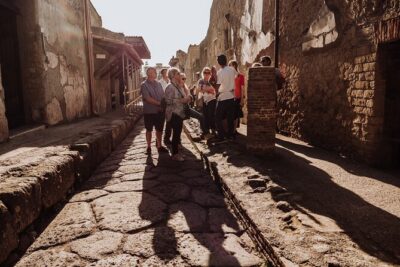
Herculaneum Small Group Tour and Ticket With an Archaeologist
Read our review →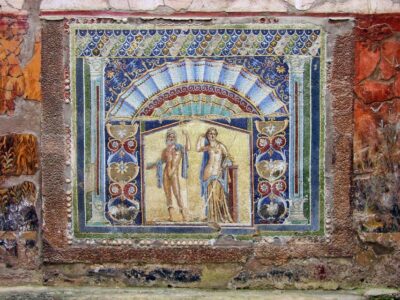
Pompeii & Herculaneum with Archaeologist Guide
Read our review →
Pompeii, Herculaneum, & Vesuvius Full-Day Tour
Read our review →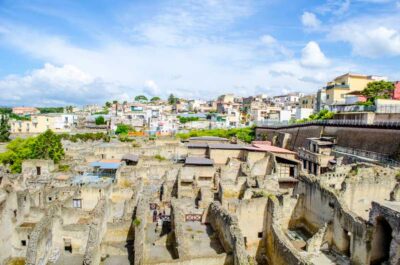
Herculaneum Entry Ticket with Optional Audio Guide
Read our review →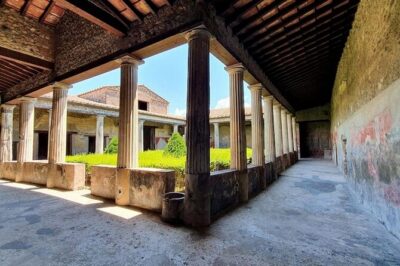
Day Trip of Pompeii, Herculaneum and Vesuvius from Naples
Read our review →Browse the lists this tour appears in