
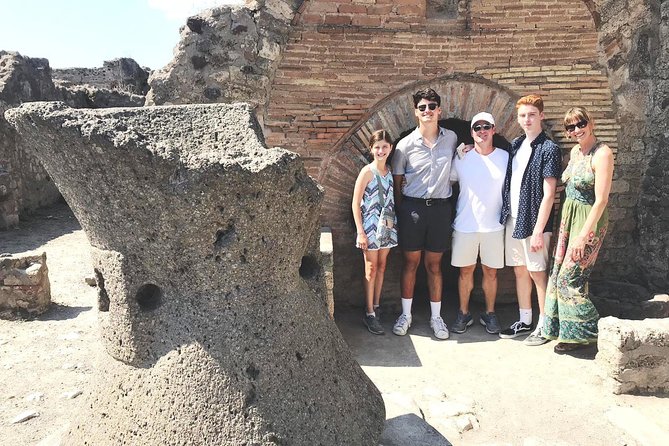
Reviewed · SKIP-THE-LINE TICKETS IN POMPEII
Pompeii and Herculaneum Private Tour with Native Guide and Skip the Line Tickets
The best reason to book this tour is that it pairs Pompeii and Herculaneum in one outing, then gives you a private guide to make sense of both sites. Italo, Rossana, Giovanna, and Roberta are among the guides associated with the experience, and the strongest feedback points to warm personalities, clear explanations, patience with children, and a good walking pace.
I like the private format, since you can focus on what interests you instead of following a large group. I also like the skip-the-line admission, especially when every minute matters at sprawling Pompeii. The main drawback is practical: you must arrange your own transport to Pompeii, between the sites, and home from Herculaneum, while lunch is also on your own.
Key points to know before booking
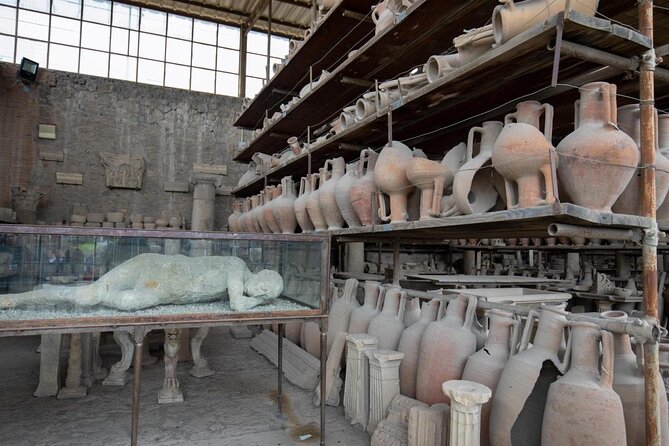
- Two ancient cities in one day: Compare Pompeii’s broad streets and public buildings with Herculaneum’s more compact ruins.
- Private local guide: Guides including Italo, Rossana, Giovanna, and Roberta bring different strengths, from archaeology and Roman daily life to family-friendly pacing.
- Skip-the-line admission: Your ticket is included, so you spend less time dealing with entry and more time inside the sites.
- A focused five-hour outing: Expect substantial walking, outdoor exposure, and a moderate fitness requirement.
- Transport is not included: The tour starts near Pompeii’s Piazza Esedra and ends at Ercolano Scavi.
- Best for curious first-time visitors: The guide’s explanations help you connect houses, shops, baths, streets, and theaters into a picture of ordinary Roman life.
Why seeing Pompeii and Herculaneum together works
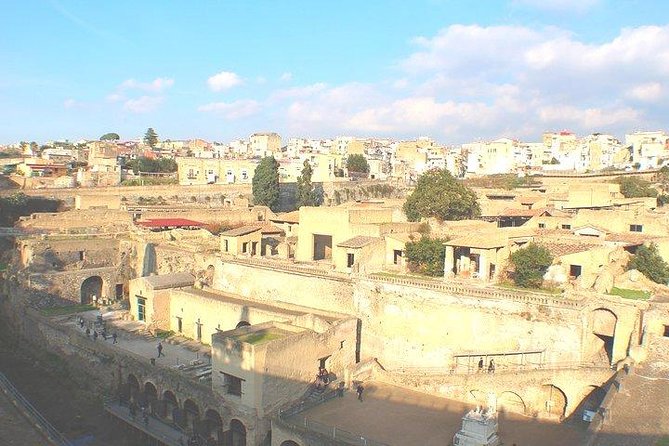
Pompeii and Herculaneum are often treated as interchangeable stops. They are not. Seeing both gives you a better sense of how the eruption of Mount Vesuvius preserved two different Roman communities.
Pompeii is the larger and more sprawling site. You walk along former commercial streets, pass public buildings, and see the remains of a city laid out for daily life, business, religion, entertainment, and bathing. Its size can be thrilling, but it can also leave you unsure where to look first.
Herculaneum is smaller and more compact. That makes it easier to take in during a shorter visit, while its preserved buildings offer a different look at Roman homes and urban life. I like the contrast: Pompeii gives you the scale of a major town, while Herculaneum helps you focus on details.
A private guide matters here. Without context, you may see walls, doorways, and worn paving stones without understanding their purpose. Giovanna, who is an archaeologist, is particularly suited to visitors who want careful explanations of Roman life. Italo is described as energetic and efficient, while Roberta is praised for bringing the ancient world to life and answering questions. Rossana is a good match for anyone who wants to slow down and examine details.
Your exact guide is assigned by the operator, so do not assume you will receive a particular person. Still, the repeated pattern is useful: the guides are presented as friendly, patient, and able to adjust their style to families, older children, and inquisitive adults.
More Guided Tours in Pompeii
- Skip the Line Guided Tour of Pompeii led by an Archaeologist
★ 5.0 · 703 reviews - Pompeii private tour with an Official Guide
★ 5.0 · 631 reviews - Pompeii Skip-the-line Tour with Archaeologist Guide
★ 5.0 · 559 reviews
Pompeii’s streets, theater, baths, and shops
The Pompeii portion takes up most of the day’s attention. The schedule gives roughly two and a half hours to the site, although the individual timing details are not perfectly consistent. One part describes about an hour with a private guide, another gives two and a half hours for the archaeological park, and the listed stops add up differently. Confirm the precise meeting time and Pompeii duration before you set your plans around it.
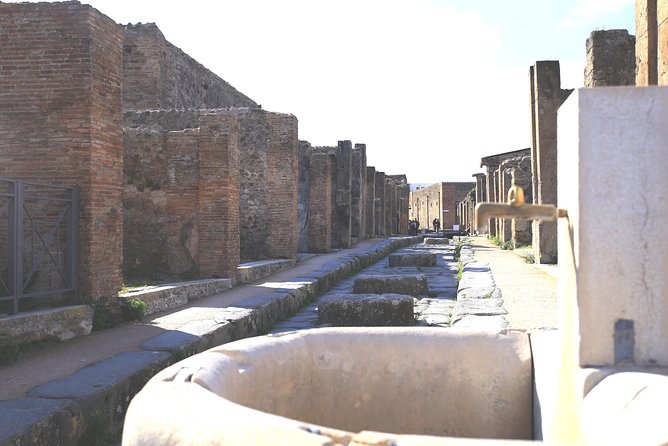
Your walk includes several of Pompeii’s most useful anchor points. The first is Via dell’Abbondanza, the main commercial street. This is where the city feels less like a collection of ruins and more like a functioning neighborhood. You follow the route people once used for shopping, errands, work, and social life.
Your guide can help you read the street as more than a line of ancient paving. Look for the relationship between storefronts, homes, public buildings, and the road itself. The value of the commentary is not simply naming each ruin. It is explaining how the parts fit together.
The Stabian Baths offer another important piece of the picture. Roman baths were not just places to wash. They were social and public spaces, and the surviving rooms help you understand the scale and planning required for them. The bath complex also gives you a break from focusing only on private houses and dramatic eruption remains.
The Teatro Grande brings entertainment into the day. You will see the theater and hear about its acoustic design. The tour description calls attention to its acoustic perfection, which makes this more than a quick photo stop. Stand in the space, listen to your guide, and consider how a performance could reach an audience without modern amplification.
Pompeii rewards attention, but its size can tire you. The paths are uneven in places, and the site asks you to walk and stand for long periods. Wear sensible shoes and bring what you need for several hours outside. The experience is not presented as strenuous, but a moderate level of fitness is required.
Herculaneum’s compact view of Roman life
The Herculaneum visit lasts about two hours and finishes the main sightseeing. It is a good second act because the site feels different from Pompeii rather than like a smaller copy.
Herculaneum’s compact layout lets your guide keep the visit focused. Instead of covering a very large urban area, you can spend more time examining selected buildings and discussing what they reveal. You might find the tighter scale easier after several hours in Pompeii.
This is also where a strong guide can make a real difference. Giovanna’s archaeological background, for example, fits a stop where architectural details and preservation need explanation. You will get more from the ruins if you ask questions about Roman homes, work, public spaces, and the way the two towns differed.
The route ends at Ercolano Scavi, which is practical if you plan to continue by public transport. It also means this is not a loop back to Pompeii or your hotel. Plan that final leg before booking, especially if you have an evening train, dinner reservation, or hotel commitment.
What the private format changes
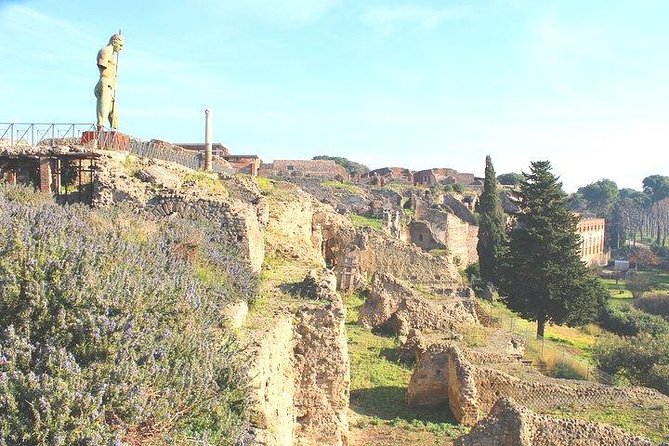
A private tour is not automatically better than a group tour, but here it solves several real problems. You can ask why a building matters, request more detail about Roman customs, or move on when a particular stop does not interest you. Families can also ask the guide to keep children engaged without worrying about slowing down a larger party.
The guides are praised for different kinds of personal attention. Italo is described as friendly, punctual, and efficient. Roberta is noted for her ability to picture daily life in the Roman world. Another account highlights patience with children, which is useful when the ruins start to look repetitive to younger minds.
You should still be clear about your priorities at the start. Tell the guide if you care most about architecture, Roman food and commerce, public life, theater, baths, or the eruption itself. The tour is advertised as customizable, so use that flexibility rather than simply accepting a one-size-fits-all route.
The tradeoff is cost. At $431.33 per person, this is a major expense, particularly for a couple or family. The price becomes easier to justify if you value a private archaeologically informed explanation, want to see both sites in one day, and would otherwise need to arrange separate entries and guiding.
It is less attractive if you prefer wandering alone, already know Pompeii well, or want a relaxed day with plenty of unscheduled time. The private format does not remove the walking, heat, crowds, or need to manage transport. You are paying for guidance, entry, and a tailored experience, not for a chauffeured day.
More Private Tours in Pompeii
- Pompeii Private Tour with an Archaeologist and Skip The Line – 3 hours
★ 5.0 · 564 reviews - Visit in Pompeii – Pompeii Private Tour with Ada
★ 5.0 · 436 reviews - Pompeii Private Tour with an Archaeologist and Skip The Line
★ 5.0 · 391 reviews - Pompeii Vineyard Escape: Private Wine Tasting & Lunch
★ 5.0 · 329 reviews
Skip-the-line tickets and the real logistics
Admission tickets are included, as is skip-the-line entry. That is useful at two busy archaeological parks, where time spent sorting out admission can cut into your visit. Still, skip-the-line access is not a reason to ignore the schedule. You must arrive at the correct starting point and follow the meeting instructions.
The tour begins at Hotel Vittoria, Piazza Esedra, 80045 Pompei. It ends at Ercolano Scavi, 80056 Ercolano. Hotel pickup and drop-off are not included, and neither is transportation between Pompeii and Herculaneum.
That transport gap is the most important booking detail. You are responsible for reaching the first meeting point and getting between the sites. The experience is near public transportation, but the supplied details do not specify a private vehicle, train departure, taxi arrangement, or transfer time. Ask for the recommended connection before the day begins.
Lunch is also not included. With several hours of walking, plan a meal or snack around the tour’s timing. Do not assume you can stop whenever you like, since the route connects two sites and finishes at a separate station.
Confirmation arrives when you book, and the tour is offered in English. Free cancellation is available if you cancel at least 24 hours before the local start time. Changes or cancellations inside that window are not accepted for a refund.
Who will get the most from this Pompeii tour
This outing suits a first visit when you want both major archaeological sites but do not want to spend days organizing tickets, routes, and research. The guide helps you form a clear picture instead of simply ticking off famous locations.
It is especially good for families who want a private pace. The feedback about patience with children is encouraging, and a guide can turn streets, baths, and theater remains into a story rather than a long sequence of stone walls.
It also suits adults with strong interests in archaeology or Roman society. Giovanna’s archaeological training and the detailed explanations associated with the guides make the experience more than a quick highlights walk.
You may want another plan if you dislike long walking days, need a fully accessible route, or want transport included. The information only states a moderate fitness requirement, not specific accessibility arrangements. Ask the operator about current paths and meeting logistics if mobility is a concern.
Is the $431.33 price worth it?
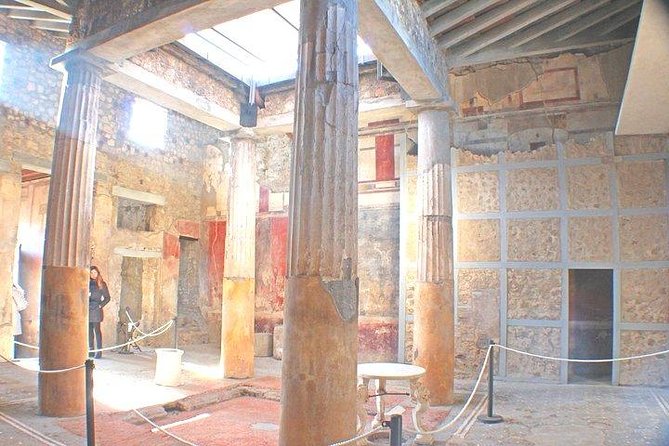
The value depends on how much structure you want. Admission to both sites, skip-the-line access, and a private guide are bundled together, which removes several planning tasks. The guide also adds context that is difficult to get from signs alone.
Still, $431.33 per person is not a casual splurge. You should book it because you want private attention and a well-explained comparison of Pompeii and Herculaneum, not because you expect luxury transport or a leisurely pace.
For a family, the total rises quickly. For a small group that can use the private format fully, the price may feel more reasonable, especially if everyone asks questions and adjusts the route to shared interests. Group discounts are listed, but no discount amount is provided, so check the final price for your party.
Should you book it?
Book this tour if you want to see both Pompeii and Herculaneum in one day, value a private English-speaking guide, and are willing to arrange your own transport. It is a strong choice for first-time visitors, families, and anyone who wants Roman daily life explained rather than guessed at.
Skip it if you want a slow, independent visit or if the price does not fit your budget. Before paying, confirm the exact Pompeii timing, the transport plan between sites, and the meeting details. If those pieces work for you, the combination of two contrasting ruins and attentive local guiding makes this a useful, information-filled day.
FAQ
How long does the Pompeii and Herculaneum tour last?
The tour lasts approximately five hours. The schedule includes about two and a half hours at Pompeii and two hours at Herculaneum, although the detailed stop times vary, so confirm the exact timing when booking.
Where does the tour start?
The meeting point is Hotel Vittoria at Piazza Esedra, 80045 Pompei, Italy.
Where does the tour end?
The tour ends at Ercolano Scavi in Ercolano, Italy.
Is transportation between Pompeii and Herculaneum included?
No. Transportation to the first site, between Pompeii and Herculaneum, and after the tour is not included.
Are admission tickets included?
Yes. Admission tickets and skip-the-line entry for the archaeological sites are included.
Can I cancel for a full refund?
Yes, if you cancel at least 24 hours before the experience start time, based on local time. Cancellations or changes made less than 24 hours before the start are not refunded.
More Herculaneum Tours
- Pompeii and Herculaneum Small Group Tour with an Archaeologist
★ 5.0 · 1,350 reviews - Private Day Tour to Vesuvius, Herculaneum & Pompeii with Pick Up
★ 5.0 · 279 reviews - The Ultimate Ruins of Pompeii and Herculaneum Private Day Trip
★ 5.0 · 103 reviews - Naples: Pompeii & Herculaneum Day Trip – Small Group Tour
★ 4.5 · 72 reviews
More Skip-the-Line Tickets in Pompeii
- Complete Pompeii Skip the Line Tour with Archaeologist Guide
★ 4.5 · 379 reviews - Ancient Pompeii Private Tour: Skip the Line & Kid-Friendly Option
★ 5.0 · 167 reviews - Pompeii small group tour with skip-the-line entrance included
★ 5.0 · 155 reviews - Pompeii: Skip the line ticket (art) + audioguide + map
★ 3.5 · 155 reviews
Just added around Pompeii
- Wine Tasting and Winery Tour in Vesuvio National Park with Lunch★ 4.5 · 3 reviews
- Mt. Vesuvius Wine Tasting and Lunch Experience from Pompeii★ 4.5 · 20 reviews
- Wine tasting in the Vesuvius national park★ 5.0 · 3 reviews
- Traditional Neapolitan Dinner in Pompei – Villa Franca – Family Restourant★ 5.0 · 8 reviews
- Private Guided Tour and VR Headsets in the Ancient Pompeii★ 5.0 · 3 reviews
- Visit Pompeii with a local expert guide★ 5.0 · 10 reviews
- Tour Mount Vesuvius with Entry Tickets and Round Trip Transfer Included★ 3.5 · 4 reviews
- Vesuvius tour entrance to the crater and return bus★ 4.5 · 9 reviews
Skip-the-Line Tickets in Pompeii, compared.
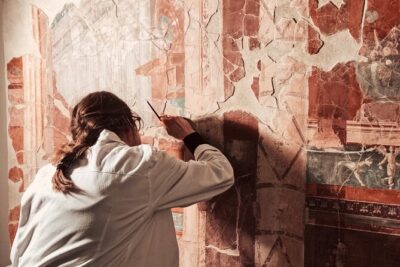
Pompeii Private Tour with an Archaeologist and Skip The Line – 3 hours
Read our review →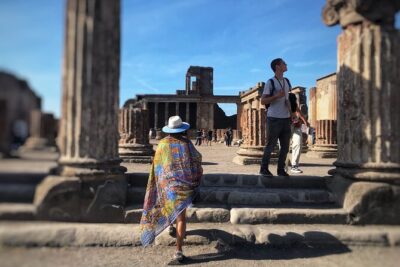
Pompeii Private Tour with an Archaeologist and Skip The Line
Read our review →
Complete Pompeii Skip the Line Tour with Archaeologist Guide
Read our review →
Ancient Pompeii Private Tour: Skip the Line & Kid-Friendly Option
Read our review →

Pompeii small group tour with skip-the-line entrance included
Read our review →
Pompeii Skip-the-Line Entry Small Group Guided Tour
Read our review →
Skip-the-Line Half-Day Private Tour Ancient Pompeii Highlights with Native Guide
Read our review →Browse the lists this tour appears in