
Reviewed · PRIVATE TOURS IN POMPEII
Private Tour with Official Guide through the wonders of Pompeii.
Pompeii makes the most sense when someone helps you read the small clues. On this private walk, guide Paolo links grand villas, theaters, baths, temples, and street life, then points out details you could easily pass without noticing. I like the private format and Paolo’s excavation background. The main catch is simple: your archaeological park ticket is not included in the $102.35 price.
I also like the clear route through Pompeii’s major sights, plus time for questions, photographs, and interests that catch your eye. You get bottled water and a map, and the English tour begins at 12:30 p.m. The two to three-hour length works well for a focused visit, though Pompeii is enormous, so this is an introduction rather than a complete look at the city.
Key points at a glance
- Paolo brings excavation experience: His past work as an archaeologist gives the tour a personal link to Pompeii’s ongoing study.
- Private touring keeps the pace flexible: Only your group takes part, so you can ask questions, pause for photos, and request more detail.
- The route covers both famous sights and everyday life: You’ll see the Forum and temples alongside villas, baths, theaters, and an ancient restaurant.
- The small details are a major strength: Expect attention to architecture, mosaics, frescoes, daily life, word origins, and lesser-noticed features.
- The $102.35 price excludes admission: Add the Archaeological Park Pompeii ticket to your budget before booking.
- The 12:30 p.m. start is practical but warm: Bring sun protection and comfortable shoes for several hours on ancient streets.
Why a private guide changes Pompeii
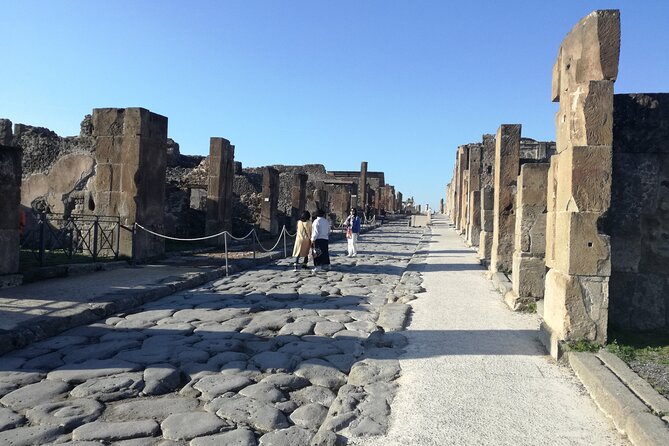
Pompeii can feel confusing at first. Streets, courtyards, temples, shops, theaters, and homes spread across a large archaeological park, and a bare wall can look like just another ruined wall. A guide gives the stones a job and a setting.
Paolo’s approach, as described through the experience, goes beyond naming buildings. He explains architecture, daily life, local customs, excavation work, and the roots of familiar English words. That last point may sound minor, but it shows the kind of connection that can make a Roman site easier to remember.
The private setup matters just as much. You are not tied to a large group’s questions or pace. If your group wants extra time at a mosaic, more information about Roman bathing, or a short pause for photographs, Paolo can adjust the visit. That flexibility is especially useful for families and small groups with different interests.
I would not expect to see every corner of Pompeii in two or three hours. You are getting a well-shaped introduction that focuses on important buildings and telling details. For a first visit, that is often a better choice than wandering without context, but it is not a substitute for a full day in the park.
More Guided Tours in Pompeii
- Skip the Line Guided Tour of Pompeii led by an Archaeologist
★ 5.0 · 703 reviews - Pompeii private tour with an Official Guide
★ 5.0 · 631 reviews - Pompeii Skip-the-line Tour with Archaeologist Guide
★ 5.0 · 559 reviews
The theaters: Greek drama and Roman music
The tour begins with Teatro Grande, Pompeii’s large theater. The stop is brief, about 10 minutes, but it introduces the public side of the city. This was a place for tragedies and comedies, and the setting helps you picture Pompeii as a functioning Roman town rather than a frozen ruin.
The theater is also a good place to hear Paolo explain how Greek and Roman traditions overlapped. The supplied description calls it a Greek-Roman theater, and that blend is important. Pompeii was part of the Roman world, yet it kept strong Greek cultural links in its public life.
You then reach the Odeon, or Teatro Piccolo, another short stop of about 10 minutes. The smaller theater is tied to singing and performance. The contrast between the two venues gives you a useful sense of scale. One served larger crowds, while the other offered a more compact setting for music and spoken performance.
These stops are short, so I would use them to ask focused questions rather than expect a long lecture. If you enjoy theater, language, or public life, they may become some of your favorite parts of the route.
The villas and their vivid interiors
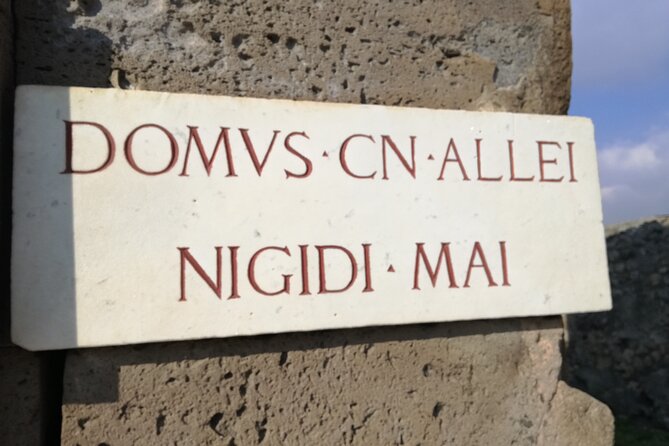
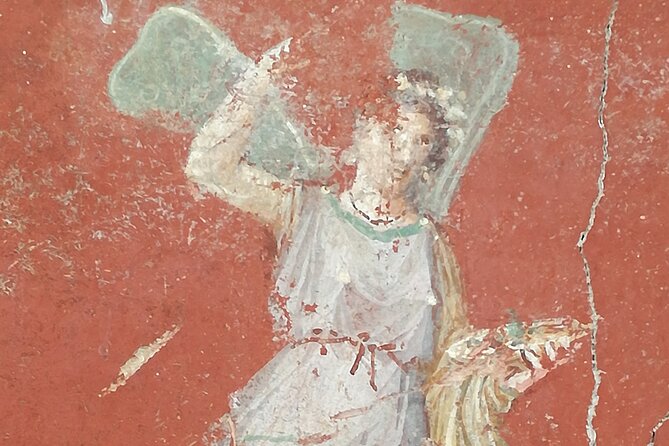
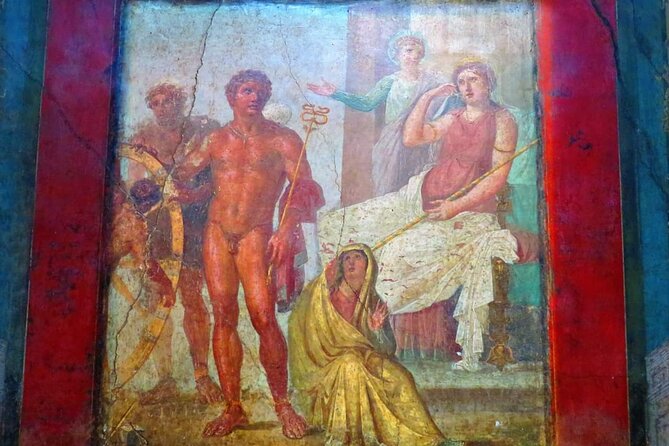
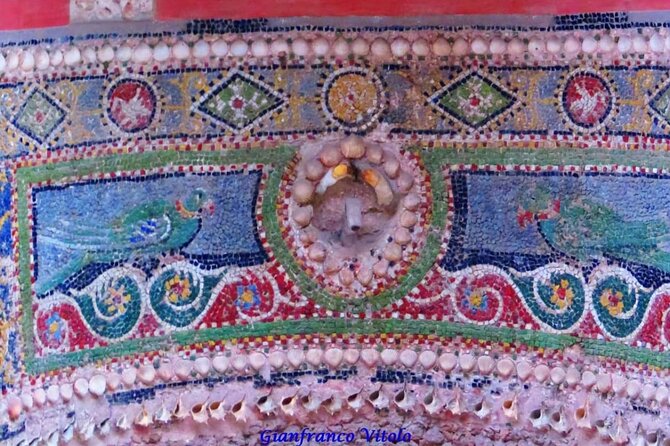
The Casa dei Vettii gets about 20 minutes, enough time to look at its architecture, frescoes, and mosaics. This is one of the places where a guide earns the fee. Pompeii’s wall paintings can seem decorative at first glance, but their placement, subjects, and condition tell you how Roman homeowners presented themselves.
Paolo’s attention to small features is particularly useful here. One account describes him explaining details that would be easy to miss without help, while another points to his ability to connect architecture with daily life. You can expect the visit to focus not only on what survives, but also on how the house worked as a home.
Casa del Fauno receives about 10 minutes. It is described as one of the oldest villas in Pompeii, and the short stop gives the route a sense of architectural age and scale. I would treat this as a concise orientation rather than a long exploration.
Casa degli Amorini Dorati is allotted 20 minutes. Its name refers to the golden cupids associated with the villa, and the description emphasizes the beauty of the house. This is another good moment to let Paolo explain how decorative details shaped the atmosphere of a wealthy Roman home.
Casa del Poeta Tragico is the shortest villa stop, at about five minutes. Its main attraction is the famous mosaic. Five minutes is enough to see the key feature and hear its story, but it will feel quick if you want to study every surface or take many photographs.
Together, these houses make one point clear: Pompeii was not just a city of public monuments. It had private rooms, decorated walls, mosaics, gardens, and social spaces where people displayed taste and money. The villa stops also help you compare domestic life with the temples and forums later in the route.
Roman bathing from luxury to routine
The Suburban Baths sit near the city walls and receive about 15 minutes. Their position makes them different from the larger public bathing complex in the center. The stop is useful because it shows how leisure and washing were built into city life, including at the edge of town.
The Stabian Baths are allotted 20 minutes and are described as Pompeii’s largest baths. Here, you can expect a broader look at Roman bathing as a social routine, not simply a matter of cleanliness. Baths could combine exercise, conversation, relaxation, and status.
These two stops work well together. The Suburban Baths give you a smaller, distinctive complex, while the Stabian Baths provide a larger example. Paolo’s explanations about daily life should help you picture how people moved through these spaces and why bathing mattered so much in Roman society.
The practical issue is footing. Pompeii’s ancient streets and ruins require walking, and the tour includes many stops rather than one building. Wear shoes you can comfortably use for two to three hours. Since the start is at 12:30 p.m., water, a hat, and sun protection are sensible choices. Bottled water is included, but you should still prepare for a warm afternoon.
More Private Tours in Pompeii
- Pompeii Private Tour with an Archaeologist and Skip The Line – 3 hours
★ 5.0 · 564 reviews - Visit in Pompeii – Pompeii Private Tour with Ada
★ 5.0 · 436 reviews - Pompeii Private Tour with an Archaeologist and Skip The Line
★ 5.0 · 391 reviews - Pompeii Vineyard Escape: Private Wine Tasting & Lunch
★ 5.0 · 329 reviews
The Forum and Pompeii’s sacred center
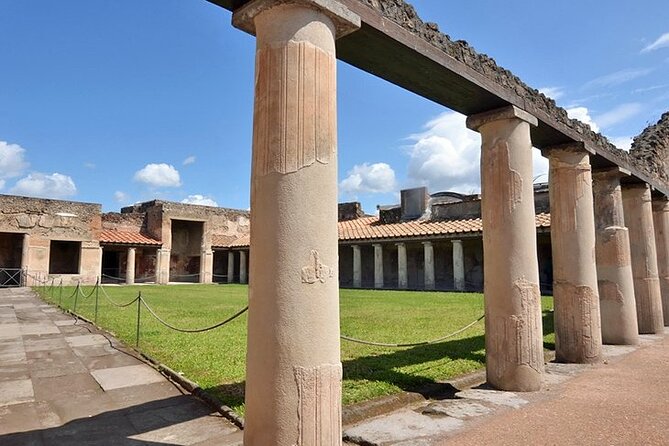
The Foro de Pompeya, or Forum, receives about 20 minutes. This is the main square and one of the most important stops on the route. It is the place to understand Pompeii as a civic center, where religion, government, commerce, and public gatherings met.
I like having the Forum placed after the theaters, villas, and baths. You first see the city through entertainment, private homes, and leisure. Then the main square brings those pieces together into a larger picture of public life.
The nearby Tempio di Giove Capitolino gets 10 minutes. Its title, the Temple of the Temples, signals its importance. The stop gives Paolo a chance to explain the religious and political meaning of the building, as well as its position within the Forum.
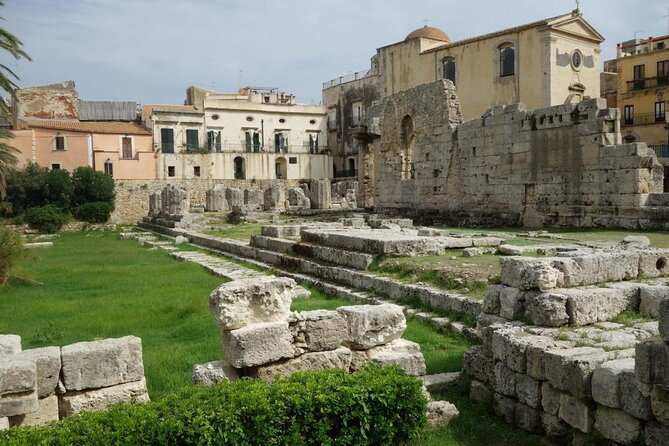
The Temple of Apollo also receives 10 minutes. Apollo was associated with the sun and was considered the son of Zeus in the supplied description. More broadly, the temple shows how several religious traditions could appear within Pompeii’s Roman setting.
Do not expect the Forum and temples to look like complete monuments. Their power comes from layout, scale, surviving columns, platforms, and the way Paolo helps you understand their original role. A guide is especially valuable here because it can be hard to read a civic space from ruins alone.
Via dell’Abbondanza and an ancient restaurant
Via dell’Abbondanza is Pompeii’s main street, with about 10 minutes on the route. It provides a direct sense of the town as a place where people moved, worked, shopped, and met. The street is not just a path between monuments. It is part of the story.
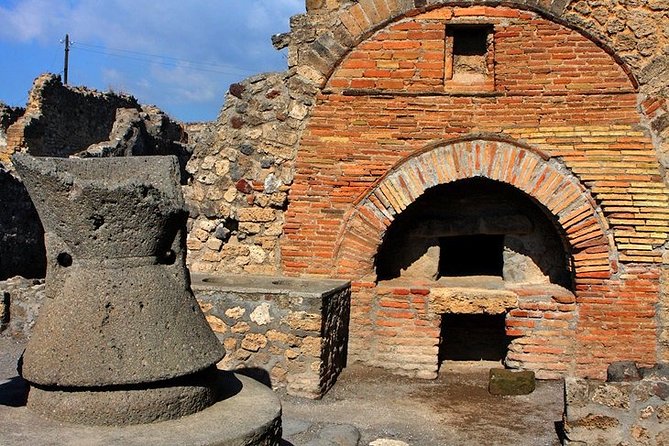
The final stop, Thermopolium Regio VI, Insula VIII, 8, lasts about five minutes. A thermopolium was a Roman food counter or restaurant, and this one gives the tour an appealing everyday detail. After the grand temples and wealthy villas, you get a glimpse of ordinary food service and urban routine.
This contrast is one of the best features of the route. Pompeii is easy to remember as a city of dramatic ruins, but the restaurant helps bring it down to human scale. You can picture people stopping for prepared food instead of only imagining officials, wealthy homeowners, or theater crowds.
The stop is short, so expect a quick explanation rather than a long study of the building. Still, it is the kind of detail that helps a city feel lived in.
How much value do you get for $102.35?
At $102.35 per person, this is not the cheapest way to enter Pompeii. The price covers a private English-speaking guide, a map of the archaeological park, and bottled water, but not the park admission ticket or a tip.
The value depends on how much you want from the visit. If you mainly want to walk around and take photographs, buying admission and exploring alone costs less. If you want context, a private pace, and help noticing details, the guide can make the extra expense worthwhile.
I see particular value for a small group that would otherwise need several separate tickets for a group tour or audio option. You also avoid being locked into someone else’s questions and timing. Paolo can adapt the visit to your interests, and the available accounts describe him allowing time for photographs and working with groups that wanted to explore certain areas more fully.
The strongest reason to pay for this experience is not the number of stops. It is the interpretation. Paolo is described as having worked on the original excavation team as an archaeologist, and his connection to the site comes through in stories about excavation, architecture, daily life, and small details. That background is unusual and gives the tour a personal edge.
Still, calculate the total before booking. Add the archaeological ticket, tip, and any transport costs to the $102.35 price. Group discounts may be available, but the supplied information does not specify the discount or the final group rate.
Timing, meeting point, and who should book
The meeting point is Via Villa dei Misteri, 1, 80045 Pompei NA, Italy. The tour begins at 12:30 p.m. and ends back at the meeting point. It is offered in English, uses a mobile ticket, and confirmation is provided at booking.
The private format suits couples, families, and small groups that want direct access to a guide. It is also a good fit if one person in your group loves history while others need a more conversational pace. Paolo’s reported patience with questions and photo stops should help keep the visit comfortable.
I would choose another plan if you want a full-day archaeological study or a very slow look at every villa. The route covers 13 stops, so the pace must be purposeful. It is best for a first visit, a limited schedule, or anyone who wants the major sights explained without spending the entire day inside the park.
Service animals are allowed, the site is near public transportation, and most people can participate. The available information does not give a detailed route assessment for every mobility need, so contact the operator if your group has specific access requirements.
You can cancel for a full refund up to 24 hours before the start time. Changes or cancellations made less than 24 hours before 12:30 p.m. are not accepted for a refund.
Should you book Paolo’s Pompeii tour?
I would book this tour if you value stories, context, and a flexible private visit more than the lowest possible price. Paolo’s excavation background, attention to overlooked details, and willingness to follow a group’s interests are the main reasons to choose it.
I would skip it if you prefer exploring independently, already know Pompeii well, or want a full-day route through every open area. For most first-time visitors with two or three hours, though, the combination of theaters, villas, baths, temples, the Forum, main street, and ancient restaurant gives you a well-chosen look at the city. Just budget for the separate archaeological admission ticket.
FAQ
How long does the Pompeii tour last?
The experience lasts approximately two to three hours.
What time does the tour start?
The tour starts at 12:30 p.m.
Where does the tour meet?
The meeting point is Via Villa dei Misteri, 1, 80045 Pompei NA, Italy.
Where does the tour finish?
The activity ends back at the meeting point.
Is the Pompeii entrance ticket included?
No. The Archaeological Park Pompeii ticket is not included in the tour price.
What is included in the experience?
The tour includes a tourist guide, a map of the Archaeological Park Pompeii, and bottled water.
Is this a private tour?
Yes. Only your group participates in the activity.
Is the tour offered in English?
Yes. The experience is offered in English.
More Ways to See Pompeii
- Pompeii Small Group Tour with an Archaeologist
★ 5.0 · 6,593 reviews - Discover the Ancient Ruins of Pompeii: Day Trip from Rome
★ 3.5 · 2,247 reviews - Pompeii and Herculaneum Small Group Tour with an Archaeologist
★ 5.0 · 1,350 reviews - Pompeii Ticket + Tour with Optional Tasting Experience at Pompeii
★ 5.0 · 663 reviews
Just added around Pompeii
- Wine Tasting and Winery Tour in Vesuvio National Park with Lunch★ 4.5 · 3 reviews
- Mt. Vesuvius Wine Tasting and Lunch Experience from Pompeii★ 4.5 · 20 reviews
- Wine tasting in the Vesuvius national park★ 5.0 · 3 reviews
- Traditional Neapolitan Dinner in Pompei – Villa Franca – Family Restourant★ 5.0 · 8 reviews
- Private Guided Tour and VR Headsets in the Ancient Pompeii★ 5.0 · 3 reviews
- Visit Pompeii with a local expert guide★ 5.0 · 10 reviews
- Tour Mount Vesuvius with Entry Tickets and Round Trip Transfer Included★ 3.5 · 4 reviews
- Vesuvius tour entrance to the crater and return bus★ 4.5 · 9 reviews
Private Tours in Pompeii, compared.

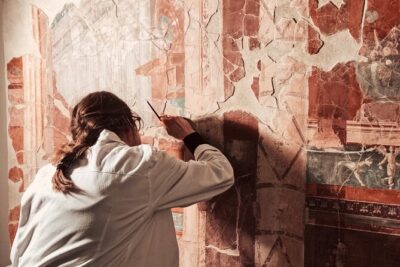
Pompeii Private Tour with an Archaeologist and Skip The Line – 3 hours
Read our review →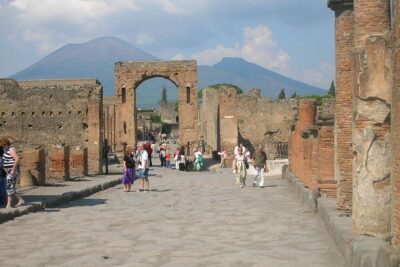
Visit in Pompeii – Pompeii Private Tour with Ada
Read our review →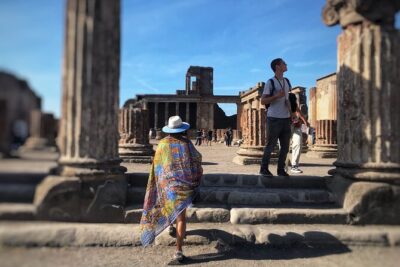
Pompeii Private Tour with an Archaeologist and Skip The Line
Read our review →
Pompeii Vineyard Escape: Private Wine Tasting & Lunch
Read our review →
Private Day Tour to Vesuvius, Herculaneum & Pompeii with Pick Up
Read our review →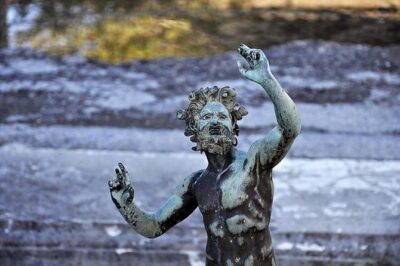
Guided Small Group Tour Max 6 People with Private Option
Read our review →
2 Hour Private Tour with an Archeologist Guide
Read our review →Browse the lists this tour appears in