
Reviewed · GUIDED TOURS IN POMPEII
Guided tour of Pompeii
Pompeii is too large and scattered to understand well by simply wandering in. This two-hour private tour with Linda gives you a clear route through the ancient streets, shops, baths, houses, temples, brothel, main square, and plaster casts of the volcano’s victims.
I like the focused pace and the human touch. Linda is an archaeological graduate, speaks excellent English, and uses questions, humor, and stories to keep the ruins from feeling like a collection of old walls. I also like that your group is private, so you are not trailing behind a large crowd with an earpiece.
The main catch is cost. The tour price is $120.68 per person, and the Pompeii admission ticket costs an additional €19 per person. You must also handle the newer nominative ticket rules, bring identification, and plan ahead because daily admission is limited.
Key Points to Know Before Booking
- Linda leads the English-language tour: She brings archaeological training, strong English, humor, and a clear interest in Pompeii’s daily life.
- The route covers the essential Pompeii sights: Expect Roman streets, shops, public baths, houses, the main square, temples, the brothel, and plaster casts.
- Your group remains private: Only your own party takes part, which makes questions and changes of pace easier.
- Admission costs extra: The park ticket is €19 per person and is not included in the tour price.
- Tickets now require personal details: Since November 2024, each ticket is nominative, and you must bring a passport or ID.
- Book well ahead: This activity is often reserved about 48 days before the tour date, and Pompeii limits daily admissions to 20,000.
Why a Guide Helps at Pompeii
Pompeii is not a small museum with a simple loop. It is a broad archaeological park filled with streets, public buildings, homes, shops, religious sites, and places of entertainment. Even with a map, you can spend a great deal of time walking past closed doors or missing the details that make the city understandable.
A guide gives the ruins a sensible order. Instead of asking where to go next, you can focus on the worn paving stones, painted walls, shop counters, household rooms, and public spaces around you.
Linda’s role is especially useful here because the tour is built around the site’s main sights rather than a single monument. She explains how people used the buildings and what happened when the volcano destroyed the city. That connection between ordinary life and disaster is what makes Pompeii so powerful.
You should not expect every corner of the archaeological park in two hours. You are getting a well-chosen route through the main areas, not an exhaustive archaeological survey. For a first visit, that is a sensible trade.
More Guided Tours in Pompeii
- Skip the Line Guided Tour of Pompeii led by an Archaeologist
★ 5.0 · 703 reviews - Pompeii private tour with an Official Guide
★ 5.0 · 631 reviews - Pompeii Skip-the-line Tour with Archaeologist Guide
★ 5.0 · 559 reviews
Starting at the Pompeii Archaeological Park
The tour begins in Pompeii, at the archaeological park area in the town of Pompei. The activity ends back at the meeting point, and no private transportation is provided.
Pompeii is easy to reach by public transportation, and the meeting point is near transit. If you are arriving by train, allow extra time. One useful practical tip from the tour is to consider the entrance at the bottom of the road from the train station, which can be quieter than the station-side entrance.
The exact entrance procedure matters more than it once did. Since November 2024, Pompeii’s park ticket is nominative. When you buy the €19 admission ticket online through the official ticket seller, you enter each person’s personal information. At the entrance, you must show the ticket along with the matching passport or ID.
If you arrive without a pre-purchased ticket, you can buy one at the ticket counter, but every person in your party still needs identification. The daily limit of 20,000 admissions makes advance planning wise, especially during busy periods.
The tour information says admission is not included. Read that carefully when comparing prices. The advertised $120.68 covers the guided experience, while the park entry fee is added separately.
Roman Streets, Shops, and Public Baths
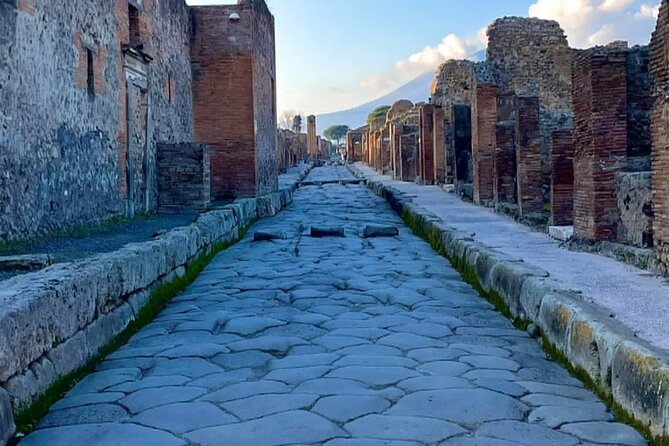
Once inside, the first reward is simply walking through a Roman city whose street plan remains unusually clear. You see the raised sidewalks, stone paving, and wheel tracks that helped organize traffic nearly two thousand years ago.
The streets are not just scenery. They show how people moved through Pompeii and how homes, businesses, and public buildings connected. Linda’s explanations help you read features that might otherwise seem random, such as shop openings and changes in the level of the road.
The shops give the city a practical, everyday character. Pompeii was not only a place of grand temples and wealthy houses. It was also a working town where people bought food, conducted business, and met one another in public spaces.
The public baths add another layer. These were social places as well as facilities for washing. With a guide, you can better understand the difference between a private home and a public building, and why certain rooms mattered to Roman urban life.
This part of the route suits you if you want more than dates and names. The strongest explanations connect the stonework to habits: where people gathered, how buildings were used, and what a normal day may have looked like before the eruption.
Houses and the Main Square
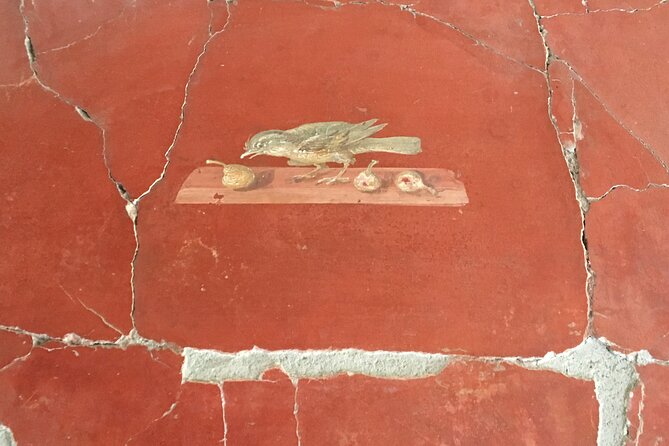
Pompeii’s houses show a sharp contrast between private life and public life. Some homes are modest, while others reveal wealth through their layout, decoration, and position. The point is not simply to admire a courtyard or painted wall, but to see how Roman households were arranged.
The tour includes ancient houses among its main stops. Access can vary at archaeological sites, but Linda has sometimes been able to show parts of Pompeii that are not usually open to the public. That access cannot be treated as a guaranteed feature, yet it is a useful reason to have a local guide rather than rely only on a printed map.
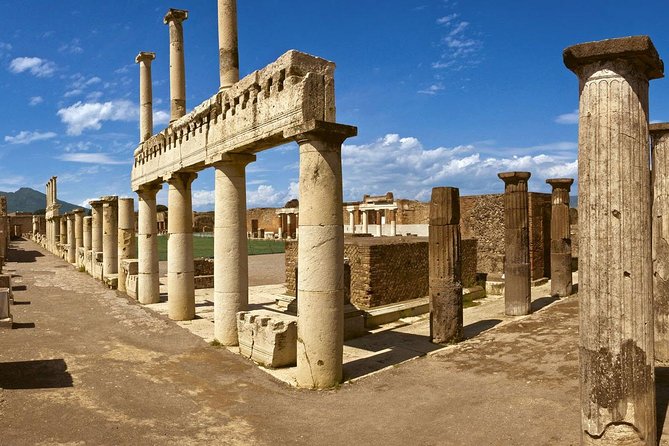
The main square, or Forum, gives you the broadest sense of Pompeii as a civic center. Temples and public buildings gathered around this open space, making it a place for religion, administration, commerce, and public life.
A good guide keeps the Forum from becoming a blur of columns. Linda explains what the structures were for and places them within the life of the city. Her approach also includes questions, which helps you stay involved instead of listening to a long speech while trying to remember which building is which.
The pace is worth noting. Two hours is enough to cover the principal sights at a steady rate, but Pompeii involves a lot of walking on uneven ancient streets. Wear comfortable shoes and expect the guide to keep moving so the group can see the planned stops.
More ways to see Pompeii:
- Pompeii Small Group Tour with an Archaeologist
★ 5.0 · 6,593 reviews - Discover the Ancient Ruins of Pompeii: Day Trip from Rome
★ 3.5 · 2,247 reviews - Pompeii and Herculaneum Small Group Tour with an Archaeologist
★ 5.0 · 1,350 reviews - Pompeii Ticket + Tour with Optional Tasting Experience at Pompeii
★ 5.0 · 663 reviews
Temples, the Brothel, and Pompeii’s Less Formal Side
The temples reveal the public and religious side of Pompeii. Their remains help explain the city’s beliefs and civic structure, but you may need context to understand what you are seeing. A guide can point out how the temples relate to the Forum and the rest of the urban plan.
The brothel is one of the most talked-about stops, but it is best understood as part of the wider city rather than treated as a novelty. Its presence offers a glimpse into a less polished aspect of Roman society and reminds you that Pompeii included ordinary commerce, private behavior, and public entertainment alongside temples and official buildings.
This is one reason I prefer a guided visit. Without explanation, the brothel can become a quick photo stop. With context, it becomes evidence of how varied Roman urban life was.
The route aims to show both the impressive and the ordinary. You see civic monuments, but also the small details of a city where people worked, washed, worshipped, ate, and socialized. That balance gives the visit its value.
The Plaster Casts and the Human Cost of the Eruption
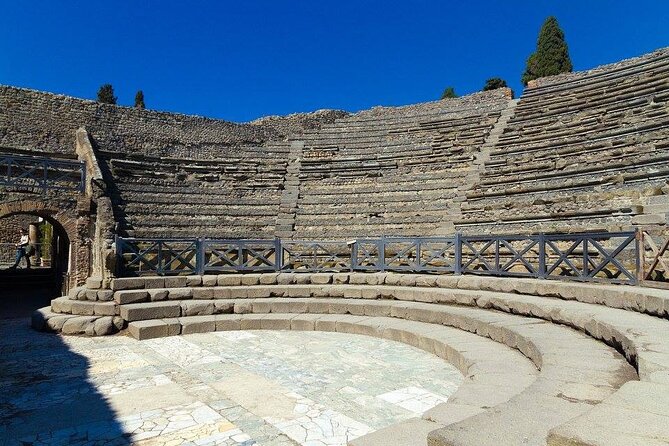
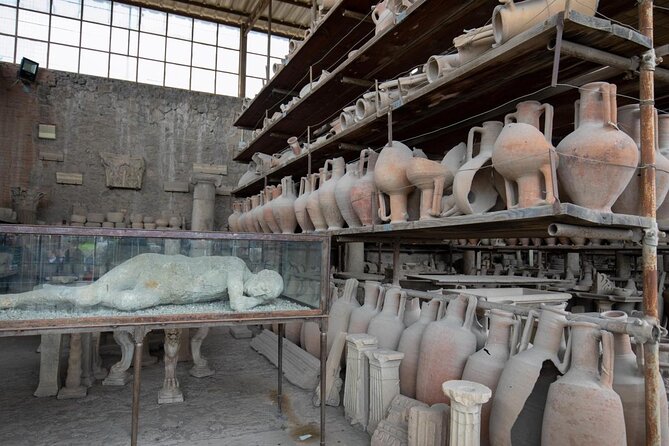
The plaster casts of the volcano’s victims are among Pompeii’s most affecting sights. They are not simply archaeological objects. They show the final positions of people caught in the disaster, giving a human scale to an event that can otherwise feel distant.
The tour includes a stop at the famous casts and explains the destruction of the city. This is a serious part of the visit, and the guide’s tone matters. Linda’s friendly style and humor are useful during the lighter parts of the tour, while the casts call for a more measured approach.
You may find this stop emotionally difficult. That is part of its importance. Pompeii is not only about architecture preserved by catastrophe. It is also about the people who lived there and lost their lives.
The combination of daily-life details and the casts creates a strong arc for the tour. You first see how the city functioned, then face what happened to it. That makes the final story more personal than a simple account of a volcanic eruption.
Linda’s Guiding Style
The guide can make or break a Pompeii visit, and Linda receives especially strong praise for her preparation, clear English, warmth, and ability to keep the group engaged. Her archaeological degree gives her a useful academic base, but her style is not presented as a dry lecture.
She asks questions, uses humor, and adjusts to the group. That matters when you are looking at similar walls for two hours and need help noticing the difference between a home, a shop, a bath, and a public building.
She also communicates before the tour. This can be helpful if your plans change or your train runs late. On one occasion, she waited for a delayed group and helped them move through the ticket process. That level of flexibility should not be assumed in every situation, but it shows the practical value of having a reachable guide.
Linda has also helped with onward travel questions, including directions toward Mount Vesuvius and the train station. Those extras are not listed as formal parts of the tour, but they can be useful if Pompeii is one stop in a busy Naples or Amalfi Coast day.
Is $120.68 Per Person Good Value?
At first glance, $120.68 per person is a serious price for two hours. Add the €19 park ticket, and the total is noticeably higher than simply entering Pompeii with a map or audio guide.
The value depends on what you want. If you already know the site well, enjoy reading signs, and are happy to walk without a fixed route, a self-guided visit costs less. You will also have more freedom to linger in one house or skip a crowded section.
If this is your first Pompeii visit, the guide fee buys orientation, interpretation, and time. You avoid spending part of your visit figuring out the site layout, and you are more likely to understand why the buildings matter. A private group also means you can ask questions without competing with a large tour party.
The price makes more sense for couples, families, and small groups who value personal attention. Group discounts may be available, but you should confirm the final price for your party before booking.
Because the average booking point is about 48 days ahead, popular dates may fill well before arrival. That is especially relevant when combined with the park’s daily visitor cap. I would arrange the admission ticket and tour well before your trip rather than treating Pompeii as a last-minute stop.
Who Should Book This Pompeii Tour?
I would choose this tour if you want the main sights in a manageable two-hour route, prefer an English-speaking guide, and value direct explanations over wandering alone.
It is a good fit for:
- First-time visitors who want help with Pompeii’s size and layout
- Families who need a guide to keep the visit moving
- Couples and small groups who prefer a private setting
- People interested in daily Roman life as well as major monuments
- Visitors connecting Pompeii with Naples, the Amalfi Coast, or Mount Vesuvius
- Anyone who wants help understanding the ticket process and finding the right entrance
It may not suit you if you want a full-day archaeological study, lots of free time for photography, or the lowest possible cost. Two hours goes quickly, and the tour focuses on highlights rather than every open building.
The site can also be tiring because of the walking and uneven surfaces. Most people can participate, and service animals are allowed, but you should consider your own comfort with a large outdoor archaeological park.
Booking, Tickets, and Cancellation
Confirmation is provided when you book. The activity is offered in English, and only your group participates.
Remember that the €19 archaeological park ticket is separate. For tickets bought online, enter the personal details carefully and carry the same passport or ID used for the booking. You can buy tickets at the park counter, but the identification requirement still applies.
Free cancellation is available if you cancel at least 24 hours before the local start time. Cancellations or changes made within 24 hours are not refunded or accepted. If the minimum number of participants is not met and the activity is canceled, you are offered another date or experience, or a full refund.
Should You Book It?
Book this tour if you want Pompeii to make sense, not just look impressive. Linda’s archaeological background, strong English, lively explanations, and practical help add real value to a site where it is easy to lose time and miss the point.
The extra admission fee and two-hour limit are the main drawbacks. Still, for a first visit, a private guided route through the streets, houses, baths, temples, brothel, Forum, and plaster casts is a sensible way to see Pompeii without getting lost in its sheer size.
FAQ
How long is the guided Pompeii tour?
The guided tour lasts approximately two hours.
Is the Pompeii admission ticket included?
No. The archaeological park ticket costs €19 per person and must be paid separately.
What does the Pompeii ticket cost and what documents do I need?
The park admission ticket costs €19 per person. Since November 2024, tickets are nominative, so you must provide personal details when buying online and bring the matching passport or ID to enter.
Is this a private tour?
Yes. Only your own group participates in the activity.
What language is the tour offered in?
The tour is offered in English.
Can I cancel for a full refund?
Yes, if you cancel at least 24 hours before the experience begins, based on local time. Cancellations made less than 24 hours before the start are not refunded.
Just added around Pompeii
- Wine Tasting and Winery Tour in Vesuvio National Park with Lunch★ 4.5 · 3 reviews
- Mt. Vesuvius Wine Tasting and Lunch Experience from Pompeii★ 4.5 · 20 reviews
- Wine tasting in the Vesuvius national park★ 5.0 · 3 reviews
- Traditional Neapolitan Dinner in Pompei – Villa Franca – Family Restourant★ 5.0 · 8 reviews
- Private Guided Tour and VR Headsets in the Ancient Pompeii★ 5.0 · 3 reviews
- Visit Pompeii with a local expert guide★ 5.0 · 10 reviews
- Tour Mount Vesuvius with Entry Tickets and Round Trip Transfer Included★ 3.5 · 4 reviews
- Vesuvius tour entrance to the crater and return bus★ 4.5 · 9 reviews
Guided Tours in Pompeii, compared.


Pompeii Guided Tour & Horse Riding on Vesuvius with Lunch
Read our review →
Complete Pompeii Skip the Line Tour with Archaeologist Guide
Read our review →
Guided Small Group Tour Max 6 People with Private Option
Read our review →
Pompeii Guided Group Tour with Entry Ticket and Archaeologist
Read our review →
2 Hour Private Tour with an Archeologist Guide
Read our review →
Stories of Pompeii: Small Group tour with archeology expert guide
Read our review →
Mount Vesuvius Tour from Pompeii Led by an Expert Guide
Read our review →Browse the lists this tour appears in