
Reviewed · GUIDED TOURS IN POMPEII
Guided tour of Pompeii with a local guide
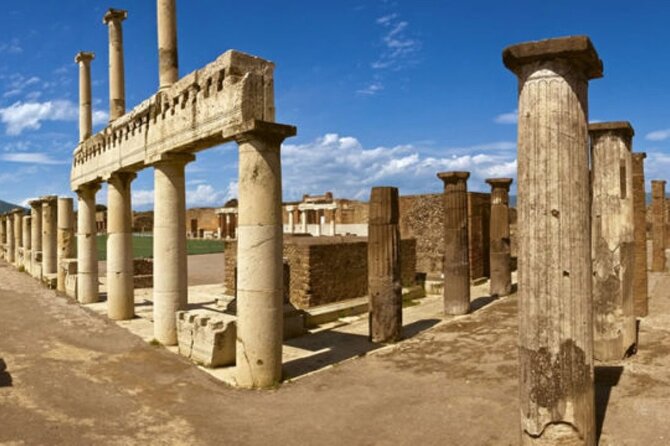
Pompeii is far more than a collection of old walls. Its cobbled streets, painted rooms, temples, and theaters give you a close look at how one Roman city worked before disaster froze it in place. This two-hour walk uses a local guide to connect the buildings with social customs, daily routines, and the catastrophe that changed the site forever.
I like the small maximum of 20 people, which should make it easier to hear the guide and ask questions. I also like the freedom after the guided visit: once the two hours end, you can keep exploring Pompeii independently instead of being hurried straight out.
The main catch is cost clarity. The tour is $36.28 per person, but the €19 park admission is extra, bringing the known total to about $36.28 plus €19. You also need moderate physical fitness for two hours of walking over old streets.
Key points to know before booking
- Two hours inside Pompeii: A focused introduction to the archaeological park, with plenty of ground covered on foot.
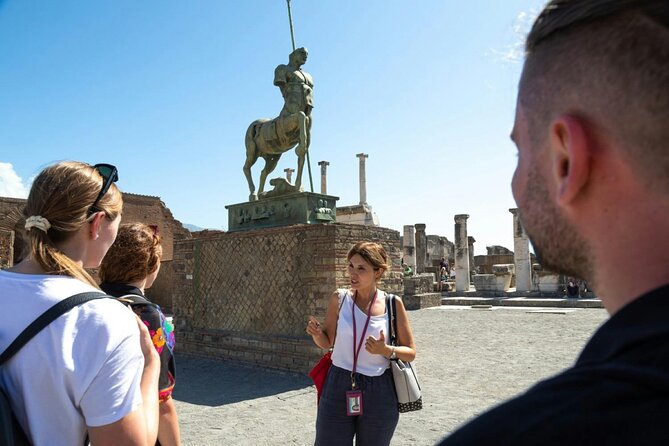
- English-speaking local guide: The guide explains houses, temples, theaters, frescoes, social habits, and unusual details.
- Guide praised for patience and humor: Gennaro is specifically singled out for being funny, patient, and full of useful detail.
- Admission costs extra: Pay €19 per person for the Archaeological Park in addition to the tour price.
- Small group limit: The maximum is 20 people, a reasonable size for a walking tour.
- Free cancellation: Cancel at least 24 hours before the 2:30 pm start for a full refund.
Why a guided walk helps at Pompeii

Pompeii can be visually stunning and intellectually confusing at the same time. You see walls, doorways, painted surfaces, and broad streets, but without context it is easy to miss what made each place important.
A guide gives those remains a human scale. Instead of simply passing a patrician house, you hear how its rooms fit into Roman social life. A temple becomes part of the city’s religious world. A theater tells you something about public entertainment and community life. Even the streets begin to make more sense when someone points out how the city was organized.
That is the real value of this experience. You are not just walking through a famous archaeological park and checking off buildings. You are getting a story that links the spaces together.
The guide also adds the sort of details you may not find in a short sign. The tour promises anecdotes, social customs, and unusual curiosities, which can turn a formal archaeological site into a place with recognizable habits and personalities. If you enjoy asking why people lived in a certain way, this format should suit you.
The best praise for the guiding comes from Gennaro, who is described as funny, patient, and able to pack a remarkable amount of information into two hours. That combination matters. Pompeii can overwhelm you with facts, so a guide who can explain clearly without racing through the site is a major advantage.
More Guided Tours in Pompeii
- Skip the Line Guided Tour of Pompeii led by an Archaeologist
★ 5.0 · 703 reviews - Pompeii private tour with an Official Guide
★ 5.0 · 631 reviews - Pompeii Skip-the-line Tour with Archaeologist Guide
★ 5.0 · 559 reviews
Following Pompeii’s ancient streets
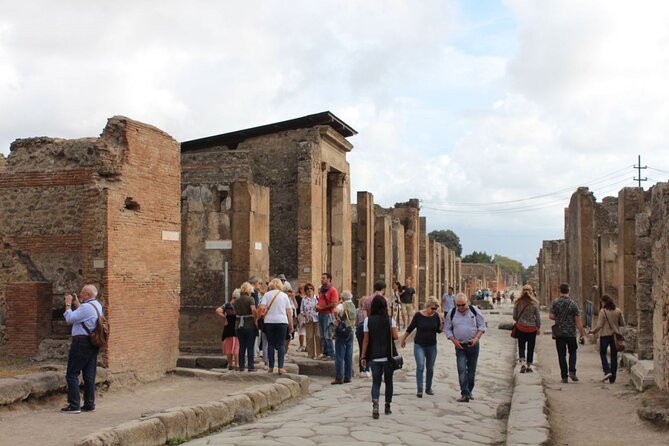
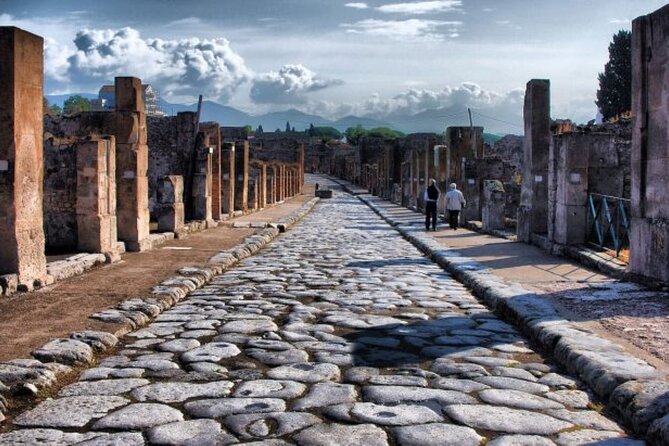
The entire visit takes place at the Pompeii Archaeological Park. You begin among the old streets, where the worn paving stones help establish the scale of the city. From there, the guide brings you through a selection of its major types of buildings and spaces.
The streets themselves are part of the experience. They are not a neutral path between attractions. They are physical evidence of an urban community, with routes linking homes, religious buildings, and public entertainment spaces. Walking them gives you a better sense of distance than seeing Pompeii only through photographs.
The surface is old and uneven, so you should expect a proper walking visit rather than a gentle stroll. The stated requirement for moderate physical fitness is worth taking seriously. Two hours may not sound long, but ancient streets can make the pace more demanding than a smooth city sidewalk.
Your guide’s job is to help you read the remains. You will hear about the people who lived in the patrician houses, the role of sacred temples, and the purpose of the major theaters. The tour description does not promise a fixed list of individual buildings, so the exact route may vary. That is normal for a guided visit, particularly at a large archaeological site.
Patrician houses and painted rooms
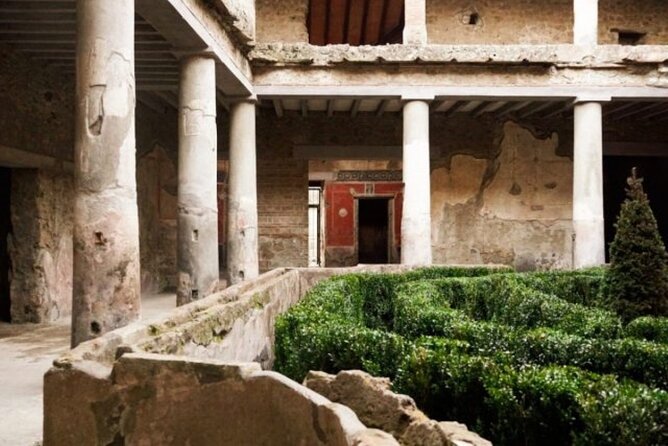
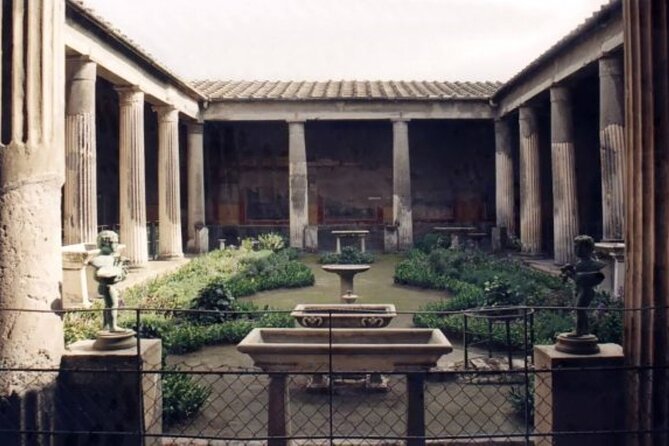
The houses are among the most rewarding parts of Pompeii because they show how private life was arranged. The guide helps you connect the architecture with status, household life, and social customs.
The preserved frescoes are another major reason to choose a guide. Color and decoration can be easy to overlook when you are focused on stone walls and missing roofs. A good explanation can help you understand why a painted room matters, what it may have signaled about the household, and how it fits into the wider culture of the city.
I would pay close attention during this part of the tour, even if you are more interested in public buildings. The houses often provide the most personal connection to Pompeii. Temples and theaters show how the city worked in public, while domestic rooms bring you closer to the choices made by individual families.
Do not expect every room to look complete. The appeal is the contrast between absence and survival. A fragment of fresco, a doorway, or a floor can still say a great deal when the guide explains what you are seeing.
Temples, theaters, and public life
Pompeii’s sacred temples and theaters shift the focus from household life to the wider community. These spaces help you see that the city was not just a group of private homes. It had shared rituals, public entertainment, and places where people gathered.
The guide is set to explain more than the names of these buildings. You will hear about their place in the city and the social habits connected with them. That broader approach is useful because a tour limited to dates and architectural labels can feel dry very quickly.
The theaters should also help you understand the scale of public life in Pompeii. The tour description calls them majestic, but the more important point for your visit is that they give you a physical setting for the city’s communal activities. Your guide can make those spaces easier to picture as active parts of daily life rather than silent ruins.
This is where the two-hour limit becomes both a strength and a weakness. You get a clear route through several major themes without committing half a day to a guided schedule. On the other hand, you will not have time for every corner of Pompeii. The free time after the tour helps soften that limitation.
More ways to see Pompeii:
- Pompeii Small Group Tour with an Archaeologist
★ 5.0 · 6,593 reviews - Discover the Ancient Ruins of Pompeii: Day Trip from Rome
★ 3.5 · 2,247 reviews - Pompeii and Herculaneum Small Group Tour with an Archaeologist
★ 5.0 · 1,350 reviews - Pompeii Ticket + Tour with Optional Tasting Experience at Pompeii
★ 5.0 · 663 reviews
The catastrophe and what survived
A visit to Pompeii naturally leads to questions about the catastrophe that destroyed the city. The tour puts that event in context and explains the legacy it left behind.
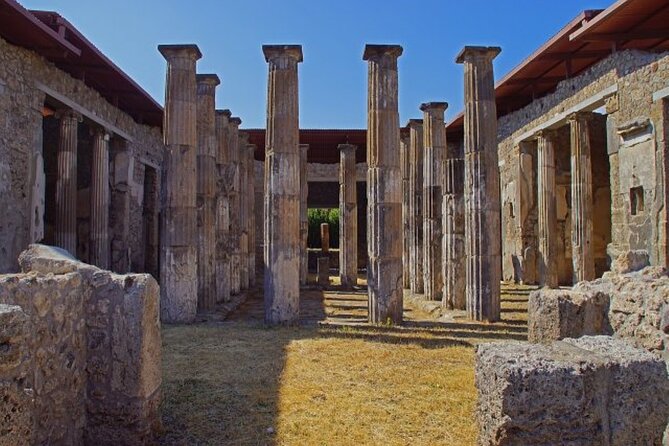
The most useful part of this discussion is likely the connection between disaster and preservation. Pompeii is powerful because so much of its built environment survived in recognizable form. The streets, frescoes, homes, temples, and theaters let you study a civilization through physical remains rather than through written accounts alone.
Your guide also helps you understand the scale of what happened. The supplied details do not specify a date or provide a full account of the eruption, so you should not book this particular tour expecting a long specialist lecture on the disaster itself. Instead, expect the catastrophe to be one part of a broader story about the city and its people.
That balance suits a first visit. You get the event that made Pompeii famous, but you also learn about the civilization that existed before it. The city is more meaningful when you see it as a functioning community first and a disaster site second.
What the €36.28 price really includes
The tour price is $36.28 per person. That covers the specialized guide and guided assistance for the full visit, but it does not cover entry to the archaeological park.
The required admission fee is €19 per person. Your known combined cost is therefore $36.28 plus €19, before considering any other personal spending. This is important because the headline price does not represent the full cost of entering Pompeii.
For the money, you are paying mainly for interpretation and structure. If you already know Pompeii well and prefer to read signs at your own pace, you may decide the guided portion is less important. If you want the site to make sense quickly, the guide can be a sensible use of your budget.
The option to continue independently adds value. A strict two-hour tour can feel short at Pompeii, but you are not required to leave when the guide finishes. You can use the guided portion to get oriented, then revisit areas or explore farther on your own, subject to the site’s access arrangements.
Meeting at Piazza Esedra at 2:30 pm
The meeting point is Piazza Esedra in Pompei, with the tour starting at 2:30 pm and ending back at the meeting point. Public transportation is nearby, which makes the starting location practical for a visit based in the surrounding area.
Build in extra time to find the meeting point. One family once had trouble locating it, and the guide waited for them even though the problem was their own. That is a useful sign of patience, but you should not rely on a late arrival being accommodated.
A mobile ticket keeps the booking simple. Confirmation is provided at the time of booking, so you should have the essential details available on your phone. Check the meeting instructions before leaving for the site, and arrive early enough to avoid beginning the tour stressed.
The afternoon start can work well if you want a slower morning or are combining Pompeii with other plans. It does mean your visit is tied to a fixed time, so leave enough room for transport delays and finding Piazza Esedra.
Group size, pace, and practical comfort
The maximum group size is 20 people. That is not a private tour, but it is manageable for a site where you need to stay within earshot of the guide. A smaller group would feel more personal, yet 20 is still far better than a large crowd for questions and explanations.
Expect to walk for about two hours. The site includes old cobbled streets and preserved spaces, so sensible footwear matters even though no specific clothing requirement is given. Bring water and prepare for a physical visit, but do not assume the tour includes extra breaks or a leisurely pace because those details are not specified.
The experience is offered in English. That makes it a straightforward choice if you want a guided explanation without arranging translation.
The tour suits families, first-time visitors, and anyone who prefers a clear introduction to a large archaeological site. It also fits people who enjoy stories about ordinary social habits, not just famous buildings. If you want a highly specialized archaeological lecture, a private custom tour may be a better match, but that option is not part of this experience.
Who will get the most from this Pompeii tour?
I would choose this tour if you want help making sense of Pompeii but still want time to roam alone. The combination of a guided route and independent time is its most useful feature.
It is also a good fit for a family visit. The feedback describes a helpful, friendly guide and specifically praises Gennaro’s patience. Those qualities matter when different ages and attention spans are sharing the same two hours.
You may want to skip it if you already have extensive knowledge of Pompeii or want to spend the entire day choosing your own route. The guide gives you a set structure, and the tour cannot cover every building in only two hours.
The three strongest positive comments all point to the same benefit: clear organization, a friendly manner, and a guide who can bring a large amount of information to life without losing patience. That is exactly what you want at a complex site where it is easy to wander without understanding what you are seeing.
Cancellation and booking details
You can cancel for a full refund up to 24 hours before the local start time. Cancellations or changes made within 24 hours are not refunded or accepted.
The experience requires a minimum number of participants. If that minimum is not reached and the tour is canceled, you will be offered another date or experience, or a full refund.
Because the tour is booked an average of 22 days ahead, reserve early if your Pompeii date is fixed. That booking pattern does not guarantee that every departure sells out, but it is a useful reason not to leave a popular travel day until the last minute.
Should you book it?
Book this tour if you want a focused, English-language introduction to Pompeii, value a local guide, and like the idea of continuing alone afterward. The guide’s patience, humor, and ability to explain social details are the strongest reasons to choose it.
Skip it if you want a full-day archaeological study or prefer to explore without a fixed route. Also remember to add the €19 admission fee to the $36.28 tour price.
For most first visits, this is a practical middle ground: two hours of useful context, a group capped at 20 people, and enough independence afterward to follow your own interests.
FAQ
How long does the Pompeii guided tour last?
The guided visit lasts approximately two hours.
What time and where does the tour start?
It starts at 2:30 pm at Piazza Esedra, 80045 Pompei, Italy.
Is admission to Pompeii included in the tour price?
No. Admission to the Archaeological Park of Pompeii costs €19 per person and is not included in the $36.28 tour price.
Is the tour offered in English?
Yes. The experience is offered in English.
Can I continue exploring Pompeii after the guided visit?
Yes. After the guided portion ends, you can visit the site independently.
What happens if I need to cancel?
You can receive a full refund if you cancel at least 24 hours before the local start time. Cancellations and changes within 24 hours are not accepted, and no refund is provided.
Just added around Pompeii
- Wine Tasting and Winery Tour in Vesuvio National Park with Lunch★ 4.5 · 3 reviews
- Mt. Vesuvius Wine Tasting and Lunch Experience from Pompeii★ 4.5 · 20 reviews
- Wine tasting in the Vesuvius national park★ 5.0 · 3 reviews
- Traditional Neapolitan Dinner in Pompei – Villa Franca – Family Restourant★ 5.0 · 8 reviews
- Private Guided Tour and VR Headsets in the Ancient Pompeii★ 5.0 · 3 reviews
- Visit Pompeii with a local expert guide★ 5.0 · 10 reviews
- Tour Mount Vesuvius with Entry Tickets and Round Trip Transfer Included★ 3.5 · 4 reviews
- Vesuvius tour entrance to the crater and return bus★ 4.5 · 9 reviews
Guided Tours in Pompeii, compared.


Pompeii Guided Tour & Horse Riding on Vesuvius with Lunch
Read our review →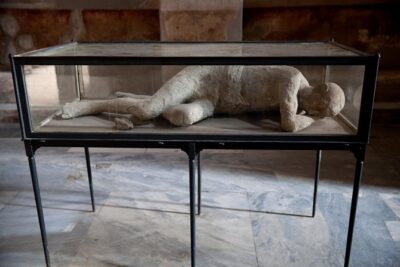
Complete Pompeii Skip the Line Tour with Archaeologist Guide
Read our review →
Guided Small Group Tour Max 6 People with Private Option
Read our review →
Pompeii Guided Group Tour with Entry Ticket and Archaeologist
Read our review →
2 Hour Private Tour with an Archeologist Guide
Read our review →
Stories of Pompeii: Small Group tour with archeology expert guide
Read our review →
Mount Vesuvius Tour from Pompeii Led by an Expert Guide
Read our review →Browse the lists this tour appears in