
Reviewed · HERCULANEUM TOURS FROM NAPLES
Skip-the-line Ancient Herculaneum Highlights Exclusive Tour with Private Guide
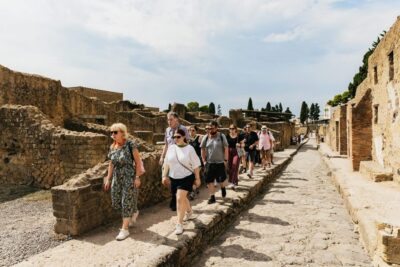
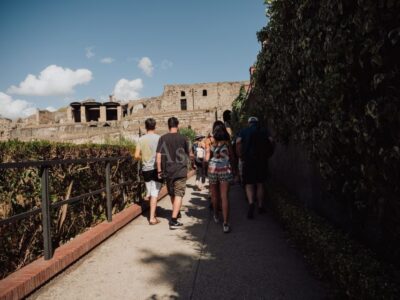
Herculaneum is the ancient city where Roman life feels unusually close. At Pompeii, the scale can feel vast and scattered. Here, the preserved houses, doors, shop fittings, and thermal baths bring you nearer to the people who once lived behind those walls. A private art historian guide helps turn those remains into a story about homes, work, leisure, and the eruption of Vesuvius.
I especially like the private format, since your group can keep its own pace and ask questions without being folded into a large crowd. I also like the skip-the-line access, a useful perk when the entrance queue is long and your total visit is only about two hours. The main consideration is the price: at $215.07 per person, this is a premium short tour, and it does not include transport from Naples or hotel pickup.
Key points to know before booking
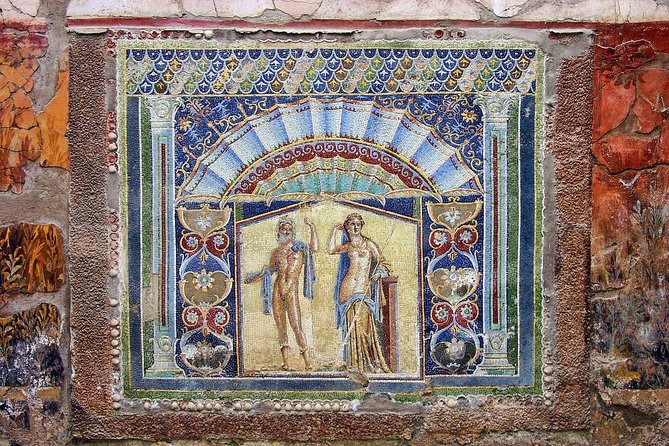
- Original Roman details: See ancient doors, shop furnishings, private houses, and the thermal baths.
- A focused two-hour visit: The guide concentrates on the most important parts of Herculaneum rather than attempting an exhausting full-day outing.
- Private art historian guide: Only your group takes part, with an English-speaking professional guide.
- Guaranteed line-skipping: Admission is included, helping you spend your limited time inside the site.
- Ercolano Scavi meeting point: You meet and finish at the archaeological site, with no hotel transfer included.
- Strong overall rating: The tour holds a 4.7 rating from 15 reviews, with 93 percent recommending it.
Why Herculaneum feels different from Pompeii
Herculaneum was buried by the eruption of Mount Vesuvius in AD 79, just as Pompeii was. Yet the two sites offer different experiences. Herculaneum is smaller, and many of its buildings retain striking details that make the city feel personal rather than simply monumental.
That difference matters when you have only two hours. You can move from one house to another and pay attention to the evidence of daily life: a doorway, a shop arrangement, a room plan, or a bath complex. The guide’s job is not only to name the buildings. It is to explain how the spaces worked and what they reveal about Roman society.
The experience is particularly good for people who want context. Without a guide, ancient walls can become a blur of brick, plaster, and partial rooms. With an art historian beside you, you can ask why a house was arranged in a certain way, what a shop might have sold, or how the eruption changed the site’s preservation.
The tour also gives you a human scale. You are not simply looking at ruins from a distance. You are entering houses where the original owners lived, worked, ate, and relaxed. That is the central strength of this visit.
More Herculaneum tours:
- Herculaneum: Skip-the-Line Guided Tour with Archaeologist
★ 4.8 · 3,439 reviews - Herculaneum Small Group Tour and Ticket With an Archaeologist
★ 5.0 · 994 reviews - Herculaneum: Skip-the-Line Entry Ticket with Audio Guide
★ 4.3 · 870 reviews
Meeting at Ercolano Scavi
The tour begins at Ercolano Scavi in Ercolano, at postal code 80056 in the Metropolitan City of Naples. This is important to plan around because the experience does not include hotel pickup or drop-off.
You need to reach the meeting point on your own, and the activity ends there as well. If you are staying in Naples, allow extra time for the journey and aim to arrive before the scheduled start. A private guide can make the visit efficient, but cannot make up for a late arrival caused by a rushed connection.
The meeting point also makes this tour easier to fit into a larger day in the area. You can treat Herculaneum as your main outing, then continue with your own plans afterward. Just remember that this is not a door-to-door excursion.
Confirmation is provided at booking, and the activity is offered in English. Children must be accompanied by an adult. The site also calls for a moderate level of physical fitness, so expect walking through an archaeological area rather than a seated museum visit.
Entering the Roman houses
The most rewarding part of the tour is the chance to step into ancient homes. The guide brings attention to the private side of Roman life, helping you imagine how rooms were used and how people moved through them.
This is where the private format earns its keep. You can stop when a detail catches your eye instead of following a fixed group pace. If one house raises questions, you have room to ask them. The guide can also adjust the amount of explanation to your interests, although the tour still has a fixed length of about two hours.
Look closely at the original doors. They are easy to miss if you are rushing from one major building to the next, but they give the site a direct connection to its former residents. A door is a simple thing, yet it tells you that this was not an abstract settlement. It was a lived-in neighborhood with entrances, rooms, belongings, and routines.
You may also see original furnishings and other preserved details inside the houses. These objects help explain how people used the buildings. The guide’s background in art history should be especially useful here, since decoration, layout, materials, and craftsmanship all carry meaning.
The tour is not presented as a technical lecture alone. Its best moments come when historical information is tied to ordinary life. You learn not just when the city was buried, but how its residents might have experienced their own homes before disaster struck.
Seeing the shops and original fittings
Herculaneum’s shops add another layer to the visit. The original shop furnishings let you picture the commercial side of the city, where people bought goods, worked, and met one another during the day.
These details are easy to overlook without guidance. A preserved counter or fitting may not look dramatic at first glance, but it shows how the building functioned. The guide can connect the physical remains to the wider pattern of Roman urban life.
I like this part because it prevents the visit from becoming a tour of wealthy homes only. The city was also a place of business. Shops help you see Herculaneum as a working community, not merely a collection of elegant rooms frozen by catastrophe.
The information available for this tour does not name the specific shops or furnishings you will see, so it is best to treat the exact route as flexible. The guide visits the most interesting areas and shapes the walk around the site and your group’s questions. The focus remains on preserved Roman interiors and the details that make them understandable.
More Skip-the-Line Tickets in Naples:
- Mount Vesuvius: Skip-the-Line Ticket and Smart Digital Guide
★ 4.2 · 2,780 reviews - From Naples: Pompeii Skip-the-Line Entry Ticket and Tour
★ 4.4 · 2,753 reviews - Pompeii: Skip-the-Line Entry Ticket with Audio Guide or Tour
★ 4.1 · 1,364 reviews - From Naples: Pompeii Guided Tour with Skip-the-Line Tickets
★ 4.8 · 1,171 reviews
The thermal baths and public life
The thermal baths were a favorite place for ancient residents, and they are a key stop on this tour. Baths were not simply places to wash. They were part of Roman social life, and their design reveals how people spent time together.
Your guide explains the baths within the wider story of the city. You can look at the rooms and imagine the movement from one space to another, while learning why these buildings mattered to ordinary Roman routines.
This stop offers a useful balance to the private houses. Homes show family life and personal space. The baths show a more public side of the city, where people gathered as part of their regular day.
Because the tour lasts roughly two hours, you should not expect every corner of Herculaneum. The benefit is focus. Rather than racing through the entire archaeological area, the guide concentrates on houses, shops, thermal baths, and other important remains. If you prefer a slower, more selective visit, this is a sensible approach.
How the Vesuvius story changes the site
The eruption of Mount Vesuvius is not treated as a detached date in a textbook. It explains why Herculaneum looks the way it does and why the site can preserve such intimate details.
Your guide covers why the city was buried and how that event shaped what survives. The result is a stronger connection between the ancient city and the physical remains around you. A doorway, household object, or shop fitting carries more weight once you understand the force that sealed the city.
One particularly good feature of this experience is the balance between background and observation. The guide provides the story of the eruption, then points you back to the evidence in front of you. That keeps the visit grounded in what you can actually see.
The tour is not a general lecture on all of Roman history. It is a compact visit centered on Herculaneum, its buildings, and the eruption that buried it. That focus suits anyone who wants a clear introduction without spending an entire day on ancient sites.
What the private guide adds
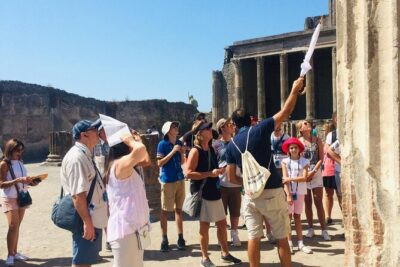
A private guide changes the rhythm of the visit. You are not joining a large group, and only your party participates. That means you can ask for clarification, pause at an especially interesting room, or move along when you feel you have understood a section.
The guide is described as a local professional and an art historian. Those roles matter in different ways. Local knowledge can help the site feel connected to the surrounding area, while art history training can sharpen your understanding of architecture, decoration, furnishings, and design.
The most praised part of the experience is the guide’s ability to make the site feel alive. The tour includes background on why Herculaneum was built and why it was buried, along with detailed explanations and personal attention. That combination is valuable because the ruins can otherwise require a lot of imagination from you.
There is no guide name provided, so you cannot choose a particular person in advance. Still, the format promises a professional English-speaking guide for your own group, rather than an audio guide or a large scheduled crowd.
Is $215.07 per person a fair price?
At $215.07 per person, this is not a budget admission ticket. You are paying for a private two-hour experience, an art historian guide, included admission, and guaranteed access without the long lines.
The price makes more sense for a small group that wants personal attention. If two or more people are sharing the experience, the private format may feel more worthwhile than booking separate general admission and trying to interpret the site alone. Group discounts are available, though the exact savings are not provided.
The value is also tied to time. If your schedule is tight, skipping a long entrance queue can protect a large part of your day. You are paying not only for information, but also for a planned route through the site and a guide who can point out details you might miss.
On the other hand, independent visitors who already know Herculaneum well may find the cost hard to justify. The tour is only about two hours, and transport is not included. If you want a long, slow archaeological visit, you may prefer to enter on your own and spend more time exploring.
I would view this as a time-saving, interpretation-focused purchase. It suits you best if you want the site explained clearly and prefer a private visit over the lowest possible cost.
Fitness, timing, and practical limits
You should expect moderate walking and enough time on your feet to move through the archaeological site. The activity information calls for moderate physical fitness, so it is not presented as a seated or low-effort excursion.
The two-hour duration is a useful middle ground. It is long enough to cover major highlights without taking over your day. It is also short enough to combine with other plans, though you should allow additional time for reaching Ercolano Scavi and for your own onward transport.
The experience ends back at the meeting point. That makes the logistics clear, but it also means you need to arrange everything after the tour yourself.
Free cancellation is available if you cancel at least 24 hours before the start time. Cancellations made less than 24 hours before the start time are not refunded, and changes within that period are not accepted. The cut-off follows local time, so check the time carefully if your schedule may shift.
Who should book this Herculaneum tour?
I would recommend it to first-time visitors who want a strong introduction to Herculaneum without wandering through the site alone. It is also a good match for families with children, provided an adult accompanies each child and everyone can manage moderate walking.
History and architecture enthusiasts should appreciate the attention to doors, houses, furnishings, shops, and baths. The art historian guide adds value if you like to understand how a building worked, not just hear its name and date.
This tour also suits couples, families, or friends who prefer a private experience. You can ask direct questions and keep the pace within your group. The English-language format makes it straightforward for English speakers.
I would think twice if your main concern is price. At more than $200 per person, this is a splurge for a short visit. I would also look elsewhere if you need hotel transportation or want to spend many hours exploring every part of the site.
Should you book it?
Book this tour if you want Herculaneum explained by a private art historian and you value time saved at the entrance. The original doors, shop furnishings, houses, and thermal baths are the right details to focus on, and the guide’s personal storytelling helps connect them to Roman life and the eruption of Vesuvius.
Skip it if you are comfortable exploring alone, already know the site well, or need a lower-cost option. For everyone else, the 4.7 rating from 15 reviews and 93 percent recommendation rate match the tour’s main strengths: clear historical background, close attention to detail, and a personal two-hour route through one of Italy’s most revealing ancient cities.
FAQ
Where does the tour start?
The tour starts at Ercolano Scavi, 80056 Ercolano, in the Metropolitan City of Naples, Italy.
Where does the tour end?
The activity ends back at the meeting point at Ercolano Scavi.
How long does the tour last?
The tour lasts approximately two hours.
Is admission to Herculaneum included?
Yes. The admission ticket is included in the experience.
Does the tour guarantee skip-the-line access?
Yes. Guaranteed access without waiting in the long lines is included.
Is this a private tour?
Yes. Only your group participates in the private activity.
Is the tour offered in English?
Yes. The experience is offered in English.
Is hotel pickup included?
No. Hotel pickup and drop-off are not included, so you must reach Ercolano Scavi on your own.
Can I cancel for a full refund?
Yes, if you cancel at least 24 hours before the experience start time. Cancellations made less than 24 hours in advance are not refunded.
Just added around Naples
- Naples: Guided Walking Tour★ 4.7 · 63 reviews
- Wine tasting in the Vesuvius National Park★ 3.5 · 4 reviews
- Naples: Pompeii and Vesuvius Skip-the-Line Day Trip★ 3.8 · 32 reviews
- Visit the Museum MANN with a professional guide★ 5.0 · 3 reviews
- Walking-tour of Naples hystorical Centre★ 4.4 · 4 reviews
- Pompeii: Vesuvius at Sunset★ 3.5 · 31 reviews
- Vesuvius – Herculaneum – Pompeii Excavations Tour★ 4.2 · 9 reviews
- Vesuvius and Herculaneum from Naples★ 3.7 · 29 reviews
Herculaneum Tours from Naples, compared.
Pompeii and Herculaneum Small Group Tour with an Archaeologist
Read our review →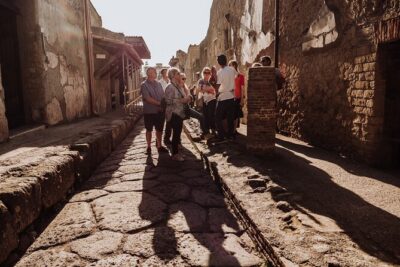
Herculaneum Small Group Tour and Ticket With an Archaeologist
Read our review →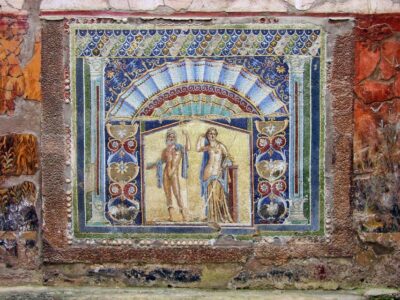
Pompeii & Herculaneum with Archaeologist Guide
Read our review →
Pompeii, Herculaneum, & Vesuvius Full-Day Tour
Read our review →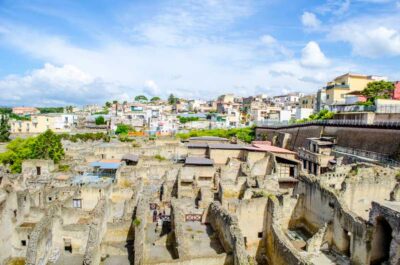
Herculaneum Entry Ticket with Optional Audio Guide
Read our review →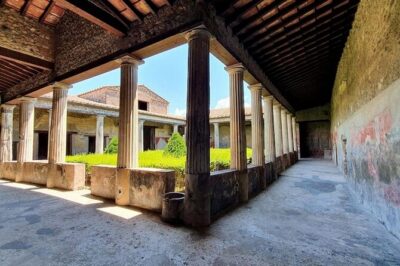
Day Trip of Pompeii, Herculaneum and Vesuvius from Naples
Read our review →Browse the lists this tour appears in