
Reviewed · PRIVATE TOURS IN POMPEII
Private Pompeii Tour with 3D Virtual Reality Headset – Tour Assistant Only
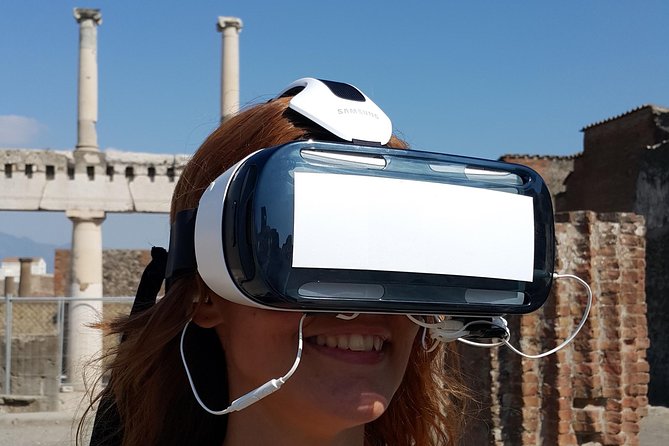
The clever idea here is simple: you walk through Pompeii’s real ruins while a headset shows you how the same street, home, temple, or theater may have looked 2,000 years ago. Up to 15 virtual reality scenes turn broken walls into a more complete picture, and skip-the-line entry saves useful time at a huge archaeological site.
I like the choice of morning or afternoon departure, and I like that the tour is private to your group. The tour assistant also helps you divide your time between the headset stops and ordinary sightseeing. The main drawback is important: this person is an escort, not a licensed guide, so you cannot rely on the assistant for detailed archaeological questions.
- Up to 15 VR reconstructions show Pompeii before the eruption of Mount Vesuvius.
- Skip-the-line admission is included, which matters at a busy archaeological park.
- Audio commentary comes in six languages: English, Italian, German, French, Spanish, and Russian.
- The assistant speaks English or Italian but is not licensed to explain the site in depth.
- The tour lasts about 2 hours and 30 minutes and is private to your group.
- Headset rules matter: children under 9 cannot use one, and the manufacturer does not recommend Gear VR for children under 13.
Pompeii With the Walls Put Back
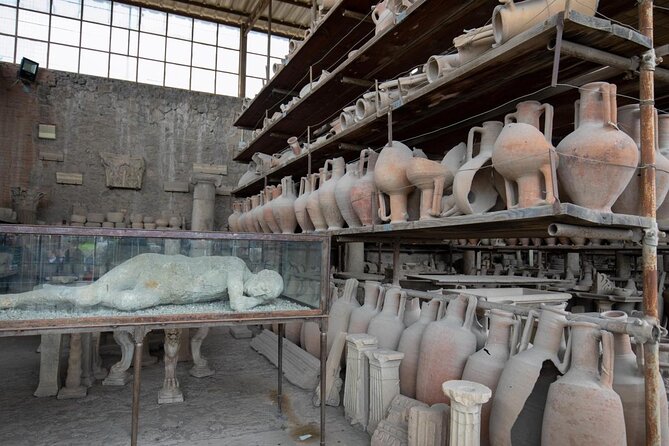
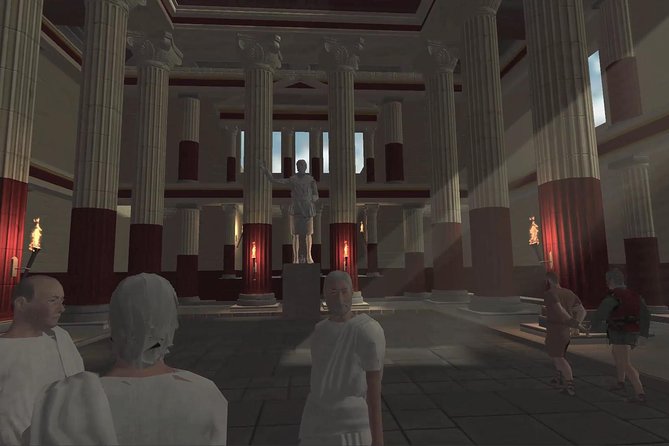
Pompeii can be hard to read at first. You see streets, foundations, painted fragments, and roofless buildings, but the original height and purpose of each space may not be clear. The headset addresses that problem by placing a digital reconstruction over the ruins as you walk.
This is not a replacement for the ancient site. The real stones remain under your feet, and you still move through Pompeii on foot. The virtual scenes simply give you a visual comparison between the surviving remains and a picture of the city before the eruption.
The effect is most useful at places that are difficult to imagine from ruins alone. Homes, shops, markets, temples, theaters, and streets are included in the reconstruction program. You can look at the physical remains, then use the headset to see how the space might have functioned when Pompeii was a living Roman town.
The graphics are not likely to satisfy someone expecting a modern video game. A computer scientist and a teenage video game player in one family felt the images could be sharper, but still found the historical use of VR worthwhile. That is the right way to approach this experience: it is an educational tool, not a premium gaming system.
How the 2.5-Hour Visit Works
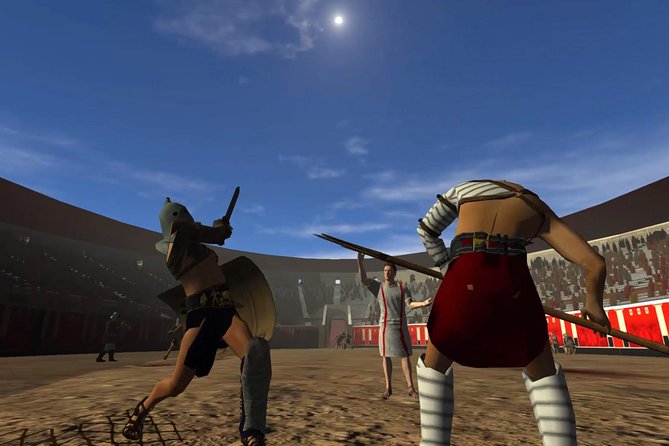
At the start, staff give you about five minutes of instruction on using the headset. That briefing matters because you will be walking over uneven ground while handling a device. You need to understand how to view each scene before entering the ruins.
You then enter Pompeii with the tour assistant. The assistant leads your group between the selected locations and helps manage the timing. The experience includes up to 15 VR videos, so you are not simply handed a headset and left to find your own way through the park.
The assistant can help you keep moving and make room for ordinary photographs and sightseeing. This balance is useful. If you stop at every location for a long virtual scene, you may have less time to look closely at the actual masonry, wall paintings, paving, and building plans.
The tour lasts approximately two and a half hours. That is long enough to create a clear sense of Pompeii, but short enough to fit into a day that also includes transport, lunch, or another nearby sight. You should still expect steady walking rather than a relaxed indoor presentation.
More Private Tours in Pompeii
- Pompeii private tour with an Official Guide
★ 5.0 · 631 reviews - Pompeii Private Tour with an Archaeologist and Skip The Line – 3 hours
★ 5.0 · 564 reviews - Visit in Pompeii – Pompeii Private Tour with Ada
★ 5.0 · 436 reviews
What the Virtual Scenes Add
Pompeii’s remains are valuable precisely because so much of the city survived, but the preservation is uneven. A wall may remain while its upper floor is gone. A shopfront may be easy to identify, while its interior layout is harder to understand. Digital reconstruction helps fill in these missing visual clues.
You may see a street with its buildings restored to their former appearance, or a temple and theater presented with more of their original form. Markets and shops help you picture daily activity, while homes show how enclosed rooms related to streets and courtyards.
The six-language audio option is another practical strength. Commentary is available in English, Italian, German, French, Spanish, and Russian. The tour assistant, however, speaks only English or Italian, so choose a headset language that suits you rather than expecting live interpretation in another language.
The audio also changes the rhythm of the visit. You listen at the relevant site instead of gathering around a guide for a long spoken explanation. That can feel more personal for a private group, though it also means the experience depends on the quality and clarity of the recorded material.
Why the Tour Assistant Matters
The tour assistant is there to lead, organize, and help you use the equipment. One family found their assistant especially helpful because she made sure they had time for both the VR stops and photographs. That is a small detail, but it can make a large archaeological park easier to manage.
You should be clear about the limits of the role. The assistant is not a licensed guide and is not allowed to answer questions about the archaeological site. If you want an expert-led discussion of Roman construction, household life, art, politics, or the eruption, this is not the right format.
The audio commentary provides the main historical explanation. You can also use the assistant for practical help with the route and headset, but not as a substitute for an archaeologist or licensed Pompeii guide. That distinction explains why this experience may suit one visitor perfectly and disappoint another.
I would choose this tour if your main goal is to make sense of what you see. I would choose a licensed guide instead if your main goal is conversation, questions, and detailed interpretation. The two formats serve different needs.
Skip-the-Line Entry and Meeting Details
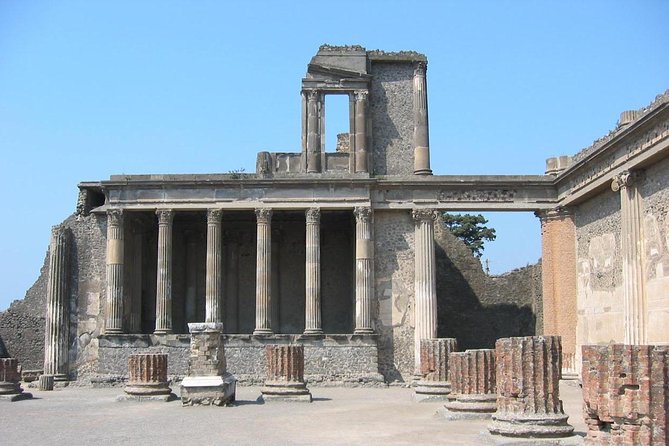
The tour begins at Hotel Vittoria, Piazza Esedra, in Pompei. It ends at Piazza Immacolata. You are responsible for getting to the meeting point and away from the ending point, since hotel pickup, drop-off, and transport are not included.
Pompeii is served by convenient, inexpensive trains at regular times throughout the day and evening. The tour information does not include a transfer, so allow enough time to reach Hotel Vittoria before the selected start time. You also need to provide your preferred starting time in the special requirements section when booking.
Skip-the-line admission to the ruins is included. At a major archaeological site, that can protect your limited sightseeing time. It does not mean you can skip the orientation or headset training, and you still need to follow the assistant into the park as part of the scheduled activity.
Morning and afternoon departures give you useful flexibility. A morning start can leave the rest of your day open, while an afternoon start may work better if you are arriving by train or combining Pompeii with another activity. The exact starting time must be arranged when you reserve.
More ways to see Pompeii:
- Pompeii Small Group Tour with an Archaeologist
★ 5.0 · 6,593 reviews - Discover the Ancient Ruins of Pompeii: Day Trip from Rome
★ 3.5 · 2,247 reviews - Pompeii and Herculaneum Small Group Tour with an Archaeologist
★ 5.0 · 1,350 reviews - Skip the Line Guided Tour of Pompeii led by an Archaeologist
★ 5.0 · 703 reviews
Walking, Bags, and What to Wear
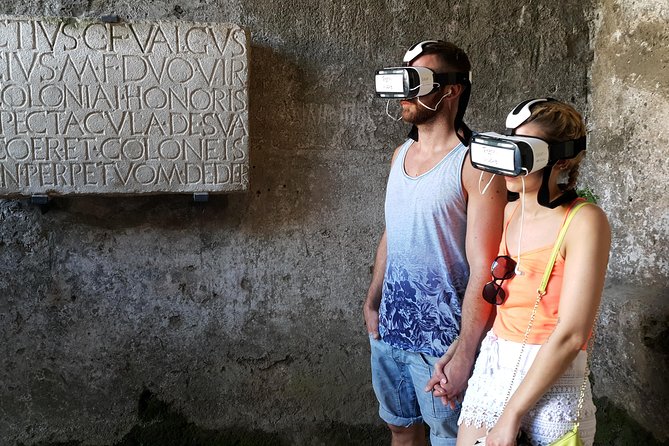
Wear comfortable shoes. Pompeii has uneven terrain, and the tour involves walking through the ruins rather than viewing them from a single point.
Travel light. Large backpacks, pocketbooks, and bags can make the headset experience awkward and may be inconvenient on narrow or uneven paths. A lightweight shoulder bag is the suggested choice.
The tour operates in safe weather conditions, so dress for the forecast. There is no promise of shelter from sun, rain, or heat within the archaeological park. Your comfort will affect how much attention you can give to the VR scenes and the ruins.
Remember that the headset changes your visual focus. You will be looking through a device while moving around an ancient site, so take care when walking. Follow the assistant’s instructions and remove or stop using the headset if you feel unsteady.
Is VR Comfortable for Everyone?
The age guidance deserves careful attention. Children under 9 cannot use the headset. The manufacturer does not recommend Gear VR for children under 13, even though the tour provides one headset per adult and youth and sets 9 as the minimum age for use.
Parents remain responsible for deciding if an older child should use the device and should watch closely for problems during and after the experience. A family with children aged 11 and 14 enjoyed the format, but that does not erase the manufacturer’s warning for younger users.
You should consult a doctor before taking the tour if you are pregnant, elderly, have binocular vision problems, psychiatric disorders, a heart condition, or another serious medical condition. Anyone with a history of seizures, loss of awareness, or symptoms related to epilepsy should also seek medical advice first.
The headset can cause dizziness, nausea, eye strain, disorientation, blurred or double vision, balance problems, drowsiness, fatigue, and other motion-sickness-like symptoms. Stop immediately if any of these occur. The information also warns that symptoms can appear or become more noticeable hours later.
There is a specific warning for people with pacemakers or other implanted medical devices. Gear VR emits radio waves that may affect nearby electronics, so consult your doctor or the device manufacturer before use.
Most people can participate, but VR is not a harmless extra for everyone. If you know that screens, video games, or motion simulation make you ill, consider choosing a standard guided visit instead.
The Price and Its Real Value
At $124.02 per person, this is not the cheapest way to enter Pompeii. The price includes admission, the headset, the escort, and skip-the-line access, but not transportation or a licensed guide.
For a private group that wants a structured visit and a visual aid, the cost can be reasonable. You are paying for the equipment, the organized route, and the chance to connect each reconstruction with the actual ruins. Group discounts may improve the value for larger parties.
The price is harder to justify if you mainly want entry and freedom to wander. Pompeii is a site where many people prefer to set their own pace, read signs, and stop wherever they wish. This tour has a schedule and a fixed VR program, so its value depends on how much you want that digital structure.
I would also compare the price with your group’s interest in technology. If nobody wants to wear a headset, the chief reason for booking disappears. If children and adults are excited by historical reconstruction, the added cost may be worthwhile.
Who Will Get the Most From This Tour?
This experience suits first-time visitors who want help understanding the physical remains without committing to a long private lecture. It also works well for families, provided you take the headset warnings seriously and supervise younger users.
It is a good match for people who learn visually. Seeing a building restored on screen can explain its purpose faster than reading a paragraph about it. The family with an 11-year-old and 14-year-old found that the historical use of VR added another layer to their visit, even though the older family members wanted better graphics.
You may also like it if you are visiting Pompeii on a tight schedule. The assistant keeps your group moving, and skip-the-line admission reduces one possible delay. The 2.5-hour length gives you a clear framework without taking the entire day.
This is less suitable for serious archaeology fans who want a licensed expert at every stop. It is also a poor choice if you dislike electronic devices, suffer easily from motion sickness, or need a fully flexible route.
Should You Book It?
Book this tour if you want Pompeii to look more complete than the surviving walls allow, and if a private group format with audio commentary appeals to you. The VR reconstructions and skip-the-line entry are the strongest reasons to pay the premium.
Choose another format if you want a licensed guide, detailed questions answered on site, or a completely open-ended visit. Before reserving, check the starting time, arrange your own transport, wear sturdy shoes, and make an honest decision about headset use for every member of your group.
Free cancellation is available if you cancel at least 24 hours before the local start time. Changes or cancellations made within 24 hours are not refunded.
FAQ
How long does the Pompeii VR tour last?
The experience lasts approximately 2 hours and 30 minutes.
Where does the tour begin?
It begins at Hotel Vittoria, Piazza Esedra, 80045 Pompei, Italy.
Where does the tour end?
The tour ends at Piazza Immacolata, 80045 Pompei, Italy.
Is transportation included?
No. Transportation to and from the attractions, as well as hotel pickup and drop-off, is not included. Trains are available at regular times throughout the day and evening.
Is a licensed guide included?
No. The tour includes a tour escort or assistant, but not a licensed guide. The assistant speaks English or Italian and is not permitted to answer questions about the archaeological site.
Which languages are available for the headset commentary?
The headset commentary is available in English, Italian, German, French, Spanish, and Russian.
Can children use the VR headset?
Children under 9 cannot use the headset. The manufacturer does not recommend Gear VR for children under 13, and children must be accompanied by an adult.
What happens if I need to cancel?
You can receive a full refund if you cancel at least 24 hours before the experience start time. Cancellations or changes made less than 24 hours before the start time are not accepted or refunded.
Just added around Pompeii
- Wine Tasting and Winery Tour in Vesuvio National Park with Lunch★ 4.5 · 3 reviews
- Mt. Vesuvius Wine Tasting and Lunch Experience from Pompeii★ 4.5 · 20 reviews
- Wine tasting in the Vesuvius national park★ 5.0 · 3 reviews
- Traditional Neapolitan Dinner in Pompei – Villa Franca – Family Restourant★ 5.0 · 8 reviews
- Private Guided Tour and VR Headsets in the Ancient Pompeii★ 5.0 · 3 reviews
- Visit Pompeii with a local expert guide★ 5.0 · 10 reviews
- Tour Mount Vesuvius with Entry Tickets and Round Trip Transfer Included★ 3.5 · 4 reviews
- Vesuvius tour entrance to the crater and return bus★ 4.5 · 9 reviews
Private Tours in Pompeii, compared.


Pompeii Private Tour with an Archaeologist and Skip The Line – 3 hours
Read our review →
Visit in Pompeii – Pompeii Private Tour with Ada
Read our review →
Pompeii Private Tour with an Archaeologist and Skip The Line
Read our review →
Pompeii Vineyard Escape: Private Wine Tasting & Lunch
Read our review →
Private Day Tour to Vesuvius, Herculaneum & Pompeii with Pick Up
Read our review →
Guided Small Group Tour Max 6 People with Private Option
Read our review →
2 Hour Private Tour with an Archeologist Guide
Read our review →Browse the lists this tour appears in