
Reviewed · PRIVATE TOURS IN POMPEII
Pompeii Unveiled: 3-Hour Private Tour In-Depth Discovery
Pompeii is easiest to appreciate when someone helps you read the city rather than simply point at it. This three-hour private tour moves from the oldest known Roman amphitheatre to painted houses, public baths, and the Forum, giving you a clear sense of how the city worked before Vesuvius buried it.
I like the small-group format, which means your questions do not get lost in a crowd. I also like the route through less obvious spots such as the House of Octavius Quartio and the House of the Ceii, rather than stopping only at Pompeii’s headline sights. The main drawback is time: three hours gives you a strong introduction, but Pompeii is large and you will not see everything.
The price is $361.23 per group of up to eight, not per person. That can be fair value for a family or group, though the Pompeii entrance ticket is not included and must be budgeted separately.
Key points to know before you book
- Six carefully chosen stops: The route covers the amphitheatre, Palestra Grande, two private houses, the Stabian Baths, and the Forum.
- A guide dedicated to your group: You can ask questions, adjust the pace, and focus on subjects that interest you.
- Good for history-minded families: Past tours with Annarosa included children aged 9 and 12, with plenty of time for questions.
- Not just the famous sights: The route includes colorful homes, garden paintings, training grounds, and public buildings.
- A useful end point: The tour finishes near the Forum, close to Porta Marina Inferiore.
- Allow for the ticket cost: The private guide is included, but the Pompeii site entrance is listed separately.
Why a private guide changes Pompeii
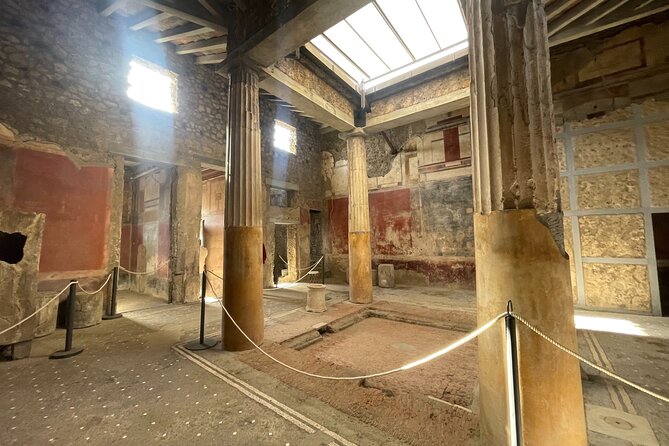
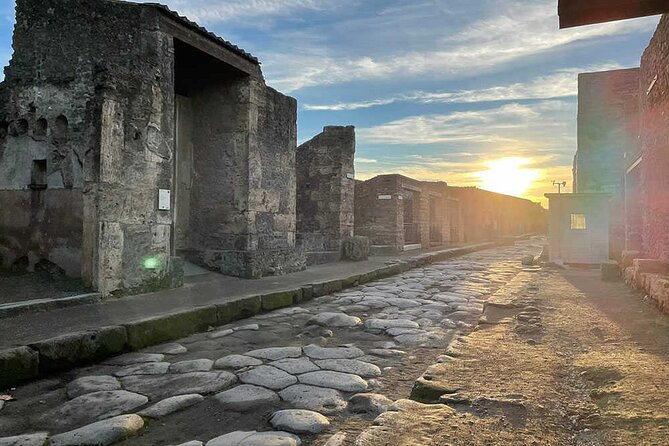
Pompeii can look like a vast collection of broken walls if you do not know what you are seeing. A private guide gives those walls a purpose. You begin to understand which spaces were homes, which were public buildings, and how gardens, streets, shops, baths, and religious areas fitted together.
That personal format matters here because the site is spread out and the details are easy to miss. One group may want to focus on Roman architecture. Another may be more interested in daily life, food, family homes, or the eruption. With only your own party, you can ask questions as they occur instead of waiting for a guide to finish a fixed speech.
Annarosa is the guide most often connected with this experience, while one account names Mariarosa. The strongest praise centers on clear explanations, academic preparation, kindness, and the ability to adapt the route. One family chose a private visit for an 80th birthday, while another used it for a father’s 70th birthday. Those details tell you who benefits most: people who want Pompeii to feel personal rather than rushed.
The listed language is English. A separate experience was arranged in French, so French may be possible with the right guide, but you should confirm that before booking rather than assume it is part of this exact departure.
More Private Tours in Pompeii
- Pompeii private tour with an Official Guide
★ 5.0 · 631 reviews - Pompeii Private Tour with an Archaeologist and Skip The Line – 3 hours
★ 5.0 · 564 reviews - Visit in Pompeii – Pompeii Private Tour with Ada
★ 5.0 · 436 reviews
Starting at Pompeii’s oldest amphitheatre
The meeting point is at Piazza Anfiteatro, beside the Roman amphitheatre. This is an excellent place to begin because the building immediately gives you a sense of Pompeii’s size and social life.
The amphitheatre is described as the oldest known from the Roman period. It could hold up to 20,000 spectators, drawing people not only from Pompeii but also from nearby towns. That capacity changes the way you picture the ancient city. Pompeii was not an isolated village frozen in time. It was a busy regional center with public entertainment large enough to attract a wide audience.
You have about 30 minutes here. That is enough for a focused explanation of the structure and its role, but not enough for a long, leisurely study of every corner. If amphitheatre architecture is a special interest, tell your guide early. If you have children, this first stop can also help anchor the rest of the visit, since the building is easy to understand as a place where thousands gathered.
Starting here is practical, too. You do not waste your first minutes trying to find a distant monument inside the site. The tour begins at the entrance area and then works inward through a series of distinct public and private spaces.
Palestra Grande and the evidence of ordinary life
The next stop is the Palestra Grande, or large gymnasium. This was a training area for ancient Pompeiians, and it offers a useful counterpoint to the amphitheatre. The first building shows where people watched spectacles. The second shows where physical training took place.
The most unusual feature here is a set of three showcases containing charred organic remains found in Pompeian homes. These remains are easy to pass without a guide, yet they offer a direct connection to domestic life. They also remind you that Pompeii is not only about grand columns and painted rooms. Small household materials can tell you what people used, stored, and lived with.
Plan on another 30 minutes. The guide can help connect the remains to the homes where they were found and explain why the preservation is so unusual. This is one of the stops where questions improve the visit. You might ask what the materials were, how they survived, or what they reveal about ordinary households.
The Palestra Grande may be less immediately dramatic than a painted villa, but it gives the tour balance. Pompeii becomes a real city, not simply a line of photogenic ruins.
The House of Octavius Quartio and its garden
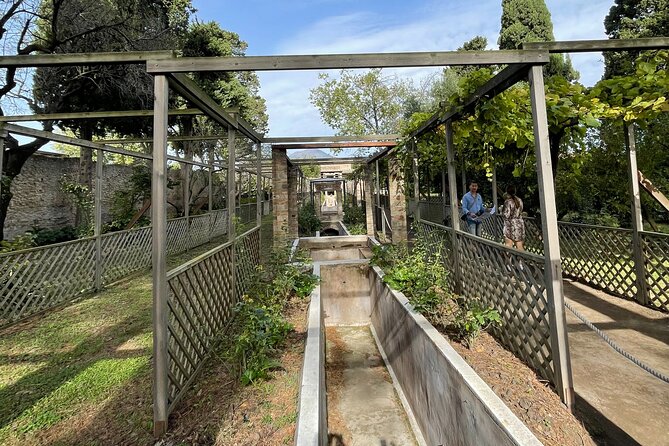
The House of Octavius Quartio is one of the tour’s more scenic stops. Its garden is the main attraction, and it gives you a chance to see how outdoor space shaped a Roman home.
Pompeian houses were not plain boxes. Gardens could be carefully arranged parts of domestic life, used for rest, display, and social gatherings. At this house, the garden helps you picture the home as a lived-in setting rather than a shell with missing walls.
You have about 30 minutes here. That is a sensible amount of time for a guide to explain the house, point out the garden features, and place the residence in the wider pattern of Pompeian homes. A guide is particularly useful in a house like this because the remains do not always make their original use obvious.
This stop will suit you if you enjoy architecture and domestic history more than battlefield-style Roman stories. The main limitation is that gardens are best appreciated slowly, and the fixed three-hour schedule means your time here will be focused rather than leisurely.
More ways to see Pompeii:
- Pompeii Small Group Tour with an Archaeologist
★ 5.0 · 6,593 reviews - Discover the Ancient Ruins of Pompeii: Day Trip from Rome
★ 3.5 · 2,247 reviews - Pompeii and Herculaneum Small Group Tour with an Archaeologist
★ 5.0 · 1,350 reviews - Skip the Line Guided Tour of Pompeii led by an Archaeologist
★ 5.0 · 703 reviews
The House of the Ceii and its hunting scene
The House of the Ceii is smaller but colorful. Its scale makes it a helpful contrast with the larger homes elsewhere in Pompeii. You can see that Roman domestic life was not limited to grand residences with expansive courtyards.
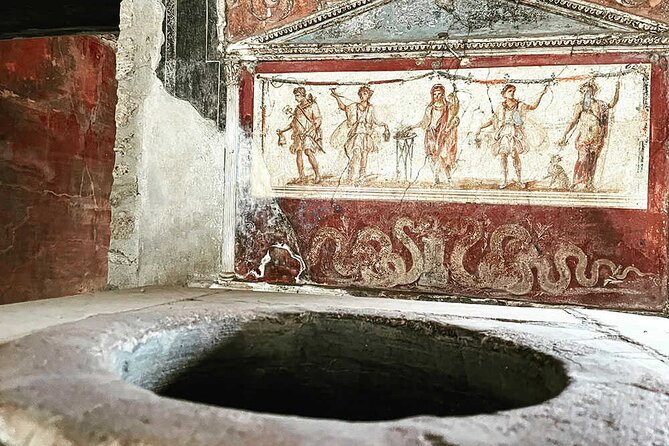
The key detail is the hunting scene on the rear wall of the garden, described as one of Pompeii’s finest. This is the kind of feature that makes a guide worthwhile. Without context, you may notice a painting and move on. With an explanation, you can spend a few minutes looking at its composition, setting, and place within the garden.
This half-hour stop also gives the route some visual variety. After the large public spaces and the open garden of Octavius Quartio, you move into a smaller home with a strong decorative focus.
If paintings are high on your list, tell the guide. The route includes several types of evidence, from charred organic remains to gardens and wall decoration. Your guide can help you pay closer attention to the subjects that matter most to your group.
A pause at the Stabian Baths
The Stabian Baths are Pompeii’s oldest known public baths, and they show how much public life revolved around bathing. The tour gives you about 30 minutes to explore the complex and understand how the baths functioned.
The phrase regenerate a little should not be taken literally. You will not be taking a bath. Instead, this is a chance to see the setting where Pompeiians came to wash, exercise, socialize, and spend part of their day.
Bath complexes can be difficult to understand from ruins alone. Rooms may look similar, and the purpose of each space is not always clear. A guide can explain how the public baths were organized and why they mattered beyond simple hygiene.
This stop is valuable because it fills in a missing part of city life. The amphitheatre shows entertainment. The houses show private life. The Forum shows government and commerce. The baths show a shared public routine.
The trade-off is that half an hour passes quickly. You will get the main story and key spaces, but you will not have time to examine every architectural detail. That is the pattern of this tour: a brisk, well-shaped introduction rather than a full-day archaeological study.
Finishing at the Forum beneath Vesuvius
The final stop is the Forum, Pompeii’s civic heart. This is where the route gathers its earlier themes. Public buildings, religion, politics, business, and daily movement all came together here.
The view toward Vesuvius is one of the strongest visual moments of the visit. The volcano is not an abstract historical detail when you see it from the city it buried. Its presence gives the Forum a powerful sense of place and helps explain why Pompeii remains so affecting.
The Forum can also be crowded. The description itself acknowledges that it attracts many people, so do not expect the same quiet feeling you may find in a smaller house or garden. A private guide can help by keeping the explanation focused and by choosing the best use of your time rather than letting you drift through the open space without context.
The tour ends near the Forum, with the nearest exit at Porta Marina Inferiore. If you need to return to the original entrance at Piazza Anfiteatro, allow at least 15 minutes to walk back. This detail matters if you have a train, a pickup, or another timed activity.
How the three-hour pace feels
Three hours is a good middle ground for many people. It is long enough to move beyond the standard highlights, but short enough for families and visitors fitting Pompeii into a wider Naples itinerary.
The route gives each of six stops about 30 minutes. That steady rhythm keeps the visit moving and helps prevent the fatigue that can come from wandering large archaeological sites without a plan. One account describes the three-hour visit as thorough but not tiring, with the guide adding quieter areas alongside the more familiar buildings.
Still, you should be realistic. Pompeii is extensive. This route cannot cover every street, shop, temple, house, and public building. If you have already spent time at Pompeii or want to study particular areas in detail, a full-day booking may suit you better. One family specifically arranged a full-day visit, while the experience here is designed for a concentrated three-hour visit.
Wear practical shoes and bring what you normally need for a long outdoor site visit. The available information does not specify shade, seating, or weather arrangements, so do not assume the route will always feel easy in strong sun or heat.
Price, group size, and what you actually receive
The listed price is $361.23 per group, with up to eight people. That makes the arithmetic quite different from a per-person tour. For a full group of eight, the guide cost works out to about $45 per person before entrance tickets. For two people, the individual cost is much higher.
I see the best value for families, two couples, or a group of friends who would otherwise book several separate places on a larger tour. You receive a private guide, a route built around six substantial areas, and room to ask questions. The more people in your group, the stronger the value becomes.
The Pompeii entrance ticket is not included. This is the most important budget point. Although each stop is marked as having admission included in the stop description, the overall booking information separately says the site entrance ticket is excluded. Treat the entrance fee as an additional cost and verify the current ticket arrangements when booking.
The experience is offered in English. Confirmation is provided at booking, and the meeting point is near public transportation. Most people can participate, but the information does not provide a detailed accessibility assessment, so anyone with mobility concerns should ask the provider about the exact route before paying.
Free cancellation is available if you cancel at least 24 hours before the start time. Cancellations or changes made less than 24 hours in advance are not accepted for a refund.
Who should choose this Pompeii tour
I would choose this experience if you want a guide focused on your group and you care about understanding what you are looking at. It suits first-time visitors who want more than a quick walk through the main street, especially families with children who are likely to ask questions.
It is also a good fit for history enthusiasts who want an informed guide. The guide associated with the tour has been praised for keeping up with recent excavations, studies, and theories about Pompeii and Herculaneum. That matters if you want more than memorized dates.
The route works well for people who enjoy variety. You move from a huge amphitheatre to a training ground, then to homes, baths, and the Forum. You see public life, private life, art, gardens, and physical remains in one compact visit.
I would hesitate if you want to explore independently for an entire day, photograph every house, or spend long periods sitting with one painting. I would also compare the group cost carefully if you are only one or two people, since the flat price makes smaller parties pay more per person.
Should you book it?
Book this private Pompeii tour if you want a clear three-hour introduction with a personal guide, a sensible mix of famous and less familiar sites, and time for questions. The amphitheatre, Palestra Grande, painted houses, Stabian Baths, and Forum give you a well-rounded look at the city.
The strongest reason to choose it is the guide’s role. Annarosa and Mariarosa are praised for careful explanations, kindness, flexible pacing, and avoiding crowded areas when possible. That can turn a hot, confusing archaeological visit into a much more readable experience.
Skip it if you prefer a slow independent visit or need a full day to cover Pompeii. Also remember to add the entrance ticket to the $361.23 group price. For a family or group of up to eight, the private format can be good value. For a couple, it is a more serious splurge, but one that may be worthwhile if personal attention matters to you.
FAQ
How long does the Pompeii private tour last?
The tour lasts approximately three hours.
How many people can join the private tour?
The price covers one private group of up to eight people.
What language is the tour offered in?
The listed language is English.
Is the Pompeii entrance ticket included?
No. The overall booking information states that the entrance ticket to the Pompeii site is not included.
What sights are included on the route?
The route includes the Roman amphitheatre, Palestra Grande, House of Octavius Quartio, House of the Ceii, Stabian Baths, and the Forum.
Where does the tour begin?
The meeting point is Pompei Piazza Anfiteatro, 80045 Pompei, in the Metropolitan City of Naples.
Where does the tour end?
The tour ends at the Forum of Pompeii on Via Villa dei Misteri. The nearest exit is Porta Marina Inferiore.
How long does it take to walk back to the starting entrance?
You should allow at least 15 minutes to walk back to the original entrance from the ending point.
Can most people take part?
The information says most travelers can participate. It does not provide detailed accessibility information for the route.
What is the cancellation policy?
You can cancel for a full refund up to 24 hours before the experience starts. Changes or cancellations made less than 24 hours before the start time are not accepted for a refund.
More 3-Hour Experiences in Pompeii
- Pompeii 3 Hours Walking Tour Led by an Archaeologist
★ 5.0 · 126 reviews - Pompei three hours with an expert guide
★ 5.0 · 82 reviews - Visit Pompeii with an expert professional guide (2/3 hours)
★ 5.0 · 35 reviews - Pompeii 3h Private & Quality Tour with your Archaeologist
★ 5.0 · 10 reviews
Just added around Pompeii
- Wine Tasting and Winery Tour in Vesuvio National Park with Lunch★ 4.5 · 3 reviews
- Mt. Vesuvius Wine Tasting and Lunch Experience from Pompeii★ 4.5 · 20 reviews
- Wine tasting in the Vesuvius national park★ 5.0 · 3 reviews
- Traditional Neapolitan Dinner in Pompei – Villa Franca – Family Restourant★ 5.0 · 8 reviews
- Private Guided Tour and VR Headsets in the Ancient Pompeii★ 5.0 · 3 reviews
- Visit Pompeii with a local expert guide★ 5.0 · 10 reviews
- Tour Mount Vesuvius with Entry Tickets and Round Trip Transfer Included★ 3.5 · 4 reviews
- Vesuvius tour entrance to the crater and return bus★ 4.5 · 9 reviews
Private Tours in Pompeii, compared.

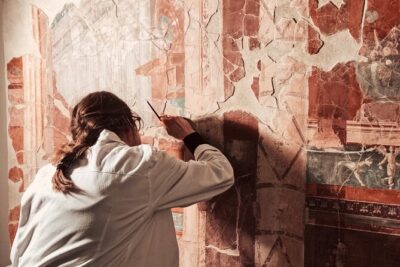
Pompeii Private Tour with an Archaeologist and Skip The Line – 3 hours
Read our review →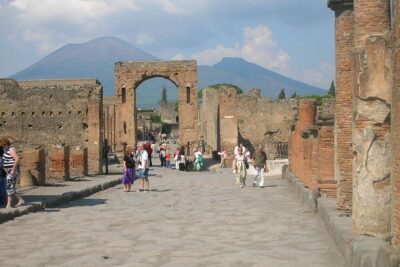
Visit in Pompeii – Pompeii Private Tour with Ada
Read our review →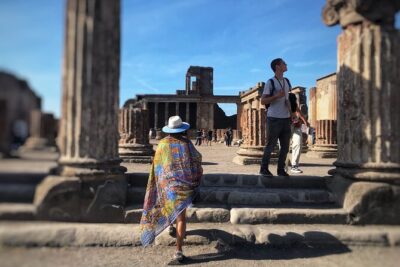
Pompeii Private Tour with an Archaeologist and Skip The Line
Read our review →
Pompeii Vineyard Escape: Private Wine Tasting & Lunch
Read our review →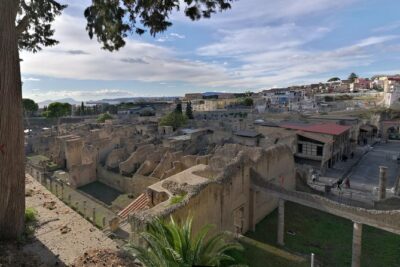
Private Day Tour to Vesuvius, Herculaneum & Pompeii with Pick Up
Read our review →
Guided Small Group Tour Max 6 People with Private Option
Read our review →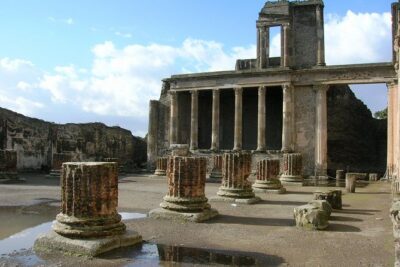
2 Hour Private Tour with an Archeologist Guide
Read our review →Browse the lists this tour appears in