
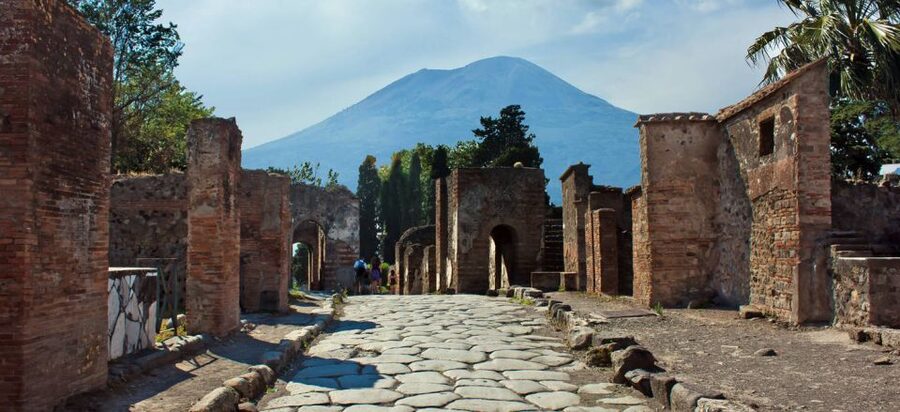
Reviewed · POMPEII TOURS FROM NAPLES
Pompeii Guided Walking Tour – Skip-the-Line Priority Access
Pompeii is not a single ruin you can glance at and understand in an hour. It is a buried Roman city with streets, homes, bakeries, public baths, temples, and political buildings spread across a huge archaeological park. This two-hour guided walk gives you a clear introduction without asking you to tackle the whole site at once.
I like the way the route moves from the Forum and major temples into ordinary streets and houses. I also like the priority access and the chance to continue exploring after the tour. The main drawback is scope: two hours covers only a small part of Pompeii, and one review noted that some important places were passed with little more than a name.
Key points to know before booking
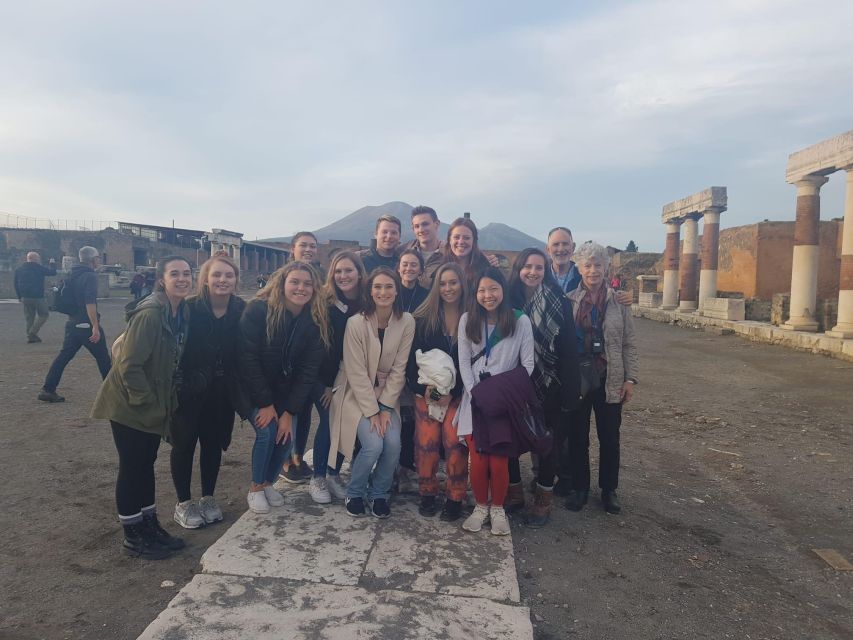
- The tour begins at Porta Marina Inferiore, in Piazza Esedra, with a guide holding a board marked with the local operator’s logo.
- The route covers Pompeii’s central highlights, including the Forum, baths, Via dell’Abbondanza, House of the Faun, and Lupanar.
- The tour lasts two hours, making it useful for a first look but too short for the entire archaeological park.
- English and Italian tours are available, led by an authorized professional guide.
- The $47 price includes the entrance fee and guided visit, which can be good value if you want context rather than a self-guided walk.
- Allow extra time after the tour if you want to see more of Pompeii’s streets, houses, and newly excavated areas.
Why a guided introduction helps at Pompeii
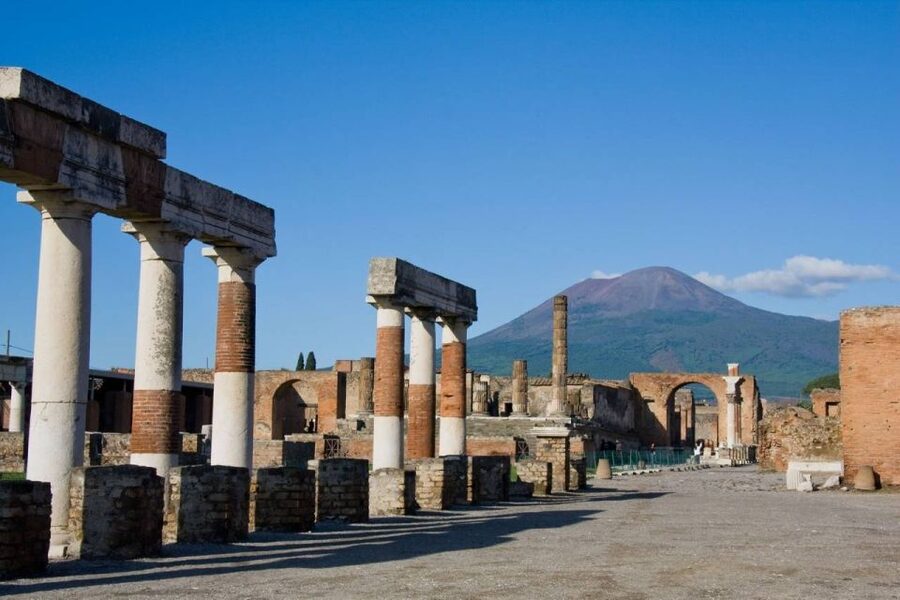
Pompeii can be hard to read on your own. A Roman street may look like a line of old stones until someone explains how carts moved through it, where shops opened onto the road, and why a particular building mattered.
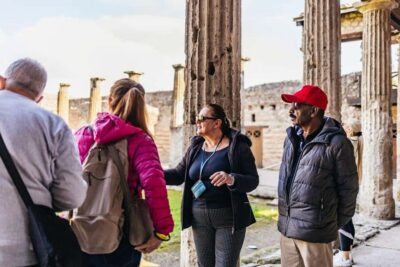
That context is the main reason I would consider this tour. An authorized guide can connect the Forum to public life, the baths to social customs, and an ordinary bakery or tavern to the daily routines of people who lived here nearly 2,000 years ago.
The city was preserved after the eruption of Mount Vesuvius in 79 AD, but the site is not arranged like a museum. You walk outdoors across ancient paving stones, pass through ruins without a neat modern sequence, and often need help spotting what made a building special.
This tour gives you a basic map of Pompeii’s central area. You will not see everything, but you should leave knowing how the city worked and which parts deserve more of your time.
More ways to see Pompeii:
- From Naples: Pompeii Ruins & Mount Vesuvius Day Tour
★ 4.3 · 11,459 reviews - Naples or Sorrento: Full-Day Pompeii and Mount Vesuvius Tour
★ 4.6 · 4,235 reviews - Pompeii & Mt.Vesuvius Day Tour from Naples with Pizza Lunch
★ 4.0 · 2,901 reviews
Meeting at Porta Marina Inferiore
The meeting point is at Porta Marina Inferiore, in Piazza Esedra. Your guide will carry a board with the local tour operator’s logo, so look for that rather than assuming every person near the entrance is part of your group.
This detail matters. One customer could not find the meeting point, and another described confusion between directions from the booking service and information from the tourist office. I recommend arriving early, keeping your booking confirmation handy, and checking that you are at Porta Marina Inferiore rather than another Pompeii entrance.
The tour does not include transport. You need to make your own way to the meeting point in Pompeii. Once you find the guide, the visit begins with priority access to the archaeological site and a walk through Porta Marina.
Entering through Pompeii’s ancient harbor gate
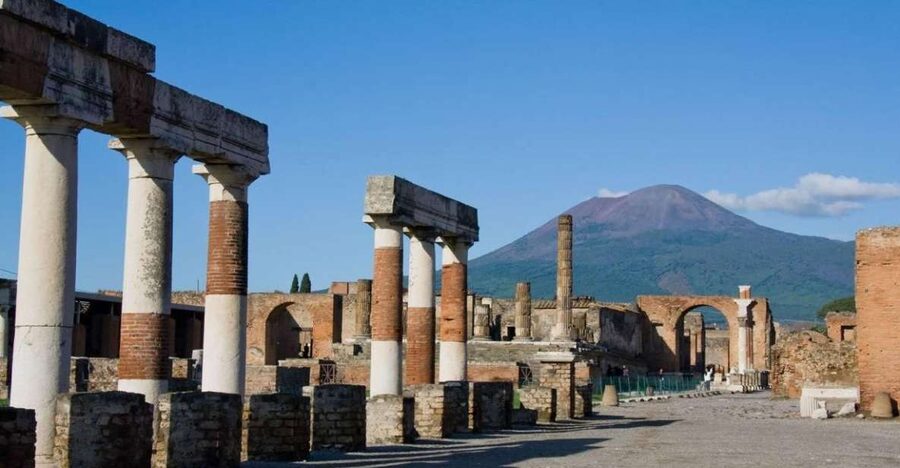
Porta Marina was once the main gateway between the city and its harbor. It is a fitting entrance because it immediately gives you a sense that Pompeii was a working town connected to trade and movement, not simply a collection of grand ruins.
From here, you begin walking along original Roman streets. The surfaces can be uneven, so comfortable shoes are essential. The tour is outdoors and involves steady walking through the excavations, even though the central route is designed to fit comfortably into two hours.
Priority access is useful at a busy archaeological site. The activity includes the entrance fee and priority access to buy the ticket, helping reduce the time spent waiting at the ticket line. It does not mean you can skip the need to meet the guide at the correct place, so that first step still deserves attention.
The Forum, Basilica, and temples
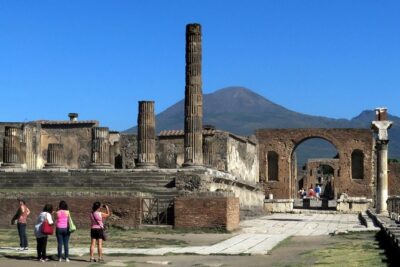
The Forum was Pompeii’s political, religious, and commercial center. This is one of the most important stops because it gives you the city’s main civic frame before the route moves into smaller buildings and residential streets.
Around the Forum, you see monumental structures including the Basilica, the Temple of Jupiter, and the Temple of Apollo. Your guide explains how these places fit into public life during the Roman Empire, when government, worship, business, and social status were closely linked.
I like this section for orientation. Once you understand the Forum as the city’s center, the rest of Pompeii makes more sense. You can picture citizens coming here for official business, religious ceremonies, trade, and public meetings.
The tradeoff is time. Pompeii has enough material in the Forum alone to fill a long visit, but this itinerary keeps moving. If you want to study columns, inscriptions, or architectural details, you may need to return after the guided walk.
More Walking Tours in Naples:
- Naples: Street Food Walking Tour with Local Guide
★ 4.8 · 4,256 reviews - Naples Spanish Quarters Walking Tour Street Art, Folklore & Sweet
★ 5.0 · 797 reviews - Naples: Old Town Guided Walking Tour
★ 4.8 · 553 reviews - Naples: Panoramic Walking Tour with Funicular
★ 4.8 · 543 reviews
Baths where Romans met and relaxed
The itinerary includes either the Forum Baths or the Stabian Baths. These were not just places to wash. Public baths were social spaces where people relaxed, talked, and maintained the routines of city life.
This stop helps correct the common image of Pompeii as only a city of temples and wealthy villas. The baths show the practical side of Roman life and offer a way to think about how ordinary residents spent part of their day.
The exact bath complex visited may depend on the guide and conditions at the site. If public life interests you, listen for details about how these spaces were used, not only how the rooms were built.
One point to keep in mind is that the tour moves through several major categories of Pompeii in a short period. You may get a useful explanation of the baths, but not a long pause in every room.
Via dell’Abbondanza and daily business
Via dell’Abbondanza was one of Pompeii’s lively streets. Ancient shops, bakeries, and taverns opened along the route, giving you some of the clearest clues about everyday business.
This is where the tour becomes especially grounded. Grand temples tell you about public ideals, while a shop or bakery shows what people actually bought, sold, and ate. The street also helps you imagine Pompeii as a place of work, errands, meals, and casual social contact.
I would pay close attention here to the small details your guide points out. An ordinary storefront can say more about daily habits than a large monument, especially if you are interested in how non-elite residents lived.
A customer who wanted more information about everyday life felt the tour spent too much time on general history. That is a fair concern. If daily routines are your main interest, tell the guide early and ask for more practical detail as you walk.
House of the Faun and Roman private life
The House of the Faun is one of Pompeii’s largest and most luxurious private residences. Its architecture and mosaics offer a sharp contrast to the shops and public streets.
This is the place to think about wealth and social rank. A large private home required space, decoration, servants, and money. The house helps show that Pompeii was not socially uniform, even though rich and poor residents shared the same city.
The mosaics and layout can be rewarding, but this is another stop where the guide’s explanation makes a difference. You are looking at rooms without the original residents, furniture, or daily noise. A good explanation helps you understand how the home was arranged and what its design said about the family.
The route may not allow enough time to examine every mosaic closely. If the House of the Faun is your top priority, note its position during the tour so you can return to it later.
The Lupanar and Roman social customs
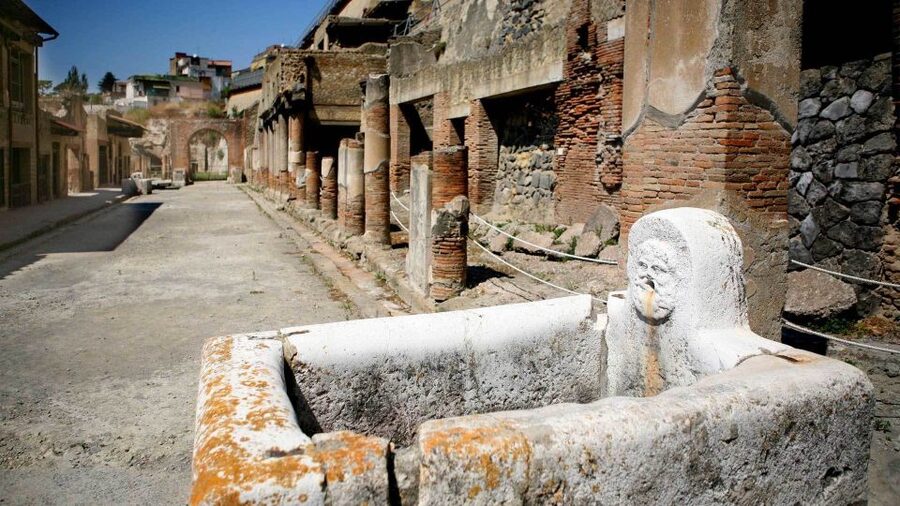
The visit also includes a brothel, known as the Lupanar. It is one of Pompeii’s most talked-about buildings, but it is more useful when treated as part of the city’s social history rather than as a quick curiosity.
The guide explains how Roman citizens spent leisure time and how different parts of society used public and private spaces. The Lupanar can add a more complete view of Pompeii, particularly when paired with the baths, taverns, and homes.
This stop may not suit every family or every visitor. Parents should decide whether the subject is appropriate for children. A passport or ID card is required for children, according to the tour information.
The Lupanar is also a good example of why a guide can add value. Without context, you might simply walk through a small building and move on. With context, it becomes part of a larger picture of Roman customs and social life.
New excavations and the final days of Pompeii
The route includes recently excavated areas and discussion of new archaeological findings. These sections can help connect the familiar story of Pompeii’s destruction with ongoing work at the site.
The focus is not only on the eruption itself, but also on what the excavations reveal about the city before Mount Vesuvius erupted in 79 AD. New findings can change how archaeologists understand homes, streets, and the people who lived there.
Because excavation is ongoing, what you see may not match older guidebooks or previous visits. That is a useful reason to take a guided tour, especially if you have visited Pompeii before and want a current look at newly opened areas.
Still, do not expect a complete tour of all new excavation zones. The route remains centered on Pompeii’s main central area and must fit within two hours.
What $47 gets you
At $47 per person, the price includes the entrance fee and a two-hour guided tour with priority access. The value depends on how you like to visit archaeological sites.
If you already know Pompeii well and prefer to wander alone, the guided portion may feel restrictive. You will need to follow the route and keep pace with the group, and you may not have time to stop for every photograph.
If this is your first visit, the price is easier to justify. You receive a basic route through the most important central areas, explanations in English or Italian, and help with entry. You also avoid spending your entire visit trying to work out what each ruin was.
The strongest value comes from using the tour as an introduction, not as your complete Pompeii visit. Afterward, you can explore independently if your ticket and available time allow. One customer liked that the tour provided an overview and left time to investigate more alone.
Pace, group experience, and photography
The tour is described as a comfortable two-hour walk, but comfortable does not mean slow. Pompeii is large, and the guide needs to cover the Forum, baths, streets, private houses, and Lupanar within a fixed period.
One person found the tour rushed when stopping to take photographs. If you want time for careful pictures, keep your camera ready and take quick shots when the group pauses. You can also plan a longer self-guided visit afterward.
The guide’s style matters here. The feedback includes strong praise for professional, engaging explanations, as well as one complaint that too much history was given while some major sights received only a brief mention. That tells me this experience works best for someone who wants a broad overview rather than a slow architectural study.
The most positive comments focus on guides who were professional, informative, and able to explain Pompeii’s past clearly. No individual guide names are provided, so you should not book expecting a particular person.
Who should book this Pompeii walk
I would recommend this tour to first-time visitors who want a structured introduction and do not want to face Pompeii without a plan. It also suits anyone with only a few hours in the area who wants to see the central highlights.
It is a sensible choice if you value historical explanation more than independent wandering. The English and Italian options make the visit practical for those languages, and the included entrance fee simplifies the cost.
I would be more cautious if you want to explore the full archaeological park. Pompeii is huge, and this route covers less than one quarter of the site according to one detailed assessment. You should treat the two-hour walk as a starting point.
Families should consider the amount of walking and the subject of the Lupanar. Children need a passport or ID card, and comfortable footwear is important for everyone.
Practical details that affect your visit
You can cancel up to 24 hours in advance for a full refund, and the reserve-now, pay-later option lets you hold a place without paying immediately. Starting times vary, so check availability for your date.
The tour is offered in English and Italian. Transport is not included, so arrange your own route to Piazza Esedra and Porta Marina Inferiore.
The first Sunday of each month is different because entrance to the site is free, but tickets cannot be reserved ahead of time. Entry is not guaranteed on that day, so the usual priority arrangement may not protect you from capacity or ticket problems.
Should you book it?
Book this tour if you want a clear two-hour introduction to Pompeii, with the Forum, baths, shops, House of the Faun, and Lupanar tied together by an authorized guide. The included entrance fee and priority access make $47 reasonable for a first visit.
Do not book it as your only Pompeii experience if you want to see the entire city or spend long periods taking photographs. Arrive early at Porta Marina Inferiore, confirm the guide’s logo board, wear good shoes, and reserve extra time afterward for independent exploration. That is the best way to get full value from this focused tour.
FAQ
Where does the Pompeii tour meet?
The meeting point is Porta Marina Inferiore, in Piazza Esedra, Pompeii. The guide will carry a board with the local tour operator’s logo.
How long does the tour last?
The guided walking tour lasts two hours.
What languages are available?
The tour is available in English and Italian.
Is the entrance fee included?
Yes. The entrance fee is included in the tour price.
Does the tour offer priority access?
Yes. The activity includes priority access to buy the entrance ticket and skip the ticket line.
Does the tour include transportation?
No. Transport is not included, so you must reach the meeting point in Pompeii yourself.
Which Pompeii sights are included?
The route includes Porta Marina, the Forum, the Basilica, the Temple of Jupiter, the Temple of Apollo, either the Forum Baths or Stabian Baths, Via dell’Abbondanza, the House of the Faun, the Lupanar, and recently excavated areas.
What should I bring?
Bring comfortable shoes. Children must have a passport or ID card.
Can I cancel the booking?
Yes. You can cancel up to 24 hours in advance for a full refund.
Is entry guaranteed on the first Sunday of the month?
No. Entrance is free on the first Sunday, but tickets cannot be reserved ahead of time, so entry is not guaranteed.
More Skip-the-Line Tickets in Naples
- Herculaneum: Skip-the-Line Guided Tour with Archaeologist
★ 4.8 · 3,439 reviews - Mount Vesuvius: Skip-the-Line Ticket and Smart Digital Guide
★ 4.2 · 2,780 reviews - From Naples: Pompeii Skip-the-Line Entry Ticket and Tour
★ 4.4 · 2,753 reviews - Pompeii: Skip-the-Line Entry Ticket with Audio Guide or Tour
★ 4.1 · 1,364 reviews
Just added around Naples
- Naples: Guided Walking Tour★ 4.7 · 63 reviews
- Wine tasting in the Vesuvius National Park★ 3.5 · 4 reviews
- Naples: Pompeii and Vesuvius Skip-the-Line Day Trip★ 3.8 · 32 reviews
- Visit the Museum MANN with a professional guide★ 5.0 · 3 reviews
- Walking-tour of Naples hystorical Centre★ 4.4 · 4 reviews
- Vesuvius – Herculaneum – Pompeii Excavations Tour★ 4.2 · 9 reviews
- Pompeii: Vesuvius at Sunset★ 3.5 · 31 reviews
- Vesuvius and Herculaneum from Naples★ 3.7 · 29 reviews
Pompeii Tours from Naples, compared.

Pompeii Small Group Tour with an Archaeologist
Read our review →
Pompeii & Mt.Vesuvius Day Tour from Naples with Pizza Lunch
Read our review →
Pompeii & Mt Vesuvius All-Inclusive Small Group w/ Lunch
Read our review →
Pompeii & Amalfi Coast Full-Day Trip with Lunch
Read our review →Browse the lists this tour appears in