
Reviewed · HISTORICAL TOURS
Naples Stress-Free Tour: Between Mystery, Legends & History
Naples’ old center is best understood on foot, where a cathedral miracle, a wall-sized portrait of St. Gennaro, a street of handmade nativity figures, and a doll repair shop all sit within a short walk. This two-hour route brings those odd and memorable details together rather than treating Naples as a parade of grand monuments.
I like the way the tour covers both major sights and small local curiosities, especially the Duomo, Spaccanapoli, San Gregorio Armeno, and the skulls of Purgatory. I also like the manageable group size of up to 15 and the finish at Piazza del Gesù Nuovo, a useful place to continue exploring on your own.
The main consideration is depth. One review found the history interesting, while another felt the explanations were too shallow and said the guide needed more training. Ludovica has led the route, but her English pronunciation was sometimes difficult for one participant to follow, so this tour is best for a broad introduction rather than a scholarly lesson.
Key points to know before booking

- Naples in one concentrated walk: Cover ten stops in roughly two hours, from the Duomo to Piazza del Gesù Nuovo.
- Legends carry the route: Hear about St. Gennaro’s blood, Purgatory skulls, Pulcinella, and the Dolls Hospital.
- Street life matters as much as monuments: San Gregorio Armeno and Via dei Tribunali show Naples through crafts, food, and local habits.
- Small group, limited time: The maximum is 15 people, but most stops last only 5 to 20 minutes.
- Good for first-time orientation: You get a useful map of the historic center, but you should not expect long museum visits or extensive interior tours.
- Plan for church dress rules: Wear comfortable shoes and cover your shoulders to enter the Naples Duomo.
Starting at the Duomo and St. Gennaro’s miracle
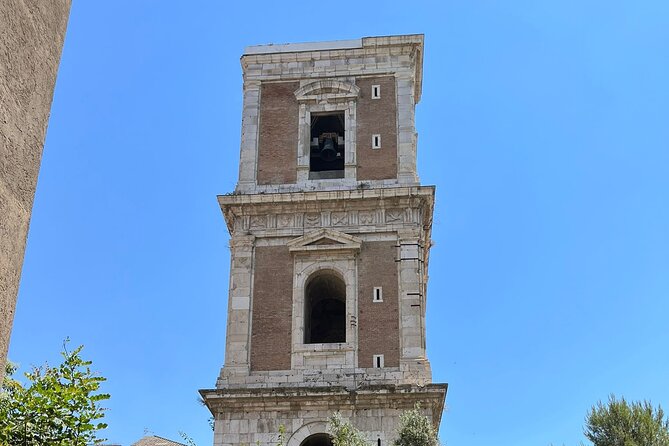
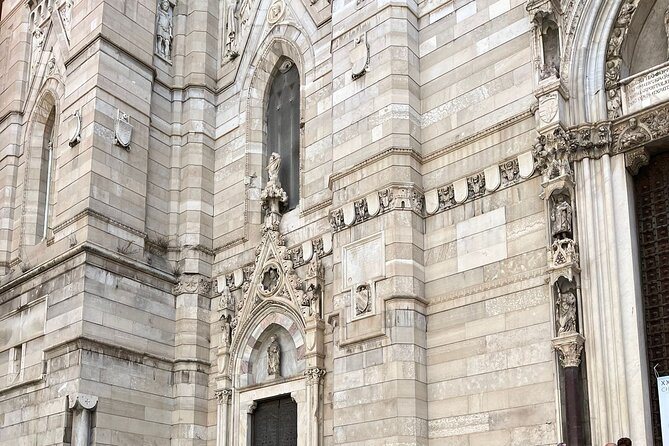
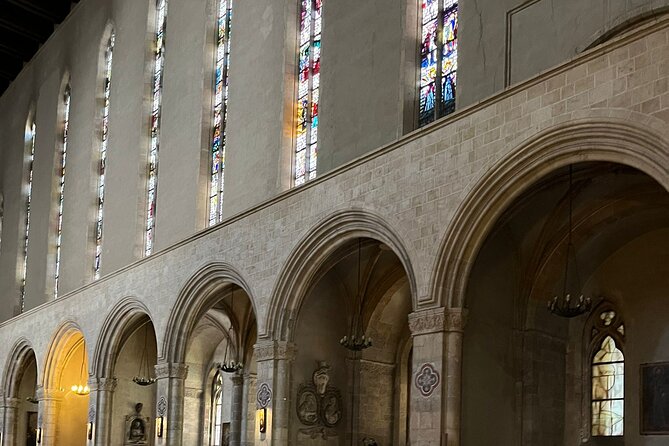
Meet at 4 p.m. outside the Duomo di Santa Maria Assunta on Via Duomo. The cathedral is the right starting point because it places you immediately in the religious heart of Naples, and the story here is not just about stonework or paintings.
Your guide explains the miracle associated with St. Gennaro, Naples’ patron saint. His blood is said to liquefy on special occasions, a belief that has shaped the city’s religious life for centuries. You get about 20 minutes at the Duomo, enough for an introduction and some looking around, though not enough for a slow study of every chapel or artwork.
The tour information describes the Duomo stop as free, but the important practical point is that you are visiting as part of a walking route, not joining an extended cathedral tour. Cover your shoulders, since that is required for entry. Comfortable shoes matter from the first step, as the route uses old streets and continues on foot for the rest of the afternoon.
More ancient sites near Naples:
- Naples: Street Art & History Tour in the Spanish Quarters
★ 4.9 · 540 reviews - Naples: Historic Center and Sansevero Chapel Walking Tour
★ 4.8 · 208 reviews - 360 ° Naples. THE historic center of the city
★ 5.0 · 85 reviews
Jorit’s St. Gennaro brings old Naples into the present
The next stop is a street portrait of St. Gennaro by Jorit Agoch, a Neapolitan artist whose work reaches from South America to the Middle East. This is a useful contrast with the cathedral. Instead of seeing the saint only through formal religious art, you see how Naples presents him through modern public art.
You have about ten minutes here. That makes it mainly a viewing and photo stop, but it also gives the guide a chance to connect Naples’ old symbols with its current creative life. If you enjoy street art, this may be one of the most distinctive moments on the route. If your main interest is architecture, it is a short pause rather than a major attraction.
Spaccanapoli and the Dolls Hospital
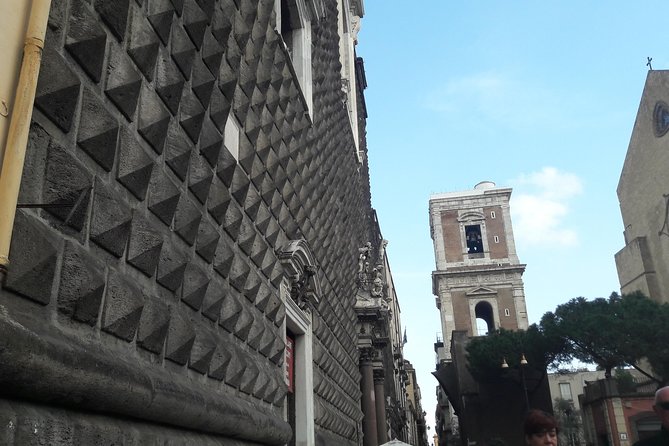
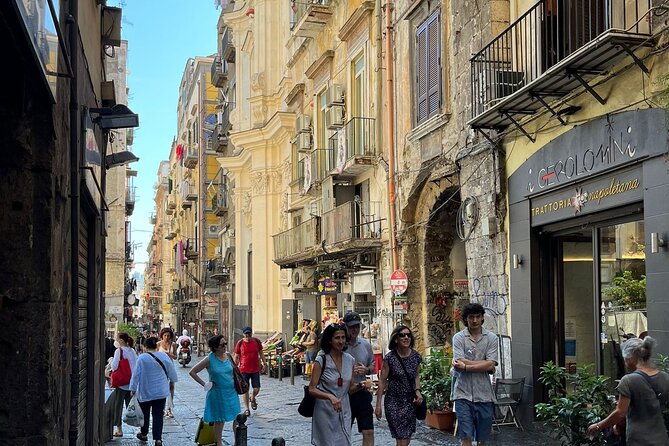
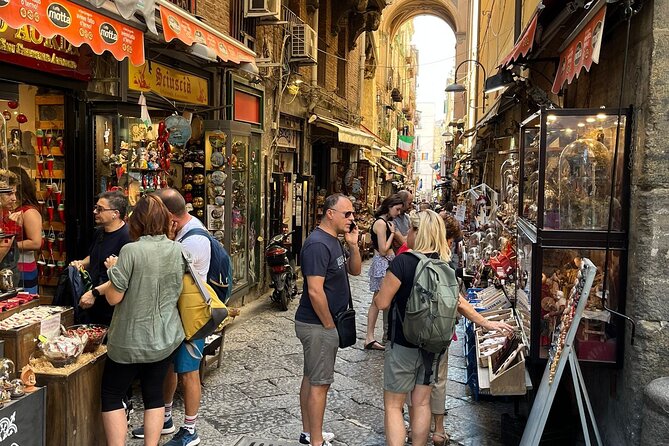
Spaccanapoli is one of the old center’s defining streets. Its narrow lanes give you the close-up Naples experience: old façades, busy passageways, small workshops, and the feeling that daily life is happening right beside centuries of history.
The route allows about ten minutes here before moving to the Ospedale delle Bambole, or Dolls Hospital. This unusual shop repairs broken dolls and toys, and the guide explains how the activity began. It is a small stop, only another ten minutes, but it gives the tour a welcome sense of humor.
I like this part because it prevents the walk from becoming a string of churches and dates. The Dolls Hospital reflects a caring, inventive side of Naples, where damaged objects are repaired instead of simply discarded. You should keep your expectations in check, though. The stop is about the story and the character of the place, not a long workshop visit.
San Gregorio Armeno and the craft of presepi
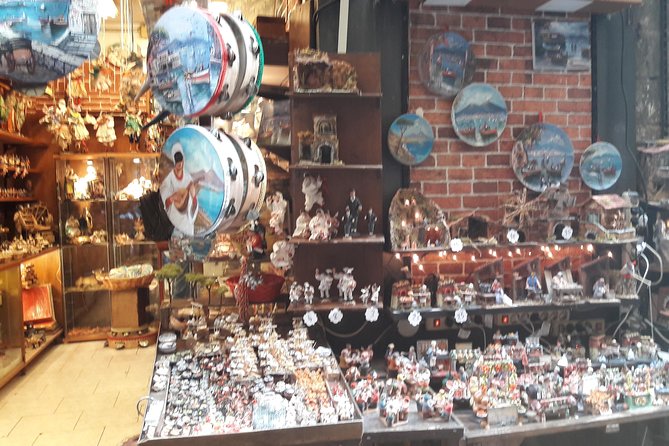
Via San Gregorio Armeno is one of the most recognizable streets in Naples. Its artisans make presepi, the detailed nativity scenes for which the city is famous. You see handmade figures and the small-scale world built around them, including the long tradition of Neapolitan nativity artistry.
The scheduled time here is about 20 minutes, making it one of the longer stops. That is helpful because the street deserves a slower look than a quick photograph. You can focus on the workmanship, notice the range of figures, and ask the guide about the tradition.
This is also a place where the tour’s timing matters. San Gregorio Armeno is a working artisan street, not a museum arranged for visitors. The route gives you an introduction, but you may want to return independently if you wish to browse shops carefully or buy a presepe figure. The tour does not include food or drinks, and it does not promise purchases or tastings.
A few more Naples outings worth a look
- From Naples: Pompeii Ruins & Mount Vesuvius Day Tour
★ 4.3 · 11,459 reviews - From Naples: Sorrento, Positano and Amalfi Full-Day Tour
★ 4.6 · 10,988 reviews - From Naples: Sorrento, Positano & Amalfi Coast – Small Group Tour
★ 5.0 · 8,643 reviews - Naples: Catacombs of San Gennaro Entry Ticket & Guided Tour
★ 4.6 · 7,941 reviews
Via dei Tribunali and the question of pizza
Via dei Tribunali takes you through another famous artery of the old center. The street is known for its pizzerias, and the guide points out the role of authentic Neapolitan pizza in local life.
The stop is listed at only five minutes, so do not book this tour expecting a pizza meal or a tasting. Food and drinks are not included. Instead, think of this as a quick orientation to one of Naples’ best-known eating streets, with the chance to return later on your own.
That arrangement can work well. A guide can show you where the culinary action is, while you choose your own time and place to eat. Just avoid arriving hungry and assuming lunch or dinner is part of the tour.
The skulls of Purgatory at Santa Maria delle Anime
The Complesso Museale Santa Maria delle Anime del Purgatorio ad Arco brings the route back to Naples’ more mysterious side. The church and museum are linked to the famous skulls known as the souls of Purgatory. Your guide explains the folk legend connected with them and gives context for why these objects have held such a strong place in local belief.
You get about ten minutes here. That is enough to hear the central story, but it is a short introduction rather than a detailed museum visit. If you are especially interested in religious customs, death rituals, or Naples’ legends, make a note of the site and consider returning with more time.
This stop is valuable because it shows how Naples mixes official Catholic practice with popular belief. The city’s identity is not presented as tidy or uniform. Saints, street art, household traditions, legends, and old fears all share the same streets.
Pulcinella, a photo, and open-legs lemonade
The tour then reaches the bust of Pulcinella, the famous Neapolitan mask. You have about 20 minutes, one of the longer pauses on the walk, with time for photographs and an explanation of this comic figure’s place in Italian tradition.
There is also a chance to try the local drink called limonata a cosce aperte, translated as open legs lemonade. The description presents it as an option if you are thirsty, but food and drinks are not included in the tour price. Treat it as a possible local extra, not as a guaranteed tasting.
Pulcinella is a fitting stop because he represents Naples’ comic, sharp-edged public personality. The figure is not just a souvenir mascot. He belongs to the city’s theatrical tradition and gives the guide another way to explain local character without relying only on monuments.
Port’Alba and the Roman city beneath Naples
Port’Alba is a brief five-minute stop at old gates dating from the Roman Age. This is one of the shortest pauses, so expect a quick explanation and perhaps a photograph rather than an extended archaeological presentation.
Its value is mainly geographic. By this point, you have walked through streets that began as part of an ancient urban pattern and continue to serve modern Naples. The route makes that layered past easier to notice, even when the physical remains are modest.
The tour includes Egyptian, Greek, Roman, and Renaissance elements in its overall story. Port’Alba supplies the Roman link, while the churches, legends, and street plan help connect different periods without asking you to visit a large museum.
Finishing at Piazza del Gesù Nuovo
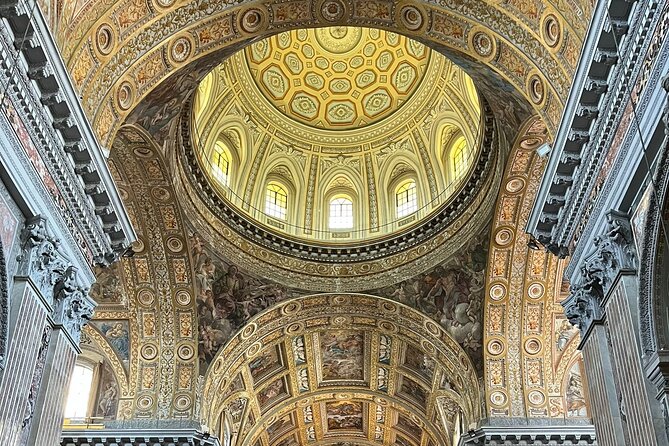
The walk ends at Piazza del Gesù Nuovo, one of the main squares in Naples’ historic center. The guide discusses the Church of Gesù Nuovo and the surrounding area, including historical events and less obvious stories tied to the square.
This is a practical ending point. You are still in the old center, not stranded at the edge of town, and you can continue walking, find a meal, or make your way toward other sights. The tour does not include hotel pickup, so you arrange your own way to the starting point and your own onward plans after the finish.
Ending here also gives the route a clear shape. You begin with St. Gennaro and cathedral devotion, pass through crafts, food streets, folk beliefs, and public art, then finish in a major square where Naples’ religious and civic stories meet.
What the two-hour format really gives you
The route is listed at approximately two hours, with stops ranging from five to 20 minutes. That is enough to cover a lot of ground, but it also means the tour moves at a firm pace.
I would view it as a city orientation with stories, not a full historical course. You get the names, locations, legends, and visual markers that help you understand the center. You do not get long interior visits, extended time at every church, or a detailed treatment of every artistic period.
The maximum group size is 15, which should make it easier to hear the guide and ask questions than on a large coach excursion. Still, the quality of the experience will depend heavily on the guide’s storytelling and English clarity. One participant found the historical content interesting but had trouble understanding Ludovica’s Italian pronunciation. Another felt the explanations lacked depth.
That mixed reaction is worth taking seriously. If you want clear, accessible highlights and a compact route, the tour may fit. If you want a guide who can handle detailed historical questions in fluent, easy-to-follow English, you may prefer a more specialist walk.
Is $54.01 a fair price?
At $54.01 per person, this is not a free walking tour, so the guide’s interpretation needs to justify the charge. The price covers an English-speaking guide, the organized route, and the convenience of fitting ten historic-center stops into two hours. The listed stops themselves are free, and food, drinks, hotel pickup, and tips are not included.
The value is strongest if you are new to Naples and want help making sense of the old center quickly. A good guide can save you time by explaining why the Duomo, Spaccanapoli, San Gregorio Armeno, Pulcinella, and Piazza del Gesù Nuovo belong in the same story.
The value is weaker if you are already comfortable navigating Naples or want substantial access to interiors. The short stop at Via dei Tribunali, for example, points you toward pizza but does not provide a meal. The Dolls Hospital and Purgatory complex are introduced briefly rather than explored at length.
A tip is recommended, though not included. You can cancel for a full refund up to 24 hours before the 4 p.m. start. The activity depends on good weather and a minimum number of participants, with another date or a full refund offered if it is canceled for those reasons.
Who should book this Naples walk?
I would choose this tour for a first afternoon in Naples, especially if you want a clear route through the UNESCO-listed historic center without spending half a day inside museums. It suits curious visitors who enjoy legends, religious stories, artisan traditions, street art, and quick photo stops.
It also works for people who want a small-group setting. With up to 15 participants, the group is limited enough to feel more personal than a large city tour, while still keeping the cost below many private walks.
I would be cautious if you need highly detailed scholarship, long visits, or consistently polished English delivery. The route is broad, and its strength is variety. You see many sides of Naples, but each one receives only a short explanation.
Final verdict: a lively introduction with limits
I like this walk for its choice of stops. St. Gennaro’s miracle, Jorit’s portrait, the Dolls Hospital, San Gregorio Armeno, the Purgatory skulls, and Pulcinella give you a more human Naples than a standard monument checklist.
The route also ends in a useful location and offers free cancellation until 24 hours before departure. Just remember that the tour is compact, the stops are brief, and the historical detail may not satisfy you if you want a specialist guide.
Book it if you want a story-filled orientation to central Naples, particularly on your first visit. Skip it if you prefer to set your own pace, spend a long time inside churches, or receive advanced historical commentary. For the best experience, arrive ready to walk, dress properly for the Duomo, keep your afternoon flexible, and return later to the places that catch your attention.
FAQ
Where does the tour start?
The tour starts at Duomo di Santa Maria Assunta, Via Duomo 147, Naples.
What time does the tour begin?
The start time is 4 p.m.
Where does the tour end?
The tour ends at Piazza del Gesù Nuovo in Naples’ historic center.
How long does the tour last?
The tour lasts approximately two hours.
Is the tour offered in English?
Yes. An English-speaking guide leads the experience.
How many people can join the tour?
The group has a maximum of 15 participants.
Is food or drink included?
No. Food and drinks are not included, including any optional lemonade at the Pulcinella stop.
What should I wear?
Wear comfortable walking shoes and cover your shoulders if you plan to enter the Naples Duomo.
Just added around Naples
- Naples: Guided Walking Tour★ 4.7 · 63 reviews
- Wine tasting in the Vesuvius National Park★ 3.5 · 4 reviews
- Visit the Museum MANN with a professional guide★ 5.0 · 3 reviews
- Walking-tour of Naples hystorical Centre★ 4.4 · 4 reviews
- Naples: Pompeii and Vesuvius Skip-the-Line Day Trip★ 3.8 · 32 reviews
- Vesuvius – Herculaneum – Pompeii Excavations Tour★ 4.2 · 9 reviews
- Pompeii: Vesuvius at Sunset★ 3.5 · 31 reviews
- Vesuvius and Herculaneum from Naples★ 3.7 · 29 reviews
Historical Tours, compared.

Street Art & History Tour in the Spanish Quarters
Read our review →
Historic Center and Sansevero Chapel Walking Tour
Read our review →


Guided Tours of Pompeii Excavations Historical and Cultural Itineraries
Read our review →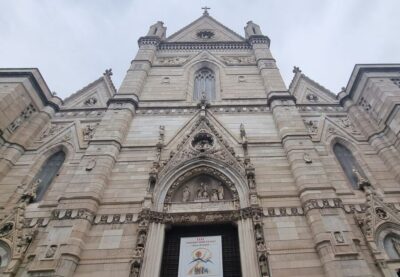
Private Walking Tour through the Historical City of Herculaneum
Read our review →
Interactive audio guide for the historic center of Naples
Read our review →Browse the lists this tour appears in