
Reviewed · PRIVATE TOURS IN POMPEII
Late Afternoon Best time to visit Pompei on a private tour
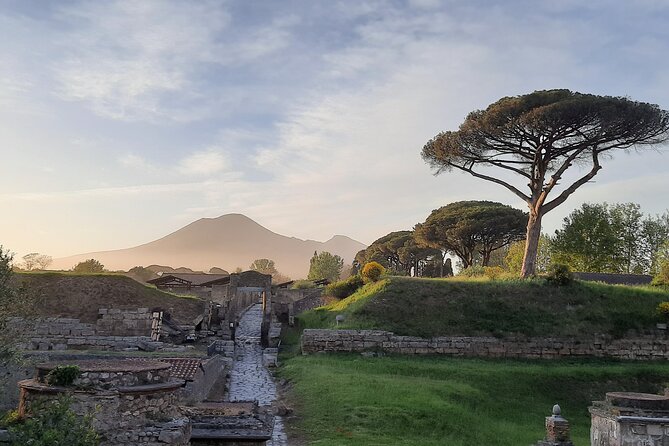
Pompeii is at its best when the hard sun softens and the ancient streets take on a warm glow. This private late-afternoon walk with Alex gives you a focused route through the buried city, from the forum and Temple of Apollo to homes, shops, theaters, and the plaster casts of people caught by the eruption of AD 79.
I like two things here: the private format, which lets Alex adjust his pace to your group, and the timing, which can mean cooler air and fewer people than a midday visit. The main catch is simple: the advertised price does not include Pompeii’s €18 adult entrance ticket, and two hours is enough for a strong introduction, not the entire archaeological park.
Key points at a glance
- Late-afternoon timing: You avoid the strongest heat and may see the ruins in warm, golden light.
- Private guide Alex: The route can respond to your questions, pace, and interests.
- Porta Marina entrance: The walk begins at Pompeii’s sea gate, with an introduction to the eruption and ancient city.
- A well-chosen route: The visit includes the forum, baths, theater, House of Menander, bakery, street-food counter, and plaster casts.
- Extra cost to plan for: Adult admission is €18, while children under 18 enter free.
- Two-hour focus: This suits first-time visitors who want the major sights explained without spending half a day on site.
Why late afternoon works so well at Pompeii
Pompeii can be a tiring place at midday. The site is broad, much of the walking is over uneven ancient paving, and shade is limited. A late-afternoon start gives you a better chance of enjoying the ruins without the full force of the day’s heat.
The light also changes the mood. Walls, columns, and faded frescoes can look softer as the sun drops, and the open forum feels less harsh than it does beneath a bright noon sky. Sunset timing depends on the season and the tour schedule, so think of this as an evening-leaning visit rather than a guaranteed sunset tour.
You meet at Via Villa dei Misteri, 2, near Porta Marina, the old sea gate. The tour ends back at the meeting point. Since the guide is licensed and your group is private, you are not tied to a large party’s pace. That matters in Pompeii, where one person may want to stop at a painted wall while another wants to move on to the next street.
More Private Tours in Pompeii
- Pompeii private tour with an Official Guide
★ 5.0 · 631 reviews - Pompeii Private Tour with an Archaeologist and Skip The Line – 3 hours
★ 5.0 · 564 reviews - Visit in Pompeii – Pompeii Private Tour with Ada
★ 5.0 · 436 reviews
Starting at Porta Marina and setting the scene
The opening talk covers the eruption of AD 79 and the background of the city before you begin the main walk. This is useful because Pompeii can initially feel like a huge collection of broken walls. A clear explanation helps you understand how the streets, homes, religious buildings, shops, and public spaces fitted together.
The route begins at Porta Marina, one of the city’s main entrances. From here, Alex introduces the eruption and the ancient urban plan before leading you toward the central sights.
The guide’s role is especially important in the first few minutes. Without context, a low stone counter may look like part of a ruin. With an explanation, it becomes part of a bakery or food shop. A broad open space becomes the center of public life, not just another patch of stone.
The Forum and Temple of Apollo
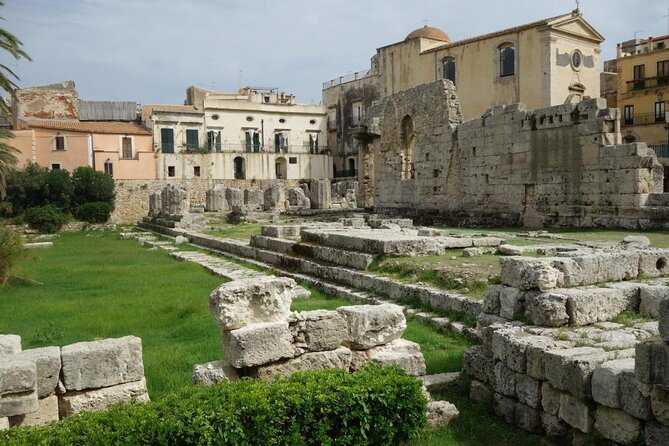
The Forum was Pompeii’s main square and the center of political, economic, religious, and social activity. It is one of the essential stops, but its value comes from learning how people used it. This was where public business, worship, commerce, and civic life met.
The forum is open and exposed, so a late visit can make a real difference. The changing light helps the surviving columns and surrounding buildings read more clearly, while the cooler air makes it easier to pause and listen.
Nearby, the Temple of Apollo brings mythology and religion into the walk. The stop is brief, but it adds balance to the tour. Pompeii was not only a place of private homes and businesses. Worship shaped the city too, and this temple helps show that public belief was built into everyday life.
The Stabian Baths and Pompeii’s water system
The Stabian Baths are among the most appealing stops for anyone curious about ordinary Roman life. These ancient public baths were more than places to wash. They were social spaces, and their remains help you picture how public facilities worked in a Roman city.
The tour also covers Pompeii’s water system. That detail may sound less dramatic than frescoes or plaster casts, but it gives the ruins practical meaning. Water had to be brought into the city and distributed to homes, baths, fountains, and businesses. Once you understand that system, Pompeii feels less like a frozen stage set and more like a functioning town.
This section can be particularly helpful for families and teenagers. Alex’s explanations connect visible stonework with daily routines, giving younger visitors something concrete to follow instead of asking them to admire ruins without context.
More ways to see Pompeii:
- Pompeii Small Group Tour with an Archaeologist
★ 5.0 · 6,593 reviews - Discover the Ancient Ruins of Pompeii: Day Trip from Rome
★ 3.5 · 2,247 reviews - Pompeii and Herculaneum Small Group Tour with an Archaeologist
★ 5.0 · 1,350 reviews - Skip the Line Guided Tour of Pompeii led by an Archaeologist
★ 5.0 · 703 reviews
Teatro Grande and the public side of Pompeii
The Teatro Grande, described as the Greek theater, shows the city’s interest in performance and public entertainment. A theater is easier to understand than many ruined buildings because its purpose remains familiar. You can see how the shape of the space directed attention toward the stage and gathered people together.
The stop lasts about 15 minutes, enough to get the layout and meaning without letting one site consume the whole visit. That balance matters. Pompeii contains more buildings than any short tour can cover, so a guide has to keep the route moving.
Theater visits also provide a break from the dense streets. You get a different sense of scale and a reminder that Pompeii’s residents enjoyed organized public events, not just work, worship, and household life.
House of Menander and the pleasures of a Roman home
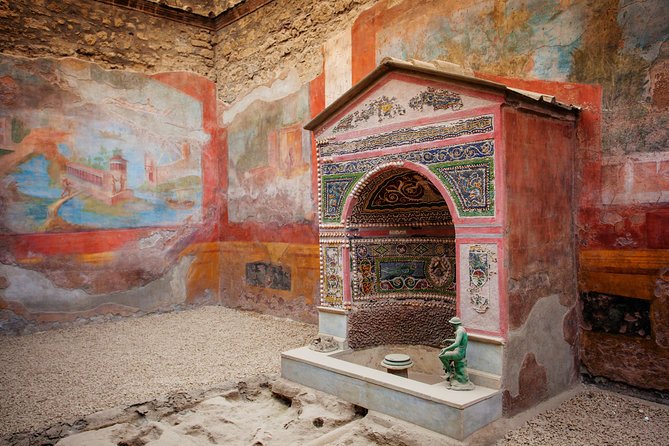
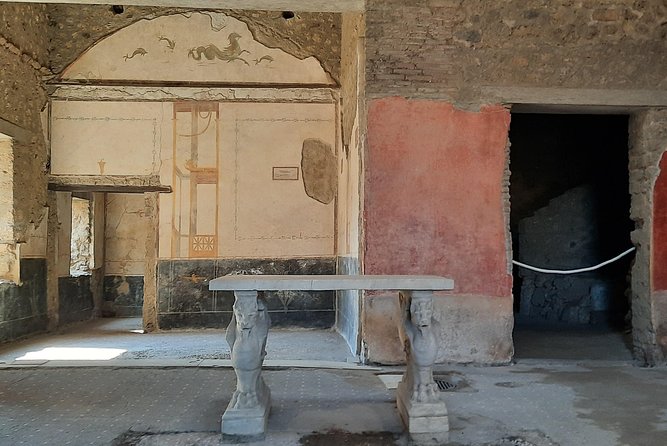
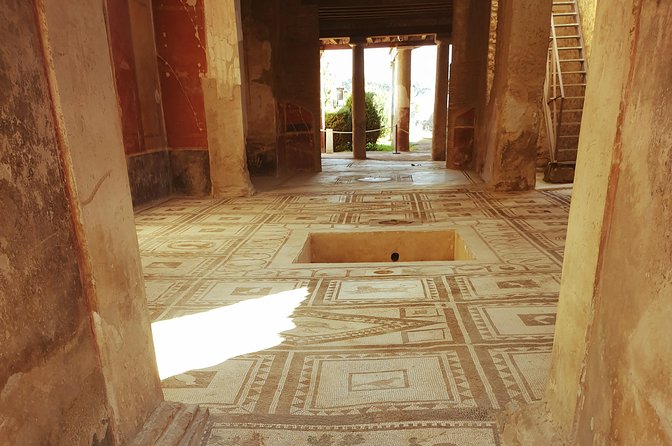
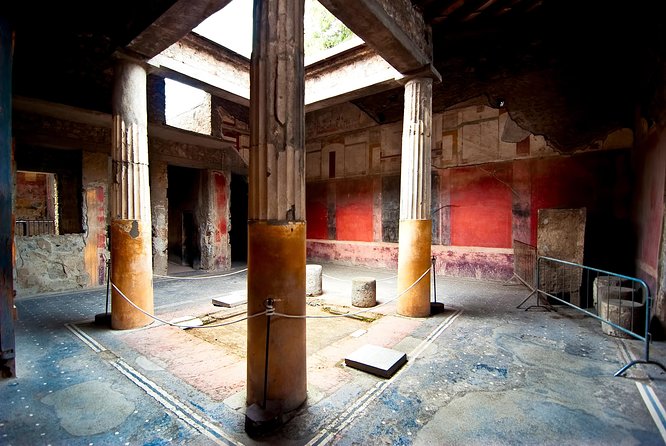
The House of Menander is one of the tour’s richest domestic stops. It is a Roman domus with fresco paintings and mosaics, offering a glimpse into the private world of a prosperous household.
The house selected for the broader home visit may vary according to crowd levels, opening rotation, or your specific request. That flexibility is useful because Pompeii’s buildings do not all have the same access every day. It also means you should not assume that one particular house is guaranteed unless Alex confirms it.
The House of Menander is a strong choice for understanding status and taste. Decorative walls and patterned floors were not random decoration. They helped communicate wealth, education, and social standing to anyone entering the home. Alex can also help you read the building as a lived space, rather than just a collection of rooms.
Because this is a private tour, you can ask about the details that catch your eye. If frescoes interest you, say so. If you would rather focus on household routines and architecture, the route can give those subjects more attention.
Bakery, street food, and the working city
The Panificio di Popidio Prisco brings Pompeii down to street level. This roughly 2,000-year-old bakery includes an oven and mills, showing how food was produced before it reached the table.
A bakery is an excellent counterpoint to the grand forum and wealthy homes. It reveals the practical work that kept the city fed. The oven and mills make the process easier to imagine, even when the surrounding building is incomplete.
Next comes the Termopolio di Vetuzio Placido, an ancient street-food counter. The name may be a mouthful, but the idea is familiar: Pompeii had places where people could buy prepared food outside the home.
These stops are among the most useful for understanding everyday life. They also give children and teens memorable visual details. A counter with serving openings is easier to picture than an abstract lesson about Roman commerce.
The plaster casts and the human cost of the eruption
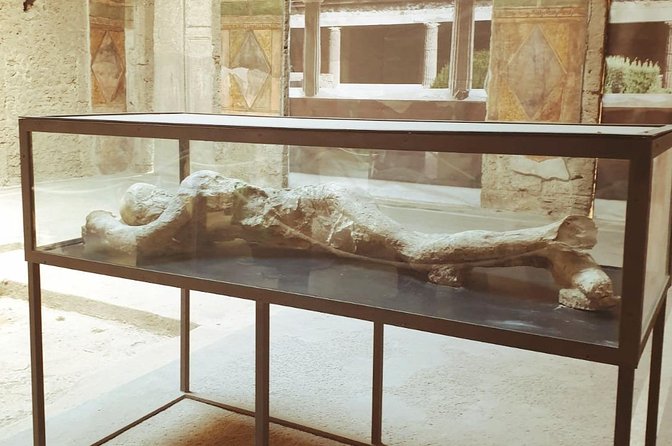
The Orto dei Fuggiaschi contains plaster casts of victims of the eruption. This is the most emotionally difficult part of the route, and it should not be treated as a simple photo stop.
The casts preserve the shapes of people in their final moments. They make the disaster personal in a way that walls and objects cannot. Pompeii’s archaeology is fascinating, but it is also a record of lives abruptly ended.
Alex’s introduction to the eruption helps place these casts in context. The subject can be upsetting, especially for children, so families should decide in advance how much detail feels right. The stop is important, but you do not need to linger if it feels too heavy.
This is also where the late light can create a strange contrast. The pleasant evening atmosphere does not soften the meaning of what happened. It may make the experience more reflective, but it does not make it easy.
What Alex adds to a short private visit
The strongest reason to choose this experience is the guide. Alex is described as energetic, patient, and able to keep both adults and children involved. His style appears to combine quick movement through the site with pauses for explanation when a building or question deserves more time.
That balance is valuable in Pompeii. Move too slowly and you see only a small corner. Move too quickly and the city becomes a blur of stones. Alex’s approach is to cover a lot while stopping where the story matters.
A private guide also helps if your group moves at different speeds. One family group of two adults and four teenagers found the two-hour route engaging even on a very hot day, while another group praised Alex for being patient with slower walkers. Those details suggest a guide who can adjust rather than deliver a fixed speech at one speed.
The experience is also suitable for repeat visitors. One person had already visited Pompeii several times and still found Alex’s educational approach worthwhile. That makes this more than a basic checklist tour, provided you are willing to ask questions and tell the guide what you have seen before.
Is $249 good value for two hours?
The price is $249 for a private experience, before entrance fees. Adults pay €18 for admission, while children under 18 enter free. Skip-the-line tickets can be purchased through the guide on request.
For a solo visitor or couple, $249 is a significant outlay. You are paying for a private licensed guide, not a low-cost group walk. The value improves when the cost is shared among several people, especially if you want a tour that includes children, older relatives, or friends with different interests.
The two-hour length keeps the experience manageable, but it also limits coverage. Pompeii is too large for a complete visit in that time. You will see a carefully chosen selection of major places, not every house, street, or public building.
I would judge the price by your priorities. If you want historical context, personal attention, and a cooler time of day, the private format can make sense. If you are happy to explore alone and read signs at your own pace, the cost may feel high once admission is added.
Practical details before you book
The experience includes a mobile ticket, but the Pompeii entrance fee is separate. Confirmation arrives at booking, and the tour is private, meaning only your group participates.
The meeting point is Via Villa dei Misteri, 2, 80045 Pompei, near the Porta Marina entrance. Public transportation is nearby, and service animals are allowed. Most people can participate, but you should expect cobblestones, uneven surfaces, and steady walking through an open archaeological site.
The activity requires good weather. You can cancel for a full refund up to 24 hours before the start time. Cancellations or changes made within 24 hours are not refunded or accepted, and the cut-off follows local time. If poor weather forces cancellation, you are offered another date or a full refund.
Who should book this Pompeii tour?
I would choose this for a first visit, especially if you have only a short window in Pompeii and want the main story explained. It also fits families well, since Alex’s style has kept both children and adults engaged.
It is a good match for anyone who dislikes hot midday sightseeing. The late start may offer cooler conditions, less crowd pressure, and softer light, though seasonal opening hours and sunset timing can affect the exact feel.
I would hesitate if you want a full-day archaeological study or a slow photographic exploration. Two hours moves at a purposeful pace, and the entrance fee is not included in the $249 price.
For most first-time visitors who value a personal guide, I think the strongest case is Alex himself. His ability to explain, answer questions, and adjust to a group can turn Pompeii from a difficult site to decode into a place you can actually picture as a living city.
FAQ
How long is the private Pompeii tour?
The tour lasts approximately two hours.
Where does the tour begin?
It begins at Via Villa dei Misteri, 2, 80045 Pompei, near Porta Marina, the sea gate.
Where does the tour end?
The activity ends back at the meeting point.
Is the Pompeii entrance ticket included?
No. Adult admission costs €18, and entry is free for visitors under 18. Skip-the-line tickets can be purchased through the guide on request.
Who leads the private tour?
The private licensed guide is Alex.
What sights are included?
The route can include the Forum, Temple of Apollo, Stabian Baths, Teatro Grande, House of Menander, a bakery, an ancient street-food counter, shops and workshops, the water system, and plaster casts of eruption victims. The specific house visit can change based on crowds, opening rotation, or your request.
Can I cancel for a full refund?
Yes, if you cancel at least 24 hours before the experience begins. Cancellations or changes within 24 hours are not refunded or accepted. If poor weather causes the tour to be canceled, you are offered another date or a full refund.
Just added around Pompeii
- Wine Tasting and Winery Tour in Vesuvio National Park with Lunch★ 4.5 · 3 reviews
- Mt. Vesuvius Wine Tasting and Lunch Experience from Pompeii★ 4.5 · 20 reviews
- Wine tasting in the Vesuvius national park★ 5.0 · 3 reviews
- Traditional Neapolitan Dinner in Pompei – Villa Franca – Family Restourant★ 5.0 · 8 reviews
- Private Guided Tour and VR Headsets in the Ancient Pompeii★ 5.0 · 3 reviews
- Visit Pompeii with a local expert guide★ 5.0 · 10 reviews
- Tour Mount Vesuvius with Entry Tickets and Round Trip Transfer Included★ 3.5 · 4 reviews
- Vesuvius tour entrance to the crater and return bus★ 4.5 · 9 reviews
Private Tours in Pompeii, compared.

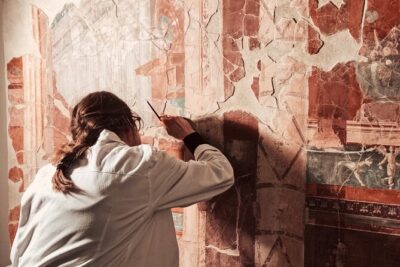
Pompeii Private Tour with an Archaeologist and Skip The Line – 3 hours
Read our review →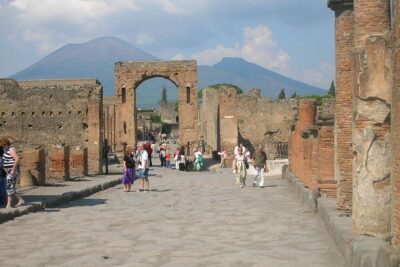
Visit in Pompeii – Pompeii Private Tour with Ada
Read our review →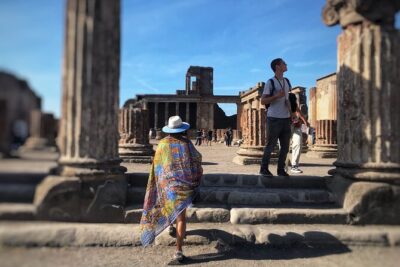
Pompeii Private Tour with an Archaeologist and Skip The Line
Read our review →
Pompeii Vineyard Escape: Private Wine Tasting & Lunch
Read our review →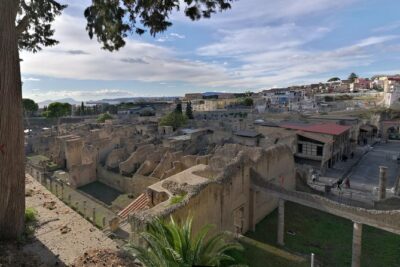
Private Day Tour to Vesuvius, Herculaneum & Pompeii with Pick Up
Read our review →
Guided Small Group Tour Max 6 People with Private Option
Read our review →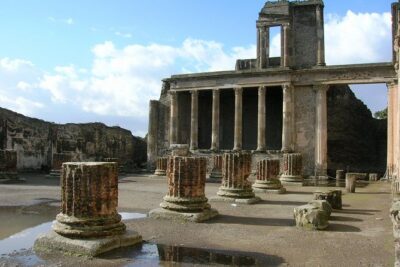
2 Hour Private Tour with an Archeologist Guide
Read our review →Browse the lists this tour appears in