
Reviewed · HERCULANEUM TOURS FROM NAPLES
Naples: Pompeii and Herculaneum Private Walking Tour
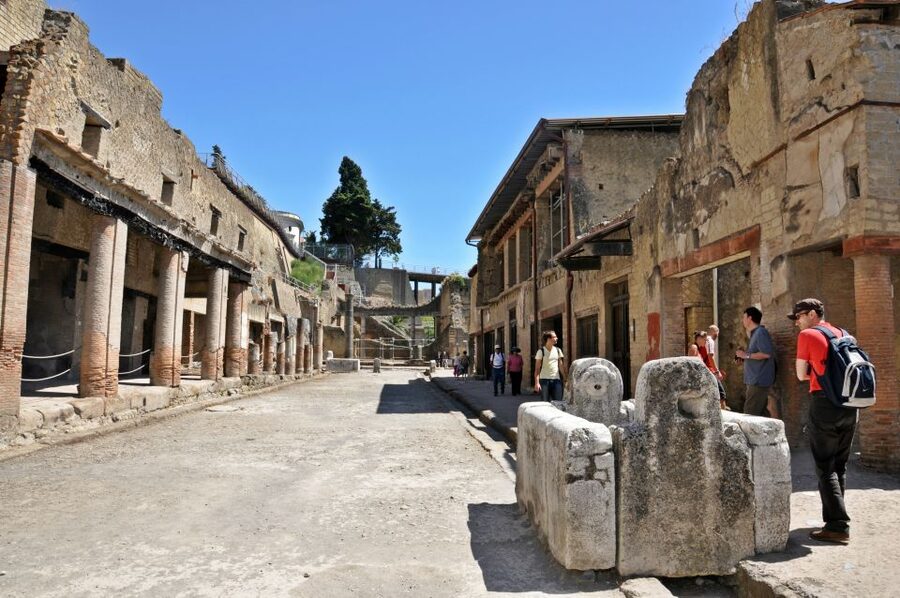
Herculaneum gives you the close-up shock, Pompeii gives you the grand scale. In one half-day, you see two Roman towns destroyed by Vesuvius in 79 AD, then compare how ash and mud preserved them in very different ways. Herculaneum’s upper floors, carbonized wood, mosaics, and paintings are unusually clear. Pompeii feels bigger and more like a whole city waiting to be explored.
I like this tour for two reasons: the private guide makes both sites easier to understand, and the pairing gives you a far better picture of Roman life than visiting either site alone. Guides such as Michele, Giulia, Jasmine, Maria Laura, Alexander, and Paulo have been praised for clear explanations, patience, humor, and flexibility. The main drawback is practical: you must arrange your own transportation between the sites, and five-plus hours of walking in the sun can be tiring, especially in summer.
Key points at a glance
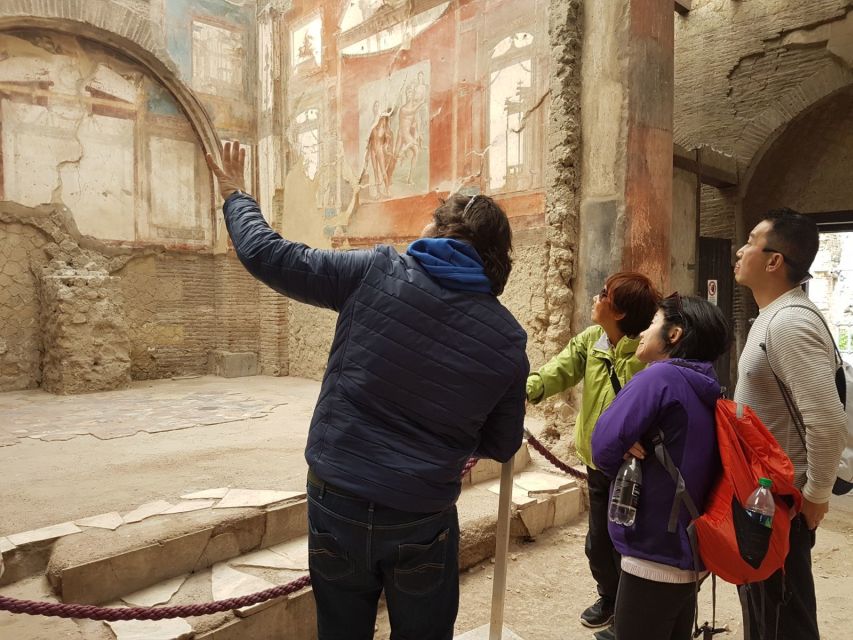
- Herculaneum’s preserved upper floors: Mud buried the town under about 20 meters, protecting wooden objects, painted walls, and mosaics.
- Pompeii’s western quarter: The two-hour visit focuses on major public buildings, private homes, shops, and the town’s most important streets.
- A genuinely private experience: Your guide can answer questions and adjust the pace more easily than a large group tour.
- Two sites, two kinds of evidence: Pompeii shows the city’s scale, while Herculaneum offers sharper details of domestic life.
- Four hours of guided touring: Plan on two hours at each archaeological site, plus the transfer between them.
- Best for history-minded visitors: You’ll get more from the ruins if you want context, not just time to wander and take photographs.
Why pairing Pompeii with Herculaneum makes sense
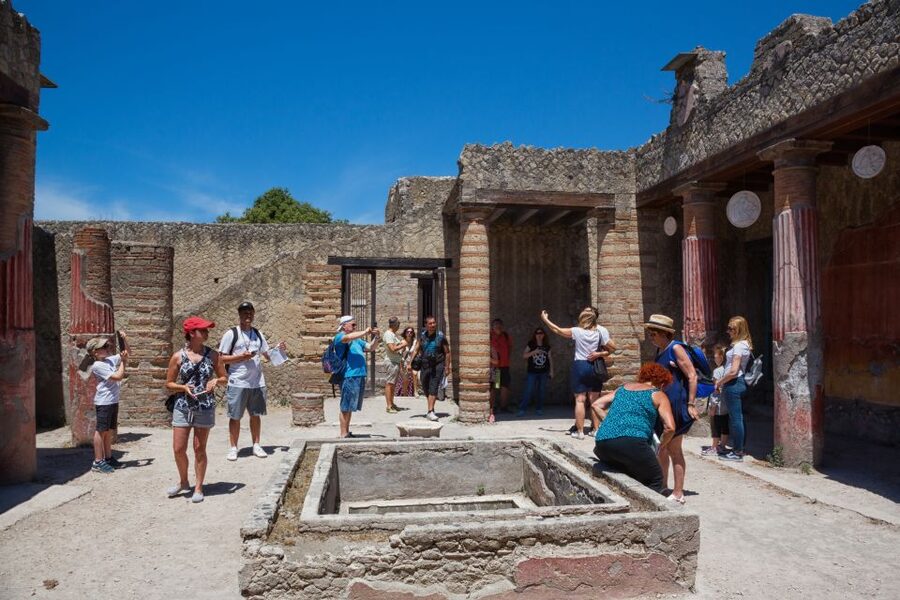
If you have only seen photographs of Pompeii, Herculaneum may surprise you more. Pompeii was covered by roughly four to five meters of ash. Herculaneum was buried by a much thicker avalanche of mud, and that difference protected parts of the town that usually disappear over time.
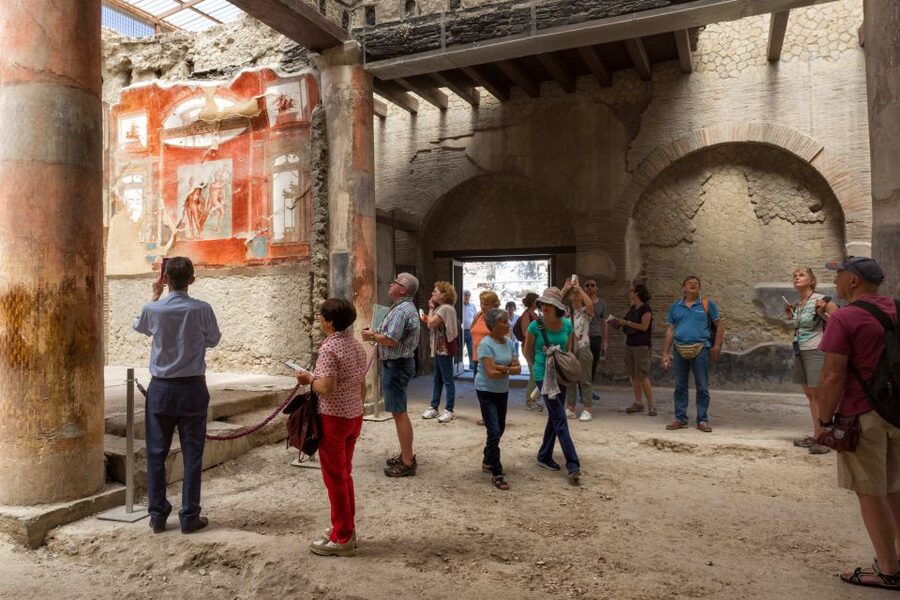
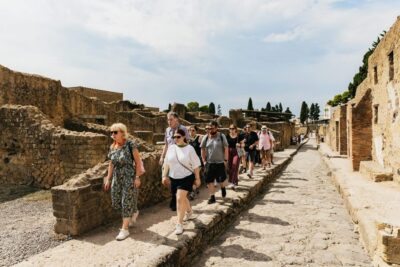
At Herculaneum, you can still see second storeys in places, carbonized wooden objects, intact mosaics, and painted decoration. The site is smaller, so a guide can help you notice details that might otherwise blur together. A doorway, wall painting, or household object becomes more useful when you understand what it tells you about Roman homes and daily routines.
Pompeii supplies the scale. Its streets, public buildings, houses, and shops spread across a much larger area, giving you a stronger sense of a functioning Roman town. The city feels less like a single archaeological display and more like an interrupted neighborhood.
I like seeing Herculaneum first because it gives you a set of visual clues. Then, at Pompeii, you can use those clues to make sense of the larger urban plan. The two-hour limits at each site also impose some discipline. You will not see every corner, but you should come away with a focused look at the highlights rather than a weary march through every available street.
More Herculaneum tours:
- Herculaneum: Skip-the-Line Guided Tour with Archaeologist
★ 4.8 · 3,439 reviews - Herculaneum Small Group Tour and Ticket With an Archaeologist
★ 5.0 · 994 reviews - Herculaneum: Skip-the-Line Entry Ticket with Audio Guide
★ 4.3 · 870 reviews
Starting at Herculaneum’s ticket office
The tour begins at the ticket office of the Herculaneum ruins on Via dei Papiri Ercolanesi. Your guide is supposed to meet you at the entrance gate holding a sign with your name. That arrangement is simple, but allow time to find the correct ticket office and arrive ready to walk.
Entrance to Herculaneum is included, listed at 16 euros per person, and skip-the-line entry is part of the activity. The tour is sold as a private group, so you are not sharing the guide with a large crowd. That matters at an archaeological site, where a good explanation can be hard to hear when several groups gather in the same narrow space.
Bring your passport or ID card, comfortable shoes, a hat, and water. Backpacks and umbrellas are not allowed, so pack lightly. The advice about water is not decorative. One family found the heat intense, and open archaeological sites offer limited relief from strong sun.
Two hours among Herculaneum’s unusually clear remains
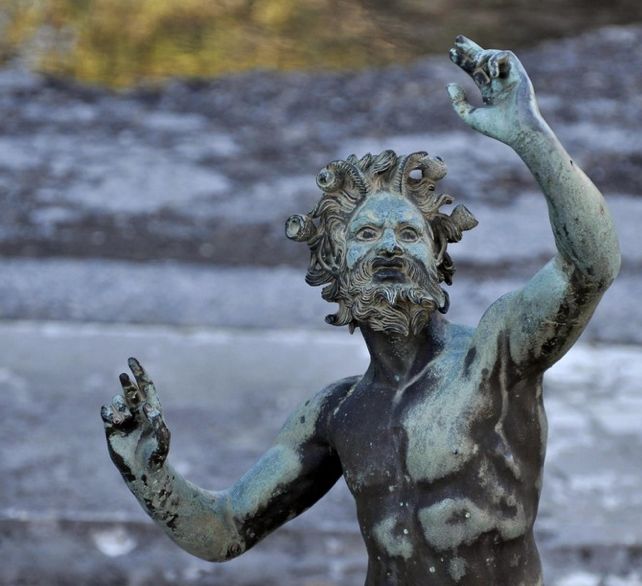
Herculaneum is the quieter, more concentrated half of the tour. The smaller footprint means you can spend more time looking closely at walls, floors, and surviving building details instead of simply covering distance.
The burial material explains much of what you see. Thick mud sealed buildings and objects, helping preserve features that ash alone would not have protected in the same way. Your guide will bring the town back into focus with explanations of the buildings, Roman culture, and the eruption.
The special appeal here is the sense of vertical space. Surviving second storeys make the ancient town feel less flattened than many archaeological sites. Carbonized wood and household furnishings add another layer. Paintings and mosaics are not just decoration. They show the care given to private rooms and help you picture how Roman homes were designed.
This is where a private guide earns the fee. You can ask why a feature survived, how a room may have been used, or what separates Herculaneum from Pompeii. Guides named Michele, Giulia, Jasmine, Maria Laura, Alexander, and Paulo have all been praised for detailed explanations and for handling questions well, but your actual guide will depend on the date and language selected.
Herculaneum can be covered more quickly than Pompeii, but do not mistake smaller for less important. Its compact size and strong preservation make it a good first lesson in what Vesuvius destroyed and what the burial conditions happened to save.
The transfer to Pompeii requires your attention
After Herculaneum, the tour moves to Pompeii by train. Transportation is not included, so you need to budget for and arrange this part yourself, unless your guide helps with the practical details on the day.
The supplied schedule shows a 20-minute train transfer, which fits the overall timing far better than the separate itinerary notation that lists 20 hours. Treat the transfer as approximately 20 minutes, but confirm the exact meeting and transport instructions before you go. The guide’s flexibility with start time and logistics can be useful, especially if you are coordinating trains or other plans.
This is one of the tour’s less polished points. The archaeological guiding is the main strength, while the connection between the two sites is something you should plan carefully. Since food and drinks are not included, bring water and consider eating before or after the tour rather than counting on a meal during the walking program.
More ways to see Pompeii:
- From Naples: Pompeii Ruins & Mount Vesuvius Day Tour
★ 4.3 · 11,459 reviews - Naples or Sorrento: Full-Day Pompeii and Mount Vesuvius Tour
★ 4.6 · 4,235 reviews - Pompeii & Mt.Vesuvius Day Tour from Naples with Pizza Lunch
★ 4.0 · 2,901 reviews - From Naples: Pompeii Skip-the-Line Entry Ticket and Tour
★ 4.4 · 2,753 reviews
Two hours in Pompeii’s western section
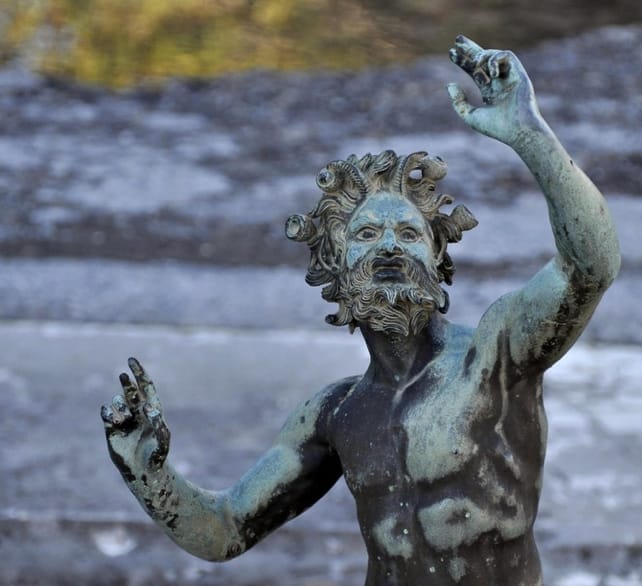
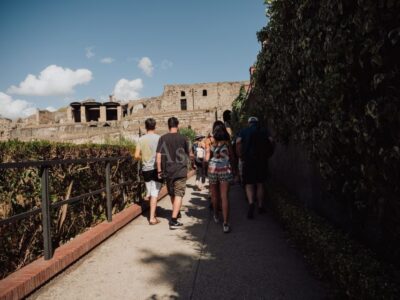
Pompeii is much larger, so the tour concentrates on the western part of the ancient town. You will see major public buildings, private houses, and shops, along with the streets that connect them.
The result is a useful cross-section of city life. Public spaces show how the town worked as a civic center. Homes reveal status, decoration, and household design. Shops make the streets feel practical rather than ceremonial. Your guide’s job is to connect these pieces so Pompeii becomes more than a collection of walls.
Pompeii can feel lively even after nearly two thousand years because its streets and buildings remain legible. You can follow the layout of the town and understand how people moved between home, business, and public life. The guide also explains how Romans lived, which gives the ruins a human scale.
The western section cannot represent every part of Pompeii. If you want a full-day archaeological survey, this is not it. The benefit is that you spend two focused hours on the most important highlights without exhausting yourself before the return journey.
Expect uneven ground and sustained walking. Comfortable shoes are essential, and a hat and water will make the afternoon easier. The sites are exposed, and one particularly enthusiastic assessment of the tour still noted that it was really hot. That is a useful warning, not a minor footnote.
What the private guide adds
A self-guided visit gives you freedom, but it also leaves you to sort out a huge amount of information. At Pompeii especially, it is easy to see a wall, shop, or painted room without understanding why it matters.
A private guide gives you a thread to follow. The best guides on this tour have been described as clear, engaging, patient, and willing to answer many questions. Giulia was noted for her humor and communication. Jasmine handled detailed questions. Paulo was praised for explaining Roman culture in very good English. Michele was credited with spending about five hours with the group and offering thorough explanations.
Those names do not guarantee who you will meet, but they show the level of guide-led experience this tour aims for. Languages include English, Spanish, Italian, French, German, Russian, Chinese, Japanese, and Portuguese. Check that your preferred language is available when choosing a date.
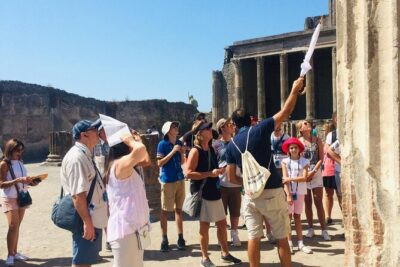
The private format is especially useful for families and curious adults. You can ask for more detail when something catches your attention, or keep moving when a room does not interest you. A large group rarely gives you that freedom.
Is the $331.36 price fair?
At $331.36 per person, this is not a budget way to see Pompeii and Herculaneum. The value depends on how much you want from the visit.
The price includes a private guide, Herculaneum entrance at 16 euros per person, and Pompeii Express entrance. It does not include transportation, food, drinks, or personal expenses. If you are comparing the cost with a basic admission ticket, it will look high. If you are comparing it with two separate guided visits, private attention, and skip-the-line access, the calculation becomes more reasonable.
I would consider it good value for a small family or group that wants one guide for both sites. You avoid having to research the ruins in advance, and you get a single explanation that compares the two cities. The price is harder to justify if you mainly want to wander alone, take photographs, or spend many hours at each site.
The tour also saves planning time. You do not have to decide which buildings matter most once inside. That can be worth real money during a short Campania stay, particularly if you are visiting from Naples and want a structured half-day.
Who should book this tour?
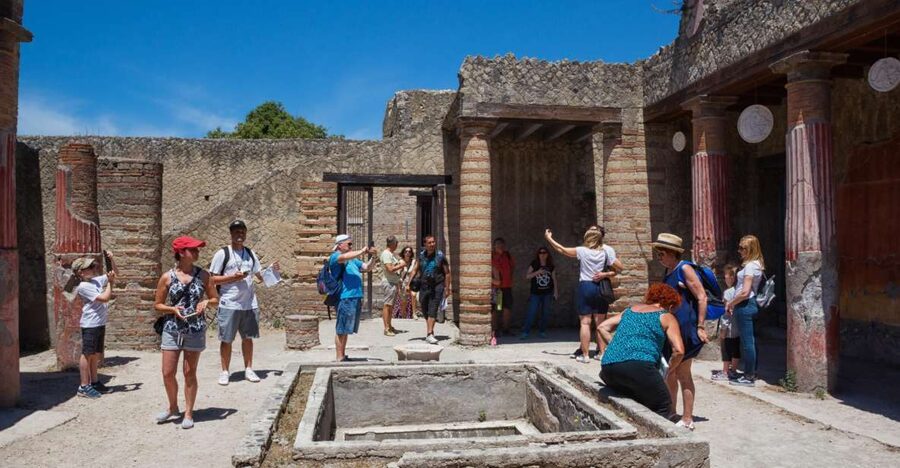
Book it if you want both ancient cities in one organized visit and prefer explanations to audio guides or guidebooks. It is a strong choice for first-time visitors, families, and anyone who wants to ask questions as they go.
It also suits people who want a private experience rather than a large group. The private format can make the four hours feel more personal and less rushed, although the fixed two-hour blocks still mean you cannot linger everywhere.
Think twice if you use a wheelchair. The activity is specifically not suitable for wheelchair users. Also reconsider it if you dislike long walks, hot outdoor sites, or arranging your own transport between stops.
The tour offers free cancellation up to 24 hours in advance and a reserve-now, pay-later option. On the first Sunday of each month, entrance is free, but tickets cannot be reserved ahead of time, so entry is not guaranteed. That is one date when the included ticket arrangement may be more valuable than trying to arrive independently.
Should you book it?
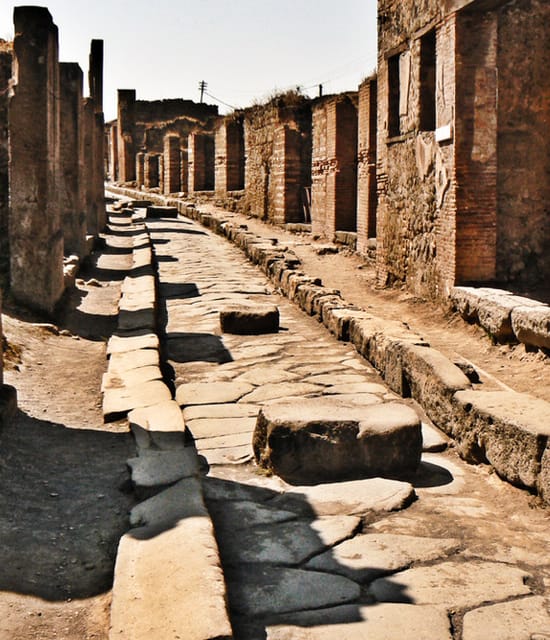
I would book this tour if your goal is understanding, not simply checking Pompeii off a list. Herculaneum gives you preserved rooms and objects at close range. Pompeii gives you a wider view of Roman urban life. Together, they explain far more than either site can do alone.
The strongest reasons to book are the private guide, the carefully limited focus at both ruins, and the chance to compare two different kinds of preservation. The main cautions are the high per-person price, excluded transportation, hot walking conditions, and the need to confirm the exact transfer and ending arrangements.
If you can afford the private format and have only half a day, this is a sensible way to see the two Campanian sites. If you want the lowest cost or a slow, independent exploration, buy your own entry and plan a longer visit instead.
FAQ
How long does the tour last?
The activity lasts about 5.5 hours. It includes a two-hour guided tour of Herculaneum, a train transfer, and a two-hour guided tour of Pompeii.
Where does the tour begin?
The meeting point is the ticket office of the Herculaneum ruins on Via dei Papiri Ercolanesi. The guide will meet you at the entrance gate with a sign showing your name.
Where does the tour end?
The activity information says it ends back at the meeting point, while the listed itinerary identifies Pompei as the finish. Confirm the exact end point and return arrangements before booking.
Is transportation included?
No. Transportation between Herculaneum and Pompeii is not included. The itinerary indicates a train transfer of about 20 minutes.
Are entrance tickets included?
Yes. Herculaneum entrance tickets and Pompeii Express entrance tickets are included.
Is this a private tour?
Yes. The activity is offered for a private group with a live guide.
What languages are available?
Guiding is available in Spanish, English, Italian, French, German, Russian, Chinese, Japanese, and Portuguese.
What should I bring?
Bring your passport or ID card, comfortable shoes, a sun hat, and water. Backpacks and umbrellas are not allowed.
More Walking Tours in Naples
- Naples: Street Food Walking Tour with Local Guide
★ 4.8 · 4,256 reviews - Naples Spanish Quarters Walking Tour Street Art, Folklore & Sweet
★ 5.0 · 797 reviews - Naples: Old Town Guided Walking Tour
★ 4.8 · 553 reviews - Naples: Panoramic Walking Tour with Funicular
★ 4.8 · 543 reviews
Just added around Naples
- Wine tasting in the Vesuvius National Park★ 3.5 · 4 reviews
- Naples: Guided Walking Tour★ 4.7 · 63 reviews
- Naples: Pompeii and Vesuvius Skip-the-Line Day Trip★ 3.8 · 32 reviews
- Visit the Museum MANN with a professional guide★ 5.0 · 3 reviews
- Walking-tour of Naples hystorical Centre★ 4.4 · 4 reviews
- Vesuvius – Herculaneum – Pompeii Excavations Tour★ 4.2 · 9 reviews
- Pompeii: Vesuvius at Sunset★ 3.5 · 31 reviews
- Vesuvius and Herculaneum from Naples★ 3.7 · 29 reviews
Herculaneum Tours from Naples, compared.
Pompeii and Herculaneum Small Group Tour with an Archaeologist
Read our review →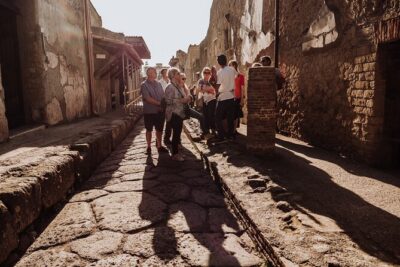
Herculaneum Small Group Tour and Ticket With an Archaeologist
Read our review →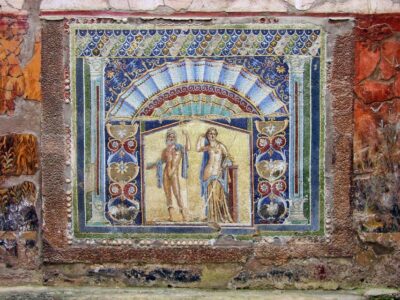
Pompeii & Herculaneum with Archaeologist Guide
Read our review →
Pompeii, Herculaneum, & Vesuvius Full-Day Tour
Read our review →
Herculaneum Entry Ticket with Optional Audio Guide
Read our review →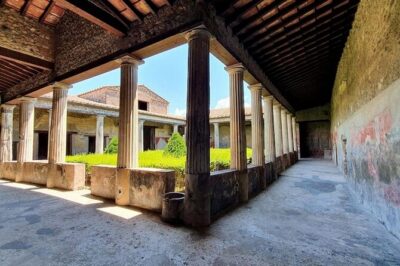
Day Trip of Pompeii, Herculaneum and Vesuvius from Naples
Read our review →Browse the lists this tour appears in