
Reviewed · HERCULANEUM TOURS FROM NAPLES
Herculaneum: Skip-the-Line Entry Ticket with Audio Guide
Herculaneum gives you something Pompeii often cannot: a more intimate look at Roman daily life. The compact ruins preserve wooden doors, beams, mosaics, painted rooms, furniture, and even food shops with startling clarity. Near the old shoreline, the boat chambers provide the site’s most moving moment.
I like the freedom to set your own pace, and the audio guide gives useful context without tying you to a group. I also like the included map, especially because the site’s streets and numbered points can be confusing at first. The main catch is that the audio guide and entrance process are not always perfectly coordinated, and you must check your booking option carefully because the entry ticket may be an extra.
Key points to know before you book
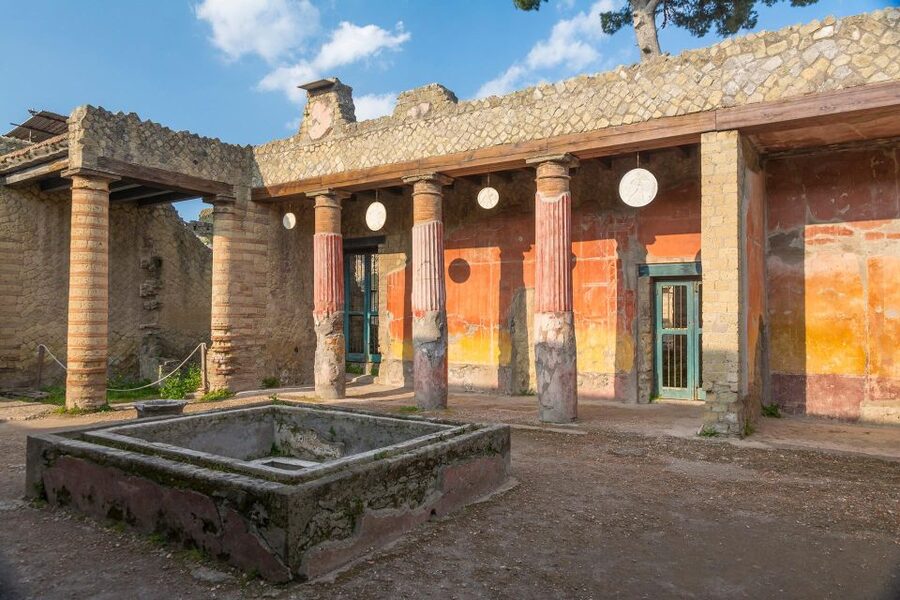
- The best-preserved Roman details: Look for wooden doors, colorful wall paintings, mosaics, beams, statues, and household spaces.
- A compact alternative to Pompeii: You can see the main site in about two to four hours, though a slower visit can take much longer.
- A flexible audio tour: Listen in English, French, German, Italian, or Spanish and choose your own route.
- A confusing ticket setup: Some booking options provide only the audio guide, so confirm that an Herculaneum entry ticket is included.
- A poignant shoreline visit: The chambers near the ancient sea offer a sobering reminder of the eruption and the people who waited for rescue.
- An early start helps: Morning visits tend to be quieter, while the cobbled ground and steep steps call for good shoes.
Why Herculaneum feels different from Pompeii
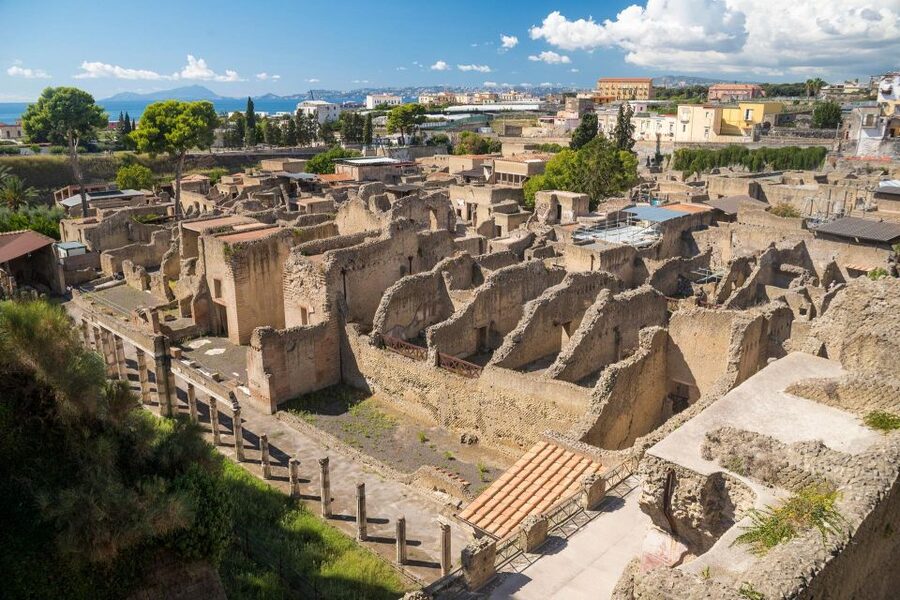
Herculaneum was a Roman seaside town buried during the eruption of Vesuvius in 79 AD. Pompeii was covered mainly by ash and pumice, while Herculaneum was struck by hot volcanic material that sealed many buildings in place. The result is a smaller site with an unusually high level of preservation.
That difference matters once you walk beyond the entrance. At Herculaneum, you are not only looking at foundations and walls. You can often see the materials and details that made a Roman home feel lived in: painted plaster, patterned floors, timber, doorways, counters, and household decoration.
The park is far more compact than Pompeii, which makes it easier to understand as a town. You can cross its streets without committing to a full day of walking, yet there is enough here for a careful three-hour visit. If you rush, you will miss the very details that make Herculaneum special.
I would not treat Herculaneum as a lesser version of Pompeii. The two sites answer different questions. Pompeii gives you scale and a vast urban plan, while Herculaneum gives you a closer look at rooms, decoration, construction, and domestic life.
More Herculaneum tours:
- Herculaneum: Skip-the-Line Guided Tour with Archaeologist
★ 4.8 · 3,439 reviews - Herculaneum Small Group Tour and Ticket With an Archaeologist
★ 5.0 · 994 reviews - From Naples: Pompeii & Herculaneum with Archaeologist Guide
★ 4.8 · 665 reviews
Collecting the ticket and audio guide
You begin at the Herculaneum Archaeological Park ticket office. Show your booking confirmation there and follow the staff’s directions for entry and the audio device.
This is the part that needs patience. Some visitors have been directed between the ticket office, an audio-guide desk, and another service point. In some cases, the audio device is issued separately, and you may need to leave a passport, identity card, or another accepted form of identification as security. Bring identification with you, as the published instructions specifically list a passport or ID card.
The phrase skip-the-line needs a little caution. At quiet times, there may be no meaningful line to skip. At busier times, the advantage can be useful, but the separate desks and unclear queue arrangements may reduce the benefit. If you arrive and do not see a clear line for prebooked tickets, ask staff where to go before joining the general queue.
The ticket wording also deserves close attention. The activity can be offered as an audio guide without admission, with the Herculaneum entry ticket selected as an extra. At around $15 per person, it can be good value, but only if you know exactly what your chosen option contains. Do not assume that every low-priced option includes both admission and the device.
Once you have the device and map, take a minute to get oriented. The audio guide uses numbered points of interest, but the numbers do not always match the physical order of the buildings. Some descriptions may appear out of sequence, and a few site numbers can be hard to identify.
Following the map through the ancient town
The map lets you make your own route instead of following a fixed group itinerary. You can start with the first numbered stop, move toward the major villas, or simply walk until a building catches your eye and then select its description.
That freedom is one of the activity’s best features. You can linger in a painted room, pause for photographs, or sit in a quiet area without worrying that a guide is waiting for you. You can also skip a crowded building and return later.
The downside is that the audio tour requires some self-management. The device may not use GPS, and the site numbering is not always obvious from inside a house. You may need to compare the map, building entrance, and number on the device before pressing play.
I recommend using the map as your main tool and the audio guide as a companion, not the other way around. Listen to the broad introduction first, then choose the individual houses and public buildings that interest you most. If a description seems to jump to another location, check the number before assuming you have walked in the wrong direction.
Villas, frescoes, and Roman home life
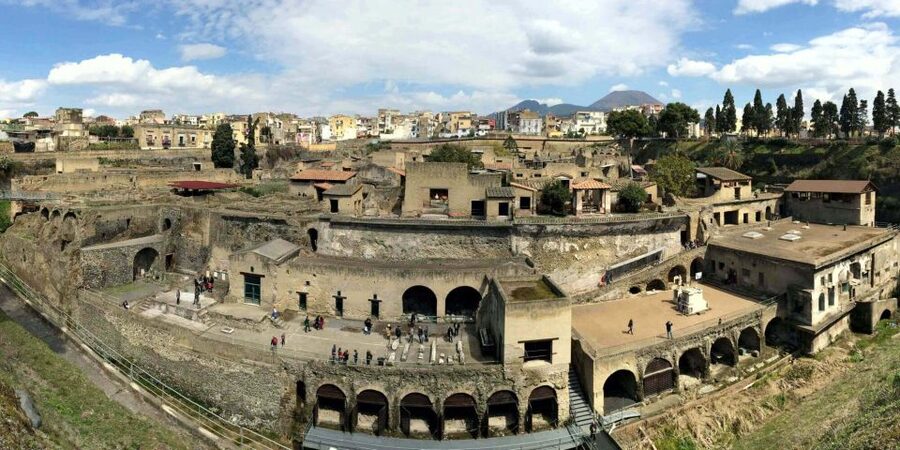
The homes are the heart of Herculaneum. The preserved walls and floor plans allow you to see how rooms connected, where light entered, and how decoration changed from plain service areas to more formal spaces.
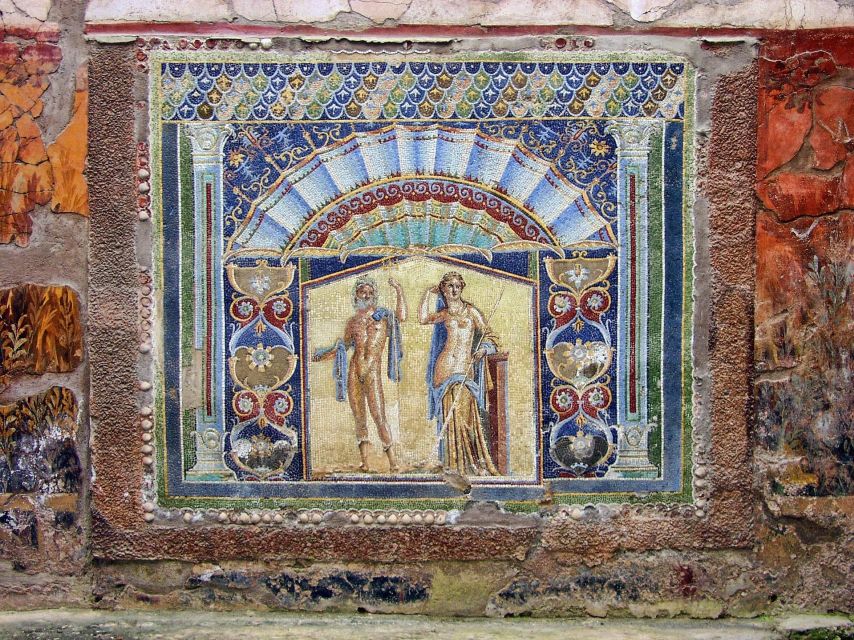
Look closely at the wall paintings and mosaics. Their colors can still be strong, and the repeated designs show how much attention wealthy residents gave to floors, thresholds, courtyards, and reception rooms. Some wooden doors and beams survived as well, offering a rare sense of the actual materials used in Roman construction.
The contrast between rich and poor households is also clear. Lavish homes had decorative floors, painted walls, and carefully designed rooms, while more basic quarters show a different standard of living. The audio guide helps explain these differences and gives you a better idea of how a Roman household functioned.
Do not race through the houses because the larger architectural features are easy to notice. The small ones are often better. Look for door frames, shelves, counters, plaster marks, and the relationship between a public room and a service space.
The guide’s commentary is detailed and generally easy to use, though several points may be out of date or difficult to match with the building in front of you. A few areas can also be closed, so do not plan your visit around seeing every single numbered stop.
More Skip-the-Line Tickets in Naples:
- Mount Vesuvius: Skip-the-Line Ticket and Smart Digital Guide
★ 4.2 · 2,780 reviews - From Naples: Pompeii Skip-the-Line Entry Ticket and Tour
★ 4.4 · 2,753 reviews - Pompeii: Skip-the-Line Entry Ticket with Audio Guide or Tour
★ 4.1 · 1,364 reviews - From Naples: Pompeii Guided Tour with Skip-the-Line Tickets
★ 4.8 · 1,171 reviews
Markets, fountains, temples, and public streets
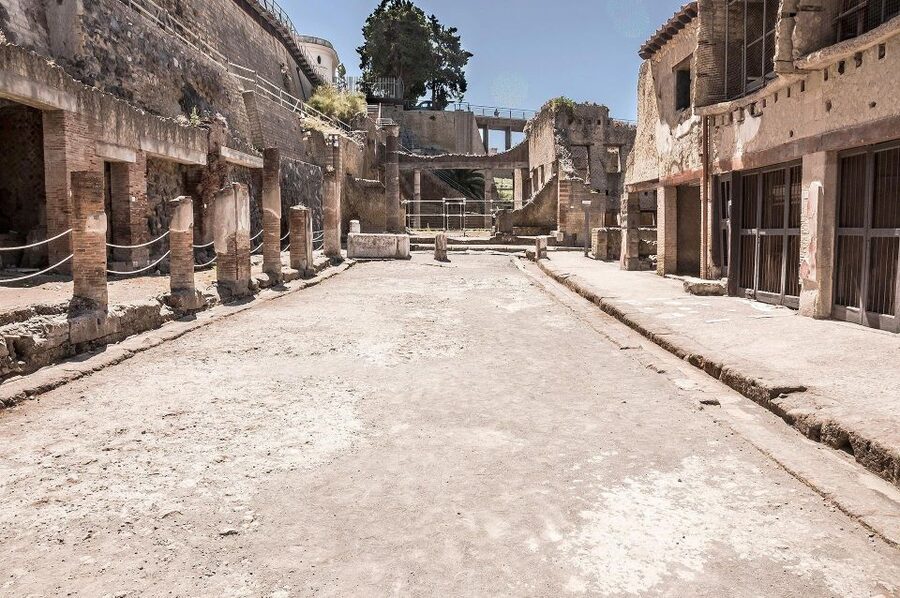
Herculaneum was not only a collection of grand houses. Its streets reveal the working town, with shops, public fountains, market areas, and places connected to civic and religious life.
The ancient market is a useful stop because it shifts your attention away from wealthy residents. You can picture people buying food, meeting neighbors, collecting water, and moving between shops and homes. The audio commentary adds the social detail that bare walls cannot provide.
Public fountains help explain how people used the streets. Temples and religious spaces, meanwhile, show the role of Roman gods in daily life. Look for decorative details and depictions of deities, but also notice the setting. A sacred building was part of the town’s routine, not an isolated monument.
The theatre is another worthwhile stop, although access and visibility can vary. Herculaneum’s surviving public buildings help you see how entertainment, religion, commerce, and private life fitted into one small town.
The site is well laid out overall, but internal signs are not always sufficient. In some buildings, you may not immediately know which feature the audio is describing. This is where a printed map or the map on the device becomes especially useful.
The shoreline chambers and the eruption’s human cost
The most solemn part of the visit is near the old shoreline, where about 300 people died while waiting for rescue from the sea. The chambers and surviving remains make the eruption feel less like a distant historical event and more like a human disaster.
You may also see the ancient boat connected with this part of the site. The nearby Antiquarium displays artifacts and furniture that help fill in what the streets alone cannot show. Together, these areas give you a stronger sense of the final hours and of the people who lived in the town.
This section can be emotionally heavy. Give yourself time here rather than treating it as just another numbered stop. The audio guide is particularly useful because it supplies context without turning the moment into a rushed lecture.
Some visitors prefer to finish with the shoreline chambers, while others walk in the opposite direction and reach them earlier. Either approach works. Since the route is flexible, you can arrange the visit around your energy and the crowds.
How much time should you allow?
Two hours is enough for a brisk visit focused on the best-preserved houses and the shoreline area. I would allow three hours if you want to use the audio guide properly and see the market, fountains, public buildings, temples, homes, and museum displays.
Four hours is reasonable for a slower visit with pauses, photographs, and time to sit. Some people spend much of the day here, especially when they want to examine the houses closely rather than tick them off one by one.
The compact layout helps, but do not mistake compact for quick. The site contains many layers of information, and the audio commentary can turn a ten-minute walk into a longer stop. If you are combining Herculaneum with Pompeii or another Campania sight, plan your schedule with care.
An early arrival is useful. The site tends to feel calmer at opening time, and the cooler part of the day is easier on the cobbled streets and steps. One booking was accepted about an hour before the selected time, but you should not count on that every day.
Walking conditions and practical comforts
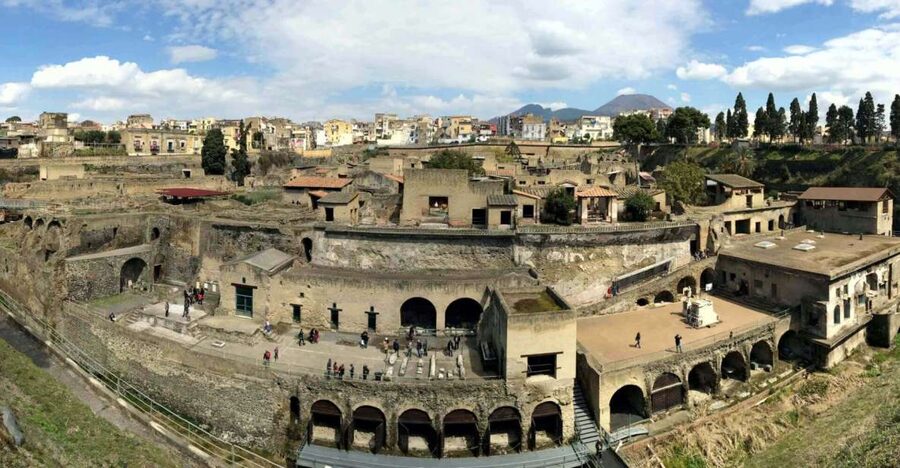
You need comfortable shoes. The ground is made up of ancient cobbles, and some sections include steep steps. There are places to sit, which helps if you are visiting in hot weather, but this is still an outdoor archaeological site with uneven surfaces.
Bring water and plan for sun. A café and a place to buy snacks and drinks are available, and you might find a restaurant opposite the entrance. A packed lunch can also work, with suitable places to pause during the visit.
Facilities are functional rather than a highlight. Toilet conditions have not always been good, so use facilities before entering if that is important to you.
The entrance is accessible from the local train station, with a walk downhill from the station area. One account describes the walk from the station as about 12 minutes. If you are staying in Pompeii or Naples, the train can make Herculaneum a practical addition to your itinerary.
A few cats live around the archaeological park. They are a familiar part of the site and may approach visitors, but they should not distract you from the remains or from any staff instructions.
Is the audio guide worth using?
Yes, provided you are comfortable finding your own way. The commentary is available in English, French, German, Italian, and Spanish, and it gives useful explanations of Roman housing, public life, art, and the eruption.
The handheld device is designed to be used at your ear. One version of the system can work with headphones or earbuds, but Bluetooth connection may not be available, so do not assume you can pair your own wireless earbuds. The audio can also be quiet in some places.
The main weakness is orientation. The guide does not always correspond neatly with the physical order of the park, and the numbered cues may not match the current site layout. The map makes a real difference, so ask for one if it is not supplied or confirm where it is displayed on the device.
If you want a smooth narrative, a live guide may suit you better. Guided upgrades have been offered with guides including Tony and Fabio, while Amara has also led visits at the site. Their tours can explain the buildings in a logical order and answer questions, but the upgrade costs more and changes the experience from an independent visit to a scheduled one.
Comparing the value with Pompeii
At $15 per person, the experience can be strong value when admission is included in the option you choose. You get access to an important archaeological park, an audio device, and a map, with enough material for several hours.
The value is less clear if the price covers only the audio guide and you must pay for entry at the park. That is not necessarily a bad deal, but you need to compare the final cost with the official admission price and your own plans.
Herculaneum also offers value in time. Pompeii can demand a full day or more, while Herculaneum gives you a substantial ancient-city visit in a shorter window. If you have only one free morning, this site may deliver more detail with less walking.
Do not book solely for the promise of skipping a line. At quieter times, the normal queue may be short. Book it for the combination of admission convenience, a self-guided explanation, and access to a site where the preserved details reward slow looking.
Should you book this Herculaneum experience?
I would book it if you want to explore independently and you enjoy moving at your own pace. It suits history fans, families who need flexibility, and anyone who finds a full day at Pompeii too demanding.
I would choose a live guide instead if you want the story arranged for you, have limited time, or dislike matching audio numbers to buildings. The audio guide is useful, but it requires a little patience and attention.
Before paying, confirm three things: the selected option includes the entry ticket, the audio language you need is available, and you understand where to collect the device. Bring identification, wear sturdy shoes, and try to arrive early.
Herculaneum is worth visiting even if you have already seen Pompeii. Its smaller scale, painted rooms, wooden details, artifacts, and shoreline chambers give you a different and often more personal view of the eruption.
FAQ
Is the Herculaneum entry ticket included?
It depends on the option you select. The audio-guide-only option does not include admission, and the Herculaneum entry ticket must be added as an extra. Check the final booking details before paying.
What languages are available for the audio guide?
The audio guide is available in English, French, German, Italian, and Spanish.
How long does the visit take?
The stated duration is one day, but most people can cover the main areas in about two to four hours. You can spend longer if you want to study the houses, museum displays, and public buildings at a slower pace.
Where do I collect the ticket and audio guide?
Show your ticket at the Herculaneum Archaeological Park ticket office. The audio device may be collected from a separate desk, so follow staff directions when you arrive.
Do I need identification?
Yes. Bring a passport or ID card. Identification may be requested as security when you collect the audio guide.
What should I wear?
Wear comfortable shoes because the site has cobbled streets, uneven ground, and some steep steps. Bring water and prepare for outdoor conditions, especially in warm weather.
More Audio Tours in Naples
- Vesuvius National Park Skip-The-Line Ticket and Audio Guide
★ 3.4 · 141 reviews - Interactive audio guide for the historic center of Naples
★ 5.0 · 43 reviews - Mount Vesuvius Skip the Line Ticket + Multilingual Audio Guide
★ 4.0 · 32 reviews - Skip the Line Ticket to Herculaneum with Audio Guide
★ 4.0 · 20 reviews
More Self-Guided Tours in Naples
- Naples: National Archaeological Museum Ticket & Audio App
★ 4.4 · 617 reviews - Naples: Pompeii Self Guided Audio Tour
★ 3.9 · 211 reviews - Naples: National Archaeological Museum audio guide
★ 4.0 · 155 reviews - Naples: Royal Palace Entry Ticket with Digital Audio Guide
★ 4.1 · 146 reviews
Just added around Naples
- Naples: Guided Walking Tour★ 4.7 · 63 reviews
- Wine tasting in the Vesuvius National Park★ 3.5 · 4 reviews
- Naples: Pompeii and Vesuvius Skip-the-Line Day Trip★ 3.8 · 32 reviews
- Visit the Museum MANN with a professional guide★ 5.0 · 3 reviews
- Walking-tour of Naples hystorical Centre★ 4.4 · 4 reviews
- Vesuvius – Herculaneum – Pompeii Excavations Tour★ 4.2 · 9 reviews
- Pompeii: Vesuvius at Sunset★ 3.5 · 31 reviews
- Vesuvius and Herculaneum★ 4.8 · 9 reviews
Herculaneum Tours from Naples, compared.
Pompeii and Herculaneum Small Group Tour with an Archaeologist
Read our review →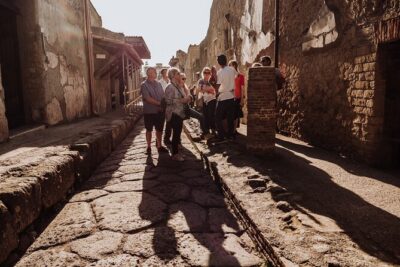
Herculaneum Small Group Tour and Ticket With an Archaeologist
Read our review →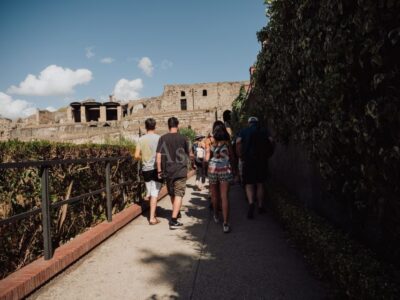
Pompeii & Herculaneum with Archaeologist Guide
Read our review →
Pompeii, Herculaneum, & Vesuvius Full-Day Tour
Read our review →
Herculaneum Entry Ticket with Optional Audio Guide
Read our review →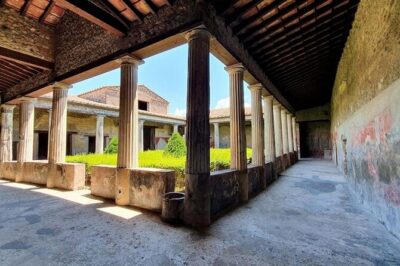
Day Trip of Pompeii, Herculaneum and Vesuvius from Naples
Read our review →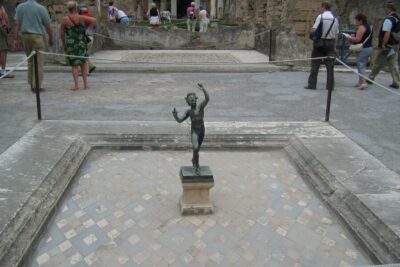
Browse the lists this tour appears in