
Reviewed · HERCULANEUM TOURS FROM NAPLES
Secret Herculaneum: The Hidden Treasure of Ancient Roman Civilization
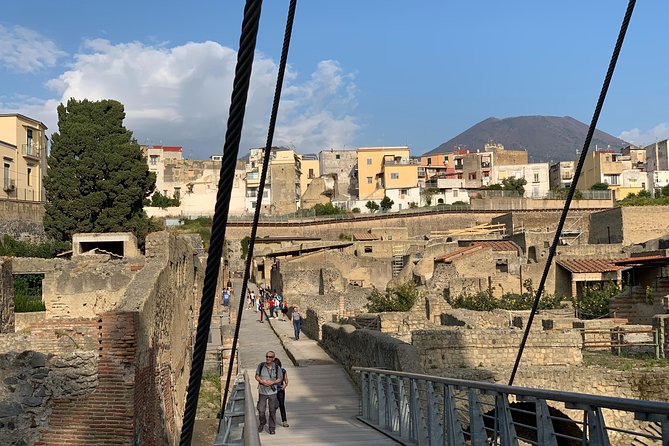
Herculaneum gives you something Pompeii cannot quite match: a compact ancient town where doors, bedrooms, wooden fittings, and household objects remain remarkably clear. Buried by Mount Vesuvius in AD 79, it feels less like a collection of ruins and more like a Roman neighborhood paused in time.
I like two things right away. First, the small group, limited to 10 people, leaves room for questions and makes it easier to hear the guide. Second, the guide team includes archaeologists such as Luigi, Ornella, Riccardo, Raffaele, Arcangelo, and Corrado, whose explanations focus on daily life rather than dates alone. The main consideration is that the €34.84 tour price does not include the €16 park entrance fee.
Key points to know before you book
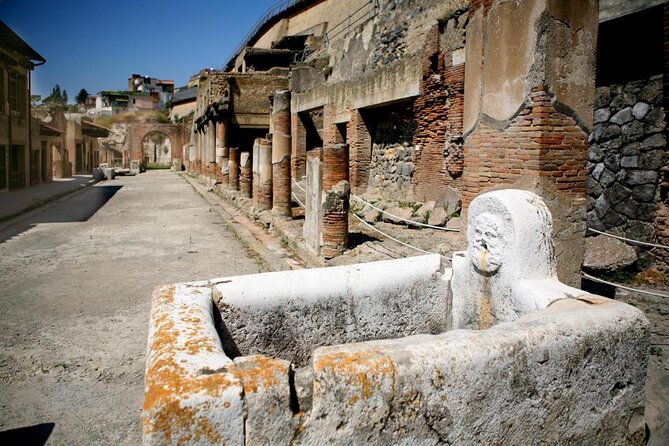
- The site is compact: You can see major houses, public buildings, the beach, and the boat without the long walks associated with Pompeii.
- The preserved interiors are the star: Frescoes, mosaics, doors, bedrooms, shops, and wooden fittings help you picture Roman life.
- An archaeologist leads the visit: The guide does more than point at walls, explaining what each room meant and how the eruption affected the town.
- The ancient beach adds emotional weight: This waterfront area connects the town’s elegant homes with the disaster that buried it.
- The cost is more than the advertised tour price: Add the €16 entrance fee, for a total of €50.84 per person before any other spending.
- Good shoes matter: Expect paved streets, uneven surfaces, and steps. Wheelchair use must be reported at least 24 hours before the visit.
Why Herculaneum feels different from Pompeii
Herculaneum was smaller than Pompeii and had the character of a coastal resort town. That smaller scale is useful. In about two hours, you can move between private homes, public buildings, the main street, the waterfront, and the boat pavilion without spending most of your energy crossing the site.
Pompeii gives you a huge city to roam. Herculaneum gives you a tighter collection of remarkably preserved rooms. I would not treat one as a replacement for the other, but if you have limited time, Herculaneum makes a strong case for itself.
The volcanic material that buried Herculaneum preserved details that usually vanish at ancient sites. You may see painted walls with warm colors, wooden elements, household spaces, and objects that make the past feel close. A guide is especially useful here because the remains can look deceptively simple at first glance. A doorway or room becomes far more meaningful when you understand who used it and how it fitted into the house.
The certified guide and archaeologist are included, but the admission ticket is not. That arrangement is easy enough, though you should budget for both parts when comparing this tour with other options.
More Herculaneum tours:
- Herculaneum: Skip-the-Line Guided Tour with Archaeologist
★ 4.8 · 3,439 reviews - Herculaneum Small Group Tour and Ticket With an Archaeologist
★ 5.0 · 994 reviews - Herculaneum: Skip-the-Line Entry Ticket with Audio Guide
★ 4.3 · 870 reviews
Starting at the Herculaneum ticket office
The meeting point is the Herculaneum ticket office in Ercolano, at 80056 Ercolano, Metropolitan City of Naples. The tour ends at the same place, which keeps the day simple if you are using public transportation or planning another stop nearby.
Confirmation arrives when you book, and the experience is offered in English. Most people can take part, but the site is not a smooth modern museum. You will walk on ancient paved streets and may need to manage steps and stairs. Wear sturdy walking shoes, not thin sandals.
A free map is available at the entrance kiosk. Pick one up even with a guide. It helps you understand the layout and can be handy if you want to look around on your own after the guided visit.
The group maximum of 10 is one of the strongest practical features. It is large enough to keep the tour social but small enough for direct questions. The guides praised most highly in the supplied comments include Luigi, Ornella, Riccardo, Raffaele, Arcangelo, and Corrado. Their styles differ, but the common thread is clear: strong command of archaeology, humor, and a real effort to connect the ruins with ordinary Roman life.
One small issue can arise at the start. If someone in the group has not checked in properly, the rest may wait. One booking experienced a delay of almost 20 minutes for this reason. Arrive early and make sure you are at the correct meeting point.
Entering the houses of ancient Herculaneum
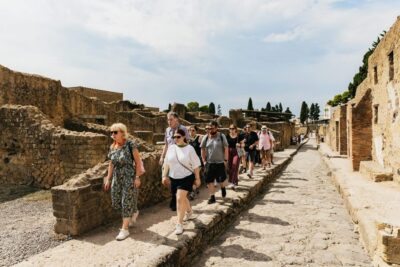
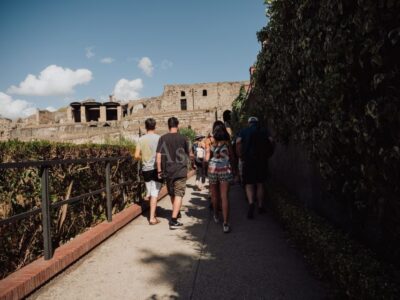
The opening portion of the visit introduces the Archaeological Park and its urban structure. You will walk along the old streets and begin to see why Herculaneum is so rewarding. Unlike an empty field of foundations, this town preserves enough of its rooms, doorways, walls, and civic buildings to suggest how people moved through their day.
The guide’s role matters most here. A bare wall can be hard to read without help. A house with a painted room, a work area, or a bedroom becomes easier to understand when the guide explains its purpose and shows how the spaces connected.
The tour spends roughly 10 minutes at several principal points. That keeps the pace moving, but it also means you should not expect a long, quiet study of every room. If you become absorbed in one mosaic or fresco, you may need to return later on your own if time allows.
The ancient beach and the terrace of Marcus Nonius Balbus
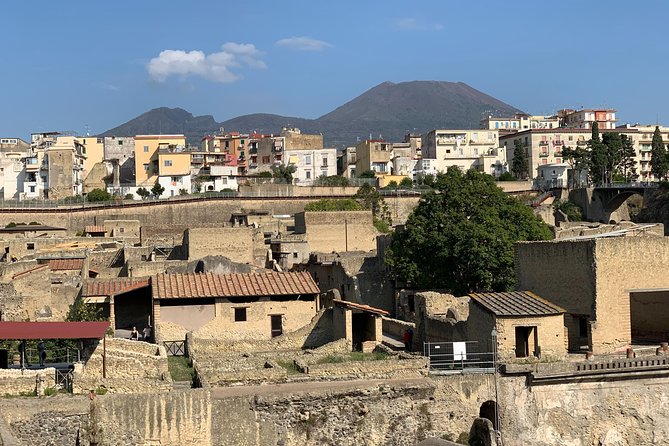
The ancient beach is one of the most memorable stops because it brings the disaster into view. This was the waterfront of a largely preserved Roman city. The site connects Herculaneum’s life as a coastal town with the eruption that ended it.
It is also one of the places where the tour moves beyond grand houses. You are not only seeing how wealthy residents decorated their homes. You are looking at the edge of the town, the point where daily life met the sea, and the area tied most closely to the final hours of AD 79.
Nearby, the terrace of Marcus Nonius Balbus recalls one of Herculaneum’s most honored citizens and patrons. The city created this terrace to honor him, and its original position looked toward the sea. This stop adds a civic and political layer to the visit. Roman towns were not only made of private villas. Status, public honors, and local power mattered too.
A few more Naples outings worth a look
- From Naples: Pompeii Ruins & Mount Vesuvius Day Tour
★ 4.3 · 11,459 reviews - From Naples: Sorrento, Positano and Amalfi Full-Day Tour
★ 4.6 · 10,988 reviews - From Naples: Sorrento, Positano & Amalfi Coast – Small Group Tour
★ 5.0 · 8,643 reviews - Naples: Catacombs of San Gennaro Entry Ticket & Guided Tour
★ 4.6 · 7,941 reviews
Casa dei Cervi and Herculaneum’s most elegant home
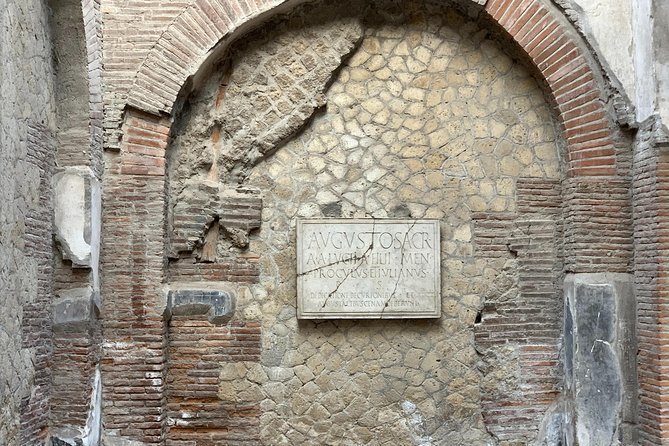
The House of Deer is described as the finest and richest residence found in the excavated area. Its name comes from two marble groups showing deer attacked by dogs.
This is the point to watch if you enjoy Roman domestic architecture. The house gives you a sense of how wealth appeared in private life through decoration, sculpture, and carefully planned rooms. The guide can help you read the home as a social setting, not just as a series of attractive remains.
The short stop works well for an introduction, but you may want extra time to appreciate the details. Herculaneum’s houses reward slow looking, especially when you compare the grand residences with the more modest buildings elsewhere in town.
The House of the Wooden Partition
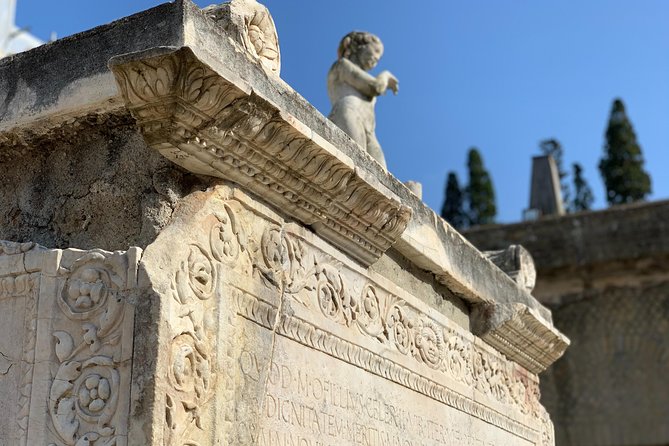
The House of the Wooden Partition takes its name from a folding wooden structure found between the atrium and the tablinum, or homeowner’s study.
This is one of the most useful stops for understanding why Herculaneum is so special. Stone survives at many Roman sites. Wood usually does not. Here, the preserved partition gives you a rare glimpse of how a Roman house could be divided and managed.
The atrium and study were not simply decorative rooms. They formed part of the household’s formal and social space. A guide who explains how the rooms worked can turn a preserved piece of furniture into evidence of family life, business, and status.
The Neptune and Amphitrite mosaic
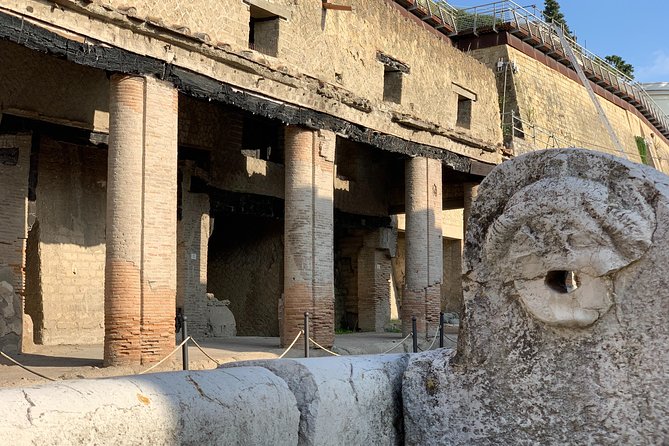
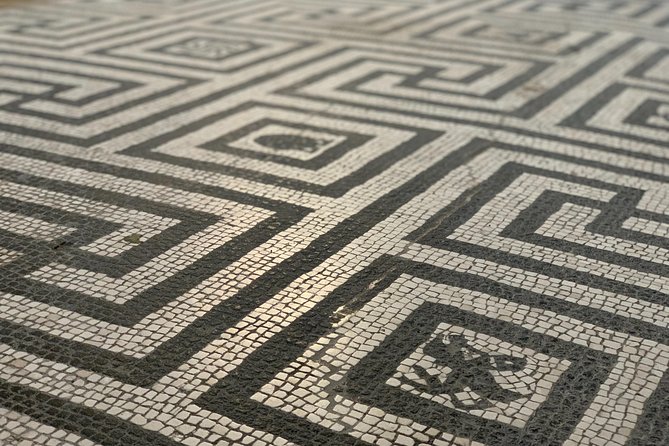
The House of Neptune and Amphitrite belonged to a wealthy merchant and contains a beautiful mosaic showing Neptune and Amphitrite.
This is likely to be one of the visual highlights of the tour. The mosaic gives the house its identity, but the setting around it matters just as much. You can see how decoration helped a prosperous homeowner signal taste and wealth.
The house also reminds you that Herculaneum was a working town, not only a retreat for the elite. A merchant’s home links trade and domestic life. Ask the guide how the rooms may have been used and how the decoration fits the owner’s position.
The Samnite House and the Decumanus Maximus
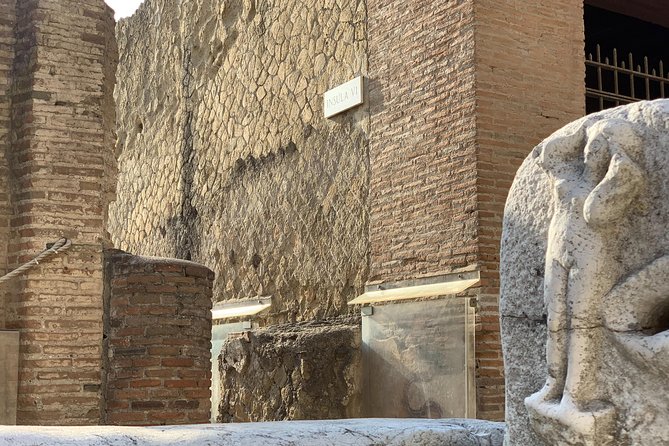
The Samnite House is considered one of the oldest dwellings in Herculaneum. Its age gives the tour another useful angle: the town was not built all at once. Homes and streets changed over time, and older structures remained part of a developing Roman community.
The decumanus maximus, the main east-west street of a Roman town, provides the city’s basic spine. In Herculaneum, prestigious homes lined this important route. Walking along it helps you understand the town plan, rather than seeing each building as an isolated attraction.
This is where a guide can point out the connection between street position and social standing. A main road was more than a way to get from one place to another. It was part of the public face of the town.
The Augustales and the House of Argo
The College of the Augustales, also called the Sacellum of the Augustals, was used for rites connected with the worship of the emperors. Priests known as Augustales tended these ceremonies.
This stop shows how religion and politics overlapped in Roman civic life. Imperial worship was not a private matter alone. It formed part of the public order and the way communities expressed loyalty and honor.
The House of Argo gets its name from a vanished fresco of Argus Panoptes, the giant with a hundred eyes. The missing painting is a useful reminder that even a well-preserved site has gaps. You are seeing what survived, not a complete Roman town.
A good guide will help you imagine the lost decoration without pretending that the missing fresco can still be seen. That balance matters. Herculaneum is impressive precisely because so much remains, but the absent pieces tell part of the story too.
The carbonized boat at the final stop
The boat pavilion preserves a charred boat found along the beach during excavations in 1981. This is one of the most unusual objects on the visit and a strong final stop.
The boat gives the waterfront a human scale. Earlier in the tour, the beach and terrace establish the town’s setting. Here, a surviving vessel adds a physical link to the sea and to the emergency surrounding the eruption.
I would save a little attention for this ending. The boat is not simply another display. It brings together the site’s strongest themes: coastal life, the violence of Vesuvius, and the remarkable preservation caused by the disaster.
The tour then returns to the meeting point. Since the route is compact, you should still have a clear sense of the town’s layout by the end, even if you do not inspect every corner.
What the €50.84 total gets you
The listed tour price is $34.84 per person, while the park admission costs €16 per person and is paid separately. The final cost therefore depends on the exchange rate, but the two stated amounts equal $34.84 plus €16, not one all-inclusive fee.
That price can be good value if you want interpretation rather than a quick walk through the ruins. The guide and archaeologist provide context for the houses, mosaics, civic buildings, and boat. Without that help, you might still admire the site, but you could miss why a wooden partition, a street plan, or a public terrace matters.
The value is less clear if you prefer to wander alone and read at your own pace. The tour moves between many stops in about two hours, so it is designed as an overview with expert explanation, not as a full-day archaeological study.
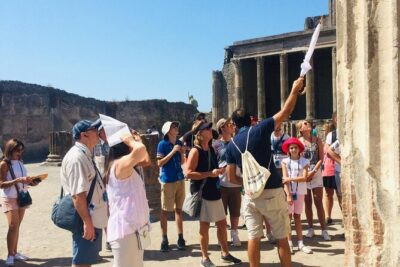
The small group improves the value. A large group can make a historic site feel distant, especially when you need to hear an explanation in an open space. With no more than 10 people, you have a better chance to ask about a mosaic, room, or household detail before the group moves on.
Who will enjoy this two-hour visit
I would choose this experience if you want a clear introduction to Herculaneum, especially if Pompeii feels too large or you have limited time in the Naples area. It also suits anyone who wants the buildings explained rather than simply photographed.
History fans will appreciate the range of material: private homes, public religion, civic honors, street planning, trade, decoration, and the waterfront. Families may also find the compact route easier to manage than a much larger archaeological park, though steps and uneven streets still require care.
This tour is less suitable if you need a fully accessible route or dislike walking on old surfaces. Wheelchair use must be reported 24 hours before the visit, and you should confirm the arrangements before booking.
It also may not suit you if hearing is difficult in a group. One person found a soft-spoken guide hard to hear. Arriving near the front of the group and asking the guide to speak up can help, but the open archaeological setting is not as controlled as an indoor museum.
Small practical details that improve the day
The park is near public transportation, and the meeting and ending point are the same. That makes it easier to plan around a visit from Naples or a day trip from Rome. One booking came by high-speed train from Rome and found the site manageable as a day visit, though you should plan your train schedule carefully around the tour time.
Some departures have been scheduled for the late afternoon, when the smaller site may feel less crowded. Do not assume every departure has the same timing, but a later start can be worth considering if you want a calmer visit.
Bring water and wear sturdy shoes. The provided information confirms walking, steps, and uneven surfaces, but it does not promise a specific level of shade or seating, so prepare for an active two hours.
Free cancellation is available up to 24 hours before the start time. Changes or cancellations made less than 24 hours ahead are not accepted for a refund. Poor weather can also cancel the experience, in which case you are offered another date or a full refund.
FAQ
Is the Herculaneum entrance ticket included?
No. The tour price is $34.84 per person, and the Archaeological Park entrance fee is an additional €16 per person.
How long does the tour last?
The experience lasts approximately two hours.
What language is the tour offered in?
The tour is offered in English.
How many people can join the group?
The group has a maximum of 10 participants.
Where does the tour begin and end?
It begins at the Herculaneum ticket office in Ercolano and ends back at the same meeting point.
Can wheelchair users join the tour?
Wheelchair use must be reported at least 24 hours before the visit. The site also includes paved streets, uneven surfaces, and steps, so accessibility arrangements should be confirmed before booking.
Should you book Secret Herculaneum?
I would book it if you want to understand what you are seeing, not simply walk past old walls. The best part is the combination of a compact route, unusually clear domestic remains, and guides with archaeological training. The House of the Wooden Partition, the Neptune and Amphitrite mosaic, the ancient beach, and the carbonized boat give the visit plenty of variety.
Budget for the separate €16 entrance fee, wear proper shoes, and arrive ready to listen closely. If you prefer a slow solo visit, buy the ticket and explore at your own pace. If you want Herculaneum to make sense in two focused hours, this small-group tour is a sensible choice.
Just added around Naples
- Naples: Guided Walking Tour★ 4.7 · 63 reviews
- Wine tasting in the Vesuvius National Park★ 3.5 · 4 reviews
- Naples: Pompeii and Vesuvius Skip-the-Line Day Trip★ 3.8 · 32 reviews
- Visit the Museum MANN with a professional guide★ 5.0 · 3 reviews
- Walking-tour of Naples hystorical Centre★ 4.4 · 4 reviews
- Vesuvius – Herculaneum – Pompeii Excavations Tour★ 4.2 · 9 reviews
- Pompeii: Vesuvius at Sunset★ 3.5 · 31 reviews
- Vesuvius and Herculaneum from Naples★ 3.7 · 29 reviews
Herculaneum Tours from Naples, compared.
Pompeii and Herculaneum Small Group Tour with an Archaeologist
Read our review →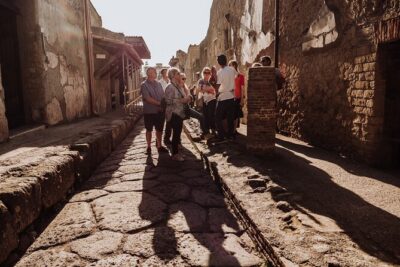
Herculaneum Small Group Tour and Ticket With an Archaeologist
Read our review →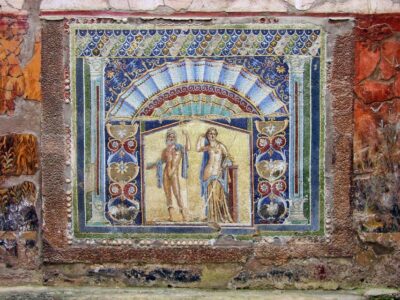
Pompeii & Herculaneum with Archaeologist Guide
Read our review →
Pompeii, Herculaneum, & Vesuvius Full-Day Tour
Read our review →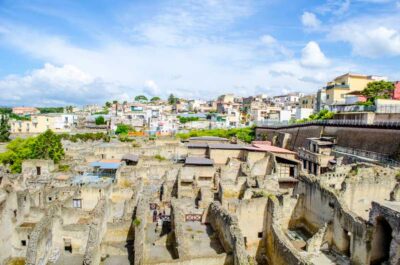
Herculaneum Entry Ticket with Optional Audio Guide
Read our review →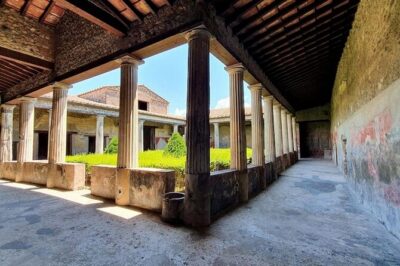
Day Trip of Pompeii, Herculaneum and Vesuvius from Naples
Read our review →Browse the lists this tour appears in