
Reviewed · HERCULANEUM TOURS FROM NAPLES
Excellence Private Herculaneum Guided Tour with an Archeologist
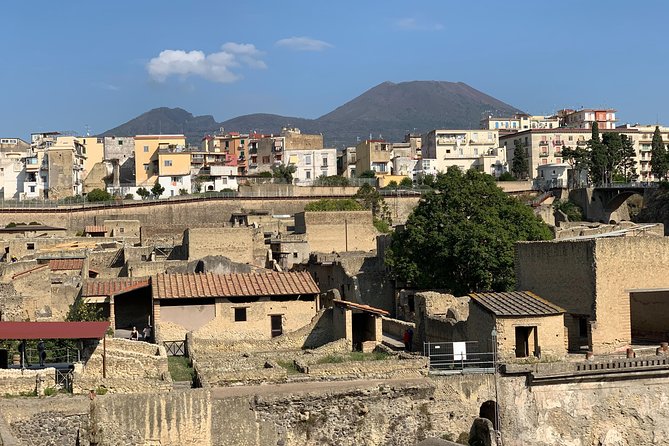
Herculaneum keeps its best surprise at the far end of the site: the ancient seaside, where the remains of people caught in the eruption still rest. From there, this private two-hour walk moves through homes, shops, a gymnasium, and baths with an official guide who is an archaeologist or archaeology student.
I like the small-group format, which lets you set a comfortable pace and ask questions without shouting across a crowd. I also like the focus on ordinary Roman life, from shopfronts and houses to public bathing. The main catch is that the €16 admission ticket per person is extra, and two hours may feel short if you want to inspect every corner.
Key points to know before you book
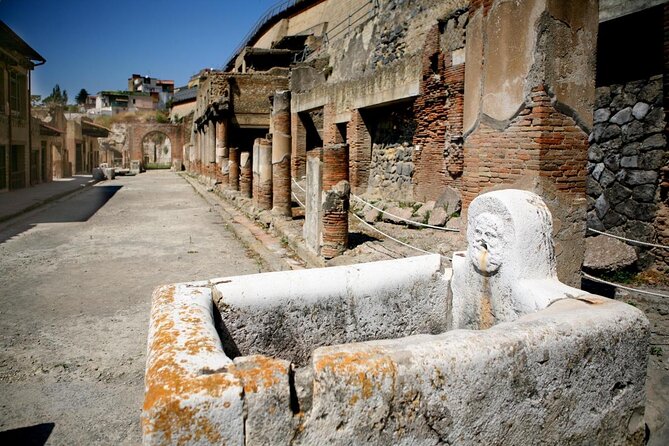
- Begin at the ancient seaside: The route starts from the lower end of Herculaneum, near the place where human remains were found.
- See unusually well-preserved objects: Almost 2,000-year-old artifacts retain their original form, giving the ruins a direct, physical quality.
- Walk through daily Roman life: Expect houses, shops, the Roman palestra, the Decumano, and thermal baths.
- Get a private guide: Only your group participates, with a flexible pace and room for questions.
- Plan for extra entrance costs: The tour price is $294.55 per group of up to 12, but admission is €16 per person.
- Go early in hot weather: Two hours is enough for the main route, and an early start makes the walk more comfortable.
Why Herculaneum feels different from Pompeii
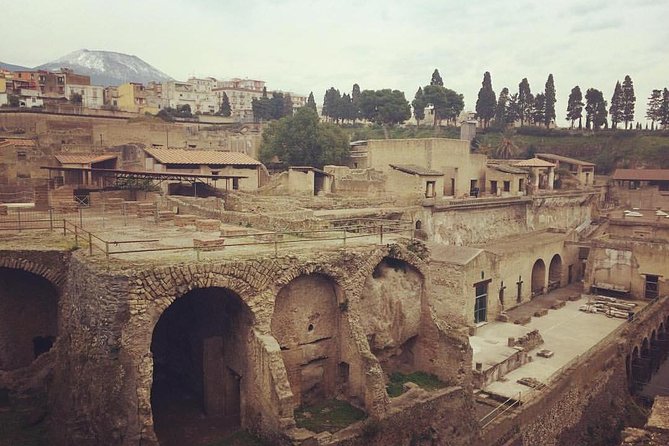
Herculaneum was a Roman town near the Bay of Naples, destroyed by the eruption of Mount Vesuvius in the first century AD. You are not simply looking at scattered walls. You are walking through a town where homes, stores, public spaces, and bathing facilities still show how people organized daily life.
The site has a more concentrated feel than a huge archaeological city. That helps during a two-hour visit. You can move from a street to a house, then to a public building or shop, and keep the connection between them clear.
I find this especially useful if you are interested in how Romans lived rather than only in grand monuments. The tour places the attention on practical details: where people walked, where they shopped, where they bathed, and how public and private life met along the streets.
A guide matters here because ruins can look quiet and incomplete without context. An archaeologist or archaeology student can explain what you are seeing, point out details that might pass unnoticed, and connect the remains to the town’s first-century life.
More Herculaneum tours:
- Herculaneum: Skip-the-Line Guided Tour with Archaeologist
★ 4.8 · 3,439 reviews - Herculaneum Small Group Tour and Ticket With an Archaeologist
★ 5.0 · 994 reviews - Herculaneum: Skip-the-Line Entry Ticket with Audio Guide
★ 4.3 · 870 reviews
Starting at the seaside and seeing the human cost
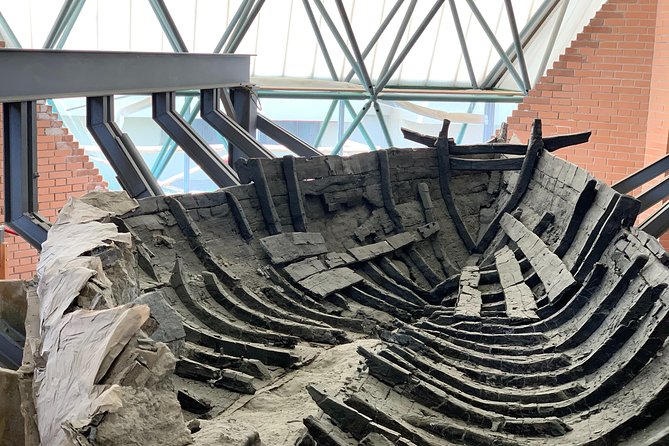
You meet at the Herculaneum ticket office in Ercolano. The walk begins at what is described as the end of the ancient town, from the seaside. This is a striking choice because many visitors expect to start with streets and buildings. Instead, you first confront the disaster and its human cost.
The area contains the bones of ancient inhabitants. That makes the opening serious and direct. You are not easing into the site with a general introduction. You begin with the people who were caught by the eruption, then move upward into the town they once occupied.
The guide can help place these remains in context without turning the visit into a list of dates. Ask questions here if you want to understand what happened to the town and how the eruption affected its residents. Since the activity is private, you have a better chance of pausing when a subject catches your attention.
This first section may be emotionally heavier than the rest of the visit. If you prefer to begin with architecture, the route may feel unusual. I think it works well because it reminds you that Herculaneum was a lived-in community, not just an attractive ruin.
Original artifacts and the power of small details
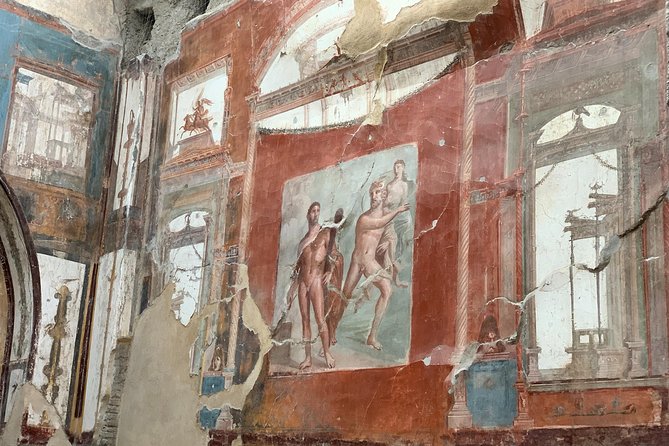
One of the strongest parts of Herculaneum is the survival of objects that have kept their original form for almost 2,000 years. The word preserved can sound vague, but here it points to something you can actually understand: objects still show their shape and practical use.
That physical evidence helps connect the site to daily routines. A house is not only a group of walls. A shop is not only an opening onto a street. The remains can suggest how people stored goods, moved through rooms, and used public facilities.
You will not get the same experience from reading a sign alone. A guide can direct your eyes toward the details that explain a building’s purpose and condition. The value is not just extra information. It is help in seeing the site as a functioning town.
Because the tour lasts about two hours, the guide will need to keep the visit moving. That is useful if you want a clear overview, but less ideal if you hope to linger at every artifact. Tell the guide early if you care most about houses, public buildings, or the archaeological evidence, so the private format can work in your favor.
Main streets, shops, and the Decumano
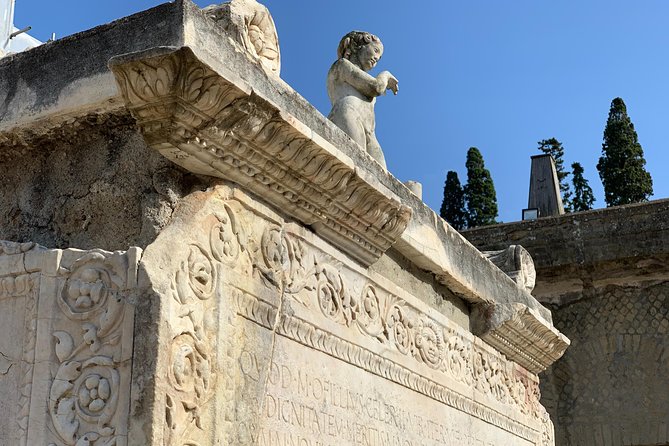
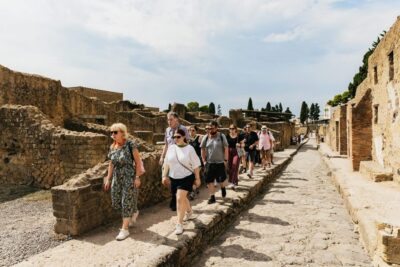
The route includes a walk along the main road, with ancient shops and well-preserved houses. This is where the town’s layout starts to make sense. Streets provide the framework, while the buildings show how people used that framework.
The Decumano is part of the route. In a Roman town, a major road such as this was more than a way to get from one place to another. It connected homes, stores, and public life. Walking it gives you a better sense of scale than viewing isolated rooms.
The shops are particularly helpful for visitors who want something concrete. You can picture commercial activity at street level, with private homes and public buildings close by. The preserved setting makes the distinction between public and private space easier to follow.
The houses offer a different kind of evidence. You might find yourself paying attention to entrances, rooms, and the way buildings face the street. The guide’s job is to explain what can be known from those remains and what is only a careful interpretation.
This is also a good stretch for questions. If you already know some Roman history, the guide can adapt to that level. If the subject is new to you, you can ask for the basic layout and purpose of each building without worrying about slowing a large group.
A few more Naples outings worth a look
- From Naples: Pompeii Ruins & Mount Vesuvius Day Tour
★ 4.3 · 11,459 reviews - From Naples: Sorrento, Positano and Amalfi Full-Day Tour
★ 4.6 · 10,988 reviews - From Naples: Sorrento, Positano & Amalfi Coast – Small Group Tour
★ 5.0 · 8,643 reviews - Naples: Catacombs of San Gennaro Entry Ticket & Guided Tour
★ 4.6 · 7,941 reviews
The Roman palestra and public life
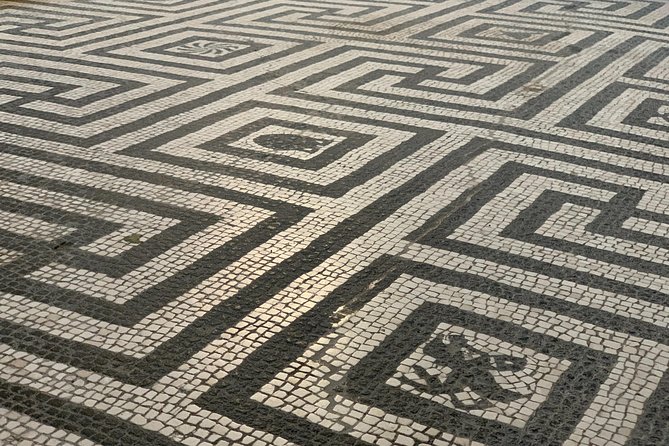
The tour visits the Roman palestra, or public gymnasium. This adds an important layer to the town because it shifts the focus away from houses and shops. You see a place connected with exercise and public activity, where the town’s residents could spend time outside their homes.
The palestra helps explain that Roman life was not confined to domestic rooms. Public buildings shaped social routines, just as shops and streets did. A guide can show how this space fits into the wider town and why it matters.
This stop may appeal most if you like architecture and urban planning. It gives you a chance to compare the scale and purpose of public facilities with the smaller spaces in the houses.
The available information does not promise a long, detailed stop at every structure. The experience is designed as a two-hour route, so expect the palestra to be part of a connected tour rather than an extended specialist lecture. That is a fair trade if you want to see several important parts of Herculaneum in one visit.
The Holy Terrace and the thermal baths
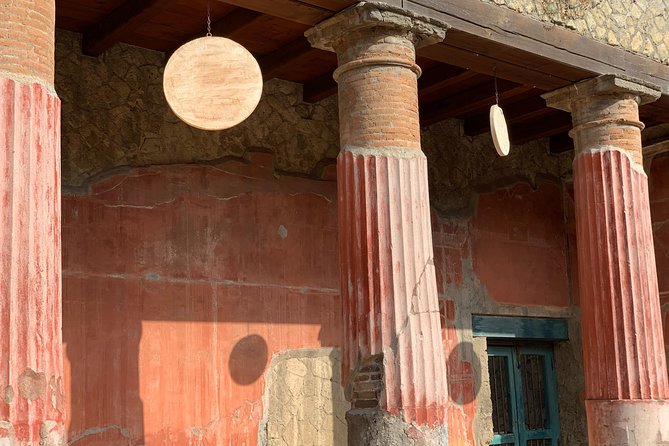
The Holy Terrace is another named point on the route. Its inclusion gives the walk a change of setting and adds a place with religious or ceremonial importance. Ask your guide to explain what you are looking at, since the name alone does not tell you how the space functioned in the ancient town.
The route also includes the thermal baths, or Roman spa. Baths were central to Roman public life, and this stop helps you understand the town beyond its private homes. The baths were places connected with washing, leisure, and social contact.
For many visitors, the thermal baths are one of the most useful stops because they make daily routine visible. You can compare them with the houses and shops you have just seen and consider how much of life took place in shared public settings.
The bath complex also shows why a guide is valuable. Rooms in an archaeological site can look similar to an untrained eye. Explanations about function and sequence help you understand how the facility was used.
You may want to move quickly through the baths if the weather is hot or if your group includes children. The private format lets you ask for a brisker pace, but remember that the tour still has several stops to cover.
What the private format is really worth
The listed price is $294.55 per group of up to 12 people. Admission is not included and costs €16 per person. If a full group of 12 attends, entrance fees add €192, making the combined cost $294.55 plus €192, with the final total affected by currency conversion.
That price makes the most sense for a family, group of friends, or several couples who can share the fee. Split among 12 people, the guiding cost is about $24.55 per person before admission. A smaller group pays more per person, so you should compare the cost with how much personal attention you want.
I see the best value in the guide, not in transportation or admission. You meet at the site, and the experience ends at the same meeting point. There is no transfer service included. You are paying for a professional archaeology guide and a private visit built around your group.
The guide team is described as official guides who are archaeologists or still studying archaeology. One piece of feedback raised a concern about whether a guide was an archaeologist, but the provider clarified that its team consists of archaeologists or archaeology students. If that qualification matters to you, ask at the start about your guide’s background.
The private format is also useful if your group has mixed interests. One person can ask about Roman buildings, another about daily life, and another about the eruption. You do not have to fit your questions into a large group’s schedule.
Timing, heat, and the two-hour limit
Two hours is enough to see the principal areas named in the route. It is a good length if you want a focused introduction before lunch or another activity in Naples. It is not the right length if you plan to study every house, artifact, and street in detail.
Start early in the day, especially during hot weather. The site includes outdoor walking, and the recommendation to go early is practical. You will have more energy for the streets, terraces, and ruins, and you will be less likely to rush the final section.
Wear shoes suitable for uneven archaeological ground. The supplied details do not specify the exact surface conditions, so I would not assume a smooth walk throughout. You should also plan your schedule around the meeting point at the Herculaneum ticket office, since the tour does not include transport from Naples.
The activity is offered in English. Confirmation arrives at booking, and the experience is listed as suitable for most participants. Service animals are allowed, and the site is near public transportation.
Who should book this Herculaneum tour
I would choose this tour if you want a guide to explain the ruins rather than simply walk through them with a map. It suits first-time visitors, families who want a manageable visit, and anyone who prefers questions and conversation over a fixed large-group pace.
It is also a good fit if you care about archaeology. The guide’s professional background is central to the experience, especially when you are looking at preserved objects, human remains, and buildings whose purpose may not be obvious.
You may want another option if your main goal is a long, unhurried archaeological study. Two hours moves at a useful pace, but it cannot cover every detail. The extra admission fee also means the total cost should be calculated before you book.
The tour is less useful if you need transport from Naples, since you must reach the Herculaneum ticket office yourself. On the other hand, its location near public transportation keeps the meeting arrangement straightforward.
Free cancellation is available if you cancel at least 24 hours before the start time. Changes or cancellations made within 24 hours are not refunded, so keep that cut-off in mind when setting your plans.
Should you book it?
Book this experience if you want Herculaneum explained by an official archaeology guide, with a private group and a clear two-hour route. The strongest reasons are the start at the ancient seaside, the preserved homes and objects, and the chance to connect shops, public buildings, streets, and baths to everyday Roman life.
Before booking, confirm that your group is comfortable paying the $294.55 guide fee plus €16 admission per person. Go early, arrive at the Herculaneum ticket office, and treat the visit as a focused introduction rather than a full-day archaeological study. For the right group, that balance gives you useful context without turning the ancient town into a tiring marathon.
FAQ
Where does the Herculaneum tour begin?
It begins at the Herculaneum ticket office in Ercolano, at 80056 Ercolano, Metropolitan City of Naples, Italy.
Where does the tour end?
The activity ends back at the meeting point.
How long does the guided tour last?
The tour lasts approximately two hours.
Is admission to Herculaneum included?
No. Admission is not included and costs €16 per person.
How much does the private tour cost?
The price is $294.55 per group, for up to 12 people. Each person also needs to pay the €16 entrance fee.
Is this a private activity?
Yes. Only your group participates in the activity.
What language is the tour offered in?
The tour is offered in English.
Who leads the tour?
A professional Archaeologist Tourist Guide leads the tour. The guide team is described as official guides who are archaeologists or archaeology students.
Can I cancel for a full refund?
Yes, if you cancel at least 24 hours before the experience start time. Cancellations or changes made less than 24 hours before the start time are not refunded or accepted.
Just added around Naples
- Naples: Guided Walking Tour★ 4.7 · 63 reviews
- Wine tasting in the Vesuvius National Park★ 3.5 · 4 reviews
- Naples: Pompeii and Vesuvius Skip-the-Line Day Trip★ 3.8 · 32 reviews
- Visit the Museum MANN with a professional guide★ 5.0 · 3 reviews
- Walking-tour of Naples hystorical Centre★ 4.4 · 4 reviews
- Vesuvius – Herculaneum – Pompeii Excavations Tour★ 4.2 · 9 reviews
- Pompeii: Vesuvius at Sunset★ 3.5 · 31 reviews
- Vesuvius and Herculaneum from Naples★ 3.7 · 29 reviews
Herculaneum Tours from Naples, compared.
Pompeii and Herculaneum Small Group Tour with an Archaeologist
Read our review →
Herculaneum Small Group Tour and Ticket With an Archaeologist
Read our review →
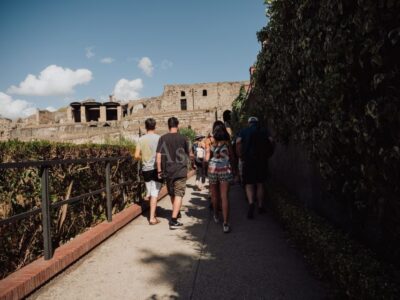
Pompeii & Herculaneum with Archaeologist Guide
Read our review →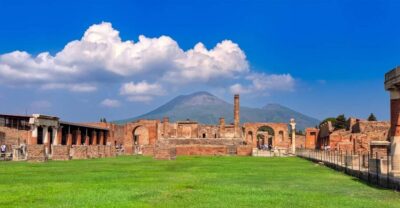
Pompeii, Herculaneum, & Vesuvius Full-Day Tour
Read our review →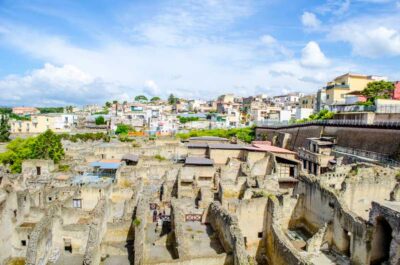
Herculaneum Entry Ticket with Optional Audio Guide
Read our review →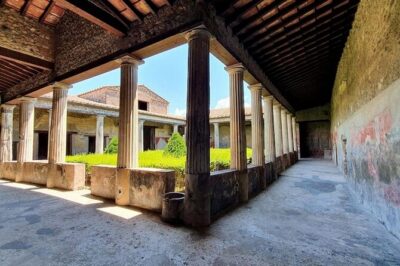
Day Trip of Pompeii, Herculaneum and Vesuvius from Naples
Read our review →Browse the lists this tour appears in