
Reviewed · POMPEII TOURS FROM NAPLES
Small-Group Tour in Pompeii with a Real Archeologist, ticket included
Pompeii becomes far more understandable when an archaeologist guide explains what you are seeing, rather than leaving you to wander among walls and faded frescoes. This tour moves through famous homes, the forum, the Lupanar, temples, baths, and the amphitheater in about two and a half hours.
I like the small maximum of 15 people, which makes it easier to hear and ask questions. I also like that the ticket is valid for the day, so you can keep exploring after the guided walk. The main drawback is pace: Pompeii is huge, and a short tour cannot cover every advertised stop in equal detail.
- A real archaeologist leads the walk, adding context about Roman life, building dates, and competing interpretations of the excavations.
- The House of the Tragic Poet and House of the Faun provide a close look at Roman homes, mosaics, gardens, and household status.
- The Lupanar and Forum show two very different sides of public life in Pompeii.
- The ticket lets you remain in the park afterward, useful if your group skips a site or you want more time with the ruins.
- Headsets are included, a practical help when up to 15 people gather around a guide.
- Bring water and good walking shoes, especially in summer, when the exposed stone streets become very hot.
Why an archaeologist changes the Pompeii visit
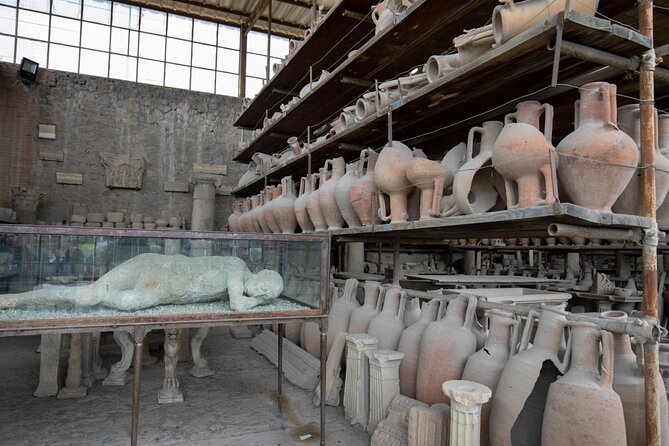
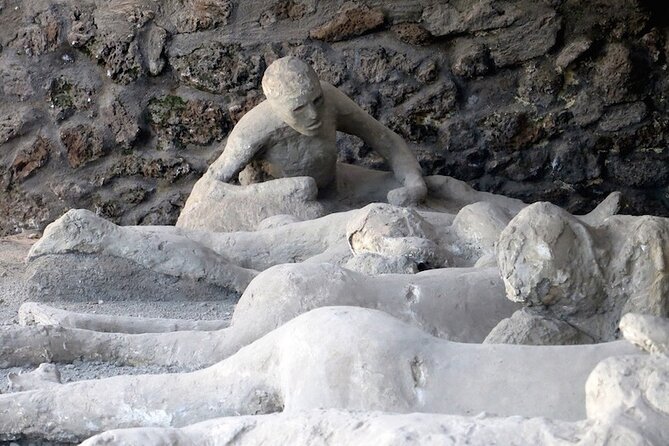
Pompeii is not a single monument. It is a buried Roman town, with homes, shops, temples, bathhouses, political buildings, entertainment venues, and streets laid out for daily use. Without context, you may notice a wall or mosaic but miss what it tells you about status, family life, religion, and business.
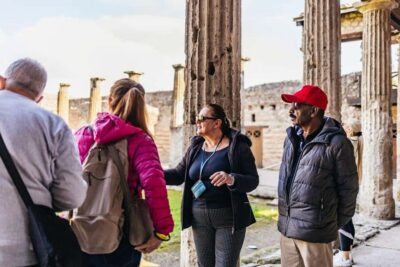
An archaeologist can point out how researchers date structures and how they interpret the evidence. Teresa, one of the guides associated with this experience, has been especially praised for explaining both accepted ideas and alternate readings of the site. Paolo has also been singled out for clear historical explanations and a good pace, while Alfredo is noted for making the main road easier to understand and finding shaded places along the route.
That matters at Pompeii. You are not simply looking at old stones. You are trying to picture a working town before the eruption of 79 AD, then understand what the ash preserved and what later excavation removed or damaged.
The guide service is offered in English, and headsets are included. That combination is useful around courtyards and open streets, where a larger group can spread out quickly.
A small group, but still a busy archaeological park
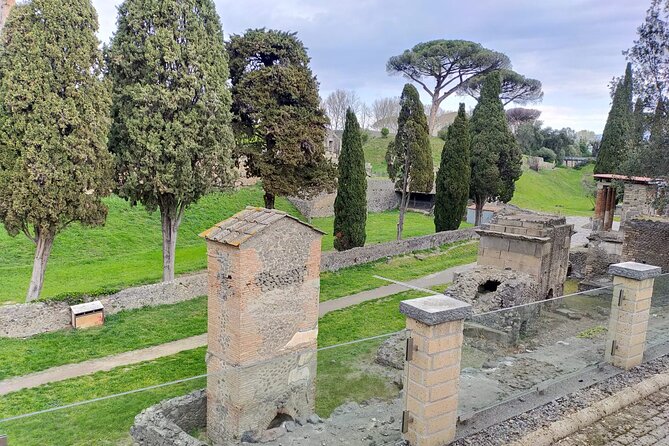
The maximum group size is 15 people. That is small enough for questions and personal attention, though it is not a private tour. You may still wait for other groups at popular houses or adjust the route when one entrance is temporarily slow.
The tour lasts about two hours and 30 minutes. Treat that as an introduction, not a complete visit. Pompeii covers a large area, and the official route includes nine major stops, each allotted roughly 15 minutes in the supplied schedule. In real conditions, some stops may receive more attention than others.
This is the key practical point: your admission ticket is for the day. If the guide does not enter every listed site, you can return to it independently after the group walk, as long as it remains accessible. One participant was disappointed after being told the House of the Vettii involved a 20-minute wait, then later walked in without difficulty. Conditions can change, so ask your guide directly about any site you especially want to see.
Meet at Hotel Vittoria on Piazza Esedra in Pompeii. The tour ends back at the meeting point. No private transport is included, so you need to make your own way there and back. The location is near public transportation.
More ways to see Pompeii:
- Pompeii Small Group Tour with an Archaeologist
★ 5.0 · 6,593 reviews - Discover the Ancient Ruins of Pompeii: Day Trip from Rome
★ 3.5 · 2,247 reviews - Pompeii and Herculaneum Small Group Tour with an Archaeologist
★ 5.0 · 1,350 reviews
House of the Tragic Poet and its Cave Canem mosaic
The House of the Tragic Poet is a useful first lesson in Pompeian domestic life. It represents an elegant imperial-era house, with the famous Cave Canem mosaic at its entrance. The Latin warning, beware of the dog, is one of Pompeii’s most recognizable details.
I like this stop because it puts Roman decoration in its proper setting. A mosaic was not just a pretty floor. It greeted visitors, marked the threshold, and helped express the owner’s taste and status.
You have about 15 minutes here, so listen for the guide’s explanation of how the house was arranged and what can be learned from its decoration. Do not expect time to study every room. The value is in seeing one polished example of a Roman home before moving on to larger residences.
House of the Vettii, wealth on display
The House of the Vettii is one of Pompeii’s most luxurious homes. It takes its name from its owners, Aulus Vettius Restitutus and Aulus Vettius Conviva, and offers a vivid look at wealth, business success, and social ambition.
The house is known for its decoration and grand scale. A guide can help you read the rooms as a statement of status rather than a collection of isolated paintings. Look for how the spaces direct guests through the home and how decoration would have shaped a visitor’s impression.
Access may be slower here than at less famous sites. The route allows about 15 minutes, but a queue can alter the plan. If this house is a priority for you, tell the guide at the start. If you miss it during the group portion, use the same-day ticket to try again later.
The Lupanar and the less polished side of town
The Lupanar is probably Pompeii’s most talked-about building. It was a two-story brothel, with five small rooms on the ground floor and five upstairs. The rooms had concrete beds, perhaps covered with a mattress or mat.
The site is stark rather than luxurious. That is precisely why it adds value to the tour. Pompeii was not only a city of grand houses and temples. It also had businesses that served ordinary needs, and the Lupanar shows a cramped, commercial side of Roman life.
Crowds can gather here, and the rooms are small. Your guide’s explanation is especially useful because the building is easy to reduce to a sensational stop. Give attention to its layout, location, and relationship to the wider street network, not only to the subject that makes it famous.
A few more Pompeii outings worth a look
- Skip the Line Guided Tour of Pompeii led by an Archaeologist
★ 5.0 · 703 reviews - Pompeii Ticket + Tour with Optional Tasting Experience at Pompeii
★ 5.0 · 663 reviews - Pompeii private tour with an Official Guide
★ 5.0 · 631 reviews - Pompeii Private Tour with an Archaeologist and Skip The Line – 3 hours
★ 5.0 · 564 reviews
The Forum, Pompeii’s civic heart
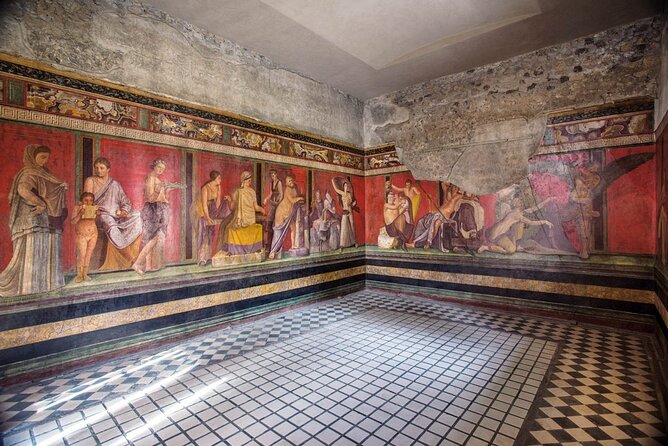
The Forum was reserved for pedestrians, with carts kept out of the central area. It measured about 142 meters long and 38 meters wide, and public buildings faced onto it.
Today the open space can feel strangely bare. Statues, marble details, and ornate flooring were removed after the eruption and reused elsewhere, which explains why the Forum does not look as richly finished as you might expect from its importance.
This is a good place to pause and let the guide reconstruct the civic center. The Forum was where public business, religion, ceremony, and power met. The empty space makes more sense once you understand what once surrounded it.
The open setting also brings the tour’s summer problem into focus. There is little shade in many parts of Pompeii, and the heat can build quickly. Bring plenty of water, wear solid walking shoes, and use shaded spots whenever the route allows.
Suburban Baths beside the old port area
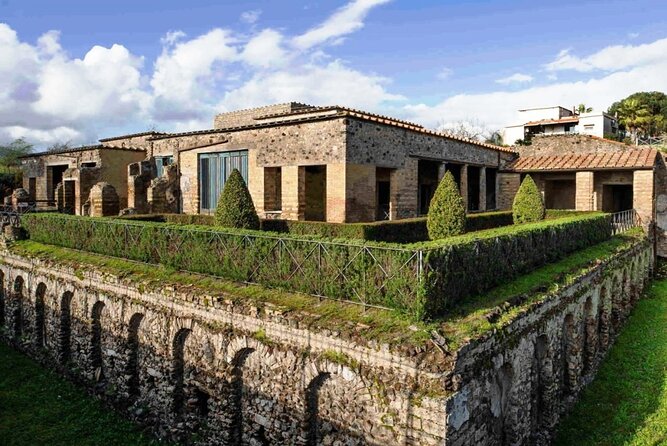
The Suburban Baths were located outside the city walls, near an area where boats could be moored. They may have served people arriving from outside Pompeii rather than the town’s regular residents.
This stop adds a useful detail to the city map. Pompeii was connected to movement, trade, and visitors, not sealed off from the wider region. The baths were not simply places to wash. They were part of the social and commercial life around the town’s edge.
The stop is brief, so you will not get a long study of every bathing room. Still, the location helps you understand why public facilities were placed where they were.
House of the Faun, a grand Roman residence
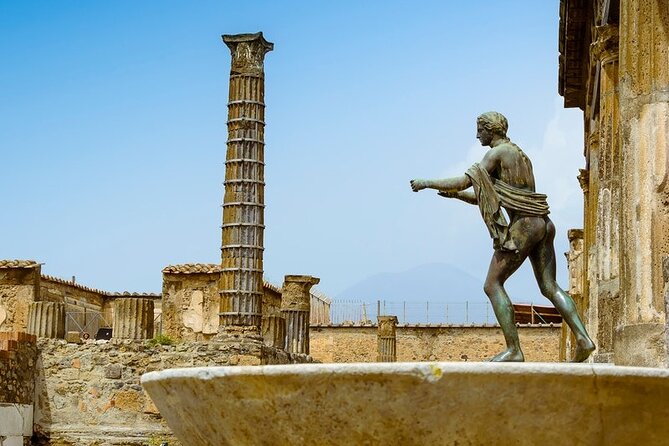
The House of the Faun is one of Pompeii’s most famous residences. Its name comes from the bronze statue of a faun in the impluvium, the basin used to collect rainwater in the open central area of a Roman house.
The size and design make this home different from the more compact residences on the route. You can use the stop to compare how wealthy households organized space, received visitors, and displayed art.
The bronze faun is the easy detail to remember, but the layout matters just as much. Ask how the central spaces controlled light, movement, and views through the house. With only about 15 minutes, the guide’s selection of details will help you focus.
House of Menander and painted stories
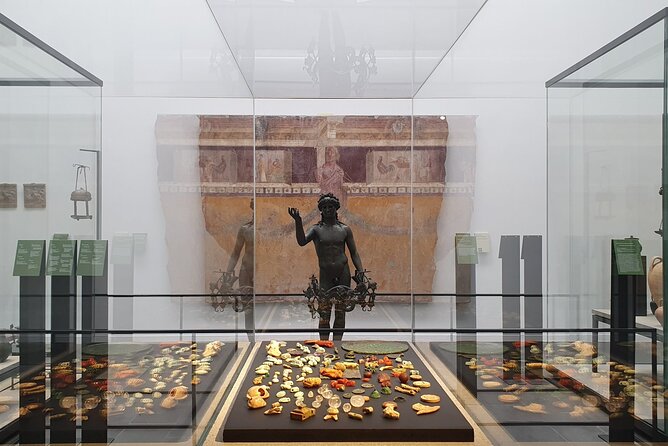
The House of Menander covers about 2,000 square meters and takes its name from a fresco of the poet Menander. Excavators found 118 silver objects here, including tableware, giving the house an unusually clear link to wealth and household possessions.
The frescoes connected with the Trojan War are another reason to pay attention. Scenes include the death of Laocoon, Cassandra, and Ulysses. These stories were familiar cultural references to Roman viewers, much as well-known films or historical events can be to you today.
The house is valuable because it joins architecture, art, and household evidence. You get more than a pretty wall. You get clues about what an affluent family owned, displayed, and expected its visitors to recognize.
Amphitheater and the big public spectacle
Pompeii’s amphitheater could hold up to 20,000 people on three levels. It hosted gladiatorial contests and other public spectacles, while the nearby large gymnasium gave young people a place to exercise.
A dark linen covering could protect spectators from the hot summer sun. That small detail helps turn the arena from an empty structure into a functioning venue, complete with crowd management and basic comfort measures.
The supplied stop information marks admission to the Archaeological Park at the amphitheater as not included, while the tour itself includes a priority ticket for the park. Since the overall ticket is described as valid for the day, ask the guide or operator how the amphitheater visit fits into your admission on the date you go. This is one point worth clarifying before you book if the arena is your main reason for coming.
Temple of Apollo and older religious traditions
The Temple of Apollo brings religion into the route. The worship of Apollo was present before the eruption, although the cult had lost influence as Jupiter became the stronger deity in Pompeii.
The temple area includes a bronze statue of Apollo with bow and arrow and a statue of Diana. The stop works best when you consider it alongside the Forum and domestic houses. Religion was not separate from daily life. Temples, public spaces, household decoration, and civic identity all overlapped.
The guide can also help you understand the difference between seeing a surviving statue and understanding the role the temple once played. The remains are partial, but the location and layout still give the site meaning.
Is $66.23 good value?
At $66.23 per person, this is not the cheapest way to enter Pompeii. You are paying for an English-speaking guide with archaeological training, priority entry, a headset, and a small group rather than only for admission.
I think the price is reasonable if you want the ruins to make sense on your first visit. Pompeii can be tiring and confusing, especially when you are trying to connect one house, temple, or street to another. A good guide saves time and gives you a framework for exploring alone afterward.
The value depends heavily on your guide. Teresa, Paolo, and Alfredo have each been praised for clear explanations, good pacing, answering questions, and keeping the group engaged. No guide can control every queue or open every building, so keep your expectations realistic: this is a strong orientation tour, not a private archaeological seminar.
If you already know Pompeii well and prefer to set your own route, buying admission and exploring independently may suit you better. If this is your first visit, the added context is likely worth the extra cost.
Heat, footwear, and what to expect physically
Pompeii is an outdoor archaeological site with uneven stone streets and long stretches without shade. The experience requires good walking shoes, and summer heat can be intense. Bring water. This is not optional advice.
The positive side is that the tour pace is described as manageable, with time for explanations and questions. The group is limited to 15, and headsets help you follow the guide without crowding close.
Most people can participate, and service animals are allowed. The activity requires good weather. If poor weather cancels it, you are offered another date or a full refund.
You receive confirmation when you book. Free cancellation is available up to 24 hours before the start time. Cancellations or changes inside that window are not refunded or accepted, and the experience can also be canceled if its minimum group size is not reached.
Who should book this Pompeii tour?
I would choose it for a first visit, especially if you want the famous houses and public spaces explained rather than simply photographed. It also suits anyone who likes asking questions and wants an archaeologist’s view of how the site is interpreted.
It is a good fit for travelers with only half a day in Pompeii because the two-and-a-half-hour walk gives you a clear route, then leaves the rest of the day for independent exploration.
I would hesitate if you want a slow, exhaustive look at every room. The scheduled stops are numerous, and some sites may be skipped or affected by lines. In that case, use the guided portion as your introduction, then spend the rest of the ticketed day returning to the places that matter most to you.
Should you book it?
Book this tour if expert explanation and efficient orientation matter more to you than complete coverage. The strongest features are the archaeologist guide, the small group, the included headset, and the chance to keep exploring after the tour.
Go prepared for heat, uneven walking, queues, and changes to the route. Tell the guide if the House of the Vettii, amphitheater, or another stop is essential. With those expectations, $66.23 buys a useful introduction to Pompeii and a better chance of seeing the ancient town as a place where people lived, worked, worshipped, and watched the games.
FAQ
How long does the Pompeii tour last?
The tour lasts approximately two hours and 30 minutes.
What language is the tour offered in?
The tour is offered in English.
Is admission to Pompeii included?
Yes. A priority ticket for the Archaeological Park of Pompeii is included. The itinerary separately marks the amphitheater stop as having no admission ticket included, so ask the operator how that entry applies on your date.
Can I stay in Pompeii after the guided tour?
Yes. The ticket is described as valid for the day, allowing you to continue exploring independently after the group tour.
How many people can join the group?
The tour has a maximum of 15 participants.
Where does the tour begin and end?
It begins at Hotel Vittoria, Piazza Esedra, 80045 Pompeii, Italy, and ends back at the meeting point.
What is included besides the ticket?
The experience includes an English guide service, priority entry to the Archaeological Park of Pompeii, and a headset.
Can I cancel for a full refund?
Yes. You can cancel at least 24 hours before the start time for a full refund. Poor weather or failure to meet the minimum number of participants can also lead to an alternative date or a full refund.
Just added around Pompeii
- Wine Tasting and Winery Tour in Vesuvio National Park with Lunch★ 4.5 · 3 reviews
- Mt. Vesuvius Wine Tasting and Lunch Experience from Pompeii★ 4.5 · 20 reviews
- Wine tasting in the Vesuvius national park★ 5.0 · 3 reviews
- Traditional Neapolitan Dinner in Pompei – Villa Franca – Family Restourant★ 5.0 · 8 reviews
- Private Guided Tour and VR Headsets in the Ancient Pompeii★ 5.0 · 3 reviews
- Visit Pompeii with a local expert guide★ 5.0 · 10 reviews
- Tour Mount Vesuvius with Entry Tickets and Round Trip Transfer Included★ 3.5 · 4 reviews
- Vesuvius tour entrance to the crater and return bus★ 4.5 · 9 reviews
Pompeii Tours from Naples, compared.
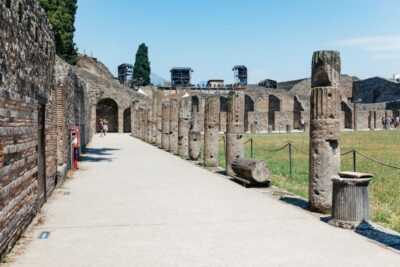

Pompeii Small Group Tour with an Archaeologist
Read our review →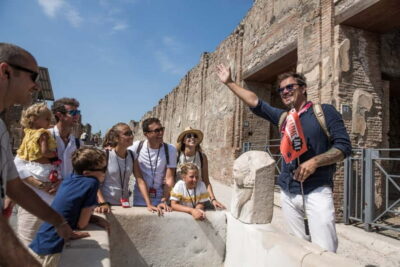
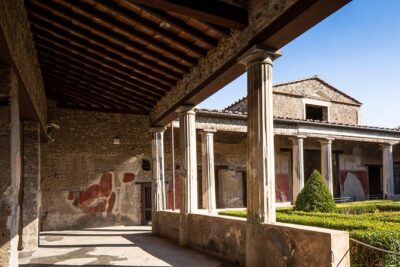
Pompeii & Mt.Vesuvius Day Tour from Naples with Pizza Lunch
Read our review →
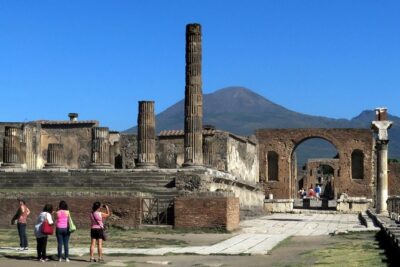
Pompeii & Mt Vesuvius All-Inclusive Small Group w/ Lunch
Read our review →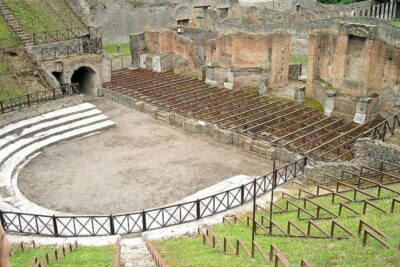
Pompeii & Amalfi Coast Full-Day Trip with Lunch
Read our review →Browse the lists this tour appears in