
Reviewed · NAPLES COOKING CLASSES
Naples Pizza Cooking Class
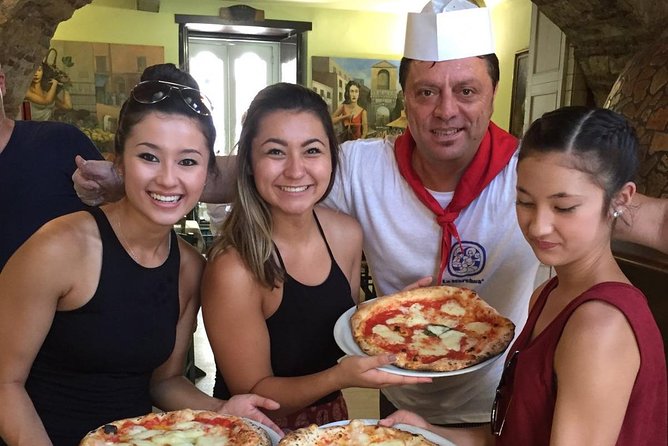
The best part of this Naples class is that you do not merely watch a pizzaiolo toss dough. You work through the full process, from flour and yeast to shaping, topping, and baking your own pizza in a wood oven. The lesson also connects the dish to Naples, including the famous Margherita story.
I like the hands-on format and the fact that lunch is included, with Campania specialties to start and your pizza as the main course. I also like the practical tips: which flour and tomato to choose, how long the dough should rest, and when to add the oil. The main consideration is the group size, which can reach 18 people, so personal attention may vary.
Key points to know
- Make the whole pizza: Work through dough, shaping, toppings, and wood-oven baking.
- Learn local technique: The pizzaiolo covers flour, yeast, resting time, tomatoes, and oil.
- Taste Campania first: Lunch begins with local specialties from the region.
- Finish with your own pizza: A traditional Neapolitan pizza and non-alcoholic drink are included.
- Simple central meeting point: Meet at Naplesbay Cooking Lab at 11:00 am and return there after about two hours.
- English-language class: The activity is offered in English, with a maximum group size of 18.
Turning Naples pizza into a practical lesson
Pizza is not a side note in Naples. It is one of the city’s clearest expressions of place, habit, and local pride. This class gives you a useful way to understand it because you are not simply handed a finished pie. You learn the decisions that shape it.
The pizzaiolo explains the process in order, beginning with the dough. That matters more than it may sound. A good Neapolitan pizza depends on timing and texture long before it reaches the oven. You learn which flour works well, which kind of yeast to use, and how long the dough needs to rest.
You also learn how the dough should be spread. That step helps explain the difference between a soft Neapolitan base and a thicker, heavier pizza. The lesson is aimed at making the method clear enough for you to remember after your holiday, even if your first home attempt does not look quite as graceful.
The class is conducted in English, which makes the instruction easier to follow if you want to ask about ingredients or technique. Chef Antonio is praised for explaining the process clearly, while Gabrielle is associated with a class that focused closely on ingredients and the friendly spirit of the group. The exact instructor may depend on the session you book.
More cooking classes in Naples:
- Naples: Pasta Making Class with Starter and Drink
★ 4.9 · 1,060 reviews - Naples Pasta Class: Fettuccine & Ravioli with Grandma’s Recipe
★ 5.0 · 506 reviews - Naples: Pasta Cooking Class with Tiramisù and a Drink
★ 4.6 · 415 reviews
From flour and yeast to a rested dough
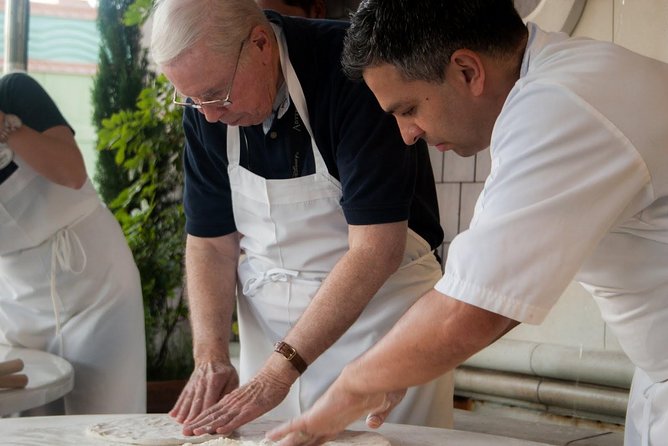
The class begins with the building blocks of pizza. You work with the ingredients rather than watching a demonstration from a distance. The pizzaiolo explains the role of flour and yeast, then covers the resting period that allows the dough to develop its proper character.
This is one of the more valuable parts of the activity for home cooks. Pizza recipes often give you measurements but skip the clues that tell you when dough is ready. Here, the instruction covers how long it should rest and how it should be handled before it is shaped.
The class does not promise a professional pizza apprenticeship, and two hours is not enough to master every part of the craft. It does give you a clear introduction to the choices that make Neapolitan pizza different. If you are curious about technique, this is more useful than a simple restaurant meal.
Shaping the base and choosing the toppings
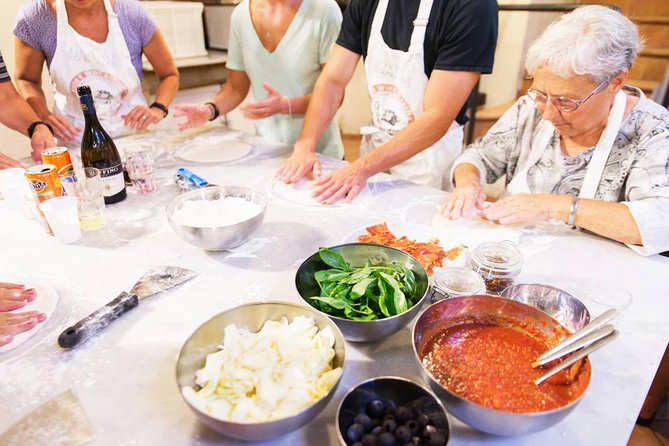
Once the dough is ready, you learn how to spread it. The method is part of the Neapolitan identity, since the center and edge need to work together in the finished pizza. The instructor also explains which tomato to use, a detail that can be easy to overlook when you are focused on cheese and toppings.
Oil comes into the lesson as well. You learn when it is added, rather than treating it as a final afterthought. Small choices like this are exactly what make a cooking class worth the time. You leave with a better sense of how ingredients behave and why the order of preparation matters.
The class focuses on traditional Neapolitan pizza rather than a long list of personal variations. That is a plus if you want a direct introduction to the local style. It may feel less suited to you if your main interest is experimental toppings or a broad Italian cooking menu.
The Margherita story behind the plate
The class also places pizza in a national setting. You hear the familiar story of Raffaele Esposito, who was asked to prepare pizza for King Umberto and Queen Margherita in the late 1800s. The version topped with tomato, mozzarella, and basil appealed to Queen Margherita, with its colors echoing the Italian flag.
The story is often told as part of the Margherita tradition, and here it adds a useful bit of context to the food in front of you. It helps explain why a simple combination of tomato, mozzarella, and basil has such a strong connection to Naples and Italy.
You should treat this part as a short cultural lesson rather than a full study of pizza’s past. Its value is in linking the ingredients, the city, and the name of one of Italy’s best-known dishes.
Same city, an entirely different sort of day:
- From Naples: Pompeii Ruins & Mount Vesuvius Day Tour
★ 4.3 · 11,459 reviews - From Naples: Sorrento, Positano and Amalfi Full-Day Tour
★ 4.6 · 10,988 reviews - From Naples: Sorrento, Positano & Amalfi Coast – Small Group Tour
★ 5.0 · 8,643 reviews - Naples: Catacombs of San Gennaro Entry Ticket & Guided Tour
★ 4.6 · 7,941 reviews
Baking your pizza in a wood oven
The most satisfying moment comes near the end, when your pizza goes into a wood oven. You have already handled the dough and selected the basic toppings, so the baking stage feels like the payoff rather than a demonstration performed for you.
A wood oven also gives the class a clear connection to the traditional pizzeria setting. The instructor explains the process, and you get to see how quickly the prepared pizza moves from work surface to finished meal. Exact baking details are not specified, so the emphasis is on taking part and understanding the method, not on learning professional oven management.
After baking, you eat the pizza you made. That final tasting gives the lesson a clear purpose. Even if your shape is uneven, the result is still your lunch, and that makes the experience more memorable than a standard meal at a restaurant.
Campania specialties make it a full lunch
The menu starts with local specialties from the Campania region. This is a welcome touch because it places the pizza within the wider food culture of southern Italy rather than treating it as the only thing worth tasting.
Your main course is a traditional Neapolitan pizza, and a non-alcoholic drink is included. Lunch and pizza ingredients are part of the experience, so you do not need to arrange a separate meal immediately afterward.
The menu is focused, not sprawling. You will not get a multi-course food tour or a broad lesson in Campanian cooking. What you do get is a simple meal built around the dish the class is teaching, with regional food at the start and your own pizza at the center.
What the two-hour schedule means for your day
The class starts at 11:00 am and lasts about two hours. That timing works well as a late-morning activity. You can take the class before a later afternoon of sightseeing, or use it as a planned lunch stop rather than squeezing in another restaurant reservation.
The experience ends back at the meeting point, Naplesbay Cooking Lab on Via delle Zite, 30. Since private transportation is not included, you need to make your own way there and back. The location is near public transportation, which makes the activity easier to fit into a day in central Naples.
The two-hour length is one of the class’s strongest practical features. It is long enough to cover the full pizza process and eat the result, but short enough that it will not consume an entire day. You should still allow extra time for finding the cooking lab and getting settled, especially if you are unfamiliar with the surrounding streets.
A group of up to 18: useful to know before booking
The maximum group size is 18 people. That is not a private lesson, and you should expect the pace and amount of individual help to depend on how the group works together.
A group can add to the enjoyment, especially during a cooking activity. You are handling food alongside other people, and the shared meal gives the class a social side. The camaraderie of the class is one of the aspects praised most strongly, along with the clear explanations and the focus on ingredients.
The tradeoff is personal attention. If you want a chef working only with you, this is not that kind of experience. If you are happy with a small-to-medium group setting and want to learn while eating lunch, the format makes sense.
The strongest reasons to book this class
I would put the clearest value in the instruction. You learn specific points that are easy to miss when reading a recipe, including flour, yeast, resting time, spreading technique, tomatoes, and oil. Those details give you something practical to take home.
The second strength is the complete sequence. You do not stop after mixing dough or shaping the base. You carry the pizza through to the wood oven and eat it afterward. That makes the activity feel like a real cooking session rather than a short food demonstration.
The third is the local setting. You are learning the city’s signature dish in Naples, with Campania specialties included at the start of lunch. The lesson also explains the Margherita connection, adding context without turning the class into a lecture.
Points to consider before you reserve
The information provided does not include a price, so I cannot judge the exact cost against other cooking classes. To assess value, look at what is included: the instruction, pizza ingredients, a starter of local specialties, your pizza, and a non-alcoholic drink. If the price is close to other two-hour pizza classes, that full lunch makes the comparison more favorable.
The group cap of 18 is worth noting. You might receive plenty of guidance, but you should not book this expecting the close attention of a private chef. The class is better suited to you if you enjoy learning in a social setting.
The activity is also focused on one dish. That is its strength and its limit. You get a direct lesson in Neapolitan pizza, not a broad survey of Italian cooking.
Free cancellation is available if you cancel at least 24 hours before the 11:00 am start time. Cancellations made within 24 hours are not refunded, and changes during that period are not accepted. Confirmation is provided when you book, and the mobile ticket is convenient for a day of sightseeing.
Who will enjoy the Naples pizza class most
I would recommend this class to food-minded visitors who want more than another restaurant meal. It suits first-time cooks because the instructor explains the basic choices, and it suits experienced home cooks who want a local approach to dough and toppings.
Families and couples may like the clear beginning-to-end format, though the group size means the atmosphere will not be private. It also works well for friends who want an easy shared activity before continuing around Naples.
You should skip it if you are looking for a quiet, highly private lesson, a long professional course, or a menu with several different dishes. This is a compact, social introduction to one famous Neapolitan specialty.
Should you book this Naples cooking class?
Book it if you want to understand how Neapolitan pizza is made, not just eat one. The class gives you practical instruction, a wood-oven finish, local Campania food, and a full lunch in about two hours.
The best reasons to choose it are the specific technique, the hands-on format, and the chance to taste what you prepare. Keep the group size and lack of included transportation in mind. For a convenient late-morning activity in Naples, it offers a sound mix of food, local context, and useful kitchen skills.
FAQ
Where does the Naples pizza class meet?
The class meets at Naplesbay Cooking Lab, Via delle Zite, 30, 80139 Napoli, Italy. The activity ends back at the same meeting point.
What time does the class start?
The class starts at 11:00 am.
How long does the experience last?
The activity lasts approximately two hours.
Is the class offered in English?
Yes. The experience is offered in English.
What food and drink are included?
Lunch includes local specialties from the Campania region, a traditional Neapolitan pizza that you prepare, and a non-alcoholic drink. Pizza ingredients are included as well.
What is the cancellation policy?
You can cancel at least 24 hours before the start time for a full refund. Cancellations and changes made less than 24 hours before the start time are not accepted, and the amount paid is not refunded.
More Workshops in Naples
- Naples: Pizza-Making Workshop with Drink and Appetizer
★ 4.9 · 5,411 reviews - Authentic Pizza Making Class in Naples with Appetizers and Drink
★ 5.0 · 3,178 reviews - Naples: Neapolitan Pizza and Tiramisù Making Class
★ 4.8 · 839 reviews - Pizza and Tiramisù Making class
★ 5.0 · 305 reviews
Just added around Naples
- Naples: Guided Walking Tour★ 4.7 · 63 reviews
- Wine tasting in the Vesuvius National Park★ 3.5 · 4 reviews
- Naples: Pompeii and Vesuvius Skip-the-Line Day Trip★ 3.8 · 32 reviews
- Visit the Museum MANN with a professional guide★ 5.0 · 3 reviews
- Walking-tour of Naples hystorical Centre★ 4.4 · 4 reviews
- Vesuvius – Herculaneum – Pompeii Excavations Tour★ 4.2 · 9 reviews
- Pompeii: Vesuvius at Sunset★ 3.5 · 31 reviews
- Vesuvius and Herculaneum from Naples★ 3.7 · 29 reviews
Naples Cooking Classes, compared.
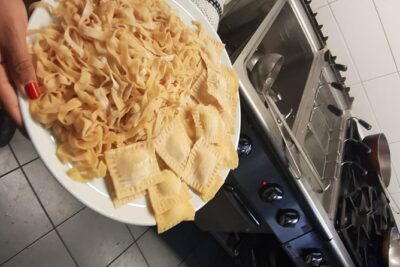
Naples Pasta Class: Fettuccine & Ravioli with Grandma’s Recipe
Read our review →
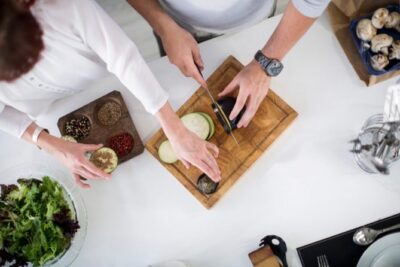
Amazing Pizza and Pasta Class at Savio’s kitchen cooking school
Read our review →
Hands-On Pasta Making and Traditional Tiramisu Workshop
Read our review →
Fresh Pasta Cooking Class and Dinner with a Local
Read our review →
Irpinia Tour of the Vineyards, Cooking Class and Wine-Tasting
Read our review →
Browse the lists this tour appears in