Reviewed · GUIDED
Herculanium guided tour
Herculaneum gives you something Pompeii cannot: a compact Roman city preserved with remarkable detail, including carbonized wood, upper floors, painted walls, mosaics, and seaside chambers. The two-hour private tour with Irina keeps the visit focused and personal, rather than sending you through the ruins with a large crowd.
I like the small private group, which means your guide can adjust the pace and explain what catches your eye. I also like the clear meeting plan: go to the Herculaneum ticket office and look for the sign marked IRINA. The main consideration is the short duration. You will see many important areas, but a site this dense can reward extra time after the guided visit.
Key points to know before booking
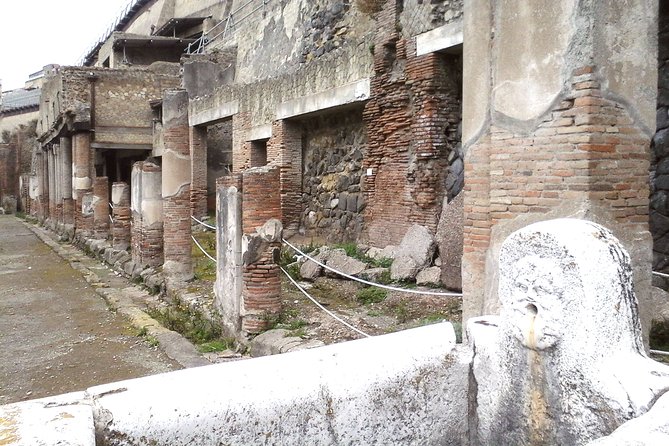
- Herculaneum’s preserved wood and upper floors give you a sharper look at Roman homes than many ancient sites can offer.
- Irina meets you at the ticket office, with the tour beginning and ending at the Archaeological Park.
- The private format covers up to 10 people, making the $241.86 group price more attractive for families or friends traveling together.
- The tour is offered in English and lasts about two hours.
- The route includes the seafront square, victim skeletons, baths, shops, and major private houses, including the House of Neptune and Amphitrite.
- A moderate level of fitness is expected, although one past guest chose Herculaneum because they found it suitable for wheelchair access. Confirm your exact needs before booking.
Why Herculaneum feels different from Pompeii
Herculaneum is often compared with Pompeii, but the two sites do not offer the same experience. Pompeii is larger and famously broad in scale. Herculaneum is closer to Mount Vesuvius and more compact, so you can spend less time crossing long stretches of street and more time looking closely at buildings.
The ancient city was home to merchants and wealthy families. That social mix comes through in the remains of private houses, public buildings, shops, baths, and religious spaces. You are not simply looking at walls. You are reading the layout of daily life: where people bathed, traded, worshipped, cooked, and lived.
The eruption of Vesuvius in AD 79 buried Herculaneum under volcanic material. That burial helped preserve details that are often lost at other Roman sites. Carbonized wooden doors, beams, furniture elements, and roof parts can still be seen. Some houses retain upper floors, giving you a better sense of their original height.
I find this detail especially useful if you have already visited Pompeii. Herculaneum does not feel like a smaller copy. It offers a more concentrated look at Roman domestic life, with many rooms close enough together for a guide to connect them into a clear story.
A few more Naples outings worth a look
- From Naples: Pompeii Ruins & Mount Vesuvius Day Tour
★ 4.3 · 11,459 reviews - From Naples: Sorrento, Positano and Amalfi Full-Day Tour
★ 4.6 · 10,988 reviews - From Naples: Sorrento, Positano & Amalfi Coast – Small Group Tour
★ 5.0 · 8,643 reviews
Meeting Irina at the Herculaneum ticket office
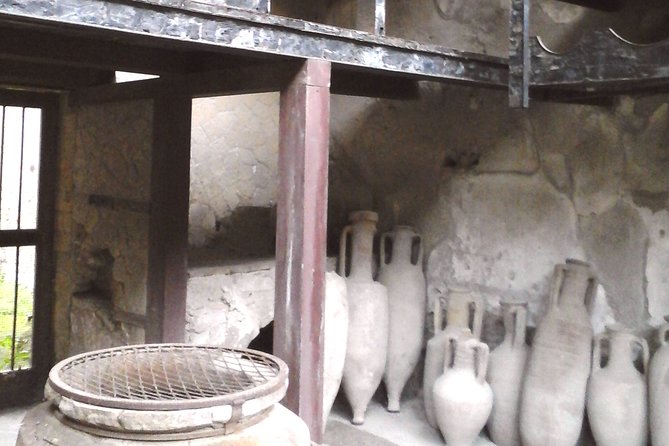
The meeting point is the Archaeological Park of Herculaneum, at Corso Resina 187 in Ercolano. The tour begins and ends at the same site, which keeps the day simple. You do not need to arrange a separate pickup or wonder where the walking portion finishes.
The meeting instruction is straightforward: look for the driver or guide holding a sign marked IRINA. The supplied details identify Irina as the guide, and the tour is offered in English. She is described as being exactly where expected and as maintaining good communication before the visit, two small points that matter when you are standing outside an archaeological park in an unfamiliar city.
Herculaneum is near public transportation, according to the tour information. The exact transport route is not included, so you should check your own connection from Naples before setting out. Give yourself enough time to reach Corso Resina without arriving breathless at the meeting point.
The park is open for this experience from 9:00 AM to 3:30 PM, Monday through Sunday, for the stated 2025 and 2026 dates. Your booked start time still matters, so do not assume you can arrive at any point during those hours and join another departure.
The seafront square and the eruption’s human cost
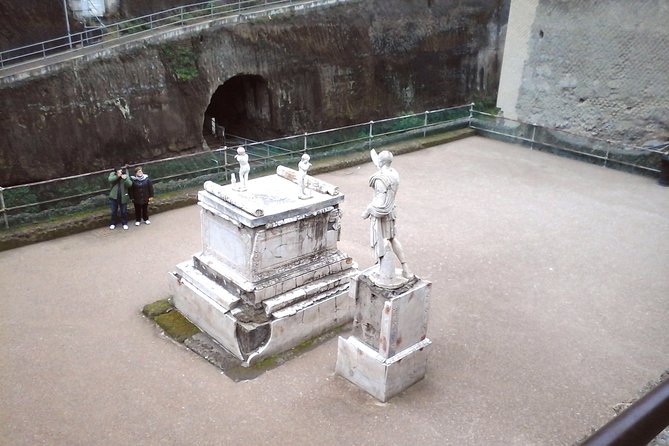
The tour begins with one of Herculaneum’s most affecting areas, the ancient square facing the sea. This setting helps you picture the city before the eruption. It was not an isolated settlement. It was a place of business, public life, private wealth, and contact with the Bay of Naples.
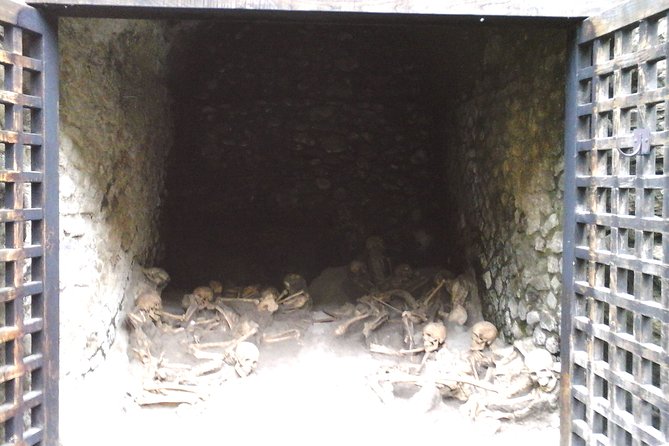
Near the old beach, you can see the skeletons of eruption victims. This is a serious part of the visit, not a theatrical opening. It puts a human face on the disaster and makes clear that the eruption was not just a story about damaged buildings.
Your guide can also explain what happened during the eruption and how the volcanic material covered the city. That context matters because many of the site’s unusual features, such as preserved wood and intact room decoration, are tied directly to the way Herculaneum was buried.
I appreciate having a guide here because the remains can otherwise be hard to read. A house may look like a series of rooms until someone explains its function, status, and connection to Roman customs. The tour promises both the disaster story and a look at ordinary life, traditions, and social habits in the Roman period.
Carbonized wood, frescoes, and houses with upper floors
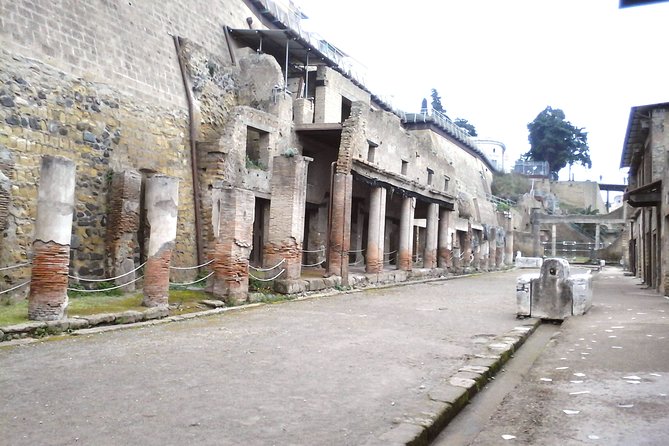
The strongest part of Herculaneum is often its domestic detail. You can expect to see carbonized wood, ancient roof structures, frescoes, mosaics, marble statues, and buildings with first floors still in place. These features make the city feel more complete than a site where only foundations survive.
The Samnite House is one of the private residences included in the route. Its name points to an earlier layer of the city’s story, before Roman rule fully shaped the settlement. The house gives the guide a useful setting for explaining how homes were arranged and how status appeared in architecture and decoration.
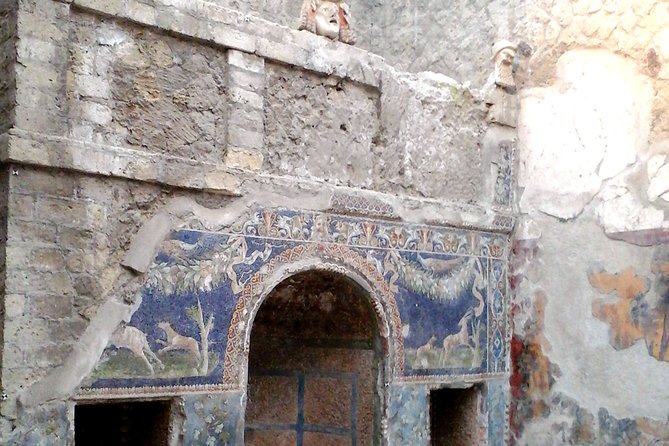
The House of Neptune and Amphitrite is another major stop. Its name comes from a striking decorative scene featuring Neptune and Amphitrite. Here, mosaics and wall decoration show how Roman homeowners used art to display taste, wealth, and cultural interests.
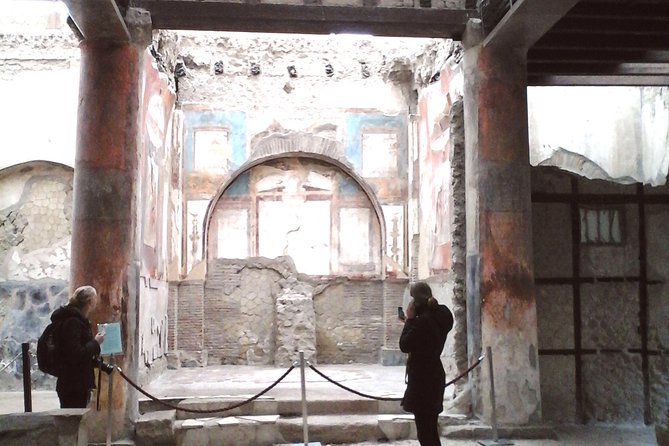
You will also see private houses with painted frescoes and marble features. Try not to rush past the walls. The color, patterns, and placement of decoration can tell you how rooms were meant to be seen and used, even when the original furniture is gone.
Because the group is private, you can ask Irina to pause over a detail or explain a room in a different way. That is a real benefit for families, first-time ancient-site visitors, and anyone who prefers conversation over a fixed speech.
More Guided Tours in Naples:
- Naples: Catacombs of San Gennaro Entry Ticket & Guided Tour
★ 4.6 · 7,941 reviews - Naples: Spanish Quarters Underground Guided Tour
★ 4.8 · 5,064 reviews - Naples: Street Food Walking Tour with Local Guide
★ 4.8 · 4,256 reviews - Herculaneum: Skip-the-Line Guided Tour with Archaeologist
★ 4.8 · 3,439 reviews
The Augusteum, public baths, and Gymnasium
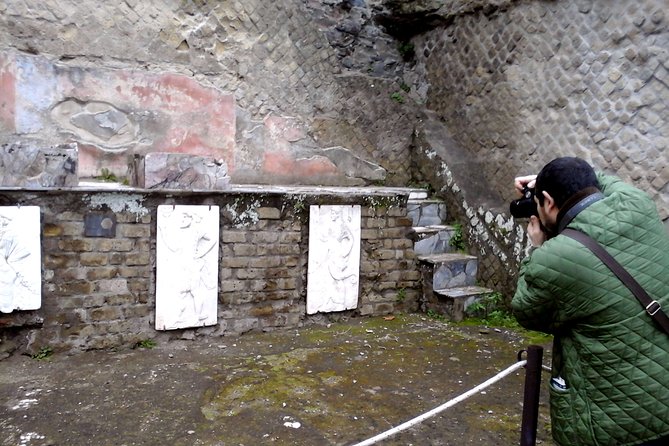
The Augusteum is one of the tour’s most important public buildings. It was connected with the imperial cult, so it offers a way to discuss religion, politics, and the role of the emperor in Roman society. The structure is not just another decorated building. It shows how public belief and government could meet in one place.
The public baths reveal a different side of the city. Roman bathing was not simply about washing. Baths were social spaces where people met, talked, exercised, and followed familiar routines. The preserved layout and decoration help you understand how much planning went into these public facilities.
The Gymnasium adds another layer to the tour. Along with the baths and Augusteum, it shows that Herculaneum had organized civic spaces, not only private villas and small shops. You get a sense of a functioning town with public institutions and shared habits.
The exact order of the stops can depend on the guide and site conditions. The advertised route includes these places, along with the houses, shops, square, beach area, and other remains. In two hours, the experience is best understood as a guided highlights visit rather than a slow examination of every accessible corner.
Shops and the practical side of Roman life
The shops are useful because they bring the visit down to street level. Wealthy homes and elegant mosaics can make Roman life seem distant, but commercial spaces show how the city worked from day to day.
Look at the relationship between shops, houses, and public buildings. A guide can help you think about who used each space and how goods and services moved through the town. Even a plain room becomes more meaningful when you understand its place in the local economy.
I also like that this experience does not focus only on the eruption. The destruction is the dramatic frame, but the tour also addresses customs, traditions, architecture, and ordinary routines. That balance keeps Herculaneum from becoming a memorial site alone.
The city’s closeness to Vesuvius adds weight to the story. You are examining remains preserved by the same force that destroyed the town. The contrast can be unsettling, but it is also what makes the site so valuable for understanding the ancient world.
What $241.86 means for a private group
The listed price is $241.86 per group of up to 10 people. That is not a low price for a two-hour visit if you are traveling alone or as a couple. For a full group, though, the cost works out to about $24 per person before considering any other admission arrangements.
The price is easiest to justify for a family or group of friends that wants a private guide. You are not paying for a large shared departure, and the guide can keep the pace suited to your group. A couple may still prefer the personal format, especially if they value questions and a quieter visit, but the per-person cost will be higher.
Check what is included in your booking before you go. The supplied information confirms the guide, private format, meeting point, duration, and language, but it does not clearly state whether archaeological park admission is included in the $241.86. That detail can affect the final value.
The tour has free cancellation if you cancel at least 24 hours before the start time. Cancellations made less than 24 hours ahead, along with late changes, are not refunded. Confirmation is sent within 48 hours of booking, subject to availability.
Pace, access, and who should choose it
You should expect a moderate level of physical fitness. The park is an archaeological site, and the information does not promise a fully step-free route or a particular accessibility service. One past couple selected Herculaneum because of wheelchair access and described the visit as being handled at their pace, but your own mobility needs may be different.
If you use a wheelchair or have limited mobility, contact the provider before booking and ask about the route for your date. Do not rely on a general assumption that every section will be accessible. Service animals are allowed.
This tour suits you best if you want:
- A private visit for up to 10 people
- An English-speaking guide
- A focused introduction to Herculaneum in about two hours
- Help understanding Roman houses, public buildings, and the eruption
- A more personal pace than a large shared group usually allows
It may be less suitable if you want to spend a full morning exploring alone or photographing every corner without interruption. In that case, you may want to ask whether you can remain in the park after the guided portion, since the listed tour itself lasts about two hours and ends at the park.
Should you book this Herculaneum tour?
I would book it if you want a clear introduction to Herculaneum and value having a guide who can adapt the visit to your group. Irina’s careful meeting instructions, personal approach, and strong command of the site’s Roman context are important advantages, especially for a first visit.
The best value comes with four or more people sharing the group price. Couples can still find the private format worthwhile, but should compare the cost with a shared tour if budget is the main concern.
Book this tour if the preserved houses, frescoes, mosaics, baths, shops, and eruption story appeal to you more than a very long, self-guided walk. Skip it only if you want complete independence, need a fully confirmed accessible route, or plan to spend far longer than two hours inside the park.
FAQ
Where does the Herculaneum tour begin?
It begins at the Archaeological Park of Herculaneum, Corso Resina 187, 80056 Ercolano, Italy, at the ticket office.
How do I find the guide?
Look for the driver or guide holding a sign marked IRINA.
Who is the guide?
The guide is identified as Irina.
What language is the tour offered in?
The tour is offered in English.
How long does the experience last?
The guided experience lasts approximately two hours.
Is this a private tour?
Yes. It is a private activity for your group only, with up to 10 people.
What does the tour include seeing?
The route includes the Archaeological Park, the ancient square facing the sea, the beach area with victim skeletons, carbonized wood, the Augusteum, public baths, the Gymnasium, shops, the Samnite House, and the House of Neptune and Amphitrite, along with frescoes, mosaics, marble statues, roofs, and houses with upper floors.
Can I cancel for a full refund?
Yes, if you cancel at least 24 hours before the experience start time. Cancellations or changes made less than 24 hours before the start time are not accepted for a refund.
Just added around Naples
- Naples: Guided Walking Tour★ 4.7 · 63 reviews
- Wine tasting in the Vesuvius National Park★ 3.5 · 4 reviews
- Naples: Pompeii and Vesuvius Skip-the-Line Day Trip★ 3.8 · 32 reviews
- Visit the Museum MANN with a professional guide★ 5.0 · 3 reviews
- Walking-tour of Naples hystorical Centre★ 4.4 · 4 reviews
- Vesuvius – Herculaneum – Pompeii Excavations Tour★ 4.2 · 9 reviews
- Pompeii: Vesuvius at Sunset★ 3.5 · 31 reviews
- Vesuvius and Herculaneum from Naples★ 3.7 · 29 reviews
Guided, compared.
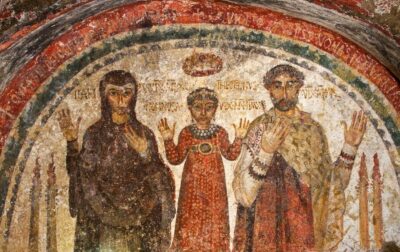
Catacombs of San Gennaro Entry Ticket & Guided Tour
Read our review →

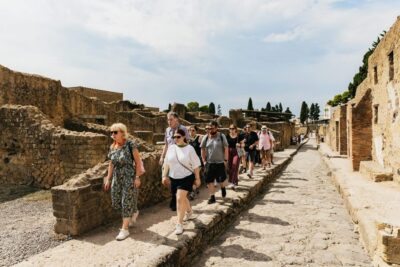

The Bourbon Tunnel Guided Tour with Entrance Ticket
Read our review →
Authentic Naples Street Food Tour With Local Expert Guide
Read our review →