
Reviewed · NAPLES HISTORIC CENTRE WALKING TOURS
Naples Walking Tour: Old Town and Spaccanapoli
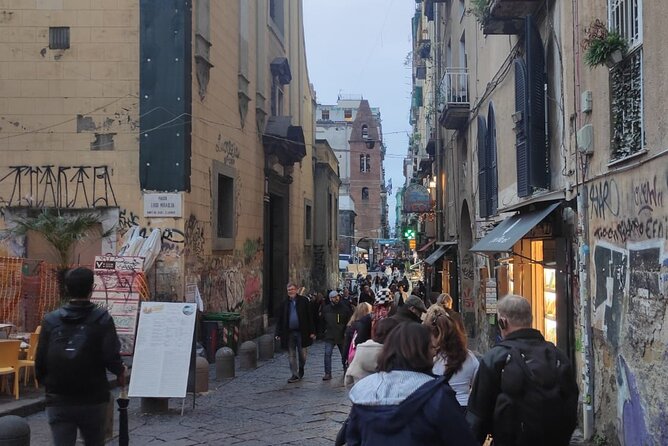
Naples reveals itself best on foot, and this two-hour walk through the old town puts you right into its narrow lanes, church-filled squares, artisan shops, and daily street life. The route follows the ancient Decumans before reaching Spaccanapoli, the famous straight street that cuts across the historic center.
I like the way the tour links Greek and Roman Naples with medieval and Baroque Naples, rather than treating the city as a collection of separate sights. I also like the stop at San Gregorio Armeno, where nativity workshops sit among religious symbols, pagan references, and the ordinary business of neighborhood life.
The main consideration is the depth of the historical commentary. Grazia earned praise for being friendly and generous with cultural details, but one English-speaking participant found a bilingual tour less satisfying and wanted more historical context. This tour is best for orientation and atmosphere, not for a scholarly lecture.
Key points to know before you book
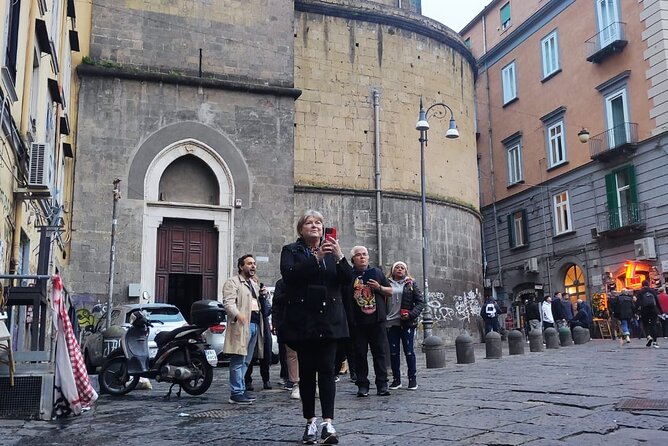
- Start at Piazza Dante: Meet beside the Dante Alighieri statue, where your guide waits with a sign bearing the participant’s name.
- Walk the ancient Decumans: The route follows Naples’ old Greek and Roman street pattern through the historic center.
- See San Gregorio Armeno: This is the city’s famous nativity street, lined with artisan shops and handmade figures.
- Cover major old-town landmarks: Expect Piazza Dante, Port’Alba, Piazza Bellini, Via dei Tribunali, the Duomo, Spaccanapoli, Piazza San Domenico Maggiore, and Piazza del Gesù Nuovo.
- Languages and audio help: Tours are offered in English, Italian, and Spanish, with headsets provided from six participants onward.
- A little food is included: The tour includes one sweet or savory tasting, a small but welcome taste of local food culture.
Starting at Piazza Dante and Port’Alba
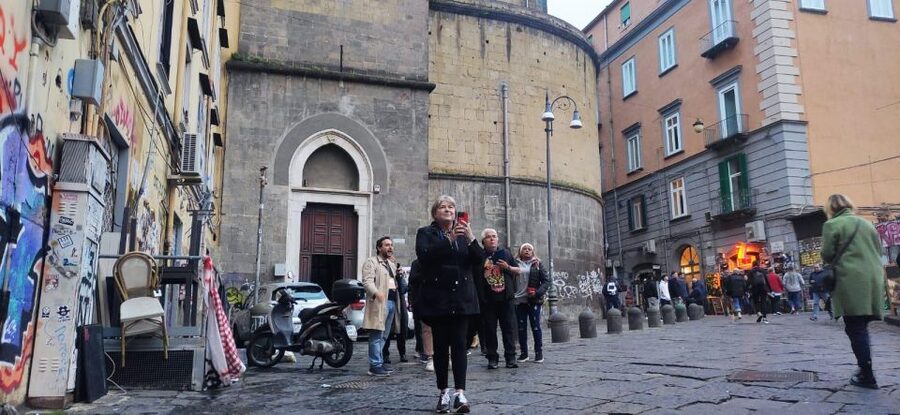
Your meeting point is easy to identify: the Dante Alighieri statue in Piazza Dante. The guide waits with a sign showing the participant’s name, so take a moment to check the statue and the sign before the walk begins.
Piazza Dante is a useful place to start because it sits at the edge of Naples’ old center. From here, the tour moves toward Port’Alba, a historic passage associated with bookshops and access into the old city. You quickly leave the broad square behind and enter streets where the city feels tighter, louder, and more personal.
I like this opening because it gives you an immediate change of scale. Naples is not presented from a lookout point or behind a coach window. You enter at street level, where laundry, scooters, food smells, church doors, and shop displays all compete for your attention.
The walk is only two hours, so your guide cannot explain every building. Pay attention to the broad story instead: Naples began as a Greek city, expanded under Roman rule, and later gained layers of medieval and Baroque architecture. The pleasure is seeing those periods overlap within a few minutes of walking.
More walks through the historic centre:
- Naples: Old Town Guided Walking Tour
★ 4.8 · 553 reviews - Naples: Guided Pub Crawl in the Old Town
★ 4.7 · 300 reviews - Naples: Historic Center and Sansevero Chapel Walking Tour
★ 4.8 · 208 reviews
Piazza Bellini and the ancient Decumans
Piazza Bellini provides one of the tour’s more open pauses. The route uses the square to help explain the old street plan before heading deeper into the historic center.
The Decumans were ancient east-west streets in Greek and Roman city planning. In Naples, parts of this pattern remain visible in the present-day roads. You are not simply walking through old streets at random. You are following the basic framework of Neapolis, even as modern shops, churches, apartments, and traffic press around it.
This is where a local guide adds real value. On your own, you can see the narrow lanes, but it is harder to understand why they run as they do. A good explanation turns the old center from a maze into a readable city plan.
The tour also uses the streets to show Naples’ religious mixture. Christian churches occupy the same urban fabric as older pagan references and folk traditions. That combination becomes especially clear later at San Gregorio Armeno, but the idea begins here.
If you want a detailed account of every Greek and Roman site, two hours will feel short. If you want a clear introduction before exploring alone, the timing works well. You get a map in your head without spending half a day in a lecture.
Via dei Tribunali and the Duomo
Via dei Tribunali is one of the old center’s key streets and one of the liveliest parts of the route. Here, the walk becomes less about grand viewpoints and more about the way Naples functions at close range.
You will see churches, small businesses, food shops, and narrow lanes branching away from the main road. The street can feel crowded and active, and the guide’s commentary helps you sort the important buildings from the visual noise.
The Duomo brings a larger religious monument into the picture. Its presence helps explain the city’s Catholic identity, but the tour does not present Naples as having only one tradition. The wider route points out how Christian practices exist alongside older symbols, local customs, and popular beliefs.
I would listen carefully for the guide’s cultural explanations here. The strongest part of this experience is not a single spectacular building. It is the contrast between formal religious spaces and the informal life taking place outside them.
The route also gives you a chance to see different architectural periods close together. Greek and Roman foundations, medieval structures, and Baroque decoration all form part of the same center. That mix is one reason Naples can feel visually untidy in the best sense. The city was built in layers, not reset for each new age.
San Gregorio Armeno, Naples’ nativity street
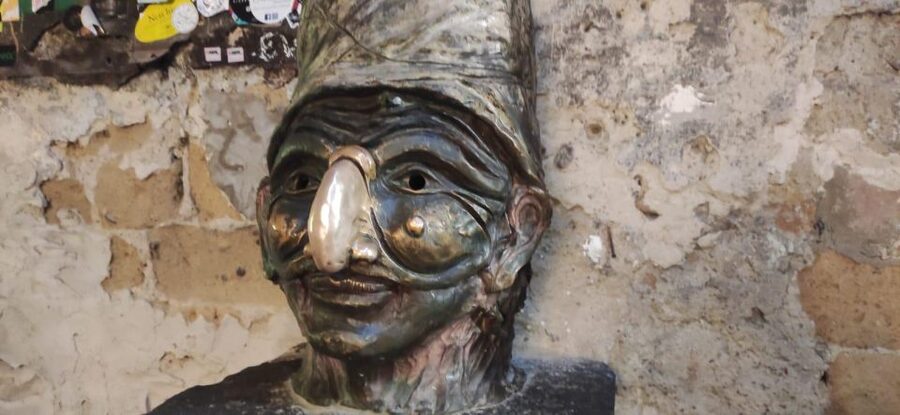
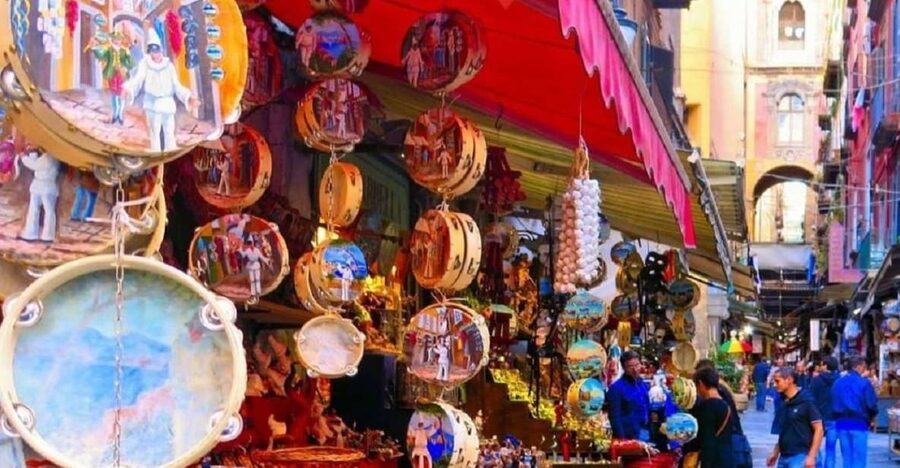
San Gregorio Armeno is likely to be the most distinctive stop. It is known for nativity scenes and artisan workshops, where you can see handmade figures and displays linked to the Neapolitan Christmas tradition.
The street is not only about Christmas shopping. The tour uses it to explain how religious and nonreligious images can sit side by side in local culture. Pagan figures, Christian icons, comic characters, and references to everyday Neapolitan life may all appear in the same visual world.
You will have time to look into artisan shops, but do not expect a long shopping session. This is a walking tour, and the group needs to keep moving. If a particular workshop catches your eye, note its location so you can return later on your own.
I like this stop because it shows culture as something people make and sell, not just something displayed in a museum. The figures connect faith, craft, humor, and local identity. It is also a good place to understand why Naples often feels theatrical without being staged for tourists.
Crowds and narrow pavement can make this section less relaxed. Stay close to the guide and keep your belongings secure. From six participants onward, headsets are supplied, which should help you follow the commentary when the street is noisy.
More Walking Tours in Naples:
- Naples: Street Food Walking Tour with Local Guide
★ 4.8 · 4,256 reviews - Naples Spanish Quarters Walking Tour Street Art, Folklore & Sweet
★ 5.0 · 797 reviews - Naples: Panoramic Walking Tour with Funicular
★ 4.8 · 543 reviews - Naples Walking Tour with Underground Roman Ruins Ticket
★ 4.5 · 510 reviews
Spaccanapoli and everyday Neapolitan life
Spaccanapoli is the route’s central experience. The name refers to the long street that appears to split the old city in two, although the modern route is made up of connected streets rather than one perfectly uninterrupted road.
Here you see the old center at its most immediate. The lane is lined with churches, cafés, workshops, apartments, and places where local routines continue around the sightseeing. The guide points out how the street expresses Neapolitan culture through food, performance, conversation, and street activity.
The supplied information refers to players and dancers adding color to the walk. That should not be read as a guaranteed formal performance. Think of it as the possibility of encountering the expressive public life that gives these lanes their character.
This is also the point where a guide can help you avoid a shallow reading of Naples. The old center is not just picturesque. It is a working neighborhood, and the narrow streets serve residents as well as visitors. You may find the energy exciting, but you may also find it noisy or cramped.
I would use Spaccanapoli as your orientation line for later independent exploring. The tour gives you a first look, then you can return to the shops, churches, and food spots that interest you most. That makes the experience more useful than a route that simply passes landmarks and moves on.
Piazza San Domenico Maggiore and Piazza del Gesù Nuovo
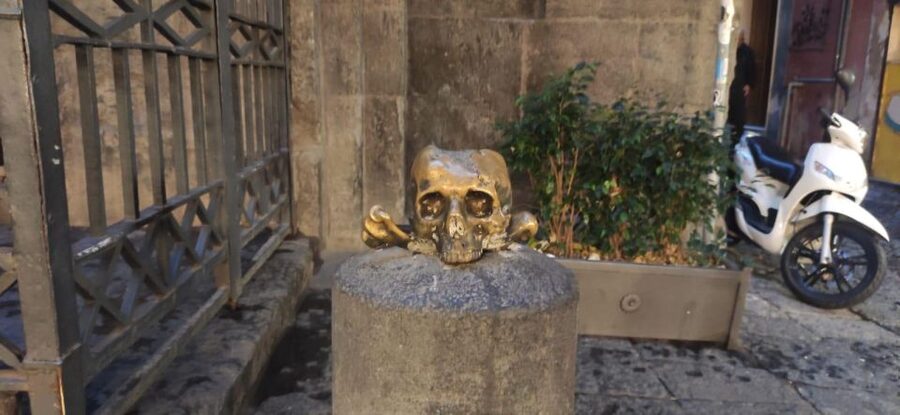
The walk continues through Piazza San Domenico Maggiore, another important old-town square where churches and historic buildings frame the route. It is a good place to pause and notice how public space works in Naples. A square can be a religious setting, a meeting point, and part of the everyday neighborhood all at once.
Piazza del Gesù Nuovo adds another strong architectural moment. The church’s unusual exterior makes it easy to recognize, and the square helps bring the route toward its close.
These final stops reinforce the tour’s main theme: Naples cannot be reduced to one period or one style. You see old street planning, medieval traces, Baroque details, popular religion, artisan work, and modern street life in a compact area.
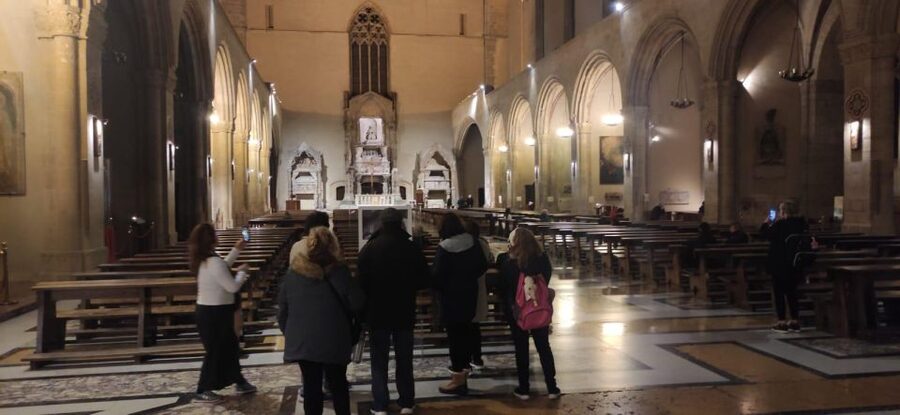
Do not expect a full interior visit to every church named along the route. The information describes a walking tour that takes you past and through the old center, with the guide explaining what you are seeing. If entering a particular church matters to you, ask the guide about timing on the day.
The guide, language, and group experience
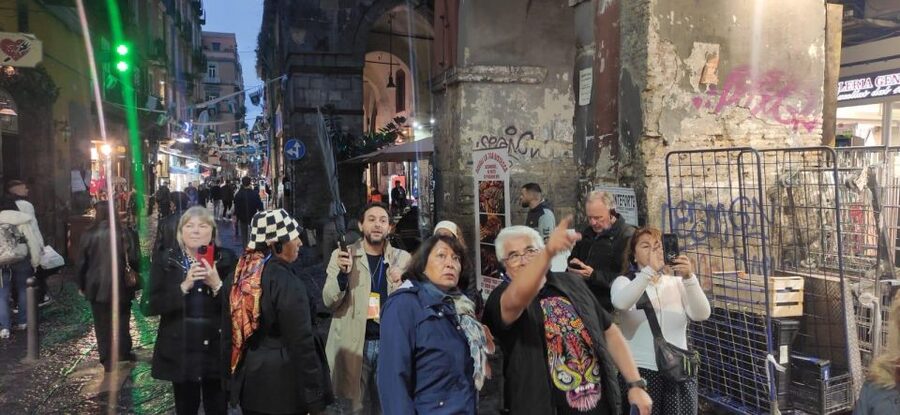
The tour is offered in English, Italian, and Spanish. That gives you a good chance of finding a suitable language, but the experience can change when several languages are combined.
Grazia was described as friendly, kind, and willing to repeat information in English during a bilingual Italian-English tour. That personal effort matters, but bilingual commentary can still reduce the amount of detail each language group receives. If historical explanation is your main reason for booking, confirm the language arrangement when possible.
Giorgia was praised for being professional and pleasant. The overall rating is 4.5 from 50 reviews, but the individual experiences show why you should judge the tour by its purpose. Several comments praise the guides’ warmth and professionalism, while one low rating describes a guide as unprepared and lacking a clear structure.
That mixed picture does not make the tour a poor choice. It tells you that the guide matters a great deal on a compact walking route. You are paying for interpretation as much as for the path itself.
Headsets are provided for groups of six or more. That is useful in Via dei Tribunali and Spaccanapoli, where street noise can swallow a quiet explanation. Smaller groups may not receive headsets, so staying near the guide becomes more important.
Food tasting and the value of $29
At $29 per person, the tour is reasonably priced for a two-hour guided introduction to central Naples. The value comes from the route, the local guide, and the time you save figuring out the old street plan on your own.
One sweet or savory food tasting is included. Treat it as a sample, not a meal. The tasting adds a practical connection to local culture, but you should still plan separate time for lunch or dinner.
I think the price works best for a first day in Naples. You get a quick framework for the historic center, learn which streets and squares deserve another look, and finish with a better sense of where to explore independently.
The value is weaker if you already know Spaccanapoli, San Gregorio Armeno, and Via dei Tribunali well. It is also less suitable if you want a long historical seminar or a detailed study of church interiors. In that case, a more specialized history tour may suit you better.
The tour runs for two hours and takes place rain or shine. Wear shoes that handle uneven old-city streets, and bring protection from rain or sun. The route includes narrow lanes and public streets, so comfort matters more than dressing up.
Free cancellation is available up to 24 hours before the start for a full refund, and you can reserve now and pay later. Those terms are useful if your Naples plans are still shifting.
Who should book this Naples walk?
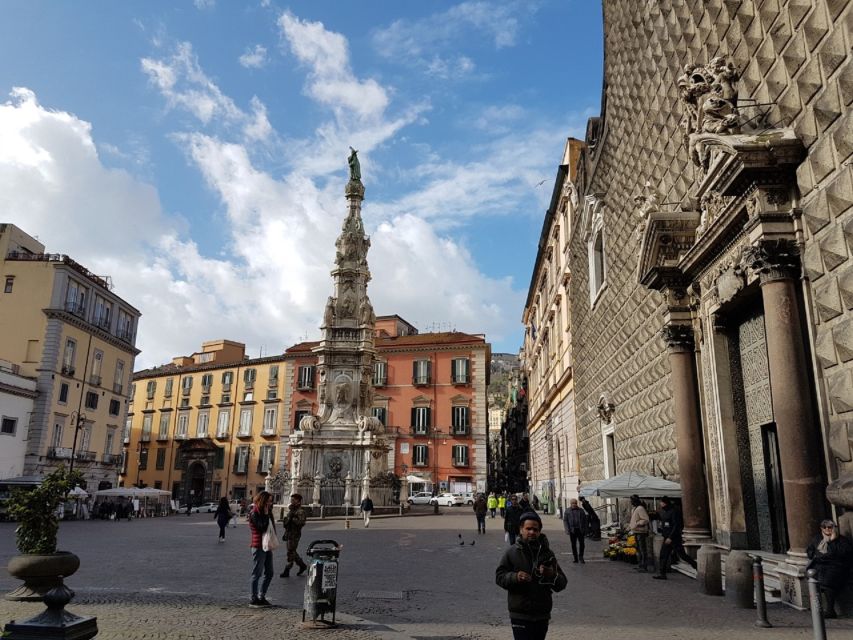
I would recommend it to you if you want a brisk introduction to the historic center, prefer walking to formal sightseeing, and enjoy seeing ordinary city life alongside major landmarks. It is especially useful early in a Naples stay, when you want to get your bearings before returning to favorite streets on your own.
Families and first-time visitors may appreciate the short length and changing scenery. The route rarely lets the eye get bored: one moment you are looking at an old street plan, the next at a church façade, an artisan display, or a food stall.
I would be more cautious if your priority is detailed history. The route covers a lot in two hours, and the amount of English explanation can vary if the group is bilingual. Grazia’s effort to repeat material in English was helpful, but the format still left one participant wanting more depth.
Should you book the Old Town and Spaccanapoli tour?
Book this tour if you want Naples in street-level detail, with a local guide connecting the Decumans, churches, artisan workshops, food, and daily life. At $29, it offers a practical introduction at a fair price, especially when taken near the start of your visit.
Skip it if you already know the old center or want a specialist guide focused on ancient history, architecture, or church interiors. For everyone else, this is a useful first walk, as long as you see it as an orientation to Naples rather than the final word on its past.
FAQ
Where does the tour meet?
Meet beside the Dante Alighieri statue in Piazza Dante. The guide waits with a sign showing the participant’s name.
How long does the walking tour last?
The tour lasts two hours. Starting times vary, so check availability when booking.
Which languages are available?
The tour is offered in English, Italian, and Spanish.
Are headsets provided?
Headsets are provided from six participants onward so you can hear the guide more clearly.
Is food included?
Yes. The tour includes one sweet or savory food tasting.
Can I cancel for a refund?
Yes. You can cancel up to 24 hours in advance for a full refund. The tour also offers reserve now and pay later booking.
Just added around Naples
- Naples: Guided Walking Tour★ 4.7 · 63 reviews
- Wine tasting in the Vesuvius National Park★ 3.5 · 4 reviews
- Naples: Pompeii and Vesuvius Skip-the-Line Day Trip★ 3.8 · 32 reviews
- Visit the Museum MANN with a professional guide★ 5.0 · 3 reviews
- Walking-tour of Naples hystorical Centre★ 4.4 · 4 reviews
- Vesuvius – Herculaneum – Pompeii Excavations Tour★ 4.2 · 9 reviews
- Pompeii: Vesuvius at Sunset★ 3.5 · 31 reviews
- Vesuvius and Herculaneum from Naples★ 3.7 · 29 reviews
Naples Historic Centre Walking Tours, compared.



Historic Center and Sansevero Chapel Walking Tour
Read our review →


Interactive audio guide for the historic center of Naples
Read our review →Browse the lists this tour appears in