Reviewed · GUIDED
Naples: Ipogeo dei Cristallini Guided Tour
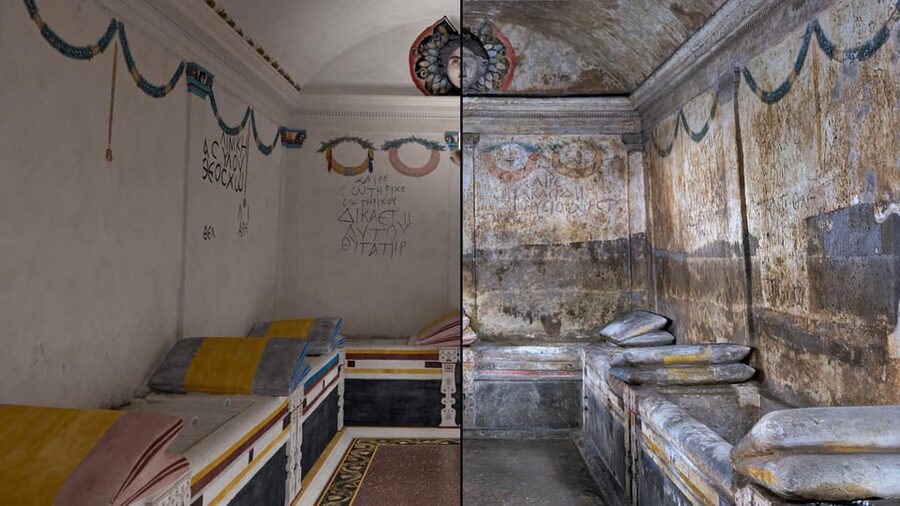
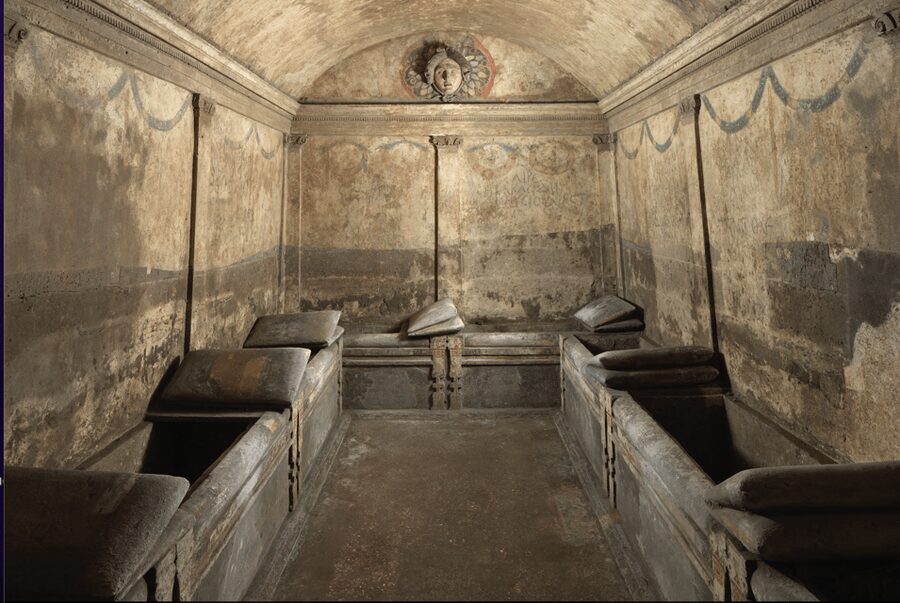
The most remarkable part of this visit is waiting below street level: four Hellenistic tombs cut into the rock, decorated with paintings from the 4th century BC, and a Medusa that still carries traces of its original color. You descend about 12 meters underground into the old Greek world of Neapolis, then see how Roman artistic touches were added later.
I like two things in particular. First, the small group, limited to 10 people, gives the guide room to explain the myths, family scenes, and odd details without turning the visit into a crowded shuffle. Second, the short film at the beginning helps you understand what you are about to see. The main drawback is practical: the stairs are dim and the site has architectural barriers, so anyone with bad knees or limited mobility should ask about access before booking.
Key points to know before you go
- Four painted Hellenistic tombs: See Greek burial chambers carved and decorated about 2,400 years ago.
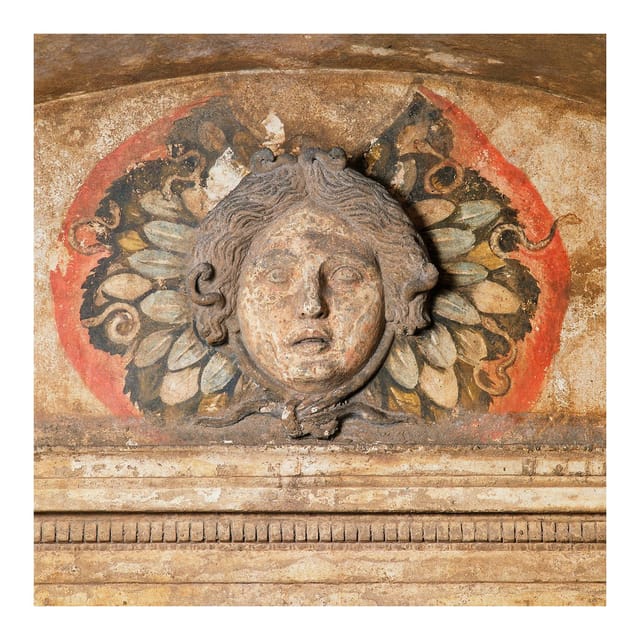
- A rare painted Medusa: The sculpted and painted figure is presented as a unique example of ancient Greek art.
- A 12-meter descent: Expect stairs, low light, and an underground setting rather than an easy museum-style walk.
- A guide from Rione Sanità: Your guide connects the tombs to Naples, Greek Neapolis, Roman additions, and the neighborhood’s story.
- A useful reconstruction video: The opening film shows how the site may have looked before you examine the surviving remains.
- A compact 45-minute visit: At $21 per person, the tour works well as a focused addition to a day in Naples.
Why the Ipogeo dei Cristallini is special
Naples is full of ancient layers, but the Ipogeo dei Cristallini gives you an unusually close look at Greek art in an underground setting. These are not bare stone chambers. Their walls preserve painted decoration, carved details, and images tied to myths, death, family, care, and friendship.
The tombs date from the 4th century BC, when Greek culture shaped the city of Neapolis. Later Roman artistic additions appear alongside the Greek work, giving the site a useful lesson in how cultures overlap rather than replace one another overnight.
I find this more interesting than a simple list of dates. You are looking at a place built for the dead, yet the decoration is full of human concerns: who was remembered, how a family expressed affection, and how people imagined the passage from life to death. The setting makes those ideas feel close at hand.
The Ipogeo was discovered by chance in 1889 by Baron Giovanni di Donato. That detail adds a little drama to the visit. For centuries, these chambers remained below the streets of Naples, and their survival was not the result of a grand public monument being carefully displayed from the start. You enter a place that was concealed, then brought back into view.
A few more Naples outings worth a look
- From Naples: Pompeii Ruins & Mount Vesuvius Day Tour
★ 4.3 · 11,459 reviews - From Naples: Sorrento, Positano and Amalfi Full-Day Tour
★ 4.6 · 10,988 reviews - From Naples: Sorrento, Positano & Amalfi Coast – Small Group Tour
★ 5.0 · 8,643 reviews
Starting with the film and the story of discovery
The visit begins with a video showing a virtual reconstruction of the archaeological site. I consider this a smart choice. Underground chambers can be hard to read when you first see them, especially when the light is low and the remains are spread across several rooms.
The film gives you a sense of the original arrangement before you deal with the physical space. It helps connect the surviving walls and paintings with the larger underground complex, rather than leaving you to stare at fragments and guess what they once meant.
Your guide then introduces the story of the discovery and the place of the tombs within Naples. The guide comes from Rione Sanità, which matters because this is not just a detached archaeological stop. The neighborhood is part of the visit’s meaning, and the guide explains its powerful story as well as the ancient site.
Languages offered are Italian, English, French, and Spanish. The small group limit of 10 people should make it easier to hear the explanation and ask a question before moving on.
Descending 12 meters into ancient Neapolis
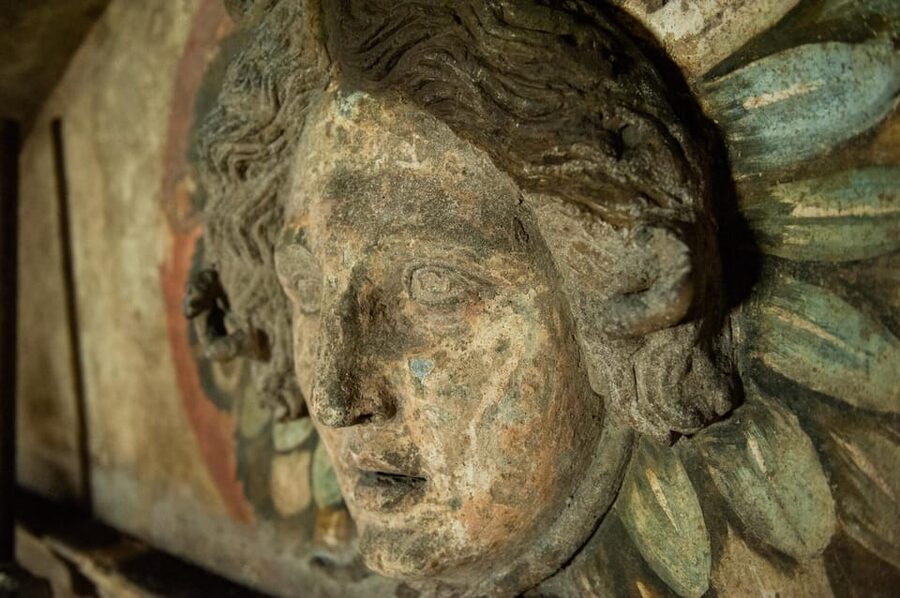
The physical change begins when you go down toward the tombs. The Ipogeo lies 12 meters below the modern street, beneath the layered city of Naples.
The stairs deserve your attention. One visitor with bad knees found the descent challenging but received help from the guide at each step. Another specifically noted that the steps are in low light and that the guide pointed them out carefully. I would use the handrail where available, take your time, and avoid treating the descent as a race.
This is not an ideal stop for someone who needs a fully step-free archaeological visit. The site has architectural barriers because of its historic structure. If you have a disability or serious mobility concern, contact the site before your visit so the team can assess what access is possible.
The darkness is part of the setting, but it is also a real comfort issue. You are going underground to see painted surfaces, so lighting must be handled with care. Give your eyes time to adjust and listen closely as the guide directs you through the chambers.
Four Greek tombs and the art on their walls
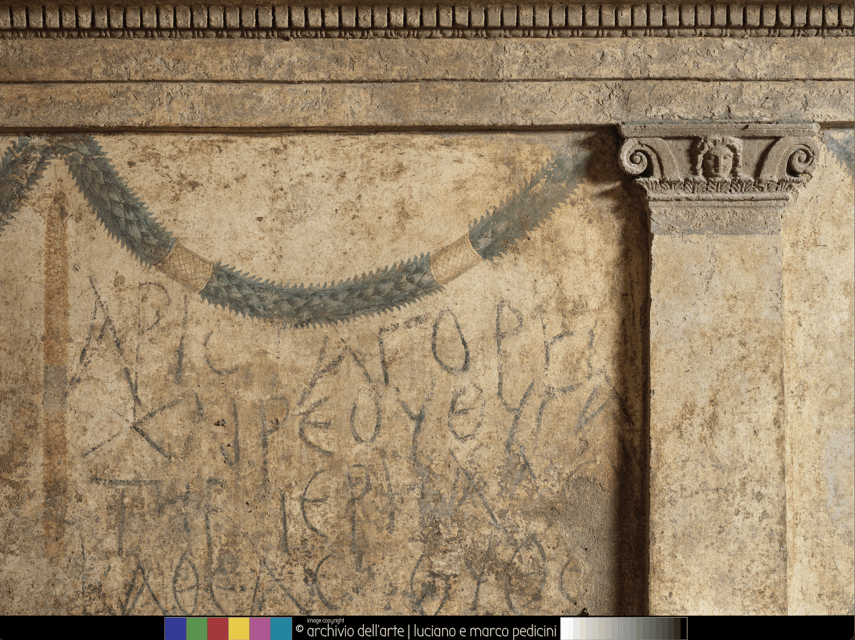
The heart of the visit is the group of four Hellenistic tombs. They were carved and painted by the ancient Greeks, and the frescoes are the reason this site is often described as a one-of-a-kind example of Greek painting and art.
The guide explains the architecture as you move through the chambers. Look beyond the broad impression of age and focus on the craft: the carved stone, the painted surfaces, the arrangement of the rooms, and the way decoration was used to honor the dead.
Because the visit lasts only 45 minutes, you will not have unlimited time to linger in every corner. That can be a drawback for anyone who wants a long, quiet study of each fresco. On the other hand, the compact length keeps the experience focused and easy to fit between other Naples sights.
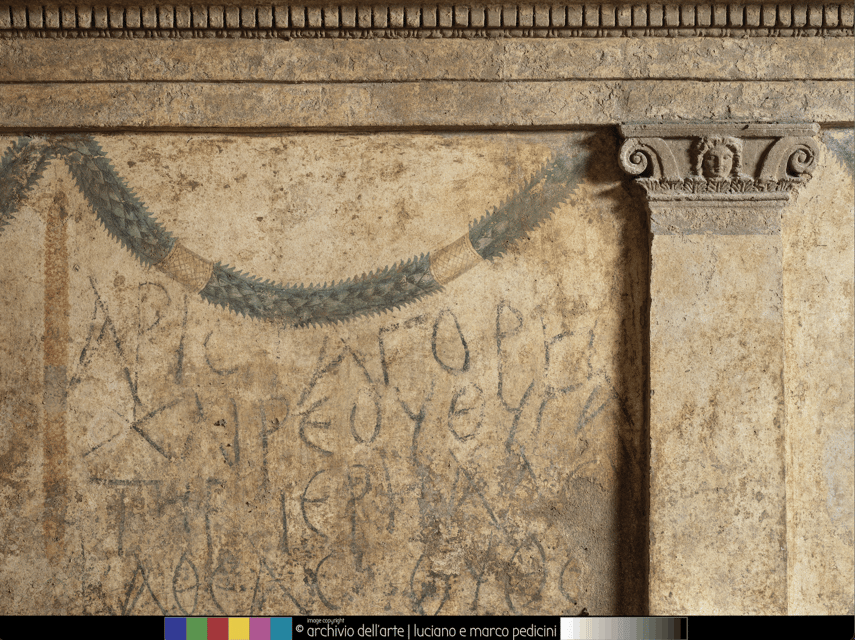
The paintings are valuable not simply because they survived. They show that Greek art in this setting was colorful and carefully designed, not limited to the white marble image many people carry in their heads. The surviving polychromy gives the tombs a different feel from a bare archaeological ruin.
Your guide also explains the ancient myths represented in the decoration. These stories help you read the images instead of seeing them as attractive but mysterious patches of paint.
More Guided Tours in Naples:
- Naples: Catacombs of San Gennaro Entry Ticket & Guided Tour
★ 4.6 · 7,941 reviews - Naples: Spanish Quarters Underground Guided Tour
★ 4.8 · 5,064 reviews - Naples: Street Food Walking Tour with Local Guide
★ 4.8 · 4,256 reviews - Herculaneum: Skip-the-Line Guided Tour with Archaeologist
★ 4.8 · 3,439 reviews
The Medusa that makes the visit memorable
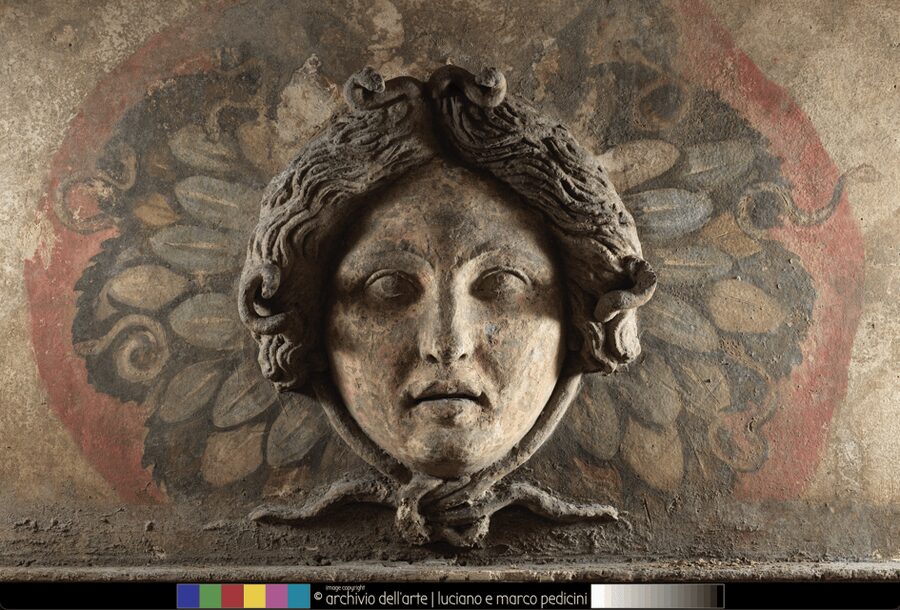
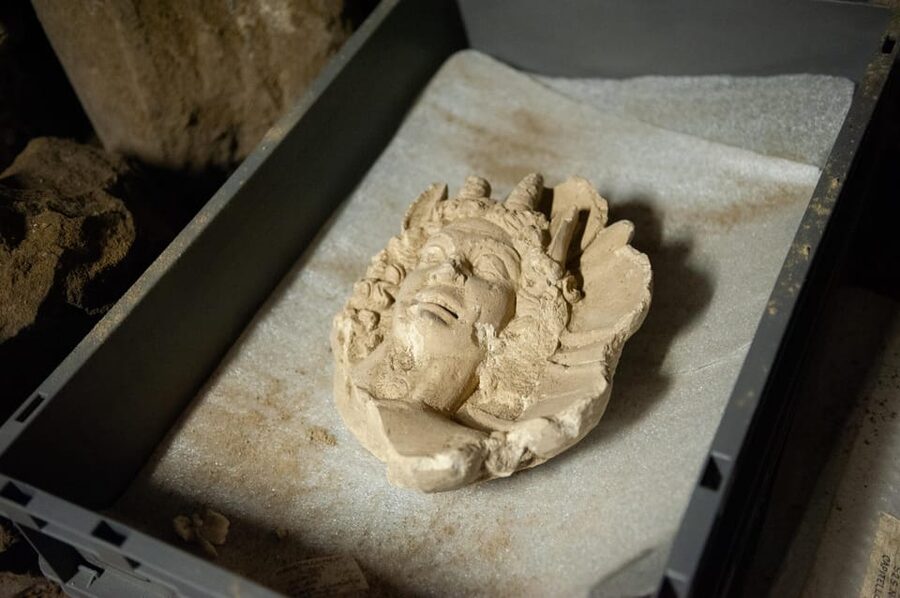
The Medusa is the moment I would especially look forward to. You see a figure that was sculpted and painted by the ancient Greeks, described here as an exceptional example with no known equal in the world.
Medusa is not just a monster from a myth. In ancient art, her image could serve as a powerful protective symbol. The Ipogeo’s version gives you a chance to see how sculpture and color worked together, rather than viewing a plain stone head stripped of its original painted finish.
The exact impact will depend on the condition of the remains and the light during your visit, so I would not expect a bright, newly painted object. The value is in seeing the surviving combination of carving and color in its original burial setting.
Listen to the explanation rather than rushing toward the headline attraction. The Medusa matters more when you understand its place among the tombs, the myths, and the larger ideas about death and protection.
Greek origins beside Roman additions
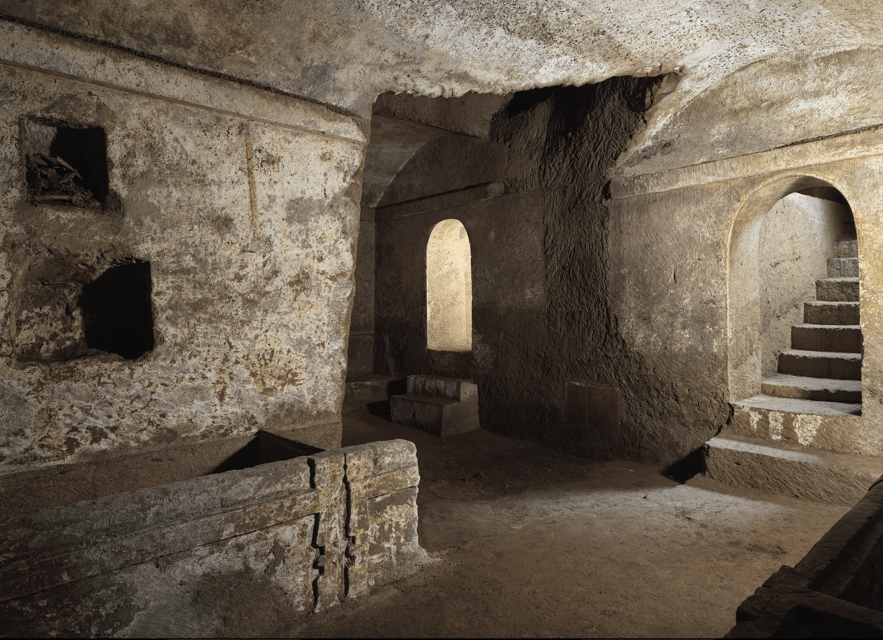
One of the most useful parts of the tour is the explanation of how Greek origins meet Roman artistic additions. Naples was not shaped by a single culture, and the tombs reflect that long process.
The site lets you see history as layers. The first impression may be Greek, especially in the painted tombs and myths, but later Roman influence adds another chapter. The guide points out this mixture and places it within the long story of Naples.
I like this approach because it prevents the visit from becoming a narrow lesson about one date. You are seeing how artistic habits, symbols, and building traditions can continue, change, and combine. The tombs become a small record of the city’s changing identity.
The themes also reach beyond archaeology. The guide connects the decoration with life and death, love and care, family and friendship. That is a useful reminder that burial spaces were not only about fear or ritual. They also expressed relationships and the wish to remember people well.
The Rione Sanità setting
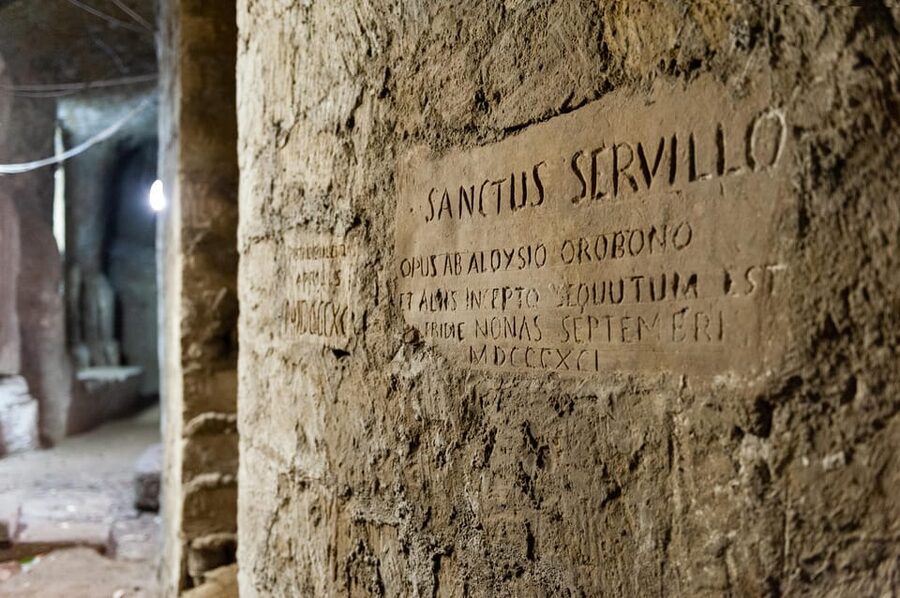
The Ipogeo dei Cristallini is in Rione Sanità, a Naples neighborhood with its own strong identity and story. The guide’s connection to the area adds context that a standard archaeological audio guide might miss.
You are not simply dropping below a random street to inspect old chambers. You are visiting an ancient site within a living part of Naples. The contrast between the modern neighborhood above and the Greek tombs below is one of the visit’s best features.
I would plan this experience as part of a day focused on the area, rather than treating it as an isolated attraction across town. The available information does not specify a full neighborhood walking itinerary, so you should not expect the 45-minute booking to include other Rione Sanità sights. Its focus is the Ipogeo and its story.
The guide also gives the site a human connection to present-day Naples. That makes the visit feel less like a sealed archaeological display and more like a conversation between the city’s ancient foundations and its current community.
Is $21 a fair price for 45 minutes?
At $21 per person, this is not the cheapest short activity in Naples, but the price is reasonable if you value a specialist archaeological site and a live explanation. You are paying for access to a fragile underground complex, a guide, the reconstruction film, and a small group capped at 10 people.
The short duration is both a strength and a limitation. You can fit it into a busy sightseeing day without giving up half a morning, but you should not expect an expansive museum visit. The price makes the most sense for someone who wants one focused encounter with ancient Greek painting rather than a long list of major monuments.
A group of 10 is another part of the value. In a larger group, the low light, narrow underground rooms, and detailed frescoes could be harder to manage. Here, the guide can point out small features and help people on the stairs.
The tour also offers free cancellation up to 24 hours before the start and a reserve-now, pay-later option. Those terms are useful when your Naples plans may change, though I would still check the available start times before building your day around the visit.
Who should book this experience?
I would recommend the Ipogeo dei Cristallini to you if you enjoy archaeology, ancient painting, mythology, or unusual places that are easy to miss in a major city. It is especially good for people who want to understand Naples through its Greek beginnings and Roman additions.
It suits adults and older children who can manage the stairs and low light. Children from 8 to 12 can visit free, while children under 8 are not admitted. The site’s subject matter and underground setting may be more rewarding for children who can listen to a focused explanation rather than expecting an interactive attraction.
You should think twice if you have bad knees, cannot manage stairs, or need step-free access. The guide may help, as happened for one visitor with knee trouble, but assistance does not remove the physical challenge. Contact the site ahead of time if access is a concern.
This is also a good pick for a repeat visit to Naples. If you have already seen the city’s better-known churches and streets, the Ipogeo offers a different view: a quiet descent into the Greek city beneath the modern one.
Practical tips for a smoother visit
Arrive ready for stairs. The descent is not long in the usual sightseeing sense, but the low light and underground setting mean you should move carefully.
Give yourself enough mental space for the first film. It is not filler. The reconstruction helps you understand the chambers and makes the later frescoes easier to place.
Choose your tour language when booking from the available options: Italian, English, French, or Spanish. If you are visiting with a small group, keep everyone together so the guide does not need to repeat explanations in the confined rooms.
Do not judge the site by the first few seconds underground. The rooms are small, and the remains are ancient. The interest comes from close observation: painted details, carved stone, Greek myths, the Medusa, and the way Roman elements appear alongside the earlier work.
Finally, allow the full 45 minutes. The tour is short enough to schedule easily, but it is not something to rush through on the way to another sight.
Should you book the Ipogeo dei Cristallini?
Book it if you want a compact, well-explained look at rare Greek painting in Naples. The combination of four Hellenistic tombs, surviving polychromy, the painted Medusa, a reconstruction video, and a guide from Rione Sanità gives the visit more substance than its 45-minute length suggests.
Skip it, or ask about access first, if stairs and low light are likely to make the visit uncomfortable. For everyone else, $21 is a fair price for a small-group introduction to one of Naples’ most unusual ancient sites. I would place it high on the list for anyone curious about what lies beneath the modern city.
FAQ
How long does the Ipogeo dei Cristallini guided tour last?
The guided tour lasts 45 minutes.
How far underground is the Ipogeo dei Cristallini?
You descend approximately 12 meters below street level.
How many people can join the tour?
The group is limited to 10 participants.
Which languages are available?
The live guide can conduct the visit in Italian, English, French, or Spanish.
What will I see during the visit?
You will see four Hellenistic tombs carved and painted by the ancient Greeks, frescoes, ancient myths, Roman artistic additions, and a sculpted and painted Medusa.
Is there a video during the tour?
Yes. The visit includes a video showing a virtual reconstruction of the archaeological site.
Are children allowed to visit?
Children from 8 to 12 years old may visit for free. Children under 8 are not permitted to enter.
Is the site accessible to visitors with disabilities?
The site has architectural barriers because of its historic structure. Visitors with disabilities should contact the site before visiting so access can be assessed.
Are there stairs and low light?
Yes. You descend stairs into the underground site, and the lighting is limited. Take care on the steps and follow the guide’s directions.
Can I cancel the booking?
You can cancel up to 24 hours in advance for a full refund. A reserve-now, pay-later option is also available.
Just added around Naples
- Naples: Guided Walking Tour★ 4.7 · 63 reviews
- Wine tasting in the Vesuvius National Park★ 3.5 · 4 reviews
- Naples: Pompeii and Vesuvius Skip-the-Line Day Trip★ 3.8 · 32 reviews
- Visit the Museum MANN with a professional guide★ 5.0 · 3 reviews
- Walking-tour of Naples hystorical Centre★ 4.4 · 4 reviews
- Vesuvius – Herculaneum – Pompeii Excavations Tour★ 4.2 · 9 reviews
- Pompeii: Vesuvius at Sunset★ 3.5 · 31 reviews
- Vesuvius and Herculaneum from Naples★ 3.7 · 29 reviews
Guided, compared.
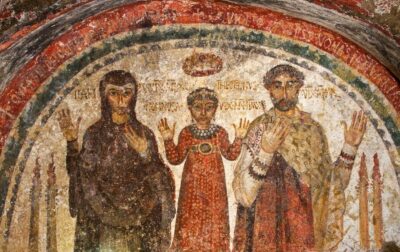
Catacombs of San Gennaro Entry Ticket & Guided Tour
Read our review →


The Bourbon Tunnel Guided Tour with Entrance Ticket
Read our review →
Authentic Naples Street Food Tour With Local Expert Guide
Read our review →