
Reviewed · NAPLES HISTORIC CENTRE WALKING TOURS
Naples Historic Center: Traditions, Legends & Folklore Tour
Naples shows its stranger side on this two-hour walk. You begin at the Duomo with the story of Saint Gennaro’s blood, then pass through streets filled with nativity makers, pizza shops, skulls, saints, luck-bringing statues, and old legends.
I like the route’s mix of famous streets and unusual stops, especially the Dolls Hospital and the skulls at Santa Maria delle Anime del Purgatorio ad Arco. I also like the small group limit of 20, which should make it easier to hear the guide in noisy lanes. The drawback is that guide quality may vary. Ludovica receives warm praise for her humor and clear explanations, while another published account found the guide poorly prepared.
Key points
- Saint Gennaro’s blood: Learn about Naples’ famous miracle at the Duomo.
- Street art on Via Duomo: Stop to see Jorit’s large San Gennaro work.
- Folklore-filled churches: Visit the Purgatory complex, Santa Chiara, and Gesù Nuovo Square.
- Traditional crafts: Walk through San Gregorio Armeno, home to Neapolitan nativity workshops.
- Good-luck customs: Touch the Pulcinella statue and hear the story behind the ritual.
- Two-hour English walk: The tour costs $51.24 per person and is limited to 20 people.
Starting at Naples Cathedral with Saint Gennaro
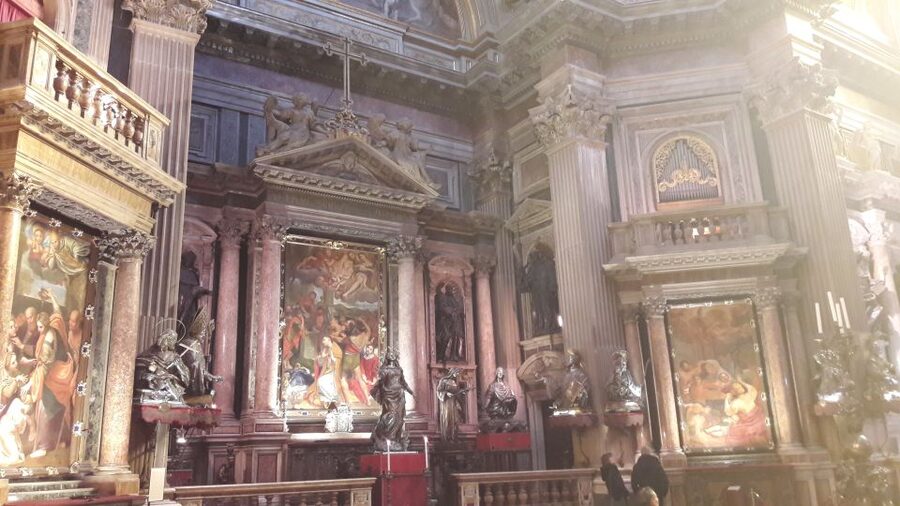
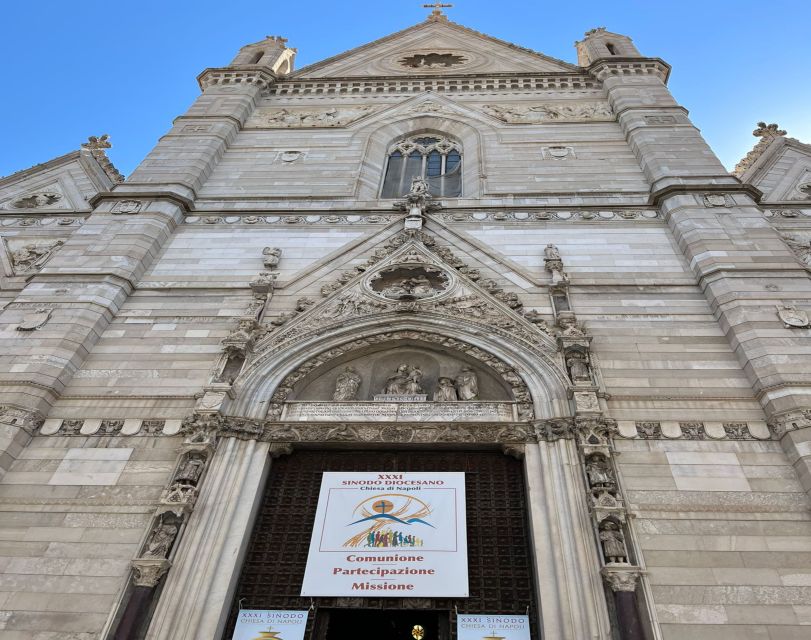
The tour begins outside the Duomo, or Cattedrale di Santa Maria Assunta, Naples’ main church. This is a sensible meeting point because the cathedral places you right in the middle of the old center, where sacred stories and daily life share the same narrow streets.
Your guide introduces the miracle of Saint Gennaro’s blood liquefaction. The story is central to Naples’ religious identity, and it gives the walk a useful starting point: this is a city where faith, ritual, superstition, and public life often overlap.
You will not spend the entire tour inside the cathedral. The main value here is the explanation of the saint and the local meaning attached to the blood ceremony. If you want an in-depth art or architecture tour of the Duomo, this walk is not designed for that.
From the cathedral, the group moves along Via Duomo. The street provides a quick change of mood, from formal church history to modern public art. You stop to look at a San Gennaro mural by Jorit, the acclaimed street artist known for large human portraits.
This contrast is one of the route’s best ideas. Naples is not presented as a museum frozen in the past. Its saints appear in old churches, folk stories, and contemporary graffiti.
More walks through the historic centre:
- Naples: Old Town Guided Walking Tour
★ 4.8 · 553 reviews - Naples: Guided Pub Crawl in the Old Town
★ 4.7 · 300 reviews - Naples: Historic Center and Sansevero Chapel Walking Tour
★ 4.8 · 208 reviews
Walking Via Duomo and Spaccanapoli
The walk continues toward Spaccanapoli, one of the best-known streets in the historic center. Its name refers to the way the route appears to split the old city, though the appeal is less about a single view than about the steady stream of churches, shops, workshops, food stops, and people around you.
The guide uses the street to explain Naples through local customs rather than a long list of dates. That approach suits a short tour. In two hours, you need a clear sense of how the city works, not a lecture on every building.
One unusual stop is the Dolls Hospital. The name alone makes it memorable, and the site gives the walk an offbeat turn. It is the kind of small cultural stop that can disappear if you explore Naples without local direction.
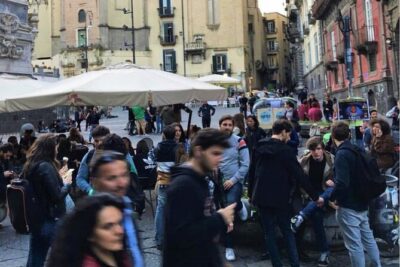
The route is on foot through busy historic streets. You should expect uneven urban surfaces, crowds, and frequent pauses rather than a brisk city walk. Wear comfortable shoes and keep your belongings secure in crowded areas. The tour is not suitable for wheelchair users, so accessibility should be considered before booking.
San Gregorio Armeno and the art of the nativity scene
Next comes San Gregorio Armeno, famous for its artisans and hand-made nativity figures. The street is closely linked to presepi, the elaborate Neapolitan nativity tradition.
This stop gives you a look at a living craft rather than a standard monument. Workshops and displays focus on much more than the central figures of a traditional nativity scene. The street is known for its skilled makers and its colorful, often playful approach to miniature characters.
Your guide helps place the craft in the larger culture of Naples. That matters because San Gregorio Armeno can feel like a commercial lane if you simply walk through it, especially when it is crowded. With context, you can pay attention to the work itself and understand why the street has such a strong place in the city’s identity.
Do not expect a long workshop visit or a shopping break built into the tour. The published route presents San Gregorio Armeno as a guided stop during a larger walk. If you want time to browse every shop, return later on your own.
Via dei Tribunali, pizza, and the souls of purgatory
The route then reaches Via dei Tribunali, one of the city center’s best-known streets for pizzerias. Food is not included, so this is an orientation stop rather than a tasting experience.
That distinction is useful. You can learn where the famous pizza street is, then decide later if you want to eat there. Since the tour lasts only two hours, a full meal would make the route harder to keep on schedule.
The most unusual stop comes at the Complesso Museale Santa Maria delle Anime del Purgatorio ad Arco. The site is associated with the so-called souls of purgatory and with skulls that became part of Neapolitan folk devotion.
This is where the tour’s focus on mystery becomes most clear. The guide explains the local legend connected with the church and the skulls, showing how Neapolitans have combined Catholic belief with personal acts of remembrance and folk tradition.
You should expect a more solemn stop here than at the street-art and craft locations. The appeal is not just visual. It is the chance to hear how the city has treated death, prayer, memory, and hope over generations.
The complex may be the strongest reason to choose this tour instead of a standard city-center walk. It offers a subject that is difficult to understand from guidebook descriptions alone. At the same time, anyone uncomfortable with skull imagery or religious material may prefer a route focused on architecture and food.
More ancient sites near Naples:
- Naples: Street Art & History Tour in the Spanish Quarters
★ 4.9 · 540 reviews - 360 ° Naples. THE historic center of the city
★ 5.0 · 85 reviews - Naples Walking tour of the Historical Center
★ 5.0 · 75 reviews - Naples: Monuments and Historic District Self-Guided Tour
★ 4.0 · 50 reviews
Touching Pulcinella for luck
The walk includes a stop at the Statue of Pulcinella. You are encouraged to touch the figure for good luck, a simple ritual that brings Naples’ theater tradition into the route.
Pulcinella is one of the most recognizable figures in Italian popular culture, and in Naples he has a special local connection. The statue is not treated as a grand monument. Its appeal comes from the custom surrounding it.
This is a small moment, but it gives the tour a human scale. You are not only looking at buildings. You are learning what people do, what they touch, and which stories continue to shape the way they move through the city.
As with all such customs, take the story as folklore rather than a promise of actual good fortune. The fun is in joining the ritual and understanding why it remains part of the city’s visitor experience.
Music near Italy’s oldest conservatory
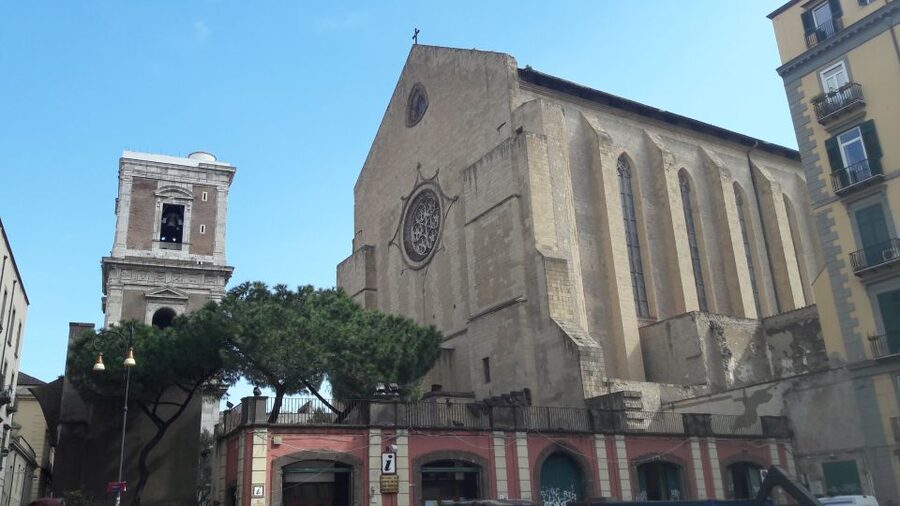
The route passes the oldest conservatory in Italy. The tour description notes that you might hear music along the way if you are fortunate.
That wording is important. Music is a possibility, not a guaranteed performance or scheduled part of the tour. You should enjoy it if it happens, but do not book this walk expecting a concert.
Even without music, the conservatory adds another layer to the route. Naples is presented through religious customs, street traditions, craft, theater, and music rather than through monuments alone. For a short walk, that range gives you a useful introduction to the city’s cultural character.
Port’Alba and its old legends
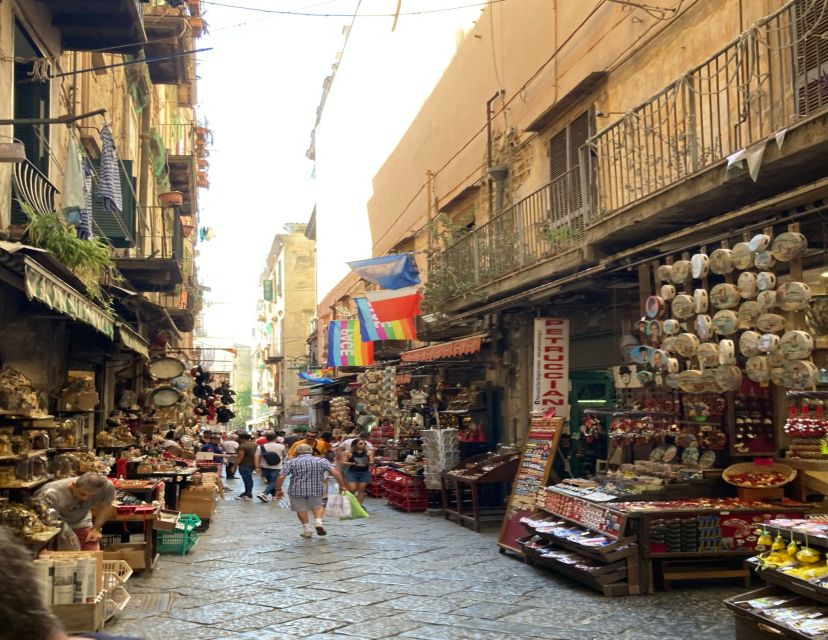
The walk continues to Port’Alba, known for its large seventeenth-century gate and its legends. The gate’s scale and architecture make it an easy landmark to notice, while the stories give it a more mysterious role in the route.
This is a good example of how the tour differs from a simple landmark checklist. You are not just told when a gate was built or where it leads. You also hear the local tales attached to it.
The route description calls Port’Alba one of Europe’s most beautiful seventeenth-century gates. That is a strong claim, and you should treat it as part of the tour’s enthusiastic presentation rather than an objective ranking. The useful point is that Port’Alba has enough size, age, and folklore to make it worth a stop.
Santa Chiara and Gesù Nuovo Square
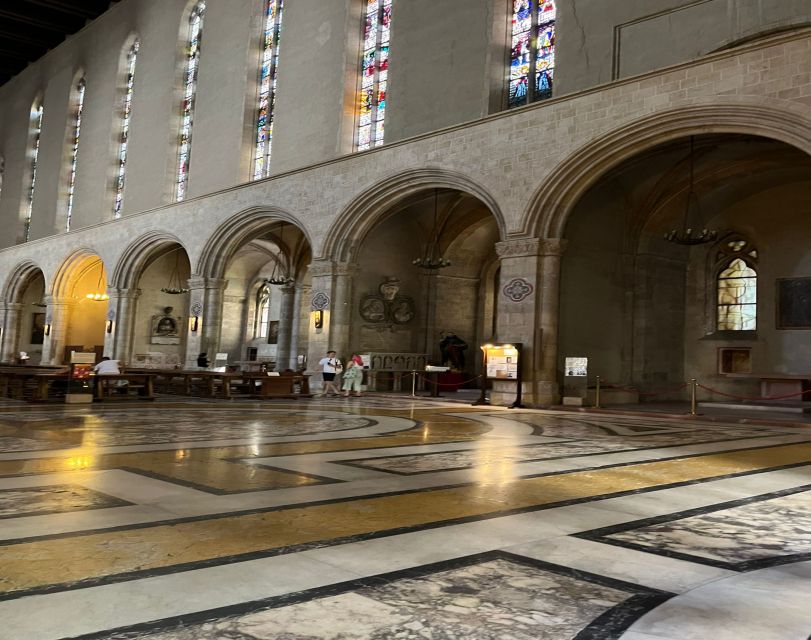
The final major church stop is Santa Chiara, described as an austere Gothic church and an important symbol of Naples. The route gives you a chance to see a more restrained side of the city after the lively streets and colorful artisan displays.
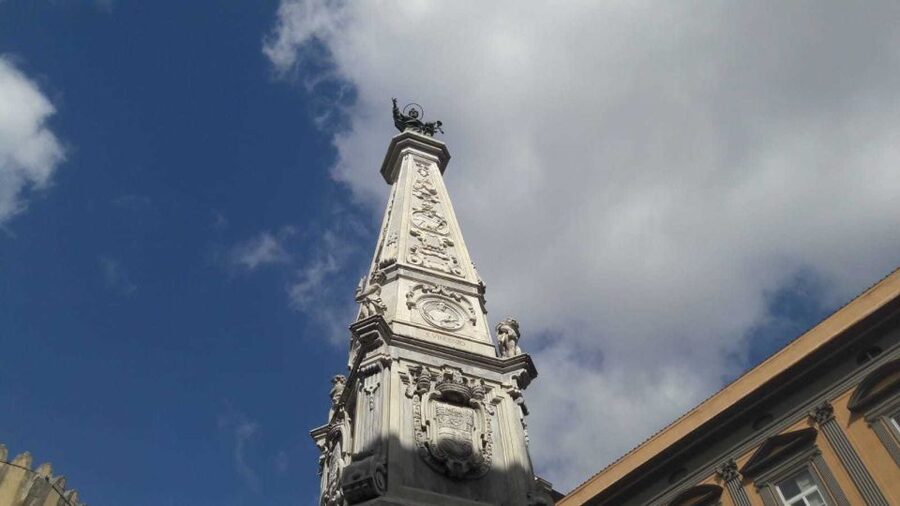
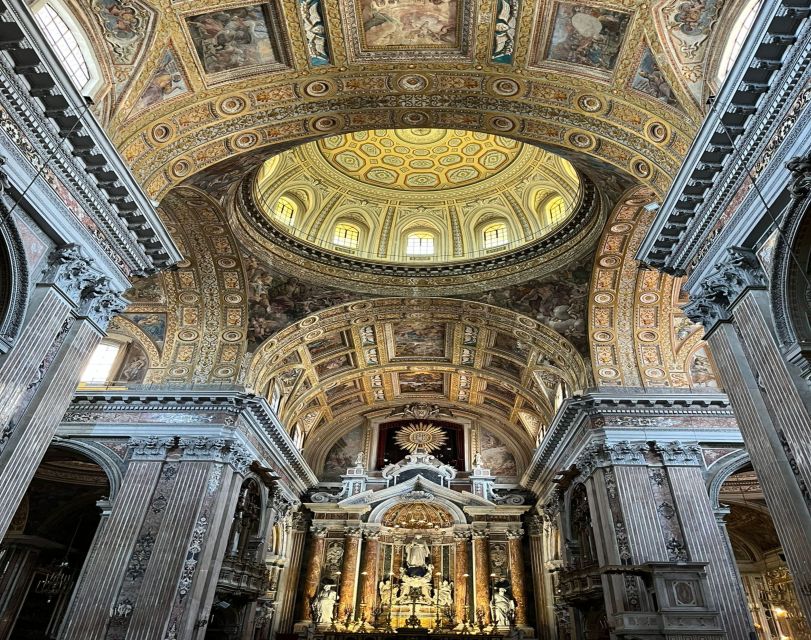
The tour then ends at Gesù Nuovo Square, where the guide explains the history behind the unusual front wall of the Church of Gesù Nuovo. The church’s exterior is striking, and the story behind it helps you look beyond the surface of the building.
The square is a fitting finish because several themes meet here: religious architecture, local stories, changing city life, and the contrast between plain stone and elaborate tradition. The route description says the tour concludes at Gesù Nuovo Square. However, the practical meeting-point information also says the activity ends back at the starting point. Confirm the exact finishing point when you book, especially if you have a restaurant reservation or a train to catch.
What $51.24 buys you
At $51.24 per person, this is not the cheapest way to walk around Naples. You are paying for an English-speaking local guide, a planned route, and explanations at places that are easy to miss or misunderstand on your own.
The value depends on what you want from a city walk. If you mainly need directions between the Duomo, Spaccanapoli, and Gesù Nuovo, you can cover much of the route without paying for a tour. If you want the legends, folklore, and odd details explained as you go, the price is easier to justify.
Food and drinks are not included. Hotel pickup and drop-off are also not included, so you must reach the Duomo independently. The tour lasts two hours, which keeps the cost from becoming an all-day commitment but also means that stops are selective.
The maximum group size is 20 people. That is not a private tour, but it is more manageable than a large coach group. In narrow streets and noisy squares, staying close to the guide will still matter.
Guide quality is the biggest uncertainty. Ludovica is specifically praised for giving plenty of information with humor, clear explanations, a helpful manner, and a smile. At the same time, a separate published account describes a guide as weak on art history and disconnected from the group. The overall rating is 4.1 from nine ratings, so the experience appears generally positive but not perfectly consistent.
Who should book this Naples folklore walk
I would choose this tour if you are visiting Naples for the first time and want an introduction that goes beyond major churches and broad historical dates. It suits you especially well if you enjoy legends, religious customs, street art, unusual cultural sites, and local rituals.
It also works well early in your stay. The route points out Via dei Tribunali, San Gregorio Armeno, Spaccanapoli, Port’Alba, and Gesù Nuovo, giving you a useful map of the old center for later exploring.
You may want a different experience if you need a serious art-history tour, a food tour, or a fully accessible route. The tour is in English only, it does not include food, and it is not suitable for wheelchair users.
Book with realistic expectations. This is a lively orientation walk with stories and memorable stops, not a scholarly study of every monument. If you get Ludovica or a similarly engaging guide, the mix of humor, explanation, and local folklore can make the old center much easier to understand.
Should you book it?
Book this tour if you want Naples explained through its legends, rituals, crafts, and unusual religious sites. The Purgatory complex, Pulcinella statue, San Gregorio Armeno, and Jorit mural give the walk a distinctive personality.
Skip it if you prefer a quiet architecture tour, need wheelchair access, or want food and museum admissions included. At $51.24, the value rests on the guide. The route is strong, but the guide’s preparation and style will shape how much you get from it.
FAQ
Where does the tour begin?
The meeting point is outside the Duomo, also called Cattedrale di Santa Maria Assunta, in Naples.
Where does the tour end?
The route description says it concludes at Gesù Nuovo Square. The practical meeting-point information says the activity ends back at the meeting point, so confirm the final location when booking.
How long does the tour last?
The walking tour lasts two hours.
What language is the tour conducted in?
The live tour guide speaks English.
What is included in the price?
A local and professional guide is included.
Are food and drinks included?
No. Food and drinks are not included.
Is the tour suitable for wheelchair users?
No. The tour is listed as unsuitable for wheelchair users.
Just added around Naples
- Naples: Guided Walking Tour★ 4.7 · 63 reviews
- Wine tasting in the Vesuvius National Park★ 3.5 · 4 reviews
- Naples: Pompeii and Vesuvius Skip-the-Line Day Trip★ 3.8 · 32 reviews
- Visit the Museum MANN with a professional guide★ 5.0 · 3 reviews
- Walking-tour of Naples hystorical Centre★ 4.4 · 4 reviews
- Vesuvius – Herculaneum – Pompeii Excavations Tour★ 4.2 · 9 reviews
- Pompeii: Vesuvius at Sunset★ 3.5 · 31 reviews
- Vesuvius and Herculaneum from Naples★ 3.7 · 29 reviews
Naples Historic Centre Walking Tours, compared.



Historic Center and Sansevero Chapel Walking Tour
Read our review →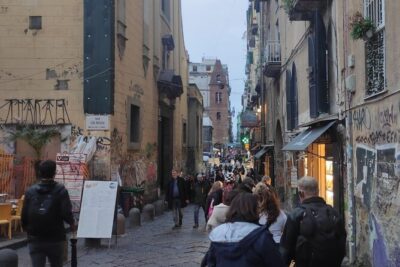


Browse the lists this tour appears in