
Reviewed · POMPEII TOURS FROM NAPLES
Pompeii the Buried city
Pompeii is most powerful when you leave the grand avenues and see the small details of daily life: a bath complex, a private house, an ancient street, and the plaster casts of people caught by the eruption of Mount Vesuvius in 79 AD. I like that this private tour reaches the quieter southern part of the ruins, and I like that guides such as Ilaria explain how the buildings once worked rather than simply naming them.
The main trade-off is time. Two hours is enough for a brisk introduction, but Pompeii is huge and the admission ticket costs an additional 16 euros per person. You will need a moderate level of fitness, and poor weather can cancel the tour, so check the forecast before setting out.
Key points to know before booking
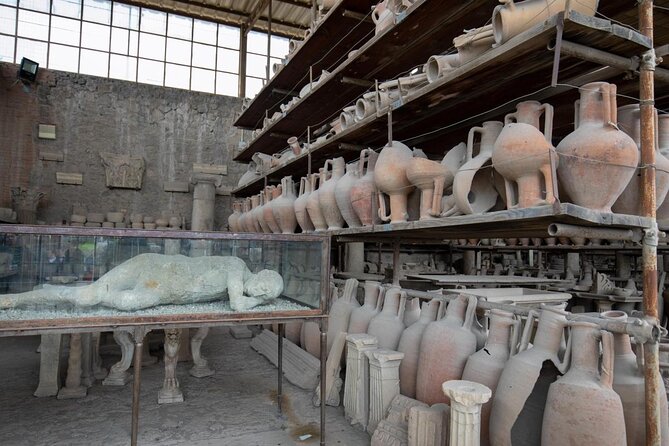
- The plaster casts are part of the route: You visit the southern section of Pompeii, where the famous casts of eruption victims can be seen.
- The tour is private: Your group alone takes part, with a maximum of six people.
- Ilaria has earned strong praise: Her tours are noted for clear explanations, enthusiasm, and thoughtful answers to questions.
- The route covers major public and private buildings: Expect the Forum, baths, Menandro’s House, the Lupanare, theaters, houses, and streets.
- Tickets cost extra: The tour price is $229.28 per group, while admission is 16 euros per person. Children under 18 enter free with valid identification.
- The schedule is morning-focused: Tours are listed from 9 a.m. to 1 p.m., with the meeting point at Pompeii’s Porta Marina entrance.
Starting at Porta Marina in Pompeii
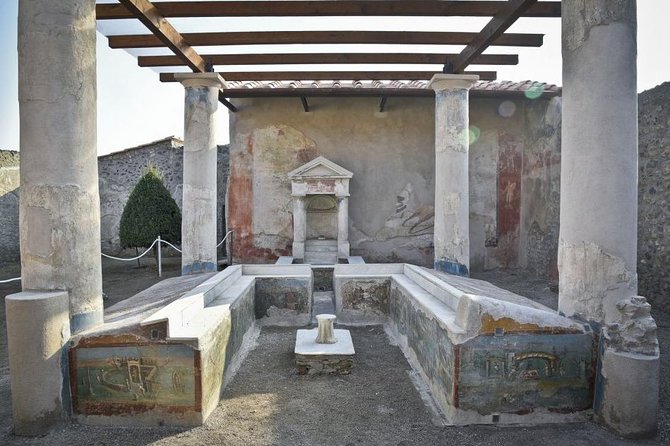
You meet your guide at Pompei-Porta Marina, the entrance area for the archaeological site. The listed address is in Pompeii, at Scavi, 80045 Pompei, in the Metropolitan City of Naples. The tour returns to this same meeting point.
That arrangement is useful if you are arriving by public transportation or want to continue exploring the town after the walk. The meeting point is near public transportation, but you should still allow time to locate the correct entrance. Pompeii has several access points, and a rushed arrival can eat into a two-hour visit.
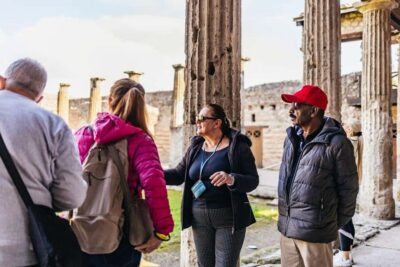
The tour is private, with only your own group taking part. That matters here. Pompeii’s streets can feel confusing, and a private guide can adjust the pace, spend longer at a house that catches your interest, or keep the group moving when time is short. The maximum group size is six, a good number for hearing explanations without the feel of a large organized party.
Admission is not included in the tour price. Budget 16 euros per person for the entrance ticket. Under-18s enter free with valid identification, so families should bring the required document for each eligible child.
More ways to see Pompeii:
- Pompeii Small Group Tour with an Archaeologist
★ 5.0 · 6,593 reviews - Discover the Ancient Ruins of Pompeii: Day Trip from Rome
★ 3.5 · 2,247 reviews - Pompeii and Herculaneum Small Group Tour with an Archaeologist
★ 5.0 · 1,350 reviews
What two hours can show you
Pompeii is not a compact monument. It is an entire ancient city, with streets, homes, businesses, religious buildings, public facilities, and theaters spread across a large archaeological area. In two hours, you are getting a guided introduction, not a full survey.
That is not necessarily a weakness. A good guide helps you avoid spending your limited time wandering between ruins without context. This route is designed to connect the best-known buildings with less crowded corners, giving you a useful sense of how Pompeii functioned as a real town.
You will spend much of the visit walking on ancient streets and uneven surfaces. Wear practical shoes and bring water, especially in warm weather. The stated fitness requirement is moderate, so this is not presented as a demanding hike, but it is still a walking tour through a large archaeological park.
The route described takes roughly two hours. One past visit with Ilaria lasted three hours, which is a reminder that the precise timing can vary with questions, pacing, and the amount of detail your group wants. If you want to see every major neighborhood, two hours will feel short. If you want a focused first visit with a guide, it can work well.
The Forum and Pompeii’s public life
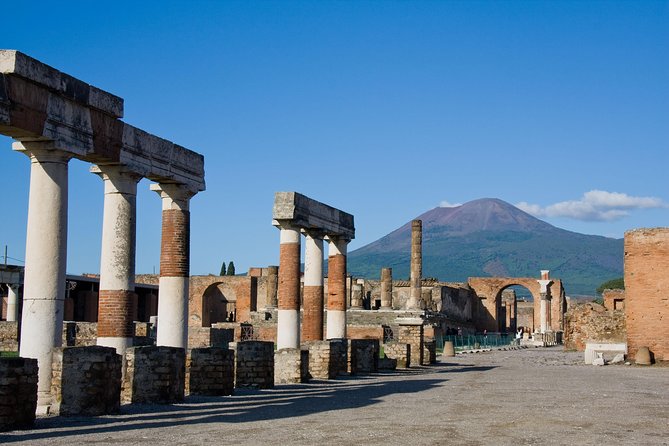
The Forum is one of the essential stops. This large public area was the center of civic and commercial activity, and it gives you the clearest sense of Pompeii as an organized city rather than a collection of isolated ruins.
Your guide can help you read the open spaces around it: where public business took place, how important buildings were arranged, and why the Forum mattered to ordinary residents. Without that explanation, it is easy to see only columns and broken walls. With context, the area begins to look like the city center it once was.
The route also includes major public buildings and baths. The thermal baths are especially useful for understanding routine life. Pompeii was not only about temples and political buildings. People washed, socialized, conducted business, ate, worked, and managed households here.
I like this balance between monumental sites and ordinary life. The tour does not focus only on the most famous photograph. It uses public buildings to show how the city operated, then shifts into private houses and more personal spaces.
Menandro’s House and the private side of Pompeii
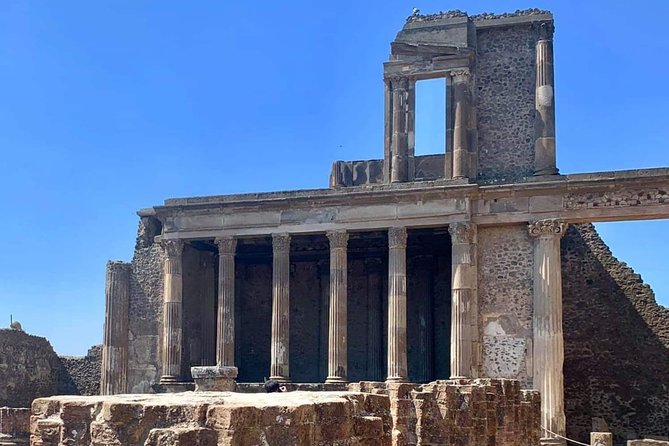
Menandro’s House is one of the private residences included on the route. A house like this gives you a different view of Pompeii from the Forum. Instead of thinking about crowds and public ceremonies, you begin to consider how families lived, received visitors, displayed wealth, and moved through domestic rooms.
The name of a house matters less than the details a guide points out. Look at the layout, decoration, courtyards, and surviving features. A guide can explain what you are seeing and help separate the original function of a room from modern assumptions.
The tour includes many other houses and buildings as well. That is useful because Pompeii’s appeal comes from comparison. One home may suggest comfort and status, while another helps you think about work, trade, or more modest daily routines.
Guides such as Ilaria have been praised for explaining what life was like in Pompeii, along with the art and buildings that remain. That focus is important. You are not just walking past walls. You are being given a way to picture the people who used them.
A few more Pompeii outings worth a look
- Skip the Line Guided Tour of Pompeii led by an Archaeologist
★ 5.0 · 703 reviews - Pompeii Ticket + Tour with Optional Tasting Experience at Pompeii
★ 5.0 · 663 reviews - Pompeii private tour with an Official Guide
★ 5.0 · 631 reviews - Pompeii Private Tour with an Archaeologist and Skip The Line – 3 hours
★ 5.0 · 564 reviews
The Lupanare and its erotic frescoes
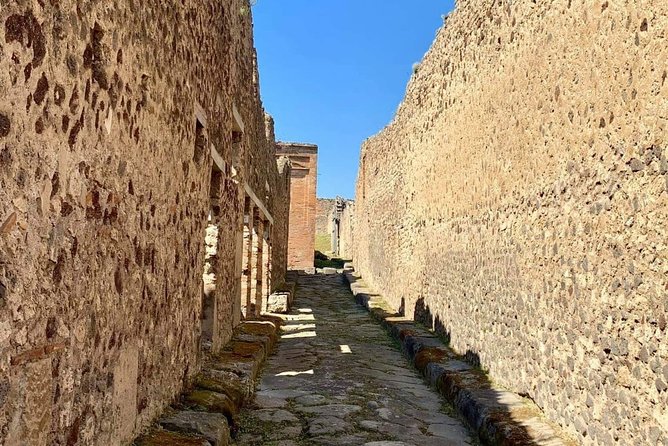
The Lupanare, Pompeii’s famous brothel, is one of the route’s more memorable stops. Its erotic frescoes are direct and striking, and they give the site a less polished, more human quality.
You should expect this part of the visit to be frank rather than delicate. The frescoes are not merely a curiosity. They offer a glimpse into how sex work was represented and how small commercial spaces fitted into city life. Your guide can provide the needed context without turning the stop into a cheap joke.
For many people, this is one of the places that makes Pompeii feel real. The Forum can seem formal and grand. The Lupanare is intimate, practical, and blunt. Together, the two stops show a city with both public ideals and everyday needs.
The southern ruins and the plaster casts
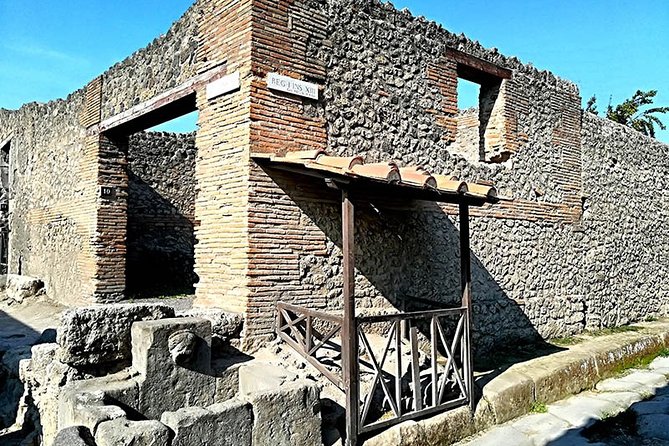
One of the strongest features of this route is its walk through the less crowded southern part of the ruins. This section includes the famous plaster casts of people who died during the eruption of Vesuvius.
The casts are difficult to see and impossible to forget. They are not ordinary statues. They were formed from cavities left in the hardened volcanic material after bodies decomposed, preserving the shapes of people in their final moments. The sight brings the disaster close in a way that written dates and ruined walls cannot.
A respectful guide makes a difference here. The casts should be treated as human remains and evidence of a catastrophe, not as a spectacle. The route gives you time to understand what happened while also connecting the casts to the streets and buildings around them.
The southern area is also valuable because it may feel calmer than the busiest parts of Pompeii. That can make it easier to listen, look carefully, and picture the city before the eruption. You are not simply ticking off a famous object. You are seeing it in the setting where the disaster unfolded.
The theaters and northern streets
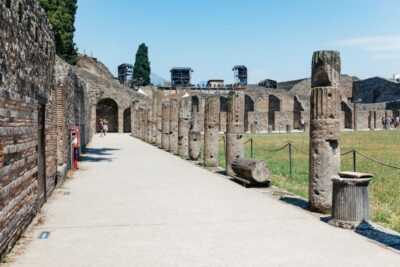
After the southern section, the route continues toward Pompeii’s theaters and then crosses streets along the northern side of the ancient city. The theaters provide another look at public life, this time through entertainment and performance.
Theater spaces are a good reminder that Pompeii was not frozen in solemn religious activity. People gathered for shows, social events, and shared experiences. The buildings also help show how the city accommodated large groups in a period long before modern public venues.
Crossing the ancient streets is one of the simplest pleasures of the tour. Streets can tell you as much as grand buildings do. Their layout, paving, and connection between public and private spaces help you understand the city as a working place.
The route description suggests that for a large part of the visit, you may feel as if you are walking through Pompeii with its inhabitants. That is the right goal for a short tour. The best moments are not always the grandest ruins. They are the points where the guide links a street, a house, and a public building into one understandable neighborhood.
Why the guide matters more than usual
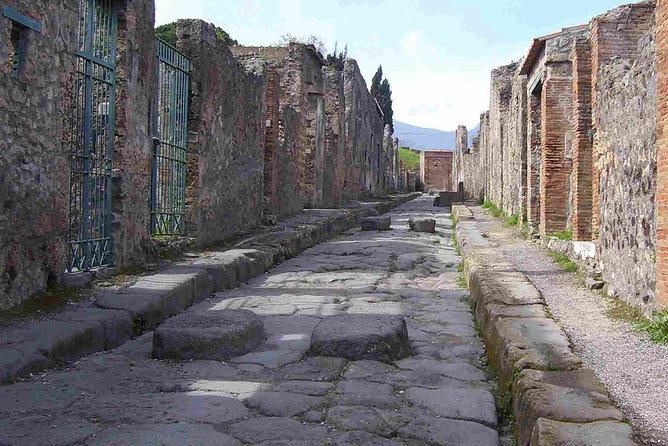
Pompeii is a place where a guide can add real value. Many structures are damaged, partially rebuilt, or difficult to identify from a distance. A professional local guide authorized by the Campania regional authorities should know how to explain the site and select the most useful stops within the time available.
Ilaria is the guide name most closely associated with the strongest praise connected to this experience. Her strengths are described as clear explanations, enthusiasm, and the ability to answer questions. One group particularly valued her insight into daily life, art, and architecture.
You should not assume Ilaria will lead every departure unless that is confirmed when you book. Still, her example shows what to look for in the guiding style: someone who explains why a building matters, connects objects to daily life, and responds to your questions rather than reciting dates.
The private format supports that style. You can ask about the eruption, household design, public baths, frescoes, or the casts without worrying about holding up a large group. If your party includes children, older relatives, or anyone who prefers a slower pace, that flexibility can be useful.
Is $229.28 good value for six people?
The tour costs $229.28 per group of up to six, before entrance tickets. For a full group, that works out to about $38 per person for the guided service, plus the 16-euro admission fee per person. For two people, the per-person tour cost is much higher.
That pricing makes the experience most attractive for families or groups of friends who can fill several places. Six people can share the guide fee, while a couple may want to compare the price with a larger shared tour. The advantage here is not just privacy. It is the chance to shape the pace and ask questions freely.
You should also consider what two hours means for the price. You are paying for a focused introduction rather than an all-day archaeological visit. If you want to stay afterward and explore alone, this format can work well. If you want a long, slow tour of many neighborhoods, you may find the duration limiting.
The cost is easier to justify if you value context. Pompeii’s most famous sights are easy to find in photographs, but understanding how the Forum, baths, houses, brothel, theaters, and streets fit together is harder without help.
Weather, timing, and practical planning
The listed operating hours are 9 a.m. to 1 p.m., from October 1, 2025, through November 30, 2026. That gives you a morning window and may suit visitors who want to continue to Naples, Mount Vesuvius, or another Pompeii site later in the day.
Weather deserves attention. This experience requires good weather and may be canceled in poor conditions. One past outing was affected by rain, lightning, hail, and flooding, which prevented the planned Mount Vesuvius and Naples portions and shortened the Pompeii visit. That is a useful warning: do not build an overly tight day around outdoor sightseeing in uncertain weather.
You can cancel free of charge up to 24 hours before the start time for a full refund. Cancellations or changes made less than 24 hours before the tour are not refunded or accepted, and the cut-off follows local time. If bad weather cancels the experience, you are offered another date or a full refund.
Confirmation arrives at booking. The activity is near public transportation, but the tour itself is on foot. Bring comfortable shoes, carry only what you need, and leave room in your schedule for locating Porta Marina.
Who should book this Pompeii tour?
I would choose this tour if you are visiting Pompeii for the first time and want a private guide to make sense of the ruins quickly. It suits a family or small group that values personal questions, a private pace, and a route that includes both famous stops and quieter southern areas.
It is also a good fit if the plaster casts, domestic houses, and daily life interest you as much as the Forum. The route does not treat Pompeii as a single grand ruin. It moves between civic buildings, baths, homes, a brothel, theaters, streets, and evidence of the eruption.
I would think twice if you want a full-day visit or prefer to explore every corner independently. Two hours passes quickly, and admission is extra. Visitors with limited mobility should note the moderate fitness requirement, though a past tour was suitable for someone who had some difficulty walking because the guide selected nearby highlights.
Should you book it?
Book this experience if you want an efficient, private introduction to Pompeii and can share the cost with a group. The best reasons are the southern route with the plaster casts, the mix of public and private buildings, and the chance to learn from a local guide such as Ilaria.
Skip it if you need a low-cost option for one or two people, or if you want enough time to cover the entire archaeological park. For most small groups, though, the focus and personal attention make this a sensible way to begin your Pompeii visit.
FAQ
How much does the Pompeii tour cost?
The private tour costs $229.28 per group of up to six people. Admission is not included and costs 16 euros per person. Entrance is free for visitors under 18 with a valid identification document.
How long does the experience last?
The tour lasts approximately two hours. The listed opening period has tour hours from 9 a.m. to 1 p.m., Monday through Sunday.
Where do I meet the guide?
You meet at Pompei-Porta Marina, Scavi, 80045 Pompei, in the Metropolitan City of Naples, Italy. The activity ends back at the same meeting point.
Is the Pompeii entrance ticket included?
No. The guided service is included, but the archaeological park admission ticket must be paid separately.
Is this a private tour?
Yes. Only your own group takes part, with a maximum of six people.
What happens if the weather is poor?
The experience requires good weather. If it is canceled because of poor weather, you can choose a different date or receive a full refund. You can also cancel up to 24 hours before the start time for a full refund.
Just added around Pompeii
- Wine Tasting and Winery Tour in Vesuvio National Park with Lunch★ 4.5 · 3 reviews
- Mt. Vesuvius Wine Tasting and Lunch Experience from Pompeii★ 4.5 · 20 reviews
- Wine tasting in the Vesuvius national park★ 5.0 · 3 reviews
- Traditional Neapolitan Dinner in Pompei – Villa Franca – Family Restourant★ 5.0 · 8 reviews
- Private Guided Tour and VR Headsets in the Ancient Pompeii★ 5.0 · 3 reviews
- Visit Pompeii with a local expert guide★ 5.0 · 10 reviews
- Tour Mount Vesuvius with Entry Tickets and Round Trip Transfer Included★ 3.5 · 4 reviews
- Vesuvius tour entrance to the crater and return bus★ 4.5 · 9 reviews
Pompeii Tours from Naples, compared.

Pompeii Small Group Tour with an Archaeologist
Read our review →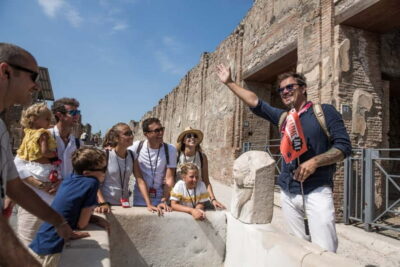
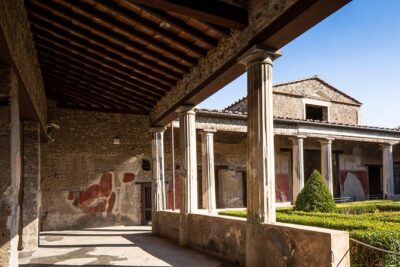
Pompeii & Mt.Vesuvius Day Tour from Naples with Pizza Lunch
Read our review →
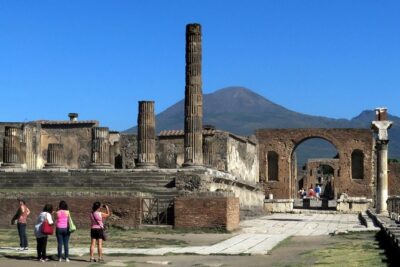
Pompeii & Mt Vesuvius All-Inclusive Small Group w/ Lunch
Read our review →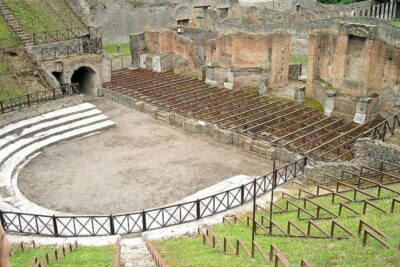
Pompeii & Amalfi Coast Full-Day Trip with Lunch
Read our review →Browse the lists this tour appears in