
Reviewed · POMPEII TOURS FROM NAPLES
Pompeii: living with the volcano
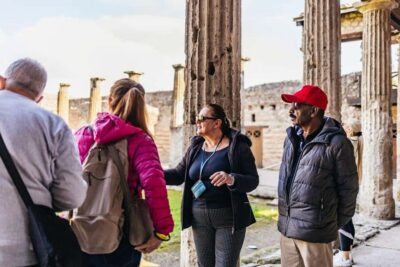
The most compelling part of this Pompeii tour is its simple time shift: you explore the city as it might have felt one day before Vesuvius erupted in 79 AD. Instead of treating the ruins as a string of old walls, guide Michele Arpa connects the shops, homes, theaters, and streets to ordinary routines.
I like two things right away. First, the private format means your group gets Michele’s full attention. Second, the route links public life with private life, from gladiator contests and election notices to take-away food counters and luxurious homes. The main drawback is that the entrance ticket is not included, and two hours can feel short in a site as large as Pompeii.
Key points to know before booking
- A private English tour with Michele Arpa: Your group explores with its own guide rather than joining a larger shared party.
- Pompeii through daily life: The route covers shops, food counters, homes, baths, theaters, the amphitheater, and the civil Forum.
- A strong story of the final day: The tour frames the ruins around the city’s routines before the eruption, then brings attention to people preserved by volcanic ash.
- The price is guide-only: At $33.36 per person, the cost covers the guide service, not admission fees or taxes.
- A morning schedule: The listed time is 9:30 AM to 11:30 AM, Monday through Sunday.
- Expect uneven walking: Pompeii’s roads make this unsuitable for visitors with mobility difficulties, and moderate physical fitness is advised.
Pompeii as a living city, not a pile of ruins
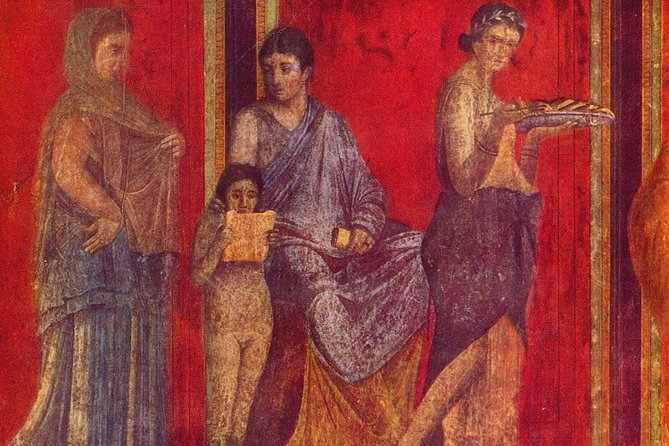
Pompeii is often presented as a disaster site. That matters, but it is only half the story. Before the ash and pumice fixed the city in place, Pompeii was a working Roman town with food sellers, shopkeepers, politicians, bathers, theatergoers, wealthy homeowners, and people rushing through very ordinary days.
This tour uses that human scale as its main tool. You are not simply pointed toward a column and told when it was built. You follow the city’s routines. A street becomes a route to the theater. A shop becomes a place to picture lunch. A wall inscription becomes evidence of local politics.
I like this approach because it gives the ruins a purpose. You can better understand why a building mattered when you see how it fitted into a person’s day.
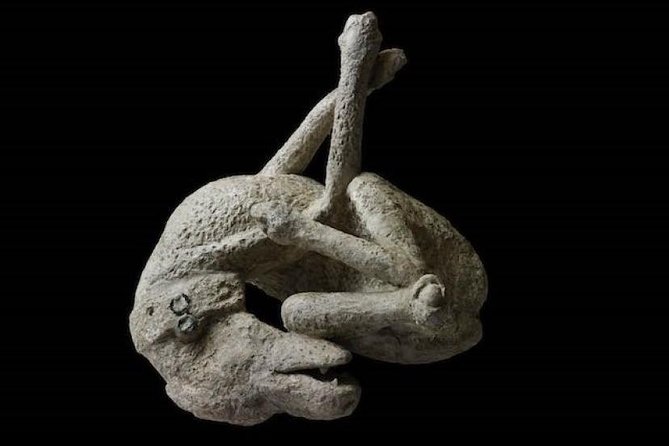
The tour also reaches the harder part of Pompeii. Archaeologists found casts and remains of people who died during the eruption. The guide’s job is to place that tragedy in context without allowing the entire visit to become a spectacle. The experience appears designed to move from normal life to sudden disaster, which gives the final section more weight.
More ways to see Pompeii:
- Pompeii Small Group Tour with an Archaeologist
★ 5.0 · 6,593 reviews - Discover the Ancient Ruins of Pompeii: Day Trip from Rome
★ 3.5 · 2,247 reviews - Pompeii and Herculaneum Small Group Tour with an Archaeologist
★ 5.0 · 1,350 reviews
The city streets and shops of Pompeii
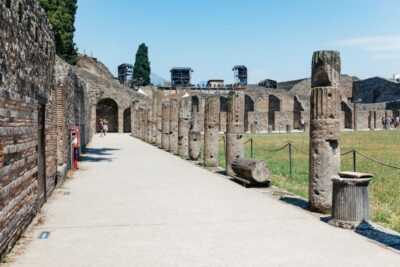
The first part of the route focuses on the streets and commercial spaces. Pompeii’s roads are one of its great strengths because they let you read the town at ground level. You can follow the routes people used, look at shop fronts, and see how public activity spilled into the street.
The tour includes the take-away food counters of the first century BC. These are among the most useful places for understanding daily life. Rather than imagining everyone eating formal meals at home, you can picture food being bought and eaten as part of the city’s routine.
That detail also helps balance the grander parts of Pompeii. Rich houses and public monuments can make ancient life seem remote. A food counter feels immediate. You can think about what was sold, who stopped there, and how the business fitted into the neighborhood.
The wording of the tour suggests that Michele encourages you to see Pompeii from the viewpoint of an inhabitant. That makes the streets more than a path between attractions. They become the setting for errands, meals, social encounters, and political messages.
Do not expect a polished modern walkway throughout the site. The roads are part of the ancient city, and the information specifically warns that their condition is not suitable for people with mobility difficulties. Wear practical shoes and be ready for a fair amount of walking over uneven ground.
Theaters and the amphitheater’s darker entertainment
Pompeii’s theaters reveal the city’s appetite for public entertainment. The tour takes you to the theater and the large amphitheater, where the subject shifts from everyday errands to mass spectacle.
The amphitheater is linked to gladiator fights, described here in deliberately harsh terms. That is useful. Roman entertainment was not gentle theater with a little pageantry added. It could involve violence, status, crowds, and public excitement on a huge scale.
I appreciate that the itinerary places the amphitheater alongside shops and homes. You get to see both sides of Pompeii: the private city where people ate and relaxed, and the public city where thousands gathered for major events.
The two-hour schedule means the guide must keep the pace moving. You will get interpretation rather than an exhaustive examination of every room or monument. If you want a slow architectural study, a full-day visit would give you more time. If you want a clear introduction that connects the main types of place, this format makes sense.
Inside the luxurious domus
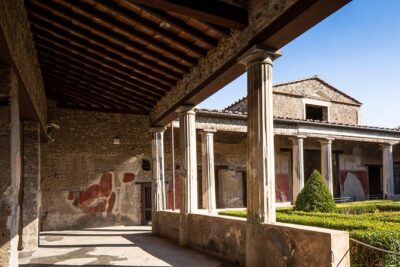
Pompeii’s wealthy homes are another key part of the route. The tour takes you into luxurious domus, where architecture and decoration signaled social position.
A domus was not just a private retreat in the modern sense. It could express wealth, family standing, taste, and the owner’s place in society. Even if you are not studying Roman architecture, the contrast between a rich home and a food shop helps you see the differences within Pompeii’s population.
The itinerary promises more than a quick look at grand rooms. It places these homes within the daily-life story, allowing you to consider how the richest people lived compared with those who worked in the streets and shops.
Site access can change, so you should not assume every room will be open on your date. A past visit described restricted exhibition areas during Covid-19, with Michele adjusting the explanations to keep the visit worthwhile. That points to a useful strength in a private tour: the guide can spend more time explaining what is available rather than following a fixed group script.
A few more Pompeii outings worth a look
- Skip the Line Guided Tour of Pompeii led by an Archaeologist
★ 5.0 · 703 reviews - Pompeii Ticket + Tour with Optional Tasting Experience at Pompeii
★ 5.0 · 663 reviews - Pompeii private tour with an Official Guide
★ 5.0 · 631 reviews - Pompeii Private Tour with an Archaeologist and Skip The Line – 3 hours
★ 5.0 · 564 reviews
Election notices and the voice of ordinary Pompeii

One of the most engaging details on this route is the writing on the walls. The tour points out the names of candidates for magistrate elections, giving you a direct connection to local politics.
These notices make Pompeii feel surprisingly familiar. The city was not only ruled from far away. People took part in local public life, supported candidates, and used visible spaces to make political views known.
I like this stop because it cuts through the idea that ancient cities were silent. The inscriptions preserve names and opinions, even though the people who wrote them are long gone. You can see how public messages occupied the same city spaces as shops, homes, and entertainment.
Michele’s role here matters. A wall inscription can be easy to overlook if you do not know what it means. With context, it becomes evidence of ambition, campaigning, and community life.
The baths and the civil Forum
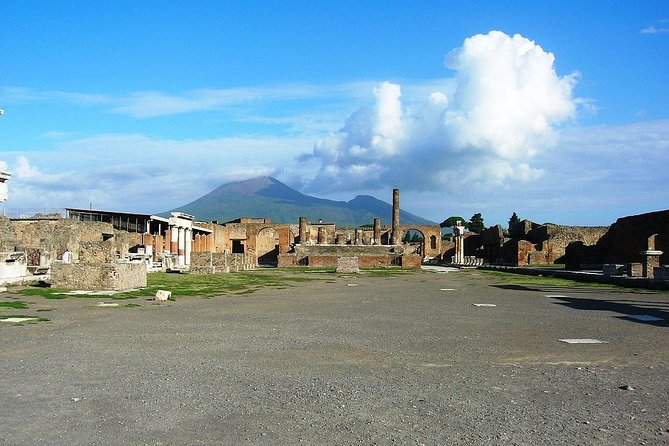
The route then moves toward the baths and the splendid civil Forum. These places show two different sides of public life.
The baths were for relaxation, but they also belonged to the social fabric of the city. The itinerary presents them as a pause in the day, after work, errands, or public activity. That is a helpful way to picture the baths, not simply as ancient plumbing but as a place connected to leisure and routine.
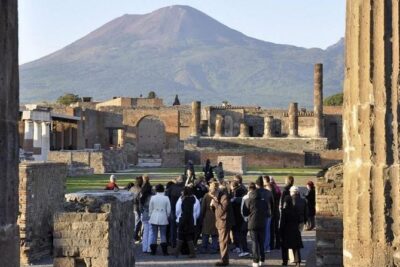
The Forum, by contrast, was the major civic setting. Ending there gives the tour a strong sense of scale. After seeing individual businesses and homes, you reach the square where public life gathered.
I like the progression from small to large. You begin with streets and shops, move through entertainment and private houses, then finish with the civic center. It mirrors the way you might understand a modern town: start with what people do, then look at the institutions that organize community life.
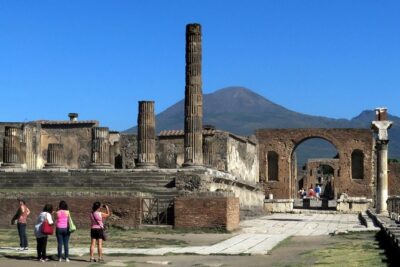
The Forum can be one of Pompeii’s most memorable spaces, but it can also be hard to take in without guidance. The remains are spread out, and the meaning of each building is not always obvious. A focused explanation helps you connect the square to the political and social life already introduced earlier.
The final hours and the people preserved by ash
The most serious part of the visit comes when the tour discusses Pompeii’s dead. People caught in the eruption were covered by volcanic ash, and archaeologists later preserved evidence of their final moments.
This is where the tour’s story changes tone. You have spent time picturing meals, elections, entertainment, and relaxation. Then you confront the fact that these routines ended abruptly.
A good guide needs judgment here. The description of Michele’s work suggests an approach that combines history with sensitivity. He is presented as someone who makes Pompeii come alive, but also as a guide who explains difficult material carefully.
The people preserved in Pompeii should not be reduced to a dramatic ending. Their presence matters because it connects the eruption to the lives you have just been imagining. The final section works best when you keep both facts in mind: Pompeii was a real city full of human activity, and the eruption destroyed that world with shocking speed.
Why the private format matters
This is a private activity, so only your group takes part. That changes the feel of the visit more than the short description might suggest.
You can ask questions without waiting for a large group to catch up. Michele can adjust the level of detail to your interests, spend longer on a favorite subject, or explain a confusing site feature in another way. A past booking also involved Michele meeting the group at Naples train station and helping with the short journey to Pompeii, although the stated meeting point for this experience is the Archaeological Park of Pompeii.
His value appears to go beyond prepared facts. He has guided people through Pompeii, Herculaneum, and Naples’ National Archaeological Museum, and he has offered suggestions about food and the rest of a holiday. One particularly practical example involved helping visitors deal with an Italian parking ticket online. That kind of everyday assistance can be useful, though it should not be treated as a promised part of this two-hour Pompeii booking.
The private format is especially helpful for families, couples, and small groups who want a conversational visit. It may be less appealing if your only goal is the lowest possible cost, since you are paying for a personal guide while still buying admission separately.
Price, tickets, and the two-hour schedule
At $33.36 per person, this is a reasonable guide fee if you value interpretation and a private group. The price is not the full cost of entering Pompeii, because site admission, taxes, and other fees are excluded.
That distinction matters when you compare options. You should budget for the entrance ticket separately and confirm current admission arrangements before you go. The tour price pays for Michele’s guiding service, not the entire day at the archaeological park.
The listed schedule runs from 9:30 AM to 11:30 AM, Monday through Sunday. A morning start is practical in a large open-air archaeological site, especially since two hours of walking can be tiring.
Two hours is enough for a guided overview of the city’s main themes. It is not enough to see every important building or explore Pompeii at a slow pace. If you have only a short window, the route gives you a useful framework. If Pompeii is a major reason for your trip, you may want extra independent time before or after the tour, provided your admission arrangements allow it.
Walking needs and who should book
You should have moderate physical fitness for this activity. The condition of the roads makes it unsuitable for visitors with mobility difficulties, and the experience involves moving through an extensive archaeological site.
Service animals are allowed, and the meeting point is near public transportation. The tour begins and ends at the Archaeological Park of Pompeii, according to the supplied details.
I would recommend this experience to you if you want history explained through human behavior rather than dates alone. It fits first-time Pompeii visitors who want help making sense of the streets, homes, public spaces, and political writing.
It also suits anyone who prefers a private conversation to a large group lecture. Michele speaks English well, and his background across Pompeii, Herculaneum, and Naples’ museum gives him a broad setting for comparison.
You may want something else if you need wheelchair-friendly access, want to spend all day on site, or prefer to explore without a guide. The extra ticket cost is also important for strict budgets.
Cancellation and booking details worth noting
You receive confirmation at booking, and free cancellation is available if you cancel at least 24 hours before the start time. A cancellation made less than 24 hours before the start is not refunded, and changes inside that period are not accepted.
The activity requires a minimum number of participants. If that minimum is not met and the tour is canceled, you are offered a different date or experience, or a full refund.
These rules are fairly clear, but check the local start time carefully. The listed operating period runs from February 9, 2019, through November 25, 2026, with the daily morning slot shown as 9:30 AM to 11:30 AM.
Should you book this Pompeii tour?
Book it if you want a focused, private introduction to Pompeii and value a guide who can connect daily routines to the city’s final hours. The strongest features are Michele Arpa’s personal guidance, the English-language format, and the route’s balance of shops, homes, entertainment, politics, baths, and the Forum.
Skip it if you need accessible paths, want a full-day archaeological study, or are not prepared to pay the site entrance fee separately. For most first visits, though, the structure makes good sense. You leave with more than a list of ruins. You see Pompeii as a working city, then understand why its sudden destruction remains so powerful.
FAQ
How long does the Pompeii tour last?
The tour lasts approximately two hours.
What time does the activity take place?
The listed schedule is 9:30 AM to 11:30 AM, Monday through Sunday.
Where does the tour begin?
It begins at the Archaeological Park of Pompeii, 80045 Pompei, Metropolitan City of Naples, Italy.
Where does the tour end?
The activity ends back at the meeting point.
Is the entrance ticket included?
No. Entrance tickets to the archaeological site are not included.
What does the price cover?
The listed price of $33.36 per person covers the guide service. All fees, taxes, and site entrance tickets are excluded.
Is the tour offered in English?
Yes. The experience is offered in English.
Is this a private tour?
Yes. Only your group participates in the activity.
Is the tour suitable for visitors with mobility difficulties?
The roads are in a condition that makes the activity unsuitable for visitors with mobility difficulties. A moderate level of physical fitness is advised.
Are service animals allowed?
Yes. Service animals are allowed.
Can I cancel for a full refund?
Yes, if you cancel at least 24 hours before the experience start time. Cancellations made less than 24 hours in advance are not refunded.
What happens if the tour does not meet its minimum number of participants?
If the activity is canceled because the minimum is not met, you are offered a different date or experience, or a full refund.
Just added around Pompeii
- Wine Tasting and Winery Tour in Vesuvio National Park with Lunch★ 4.5 · 3 reviews
- Mt. Vesuvius Wine Tasting and Lunch Experience from Pompeii★ 4.5 · 20 reviews
- Wine tasting in the Vesuvius national park★ 5.0 · 3 reviews
- Traditional Neapolitan Dinner in Pompei – Villa Franca – Family Restourant★ 5.0 · 8 reviews
- Private Guided Tour and VR Headsets in the Ancient Pompeii★ 5.0 · 3 reviews
- Visit Pompeii with a local expert guide★ 5.0 · 10 reviews
- Tour Mount Vesuvius with Entry Tickets and Round Trip Transfer Included★ 3.5 · 4 reviews
- Vesuvius tour entrance to the crater and return bus★ 4.5 · 9 reviews
Pompeii Tours from Naples, compared.
Pompeii Small Group Tour with an Archaeologist
Read our review →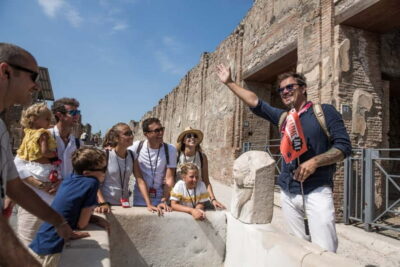
Pompeii & Mt.Vesuvius Day Tour from Naples with Pizza Lunch
Read our review →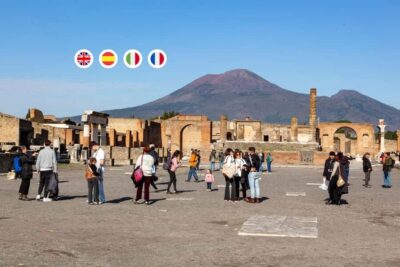
Pompeii & Mt Vesuvius All-Inclusive Small Group w/ Lunch
Read our review →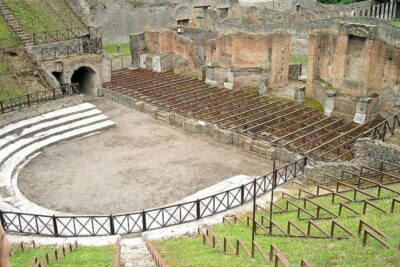
Pompeii & Amalfi Coast Full-Day Trip with Lunch
Read our review →Browse the lists this tour appears in