
Reviewed · POMPEII TOURS FROM NAPLES
Exploring Pompeii
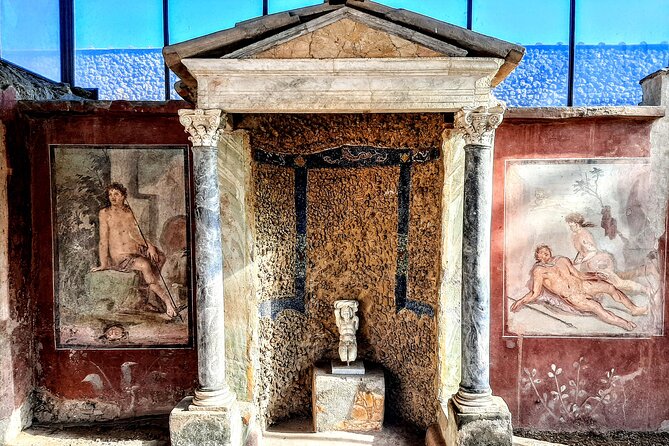
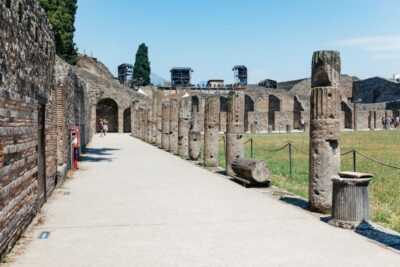
Pompeii gives you something rare: a Roman town where everyday life remains visible in streets, homes, shops, temples, and bathhouses. This private two-hour tour focuses on the city’s most revealing places, including painted villas, original mosaics, and the plaster casts made from victims of the eruption of Mount Vesuvius in 79 AD.
I like the one-group format, since your guide can keep the pace suited to your party. I also like the chance to see Pompeii through an English-speaking guide who can explain how a wealthy Roman town worked, rather than leaving you to guess at rows of ruins. Guide Francesco is singled out by name for making the experience especially enjoyable.
The main catch is simple and important: admission tickets are not included in the $36.04 tour price. You’ll also cover the archaeological park in about two hours, so this works best as a focused introduction, not a full-day examination of every corner.
Key points to know before booking
- Pompeii’s private homes are a major highlight: Expect painted frescoes, original mosaics, and a close look at how wealthy Romans lived.
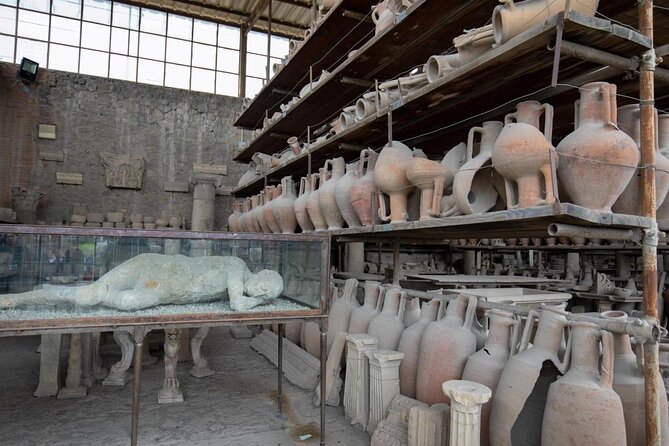
- The route covers more than houses: You’ll also see Roman shops, major temples, thermal baths, and plaster casts of eruption victims.
- Your group stays together: This is a private activity, so only your party participates.
- The tour lasts about two hours: It gives you a compact visit to the archaeological park, with a moderate level of physical fitness required.
- Tickets are extra: The $36.04 price covers the guided experience, but not the Pompeii admission fee.
- An English-speaking guide leads the visit: Francesco is specifically praised, though the assigned guide may vary.
Why Pompeii works best with a guide
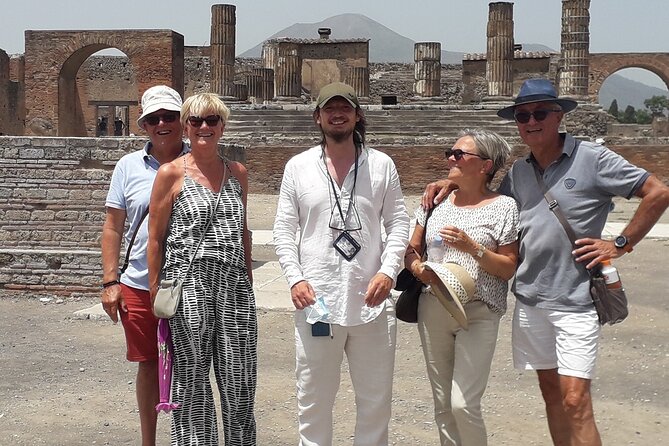
Pompeii can look easy to understand at first. You see streets, walls, columns, and roofless rooms. Then you realize that many details need explanation: the difference between a private residence and a shop, the purpose of a temple, the role of a bath complex, and the marks left by ordinary life before the eruption.
That is where this tour earns its keep. A guide can point out what you might otherwise walk past and connect separate ruins into a picture of a functioning Roman town. The experience is not just a walk among old stones. It is a look at homes, commerce, religion, bathing, and disaster in one compact setting.
I especially like the private setup for Pompeii. A large group can make a crowded archaeological site feel even more hurried. Here, only your own party takes part, which gives you a better chance to hear the guide clearly and ask questions when a room or object catches your attention.
Still, keep your expectations realistic. Two hours is enough for a clear introduction, but not enough for every street and building in the park. Pompeii is large, and this tour concentrates on selected highlights rather than attempting an exhaustive visit.
More ways to see Pompeii:
- Pompeii Small Group Tour with an Archaeologist
★ 5.0 · 6,593 reviews - Discover the Ancient Ruins of Pompeii: Day Trip from Rome
★ 3.5 · 2,247 reviews - Pompeii and Herculaneum Small Group Tour with an Archaeologist
★ 5.0 · 1,350 reviews
A two-hour route through Roman daily life
The experience takes place inside the Archaeological Park of Pompeii. The stated stop is one broad visit rather than a series of separate attractions, so your guide brings together several kinds of remains during the two-hour outing.
That variety is one of the tour’s strengths. You are not looking at only grand public buildings or only tragic reminders of the eruption. The route includes private houses, commercial spaces, religious buildings, baths, and the plaster casts of victims. Together, these stops show both the ordinary rhythm of Pompeii and the sudden end of it.
The visit also gives you a useful contrast between public and private life. Wealthy homes reveal taste and status. Shops show how people bought and sold goods. Temples point to religious practice. Thermal baths show how Romans spent time in shared public spaces. The casts bring the story back to the eruption itself.
Because the guide leads a private group, you can ask for clarification as you move between these settings. That matters at an archaeological site where the remains are impressive but not always self-explanatory.
Inside Pompeii’s wealthy Roman residences
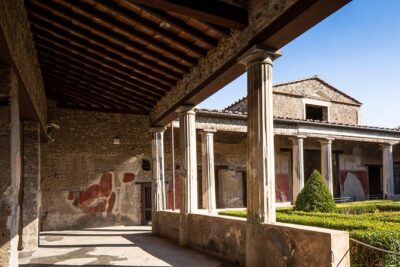
The private residences are likely to be the most visually rewarding part of the tour. These homes include painted frescoes and original mosaics, giving you a closer look at the tastes and habits of wealthy Roman families.
Frescoes were not simply decoration in the modern sense. Within Pompeii’s houses, painted walls helped create a sense of refinement and status. A guide can help you notice how the art fits the room and how the home was arranged, instead of reducing every painted surface to a quick photo stop.
The mosaics matter for a similar reason. They are durable fragments of domestic life, and their presence helps you picture a home as a lived-in place rather than a bare ruin. The combination of floor mosaics and painted walls makes these residences more personal than the larger civic remains.
You should also expect some unevenness in what survives. Pompeii is an archaeological site exposed to the elements, and not every room will look complete. That is part of the setting, but it means the guide’s explanation is especially useful. The tour’s value comes not only from seeing the remains, but from understanding what the fragments tell you.
If you enjoy architecture, art, or social history, this part of the visit gives you plenty to consider. If you mainly want the broadest possible view of Pompeii, two hours may feel short once you begin stopping in the houses.
Roman shops and the practical side of town life
The Roman shops add a welcome change of scale. Wealthy residences tell you about private comfort and display. Shops show the town as a place where people worked, traded, and bought everyday goods.
The supplied details do not identify particular shop types or preserved objects, so I would not promise a specific business or display. What you can expect is a look at commercial spaces within the wider town, with the guide explaining their place in Pompeii’s daily routine.
This is one reason I prefer a route that includes both houses and shops. Without the commercial side, Pompeii can seem like a collection of elite villas and monuments. The shops remind you that the town was also practical and lived in, with people moving through streets for ordinary reasons before the disaster.
For you, the main benefit is context. A house tells you how one class lived. A shop helps you think about the broader community. In a short visit, those contrasts make the route feel more complete.
A few more Pompeii outings worth a look
- Skip the Line Guided Tour of Pompeii led by an Archaeologist
★ 5.0 · 703 reviews - Pompeii Ticket + Tour with Optional Tasting Experience at Pompeii
★ 5.0 · 663 reviews - Pompeii private tour with an Official Guide
★ 5.0 · 631 reviews - Pompeii Private Tour with an Archaeologist and Skip The Line – 3 hours
★ 5.0 · 564 reviews
Temples and the public face of Pompeii
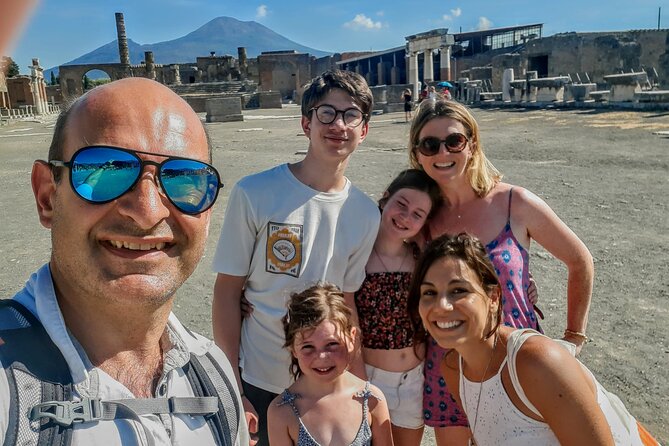
The tour also includes the most important temples. These buildings bring religion into the picture and show that Pompeii was not simply a residential town.
Again, the guide’s role is important. A temple’s columns and open space can look impressive, but the meaning of the building is harder to read without explanation. An English-speaking guide can help you understand why these places mattered and how they fit into Roman public life.
The phrase most important temples does not mean you will see every religious building in Pompeii. It signals a selection of major sites within the two-hour route. If you have a particular temple in mind, ask about it when booking or at the beginning of the visit, since the available route and guide assignment are not detailed here.
I like the inclusion of temples because they balance the private homes. You get a sense of what people valued inside their houses, then a glimpse of the beliefs and public customs that shaped the town as a whole.
Thermal baths and the shared social world
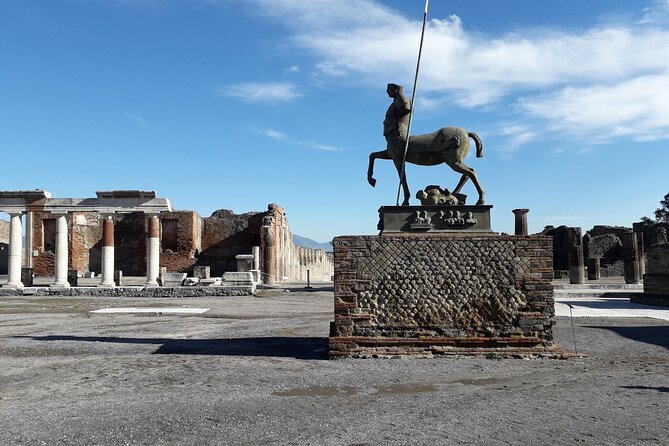
The thermal baths offer another useful window into Roman life. These were not simply places to wash. Within the tour’s scope, they represent the public side of Roman routine and the importance of shared bathing spaces.
The available information does not name a particular bath complex or describe its surviving rooms in detail, so you should think of this as a guided look at the baths rather than a promise of a specific architectural sequence. Your guide can help you see the baths as part of the town’s social structure, not just another set of ruins.
Their presence also breaks up the route nicely. After private homes and temples, the baths add a civic and social setting. The result is a broader picture of Pompeii in only two hours.
You will need a moderate level of physical fitness. The tour takes place in an archaeological park, and the description specifically flags this requirement. No exact walking distance or surface conditions are provided, so plan for a physical visit rather than a seated museum tour.
The plaster casts and the human cost of 79 AD
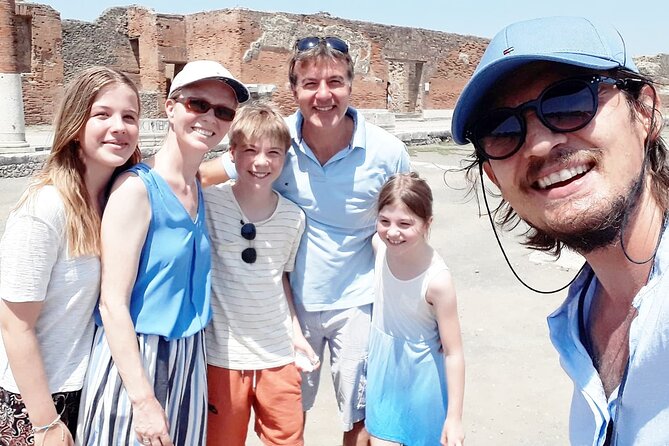
The plaster casts of the victims are the most difficult part of the visit. They are also the clearest reminder that Pompeii is not only an archaeological attraction. It is the preserved scene of a human disaster caused by the eruption of Mount Vesuvius in 79 AD.
The casts were made from spaces left in the hardened volcanic material where bodies had decomposed. Their forms record the final moments of people caught by the eruption. Seeing them can shift the mood of the entire tour, especially after the more pleasant details of frescoes, mosaics, shops, and baths.
A guide is valuable here because the casts should be approached with care and context. The point is not spectacle. They help you understand the scale and suddenness of the tragedy, and they connect the preserved town to the people who lived there.
If you are visiting with children or anyone sensitive to difficult historical sites, be aware that this portion may be upsetting. The tour description specifically includes the casts, so you should not expect a visit limited to art and architecture.
What the private format changes
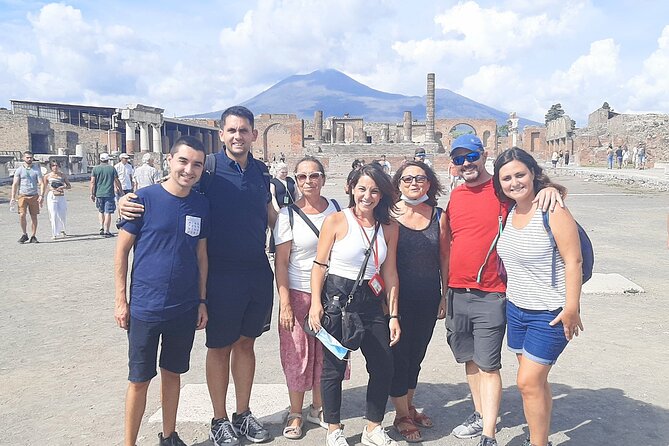
This is a private tour, meaning only your group participates. That makes it a good fit if you want a more direct exchange with the guide or if your party has different interests from a large shared group.
You can spend more time on a fresco, ask about the baths, or request clarification about the eruption without competing with a busload of people. The actual flexibility is not spelled out, so do not assume the route can be completely redesigned. The stated focus remains the Archaeological Park and its major highlights.
The English option is useful for anyone who wants the explanations in English. Guide Francesco receives specific praise for making the experience better, but the information does not guarantee that he will lead every departure. Treat his name as a helpful indication of the guide quality available, not as a promise of assignment.
The private format can also improve the experience for people who dislike being rushed by a large group. On the other hand, the price is charged per person, so a small party may pay more per head than a shared group tour. At $36.04 per person, the cost is reasonable if you value direct guiding, but remember that the park ticket comes separately.
Is $36.04 a fair price?
The price buys the guided experience, not entry to Pompeii. That distinction deserves attention because the headline cost does not represent the full outing.
At $36.04 per person, the tour makes the most sense if you want an English-speaking guide to organize a focused two-hour visit and explain what you are seeing. You are paying for interpretation and a private group, not for a ticket bundle or a full-day route.
The value is strongest for first-time visitors who might otherwise wander through the park without understanding the difference between a home, shop, temple, or bath. It is also appealing if you prefer asking questions as you go.
The value is weaker if you already know Pompeii well, want to explore independently, or expect a long visit that covers most of the archaeological park. Two hours is a compact introduction, and the admission cost must be added before you compare the total with other options.
Do not skip the ticket note. One review specifically warns that Pompeii entry is not included, and that is the practical detail most likely to cause a surprise at the site.
Timing, planning, and physical effort
The experience lasts about two hours. That length works well if Pompeii is one part of a larger day, but you should not treat it as enough time to see everything.
The activity is booked an average of 36 days in advance, which suggests that planning ahead is sensible, especially if your schedule is fixed. This is not a guarantee that every date fills early, but it is a good reason not to leave the decision until the last minute.
Confirmation is provided at booking. The experience is near public transportation, and service animals are allowed. No exact meeting point, ticket procedure, or transportation route is provided, so check those details carefully before setting out.
The moderate fitness requirement is worth taking seriously. You should be ready for an active archaeological visit, though the information does not give a precise walking distance or list of surfaces. Comfortable footwear and water are sensible choices, but the tour data does not specify what facilities are available inside the park.
Cancellation is flexible up to 24 hours before the local start time, with a full refund. Cancellations or changes made less than 24 hours ahead are not accepted for a refund. The activity also requires a minimum number of participants, and if that minimum is not met, you are offered another date or experience, or a full refund.
Who will enjoy this Pompeii tour most?
I would choose this experience if you want a focused first look at Pompeii and prefer a guide to give the ruins a clear shape. It suits couples, families, or small groups who want a private visit rather than a shared departure.
It is particularly useful for anyone interested in Roman homes, art, public life, or the human story behind the eruption. The range of stops means you are not limited to one type of ruin.
You may want another format if you plan to spend most of the day in Pompeii, need a ticket-inclusive package, or prefer to explore without a guide. The two-hour length is efficient, but it also limits how much ground and detail you can cover.
Should you book Exploring Pompeii?
Book it if you want an English-speaking private guide, a compact route through Pompeii’s key types of buildings, and enough explanation to make the ruins readable. The praised guidance from Francesco suggests the human side of the tour can make a real difference, though you should confirm who will lead your visit if that matters.
Before paying, budget separately for admission and make sure two hours matches your plans. If it does, this is a practical way to see wealthy homes, frescoes, mosaics, shops, temples, baths, and the sobering plaster casts without joining a large group.
FAQ
How long does Exploring Pompeii last?
The experience lasts approximately two hours.
Are Pompeii admission tickets included?
No. The Pompeii entry tickets are not included in the $36.04 tour price.
Is the tour private?
Yes. Only your group participates in this private activity.
Is the tour offered in English?
Yes. The experience is offered in English.
What can I see during the tour?
The visit includes wealthy Roman residences with painted frescoes and original mosaics, Roman shops, important temples, thermal baths, and plaster casts of victims of the 79 AD eruption.
Can I cancel for a full refund?
Yes. You can cancel at least 24 hours before the local start time for a full refund. Cancellations or changes made less than 24 hours before the start time are not refunded or accepted.
Just added around Pompeii
- Wine Tasting and Winery Tour in Vesuvio National Park with Lunch★ 4.5 · 3 reviews
- Mt. Vesuvius Wine Tasting and Lunch Experience from Pompeii★ 4.5 · 20 reviews
- Wine tasting in the Vesuvius national park★ 5.0 · 3 reviews
- Traditional Neapolitan Dinner in Pompei – Villa Franca – Family Restourant★ 5.0 · 8 reviews
- Private Guided Tour and VR Headsets in the Ancient Pompeii★ 5.0 · 3 reviews
- Visit Pompeii with a local expert guide★ 5.0 · 10 reviews
- Tour Mount Vesuvius with Entry Tickets and Round Trip Transfer Included★ 3.5 · 4 reviews
- Vesuvius tour entrance to the crater and return bus★ 4.5 · 9 reviews
Pompeii Tours from Naples, compared.

Pompeii Small Group Tour with an Archaeologist
Read our review →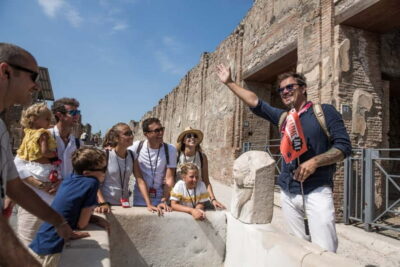
Pompeii & Mt.Vesuvius Day Tour from Naples with Pizza Lunch
Read our review →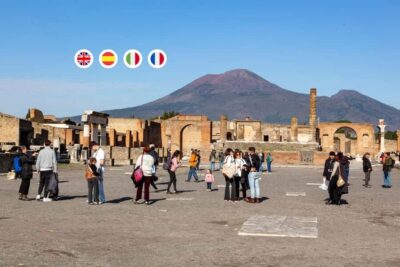
Pompeii & Mt Vesuvius All-Inclusive Small Group w/ Lunch
Read our review →
Pompeii & Amalfi Coast Full-Day Trip with Lunch
Read our review →Browse the lists this tour appears in