

Reviewed · NAPLES HISTORIC CENTRE WALKING TOURS
Naples Old Town 2.5h Private Walking Tour
Naples reveals itself best on foot, one narrow street and half-seen church at a time. This private Old Town walk links Greek city walls, ancient Roman street planning, underground religious customs, artisan workshops, and the cathedral of San Gennaro. It gives you a useful way into a city that can feel chaotic at first glance.
I like the archaeologist guide format, since the history here reaches back roughly 2,500 years and is easy to miss without someone to explain what you are seeing. I also like the flexible feel: you can ask about art, food, traditions, or daily life, then stop for coffee and practical advice on where to eat.
The main drawback is pace. Eleven points in about two and a half hours means some stops are brief, and the underground Purgatory complex costs extra. If you want long church visits or museum time, you will need a slower, more focused tour.
Key points to know before booking
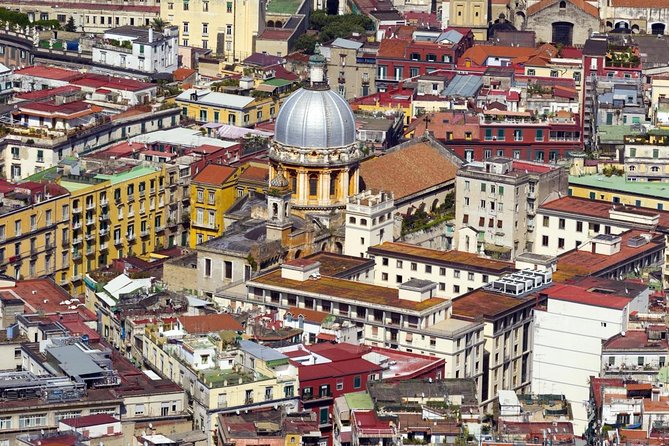
- Greek and Roman Naples in one walk: Begin at Piazza Bellini and follow the old Decumano along Via dei Tribunali.
- A private group of up to 10: Your guide can adjust the conversation and route to your interests.
- Underground Naples is extra: The Complesso Museale Santa Maria delle Anime del Purgatorio ad Arco does not include admission.
- Coffee is part of the local flavor: A traditional bar near the Statue of the Nile is tied to Maradona and Neapolitan superstition.
- Several guides are named in the tour’s feedback: Enrica, Maria, Riccardo, and Teresa are praised for clear explanations and a friendly manner.
- The finish is well placed: End at Naples Cathedral, a handy point for continuing around the historic center.
Why this walk works well in Naples
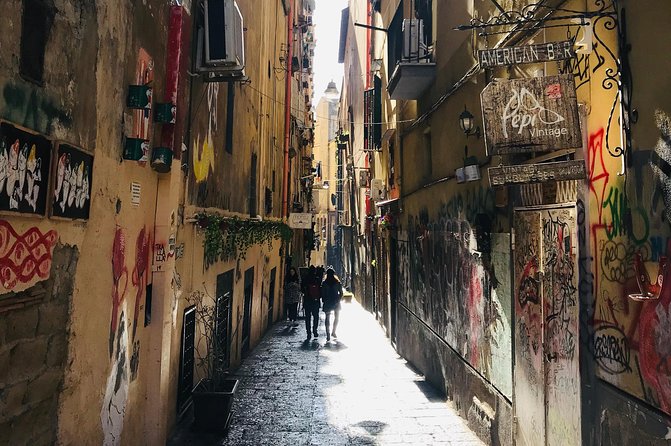
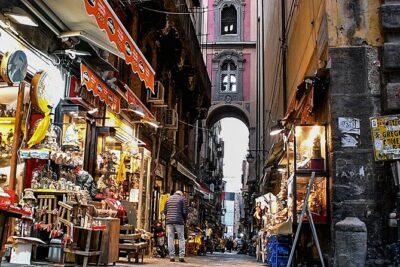
Naples is not a city that explains itself from a wide boulevard. Its oldest quarter is a tight web of lanes, churches, carved stone, small shops, and layers of buildings from different periods. A local guide helps you connect those pieces instead of simply pointing at them.
The route is private, so your group does not have to follow a fixed public-tour rhythm. You can ask why a street follows an ancient line, spend more time on religious customs, or turn the conversation toward pizza and local eating places. That flexibility matters more here than it would in a neatly arranged museum district.
The group limit is 10 people. At $312.06 per group, the value depends heavily on your party size. Ten people pay about $31 each, while two people pay roughly $156 each. For a family or group of friends, the private format can make good sense. For a couple, it is a premium purchase, but you are paying for personal attention rather than a large group experience.
The tour is offered in English and lasts about two hours and 30 minutes. The meeting point is Piazza Bellini, and the walk ends at the Duomo di Santa Maria Assunta on Via Duomo. Both points are in the historic center, so the tour makes a practical first activity if you want to get oriented.
More walks through the historic centre:
- Naples: Old Town Guided Walking Tour
★ 4.8 · 553 reviews - Naples: Guided Pub Crawl in the Old Town
★ 4.7 · 300 reviews - Naples: Historic Center and Sansevero Chapel Walking Tour
★ 4.8 · 208 reviews
Piazza Bellini and the Greek foundations
Piazza Bellini opens the story with the Greek city walls of Naples. This is a smart starting point because it shows that the old center is not simply medieval or Roman. The city began as a Greek settlement, and traces of that early plan still shape the streets you walk today.
Your guide can set the basic timeline here before the route moves into the narrower lanes. That context helps you understand why Naples often feels layered rather than orderly. Ancient planning, later churches, and modern daily life occupy the same small area.
The stop is listed at about 15 minutes. That is enough for an introduction and a look at the remains, but not a long archaeological visit. Think of it as a scene setter rather than a full excavation tour.
Via dei Tribunali and the old Decumano
Via dei Tribunali follows one of Naples’ main ancient east-west streets, known as a Decumano. This is where the city’s old structure becomes easier to read. The road is not just a modern shopping or walking street. It follows a line laid out in the ancient city.
A guide makes this part more useful by pointing out how the route relates to the other old streets. You will hear about Naples as a planned Greek and Roman city, not only as a place of famous churches and food.
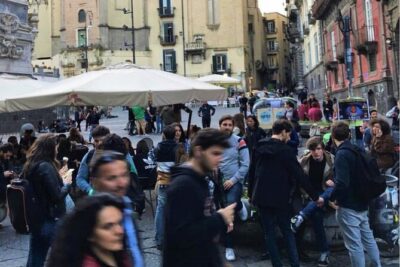
The street can be active and crowded, and the walk is not designed as a quiet, slow stroll. Keep your belongings secure and stay close to your group in the tighter stretches. The benefit is the chance to see real city life around important historic sites, rather than historic buildings separated from everyday Naples.
Santa Maria Maggiore alla Pietrasanta
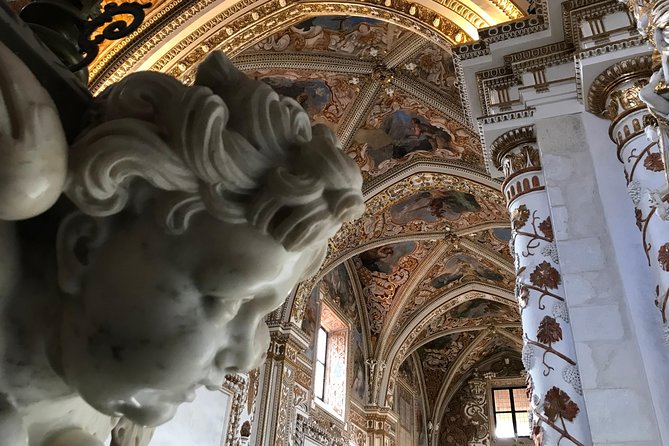
The Basilica di Santa Maria Maggiore alla Pietrasanta introduces another layer of the city. The stop focuses on what is described as Naples’ oldest tower, giving you a chance to look upward as well as along the street.
This is one of several places where the tour connects architecture with the long development of the city. You are not simply collecting church names. You are seeing how religious buildings took over or incorporated earlier urban spaces.
The planned time is again about 15 minutes. If the doors are open and your guide can enter, you may get a brief look inside. Do not book this walk expecting extended interior visits at every church. Its strength is the connected story told between the stops.
More Walking Tours in Naples:
- Naples: Street Food Walking Tour with Local Guide
★ 4.8 · 4,256 reviews - Naples Spanish Quarters Walking Tour Street Art, Folklore & Sweet
★ 5.0 · 797 reviews - Naples: Panoramic Walking Tour with Funicular
★ 4.8 · 543 reviews - Naples Walking Tour with Underground Roman Ruins Ticket
★ 4.5 · 510 reviews
The Purgatory complex and Naples below street level
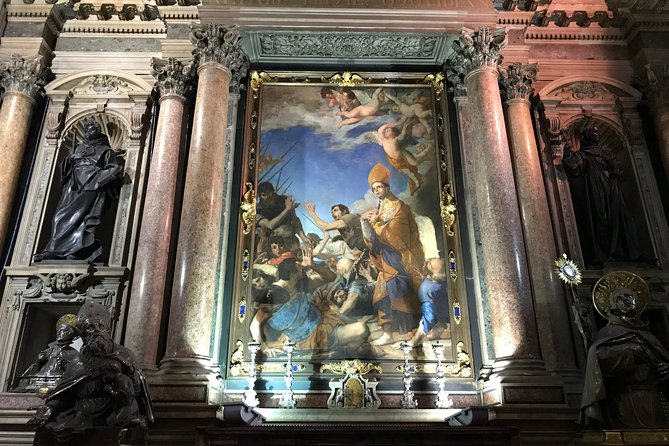
The Complesso Museale Santa Maria delle Anime del Purgatorio ad Arco is the route’s most unusual stop. It introduces the cult of the dead and the underground religious traditions of Naples, an important part of the city’s identity.
This is also the one scheduled stop where admission is not included. Budget for an additional ticket if you want to enter. Since the tour allots about 15 minutes, ask your guide how the visit will fit into the day and what portion is included in that time.
I like that this stop goes beyond the standard list of grand churches. Naples is often most revealing when formal Catholic practice meets older folk beliefs, family memory, and local superstition. This site gives the guide room to explain those connections.
San Lorenzo Maggiore, the heart of the old center
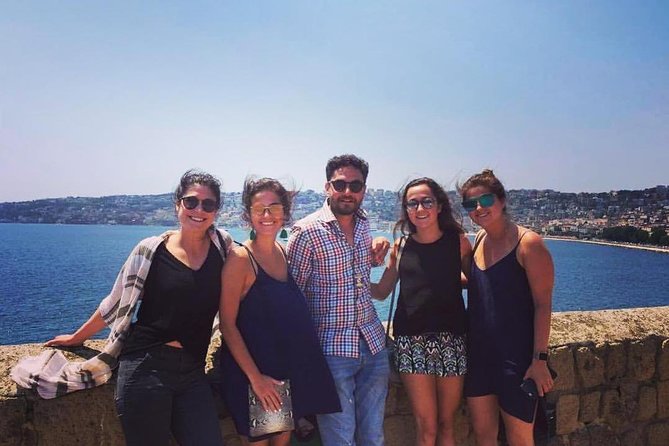
The Basilica di San Lorenzo Maggiore is presented as the heart of Naples. It sits in one of the most important parts of the old town, and its setting helps show how central religious institutions were to city life.
This is another place where your guide’s archaeological background can add value. The city is not a flat timeline. Ancient remains, medieval buildings, and later changes can appear close together, sometimes beneath the modern street.
The church is listed as free on the route, though the tour does not promise a full interior visit. You will get the most from this stop if you ask specific questions about the building, the surrounding street plan, and what can be seen nearby.
Piazza San Domenico Maggiore
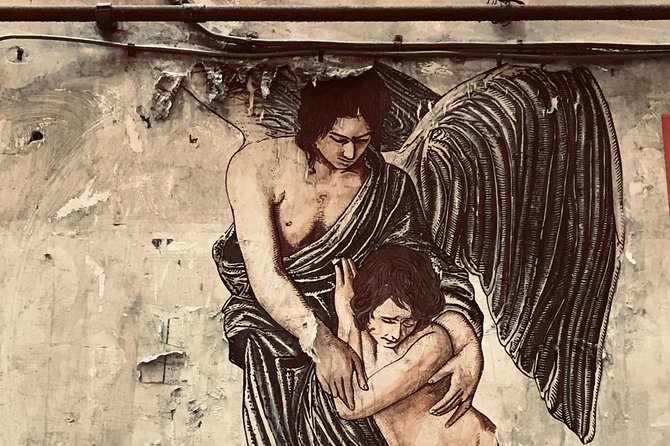
Piazza San Domenico Maggiore is the main square on the walk and one of its better pauses. A square gives you more room to look around after the tight lanes of the old center.
The setting also helps explain the social side of Naples. Historic squares are not only backdrops for monuments. They are meeting places, routes through the neighborhood, and points where religious and civic life overlap.
This is a useful spot to ask your guide for recommendations based on your remaining time in Naples. If you are interested in churches, food, or street photography, the private format makes it easy to shift the discussion.
The Statue of the Nile and a very Neapolitan coffee stop
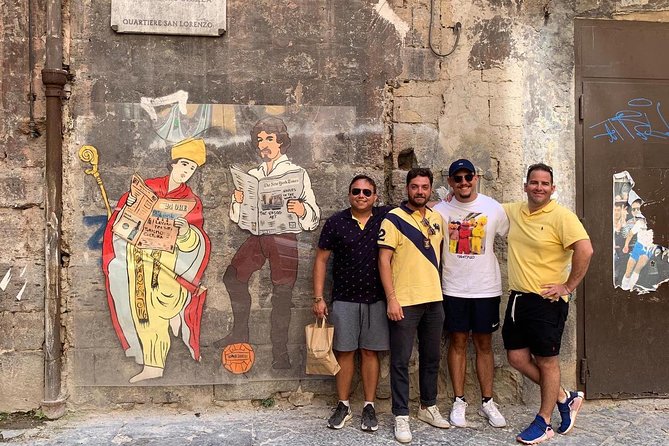
At the Statue of the God Nile, the tour turns toward superstition, religion, and the old connections between Naples and other parts of the Mediterranean world. The statue is a small but memorable piece of the street, surrounded by the layered character that defines the historic center.
This is also where the tour highlights a coffee stop at Maradona’s bar. Food and drink are not included, so bring money for your own coffee. That detail matters because the stop is not a formal tasting or paid meal. It is a chance to pause in a traditional bar and get direct advice about where to eat afterward.
I see this as one of the tour’s strongest practical features. A map can show you restaurants, but a local guide can explain what kind of place suits your budget and appetite. The food guidance is especially useful if you have only a short stay in Naples.
Spaccanapoli and the city’s famous straight line
Spaccanapoli is the main street cutting through the historic center. From above, its long line helps explain the nickname and the way the old city is organized. On foot, it gives you a clear route through an area that can otherwise feel like a maze.
The street is a good place to notice contrasts. Churches sit near shops, historic facades meet ordinary apartments, and ancient routes still serve modern city life. You will not experience Naples as a museum here. That is part of the appeal, though it also means noise, crowds, and uneven walking conditions can be part of the outing.
The guide’s role is important on this section. Without context, Spaccanapoli can become a sequence of dramatic views and busy corners. With explanation, it becomes a lesson in how the old center still functions.
San Gregorio Armeno and the artisan quarter
Via San Gregorio Armeno is known for its artisans and nativity scenes. This is one of the most distinctive stops because the street has a strong craft tradition rather than serving only as a monument route.
The nativity figures connect with Naples’ religious culture, but the workshops also show the city’s talent for mixing devotion, humor, portraiture, and popular culture. You may find this section more engaging than a standard church visit if you enjoy handmade objects and local traditions.
The stop is planned for about 15 minutes, so you will have time to look and ask questions, but not necessarily enough for a long shopping session. If you want to buy a detailed piece, tell your guide early so the walk can be adjusted as much as possible.
Cammeo art and the Banksy reference
Il Piccolo Museo Del Cammeo adds a different artistic note. Cameo work is a traditional form of carved relief art, and a small museum gives you a closer look than you usually get while walking past shop windows.
This stop also refers to what is described as the only Banksy in Italy. That is a striking claim, and you should treat it as a point for discussion with the guide rather than assuming the stop is a full modern-art museum. The contrast between old cameo craft and contemporary street art makes the visit more interesting.
As with several points on the route, the value comes from the explanation. Fifteen minutes is enough for a quick introduction, but not for a long art study.
Naples Cathedral and the miracle of San Gennaro
The tour ends at the Duomo di Napoli, the city’s main church. This is a strong finish because it brings together the religious history and local identity that have shaped much of the walk.
The cathedral is closely tied to San Gennaro, Naples’ patron saint, and the famous tradition involving his blood and its miracle. Your guide can explain why San Gennaro matters so much to the city, not only as a church figure but as part of Neapolitan public life.
Ending here also gives you a clear next step. You can continue exploring Via Duomo, visit other nearby sights, or use the cathedral as a landmark while finding your way through the old center.
Guides, pace, and the private format
The named guides associated with this experience include Enrica, Maria, Riccardo, and Teresa. Enrica is praised for detailed explanations with a group of seven. Maria is noted for adding local flavor to the historical material, while Riccardo is associated with food advice and the connection between ancient customs and present-day culture. Teresa is described as warm, patient, and especially good at guiding people through the maze of lanes.
You are not guaranteed a particular guide unless the booking specifically confirms one. Still, the pattern is clear: this experience is built around personal explanation, not a recorded script or a quick list of dates.
The private setup suits families, friends, and small groups with different interests. It also works well if you want to ask questions without holding up strangers. The tradeoff is cost for very small parties.
Practical details worth knowing
Wear comfortable shoes and smart-casual clothing. The route is on foot through the old center, and the tour operates in all weather conditions according to the practical information provided. At the same time, poor weather may lead to a new date or a full refund, so check the final arrangements if rain is forecast.
Service animals are allowed, and most people can take part. The meeting point is near public transportation at Piazza Bellini. Food and drinks are not included, and the Purgatory complex has a separate admission charge.
The tour offers free cancellation up to 24 hours before the start time. Changes made inside that 24-hour window are not accepted, and the local time controls the cut-off.
Should you book this Naples walk?
Book it if you want a fast, personal introduction to Naples that mixes archaeology, religion, craft, superstition, coffee, and food advice. It is particularly useful on a first visit, when the old center can seem confusing and you want a local voice to connect the pieces.
I would also recommend it for a group of four to 10 people, where the price becomes easier to justify. Ask for the guide to adjust the emphasis toward food, churches, archaeology, or art.
Skip it if your main goal is long interior visits, a dedicated museum tour, or a slow photography walk. The route covers a lot in 150 minutes. For the right group, that brisk pace is an advantage. For everyone else, it may leave you wanting more time at the most fascinating stops.
FAQ
Where does the tour start?
The tour starts at Piazza Bellini, 80138 Naples, Italy.
Where does the tour finish?
It ends at the Duomo di Santa Maria Assunta, Via Duomo 147, Naples.
How long does the tour last?
The walking tour lasts approximately two hours and 30 minutes.
How many people can join the private tour?
The private activity is for your group only, with up to 10 people.
Is the tour offered in English?
Yes. The experience is offered in English.
Is admission to every stop included?
No. Most listed stops are free, but admission to the Complesso Museale Santa Maria delle Anime del Purgatorio ad Arco is not included. Food and drinks are also separate.
What is the cancellation policy?
You can cancel at least 24 hours before the start time for a full refund. Cancellations or changes made less than 24 hours before the start time are not refunded or accepted.
Just added around Naples
- Naples: Guided Walking Tour★ 4.7 · 63 reviews
- Wine tasting in the Vesuvius National Park★ 3.5 · 4 reviews
- Naples: Pompeii and Vesuvius Skip-the-Line Day Trip★ 3.8 · 32 reviews
- Visit the Museum MANN with a professional guide★ 5.0 · 3 reviews
- Walking-tour of Naples hystorical Centre★ 4.4 · 4 reviews
- Vesuvius – Herculaneum – Pompeii Excavations Tour★ 4.2 · 9 reviews
- Pompeii: Vesuvius at Sunset★ 3.5 · 31 reviews
- Vesuvius and Herculaneum from Naples★ 3.7 · 29 reviews
Naples Historic Centre Walking Tours, compared.



Historic Center and Sansevero Chapel Walking Tour
Read our review →
Browse the lists this tour appears in