

Reviewed · NAPLES HISTORIC CENTRE WALKING TOURS
Walking Tour of Naples Old Town with Expert Guide
Naples reveals itself in layers: Greek walls beneath Roman streets, Gothic churches beside lively alleys, and tiny workshops where nativity figures are made all year. This tour gives you a useful path through that maze, from Piazza Bellini to the Duomo, with an archaeology or art-history trained guide such as Enrica, Livio, Tony, or Riccardo leading the way.
I like the small group limit of 15, which should make it easier to ask questions, and I like the mix of serious history and local customs. The stop for a Neapolitan espresso adds a simple taste of daily life, while Via San Gregorio Armeno shows you a tradition that is far more interesting than a standard souvenir shop.
The main caution is the pace. You are on your feet for about two and a half hours over uneven paving, and some guides speak quickly or pack in so much information that it can be hard to keep up. The quality also depends on your assigned guide and on how much time is spent on formal history rather than colorful side stories.
Key points before you book
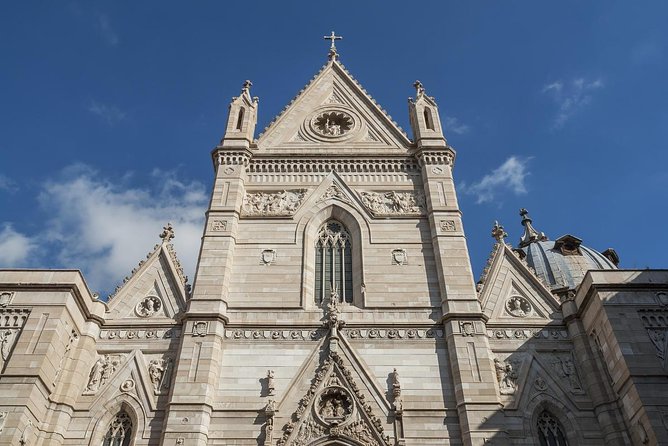
- Greek and Roman Naples in one walk: See ancient tufa walls, the old decumano, and Roman remains beneath the historic center.
- Churches are the main event: San Domenico Maggiore, Santa Maria Maggiore, San Lorenzo Maggiore, and the Duomo each show a different period of Neapolitan art.
- A real coffee stop is built in: The walk includes a Neapolitan coffee bar, with espresso as part of the local introduction.
- Via San Gregorio Armeno works year-round: You can see hand-made nativity figures even outside the Christmas season.
- The route ends at the Duomo: This is useful for continuing on your own to nearby sights in central Naples.
- Expect a scholarly style: Guides have training in archaeology, history, or art history, but some visitors found the delivery fast or too talkative.
Why this walk is a good first look at Naples
I would put this tour early in a Naples visit, not at the end. It gives you a mental map of the old center and helps you understand why the streets feel crowded, irregular, and full of competing eras.
Naples can be confusing at first. The historic center has narrow lanes, noisy traffic, graffiti, churches that appear suddenly behind plain facades, and archaeological traces hidden under everyday buildings. A guide helps connect those pieces. You are not simply ticking off churches. You are hearing how Greek, Roman, medieval, Renaissance, Baroque, and modern Neapolitan life occupy the same small area.
The route begins at Piazza Bellini, a practical starting point near public transportation. From there, it moves generally through the old center toward the Duomo. The finish at Naples Cathedral is useful because you can continue sightseeing, find lunch, or make your way to another part of the city without returning to the start.
At $30.04 per person, the price is reasonable for a 2.5-hour guided walk, especially if you value context more than entry tickets. Most stops are viewed from outside or are free, but admission is not included for the Purgatorio ad Arco complex or the Duomo. Check what your guide plans to enter on the day so you are not surprised by an extra charge.
More walks through the historic centre:
- Naples: Old Town Guided Walking Tour
★ 4.8 · 553 reviews - Naples: Guided Pub Crawl in the Old Town
★ 4.7 · 300 reviews - Naples: Historic Center and Sansevero Chapel Walking Tour
★ 4.8 · 208 reviews
Piazza Bellini and the ancient tufa walls
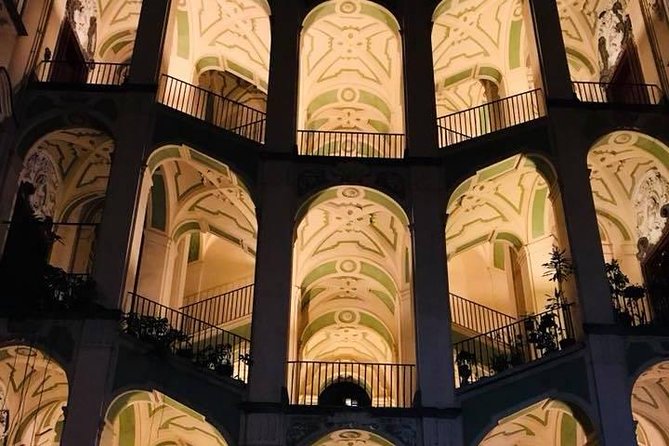
Piazza Bellini introduces you to one of Naples’ most important ideas: the city is built over its own past. You can admire part of the ancient tufa walls of the Greek-Roman city here, a reminder that the modern street plan sits on foundations laid many centuries ago.
Tufa is a soft volcanic stone, and it became one of the basic building materials of Naples. That matters because the city’s underground spaces, walls, foundations, and churches are tied to the local geology as much as to politics or religion.
This opening section should help you understand the old center before the walking becomes more detailed. It is also a good moment to settle into the group and ask your guide to slow down if needed. One practical point comes through clearly from the feedback: some guides deliver a lot of material at speed, and street noise can make listening harder.
San Pietro a Majella and young Neapolitan musicians
The first listed stop is Museo del Conservatorio San Pietro a Majella, the Naples music academy. The planned visit lasts about 10 minutes and does not require an admission ticket.
The appeal here is not only the building. You may hear young Neapolitan musicians practicing, which gives the stop a living connection to Naples’ musical culture. It is a short pause, so do not expect a full museum visit. Think of it as a glimpse into the city’s continuing artistic life.
This is one point where the guide’s storytelling matters. A strong guide can connect the academy to Naples’ broader musical traditions. A less focused presentation may leave you wishing for more explanation. If music interests you, ask a question rather than waiting for a long stop.
Santa Maria Maggiore alla Pietrasanta
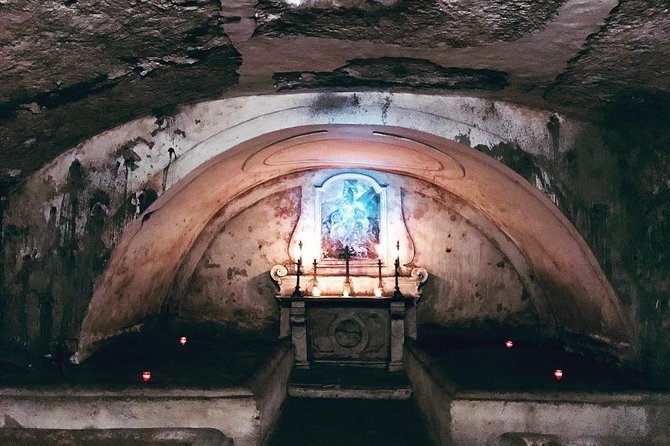
At Basilica di Santa Maria Maggiore alla Pietrasanta, the group pauses for about 15 minutes to see one of the city’s ancient bell towers. The basilica sits in the heart of the historic center, where even a quick look upward can reveal several centuries of construction and repair.
Naples rarely offers one clean architectural period at a time. A church may preserve medieval foundations, later decorative work, and changes made for practical or religious reasons. That is part of the pleasure here, though it can also make the tour feel packed.
The stop is free according to the tour details. You should treat it as an exterior-focused visit unless your guide says otherwise. The walk is designed to explain the setting and the major features, not to provide long, quiet time inside every church.
More Walking Tours in Naples:
- Naples: Street Food Walking Tour with Local Guide
★ 4.8 · 4,256 reviews - Naples Spanish Quarters Walking Tour Street Art, Folklore & Sweet
★ 5.0 · 797 reviews - Naples: Panoramic Walking Tour with Funicular
★ 4.8 · 543 reviews - Naples Walking Tour with Underground Roman Ruins Ticket
★ 4.5 · 510 reviews
San Domenico Maggiore and Naples’ changing art
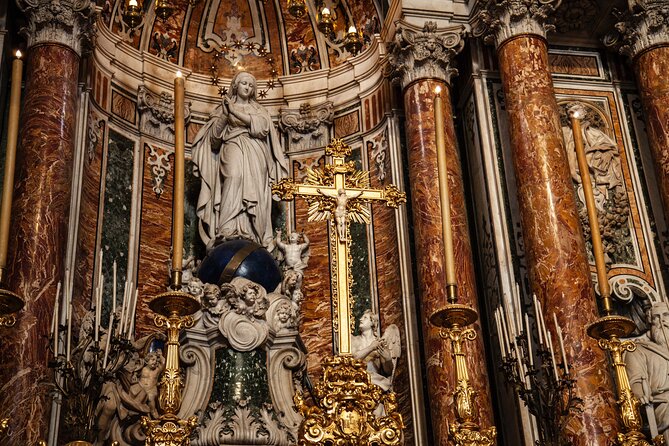
Chiesa di San Domenico Maggiore receives about 20 minutes, making it one of the more substantial church stops. This basilica is among the oldest in Naples and brings together medieval, Gothic, Renaissance, and Baroque elements.
For me, this is the sort of stop that justifies booking a guide. Without background, you may see a grand church and move on. With a good explanation, you can begin to read the building as a record of changing taste, power, devotion, and artistic fashion.
The church also shows why Naples is better understood through several periods at once. The goal is not to memorize dates. It is to notice how each era altered the city without wiping away everything that came before.
Some participants wanted more direct discussion of the churches themselves and less time on unrelated personalities or modern cultural stories. That is a fair concern. If your main interest is architecture and religious art, say so early. A guide with academic training can usually adjust the emphasis if you make your preference clear.
Piazzetta Nilo and the Neapolitan espresso break
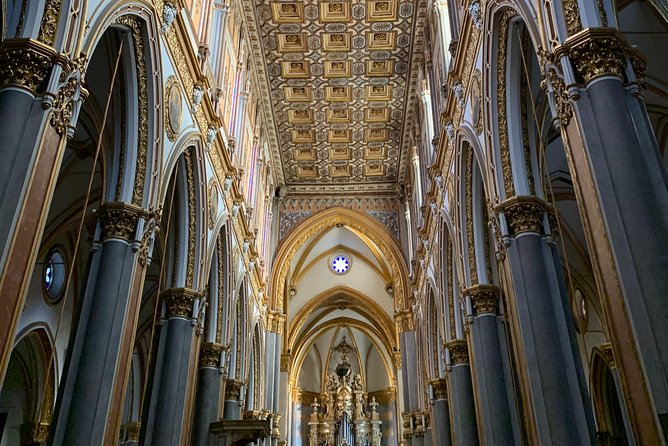
The walk continues to Piazzetta Nilo, where you stop at a traditional coffee bar for a taste of Neapolitan espresso. The planned coffee pause lasts about 10 minutes.
This is a small feature, but I like it. Naples has a distinct coffee ritual, and standing at a bar for a strong espresso feels more connected to local routine than stopping at a generic cafe. The break also gives your feet a rest and creates a natural opening for questions.
Coffee in Naples is famously strong, so approach it accordingly. One person described the included drink as very powerful but good. If you do not drink coffee, the practical value of this stop is mainly the short pause and the chance to watch ordinary city life.
The description promises a sample, but the exact delivery may depend on the guide and the day. If the coffee is important to you, ask where the group is stopping when the tour begins.
Via San Gregorio Armeno and the craft of nativity figures
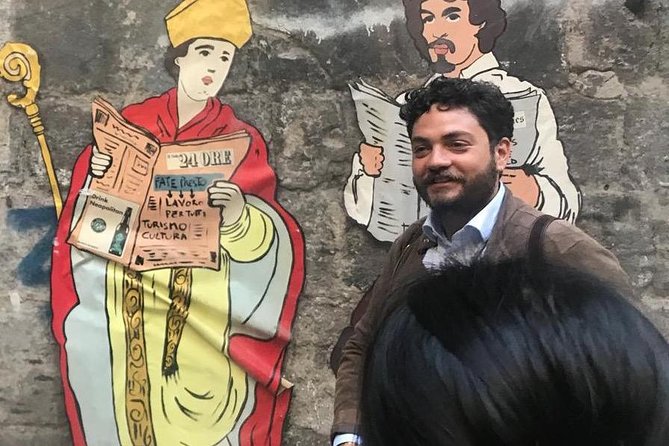
Via San Gregorio Armeno is one of the most distinctive parts of the walk. The street is known for its nativity workshops, and the shops display hand-made figures throughout the year, not only in December.
The tradition is broader than a simple Christmas display. Neapolitan nativity scenes often include familiar local characters, public figures, comic figures, and scenes from everyday life. The workshops show how craft, faith, humor, and city identity meet in one narrow street.
This section is lively and commercial, so your guide’s judgment helps. You will see plenty of shops, but the value comes from learning what the figures mean and how the craft developed. It is also a good place to buy a small keepsake, though personal purchases are not included in the tour price.
The route passes through some of Naples’ most characteristic lanes. Keep your group in sight, watch your footing, and do not expect a quiet museum-like setting. This is a working street, not a preserved display.
Purgatorio ad Arco and the city’s unusual beliefs
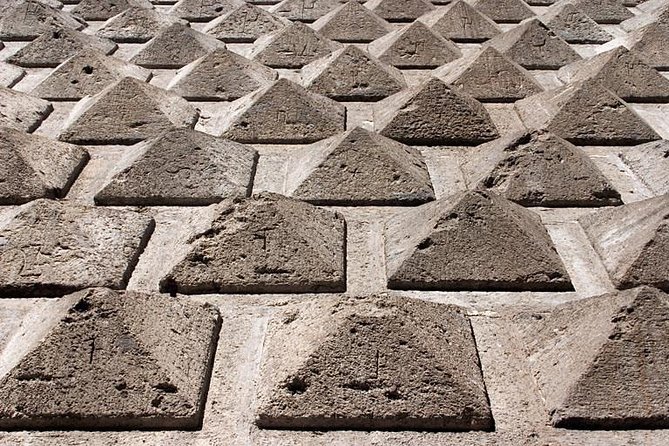
The Complesso Museale Santa Maria delle Anime del Purgatorio ad Arco is scheduled for about 30 minutes, the longest stop on the route. Admission is not included, so bring this into your budget if the guide enters the complex.
This is one of the more unusual religious sites in Naples. The lower church is linked to old beliefs and forms of worship connected with the souls in purgatory. Naples has long treated the boundary between the living and the dead in a very personal way, and this complex offers a strong example of that local outlook.
The stop can be especially rewarding if you enjoy folklore, religious customs, and the less polished side of city history. It is not simply another grand church. It gives you a window into popular devotion and the ways ordinary people shaped religious practice.
You may want to ask whether the admission fee is payable directly and whether the full lower church visit is included on your date. The tour details list the ticket as not included, so do not assume all visitors will enter automatically.
The old decumano and San Lorenzo Maggiore
The route then follows the ancient major decumano, one of the old east-west streets of the Greek and Roman city. Today it is among the most active lanes in central Naples, but its importance reaches back to the city’s earliest urban plan.
Basilica di San Lorenzo Maggiore gets about 15 minutes. This Gothic church is notable for the remains of Roman Neapolis that can still be seen in the area. It is a fine example of Naples’ habit of placing later religious buildings over earlier civic and domestic spaces.
I find this pairing especially useful. The decumano shows the street as a living part of Naples, while San Lorenzo lets you think about what lies below it. Together, they make the ancient city feel less like a remote archaeological subject and more like part of the present-day neighborhood.
The stop is listed as free, but the tour may focus on the basilica and nearby remains without giving you time for a full archaeological visit. If you want to explore the site in detail, plan a separate return visit.
Naples Cathedral and the Treasury of San Gennaro
The walk finishes at Duomo di Napoli, or Naples Cathedral, after about 10 minutes at the stop. The cathedral combines several architectural styles and includes the Treasury Chapel of San Gennaro, Naples’ patron saint.
This is an impressive ending because it brings together many of the themes introduced earlier: changing architecture, local devotion, artistic wealth, and the strong relationship between Naples and its patron saint. The chapel is one of the city’s major religious highlights.
Admission to the Duomo is not included. The brief scheduled stop may be enough for an introduction, but you will likely want more time if you plan to see the cathedral and Treasury Chapel properly. I would consider staying in the area after the tour rather than treating the final 10 minutes as a complete visit.
The route’s ending is convenient, but it also means the tour does not return you to Piazza Bellini. That is useful if you want to continue exploring the center, though less convenient if you have left belongings near the starting point.
Guide style, group size, and walking conditions
The operator says its guides hold degrees in archaeology, history, or art history. Named guides in the feedback include Enrica, Livio, Tony, Camilla, Chiara, Teresa, Maria, Ricardo, and Riccardo. The assigned guide can change, so you should not book this expecting one particular person unless the provider confirms it.
The strongest guide style here is clearly academic but warm. Enrica is praised for explaining Greek, Roman, religious, and architectural subjects in a way that makes the old center easier to understand. Livio is described as an experienced guide with a background in archaeology and classical languages. Other guides receive praise for food suggestions, navigation help, and their affection for Naples.
There is a real tradeoff. Some people found the delivery too fast or hard to understand, while another asked the guide to slow down and allow more time for photos. A few felt the talk wandered toward modern personalities, souvenir details, or street art instead of staying with the history of each church.
The group limit of 15 is a positive feature, but it does not remove city noise. One person wished for an audio system, and that is sensible in busy streets. Wear comfortable shoes, expect uneven pavement, and be ready to stand for the whole walk. The tour is open to most people, but it is not a seated or gentle sightseeing ride.
Who gets the most from this Naples walk?
I would recommend it to a first-time visitor who wants a quick orientation and enjoys history, churches, local beliefs, and street culture. It is also a good fit if you are staying in Naples for only a short time and want to cover the central old town without constantly checking a map.
You will get the most from it if you enjoy listening to a guide for long stretches. Ask questions, request a slower pace if needed, and tell the guide what interests you. That small bit of communication may help shape the walk toward art, archaeology, food, religion, or local customs.
I would hesitate to recommend it to someone who wants extended interior visits, lots of free time for photographs, or a tightly scripted architectural lecture. The route covers many subjects in a short period, and the guide’s personal style can strongly affect the balance.
Book at least 24 hours ahead if your plans might change, since cancellation is free up to that point. Poor weather or an insufficient number of bookings can also lead to a date change or refund. The tour is offered in English and uses a mobile ticket.
Should you book the Walking Tour of Naples Old Town?
Book it if you want a strong first orientation to central Naples, especially if Greek and Roman remains, churches, religious customs, and local craft appeal to you. At around $30, the combination of a small group, a trained guide, a coffee stop, and a route through several major old-town sights is fair value.
Go in with realistic expectations. You are not buying a series of full museum visits, and two and a half hours is not enough for every church, chapel, and archaeological site. You are buying a guided framework for understanding Naples.
My best advice is to schedule it near the start of your stay, wear sturdy shoes, arrive ready to walk, and ask for the kind of explanation you want. With the right guide and an interest in layered city history, this can turn Naples’ confusing center into a place you can read for yourself.
FAQ
How long does the walking tour last?
The tour lasts approximately 2 hours and 30 minutes.
Where does the tour begin?
The meeting point is Piazza Bellini in Naples, at 80138 Napoli NA, Italy.
Where does the tour finish?
The tour ends at Naples Cathedral, Duomo di Santa Maria Assunta, Via Duomo 147.
Is the tour offered in English?
Yes. The tour is offered in English.
How many people can join the group?
The maximum group size is 15 people.
Is coffee included?
The route includes a stop at a Neapolitan coffee bar to sample espresso. Personal expenses are not included, so confirm the exact arrangements with your guide.
Are entrance tickets included?
Most listed stops are free or viewed without an admission charge. Admission is not included for the Complesso Museale Santa Maria delle Anime del Purgatorio ad Arco or the Duomo di Napoli.
Can I cancel for a full refund?
Yes, you can cancel up to 24 hours before the experience starts for a full refund. Cancellations or changes made less than 24 hours before the start time are not refunded.
Just added around Naples
- Naples: Guided Walking Tour★ 4.7 · 63 reviews
- Wine tasting in the Vesuvius National Park★ 3.5 · 4 reviews
- Naples: Pompeii and Vesuvius Skip-the-Line Day Trip★ 3.8 · 32 reviews
- Visit the Museum MANN with a professional guide★ 5.0 · 3 reviews
- Walking-tour of Naples hystorical Centre★ 4.4 · 4 reviews
- Vesuvius – Herculaneum – Pompeii Excavations Tour★ 4.2 · 9 reviews
- Pompeii: Vesuvius at Sunset★ 3.5 · 31 reviews
- Vesuvius and Herculaneum from Naples★ 3.7 · 29 reviews
Naples Historic Centre Walking Tours, compared.



Historic Center and Sansevero Chapel Walking Tour
Read our review →


Browse the lists this tour appears in