
Reviewed · NAPLES UNDERGROUND TOURS
The Underground of Napoli: a Trip to the Hidden City
Naples keeps an older city under its streets. This two-hour private walk takes you from the medieval cloister of San Lorenzo Maggiore down to Neapolis Sotterrata, about 12 meters below modern Naples, where Greek and Roman remains survive beneath the city. I like that the tour links archaeology with living Neapolitan customs, including the cult of the dead at Purgatorio ad Arco. I also like the chance to pause for a coffee or sfogliatella before continuing to the cathedral’s underground layers.
The main drawback is cost. The tour is $283.21 for a private group of up to 10, and admission tickets are extra. If you are traveling with several people, the group price can make sense. For one or two people, the total may feel high, especially if you pay for two museum entries at a combined €20 per person.
Key points at a glance
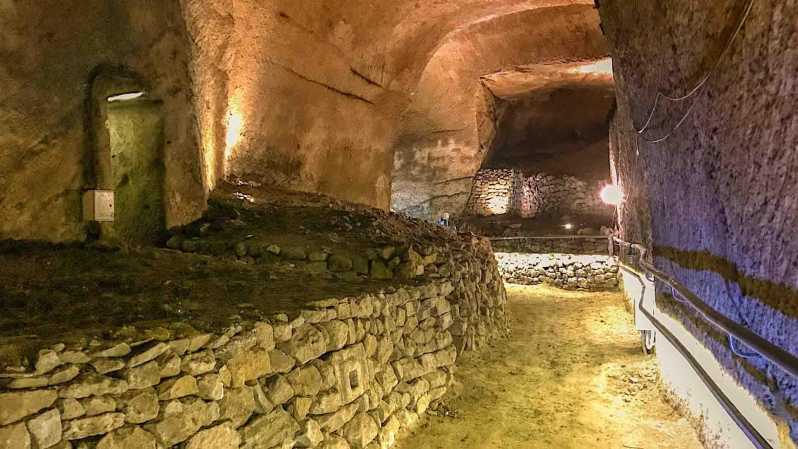
- Roman Naples lies 12 meters below street level: Neapolis Sotterrata gives you a direct look at the ancient Greek and Roman city.
- The route connects archaeology and devotion: Purgatorio ad Arco adds a local look at Naples and its relationship with the dead.
- The Duomo has underground layers: The cathedral stop shows how religious buildings in Naples were built over older foundations.
- You book a private group: The guide can speak English, Italian, Spanish, or French, with Daniela specifically praised for adapting her French explanations for a 16-year-old.
- Tickets are not included: Plan for admission costs, with two museum tickets listed at €20 per person.
- Opening times can change: Purgatorio ad Arco, San Lorenzo Maggiore, and Lapis Museum depend on decisions made by their owners and managers.
Why Naples makes sense from below
Naples is a city where the past is not kept in one tidy archaeological park. It sits under churches, lanes, courtyards, and busy streets. This tour uses that fact as its main idea. Instead of looking at isolated ruins, you move between layers of the city and see how one period was built over another.
The route is especially useful if you want a quick introduction to Naples before spending more time on your own. In two hours, you cover several central sites with a guide who can explain how the ancient city, Christian worship, local customs, and wartime survival fit together.
You should think of this as a walking tour with underground visits, not a single cavern experience. The guide leads you through the main streets and into selected sites. Conditions and access can vary because some locations operate according to the decisions of their owners and managers.
More underground tours in Naples:
- Naples: Catacombs of San Gennaro Entry Ticket & Guided Tour
★ 4.6 · 7,941 reviews - Naples: Spanish Quarters Underground Guided Tour
★ 4.8 · 5,064 reviews - Naples Underground Spanish Quarters with Guide
★ 5.0 · 1,886 reviews
Entering Neapolis Sotterrata beneath San Lorenzo Maggiore
The centerpiece is Neapolis Sotterrata, reached through the entrance of a medieval cloister at the San Lorenzo Maggiore complex. That change of setting is part of the appeal. You begin in a religious building and then move below it, leaving the modern street behind for the remains of ancient Neapolis.
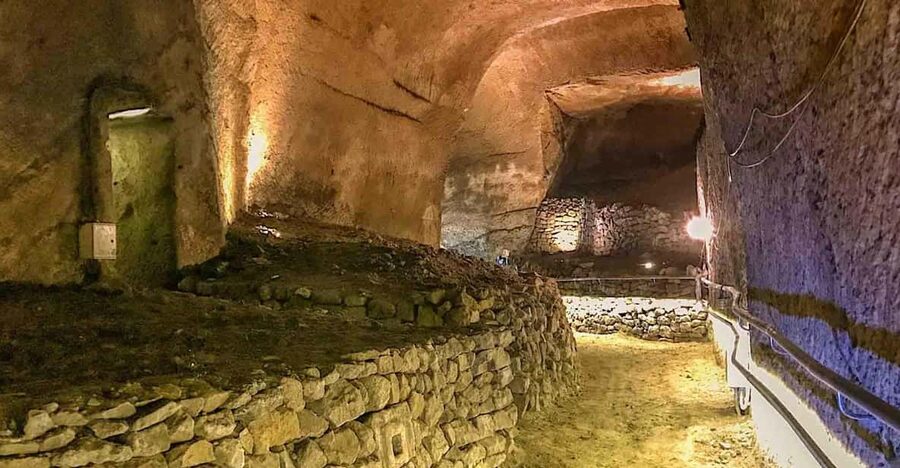
At roughly 12 meters underground, you can see a real section of the Greek and Roman city. The value here is scale. You are not simply looking at a loose collection of stones. You are being shown a portion of the urban world that existed below today’s Naples.
Your guide is important at this stop. Ancient masonry can be hard to read without help, particularly when the visit is short. A good explanation gives the remains a purpose and helps you understand that modern Naples was built directly over earlier city life.
This is also the part of the tour most likely to appeal to anyone interested in archaeology. The setting has a strong sense of discovery without needing theatrical effects. You walk from a familiar city street into a buried section of Naples, then return to the surface and continue through the same historic center.
Admission to the sites is not included in the tour price. The information provided allows you to decide whether to buy tickets on the spot. Since the opening of San Lorenzo Maggiore can depend on the day’s management decisions, you should keep some flexibility in your schedule.
A short surface break for coffee and sfogliatella
After returning upstairs, the tour allows time for a Neapolitan coffee or a sfogliatella, the city’s well-known filled pastry. This is a small detail, but it gives the walking route a more natural rhythm.
You are not rushing from one underground chamber to another without pause. You have a chance to reset, cool off after the lower level, and enjoy a local taste before the next stop. The coffee or pastry is not listed as an included food service, so plan to pay for it yourself.
This break may also help families. Daniela, one guide associated with the experience, was praised for speaking excellent French and adjusting her explanations for a 16-year-old. That suggests the tour can work well for mixed-age private groups when the guide responds to the people in front of her instead of delivering one fixed speech.
The Purgatorio ad Arco complex and Naples’ cult of the dead
The next major stop is the underground church of Santa Maria delle Anime del Purgatorio ad Arco, on Via dei Tribunali. The site is tied to the Neapolitan cult of the dead, giving you a different way to understand the city’s religious life.
This is not simply another archaeological visit. The focus shifts from the physical remains of ancient streets to the beliefs and rituals connected with those who have died. That contrast gives the tour a useful balance. Neapolis Sotterrata explains the city through construction and urban layers. Purgatorio ad Arco explains it through faith, memory, and devotion.
The hypogeum is described as mysterious, and that atmosphere is part of its draw. Still, you should not expect the guide to provide a full scholarly study of every religious practice. The tour has only two hours and several stops, so the visit works best as an introduction.
Opening access is not guaranteed. The Purgatorio ad Arco complex can be affected by the daily decisions of its owners and managers. If this site matters most to you, ask about that day’s availability before paying for additional admission.
A few more Naples outings worth a look
- From Naples: Pompeii Ruins & Mount Vesuvius Day Tour
★ 4.3 · 11,459 reviews - From Naples: Sorrento, Positano and Amalfi Full-Day Tour
★ 4.6 · 10,988 reviews - From Naples: Sorrento, Positano & Amalfi Coast – Small Group Tour
★ 5.0 · 8,643 reviews - Naples: Downtown Tour with Veiled Christ & St Clare Tickets
★ 4.9 · 6,462 reviews
The Duomo’s underground roots
The tour ends with the underground area of Naples Cathedral, or the Duomo. The cathedral’s roots extend below the present building, and the visit focuses on how those lower layers connect with Neapolitan devotion.
This stop brings the route back to a major landmark, but with a different point of view. You are not only entering a grand church and looking upward. You are considering what lies beneath it and how older religious and urban layers shaped the site.
For first-time visitors, this can make the Duomo easier to understand. Naples has many churches, and it is easy to see them as separate monuments. The underground visit shows that the city’s religious buildings also preserve earlier phases beneath their floors and foundations.
The Duomo is listed as part of the planned route, but the information also notes that opening decisions can affect several sights. Confirm the day’s access rather than assuming every location will operate on the same schedule.
Lapis Museum and the wartime story below Naples
The experience also highlights the Lapis Museum, connected with wartime recovery and an ancient Naples water tank. The available information presents it as one of the underground locations that may be visited when open.
This adds another historical period to the route. You move from Greek and Roman remains to Christian underground worship, then to the survival of Naples during war. The result is a broad introduction to the city below street level, even though the tour itself remains short.
The Lapis Museum is not guaranteed on every departure. Its opening depends on the museum’s owners and managers, just as access to Purgatorio ad Arco and San Lorenzo Maggiore does. If the Lapis Museum is available, it can make the tour feel more complete. If it is closed, the main experience still centers on Neapolis Sotterrata, Purgatorio ad Arco, and the Duomo’s underground layers, subject to access.
What the private format adds
The private format is the clearest reason to choose this experience over a cheaper shared walk. Your group can include up to 10 people, and the guide can lead the tour in English, Italian, Spanish, or French.
A private guide is useful in underground spaces because you can ask questions without waiting for a large group to catch up. It also helps when your party includes children or teenagers. Daniela’s ability to adjust her French presentation for a 16-year-old is a good example of the kind of flexibility you should expect from a private service.
The format may be less valuable if you are a solo visitor or a couple on a tight budget. A shared tour would spread the guide’s fee across more people. One small group had originally reserved a less expensive shared option, but that arrangement was canceled the day before and replaced with a private visit. That kind of change can affect the final cost, so check the group terms carefully.
Is $283.21 a fair price?
The listed price is $283.21 per group of up to 10 people. That works out well for a full group, but the value changes sharply based on how many people are traveling with you.
For 10 people, the guide cost is about $28 per person before admissions. For four people, it is about $71 each. For two people, it is about $142 each. You must then add the entrance fees, with two tickets listed at a combined €20 per person.
The price buys a private guiding service and an expert subject guide rather than admission to every site. It also includes the convenience of linking several underground locations in one route. If you care about context and want the guide’s attention, that may justify the cost.
If your priority is simply entering one underground site, buying individual tickets and exploring independently may be cheaper. You would lose the connecting story, though. This tour’s value comes from the way it places Roman ruins, a hypogeum, cathedral foundations, and wartime history in one short walk.
Timing, meeting point, and practical planning
The experience lasts two hours. The exact starting time is chosen from the available departures, so check the schedule before committing it to a busy Naples day.
The meeting point is next to the statue in the middle of the square. The tour ends back at that meeting point, which makes it easier to plan another activity afterward. Since the route is a walking tour through central Naples, wear shoes you can use comfortably on city streets and underground floors.
Bring cash for optional purchases and admission tickets. You should also have a passport or ID card, with a copy accepted according to the information provided. Student cards, children’s identification, and disability cards may also be relevant depending on who is in your group.
The experience is not suitable for wheelchair users. Underground sites can involve access limits, and no alternative accessible route is specified here. If mobility is a concern, ask before booking rather than relying on the standard route.
Free cancellation is available up to 24 hours before the start for a full refund. You can also reserve now and pay later, which helps if the opening of a particular site still needs to be confirmed.
Who will enjoy this Naples underground tour?
I would recommend it most strongly to first-time visitors who want a compact introduction to Naples beneath the usual church-and-street circuit. It is also a good match for families with older children or teenagers, especially when a private guide can adjust the language and level of detail.
History lovers will appreciate the mix of ancient city remains and later religious layers. People interested in local beliefs may find Purgatorio ad Arco more memorable than a standard archaeological visit. The experience also suits anyone who wants a guide to explain why Naples feels built in layers rather than assembled all at once.
You may want to skip it if you dislike paying admission separately or if your schedule cannot handle changes to the planned underground stops. The tour depends on the opening decisions of several independent sites, so it is not the best choice for someone who needs every stop guaranteed.
Should you book this private underground tour?
Book it if you want a guide-led introduction to the parts of Naples below street level, especially if you have a group large enough to share the $283.21 fee. Neapolis Sotterrata is the strongest reason to go, while Purgatorio ad Arco and the Duomo add human and religious context.
Before booking, calculate the total with museum tickets and confirm which sites are open on your date. If you are traveling with two or three people and watching costs closely, the price may be difficult to defend. If you value a private guide, multilingual support, and a carefully connected route through ancient, religious, and wartime Naples, it can be a useful two-hour orientation.
FAQ
How long does the underground Naples tour last?
The tour lasts two hours. Starting times depend on availability.
What is the tour price?
The price is $283.21 per private group of up to 10 people.
Are admission tickets included?
No. You decide whether to purchase admission tickets on the spot. Two museum tickets are listed at a total of €20 per person.
Which underground sites are part of the experience?
The route highlights Neapolis Sotterrata, the Purgatorio ad Arco complex, and the underground area of Naples Cathedral. The Lapis Museum and San Lorenzo Maggiore Complex may also be included when open.
Can the tour visit every listed site?
Access depends on the daily decisions of the owners and managers of Purgatorio ad Arco, San Lorenzo Maggiore Complex, and Lapis Museum. Confirm availability for your date.
What languages are available?
The live guide can provide the tour in English, Italian, Spanish, or French.
Is this a private tour?
Yes. It is a private group experience for up to 10 people.
Where does the tour begin and end?
It begins next to the statue in the middle of the square and ends back at the meeting point.
Is the tour suitable for wheelchair users?
No. The experience is not suitable for wheelchair users.
Just added around Naples
- Naples: Guided Walking Tour★ 4.7 · 63 reviews
- Wine tasting in the Vesuvius National Park★ 3.5 · 4 reviews
- Naples: Pompeii and Vesuvius Skip-the-Line Day Trip★ 3.8 · 32 reviews
- Visit the Museum MANN with a professional guide★ 5.0 · 3 reviews
- Walking-tour of Naples hystorical Centre★ 4.4 · 4 reviews
- Vesuvius – Herculaneum – Pompeii Excavations Tour★ 4.2 · 9 reviews
- Pompeii: Vesuvius at Sunset★ 3.5 · 31 reviews
- Vesuvius and Herculaneum from Naples★ 3.7 · 29 reviews
Naples Underground Tours, compared.
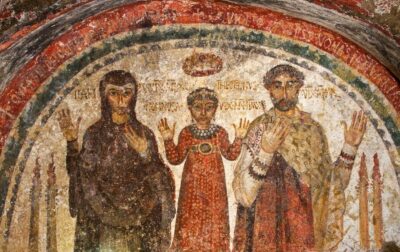
Catacombs of San Gennaro Entry Ticket & Guided Tour
Read our review →

Naples Underground Spanish Quarters with Guide
Read our review →
Naples Underground Official Skip-the-line Ticket
Read our review →
Naples Walking Tour with Underground Roman Ruins Ticket
Read our review →
City Walking Tour w/ Underground Roman Ruins Ticket
Read our review →
Naples Underground & Highlights Tour – Small Group Experience
Read our review →Browse the lists this tour appears in