Reviewed · TICKETS
Naples: San Gennaro & Caravaggio Combined ticket
Caravaggio’s The Seven Works of Mercy and the glittering relics of San Gennaro make an unusually good Naples pairing. One stop confronts poverty and human duty through a dramatic painting. The other surrounds faith with gold, silver, jewels, and centuries of devotion.
I like the two-site format, which gives you two very different views of Neapolitan culture without paying for separate admissions. I also like the included audio guide at the Treasure of San Gennaro, especially since the objects can be hard to understand without some context. The main drawback is simple: there is no live guide, so you must set your own pace and supply your own questions.
Key points at a glance
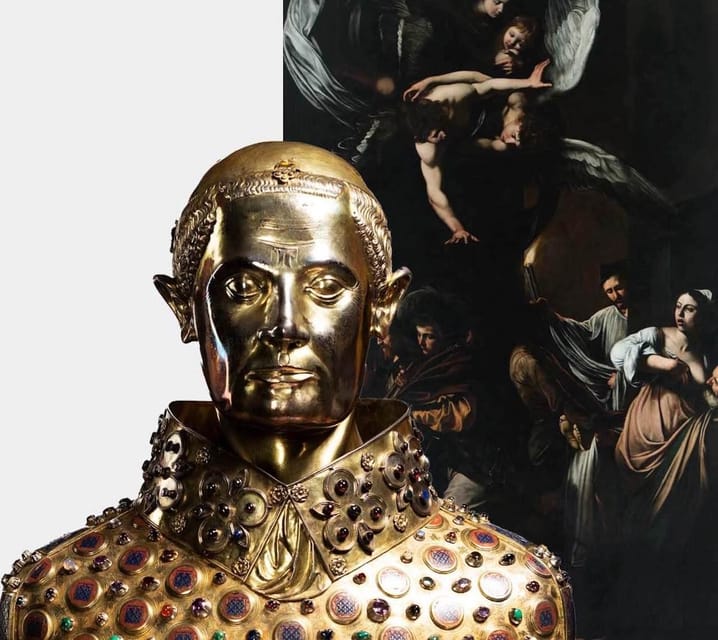
- Caravaggio’s major Naples painting: See The Seven Works of Mercy at Pio Monte della Misericordia, along with six other works by seventeenth-century Neapolitan artists.
- A famous devotional collection: The Treasure of San Gennaro includes objects made of gold, silver, bronze, and precious stones.
- One ticket, two institutions: The combined admission covers the Chapel and Treasure of San Gennaro plus Pio Monte della Misericordia.
- A useful audio guide: The San Gennaro ticket includes an audio guide for the chapel, treasure, and sacristies.
- A central starting point: Begin at the Treasure of San Gennaro ticket office at Via Duomo 149.
- Designed with inclusion in mind: Both institutions work to reduce physical, cognitive, and sensory barriers, and the activity is wheelchair accessible.
Why this Naples pairing works
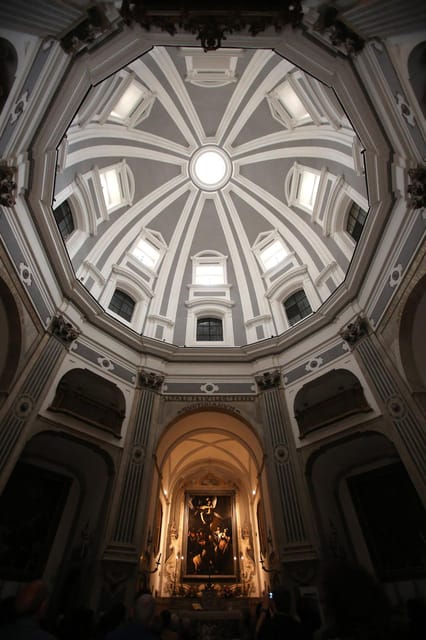
Naples can sometimes feel like a city of separate discoveries. A church here, a palace there, a painting tucked behind a street corner. This ticket gives your sightseeing a clear shape: start with the sacred world of San Gennaro, then continue to Pio Monte della Misericordia and Caravaggio.
The contrast is the real pleasure. At the Treasure of San Gennaro, the focus is on devotion expressed through precious materials. At Pio Monte, Caravaggio turns charitable acts into a dark, crowded human scene. One place asks you to look closely at objects. The other asks you to read a painting almost like a stage play.
The full visit is listed at about two hours. That is a sensible amount of time if you want to see both sites without turning the experience into an all-day museum march. You will need enough attention for the audio guide and the artwork, but not so much stamina that the afternoon disappears indoors.
A few more Naples outings worth a look
- From Naples: Pompeii Ruins & Mount Vesuvius Day Tour
★ 4.3 · 11,459 reviews - From Naples: Sorrento, Positano and Amalfi Full-Day Tour
★ 4.6 · 10,988 reviews - From Naples: Sorrento, Positano & Amalfi Coast – Small Group Tour
★ 5.0 · 8,643 reviews
Begin at the Treasure of San Gennaro on Via Duomo
Your meeting point is the Treasure of San Gennaro ticket office at Via Duomo 149. This is where you begin the combined visit, so allow a little time to find the correct entrance and get oriented before setting off.
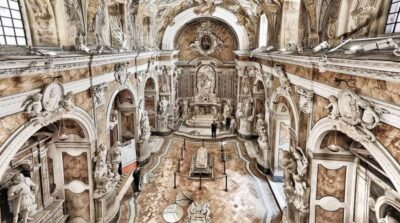
The Treasure of San Gennaro is connected to the Chapel of San Gennaro, a major sacred space in Naples. The ticket also covers the sacristies, giving you more than a quick look at a single chapel. The audio guide accompanies you through these areas and helps explain what you are seeing.
That matters here. A collection of devotional objects can easily become a blur of shiny surfaces if you do not know who gave them, why they mattered, or how they fit into the city’s relationship with its patron saint. The audio guide gives the objects a voice and lets you take the visit at your own speed.
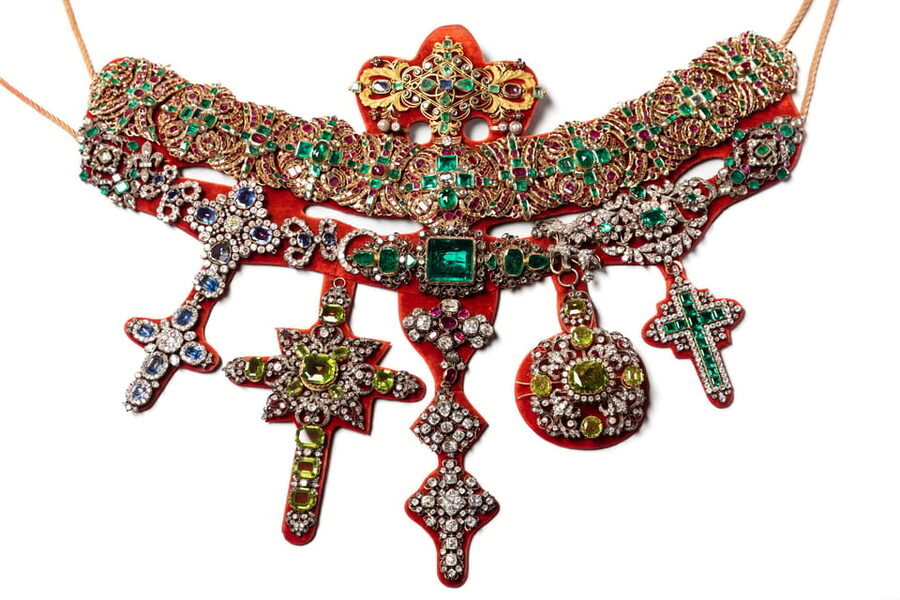
The collection includes gold, silver, bronze, and precious stones. These gifts came over the centuries from Neapolitan and foreign rulers, popes, and ordinary people. The result is not just a display of expensive things. It records a long pattern of gratitude, fear, hope, and civic pride.
The Chapel of San Gennaro and its devotional world
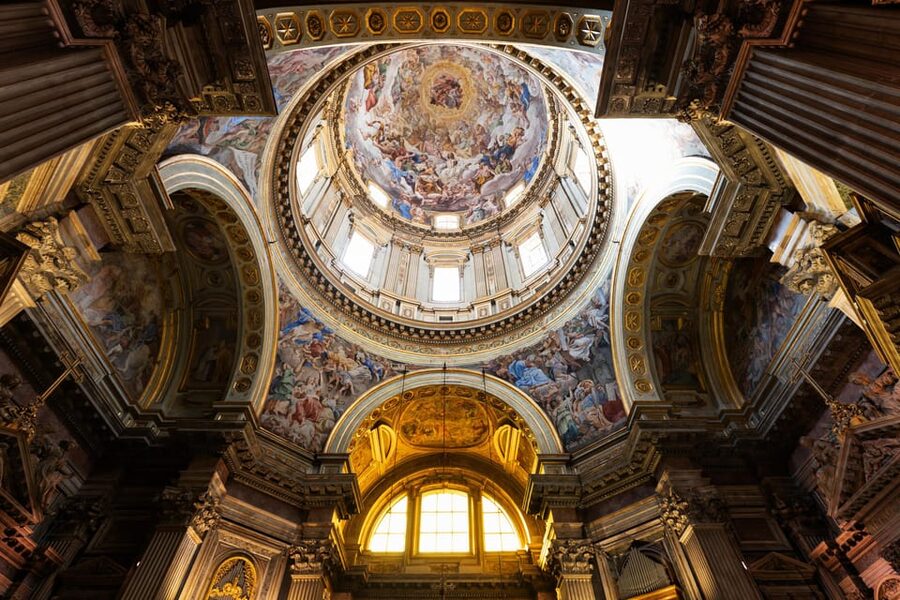
San Gennaro is Naples’ patron saint, and his importance reaches well beyond the walls of this museum. The chapel and its objects reflect the city’s close bond with the saint. For many Neapolitans, this is not simply an art collection. It is part of the city’s spiritual identity.
You will see the chapel first as an architectural and religious setting, then encounter the objects kept within this tradition. The experience works best if you resist the urge to rush straight toward the most glittering case. Pause and consider the connection between the chapel, the relics, and the gifts offered over time.
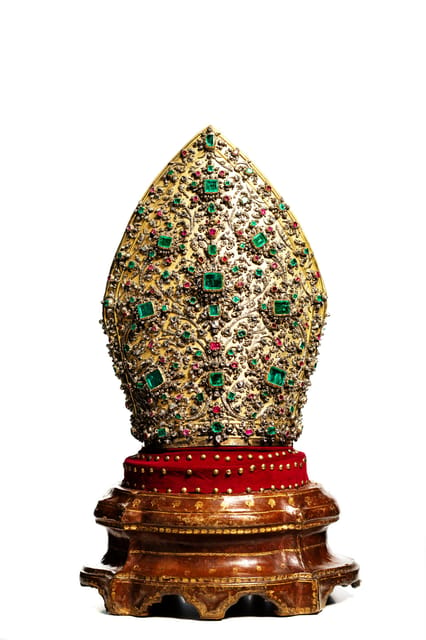
The famous miter of San Gennaro is one of the key reasons people make this visit. It is described as priceless, and the word is justified in a practical sense as well as an emotional one. Its value comes not only from materials, but from its role in the city’s devotional life.
The treasure also gives you a chance to see how power and faith met in Naples. Sovereigns and popes donated costly objects, but the collection also reflects gifts from the people. That combination keeps the experience from feeling like a royal display alone.
Use the audio guide to make sense of the collection
The audio guide is included for the Chapel of San Gennaro, the Treasure, and the sacristies. Since there is no live guided tour included, this narration is your main source of built-in explanation.
I would use it selectively rather than treat every stop as compulsory. Listen closely when the guide explains the role of an object, its connection to San Gennaro, or the reason it remains important to Naples. Then give yourself quiet time to look.
The lack of a live guide has both good and bad sides. You do not have to keep up with a group or wait while someone asks a long question. You can slow down at an object that catches your eye. On the other hand, you cannot ask for a quick explanation if a detail puzzles you.
For visitors who prefer independence, this is a comfortable arrangement. If you want a flowing story told by a person who can respond to your interests, you may find the experience less satisfying than a private or group tour.
Same city, an entirely different sort of day:
- Naples: Catacombs of San Gennaro Entry Ticket & Guided Tour
★ 4.6 · 7,941 reviews - Naples: Downtown Tour with Veiled Christ & St Clare Tickets
★ 4.9 · 6,462 reviews - Naples: Pizza-Making Workshop with Drink and Appetizer
★ 4.9 · 5,411 reviews - Naples: Hop-on Hop-off Bus Tour 24-Hour Ticket
★ 4.3 · 5,157 reviews
Cross to Pio Monte della Misericordia for Caravaggio
The second half takes you to Pio Monte della Misericordia, a seventeenth-century palace in the heart of Naples. The institution was founded in 1602 by seven young Neapolitan nobles who wanted to use part of their wealth for practical charity.
That founding purpose is essential to understanding the building and its most famous painting. Pio Monte was created to respond to poverty and need. Its art was not placed in a vacuum. The subject of charity was part of the institution’s work.
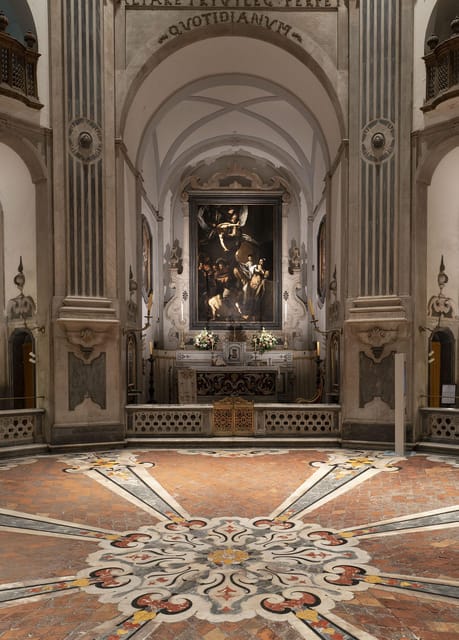
Caravaggio’s The Seven Works of Mercy is the main event. The painting brings several acts of mercy into one intense composition. Rather than presenting charity as a distant ideal, Caravaggio gives it human bodies, difficult choices, and a crowded Neapolitan setting.
This is a painting that rewards time. At first, the scene can feel dark and busy. Then individual acts begin to separate from the whole. Look for how the figures overlap and how the eye moves through the composition. The drama is not decorative. It pushes you to think about aid as something done directly, by people, in hard circumstances.
What makes The Seven Works of Mercy worth your time
Caravaggio’s painting is not simply a famous artwork added to a palace collection. It connects directly to the mission of Pio Monte della Misericordia. The seven works of mercy refer to acts of care and assistance, and the painting gives visual form to that charitable program.
The setting adds weight. You are not viewing the canvas in an unrelated gallery. You are seeing it in an institution founded for charitable action. That connection gives the visit an unusual sense of purpose.
I would plan to spend unhurried time with the painting, even if you are not an art specialist. You do not need a lecture to appreciate the strong contrasts, close-packed figures, and emotional force. The key is to look past the label and ask what each person is doing for another person.
The work can also be challenging. Caravaggio’s style is dramatic, and the dark tones may make some details harder to pick out at first. If you are hoping for a bright, spacious gallery experience, this is not that. The reward comes from close looking and from understanding the link between the painting and the charitable institution.
Six more Neapolitan paintings in the same palace
Pio Monte della Misericordia does not stop with Caravaggio. The palace contains six additional masterpieces by seventeenth-century Neapolitan artists.
These works help place Caravaggio within the artistic world of Naples rather than treating him as an isolated genius. You get a better sense of the local setting and the kind of religious and charitable art that surrounded his work.
The information provided does not name each artist or describe every painting, so I would not arrive expecting a detailed catalog of the entire collection from the ticket alone. Still, the additional works make the stop more worthwhile than a single-painting visit.
The palace itself is part of the experience. It is described as one of the most beautiful seventeenth-century buildings in central Naples, and its long role as the headquarters of Pio Monte gives the rooms a clear connection to the institution’s mission.
Art, charity, and a modern museum mission
Pio Monte della Misericordia continues its charitable purpose today through social, educational, solidarity, and inclusive projects. That makes the visit feel connected to more than art history.
I like this aspect because it gives the palace a living role. You are not only looking back at what seven nobles decided in 1602. You are seeing an institution that still links beauty with concrete help for people in need.
The Treasure of San Gennaro also places strong emphasis on access. It has worked to remove physical, cognitive, and sensory barriers and to make the spaces and content more usable for people with specific needs and disabilities.
Both institutions prioritize inclusion, and the activity is wheelchair accessible. That does not answer every possible access question, so you should still contact the provider if you need a precise accommodation. But the stated approach is encouraging, especially for a visit involving historic religious buildings that can sometimes be difficult to navigate.
How the two-hour timing affects your visit
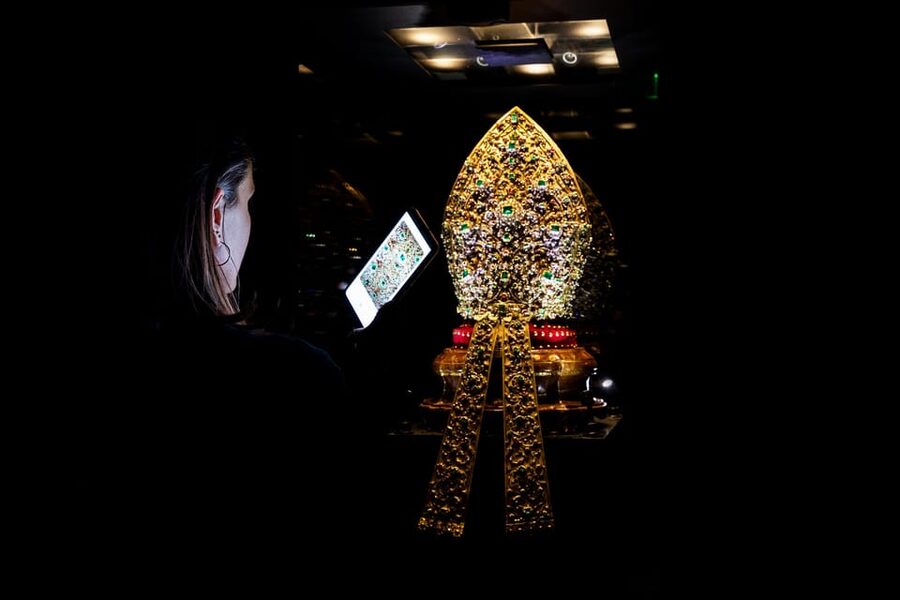
Two hours is enough for a focused visit to both institutions. It is not an invitation to linger over every object, replay every audio segment, and study every painting in equal depth.
I would give the Treasure of San Gennaro the time it deserves for the chapel, the miter, the collection, and the sacristies. Then I would make sure Pio Monte receives a calm look at Caravaggio rather than treating it as a quick final stop.
The exact starting times vary, so check availability before choosing your day. The ticket allows you to skip the ticket line, which is useful when your sightseeing time is tight. You still need to begin at the stated ticket office, and the combined admission does not turn the visit into a guided tour.
There is no transportation included, and none is needed within the activity itself. The starting point is in central Naples, with both stops focused on the city’s historic core.
Is $20 a fair price?
At $20 per person, this ticket offers solid value if you want both the San Gennaro collection and Caravaggio’s painting. Buying access to two significant cultural institutions through one admission is convenient, and the included audio guide adds useful structure to the San Gennaro visit.
The value is strongest for art lovers, visitors interested in religious culture, and anyone trying to make good use of a short stay in Naples. You receive a famous Caravaggio, a major devotional collection, a historic chapel, sacristies, and additional Neapolitan paintings in one compact outing.
The price is less compelling if you only want to see Caravaggio. In that case, a combined ticket may include more than you plan to use. It is also not the right choice if you expect a personal guide to explain every room and answer questions as you go.
The flexible cancellation policy adds a practical benefit. You can cancel up to 24 hours in advance for a full refund, and you can reserve now and pay later. Those terms help if your Naples schedule is still shifting.
Who will enjoy this combined ticket most
I would recommend it to you if you want a concentrated cultural visit rather than a broad city tour. It suits adults and older children who can handle sacred art, historical objects, and a self-guided format.
It is especially useful for:
- Art lovers who want to see Caravaggio in its original Neapolitan setting.
- Visitors curious about San Gennaro and the city’s devotional traditions.
- People with only a few hours available in central Naples.
- Independent sightseers who prefer an audio guide to a fixed group.
- Wheelchair users looking for an attraction that explicitly addresses access.
- Anyone who wants a clear two-stop plan instead of choosing museums on the fly.
You may want to skip it if you dislike religious collections, need a live guide, or prefer outdoor sightseeing. The experience is focused and serious. There is no food tasting, city walk, or entertainment element to break up the art and sacred spaces.
Practical details before you book
The starting point is the Ticket Office of the Treasure of San Gennaro at Via Duomo 149, 80138 Naples. Begin there, not at Pio Monte della Misericordia.
Pets are not allowed. The activity is wheelchair accessible, and both institutions have worked on physical, cognitive, and sensory access. If you have a particular mobility or sensory requirement, confirm the details before arrival rather than relying only on the general accessibility label.
The admission includes the combined ticket and the San Gennaro audio guide. It does not include a guided tour, so download or carry any personal notes you want for Caravaggio and Pio Monte.
The experience is provided by D’Uva. The published rating is 4.5 out of 5 from 76 reviews. One especially enthusiastic response from Beatrix of Slovakia singled out the unexpected pleasure of finding Caravaggio in Naples and described the San Gennaro cathedral and treasures as breathtaking. That reaction points to the outing’s strongest surprise: the two stops are more memorable together than they might be on a checklist.
Should you book this Naples experience?
Book it if you want two substantial cultural stops, appreciate the freedom of an audio guide, and can spare about two hours. The strongest reason to go is the pairing of Caravaggio’s The Seven Works of Mercy with the miter and treasure of San Gennaro. The contrast gives you both the human drama of charity and the ceremonial power of devotion.
Skip it if you want a live expert, a relaxed full-day museum visit, or a tour built around Naples street life. For most independent visitors interested in art and sacred history, though, $20 is a sensible price for a compact and meaningful introduction to two of the city’s most distinctive institutions.
FAQ
Where does the experience begin?
It begins at the Ticket Office of the Treasure of San Gennaro at Via Duomo 149, 80138 Naples, Italy.
What does the combined ticket include?
It includes admission to the Chapel and Treasure of San Gennaro and Pio Monte della Misericordia.
Is an audio guide included?
Yes. The San Gennaro ticket includes an audio guide for the Chapel of San Gennaro, the Treasure, and the sacristies.
Is a live guided tour included?
No. A guided tour is not included.
How long does the visit take?
The stated duration is two hours.
Can I skip the ticket line?
Yes. The activity includes skip-the-ticket-line access.
Is the experience wheelchair accessible?
Yes. The activity is wheelchair accessible, and both institutions have worked to improve access for visitors with physical, cognitive, and sensory needs.
Can I cancel for a refund?
Yes. You can cancel up to 24 hours in advance for a full refund. You can also reserve now and pay later.
Just added around Naples
- Naples: Guided Walking Tour★ 4.7 · 63 reviews
- Wine tasting in the Vesuvius National Park★ 3.5 · 4 reviews
- Visit the Museum MANN with a professional guide★ 5.0 · 3 reviews
- Walking-tour of Naples hystorical Centre★ 4.4 · 4 reviews
- Naples: Pompeii and Vesuvius Skip-the-Line Day Trip★ 3.8 · 32 reviews
- Vesuvius – Herculaneum – Pompeii Excavations Tour★ 4.2 · 9 reviews
- Pompeii: Vesuvius at Sunset★ 3.5 · 31 reviews
- Vesuvius and Herculaneum from Naples★ 3.7 · 29 reviews
Tickets, compared.
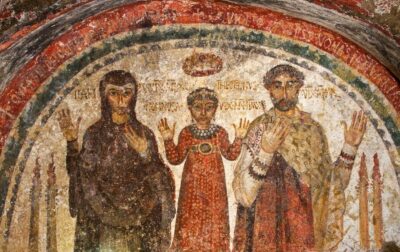
Catacombs of San Gennaro Entry Ticket & Guided Tour
Read our review →

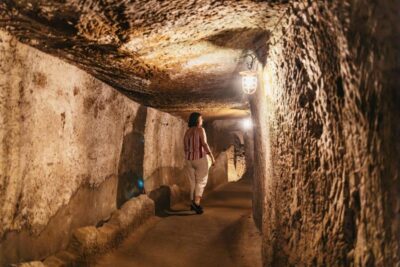
The Bourbon Tunnel Guided Tour with Entrance Ticket
Read our review →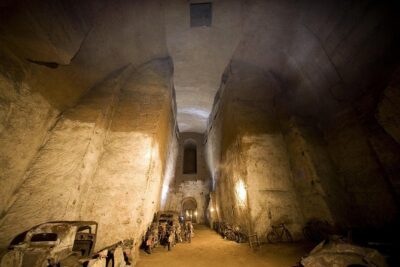
Galleria Borbonica Entrance Ticket in Standard Route
Read our review →
Capri Guided Tour with Ferry Tickets & Minibus
Read our review →